
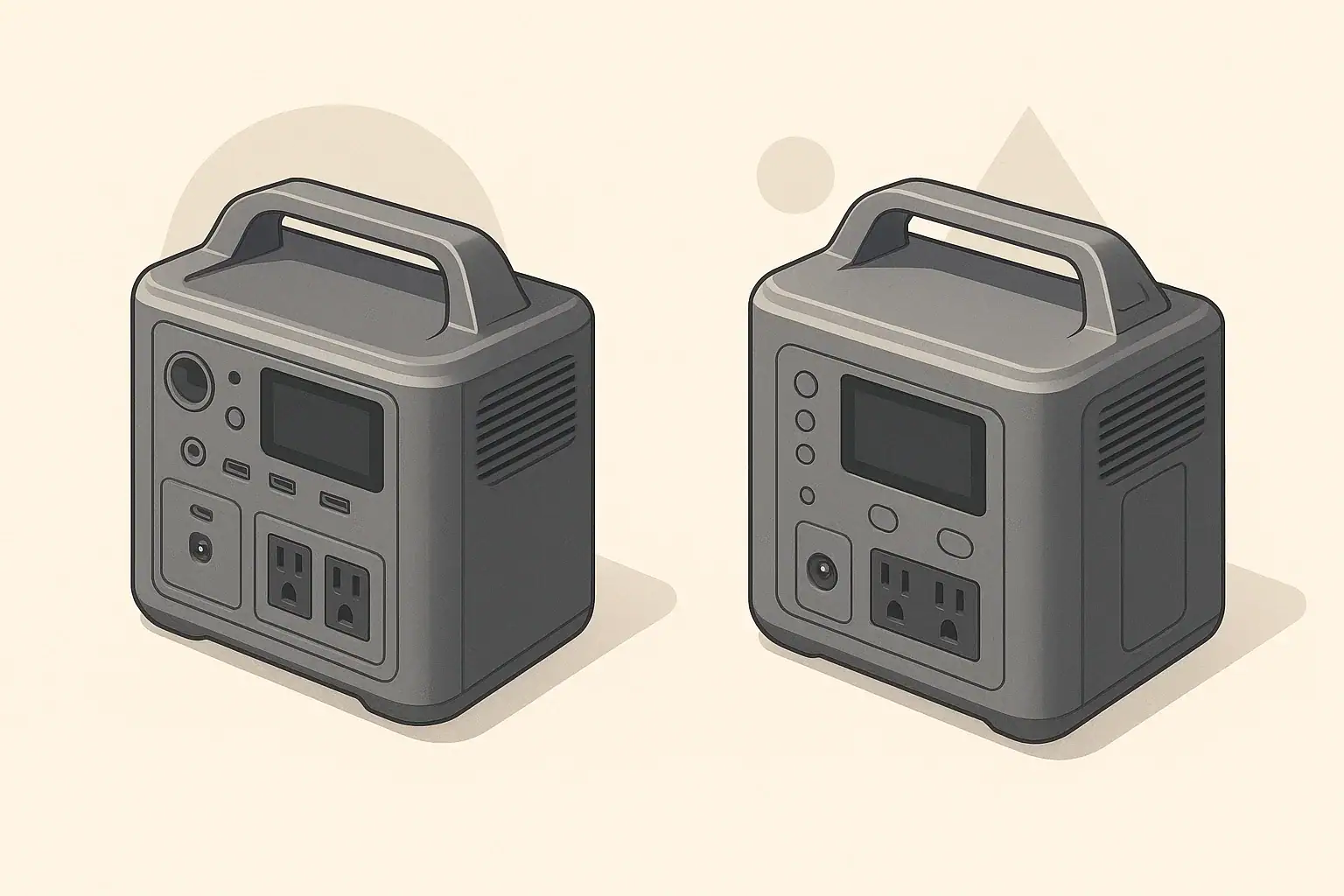
A portable power station is usually the better choice for most people, while a DIY solar battery box only makes sense if you want customization, expansion, and are comfortable with electrical work. Both options can power the same devices, but they differ a lot in cost, complexity, safety, and long-term flexibility.
This guide walks through how portable power stations compare with DIY solar battery boxes for backup power, camping, RVs, and off-grid use. You will see how they work, what they realistically power, where DIY can save money, and where it can quietly get more expensive or risky.
If you are deciding between a ready-made portable power unit and building your own battery box with solar, use this as a practical checklist to size your system, avoid common mistakes, and choose the option that fits your skills, budget, and tolerance for tinkering.
What Each Option Is and Why It Matters
When you need electricity away from a standard wall outlet, you are basically choosing between an all-in-one portable power station or a custom DIY solar battery box built from separate parts. Both can keep phones, laptops, lights, and even fridges running, but they solve the problem in very different ways.
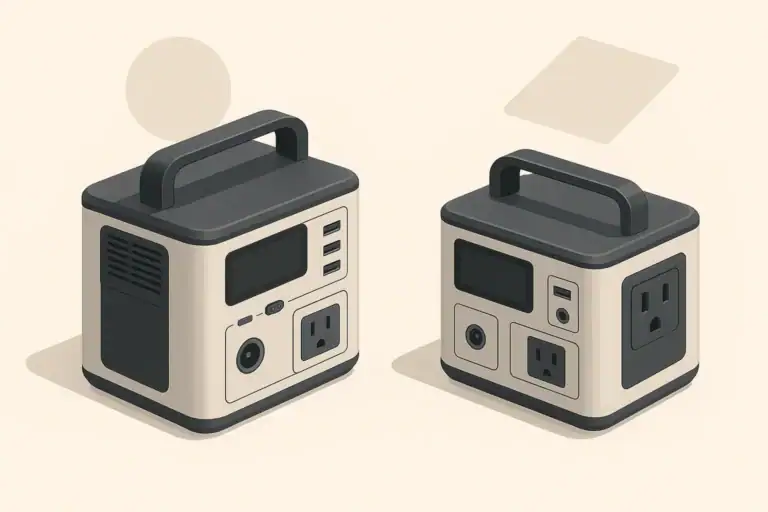
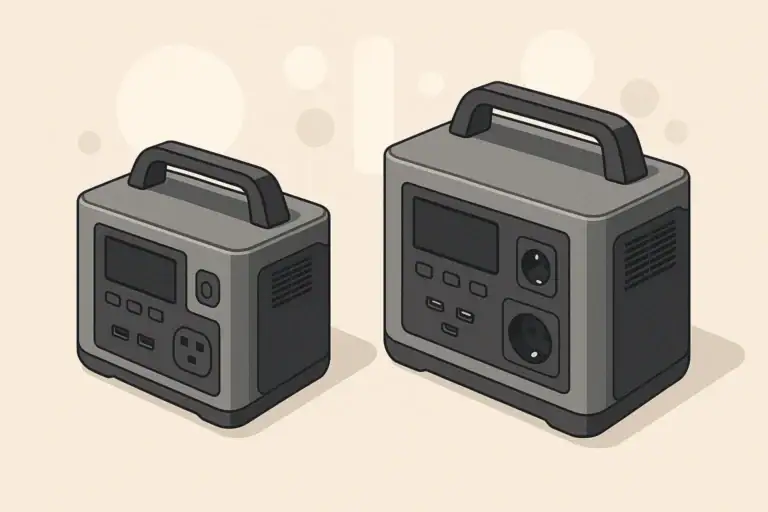
Portable power station: A factory-built, plug-and-play box that typically includes:
- Built-in battery and battery management system (BMS)
- Inverter for AC outlets
- DC and USB outputs
- Charging inputs for wall, vehicle, and often solar
- Integrated protections and a single warranty
DIY solar battery box: A custom system you assemble yourself from individual components, such as:
- Battery (deep-cycle or lithium)
- Separate inverter for AC power
- Solar charge controller
- DC distribution, fuses, and wiring
- Enclosure or battery box
This choice matters because it affects:
- Total cost: Not just parts, but tools, wiring, and your time.
- Reliability: How predictable runtimes and charging will be.
- Safety: How much electrical risk you personally manage.
- Future upgrades: Whether you can swap or scale pieces over time.
If you want a power tool you can trust out of the box, a portable power station usually wins. If you want a project you can grow and customize, a DIY solar battery box can be a better long-term fit.
Key Concepts: Capacity, Power, Cost, and Complexity
Whether you buy a portable unit or build a DIY box, the same basic ideas determine how useful your system will be: how much energy it stores, how much power it can deliver at once, how you charge it, and how complicated it is to install and maintain.
Capacity and Runtime (Watt-Hours)
Battery capacity is measured in watt-hours (Wh). A simple way to estimate runtime is:
Runtime (hours) ≈ Battery capacity (Wh) ÷ Load (W) ÷ 1.2
The 1.2 factor roughly accounts for inverter and system losses.
Example: A 500 Wh system powering a 100 W load:
500 ÷ 100 ÷ 1.2 ≈ 4.2 hours of realistic runtime.
Portable power stations list Wh directly. In a DIY box, you calculate it. For example, a 12 V, 100 Ah battery:
- Theoretical capacity: 12 V × 100 Ah = 1200 Wh
- Usable capacity may be less, depending on chemistry and how deep you discharge it.
Power Output: Continuous vs Surge Watts
Power output is measured in watts (W) and usually split into:
- Continuous watts: What the inverter or AC outlets can supply steadily.
- Surge watts: Short bursts to start motors or compressors.
For example, a 500 W inverter might handle 1000 W surge for a few seconds. A DIY system must be wired and fused so that the battery and cables can safely deliver that current at low voltage.
Cost and Complexity Tradeoffs
At a high level, you are trading money for convenience and safety certifications on one side, and time and flexibility on the other.
| Factor | Portable power station tends to fit when… | DIY solar battery box tends to fit when… |
|---|---|---|
| Technical skill | You prefer plug-and-play and do not want to design wiring. | You are comfortable with basic DC wiring, fuses, and diagrams. |
| Time available | You want working backup power the same day you buy it. | You can spend weekends planning, building, and testing. |
| Budget style | You want one predictable purchase, even if cost per Wh is higher. | You want to optimize cost per Wh and may already own some parts. |
| Expandability | Replacing the whole unit in a few years is acceptable. | You want to upgrade battery, inverter, or solar independently. |
| Use environment | Mostly indoor, short trips, and occasional power outages. | Permanent installs in vans, RVs, sheds, or small off-grid cabins. |
| Risk tolerance | You prefer factory-tested protections and a single warranty. | You accept responsibility for correct fusing, routing, and mounting. |
Charging Paths: Wall, Vehicle, and Solar
Both options can usually charge from:
- Wall power: Fastest and simplest. Portable units have built-in or matched chargers; DIY builds need a charger matched to battery type and voltage.
- Vehicle power: Good for topping up while driving. Portable units often use a 12 V socket; DIY builds may use a DC-DC charger tied into the alternator.
- Solar: Critical for off-grid or long trips. Portable units include a built-in solar charge controller with a fixed input range; DIY systems let you choose panel wattage and controller size.
For solar planning, a quick rule of thumb is:
Daily solar energy (Wh) ≈ Panel watts × 4–5 effective sun hours
So a 200 W array might provide 800–1000 Wh per sunny day, depending on angle and location.
Real-World Examples: What Each Option Looks Like in Use
It is easier to decide between a portable power station and a DIY solar battery box when you see how they behave in real situations. Below are typical scenarios and what each option looks like in practice.
Short Home Power Outages
Goal: Keep internet, phones, and a few lights running for several hours.
- Router + modem: 20–30 W
- Two LED lamps: 10 W each (20 W total)
- Phone charging: 10–15 W average
Total continuous load: roughly 50–65 W.
Portable power station: A 500 Wh unit can typically run this setup for around 6–8 hours with no wiring work. You plug everything into AC and USB ports and monitor the screen for remaining runtime.
DIY solar battery box: A 12 V, 100 Ah battery (about 1200 Wh theoretical) with a small inverter could run the same loads much longer. But you must install the inverter, fuses, and outlets, then either connect to a wall charger or add solar to recharge after the outage.
Remote Work and Mobile Office
Goal: Run a laptop, monitor, and networking gear from a vehicle, cabin, or job site.
- Laptop: 50–80 W while working
- Monitor: 20–40 W
- Router/hotspot: 10–20 W
Total load: around 80–140 W during heavy use.
Portable power station: Great if you move between locations. You can charge the unit at home, top up from the vehicle while driving, and plug into solar when parked. Clear state-of-charge indicators make it easy to plan your workday.
DIY solar battery box: Better if you are building out a trailer, shed, or semi-permanent workspace. You can hard-mount DC outlets at the desk, add dedicated USB-C chargers, and size the solar array to match your daily energy use without being limited by a built-in input rating.
Camping, Vanlife, and RV Use
Goal: Run a 12 V fridge, lights, fans, and occasional small appliances.
- 12 V compressor fridge: 30–60 W while running, often 25–40% duty cycle
- LED strip lights: 5–15 W
- Small fan: 30–60 W
- Occasional use of a coffee maker or small microwave: 600–1200 W for a few minutes
Portable power station: Works well for occasional camping or weekend van trips. You can set the unit on a counter, plug in the fridge and lights, and add a folding solar panel outside the vehicle. High-wattage appliances are possible if the inverter is large enough, but they will drain capacity quickly.
DIY solar battery box: Shines in full-time vanlife or RV setups. You can mount the battery low and secure, run hidden wiring to lights and fans, and put fixed solar panels on the roof. A larger battery bank and solar array can support daily fridge use and longer stays without shore power.
| Device or setup | Approx. power draw (W) | Estimated runtime from 1000 Wh system* |
|---|---|---|
| Router + modem + 1 laptop | 80 | 1000 ÷ 80 ÷ 1.2 ≈ 10 hours |
| 12 V fridge (average over day) | 25 | 1000 ÷ 25 ÷ 1.2 ≈ 33 hours |
| Two LED lights + small fan | 70 | 1000 ÷ 70 ÷ 1.2 ≈ 12 hours |
| Coffeemaker (10 minutes per use) | 800 | About 130 Wh per 10 minutes; roughly 7 uses from 1000 Wh |
*These are ballpark estimates and assume a reasonably efficient inverter and healthy battery.
Common Mistakes and Troubleshooting Cues
Whether you buy or build, most frustrations come from sizing errors, wiring issues, or unrealistic expectations about what the system can do. Watching for these early warning signs can save you money and headaches.
Undersizing Capacity and Solar
Common mistake: Choosing a battery that is too small or solar that is too weak for daily use.
- Symptom: The system keeps shutting down overnight, even though it seemed fine during the day.
- Likely cause: Average daily loads exceed what your battery and solar can supply.
- Fix: Recalculate daily watt-hours used and compare to battery capacity and realistic solar input. You may need more capacity, more solar, or lower loads.
Overloading the Inverter
Common mistake: Plugging in a high-wattage appliance that exceeds the inverter rating.
- Symptom: Inverter or portable power station shuts off when you start a microwave, coffee maker, or hair dryer.
- Likely cause: Appliance startup or running watts are higher than the inverter’s continuous or surge rating.
- Fix: Add up the maximum watts of devices you want to run at the same time and size the inverter accordingly. In DIY builds, also confirm cables and fuses can handle the DC current.
Weak or Incorrect Wiring in DIY Builds
Common mistake: Using wire that is too small, too long, or unfused between the battery and inverter or loads.
- Symptom: Warm cables, voltage drop under load, flickering lights, or intermittent inverter shutdowns.
- Likely cause: Undersized wire gauge or missing/incorrect fuses near the battery.
- Fix: Recalculate expected DC current at full load, choose wire gauge based on current and run length, and install appropriately sized fuses close to the battery.
Ignoring Temperature Effects
Common mistake: Leaving the battery or portable unit in very hot or very cold environments.
- Symptom: Noticeably shorter runtime in winter, or the system refuses to charge when cold or after being in a hot vehicle.
- Likely cause: Battery chemistry limits charging and discharging outside recommended temperature ranges.
- Fix: Keep the unit within the stated temperature range when charging and discharging. For DIY boxes, consider insulating the enclosure or relocating the battery.
| Problem | Likely cause | First things to check |
|---|---|---|
| System shuts off under moderate load | Undersized inverter or low battery voltage | Inverter watt rating, battery state of charge, cable temperature |
| Battery seems to charge very slowly | Charger or solar input is too small | Charger wattage, solar wattage and sun hours, connection polarity |
| Fridge or fan runs but screen devices reset | Startup surges causing brief voltage dips | Surge watt rating, cable size, whether loads share the same inverter |
| DIY box gets warm near connections | Loose or corroded terminals, undersized wire | Tightness of lugs, signs of discoloration, correct wire gauge |
Safety Basics for Portable and DIY Systems
Both portable power stations and DIY solar battery boxes can be very safe when used correctly, but the risk profile is different. With a portable unit, most safety engineering is done for you. With DIY, you become the designer and installer.
General Safety Practices
- Avoid overloading: Stay within the published watt limits. If devices trip breakers or cause shutdowns, reduce the load or upgrade the system.
- Keep units dry and ventilated: Avoid rain, standing water, and enclosed spaces without airflow. Heat is a major enemy of battery life and safety.
- Protect from physical damage: Do not stack heavy items on the battery or portable unit, and avoid pinch points where cables can be crushed.
DIY-Specific Safety Points
- Fuse close to the battery: Every positive cable leaving the battery should have a correctly sized fuse or breaker as close to the battery terminal as practical.
- Correct polarity: Double-check positive and negative before connecting. Reverse polarity can instantly damage equipment and create arcs.
- Secure mounting: In vehicles, mount batteries and inverters so they cannot move during sudden stops or impacts.
- Enclosure choice: Use an enclosure that protects from accidental contact with terminals and provides any ventilation recommended for your battery type.
Home Integration Caution
Whether you use a portable power station or a DIY battery box, connecting to household circuits requires proper transfer equipment. Backfeeding through a wall outlet is dangerous and can endanger line workers. Any connection to a home electrical panel should be designed and installed by a qualified electrician.
Long-Term Use, Storage, and Maintenance
Good habits around charging, storage, and inspection have a big impact on how long your system lasts and how reliable it feels when you really need it.
Charging and Usage Habits
- Avoid full discharge when possible: Regularly draining to 0% shortens battery life. Try to recharge before the battery is completely empty.
- Use appropriate charge rates: Very high charge currents can stress batteries. Use chargers sized within the manufacturer’s recommendations.
- Balance pass-through use: Running heavy loads while charging generates extra heat. It is fine in moderation but avoid pushing the system at maximum input and output for long periods.
Storage and Self-Discharge
- Store in a cool, dry place: Avoid long-term storage in hot vehicles, attics, or damp sheds.
- Partial charge for long storage: Many batteries prefer being stored around mid-charge rather than 100% or 0% for months at a time.
- Top up periodically: Check and recharge every few months to prevent deep discharge from self-consumption or parasitic loads.
Inspection and Maintenance Routines
- Portable power stations: Keep vents clear, check cords for damage, and visually inspect the case for cracks or swelling. If you notice unusual smells or heat, stop using the unit and investigate.
- DIY solar battery boxes: Periodically check all screw terminals, lugs, and bus bars for tightness. Look for discoloration, melted insulation, corrosion, or moisture inside the enclosure.
Any signs of battery swelling, hissing, or strong chemical odor are red flags. Disconnect the system if it is safe to do so and do not continue using damaged components.
How to Decide and Key Specs to Look For
Choosing between a portable power station and a DIY solar battery box comes down to how you value time, flexibility, and safety responsibilities.
Portable power station usually makes more sense when you:
- Need something that works immediately with minimal setup.
- Move it between home, vehicle, and campsite.
- Prefer integrated protections, a single warranty, and clear displays.
- Are okay replacing the entire unit when capacity needs change.
DIY solar battery box usually makes more sense when you:
- Already own components like panels or a suitable battery.
- Want to customize layout for a van, RV, shed, or off-grid structure.
- Plan to expand capacity or solar over time without replacing everything.
- Enjoy learning and are comfortable taking responsibility for wiring and safety.
Specs to Look For (Checklist)
Use this checklist when comparing portable power stations or planning a DIY solar battery box:
- Battery capacity (Wh): Sum up your daily watt-hour use and aim for at least one full day of autonomy, more if you expect cloudy weather or long outages.
- Inverter size (W): Add the maximum watts of devices you want to run at the same time, then choose an inverter with some headroom for surges.
- Battery chemistry: Consider cycle life, weight, and usable depth of discharge when choosing between different battery types.
- Solar input rating: Check how many watts of solar the system can realistically accept and how that compares to your location’s sun hours.
- Charging options: Confirm you have at least two charging paths (for example, wall plus solar, or vehicle plus solar) for flexibility.
- Number and type of outputs: Count how many AC, DC, and USB ports you actually need and whether some loads can run more efficiently from DC.
- Weight and form factor: Make sure the system is practical to move, mount, or store where you plan to use it.
- Operating temperature range: Compare the specified range to your climate, especially for winter camping or hot garages.
- Protections and monitoring: Look for clear state-of-charge indicators, overcurrent protection, and temperature protections. DIY builders should plan for fuses, breakers, and a way to monitor voltage and current.
Whichever path you choose, sizing the system to your real loads, planning charging carefully, and paying attention to safety will matter far more than any single feature on the box. A well-matched system, whether portable or DIY, will feel simple, predictable, and ready whenever you need power away from the grid.
Frequently asked questions
Which specs and features should I prioritize when choosing between a portable power station and a DIY solar battery box?
Prioritize battery capacity in watt-hours, inverter continuous and surge watt ratings, and the system’s solar input limits. Also consider battery chemistry (cycle life and usable depth of discharge), number and type of outputs, and operating temperature range. These factors determine runtime, what appliances you can run, and how the system performs in your climate.
How can I avoid undersizing the battery or solar array for my needs?
Calculate your average daily energy use in watt-hours and compare it to realistic solar production (panel watts × 4–5 effective sun hours) and usable battery Wh. Add margin for cloudy days and inverter/system losses, then size battery and solar to meet those revised needs. If in doubt, increase capacity or reduce loads to avoid chronic shortfalls.
Are portable power stations safer than DIY solar battery boxes?
Portable power stations generally reduce installation risk because they include factory-designed protections, integrated BMS, and a single warranty. DIY systems can be equally safe when properly designed with correct fusing, enclosures, and ventilation, but they require the builder to implement those protections. In short, portable units lower user-error risk while DIY gives more control and requires more attention to safety details.
Can building a DIY solar battery box save money compared with buying a portable power station?
DIY can lower cost per watt-hour for larger systems or when you already own parts, but tool costs, time, and potential mistakes can reduce or eliminate those savings. Small systems are often cheaper and simpler as factory-built units. Consider total cost including wiring, fuses, enclosures, and your labor before deciding.
What regular maintenance does each option require for long-term use?
Portable power stations need minimal maintenance—keep vents clear, inspect cords, and store within recommended temperature and charge levels. DIY boxes require periodic checks of terminal tightness, wire insulation, fuse condition, and enclosure integrity, plus battery health monitoring. In both cases, avoid deep long-term discharge and top up periodically.
Can these systems run high-wattage appliances like coffee makers or microwaves?
They can, but you must match the inverter’s continuous and surge ratings to the appliance’s startup and running watts and ensure cabling and fuses are sized appropriately. High-wattage appliances will drain capacity quickly and may require a large inverter and robust DC wiring in a DIY setup. For occasional short use it is feasible, but expect significant current draw and reduced runtime.
Related guides
Browse this topic →
- Beginner-friendly sizing, runtime & specs
- Solar & charging (MPPT, fast charging, cables)
- Batteries (LiFePO4, cycles, care & storage)
- Safety, cold-weather performance, real-world tips
More in Comparison
See all →Keep reading
About this site
Portable Energy Lab publishes practical, independent guides about portable power—clear sizing, safe use, and real-world expectations.
Affiliate disclosure
Some links on this site may be affiliate links. If you buy through these links, we may earn a small commission at no extra cost to you. This helps support our content. Read our affiliate disclosure.