
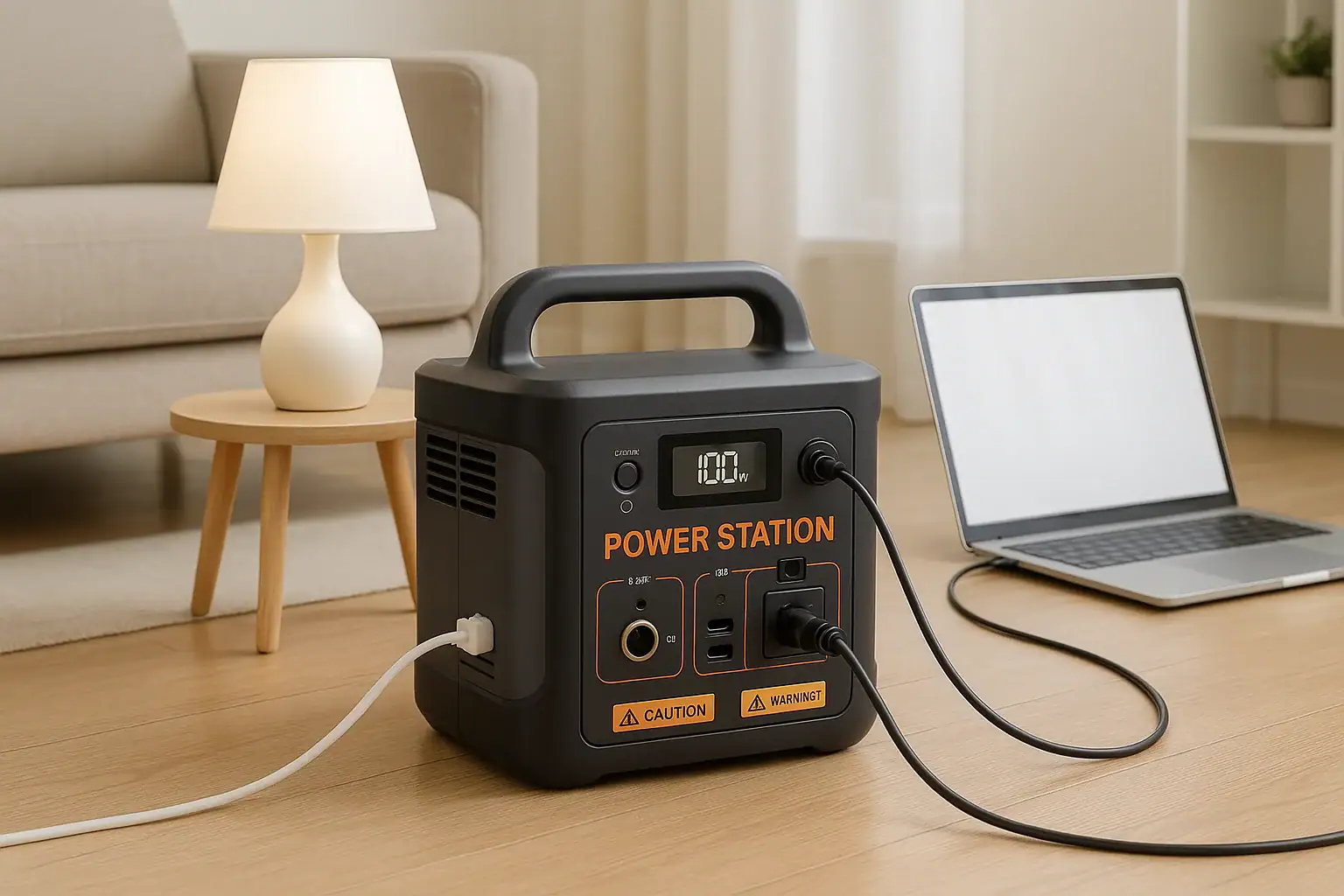
Portable power stations can be safe for indoor use when they rely on battery power, have the right safety features, and are used within their rated limits. The main risks come from misuse, blocking ventilation, overloading the inverter, or confusing them with gas generators that produce fumes and carbon monoxide. Understanding wattage, surge watts, battery capacity, runtime, and safe charging practices is essential before plugging one in beside your couch or bed.
People use portable power stations indoors for backup power, camping in vans, powering CPAP machines, or running small appliances during outages. Unlike fuel generators, battery-based units do not emit exhaust, but they still store a lot of energy and convert DC to AC, which can create heat, short-circuit risks, and fire hazards if handled poorly. This guide explains how indoor-safe models work, what to avoid, and which specifications matter most so you can decide when and how to use a portable power station safely inside your home or apartment.
What Indoor-Safe Portable Power Stations Are and Why They Matter
In the context of indoor use, a portable power station is a rechargeable battery system with built-in electronics that provide AC outlets, DC ports, and USB outputs without burning fuel. It is essentially a large power bank with an inverter, designed to deliver household-style power to devices like laptops, lights, fans, routers, or medical equipment.
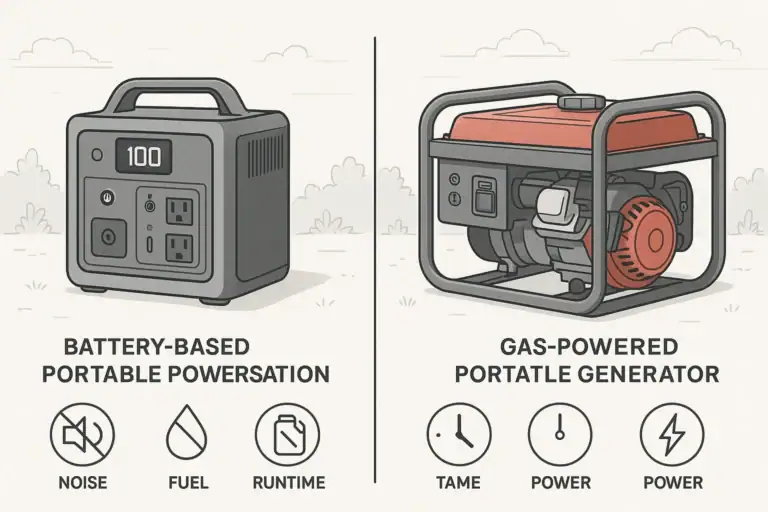
Unlike gasoline or diesel generators, battery-based portable power stations do not produce exhaust gases, so they can be used inside as long as they are operated within their design limits and kept away from flammable materials. That makes them attractive for apartment dwellers, renters, and anyone who cannot safely run a fuel generator outdoors.
Indoor safety matters because these devices concentrate significant energy in a compact enclosure. High-capacity lithium batteries, high-wattage inverters, and fast chargers can all generate heat and high currents. If you ignore their continuous watt rating, surge watts, or input limit, you can trigger overloads, shutdowns, or, in rare cases, damage. Understanding what a power station is designed to do—and what it is not—is the first step toward safe indoor operation.
Used correctly, a portable power station can provide quiet, fume-free backup power for critical loads. Used incorrectly, it can become a fire risk, a tripping hazard, or a weak link in your emergency plan.
How Portable Power Stations Work Indoors: Key Safety Concepts
To understand indoor safety, it helps to know the main components and how they interact: the battery, the battery management system (BMS), the inverter, and the charging circuitry.
The battery (often lithium-ion or lithium iron phosphate) stores energy in watt-hours (Wh). The higher the Wh rating, the longer the runtime for a given load. Indoors, this means you can estimate how long you can power essentials like a Wi‑Fi router, LED lights, or a CPAP machine without recharging.
The BMS is the internal safety brain. It monitors cell voltage, temperature, and current, and it enforces limits. When you exceed the output rating, short a port, or operate in extreme temperatures, the BMS can shut down the system to prevent damage. A robust BMS is critical for preventing overcharge, over-discharge, and thermal runaway.
The inverter converts the battery’s DC power to AC power. Its continuous watt rating tells you how much power it can sustain, while its surge watts rating tells you how much it can handle briefly when a device starts up. Many appliances draw more power at startup than during normal operation; if the surge exceeds the inverter’s capacity, it will typically shut down or trip a protection circuit.
Charging circuits control how quickly the battery can be recharged from wall outlets, solar panels, or vehicle sockets. The input limit defines the maximum safe charging power. Indoors, exceeding this limit with improvised chargers or non-approved configurations can cause overheating.
All of these systems are housed in an enclosure that must be kept ventilated and dry. Heat generated by the inverter and charger needs to dissipate. Blocking vents, stacking items on top, or operating in enclosed cabinets can raise internal temperatures and stress components, even if you stay within wattage ratings.
| Component | What It Does | Indoor Safety Relevance |
|---|---|---|
| Battery (Wh) | Stores energy for later use | Determines runtime and potential energy if damaged |
| BMS | Monitors and protects cells | Prevents overcharge, over-discharge, and overheating |
| Inverter (W) | Converts DC to AC power | Limits what appliances you can safely run |
| Charging Circuit | Controls input power | Prevents overcurrent and charging-related heat |
| Enclosure & Vents | Houses components, allows airflow | Requires clear space to avoid heat buildup |
Indoor Use Scenarios and What They Reveal About Safety
Looking at common real-world indoor uses helps clarify what is typically safe and where people get into trouble.
Powering Electronics and Small Devices
Using a portable power station to run phones, tablets, laptops, cameras, routers, and LED lights indoors is generally low risk, as long as total wattage stays well below the inverter’s continuous rating. These loads are modest, usually under a few hundred watts combined, and they do not have large startup surges.
In this scenario, the main safety considerations are basic: keep the unit on a hard, stable surface; avoid covering vents; and do not overload AC outlets with multi-plug adapters or daisy-chained power strips.
Running Medical Devices Like CPAP Machines
Many people use portable power stations to run CPAP machines or similar low-to-moderate power medical devices indoors during outages or when traveling. This is usually safe when the power station has sufficient capacity and a pure sine wave inverter that matches the device’s voltage and wattage requirements.
Here, the safety focus is on reliability and runtime. Undersizing the battery can lead to unexpected shutdowns during the night, which is a comfort and health concern. Verifying the CPAP’s wattage, checking the power station’s rated runtime, and testing the setup before relying on it overnight are important steps.
Indoor Backup for Refrigerators and Fans
Using a portable power station to run a refrigerator or box fan indoors during a blackout is more demanding. Refrigerators often have high surge watts at startup, even if their running watts are moderate. Fans are usually easier loads but can still add up if you run several at once.
Safety here revolves around respecting surge ratings and continuous output limits. If the refrigerator’s startup surge is too high, the inverter may trip or shut down. Repeated overloads can stress internal components. It is also important to ensure that extension cords do not become tripping hazards in dark rooms.
Van Life, RVs, and Tiny Homes
In vans, RVs, and tiny homes, portable power stations are often used as the main power source for lights, fans, laptops, and occasionally induction cooktops or small heaters. These semi-permanent setups blur the line between portable and installed power.
Risks increase when people try to run high-wattage appliances indoors for long periods, or when they attempt improvised wiring to tie a power station into an existing electrical system. Without proper design and professional installation, these setups can overload circuits, create shock hazards, or bypass built-in protections.
Common Indoor Safety Mistakes and Warning Signs
Most indoor incidents with portable power stations stem from a handful of predictable mistakes. Recognizing them—and the early warning signs—helps you avoid problems.
Overloading the Inverter
Plugging in too many devices, or a single appliance that exceeds the inverter’s continuous watt rating, can cause the unit to shut down or repeatedly trip protection circuits. Symptoms include sudden power loss, warning beeps, or error codes on the display.
Even if the device restarts, repeated overloads generate extra heat and stress components. If the casing feels unusually hot or you smell hot plastic, disconnect loads and allow the unit to cool before using it again.
Ignoring Surge Watts for Motor Loads
Appliances with compressors or motors—like refrigerators, some air purifiers, or power tools—can briefly draw two to three times their running watts at startup. If you size your power station purely on running watts, you may see frequent shutdowns when these devices cycle on.
Warning signs include the appliance trying to start and immediately stopping, dimming lights on the same circuit, or the power station flashing overload indicators even though the displayed running watts look acceptable.
Blocking Ventilation and Heat Buildup
Placing a power station in a closet, under bedding, or against soft furnishings can block vents and trap heat. Indoors, this is a common mistake when people try to hide the unit for aesthetics or noise reasons.
Excessive fan noise, a hot case, or error messages related to temperature are cues that the device is struggling to stay cool. Long-term operation in this state can shorten battery and component life, and in extreme cases, increase fire risk.
Using Damaged Cords or Improvised Adapters
Frayed extension cords, crushed plugs under furniture, or homemade adapters can introduce shock and fire hazards. Because portable power stations are often moved around, cords may be pinched in doors or stepped on repeatedly.
Visual signs of trouble include exposed copper, melted insulation, discoloration around plugs, or intermittent power when you wiggle a cord. Any of these indicate it is time to replace the cord and stop using that connection indoors.
Charging in Extreme Temperatures
Charging the battery in very hot or very cold indoor environments—such as unconditioned attics, garages, or near heaters—can stress cells. Many BMS systems will limit charging or shut down outside safe temperature ranges, but some may only show reduced performance.
If you notice unusually slow charging, frequent fan cycling, or temperature warnings on the display, move the unit to a more moderate environment and let it acclimate before charging again.
Core Safety Principles for Using Portable Power Stations Indoors
Safe indoor use comes down to a few high-level practices that apply across most models and capacities.
Confirm It Is a Battery Power Station, Not a Fuel Generator
Only battery-based portable power stations are appropriate for indoor use. Fuel-powered generators produce exhaust containing carbon monoxide and must never be operated indoors, in garages, or near open windows. Before using anything inside, confirm it is a rechargeable battery unit with no combustion engine.
Match Loads to Ratings With a Safety Margin
Check the continuous AC output rating and keep your total load comfortably below it—ideally under about 70–80% for extended use. For example, if the inverter is rated for 1000 watts continuous, aim to stay below roughly 700–800 watts when planning what to run indoors.
Also verify that any device with a motor or compressor will not exceed the surge watts rating at startup. When in doubt, start with fewer devices and add loads gradually while monitoring wattage and temperature.
Maintain Clear Space and Ventilation
Place the power station on a flat, stable, nonflammable surface such as a floor or solid shelf. Keep several inches of clearance around all sides, especially near vents and fans. Avoid placing it on beds, sofas, or thick carpets that can block airflow or trap heat.
Do not stack objects on top of the unit, and avoid enclosing it in cabinets while it is running or charging. Adequate airflow is one of the simplest and most effective indoor safety measures.
Use Proper Cords and Outlets
Use cords that are rated for the load and in good condition. Avoid daisy-chaining multiple power strips, and do not plug the power station into a wall outlet to “backfeed” a home circuit. Backfeeding can create serious shock and fire hazards and can endanger utility workers; any connection to a building’s wiring should be designed and installed by a qualified electrician using appropriate equipment.
Follow Manufacturer Limits and Warnings
Each power station has specific guidelines for maximum input power, acceptable operating temperatures, and storage conditions. Respecting these limits is essential for safe indoor use. If the manual warns against use in certain environments or with certain loads, treat those warnings as hard boundaries, not suggestions.
Safe Indoor Charging, Storage, and Long-Term Care
How you charge and store a portable power station indoors has as much impact on safety as how you use it during a blackout.
Charging Practices Inside the Home
When charging from a wall outlet, plug the power station directly into a properly grounded receptacle. Avoid overloading the same circuit with other high-wattage appliances such as space heaters or microwaves while fast charging, as this can trip breakers or warm wiring.
Place the unit in a well-ventilated area on a hard surface while charging. Do not cover it with blankets or place it in tight cabinets. If the fans run continuously or the case becomes very warm, reduce the charging rate if possible or move it to a cooler area.
Temperature and Humidity Considerations
Most portable power stations are designed to operate and be stored in moderate indoor temperatures. Extended exposure to high heat (for example, near radiators, heaters, or sunlit windows) can accelerate battery aging and increase the risk of swelling or failure. Very cold environments can reduce available capacity and may temporarily prevent charging.
High humidity, especially in basements or bathrooms, can encourage corrosion and condensation. Whenever possible, store and charge the unit in a dry, temperature-controlled room away from direct heat sources and moisture.
Long-Term Storage Between Outages
If you mainly use a portable power station for emergency backup, it may sit unused for months. Storing it completely full or completely empty for long periods is not ideal for most lithium batteries. Many manufacturers recommend a partial charge—often around 40–60%—for long-term storage, with periodic top-ups.
Check the state of charge every few months and recharge to the recommended level if it has dropped significantly. This helps preserve capacity and ensures the unit is ready when you need it indoors.
Inspection and Retirement
Periodically inspect the casing, ports, and cords for cracks, bulges, discoloration, or other physical damage. If you notice swelling of the case, persistent burning smells, or repeated unexplained shutdowns, discontinue use and contact the manufacturer or a qualified professional for guidance.
Like all batteries, portable power stations have a finite cycle life. Over time, you will notice reduced runtime at the same loads. While that does not automatically make them unsafe, combining advanced age with visible damage or erratic behavior is a sign it may be time to retire the unit from critical indoor use.
| Care Area | Good Practice | Why It Matters Indoors |
|---|---|---|
| Charging Location | Hard, ventilated surface | Reduces heat buildup and fire risk |
| Temperature | Moderate room conditions | Protects battery health and performance |
| Storage Charge Level | Partial charge, checked periodically | Maintains capacity and readiness |
| Cord Condition | Inspect and replace if damaged | Prevents shorts and shocks |
| Physical Inspection | Watch for swelling or cracks | Early detection of potential failures |
Related guides:
Indoor Use Safety: Ventilation, Heat, and Fire-Prevention Basics •
Surge Watts vs Running Watts: How to Size a Portable Power Station •
Extension Cords and Power Strips: Safe Practices With Portable Power Stations
Practical Indoor Safety Takeaways and Key Specs to Look For
Used thoughtfully, portable power stations offer a safe, quiet alternative to fuel generators for indoor backup and everyday convenience. The core principles are straightforward: choose a true battery power station, size it correctly for your loads with a margin, keep it ventilated, and follow the operating limits. Avoid improvised wiring or attempts to integrate it into home circuits without professional help.
When evaluating a unit for indoor use, translate marketing claims into practical questions: What can it realistically power, for how long, and how safely? Focus on the specifications that directly affect indoor performance, heat, and protection features rather than only headline capacity numbers.
Specs to look for
- Battery capacity (Wh) – Look for a capacity that comfortably covers your expected runtime (for example, 500–1500 Wh for light indoor backup). This determines how long you can run essentials like routers, lights, or a CPAP without recharging.
- Continuous AC output (W) – Choose an output rating that exceeds your total planned load by at least 20–30% (for example, 600–1200 W for small indoor setups). A margin reduces overload risk and heat buildup.
- Surge watts rating – Ensure the surge rating is significantly higher than the continuous rating (often 1.5–2x). This helps handle startup currents from refrigerators, pumps, or fans without tripping protections.
- Inverter waveform – Prefer a pure sine wave inverter for sensitive electronics and medical devices. This provides cleaner power, reduces noise in audio equipment, and improves compatibility with a wider range of appliances.
- Thermal management and ventilation – Look for visible vents, active cooling (fans), and clear operating temperature ranges. Effective cooling supports safe indoor use during long runtimes and fast charging.
- Battery chemistry and cycle life – Note whether the unit uses lithium-ion or lithium iron phosphate and check the approximate cycle rating (for example, 500–3000 cycles). This influences longevity, thermal behavior, and how often you can rely on it indoors.
- Built-in protection features – Check for overcurrent, overvoltage, short-circuit, over-temperature, and low-voltage cutoffs. A robust protection suite is your last line of defense against misuse or unexpected faults.
- Input limit and charging options – Verify the maximum AC charging wattage (for example, 100–800 W) and whether it supports multiple input sources. Higher but controlled input speeds mean faster indoor recharges without overloading circuits.
- Display and monitoring – Look for a clear display showing watts in/out, state of charge, and error indicators. Accurate, real-time feedback makes it easier to avoid overloads and manage indoor runtime.
- Weight, handles, and footprint – Consider size and ergonomics relative to where you will place it indoors. A stable, easy-to-move design reduces tripping hazards and makes it easier to position for safe ventilation.
By aligning these specifications with your actual indoor needs—rather than just peak numbers—you can select and operate a portable power station that is both effective and safe inside your home.
Frequently asked questions
What specs and features should I prioritize when choosing a portable power station for indoor use?
Prioritize battery capacity (Wh) for runtime, continuous AC output and surge watts for the loads you plan to run, and a pure sine wave inverter for sensitive electronics. Also look for robust thermal management, a solid battery management system (BMS), clear input limits, and built-in protection features like overcurrent and over-temperature cutoffs.
What is the most common mistake people make when using portable power stations indoors?
The most common mistake is overloading the inverter or ignoring surge requirements for motorized appliances, which leads to repeated shutdowns and excess heat. Blocking ventilation and using damaged or underspecified cords are other frequent errors that increase risk indoors.
How can I tell if a portable power station is safe to run inside my home?
Confirm it is a battery-based unit (not fuel-powered), check that it has a BMS and comprehensive protection features, and verify the continuous and surge watt ratings match your needs. Ensure it has adequate ventilation and that you can place it on a hard, nonflammable surface away from moisture and heat sources.
Can I charge a portable power station indoors while powering appliances from it?
Yes, in many cases you can use pass-through charging, but only if the station and the household circuit can safely handle both the input and output loads. Monitor circuit load and device temperature, avoid exceeding the unit’s input limit, and reduce charging rate if the case becomes very warm.
Are there special precautions for using a portable power station with medical devices such as CPAP machines?
Ensure the station provides a reliable pure sine wave output, has enough battery capacity for the required runtime, and test the setup in advance to confirm compatibility. For critical medical use, consider redundancy or a tested backup plan to avoid unexpected shutdowns during use.
How should I maintain and store a portable power station when it’s not in use?
Store it in a dry, temperature-controlled area at a partial charge (commonly around 40–60%) and check the state of charge every few months. Periodically inspect for physical damage or swelling and retire the unit if you see persistent issues or significant capacity loss.
Related guides
Browse this topic →
- Beginner-friendly sizing, runtime & specs
- Solar & charging (MPPT, fast charging, cables)
- Batteries (LiFePO4, cycles, care & storage)
- Safety, cold-weather performance, real-world tips
More in Safety
See all →- Neutral-Ground Bonding Explained for Portable Power Stations: When It Matters (and When It Doesn’t)
- GFCI Tripping Explained: Why Power Tools and Appliances Trip on Power Stations (and Solutions)
- Extension Cords and Power Strips: Safe Practices With Portable Power Stations
- Indoor Use Safety: Ventilation, Heat, and Fire-Prevention Basics
Keep reading
About this site
Portable Energy Lab publishes practical, independent guides about portable power—clear sizing, safe use, and real-world expectations.
Affiliate disclosure
Some links on this site may be affiliate links. If you buy through these links, we may earn a small commission at no extra cost to you. This helps support our content. Learn more.