
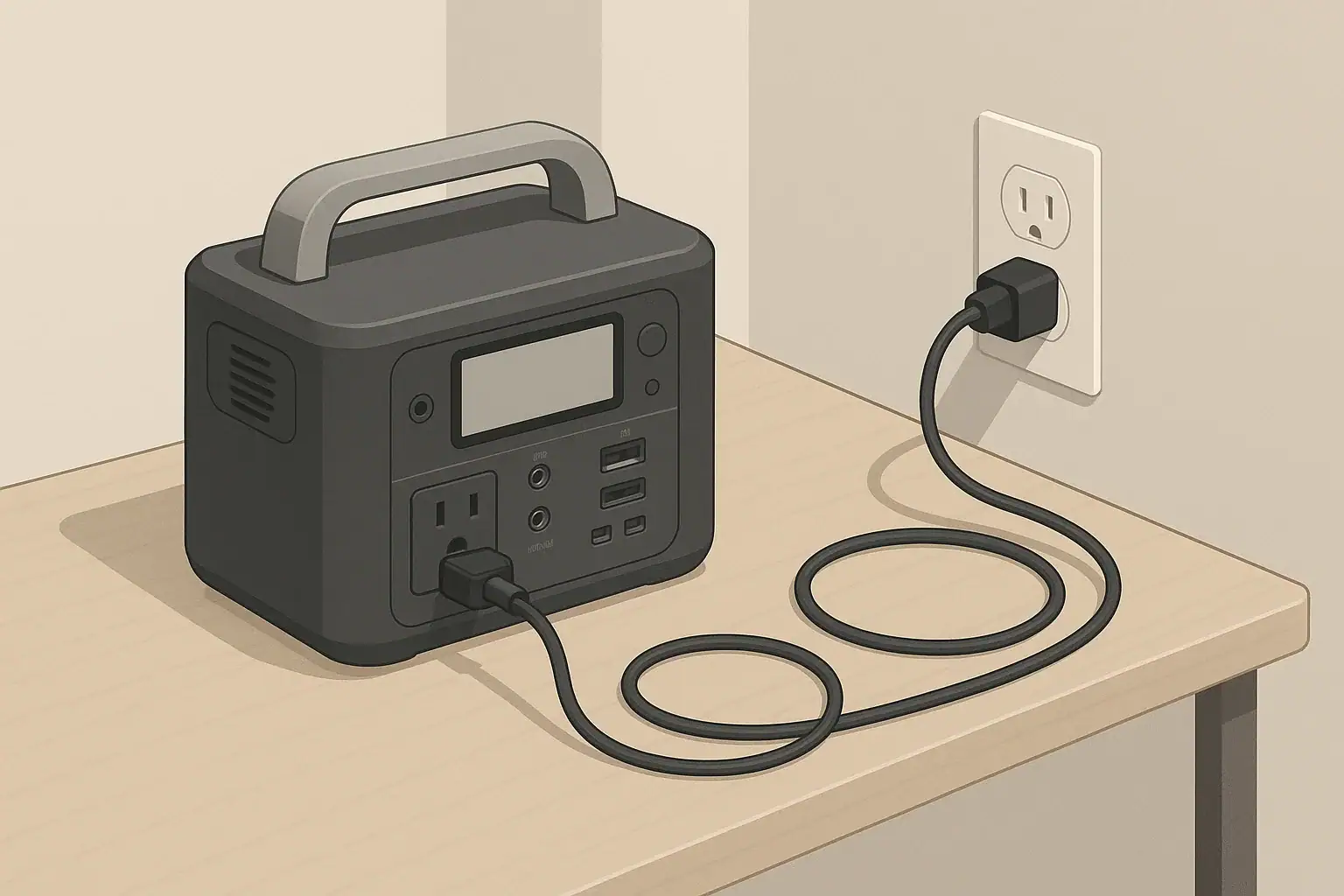
Neutral-ground bonding on a portable power station is simply how the neutral wire is connected (or not connected) to the safety ground inside the unit, and it only really matters when you plug the power station into a bigger wiring system like an RV panel or a home transfer switch. For most people who just plug appliances directly into the outlets on the power station, you do not need to change or add any bonding at all.
Still, understanding whether your power station uses a floating neutral or a bonded neutral helps explain odd behavior like GFCI trips, plug-in testers showing “faults,” or transfer switches not working as expected. It also helps you know when to bring in a qualified electrician instead of experimenting with adapters.
This guide walks through what neutral-ground bonding means, how it works in portable power systems, practical examples (home backup, RV, camping), common mistakes, safety basics, and the key specs to check on a spec sheet or user manual before you connect anything more complex than a simple appliance.
What neutral-ground bonding means and why it matters
In any AC power system, you have at least three conductors: hot, neutral, and equipment ground. Neutral carries return current during normal operation. The equipment ground is a safety path that is normally unused unless there is a fault. Neutral-ground bonding is the intentional connection between neutral and the equipment grounding conductor at one specific point in the system.
In a typical home in the United States, this bond is made in the main service panel. That single bond defines neutral as “0 volts” with respect to earth and gives fault current a low-resistance path so breakers or fuses trip quickly if something goes wrong.
Portable power stations also create 120V AC output, but they are not always wired like a house. Some have a floating neutral, where neutral is isolated from ground inside the unit. Others have an internal neutral-ground bond, or they allow a bond to be created with a specific adapter or connection method described in the manual.
Why this matters:
- It affects how GFCI devices behave and whether plug-in testers show “correct” wiring.
- It changes how safe or unsafe a DIY connection to an RV panel or home circuits might be.
- It can explain nuisance shutdowns or tripping when using surge strips or transfer switches.
Used as intended, both floating-neutral and bonded-neutral portable power stations can be safe. Problems usually appear when users try to make them behave like a permanently installed generator or home panel without understanding how the neutral and ground are already handled.
Key concepts: floating vs bonded neutral and how it works
Most of the confusion around neutral-ground bonding in portable power stations comes down to two designs: floating neutral and bonded neutral.
Floating neutral means the neutral conductor is not intentionally connected to the equipment ground inside the power station. The AC output “floats” with respect to earth. If you measure from either hot or neutral to a separate earth reference, you may see odd or unstable voltages, but the hot-to-neutral voltage is still around 120V.
Bonded neutral means the neutral conductor is tied to the equipment ground at one point inside the unit. This makes the power station behave more like a small standalone generator or a mini service panel, with neutral defined at ground potential.
Key behaviors to understand:
- Protective devices: Breakers, fuses, and GFCIs rely on predictable current paths. A bond point helps fault current flow in a way that trips protection quickly.
- Single bond rule: In a given system, neutral and ground should be bonded in only one place. Multiple bonds can create unintended current on grounding conductors and metal parts.
- Testers and indicators: Many three-light plug-in testers assume a bonded-neutral system. On a floating-neutral power station, they may show “open ground” or other unusual results even if the unit is operating as designed.
Neutral-ground bonding does not change how many watts the power station can supply, but it can change whether it is appropriate to back-feed a small subpanel, connect through a transfer switch, or plug into an RV shore-power inlet without extra planning.
The table below summarizes how floating and bonded neutrals typically interact with common use cases.
| Use case | Floating neutral behavior | Bonded neutral behavior | What usually needs attention |
|---|---|---|---|
| Plugging appliances directly into the power station | Normally works as designed; plug-in testers may show nonstandard readings | Also works as designed; behavior similar to a small generator | Generally none beyond following the manual and load limits |
| Using external GFCI power strips or cords | Some GFCI devices may not test as expected but can still trip on real faults | GFCIs usually behave more like on household circuits | Confirm GFCI test button works; avoid home-made bonding adapters |
| Feeding an RV distribution panel via shore-power inlet | May be acceptable if the RV is wired for a single bond elsewhere | Risk of multiple neutral-ground bonds if the RV also bonds neutral | Have an RV tech or electrician verify where the bond should be |
| Connecting through a home transfer switch to selected circuits | Transfer switch may expect a bonded neutral and behave oddly | More compatible with transfer switches designed for generators | Electrician should match transfer switch type to the power station design |
| Using plug-in outlet testers | Often shows “open ground” or “open neutral” even if safe | Typically shows “correct” wiring if wired properly | Treat confusing tester results as a cue to check the manual |
How bonding interacts with fault currents
When a hot wire touches a metal case or other grounded surface, you want a large, fast surge of current through the equipment ground so a breaker or fuse opens quickly. A proper neutral-ground bond in the system helps make that happen.
In a floating-neutral portable power station, the manufacturer may rely on different protection strategies, such as internal sensing and shutdown, double insulation, or GFCI-type electronics. That is why adding your own bond or adapters can confuse the built-in protections and create new hazards instead of fixing anything.
Real-world examples: home backup, RVs, and camping
Neutral-ground bonding becomes easier to understand when you look at specific setups. Here are three common scenarios with approximate numbers to illustrate what happens.
Example 1: Short home outage with direct plug-in loads
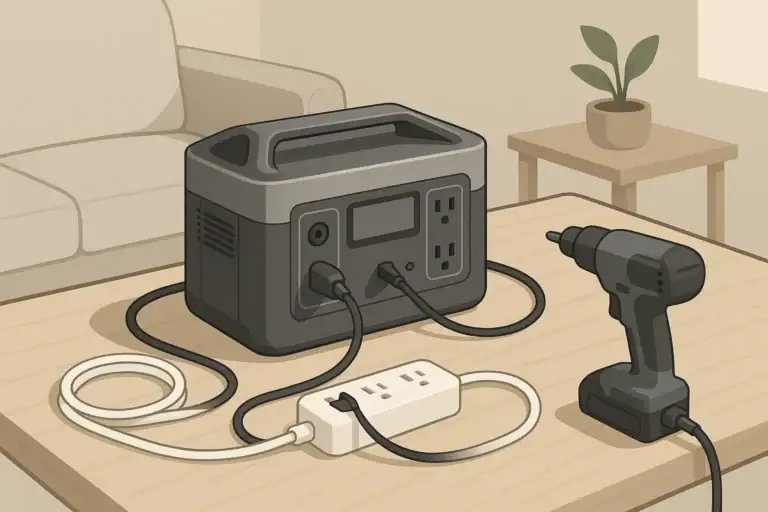
Scenario: A short neighborhood outage, and you want to power a refrigerator, a Wi-Fi router, a few LED lights, and charge phones and a laptop. You plug everything directly into the power station’s AC outlets or a simple power strip.
- Refrigerator: about 150 W running, 600–800 W surge
- Router and modem: about 20–30 W
- LED lights: about 20–40 W total
- Charging electronics: about 40–80 W
Total running load might be around 250–300 W with a brief surge under about 800 W. A power station with a 1,000 W continuous inverter and around 1,000 Wh of battery capacity can usually handle this. With roughly 80% practical AC efficiency, you might see about 800 Wh of usable energy, or roughly 2.5–3 hours at a 300 W average draw.
Bonding impact: Because everything is plugged directly into the unit, you typically do not change or worry about neutral-ground bonding. The manufacturer has already designed internal protections for this kind of use.
Example 2: RV or camper shore-power inlet
Scenario: You park an RV or camper and want to power the whole rig by plugging the portable power station into the RV’s shore-power cord.
- Loads may include a converter/charger, lights, fans, outlets, and possibly a small microwave or coffee maker.
- Total running loads might range from 200 W for light use up to 1,000 W or more if several appliances run at once.
Bonding impact: Many RVs are wired with the expectation that neutral and ground are bonded at the source (like a campground pedestal) and not inside the RV panel. If your power station has a floating neutral, the RV may effectively treat it like a subpanel, and the overall system can still have a single bond at the correct place. If the RV or an adapter adds its own bond and your power station is already bonded internally, you now have multiple bond points. That can put return current on grounding conductors and metal frames, which is not what you want.
In this scenario, the safe approach is to have an RV technician or electrician confirm where the neutral-ground bond should exist and how the RV is wired before relying on the power station as a primary source.
Example 3: Camping or jobsite near water
Scenario: You are camping or working outdoors and using the power station to run string lights, a small pump, or power tools near damp ground or water.
- Loads might be 50–300 W for lights and pumps, or 500–800 W for tools.
- You may use long extension cords and possibly a portable GFCI device.
Bonding impact: Here, the primary concern is shock protection. A floating-neutral design may behave differently than a house circuit, and some GFCI devices may not test the way you expect. However, the power station’s built-in protections are designed around its bonding scheme. Trying to “fix” tester readings by adding a neutral-ground bond adapter can bypass those protections and reduce safety in wet conditions.
In practice, it is safer to keep the power station itself away from water, use properly rated outdoor cords and GFCI devices, and follow the manual rather than altering bonding.
Common mistakes and troubleshooting cues
Most neutral-ground bonding problems show up as odd symptoms rather than obvious sparks or smoke. Recognizing the patterns can help you troubleshoot without creating new hazards.
Mistake 1: Assuming the power station is identical to a wall outlet
Portable power stations often shut down faster than a home breaker would. If your loads suddenly turn off:
- Check whether the total running watts exceeded the inverter’s continuous rating.
- Consider whether a motor load (pump, fridge, power tool) has a high surge that trips the inverter.
- Look for error codes or indicators on the display that point to overload or over-temperature.
Bonding rarely causes these shutdowns directly, but misunderstanding it can send you looking in the wrong place.
Mistake 2: Using plug-in testers as the final word
Simple three-light testers are designed for fixed home wiring with a bonded neutral. On a floating-neutral power station, they may show “open ground” or other warnings even when the unit is operating as intended. Treat those results as informational, not as a reason to rewire the power station.
Mistake 3: Adding DIY neutral-ground bonds or adapters
One of the most serious mistakes is using homemade bonding plugs, modified cords, or adapters that intentionally tie neutral and ground together outside of the locations specified by the manufacturer. This can:
- Create multiple bond points that put current on grounding conductors and metal frames.
- Interfere with built-in protective electronics that expect a floating neutral.
- Defeat some types of GFCI or fault detection inside the power station.
If you see repeated nuisance trips or confusing behavior, simplify the setup instead of adding adapters: shorten cord runs, remove extra strips, and try a single load directly on the power station to see if the problem persists.
Mistake 4: Complex RV or home backup hookups without expert review
Connecting a portable power station to a transfer switch, interlock, or RV panel can be safe, but only when the overall system has exactly one neutral-ground bond in the correct place. Common red flags include:
- Metal parts tingling when touched.
- GFCIs tripping randomly with light loads.
- Breaker behavior that changes when you switch between grid and power station.
These are cues to stop and have a qualified electrician or RV technician review the wiring and bonding, rather than experimenting further.
| Symptom | Likely cause | First things to check |
|---|---|---|
| Power station shuts off when a tool or fridge starts | Startup surge exceeds inverter capability | Compare load wattage to inverter surge rating; try starting large loads one at a time |
| GFCI trips immediately when connected to power station | Leakage current, multiple bonds, or incompatible bonding scheme | Remove extra adapters and strips; test with a single cord and one device |
| Outlet tester shows “open ground” or “open neutral” | Floating-neutral design confusing the tester | Check the manual for bonding notes; do not add a bond unless specified |
| Metal surfaces or RV frame feel tingly | Possible current on grounding conductors due to multiple bonds or faults | Disconnect the power station immediately and have wiring inspected |
| Charging slows or stops unexpectedly | High state of charge, high temperature, or internal protection limits | Check battery percentage, ventilation, and ambient temperature |
Safety basics with neutral-ground bonding in mind
Most safety practices around portable power stations are the same whether the neutral is floating or bonded, but bonding affects how protective devices behave when something goes wrong.
Placement and ventilation
- Set the power station on a stable, dry, level surface.
- Leave several inches of clearance around vents and fans for airflow.
- Avoid closed cabinets, piles of gear, or direct sun that can trap heat.
Overheating can trigger shutdowns or shorten component life, regardless of bonding.
Cords, extension cables, and power strips
- Use cords rated for at least the maximum load you expect, with heavier-gauge wire for longer runs.
- Keep cords as short as practical to reduce voltage drop and heat.
- Avoid daisy-chaining multiple power strips or reels.
Remember that extension cords and strips are part of the safety system. Damaged insulation or loose connections can defeat the benefits of proper bonding and grounding.
Wet or outdoor locations
- Keep the power station itself away from rain, splashes, and standing water.
- Use outdoor-rated cords and, where appropriate, GFCI devices near water.
- Do not stand in water or on wet ground while plugging or unplugging cords.
Whether neutral is floating or bonded, water lowers resistance and can turn minor faults into serious shock risks. Proper equipment and careful handling matter more than trying to force the power station to mimic household wiring.
Professional help for complex systems
Any time your setup involves:
- Transfer switches or interlock kits for home backup,
- RV or boat distribution panels, or
- Permanent or semi-permanent wiring changes,
you should plan on involving a qualified electrician or RV technician. Their job is to confirm that there is exactly one neutral-ground bond in the overall system and that protective devices still operate correctly with the portable power station as a source.
Maintenance and long-term use
Neutral-ground bonding does not change basic maintenance needs, but regular checks help ensure that outlets, cords, and protective features keep working the way they should over time.
Battery care and storage
- Avoid storing the battery at 0% or 100% state of charge for long periods.
- For multi-month storage, a moderate charge level (often around the middle of the range) is usually recommended.
- Top up the battery every few months to account for self-discharge.
Keeping the battery healthy ensures that protection circuits and inverters receive stable power when you need them most, such as during an outage.
Temperature and environment
- Store the power station in a cool, dry place away from direct sun.
- Avoid leaving it in a hot vehicle or unconditioned shed for long periods.
- In cold conditions, allow the unit to warm gradually before high-rate charging.
Extreme heat can permanently reduce capacity, while cold can temporarily reduce runtime and charging performance.
Periodic functional checks
- Every few months, plug in a small AC load (such as a lamp or fan) and verify that the inverter starts and runs normally.
- Check that any built-in GFCI or protection indicators work as described in the manual.
- Inspect cords, plugs, and outlets for discoloration, looseness, or damage.
If you use the power station with an RV or home circuits, schedule occasional professional inspections of those connection points, especially if you notice any unusual behavior like tingling metal, burning smells, or frequent tripping.
Practical takeaways and specs to look for
Neutral-ground bonding in portable power stations is mainly about system compatibility and fault behavior, not about how much power you have. When you plug devices directly into the unit, you usually do not need to change anything. When you connect into a larger wiring system, the goal is to keep a single, correctly located neutral-ground bond and preserve the function of protective devices.
Use the checklist below when evaluating a power station or planning a setup that might involve bonding questions.
Quick planning checklist
- List your key loads (refrigerator, router, lights, tools, etc.) and estimate both running and surge watts.
- Plan to stay under about 70–80% of the inverter’s continuous watt rating for routine use.
- Use short, appropriately rated extension cords; avoid unnecessary power strips and adapters.
- Place the power station on a stable, dry, ventilated surface away from water and direct sun.
- Never add or remove neutral-ground bonds yourself unless the manual explicitly instructs you how.
- For RVs, boats, and home transfer switches, assume you need a qualified electrician or technician to verify bonding.
- Treat any odd tester readings, tingling metal, or frequent GFCI trips as warnings to stop and investigate.
Specs to look for on a portable power station
When you read a spec sheet or manual, these items help you understand how the unit will behave in real-world setups:
- Inverter continuous watt rating: The maximum power it can supply for extended periods.
- Inverter surge rating: How much short-term power it can provide for motor starts and compressor kicks.
- Battery capacity (Wh): Combined with estimated efficiency, this tells you how long loads can run.
- Neutral-ground configuration: Whether the neutral is floating, bonded internally, or configurable.
- GFCI presence: Whether any AC outlets are GFCI-protected and how they are labeled.
- Approved connection types: Any notes about using RV inlets, transfer switches, or subpanels.
- Operating and storage temperature ranges: Helps you plan where and how to store the unit.
- Recommended maintenance interval: Guidance on how often to check or top up the battery.
By focusing on these specs and respecting the built-in bonding design, you can use a portable power station safely for home backup, RV travel, camping, and work sites without needing to modify the wiring inside the unit.
Primary reference: OSHA’s grounding and bonding fact sheet explains the distinction between grounding and neutral bonding for portable generators. A portable power station may be designed differently, so never add a bonding plug unless the manufacturer explicitly permits it for the intended setup.
Frequently asked questions
Which specs or features on a portable power station should I check to understand its neutral-ground bonding behavior?
Look for the neutral-ground configuration (floating, internally bonded, or configurable) on the spec sheet or in the manual, whether any AC outlets are GFCI-protected, approved connection types (RV inlet or transfer switch), and the inverter continuous and surge ratings. These items tell you how the unit will interact with external wiring and what connection methods are supported.
Is it safe to use a DIY neutral-ground bonding adapter or modified cord to force a bond?
No. Homemade bonding adapters can create multiple bond points, place return current on grounding conductors and metal frames, and interfere with the unit’s built-in protective electronics, increasing shock and fire risk. If bonding is required, follow manufacturer guidance or have a qualified electrician make any changes.
Does neutral-ground bonding significantly affect the safety of using a portable power station?
Bonding affects how fault current flows and how protective devices behave, so it matters for safety when the station is connected to larger wiring systems like an RV panel or home transfer switch. For direct appliance use from the station, the manufacturer’s designed protections are typically sufficient; for integrated setups, ensuring a single correct bond is important.
Why does a three‑light outlet tester show “open ground” or “open neutral” on my power station?
Many simple testers assume household wiring with a bonded neutral; on a floating-neutral power station they can show “open ground” or similar warnings even when the unit is operating as intended. Treat tester results as informational and consult the manual rather than adding bonds to force a “correct” reading.
How should I approach connecting a portable power station to an RV shore inlet or a home transfer switch?
Have an RV technician or a qualified electrician verify where the single neutral-ground bond should exist and whether the transfer switch is compatible with a floating or bonded neutral. Use only approved connection types and follow the manufacturer’s instructions instead of improvising with adapters.
What should I do immediately if metal parts feel tingly or GFCIs trip frequently when using the power station?
Disconnect the power station immediately and stop using the setup; these are signs of possible leakage, multiple bond points, or wiring faults. Have a qualified electrician or RV technician inspect the system before attempting to use it again.
Related guides
Browse this topic →
- Beginner-friendly sizing, runtime & specs
- Solar & charging (MPPT, fast charging, cables)
- Batteries (LiFePO4, cycles, care & storage)
- Safety, cold-weather performance, real-world tips
More in Safety
See all →- Childproofing a Portable Power Station at Home: Cables, Heat, Buttons, and Pets
- Can You Take a Portable Power Station on a Plane? Battery Limits and Safer Travel Planning
- What to Do If a Portable Power Station Gets Wet
- Portable Power Station Fire Safety Checklist for Apartments
- UL 2743 Certification Explained for Portable Power Stations
Keep reading
About this site
Portable Energy Lab publishes practical, independent guides about portable power—clear sizing, safe use, and real-world expectations.
Affiliate disclosure
Some links on this site may be affiliate links. If you buy through these links, we may earn a small commission at no extra cost to you. This helps support our content. Read our affiliate disclosure.