
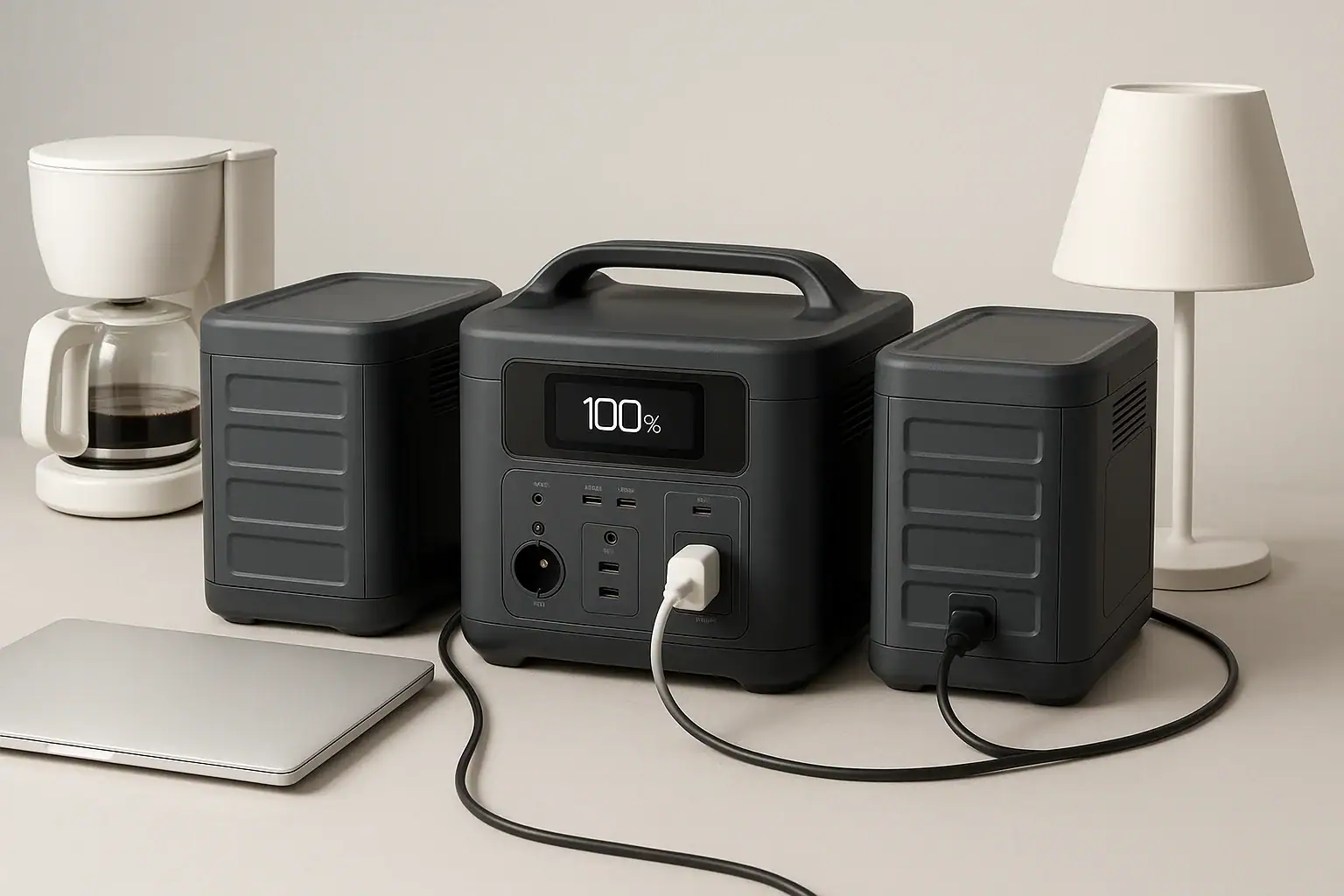
Expandable portable power stations are worth it if you need longer runtime without buying a second full power station, but they are not the best value for every user. The main question is whether extra battery capacity solves your real need better than a larger single unit, a smaller backup unit, or simply reducing your loads.
These systems matter most when your appliances run for hours, not minutes. If you are comparing capacity, extra battery cost, inverter watts, solar input, surge watts, and expected runtime, an expandable setup can be flexible and efficient. If you only charge phones, lights, laptops, or occasional small devices, a fixed-capacity power station may be simpler and cheaper.
The best answer depends on what you plan to power, how long you need it to run, how often you will expand the system, and whether the base unit can actually handle the loads you care about.
What expandable portable power stations mean and why they matter
An expandable portable power station is a battery-based power station that can connect to one or more external battery modules. The main unit normally contains the inverter, display, outlets, charging ports, battery management system, and inputs for wall or solar charging. The added batteries increase stored energy, usually measured in watt-hours, while relying on the base unit to deliver AC and DC power.
This is different from owning two separate power stations. With an expandable system, extra batteries typically feed one central inverter and one set of outlets. That can make operation easier because you manage one system instead of splitting devices between multiple units. It can also reduce clutter during an outage, camping trip, remote work setup, or mobile jobsite use.
The reason expandability matters is simple: battery capacity is what determines runtime, while inverter output determines what you can run at one time. A power station with a strong inverter but limited capacity may start a refrigerator, microwave, or power tool, yet run out quickly. Adding compatible battery modules can extend the runtime without changing the main unit.
However, expandability is not automatically a better deal. Extra batteries can be expensive, heavy, and tied to a specific connector ecosystem. If you never buy the expansion battery, you may have paid for a feature you do not use. If you buy too much capacity, you may carry and store more battery than your actual needs justify.
How expandable power stations work
Most expandable systems are built around a base power station plus one or more battery expansion packs. The expansion pack is usually a battery-only module. It does not always include AC outlets or a full inverter. Instead, it connects to the base unit through a proprietary high-current cable, allowing the main power station to draw from the combined stored energy.
The key concept is that extra batteries usually increase energy capacity, not output power. If the base unit has a 1,800-watt inverter, adding batteries may extend how long it can supply 1,800 watts, but it usually will not turn that inverter into a 3,000-watt inverter. The same idea applies to surge watts. Expansion capacity can help sustain loads longer, but the appliance still has to be within the inverter’s starting and running limits.
Charging behavior also matters. Some systems can charge the base unit and expansion batteries together from a wall outlet, solar panels, a vehicle socket, or another supported input. Others may charge more slowly when multiple batteries are attached. Solar input can become a bottleneck if the total battery capacity grows faster than the maximum charging rate. A very large battery bank paired with modest solar input may take multiple sunny days to refill.
Chemistry and battery management are also part of the value. Lithium iron phosphate batteries are commonly favored for longer cycle life, while other lithium chemistries may offer lower weight for a given capacity. In either case, the battery management system should coordinate charging, temperature monitoring, and protection features across the base unit and added modules.
| Concept | What it means | Why it affects value |
|---|---|---|
| Capacity | Stored energy, often 1,000 to 4,000 watt-hours with expansion | Higher capacity increases runtime for long outages or overnight loads |
| Inverter output | Continuous AC power, such as 1,000 to 3,000 watts | Determines which appliances can run at the same time |
| Surge output | Short burst power for motors and compressors | Helps start refrigerators, pumps, and some tools |
| Solar input | Maximum charging power from panels | Controls how quickly a larger battery bank can be refilled off-grid |
| Expansion limit | Maximum number or capacity of add-on batteries | Shows whether the system can grow with future needs |
Real-world examples of when expansion is worth it
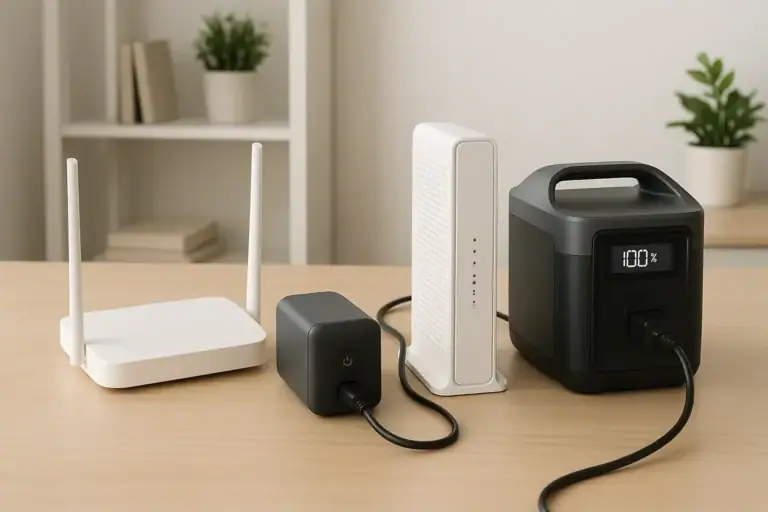
For home backup, an expandable portable power station can make sense when you want to keep essential loads running longer. A refrigerator, internet modem, router, a few lights, and device charging may draw a modest amount of power on average, but they need energy over many hours. A base unit may cover a short outage, while one or two battery modules may stretch that into overnight or multi-day support if loads are managed carefully.
For medical or comfort-related devices, expansion can also be valuable, but sizing should be done conservatively. Devices that run continuously can drain a small power station faster than expected. Users should check the actual wattage, startup behavior, and required runtime, then leave a margin for battery losses and cold or hot conditions. Critical medical needs should also have a broader backup plan, not depend on one portable device alone.
For camping and overlanding, expansion is useful when you run a fridge, lights, camera gear, radio equipment, induction cooking, or fans for several days. A modular setup lets you bring only the base unit for a short trip and add a battery for longer travel. The trade-off is weight. A system that is easy to move at 30 pounds may become much less portable once expansion batteries are added.
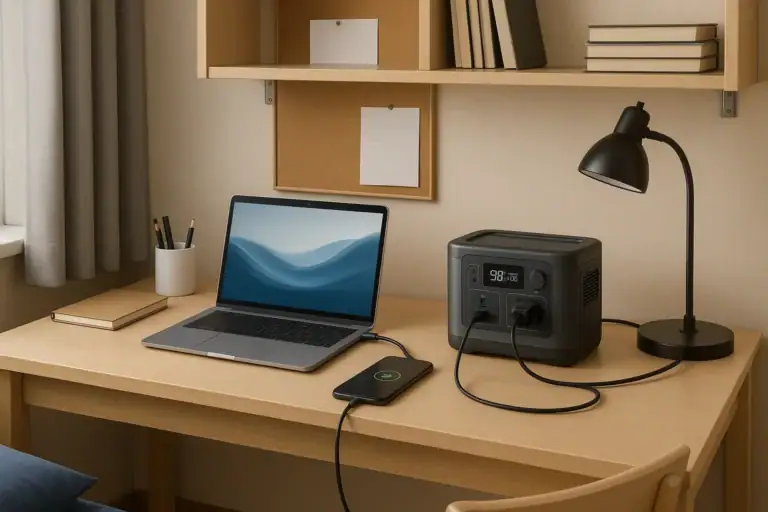
For remote work, film production, events, or field service, expandable capacity can reduce downtime. Running laptops, monitors, networking equipment, battery chargers, LED lighting, or small tools for a full day may require more watt-hours than a compact unit can store. In these cases, the ability to add capacity without changing the inverter and outlet layout can be convenient.
For occasional phone charging, emergency lights, tablets, and small electronics, expansion is usually less compelling. A smaller fixed-capacity station or even a compact power bank may cover those needs at lower cost and weight. Expandability is most valuable when the base unit is already the right size for your loads and the only missing piece is runtime.
Common mistakes and troubleshooting cues
The most common mistake is assuming more battery capacity means more power output. Capacity and output are related but not the same. If a coffee maker, heater, pump, or power tool exceeds the inverter’s continuous or surge rating, an extra battery will not fix overload shutdowns. In that case, the issue is output rating, not expansion capacity.
Another mistake is undersizing solar input. A large expanded battery bank may look attractive for off-grid use, but if the solar input is limited, recharging can be slow. For example, a system with several thousand watt-hours of capacity and only a few hundred watts of real-world solar harvest may not fully recover each day. Weather, panel angle, shade, and season can reduce charging further.
Buyers also sometimes overlook compatibility. Expansion batteries are usually not universal. Connector type, voltage range, communication protocol, firmware behavior, and battery chemistry can limit what works together. It is not safe to improvise cables, adapters, or battery packs to force compatibility. Use only supported expansion methods for the system.
Runtime estimates can be another source of confusion. A 1,000-watt-hour battery does not always deliver a full 1,000 watt-hours to AC appliances. Inverter losses, standby draw, temperature, battery age, and high-load operation reduce usable energy. A practical estimate might use 80 to 90 percent of rated capacity for AC loads, then divide by the device’s average watts.
Troubleshooting cues often point to the real problem. If the power station shuts off immediately when a motor starts, check surge watts. If it runs the load but drains quickly, check capacity and average wattage. If it charges slowly, check input limit, cable connection, panel conditions, and whether multiple batteries are sharing the same charger. If an added battery is not recognized, stop and review compatibility rather than attempting modifications.
Safety basics for expanded battery systems
Expandable portable power stations store substantial energy, so safe use matters even when the system is marketed as plug-and-play. Follow the manufacturer’s supported connection method, use approved cables, and keep connectors clean, dry, and fully seated. Do not open the power station, alter battery packs, bypass protection circuits, or use improvised high-current adapters.
Ventilation is important. Even efficient inverters produce heat under load and during charging. Keep the unit away from bedding, sealed cabinets, direct heat sources, standing water, and flammable materials. Avoid stacking equipment in a way that blocks cooling vents. If a unit displays temperature warnings or shuts down from heat, reduce the load and let it cool in a safe location.
Be careful with high-demand appliances. Space heaters, air conditioners, microwaves, kettles, hair dryers, pumps, and large power tools can draw heavy continuous power or high startup surges. Confirm that the running watts and surge watts fit the base unit’s ratings before relying on the setup. Expansion batteries may allow longer operation, but they do not remove the need to stay within electrical limits.
For home backup, avoid unsafe backfeeding. Do not plug a power station into a wall outlet to energize home circuits. If you want to connect backup power to selected household circuits, use properly installed equipment and consult a qualified electrician. Portable power stations are safest when powering devices directly from their outlets or through approved connection methods designed for that purpose.
Charging should also stay within supported input ranges. Solar panels must match the acceptable voltage and current window of the power station. Too high a voltage can damage equipment or create a hazard. Vehicle charging and generator charging should follow the supported input type and cable rating.
Maintenance and storage considerations
Expandable systems need more planning than a single small power station because there are more modules, cables, and state-of-charge levels to manage. For long-term storage, keep the base unit and expansion batteries in a cool, dry place away from direct sun and moisture. Moderate temperatures are better for battery life than hot garages, freezing sheds, or vehicle storage in extreme weather.
Many lithium battery systems store best at a partial charge rather than completely full or completely empty. A practical storage range is often around 40 to 80 percent, with periodic checks every few months. If the station self-discharges or powers a display, wireless module, or standby circuit, the battery may slowly drop over time. Letting lithium batteries sit empty for long periods can reduce capacity or prevent normal operation.
Cables and connectors deserve attention. Expansion cables carry high current and should not be crushed, kinked sharply, exposed to water, or used if damaged. Before connecting modules, check for debris or moisture on connectors. Keep protective caps in place when cables are not in use if the system includes them.
It is also worth testing the full setup before an outage or trip. Connect the expansion battery, charge the system, run typical loads, and observe approximate runtime. This helps reveal whether the base unit recognizes the extra battery, whether the load is within limits, and whether your runtime estimate is realistic. Testing under calm conditions is much better than learning during a storm, work deadline, or cold night outdoors.
Battery age matters. Over years and cycles, usable capacity gradually declines. A modular system can still be useful, but old and new modules may not always behave exactly the same. Keep expectations realistic and avoid assuming that an older expanded setup will deliver the same runtime it did when new.
| Care item | Practical target | Reason |
|---|---|---|
| Storage charge | About 40 to 80 percent for long pauses | Helps reduce stress compared with empty or full storage |
| Storage temperature | Cool, dry indoor location when possible | Heat and freezing conditions can shorten battery life |
| Inspection interval | Every 2 to 3 months during storage | Confirms charge level and catches cable or connector issues |
| Runtime test | Test with normal loads before relying on it | Reveals realistic runtime and overload problems |
| Connector care | Keep dry, clean, and protected | Supports safe high-current operation |
Practical takeaways and the specs that matter
Related guides: Portable Power Station Expansion Batteries: When Extra Capacity Makes Sense • How Battery Expansion Changes Runtime, Weight, and Charging Time • Modular vs All-in-One Portable Power Stations: Pros, Cons, and Best Use Cases
Expandable portable power stations are worth it when runtime is the main limitation and the base unit already has enough inverter output for your appliances. They are especially useful for longer outages, repeated off-grid use, field work, and modular travel setups where you may want to add or remove battery capacity depending on the situation.
They are less compelling when your loads are small, your budget is tight, you need more inverter power rather than more runtime, or you do not plan to buy the expansion batteries. In those cases, a fixed-capacity model, a larger single unit, or a second independent power station may be easier to justify.
The most practical way to decide is to list your devices, estimate average watts, choose a desired runtime, and compare that energy need with the usable capacity of the base unit and expansion modules. Then check whether the inverter, surge rating, charging input, weight, and storage requirements still fit your use case.
Specs to look for
- Base battery capacity: Look for enough watt-hours to cover short use by itself, such as 700 to 2,000 watt-hours, because the base unit should still be useful without extra modules.
- Maximum expanded capacity: Look for a clear expansion ceiling, such as 2,000 to 8,000 watt-hours, because this determines whether the system can support overnight or multi-day runtime.
- Continuous inverter watts: Look for a rating above your combined running loads, often 1,500 to 3,000 watts for appliance backup, because expansion batteries usually do not increase inverter size.
- Surge watts: Look for enough short-burst output for motors and compressors, often roughly double the continuous rating, because refrigerators, pumps, and tools may spike at startup.
- Solar input range: Look for practical charging capacity, such as 400 to 1,600 watts depending on battery size, because large expansions need enough input to recharge in a useful timeframe.
- AC recharge speed: Look for adjustable or high enough wall charging, such as 800 to 1,800 watts, because a large battery bank can take many hours to refill at low input power.
- Battery chemistry and cycle life: Look for long-cycle lithium chemistry when weight is acceptable, because frequent expansion use benefits from better long-term capacity retention.
- Expansion cable and module design: Look for secure keyed connectors, manageable cable length, and stackable or easy-to-place modules, because daily usability depends on safe physical setup.
- Weight per module: Look for a module weight you can actually move, such as 20 to 60 pounds each, because expandable systems can become stationary once fully built out.
- Warranty and service support: Look for clear coverage on both the base unit and expansion batteries, because the system depends on compatibility between multiple components over time.
In short, expandability is a strong feature when it matches a real runtime need and the other specifications are properly sized. It is not a magic upgrade for every power station. Treat it as a modular capacity strategy, not a substitute for checking output, charging limits, safety, and long-term usability.
Frequently asked questions
Are expandable portable power stations better than buying a larger single unit?
They can be better if you want flexibility to start smaller and add capacity later. A larger single unit may be simpler and sometimes cheaper if you already know your full power needs. The better choice depends on whether you value modular growth or one-time simplicity.
What specs matter most when comparing expandable portable power stations?
The most important specs are inverter output, surge watts, usable battery capacity, maximum expansion capacity, and charging input speed. You should also check connector compatibility, battery chemistry, weight, and warranty coverage. Capacity affects runtime, while inverter ratings determine what appliances the system can actually run.
What is the most common mistake people make with expandable systems?
The biggest mistake is assuming extra battery modules increase power output. Expansion usually extends runtime, but it does not raise the inverter’s wattage limit. Buyers also sometimes overlook solar input limits, which can make a large battery bank slow to recharge.
Are expandable portable power stations safe to use at home?
Yes, when used as designed and with approved cables and charging methods. Keep the unit ventilated, avoid modifying batteries or connectors, and do not backfeed household circuits through a wall outlet. For whole-home or circuit-level backup, use properly installed equipment and professional guidance.
How do I know if expansion is worth the extra cost?
Expansion is usually worth it when your main problem is runtime, not output power. It makes the most sense for longer outages, off-grid trips, or work setups that need many hours of energy. If you only need short-term charging for small devices, a fixed-capacity unit is often the better value.
Can I mix different battery modules with the same power station?
Usually not unless the manufacturer explicitly supports it. Expansion batteries often require matching voltage, communication, and connector standards to work correctly. Mixing unsupported modules can cause charging problems, recognition errors, or safety issues.
Related guides
Browse this topic →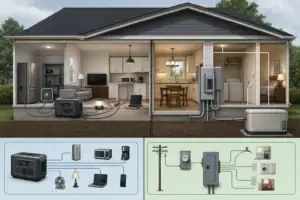
- Beginner-friendly sizing, runtime & specs
- Solar & charging (MPPT, fast charging, cables)
- Batteries (LiFePO4, cycles, care & storage)
- Safety, cold-weather performance, real-world tips
More in Comparison
See all →Keep reading
About this site
Portable Energy Lab publishes practical, independent guides about portable power—clear sizing, safe use, and real-world expectations.
Affiliate disclosure
Some links on this site may be affiliate links. If you buy through these links, we may earn a small commission at no extra cost to you. This helps support our content. Read our affiliate disclosure.