
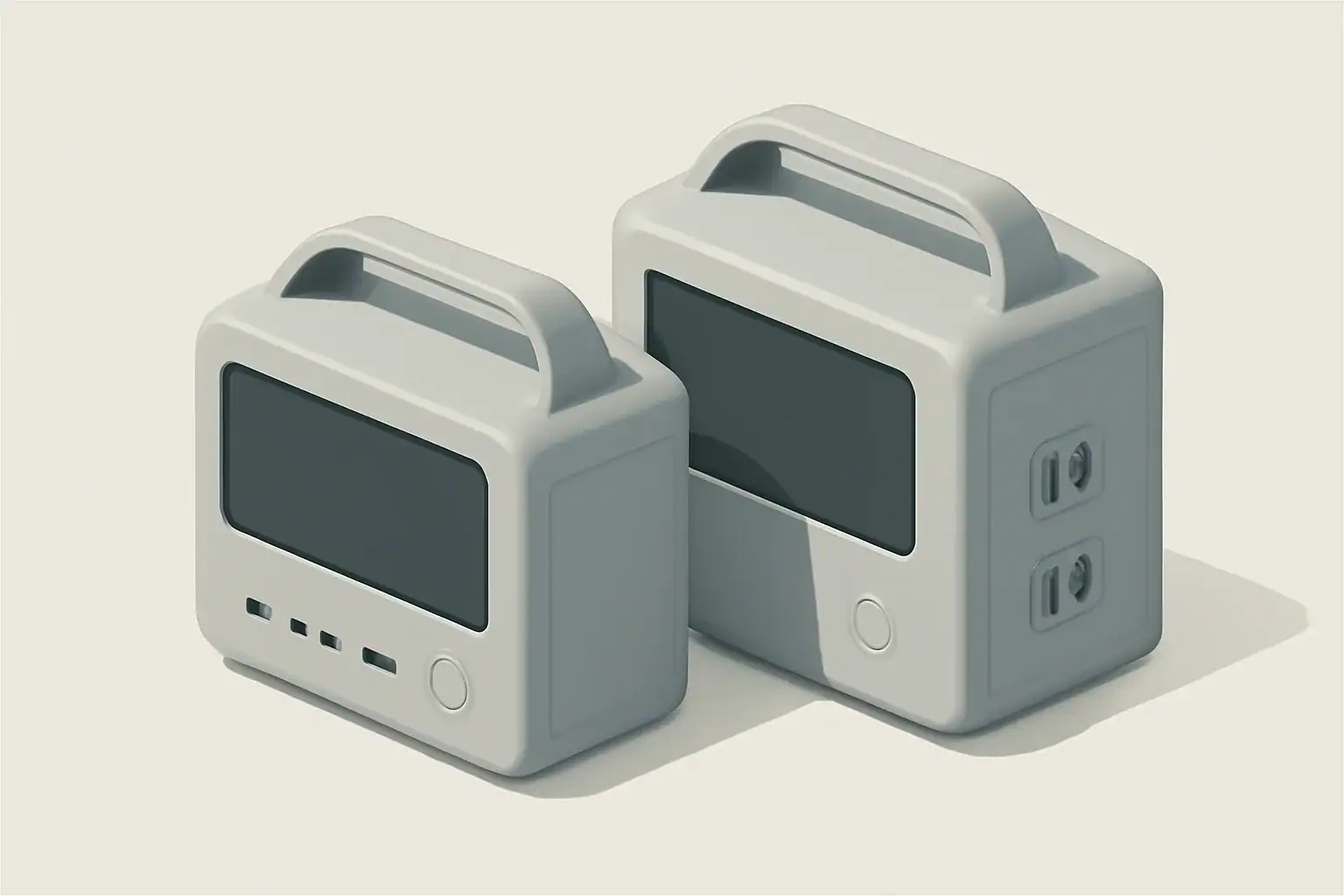
A portable power station can replace a UPS for some non-critical electronics, but it is not a universal, interruption-free substitute for every uninterruptible power supply. Whether it works depends on transfer time, waveform quality, runtime, and how sensitive your devices are to even split-second power drops.
If you mainly want to keep home internet, a laptop, or a TV running during power outages, a properly sized portable power station can be a practical UPS alternative that also covers longer blackouts. If you need guaranteed seamless power for servers, medical equipment, or industrial controls, a dedicated UPS remains the safer choice. The sections below explain what each device is designed to do, how they behave during outages, and how to test and size a portable power station before you rely on it as a UPS replacement.
What These Devices Are and Why the Difference Matters
Both portable power stations and UPS units are battery-backed power sources, but they are built around different priorities and assumptions about how long the power will be out and how sensitive your equipment is.
A UPS (uninterruptible power supply) is built to keep electronics running through short power interruptions with minimal or no visible glitch. Its job is to smooth out voltage dips, filter electrical noise, and give you a few minutes to ride through a blip or shut down cleanly.
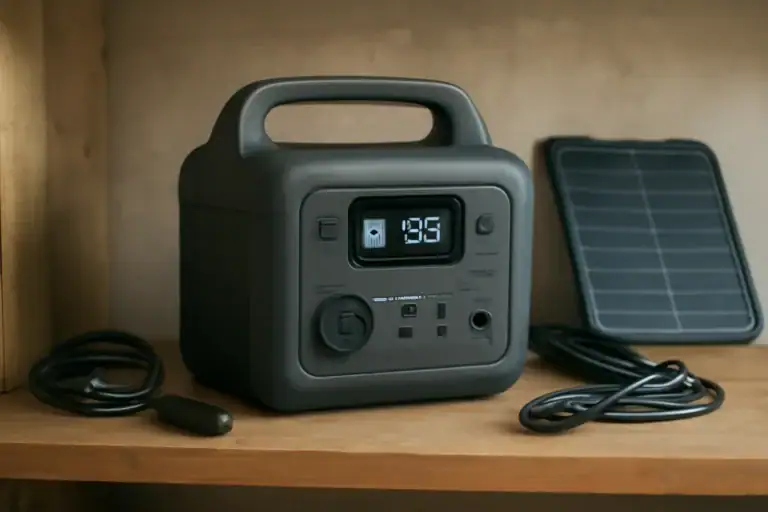
A portable power station is essentially a large rechargeable battery with an inverter and multiple outlets. It is designed to run devices for hours, be moved around easily, and recharge from several sources such as wall power, vehicle outlets, or solar. Seamless switchover is usually a secondary feature, if it is present at all.
This difference in design goals matters because:
- A UPS focuses on continuity and power quality over short periods.
- A portable power station focuses on capacity and versatility over longer periods.
- Using the wrong one can cause surprise shutdowns, corrupted files, or overloaded circuits, even if the wattage numbers look fine on paper.
Understanding these roles helps you decide where a portable power station can safely stand in for a UPS and where you still need a dedicated uninterruptible power supply.
How UPS Units and Portable Power Stations Actually Work
Both devices combine a battery, an inverter, and control electronics, but they are wired and programmed differently. Knowing how they behave when grid power fails is the key to deciding if a portable power station can act like a UPS in your setup.
UPS: Built for Continuity and Conditioning
- Fast transfer or no transfer gap: Many standby and line-interactive UPS units keep the inverter ready so they can switch to battery in a few milliseconds. Online (double-conversion) UPS units run the inverter all the time, so there is effectively no transfer event when the grid fails.
- Power conditioning: A UPS usually includes voltage regulation, surge protection, and filtering to smooth out spikes, brownouts, and electrical noise that can bother computers and networking gear.
- Short, predictable runtime: The internal battery is sized for minutes, not hours. This is enough to ride through brief outages or shut down equipment in a controlled way.
- Status and alarms: Many UPS units provide audible alarms, basic displays, and sometimes USB or network connections so a computer can shut itself down when the battery runs low.
Portable Power Station: Built for Energy and Flexibility
- Larger energy storage: Capacity is usually listed in watt-hours (Wh) and is often several times that of a small office UPS. This is what lets a portable power station run a fridge or router for hours.
- Multiple outputs: AC outlets, USB ports, and 12 V DC outputs let you run laptops, phones, lights, and small appliances at the same time.
- Flexible charging: Many units can be charged from wall power, a vehicle outlet, and sometimes solar panels, which is useful for extended outages or off-grid use.
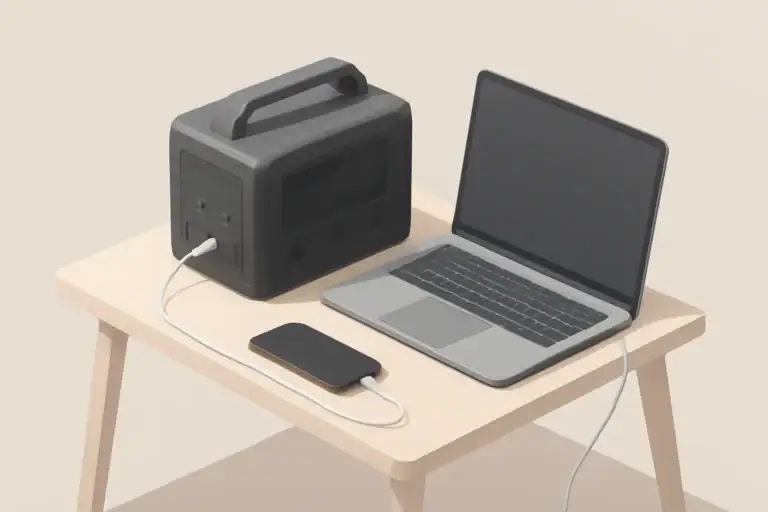
- Pass-through or “UPS mode”: Some models can charge from the wall while powering devices. When the grid fails, they switch to battery. However, transfer time, maximum load in this mode, and long-term duty rating vary widely.
Key Technical Differences That Affect Replacement
The following factors largely determine whether a portable power station can act as a UPS replacement for a specific set of devices.
| Feature | Typical UPS | Typical Portable Power Station |
|---|---|---|
| Primary purpose | Short, seamless backup and power conditioning | Portable, longer-duration power for mixed loads |
| Transfer behavior | 0–10 ms, often optimized for computers | May have a short but noticeable transfer delay |
| Typical runtime at 50 W load | 5–30 minutes | 1–10+ hours |
| Output waveform | Pure sine or stepped waveform tuned for IT gear | Often pure sine, but quality and regulation vary |
| Common loads | Desktops, servers, switches, routers | Appliances, electronics, tools, backup for non-critical loads |
| Charging options | AC wall outlet only | AC wall, vehicle, sometimes solar or generator |
For interruption-sensitive devices such as desktop PCs and small servers, the transfer behavior and waveform quality of a UPS are usually more predictable. For devices that simply need power for hours, such as lights or a refrigerator, the larger battery of a portable power station is often more useful.
Real-World Scenarios: When a Portable Power Station Can and Cannot Replace a UPS
Looking at concrete setups makes it easier to see where a portable power station can stand in for a UPS and where it should only be a supplement.
Home Internet and Wi-Fi
Goal: Keep a modem and router running during outages so phones, laptops, and smart devices stay online.
- Typical combined draw: 15–30 W for a modem and Wi-Fi router.
- Most consumer networking gear tolerates a short transfer delay without issues.
- Desired runtime: 2–8 hours for comfort during a blackout.
Can a portable power station replace a UPS here? Often yes. Look for a unit with pass-through capability, pure sine wave output, and at least 150–300 Wh of usable capacity for multi-hour runtime. In many homes, this is one of the best use cases for using a portable power station like a UPS.
Single Desktop PC and Monitor
Goal: Avoid data loss and allow time to save work when the power fails.
- Typical draw: 150–300 W for a modest desktop and monitor, more for gaming or workstation setups.
- Many PCs will reboot if power is lost for more than a few milliseconds.
- Desired runtime: 5–30 minutes to save work and shut down.
A traditional UPS is optimized for this scenario. It is specifically designed to switch fast and maintain stable voltage for computers. A portable power station can work if the transfer time is short enough and you test it in advance, but there is more uncertainty. If your top priority is preventing reboots, a UPS is usually the safer primary device, with a portable power station used separately for longer-duration loads.
Refrigerator or Small Freezer
Goal: Keep food cold during an extended outage.
- Running power: often 60–150 W for a modern fridge or chest freezer.
- Startup surge: can be 3–6 times the running power for a second or two.
- Desired runtime: several hours or more, depending on outage length and how often the door is opened.
A small office UPS is rarely sized to handle compressor surges or all-day runtime. A portable power station with enough surge rating and watt-hours is usually a better fit. You still need to confirm that the surge rating comfortably exceeds the fridge’s startup draw and that the battery capacity is large enough to cover the typical duty cycle (the compressor does not run continuously).
Network Closet or Small Server Rack
Goal: Keep switches, firewalls, and small servers running without interruption, often with remote management and clean shutdown.
- Loads often include devices that do not tolerate any visible power blip.
- There may be requirements for logging, alerts, and automatic shutdown.
In this case, a dedicated UPS with documented transfer characteristics and monitoring support is usually the right tool. A portable power station can be added for extra runtime, but it should not replace the UPS function for critical networking or server hardware.
Quick Runtime Estimation for Portable Power Stations
To see whether a portable power station has enough capacity to act as a UPS alternative for your setup, you can use a simple runtime estimate.
- List each device you want to run and note its wattage.
- Add the wattages to get total power draw in watts.
- Multiply total watts by the number of hours you want to run to get watt-hours (Wh).
- Divide by 0.9 to account for typical inverter losses.
- Add 20–30% extra for safety margin and battery aging.
| Load Scenario | Approx. Power Draw | Battery Capacity | Estimated Runtime |
|---|---|---|---|
| Modem + router | 25 W | 300 Wh | About 9–10 hours |
| Desktop PC + monitor | 200 W | 600 Wh | About 2.5–3 hours |
| Mini fridge | 80 W average | 500 Wh | About 5–6 hours |
| TV + streaming box | 120 W | 500 Wh | About 3.5–4 hours |
These are rough planning numbers, but they help you see quickly whether a given portable power station is in the right ballpark for your backup goals.
Common Mistakes and Troubleshooting When Using a Portable Power Station Like a UPS
Many issues arise when people assume a portable power station will behave exactly like a UPS. Recognizing common problems and what to check can save time and frustration.
Frequent Mistakes
- Assuming “UPS mode” is seamless: Some portable power stations have a noticeable transfer delay even when marketed for backup use. Sensitive devices can still reboot.
- Ignoring surge power needs: Compressors, pumps, and some power tools need much higher startup power than their running wattage. If the surge exceeds the inverter rating, the unit may shut down.
- Overloading by outlet count: Seeing several AC outlets and plugging in too many devices without checking total watts against the continuous rating.
- Leaving the unit in pass-through 24/7 without checking the manual: Not all portable power stations are designed for constant, always-on pass-through operation.
- Poor placement and ventilation: Putting the unit in a closed cabinet or tight corner, causing overheating and unexpected shutdowns.
- Relying on estimates only: Skipping real-world tests and discovering during a real outage that runtime or transfer behavior is not what you expected.
What to Check When Something Goes Wrong
| Symptom | Likely Cause | First Things to Check |
|---|---|---|
| Computer or router reboots during an outage | Transfer time too long or no true UPS behavior | Verify transfer time, test with a non-critical device, consider a dedicated UPS for that load |
| Unit shuts off when fridge or pump starts | Startup surge exceeds inverter’s peak rating | Compare device startup watts to surge rating, reduce load, or move the appliance to another backup source |
| Runtime far shorter than expected | Actual load is higher than assumed or battery not fully charged | Measure or recalculate total watts, confirm state of charge, unplug non-essential devices |
| Fan runs constantly and case feels hot | High continuous load or restricted airflow | Reduce load, move the unit to an open area, keep vents clear on all sides |
| Buzzing from speakers or odd behavior from electronics | Waveform or electrical noise issues | Confirm pure sine output, avoid running sensitive audio or specialty gear if issues persist |
| Battery appears to drain while idle | Standby consumption or normal self-discharge | Turn outputs fully off, power down the unit when not in use, top up charge every few months |
Simple At-Home Tests Before You Rely on It
Before you trust a portable power station as a UPS replacement, run these tests with non-critical devices:
- Transfer test: Plug in a lamp or small fan, turn it on, then unplug the wall input to simulate a blackout. Watch carefully for flicker, stops, or restarts.
- Runtime test: Charge the unit fully, connect your intended backup devices, and run them until the battery is nearly empty. Compare actual runtime to your earlier calculation.
- Heat and noise test: Run at your expected load for at least 30–60 minutes. Check whether fan noise and case temperature are acceptable for the room where you plan to use it.
Documenting these results gives you a realistic picture of how the portable power station will behave when the power really goes out.
Safety Basics for UPS Units and Portable Power Stations
Both UPS units and portable power stations store significant energy and can deliver high currents. Treat them like any other high-capacity electrical device in your home.
Electrical Safety
- Stay within power ratings: Do not exceed the continuous or surge wattage listed for the unit. Leaving a margin (for example, using no more than 70–80% of the continuous rating) improves reliability.
- Avoid daisy-chaining power strips: Plugging one strip into another or stacking adapters on a single outlet increases the risk of overload and loose connections.
- Respect grounding: Use grounded outlets when available and avoid defeating ground pins on three-prong plugs.
- Keep units dry: Do not place them where leaks or spills are likely. In basements, elevate them above floor level in case of minor flooding.
Battery and Thermal Safety
- Ensure ventilation: Keep air vents clear and maintain a few inches of space around the unit. Do not cover it with clothing, blankets, or other insulating materials.
- Avoid extreme temperatures: High heat accelerates battery wear, and very low temperatures reduce capacity and can affect charging behavior.
- Watch for damage: If you notice swelling, unusual odors, discoloration, or cracking, disconnect loads and stop using the device until it has been inspected or replaced.
- Use the intended charger: Stick with the supplied or approved charging equipment to avoid overcharging or incompatible voltages.
Placement and Use in the Home
- Keep away from flammable materials: Avoid placing units on soft furnishings or against curtains and other easily ignited surfaces.
- Manage cables: Route cords neatly to avoid tripping hazards and accidental unplugging during an outage.
- Supervise around children and pets: Prevent access to outlets, buttons, and cables that might be pulled or chewed.
Long-Term Use, Maintenance, and Storage
Whether you are using a UPS, a portable power station, or both, long-term performance depends on how you maintain the battery and where you store the equipment between outages.
Battery Care Over Time
- Avoid frequent deep discharges: Regularly draining the battery to 0% shortens its lifespan. When possible, recharge before it is completely empty.
- Store at moderate charge: For rarely used backup units, storing around half charge is often easier on the battery than leaving it full or empty for months.
- Exercise the battery periodically: Every few months, run the unit under a light to moderate load, then recharge. This also confirms it still works as expected.
Storage Conditions
- Cool and dry: Avoid very hot spaces such as attics and very damp spaces such as unfinished basements.
- Off the floor and protected: Use a shelf, stand, or sturdy table to keep the unit away from minor spills and to reduce dust intake.
- Easy to access in the dark: Store backup power where you can reach it quickly when the lights go out, without moving heavy furniture or digging through clutter.
Periodic Checks
- Visual inspection: Look for damaged cords, loose plugs, cracked housings, or discoloration around vents and outlets.
- Function test: At least once or twice a year, simulate an outage and confirm that your priority devices stay powered for the expected time.
- Track runtime changes: If runtime drops significantly under the same load, the battery may be aging and you may need to adjust expectations or plan for replacement.
Many UPS units have user-replaceable batteries, while most portable power stations use sealed packs that require professional service or full unit replacement when capacity becomes too low.
Practical Takeaways and Specs to Look For
For many households, the best approach is to match each device to the backup power type it truly needs. A portable power station can replace a UPS for non-critical loads that can tolerate a brief interruption, while a dedicated UPS should still protect equipment that must never unexpectedly shut off.
In general:
- Use a UPS for mission-critical or interruption-sensitive loads such as servers, desktop PCs with important work, and essential networking gear.
- Use a portable power station for longer runtime on non-critical loads such as home internet, entertainment devices, lights, and many small appliances.
- Combine both if you need seamless switchover plus many hours of runtime, for example by keeping sensitive electronics on a UPS and using the portable power station for everything else.
Specs Checklist When Considering a Portable Power Station as a UPS Replacement
When you evaluate a portable power station for UPS-like use, work through this checklist against the specific devices you plan to back up:
- Transfer time or UPS behavior: Look for a clearly stated transfer time or an indication that the inverter runs continuously while grid power is connected. Test this yourself with non-critical gear.
- Output waveform: Prefer pure sine wave output, especially for computers, routers, audio gear, and devices with motors or power bricks.
- Continuous power rating: Add up the wattage of all connected devices and aim to use no more than about 60–70% of the unit’s continuous rating for reliability.
- Surge or peak power rating: Check that the surge rating comfortably exceeds the startup draw of fridges, pumps, or other motor-driven loads you plan to connect.
- Battery capacity (Wh): Use the runtime method above to estimate the minimum capacity you need, then add 20–30% margin for inverter losses and battery aging.
- Pass-through charging capability: Confirm that the unit can charge and power loads at the same time, and whether the manufacturer allows continuous pass-through use.
- Charging speed and options: Note how long a full recharge takes and whether you can recharge between outages using wall power, a vehicle outlet, or other sources available to you.
- Noise and cooling behavior: Consider where the unit will sit. A fan that is acceptable in a garage may be too loud in a bedroom or quiet office.
- Operating temperature range: Make sure the specified range fits the room or environment where you will use and store the unit.
- Built-in protections: Look for overcurrent, overvoltage, short-circuit, and temperature protections, along with clear status indicators or displays.
If a portable power station meets these criteria for your specific loads and passes your at-home tests, it can serve as a practical UPS replacement for many home and light office scenarios. Where it does not, a dedicated UPS remains the more reliable way to keep critical electronics powered without interruption.
Frequently asked questions
Which specifications matter most when choosing a portable power station to back up electronics?
Key specifications include transfer time or confirmed UPS-mode behavior, output waveform quality (pure sine is preferred), continuous and surge (peak) power ratings, and battery capacity in watt-hours. Also consider pass-through charging capability, inverter efficiency, and how long the unit takes to recharge.
What common mistakes should I avoid when using a portable power station like a UPS?
Common mistakes include assuming pass-through or UPS mode is seamless, ignoring startup surges for motors and compressors, overloading the unit by plugging in too many devices, and failing to test transfer behavior and runtime before relying on it. Poor ventilation and leaving the unit in always-on pass-through without confirming manufacturer guidance are additional frequent issues.
What safety precautions should I take when using a portable power station or UPS?
Stay within the unit’s continuous and surge ratings, provide adequate ventilation, keep the unit dry and away from flammable materials, and use grounded outlets when available. Store units in a cool, dry place, inspect regularly for damage, and follow recommended charging and maintenance procedures.
Will a portable power station reliably keep my modem and router online during an outage?
Often yes; typical modem and router draws are low and many units can run them for hours. Choose a station with pass-through capability, pure sine output, and enough watt-hours for your desired runtime, and perform a transfer test to confirm it tolerates the brief switchover.
Can a portable power station handle refrigerator startup surges?
Possibly, but only if the inverter’s surge (peak) rating comfortably exceeds the fridge’s startup current. Verify both continuous and peak ratings and consider using a model with higher surge capability, a soft-start device, or a separate backup solution for compressor loads.
How can I test whether a portable power station will work as a UPS for my computer?
Run a transfer test by unplugging the wall input while a non-critical computer is running and watch for reboots or glitches, and perform a full runtime test to compare actual runtime to estimates. If the computer reboots or you notice instability, use a dedicated UPS for that load or combine a UPS with a portable station for extended runtime.
Related guides
Browse this topic →
- Beginner-friendly sizing, runtime & specs
- Solar & charging (MPPT, fast charging, cables)
- Batteries (LiFePO4, cycles, care & storage)
- Safety, cold-weather performance, real-world tips
More in Comparison
See all →Keep reading
About this site
Portable Energy Lab publishes practical, independent guides about portable power—clear sizing, safe use, and real-world expectations.
Affiliate disclosure
Some links on this site may be affiliate links. If you buy through these links, we may earn a small commission at no extra cost to you. This helps support our content. Read our affiliate disclosure.