
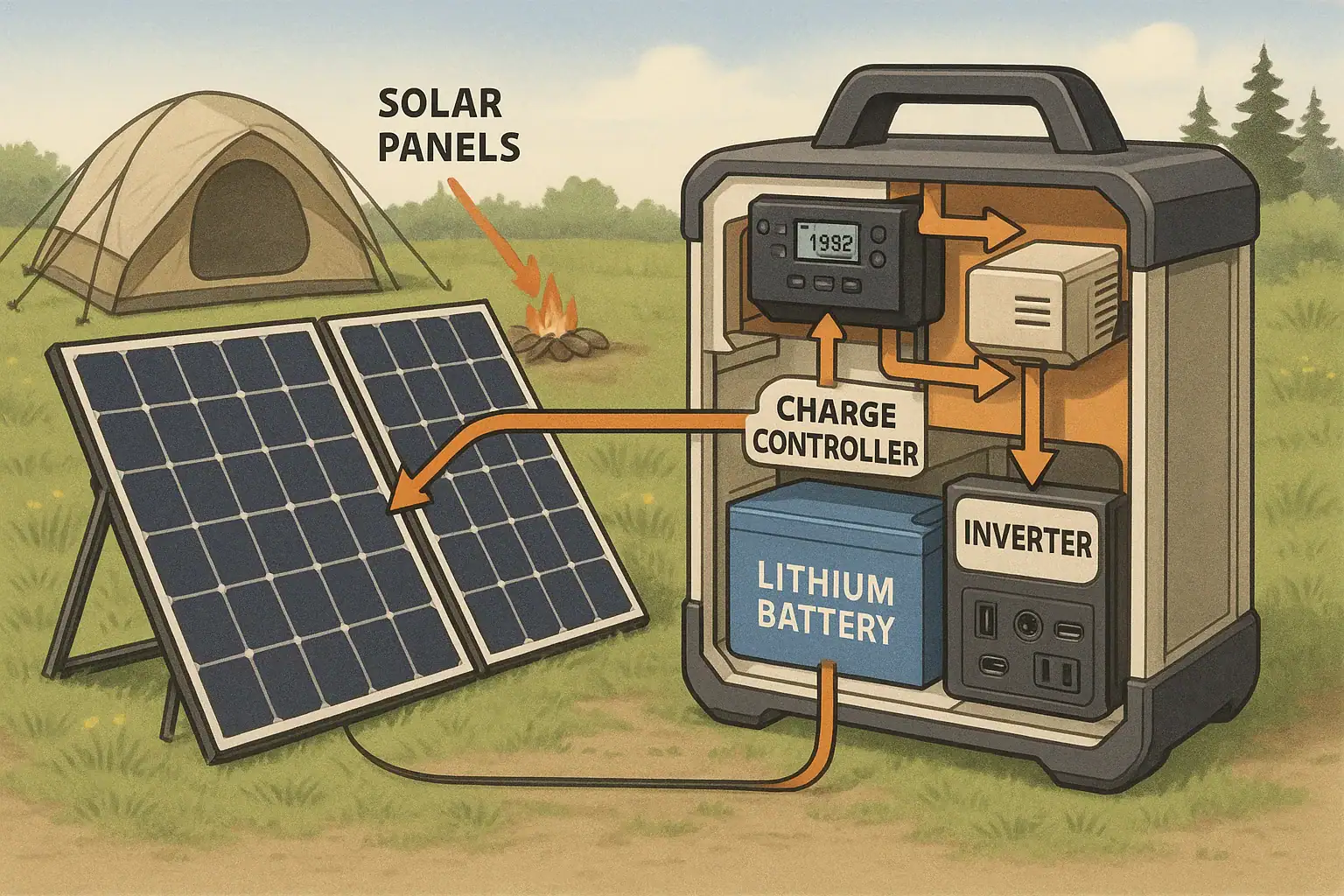
Solar generators work by converting sunlight into electricity with solar panels, storing that energy in a battery, and then turning it into usable power through an inverter and DC ports. In practice, their performance depends on solar input watts, battery capacity, inverter efficiency, and real-world runtime under your typical loads.
Understanding how solar generators really work helps you predict charging time, avoid overloading surge watts, and match panel input limits to your power needs. Whether you call them solar power stations, solar battery generators, or portable solar systems, the basic components and power flow are the same.
This guide breaks down the core concepts in plain language: how solar charging works, what affects efficiency, how long devices can run, and which specs matter most when comparing models. That way, you can choose and use a solar generator confidently for camping, RVs, tailgating, or backup power.
What Is a Solar Generator and Why It Matters
A solar generator is a self-contained power system that combines solar panels, a battery, and power electronics to provide portable electricity without fuel. In many cases, the term refers to a portable power station paired with solar panels, but the same principles also apply to semi-permanent off-grid setups.
Unlike traditional gas generators, solar generators create electricity silently from sunlight, then store it in a rechargeable battery for later use. They typically include AC outlets, DC ports, and USB outputs, making them flexible for phones, laptops, small appliances, and emergency backup loads.
Solar generators matter because they solve three common problems:
- Quiet, low-maintenance backup power: No fuel storage, no engine oil, and minimal moving parts.
- Portable off-grid power: Useful for camping, RVs, van life, work sites, and outdoor events.
- Clean energy source: They reduce reliance on fossil fuels and can operate indoors since there are no exhaust fumes.
However, solar generators are not magic. Their usefulness depends on matching solar input, battery capacity, and inverter output to your actual energy needs. Knowing how they work makes it easier to size a system correctly and avoid unrealistic expectations about runtime and charging speed.
Core Components and How Solar Generators Work
All solar generators follow the same basic energy path: sunlight → solar panel → charge controller → battery → inverter/DC ports → your devices. Each stage affects overall performance and efficiency.
Solar panels: capturing sunlight
Solar panels (photovoltaic modules) convert sunlight into direct current (DC) electricity. Key ideas:
- Rated wattage (W): The maximum power under ideal conditions (for example, 100 W or 200 W per panel). Real-world output is usually 60–80% of the rating due to angle, temperature, and clouds.
- Voltage and current: Panels have a working voltage (Vmp) and current (Imp). Panels can be wired in series or parallel to reach the voltage and current ranges that the solar generator accepts.
- Input limit: The solar generator has a maximum solar input wattage and voltage window it can safely handle.
Charge controller: managing solar input
The charge controller sits between the solar panels and the battery. Its job is to safely regulate voltage and current to charge the battery without overcharging or overheating. There are two main types:
- PWM (Pulse Width Modulation): Simpler, usually cheaper, and less efficient, especially when panel voltage is much higher than battery voltage.
- MPPT (Maximum Power Point Tracking): More efficient, especially in variable light and with higher-voltage arrays. It actively tracks the panel’s optimal operating point to harvest more energy.
Battery: storing energy
The battery is the energy reservoir of the solar generator. Common chemistries include lithium iron phosphate (LiFePO4) and other lithium-ion variants. Important concepts:
- Capacity (Wh): Watt-hours tell you how much energy the battery can store. For example, a 1,000 Wh battery can theoretically power a 100 W device for about 10 hours, before accounting for losses.
- Depth of discharge (DoD): How much of the battery’s capacity can be used regularly without harming its lifespan. Many lithium batteries are rated for deep discharge compared to lead-acid.
- Cycle life: How many full charge/discharge cycles the battery can endure before its capacity significantly declines.
Inverter and DC outputs: delivering usable power
Most household devices expect alternating current (AC). The inverter converts the battery’s DC into AC power at standard household voltage and frequency. Key points:
- Continuous watts: The maximum power the inverter can supply steadily (for example, 500 W, 1,000 W, 2,000 W).
- Surge watts: Short-term peak power for starting motors or compressors (such as fridges, pumps, or power tools). Surge ratings are usually higher than continuous ratings.
- Waveform: Pure sine wave inverters are best for sensitive electronics and inductive loads.
In addition to AC outlets, solar generators typically offer DC outputs: 12 V car-style ports, barrel connectors, and USB ports, including USB-C with Power Delivery (PD) profiles for fast charging laptops and phones.
Energy flow in real use
During sunny hours, the panels feed the charge controller, which charges the battery while your loads draw power through the inverter and DC ports. If solar input exceeds your load, the battery charges; if loads exceed solar input, the battery makes up the difference. At night or in shade, the battery alone powers your devices until it is depleted.
| Component | Typical Spec Range | Role in Solar Generator |
|---|---|---|
| Solar Panel Array | 100–400 W portable | Captures sunlight and produces DC power |
| Solar Input Limit | 100–800 W | Maximum solar power the unit can accept |
| Battery Capacity | 300–2,000 Wh | Stores energy for use when the sun is weak or absent |
| Inverter Output | 300–2,000 W continuous | Supplies AC power to household devices |
| USB-C PD Output | 30–100 W | Fast-charges phones, tablets, and laptops |
How Solar Generators Work in Real-World Scenarios
Understanding theory is useful, but it helps to see how solar generators behave in everyday situations. These simplified examples show how input limits, loads, and battery capacity interact.
Example 1: Weekend camping with light loads
Imagine a compact solar generator with a 500 Wh battery and 300 W inverter, paired with a 100 W folding panel. You use it to run LED lights, charge phones, and top off a laptop.
- Daily energy use might be around 150–200 Wh.
- In good sun, the 100 W panel might average 60–70 W over 5 hours, yielding about 300–350 Wh per day.
- The system easily replaces what you use each day and keeps the battery reasonably full.
In this case, the solar generator works very well because your loads are small and predictable, and the panel is sized to comfortably cover daily consumption.
Example 2: Running a small fridge and devices in an RV
Consider a 1,000 Wh solar generator with a 1,000 W pure sine inverter and a 200 W solar array on the roof. You run a 60 W compressor fridge (with a higher starting surge) plus phones and a laptop.
- The fridge might average 30–40 W over 24 hours, using roughly 720–960 Wh per day.
- Your 200 W of panels might deliver 120–140 W for 5–6 hours of good sun, or about 600–840 Wh per day.
- On sunny days, solar almost keeps up with the fridge plus light device charging, but cloudy days will leave a deficit.
Here, the system can run the fridge and small devices, but you may need to manage usage, tilt panels, or add more solar capacity to stay energy-neutral over multiple days.
Example 3: Short-term backup for a power outage
Now picture a larger unit with a 2,000 Wh battery and 2,000 W inverter. You connect a fridge, some LED lights, a Wi-Fi router, and occasionally a microwave.
- Baseline loads (fridge, router, lights) might average 150–250 W.
- At 200 W average, the 2,000 Wh battery could theoretically last about 10 hours, minus inverter losses.
- Using a microwave at 1,000 W for 10 minutes uses roughly 167 Wh, which adds up if used frequently.
With limited or no solar input (for example, at night or in storms), you must prioritize critical loads and accept that a solar generator of this size is best for short-term backup rather than whole-house power.
Example 4: Daytime worksite power
On a remote job site, a solar generator with 1,500 Wh and 400 W of solar runs cordless tool chargers, a laptop, and a small fan.
- Loads may be intermittent, averaging 150–200 W over the workday.
- In strong sun, 400 W of panels might average 250–300 W for 5 hours, delivering 1,250–1,500 Wh.
- The system can stay close to energy-neutral, especially if heavy loads are timed during peak sun.
Here, understanding solar generator behavior lets you plan work around charging cycles and avoid overtaxing the system.
Common Misunderstandings, Mistakes, and Troubleshooting Clues
Solar generators are often misunderstood, which can lead to frustration or underperformance. Recognizing common mistakes and warning signs helps you troubleshoot quickly.
Overestimating solar panel output
A frequent misconception is assuming a 200 W panel will always provide 200 W. Real output depends on sun angle, shading, temperature, and cleanliness.
- Symptom: Charging takes much longer than expected.
- Check: Compare real-time solar input on the display to panel rating; clean and reposition panels; avoid partial shading.
Ignoring the solar input limit
Adding more panels than the solar generator’s input limit will not increase charge speed and can be unsafe if voltage limits are exceeded.
- Symptom: Display shows a capped solar input (for example, stuck around 200 W even with larger array).
- Check: Confirm the maximum solar input wattage and voltage range; reconfigure panels to stay within limits.
Confusing battery capacity with inverter size
Some users focus only on inverter watts and forget about battery capacity. A powerful inverter with a small battery can run big loads for only a short time.
- Symptom: High-wattage devices work but drain the battery very quickly.
- Check: Estimate runtime by dividing usable battery Wh by average watt draw, then adjust expectations.
Overloading surge watts
Appliances with motors or compressors can draw several times their running watts at startup.
- Symptom: Inverter shuts down or displays overload when starting a fridge, pump, or power tool.
- Check: Ensure surge watts rating exceeds the device’s startup demand; avoid starting multiple heavy loads at once.
Misinterpreting state-of-charge
Battery percentage displays are estimates and can vary with load.
- Symptom: State of charge seems to drop quickly under heavy loads.
- Check: Look at actual watt draw and remaining watt-hours, not just percent; expect faster percentage swings at high loads.
Basic troubleshooting cues
- No solar charging: Verify panel connections, polarity, and that the solar input port is selected or enabled if required by the unit.
- No AC output: Confirm the AC output is switched on, check for overload icons, and reduce load if necessary.
- Frequent shutdowns: Look for overheating indicators, blocked ventilation, or running close to maximum continuous output for long periods.
If problems persist, consult the user manual and consider contacting the manufacturer or a qualified technician rather than attempting internal repairs.
Safety Basics When Using Solar Generators
Solar generators are generally safer than fuel-powered generators, but they still store significant electrical energy. Following basic safety practices helps prevent damage and injury.
Electrical and load safety
- Stay within rated limits: Do not exceed the inverter’s continuous or surge watt ratings. Overloading can cause shutdowns or stress components.
- Use appropriate cords: Choose extension cords rated for the load and length, and avoid daisy-chaining multiple strips.
- Avoid DIY internal modifications: Do not open the battery pack or bypass built-in protections. High-energy lithium batteries require proper management systems.
Ventilation and heat management
- Allow airflow: Keep vents unblocked and provide clearance around the unit to help cooling fans work effectively.
- Avoid extreme heat: Do not leave the solar generator in direct, enclosed sun (such as a closed car) where internal temperatures can rise dramatically.
- Monitor under heavy loads: During sustained high-power use, periodically check for overheat warnings on the display.
Safe solar panel handling
- Secure placement: Prevent panels from tipping or sliding, especially in windy conditions.
- Weather awareness: Most portable panels are weather-resistant but should not be immersed in water or left in severe storms.
- Correct polarity: Follow markings on connectors; reversed polarity can trigger protection circuits or damage equipment.
Connection to home circuits
Using a solar generator for home backup requires caution. Plugging individual devices directly into the unit is generally safe. However, connecting it into a home electrical panel or backfeeding household circuits without proper equipment can be dangerous and may violate electrical codes.
For any connection involving home wiring, transfer switches, or interlocks, consult a qualified electrician and follow local regulations. Avoid improvised solutions that could energize utility lines or create shock hazards.
| Safety Area | Good Practice | Potential Risk if Ignored |
|---|---|---|
| Load Management | Keep total draw under 80% of continuous rating | Frequent overload shutdowns and component stress |
| Ventilation | Maintain several inches of clearance around vents | Overheating, reduced performance, shortened lifespan |
| Panel Connections | Match connectors and polarity as labeled | Tripped protections, possible damage to electronics |
| Environment | Store and operate in dry, stable locations | Shock hazards, corrosion, or water damage |
Related guides: Input Limits (Volts/Amps/Watts) Explained: How Not to Damage Your Unit • How Many Solar Watts Do You Need to Fully Recharge in One Day? • Can You Charge a Portable Power Station With Solar Panels?
Maintenance, Storage, and Getting the Most from Your System
Solar generators require far less upkeep than fuel generators, but some basic care extends performance and lifespan.
Battery care and partial cycling
- Avoid long-term full depletion: Do not leave the battery at 0% for extended periods. Recharge soon after use.
- Partial discharge is fine: Lithium batteries generally prefer frequent shallow to moderate cycles rather than constant full-to-empty cycles.
- Periodic top-ups: If stored, recharge every few months as recommended by the manufacturer.
Solar panel upkeep
- Keep surfaces clean: Dust, pollen, and grime can noticeably reduce output. Wipe panels gently with a soft cloth and water when needed.
- Inspect connectors: Check for loose, corroded, or damaged connectors and cables, and replace if necessary.
- Protect hinges and frames: For folding panels, avoid forcing hinges and store them in protective cases when traveling.
Storage environment
- Moderate temperatures: Store the solar generator in a cool, dry place away from direct sunlight and freezing conditions.
- Dry conditions: Avoid damp basements or areas prone to condensation to reduce corrosion risk.
- Transport protection: Use padding or cases during transport to prevent drops and impacts.
Using displays and apps effectively
- Monitor watt input and output: Use the display to understand real-time solar input and load draw, helping you adjust usage.
- Track runtime estimates: Many units show remaining runtime based on current load, which is useful for planning.
- Firmware updates: If the unit supports updates through an app, installing them can improve performance or add features.
With basic care and occasional inspection, a solar generator can deliver reliable power for years, making it a practical part of your portable and backup power strategy.
Key Takeaways and Specs to Look For in a Solar Generator
Solar generators work by combining solar panels, a charge controller, a battery, and an inverter into a portable system that captures, stores, and delivers electricity. Their usefulness depends on sizing the system to your loads, respecting input and output limits, and maintaining realistic expectations about charging speed and runtime.
When you understand how each component contributes to overall performance, it becomes much easier to match a solar generator to specific tasks like camping, RV use, outdoor work, or emergency backup.
Specs to look for
- Battery capacity (Wh): Look for a capacity that comfortably covers a full day of your expected use (for example, 500–2,000 Wh). More capacity means longer runtime between charges.
- Inverter continuous and surge watts: Choose continuous output above your typical combined load (for example, 300–2,000 W) and surge watts high enough to start fridges or tools. This prevents overload shutdowns.
- Solar input limit (W and V): Check that the maximum solar input (such as 100–800 W) and voltage window match the panels you plan to use. Higher input allows faster recharging in good sun.
- Battery chemistry and cycle life: Compare lithium chemistries and rated cycles (for example, 2,000+ cycles at a given depth of discharge). Longer cycle life means better long-term value.
- AC and DC port selection: Ensure the mix of outlets (AC, 12 V, USB-A, USB-C PD) fits your devices. Multiple high-watt USB-C ports are useful for modern laptops and tablets.
- Efficiency and idle consumption: Look for units with efficient inverters and low idle draw, especially if you run small loads for long periods. Better efficiency extends usable runtime.
- Display and monitoring: A clear display showing input watts, output watts, and remaining battery percentage or watt-hours helps manage energy use effectively.
- Weight, size, and portability: Check total weight and form factor relative to your use case. Lighter, compact units are easier to move for camping or job sites.
- Operating temperature range: Confirm the recommended temperature range if you plan to use the unit in hot summers or cold winters. Staying within range supports performance and battery health.
- Expansion options: If available, external battery or solar expansion capability offers flexibility to grow your system later as your power needs increase.
By focusing on these practical specs and understanding how solar generators really work, you can choose a system that reliably meets your power needs without guesswork.
Frequently asked questions
What specs and features should I prioritize when choosing a solar generator?
Prioritize battery capacity in watt‑hours, inverter continuous and surge ratings, and the unit’s solar input wattage and voltage range. Also consider battery chemistry and cycle life, available AC/DC/USB ports, and monitoring features to match your typical loads and future expansion plans.
How long will a solar generator run my devices?
Runtime depends on usable battery watt‑hours divided by your device’s average watt draw, adjusted for inverter losses and depth-of-discharge limits. For a rough estimate, divide usable Wh by device watts; heavier or starting loads and inefficiencies will shorten that time.
What common mistakes lead to poor charging performance with solar generators?
Frequent mistakes include overestimating panel output, placing panels with poor tilt or shading, and exceeding the generator’s solar input limits. Verify real-time input on the display, reconfigure panels to proper voltage/current ranges, and clean or reposition panels to improve charging.
Are solar generators safe to use indoors or near living spaces?
Solar generators are generally safe for indoor use because they don’t produce exhaust, but they still store high electrical energy and can overheat if poorly ventilated. Follow rated limits, use proper cords, avoid internal modifications, and consult an electrician before connecting to household wiring.
Can I expand a solar generator with extra panels or batteries later?
Many systems support adding panels or external batteries, but expansion depends on the unit’s input limits and supported battery interfaces. Always check the manufacturer’s specifications for allowable wattage, voltage, and compatible battery chemistry before adding components.
Related guides
Browse this topic →
- Beginner-friendly sizing, runtime & specs
- Solar & charging (MPPT, fast charging, cables)
- Batteries (LiFePO4, cycles, care & storage)
- Safety, cold-weather performance, real-world tips
More in Solar
See all →- How to Clean Portable Solar Panels Without Damage
- Solar Charging on Cloudy Days: What Output Can a Portable Power Station Expect?
- How Many Portable Solar Panels Do You Need for a 1,000Wh Power Station?
- Solar Adapter Polarity Mistakes: How to Avoid Reverse-Polarity Charging Problems
- Portable Solar Panel Waterproof Ratings: What Rain, Dew, and Splash Resistance Mean
Keep reading
About this site
Portable Energy Lab publishes practical, independent guides about portable power—clear sizing, safe use, and real-world expectations.
Affiliate disclosure
Some links on this site may be affiliate links. If you buy through these links, we may earn a small commission at no extra cost to you. This helps support our content. Read our affiliate disclosure.