
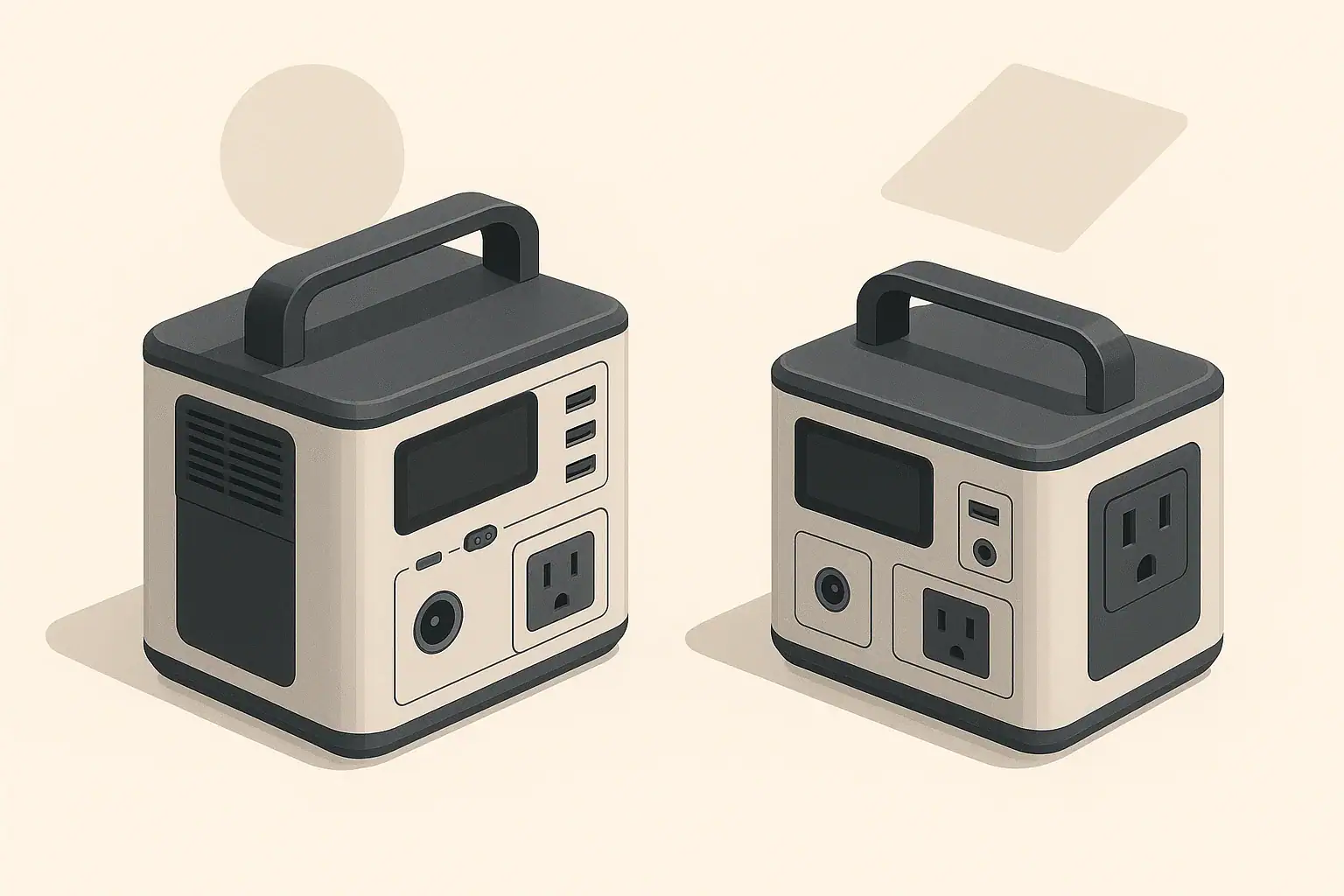
If you want the simplest and safest option for most people, a portable power station is usually better than an inverter plus car battery, but the DIY inverter setup can win on cost and flexibility if you are comfortable with wiring and safety. This comparison applies whether you call it a portable power station, solar generator, car inverter system, or 12 V battery backup.
Both approaches can keep phones, laptops, lights, and small appliances running during power outages, camping trips, or vanlife. The main differences are how much work you must do yourself, how easy it is to use safely, and how well the system scales as your power needs grow.
The sections below explain how each system works, show realistic runtimes with simple numbers, highlight common mistakes, and end with a practical checklist so you can choose the option that fits your situation, budget, and comfort level with electrical gear.
What These Systems Are and Why the Choice Matters
When people compare a portable power station vs an inverter and car battery, they are really choosing between an all-in-one appliance and a custom-built 12 V power system.
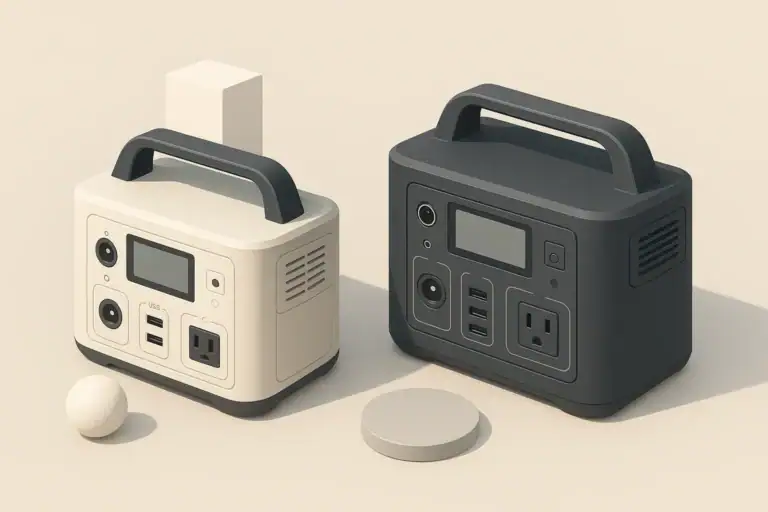
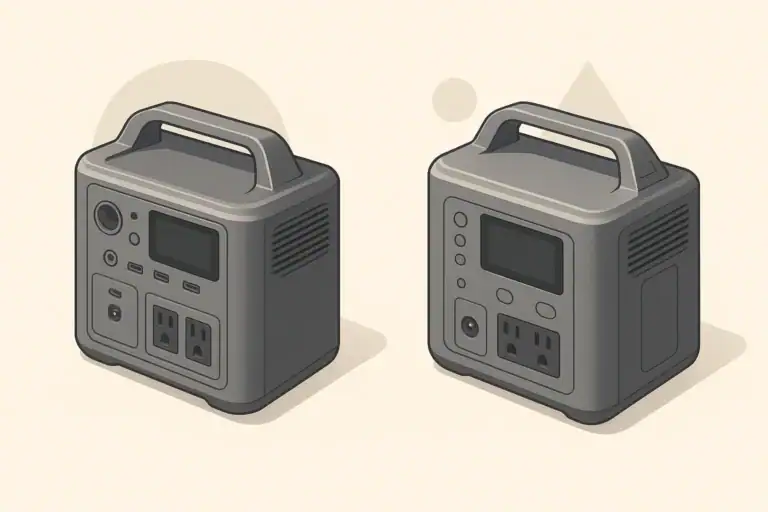
Portable power station: A self-contained unit with an internal battery, built-in inverter, charge controller, and multiple output ports. You plug devices in and turn it on, much like using a wall outlet.
Inverter + car battery system: Separate pieces you assemble yourself: a 12 V battery, a standalone inverter, and the cables and fuses that connect everything. You also add a charger or solar charge controller if you want more than alternator charging.
This choice matters because it affects:
- Ease of use: Whether anyone in the household can safely operate it, or only the person who built it.
- Safety margin: How much built-in protection you get against overloads, short circuits, and overheating.
- Total cost over time: Upfront price, battery replacements, and how easily you can upgrade parts later.
- Portability: Whether you can grab one handle and go, or move multiple heavy components.
Understanding these trade-offs upfront helps you avoid buying a system that feels either overcomplicated or underpowered once you start using it in real situations.
How Each Option Works: Key Concepts
Both options turn stored battery energy into usable AC and DC power, but they package the parts differently.
Inside a Portable Power Station
A portable power station typically includes:
- A rechargeable battery (often lithium-based for higher usable capacity and lower weight)
- An integrated inverter that provides standard 120 V AC outlets
- DC outputs such as 12 V car-style ports and barrel jacks
- Multiple USB ports for phones, tablets, and small electronics
- Internal charge controller and inputs for wall, vehicle, and sometimes solar charging
- Built-in protections and monitoring (over-current, over-temperature, short-circuit, and battery management)
Most units show remaining battery percentage, input and output watts, and sometimes remaining runtime. Many support pass-through operation, where the unit can charge while powering devices, within its rated limits.
Inside an Inverter + Car Battery Setup
An inverter plus car battery system separates those same functions into different components:
- A 12 V battery (starting battery, deep-cycle battery, or a dedicated house battery)
- A standalone inverter that converts 12 V DC to 120 V AC
- Cables, lugs, and fuses to connect the battery and inverter
- Optional extras such as a battery charger, solar charge controller, fuse block, and monitoring gauge
You are responsible for choosing compatible parts, sizing cables, adding fuses near the battery, and ensuring adequate ventilation. The system can be simple (a small inverter clipped to a car battery) or complex (a multi-battery bank with high-power inverter and solar array).
Capacity, Power, and Runtime Basics
Two numbers matter in both systems:
- Battery capacity (Wh): How much energy is stored. For a 12 V battery, approximate watt-hours = 12 V × amp-hours (Ah).
- Power draw (W): How fast energy is used by your devices.
A simple way to estimate runtime is:
Runtime (hours) ≈ Usable battery capacity (Wh) ÷ Total load (W)
Real-world runtimes are lower than the math suggests because of inverter losses and limits on how deeply you should discharge the battery, especially for lead-acid types.
| Factor | Portable power station | Inverter + car battery |
|---|---|---|
| Typical user | Wants plug-and-play backup with minimal setup | Comfortable with DIY wiring and system design |
| Ease of setup | Very easy: charge and plug in | Moderate to hard: sizing, wiring, fuses, mounting |
| Safety features | Integrated protections and clear indicators | Depends on components and installation quality |
| Port variety | AC, 12 V DC, multiple USB ports | Mainly AC; extra DC ports require added hardware |
| Expandability | Usually fixed capacity, sometimes limited expansion | Can upsize battery bank and inverter separately |
| Monitoring | Built-in display with battery and wattage | Often basic LEDs; detailed monitoring is optional add-on |
| Portability | Single unit with handle(s) | Separate heavy battery, inverter, and cables |
| Cost per watt-hour | Higher due to integration and convenience | Often lower, especially if reusing existing battery |
Example values for illustration.
Real-World Examples and Runtime Planning
Looking at real scenarios makes the differences clearer than specs alone. The examples below assume moderate efficiency and conservative usable capacity.
Example 1: Short Home Outage Kit
Goal: Keep essentials running for a few hours during a typical evening outage: a Wi‑Fi router, one laptop, two phones, and an LED light.
- Wi‑Fi router: ~10 W
- Laptop: ~60 W while in use
- Two phones charging: ~15 W combined
- LED light: ~10 W
Total load: about 95 W
Portable power station scenario: A unit with about 500 Wh of usable capacity could power this for roughly 500 ÷ 95 ≈ 5 hours of continuous use. In practice, expect around 4 hours to account for inverter losses.
Inverter + car battery scenario: A 12 V, 60 Ah starting battery has a theoretical 12 × 60 = 720 Wh. To avoid deep discharging and battery damage, using about 50% (360 Wh) is more realistic. Runtime ≈ 360 ÷ 95 ≈ 3.8 hours, and you must monitor voltage to avoid draining the battery too far.
Example 2: Weekend Camping Trip
Goal: Two nights of camping with phone charging, a small 12 V cooler, a portable fan, and a few lights.
- 12 V cooler (compressor type): ~50 W while running, ~30% duty cycle over 24 hours ≈ 360 Wh/day
- Fan on low: ~20 W for 8 hours ≈ 160 Wh/night
- Lights and phone charging: ~40 Wh/night
Approximate total per day: 360 + 160 + 40 ≈ 560 Wh
Portable power station: A 1000 Wh unit could roughly cover one day’s use with margin, especially if you add some daytime solar input or reduce fan use.
Inverter + car battery: A single 12 V, 100 Ah deep-cycle battery (about 1200 Wh theoretical) used to 50% depth of discharge offers around 600 Wh usable per day. This is similar capacity but heavier and less portable; adding solar or alternator charging becomes more important for multi-day trips.
Example 3: Powering a Small Appliance
Goal: Run a compact 700 W microwave briefly during outages or road trips.
- The microwave may draw 900–1000 W from the inverter due to efficiency losses.
- You only run it for a few minutes at a time.
Portable power station: You need a model with an inverter rated above the microwave’s peak draw (often 1000–1200 W or more). Short bursts are usually fine if within the continuous and surge ratings.
Inverter + car battery: You need a pure sine or compatible modified sine inverter rated above 1000 W, with thick, fused cables to the battery. The battery can handle the brief surge if it is in good condition, but repeated high loads will drain it quickly and create heat in wiring if undersized.
| Use case | Approximate load (W) | Approximate runtime on 500 Wh usable | Planning note |
|---|---|---|---|
| Router + laptop + light | 80–100 W | 4–5 hours | Good fit for small power station or healthy car battery |
| Phone charging only (several phones) | 10–25 W | 20+ hours | Very light load; either system works easily |
| 12 V cooler + lights | 40–80 W average | 6–10 hours | Plan for solar or alternator recharge on longer trips |
| Small fan overnight | 20–40 W | 10–20 hours | Check noise level of power station fan in a tent or bedroom |
| 700 W microwave (intermittent) | 900–1000 W while running | About 25–30 minutes total run time | Requires higher-wattage inverter and robust wiring |
Example values for illustration.
Common Mistakes and Troubleshooting Cues
Many problems with both portable power stations and inverter + car battery systems come from the same few issues. Knowing what to watch for helps you fix or avoid them quickly.
Undersizing the System
Mistake: Buying a unit based only on peak watts, not on battery capacity and typical runtime needs.
Warning signs:
- Battery percentage drops very quickly when you plug in a few devices.
- High-draw devices (like kettles or hair dryers) cause the inverter to shut down.
What to do: Add up your common loads and hours of use, then size for at least 20–30% more than the math suggests to account for losses and future needs.
Overloading Inverters and Outlets
Mistake: Plugging in too many devices or a single appliance that exceeds the inverter’s continuous rating.
Warning signs:
- Inverter or power station beeps and shuts off when a device starts.
- Display shows wattage very close to or above the rated maximum.
- Cords or plugs feel hot to the touch.
What to do: Check the rated continuous watts; keep your typical load below about 80% of that rating. Avoid daisy-chaining power strips.
Running a Vehicle Starting Battery Too Low
Mistake: Using the car’s starting battery for long periods with the engine off.
Warning signs:
- Engine cranks slowly or not at all after using the inverter.
- Headlights dim noticeably when loads turn on.
What to do: Limit use from the starting battery, or install a separate deep-cycle battery isolated from the starter. Recharge before the battery voltage drops too low, and avoid repeated deep discharges.
Ignoring Heat and Ventilation
Mistake: Placing the power station or inverter in a closed cabinet, under bedding, or in direct sun.
Warning signs:
- Cooling fans run constantly or get very loud.
- Case feels hot, and output power may drop or shut off.
What to do: Keep vents clear, allow airflow around the unit, and avoid covering it with clothing or gear. In vehicles, avoid mounting in sealed spaces without ventilation.
Loose or Undersized Cables in DIY Systems
Mistake: Using thin jumper cables or long, undersized wires between the battery and inverter.
Warning signs:
- Inverter shuts down under load even though the battery is charged.
- Cables get warm or hot at higher loads.
- Voltage drop readings are much lower at the inverter than at the battery terminals.
What to do: Use appropriately sized cables for the inverter’s maximum current, keep runs as short as practical, and install fuses close to the battery.
Safety Basics for Both Options
Both portable power stations and inverter + car battery systems can be used safely if you respect their limits and follow a few high-level rules.
Battery Placement and Environment
Portable power station:
- Place on a stable, dry, level surface.
- Keep away from flammable materials and direct heat sources.
- Do not expose to rain, standing water, or heavy condensation.
Inverter + car battery:
- Secure the battery so it cannot move or tip during driving or transport.
- Provide ventilation, especially for lead-acid batteries that can release gas while charging.
- Protect battery terminals from tools, loose metal objects, and accidental short circuits.
Electrical Load and Cord Safety
Regardless of system type:
- Stay within the inverter’s rated continuous watts and surge rating.
- Use extension cords only when necessary, and choose cords rated for the expected load and length.
- Route cords to avoid pinching in doors, under furniture, or across walkways where they can become tripping hazards.
- Stop using any cord, plug, or outlet that becomes hot, discolored, or smells like burning plastic.
Indoor vs Vehicle Use
Indoors: Portable power stations are generally designed for indoor use when kept dry and ventilated. DIY battery systems should only be used indoors if the battery type and ventilation are appropriate and the wiring is protected from accidental contact.
In vehicles: Mount inverters securely, protect cables with grommets or conduit where they pass through metal, and keep equipment clear of fuel containers and other flammables.
Long-Term Use, Maintenance, and Storage
How you treat the battery over months and years has a big impact on safety, runtime, and total cost.
Battery Care for Portable Power Stations
- Avoid storing the unit completely full or completely empty for long periods; a moderate state of charge is usually recommended for storage.
- Top up the charge every few months if the unit is not used, to offset self-discharge.
- Keep the unit within its specified temperature range, especially during charging.
- Use gentle loads when possible; repeated heavy discharges to very low state of charge can shorten battery life.
Battery Care for Inverter + Car Battery Systems
- For lead-acid batteries, avoid deep discharges below recommended depth of discharge; recharge promptly after use.
- Use a charger designed for the specific battery chemistry (flooded, AGM, gel, or lithium).
- Check terminals periodically for corrosion and clean as needed.
- Ensure mounting brackets and straps remain tight after rough roads or repeated moves.
Cold Weather and Heat Exposure
Both lithium and lead-acid batteries perform worse in the cold; available capacity drops and charging may be restricted at low temperatures. Excessive heat accelerates aging.
- Avoid leaving systems in hot vehicles or direct sun for extended periods.
- In cold conditions, keep the battery or power station in an insulated but ventilated area if possible.
| Habit | Applies to | Why it matters | Practical tip |
|---|---|---|---|
| Avoid deep discharges | Both systems | Reduces stress on cells and extends cycle life | Recharge before the display or meter shows very low state of charge |
| Periodic top-up charging | Both systems | Offsets self-discharge during storage | Plug in for a full charge every 1–3 months when not in use |
| Keep connections tight and clean | Inverter + battery | Prevents voltage drop and overheating at terminals | Inspect lugs and clamps; clean corrosion and retighten as needed |
| Manage temperature | Both systems | Extreme heat or cold shortens battery life | Avoid trunk or roof storage in hot sun; avoid charging below freezing |
| Use appropriate chargers | Inverter + battery | Wrong charging profile can damage batteries | Match charger settings to battery chemistry and size |
Example values for illustration.
Practical Takeaways and Specs to Look For
Choosing between a portable power station and an inverter plus car battery comes down to how much you value simplicity versus flexibility.
- If you want a plug-and-play solution for outages, camping, and remote work, a portable power station is usually the better fit.
- If you want a customizable, scalable system and are comfortable with wiring, fuses, and battery care, an inverter + battery setup can provide more capacity per dollar.
Specs to Look For in a Portable Power Station
- Battery capacity (Wh): Match to your daily energy needs; many users find 500–1000 Wh a practical starting range for mixed light loads.
- Inverter rating (W): Continuous and surge ratings should comfortably exceed your highest planned load.
- Output ports: Enough AC outlets, at least one high-power USB-C port if you use modern laptops, and 12 V DC outputs if you run automotive devices.
- Display and monitoring: Clear readouts for state of charge and input/output watts help manage runtime.
- Charging options: Wall, vehicle, and solar input support if you plan to use it off-grid.
- Weight and form factor: Consider how far and how often you will carry it.
Specs to Look For in an Inverter + Car Battery System
- Battery type and capacity: Deep-cycle batteries are usually better for repeated discharge than starting batteries. Size in amp-hours based on your daily watt-hour needs.
- Inverter type: Pure sine wave is often preferred for sensitive electronics and many appliances.
- Inverter power rating: Continuous and surge ratings must cover your largest loads with margin.
- Cable and fuse sizing: Appropriately thick cables and correctly sized fuses close to the battery improve safety and performance.
- Charging method: Decide how you will recharge (alternator, dedicated charger, solar) and size those components accordingly.
- Mounting and ventilation: Plan where the battery and inverter will live so they stay secure, dry, and cool.
With a clear picture of your typical loads, runtime expectations, and comfort level with electrical work, you can choose the portable power solution that delivers reliable energy without unnecessary complexity or cost.
Frequently asked questions
Which specs and features matter most when choosing between a portable power station and an inverter-based system?
Prioritize usable battery capacity (Wh), the inverter’s continuous and surge watt ratings, and the available output types (AC, DC, USB). Also consider charging options (wall, vehicle, solar), battery chemistry and management protections, and weight/portability for your use case.
What is a common sizing mistake people make with these power systems?
A frequent error is focusing only on peak or surge watts instead of actual battery capacity and expected runtime, which leads to systems that run out of energy quickly. Account for inverter losses and typical hours of use when sizing the battery capacity.
Are these systems safe to use indoors and what general precautions should I follow?
Both types can be safe indoors if kept dry, ventilated, and used within their rated limits. For inverter + battery setups, ensure proper ventilation for lead-acid batteries, secure mounting, terminal protection, and correctly sized fuses; portable units typically include integrated protections but should still be kept away from heat and moisture.
How do I estimate how long my devices will run on a given battery?
Use usable battery capacity in watt-hours divided by the total device load in watts as a starting point, then reduce the result for inverter inefficiency and recommended depth-of-discharge (for example, lead-acid often uses 50% DOD). This gives a realistic runtime estimate you can adjust with measured loads.
Can I charge the battery while using the power station or inverter system?
Many portable power stations support pass-through charging (charging while powering loads) within their rated input/output limits; check the unit’s specifications. For inverter + battery systems, you can run loads while charging if the charging source provides enough power and the charging equipment and wiring are sized appropriately.
Which option is usually more cost-effective per watt-hour?
Custom inverter and battery systems typically offer a lower cost per usable watt-hour, especially if reusing an existing battery, but they require more installation work and maintenance. Portable power stations cost more per Wh for the convenience, integrated protections, and compact form factor, so weigh upfront cost against usability and long-term maintenance.
Related guides
Browse this topic →
- Beginner-friendly sizing, runtime & specs
- Solar & charging (MPPT, fast charging, cables)
- Batteries (LiFePO4, cycles, care & storage)
- Safety, cold-weather performance, real-world tips
More in Comparison
See all →Keep reading
About this site
Portable Energy Lab publishes practical, independent guides about portable power—clear sizing, safe use, and real-world expectations.
Affiliate disclosure
Some links on this site may be affiliate links. If you buy through these links, we may earn a small commission at no extra cost to you. This helps support our content. Read our affiliate disclosure.