
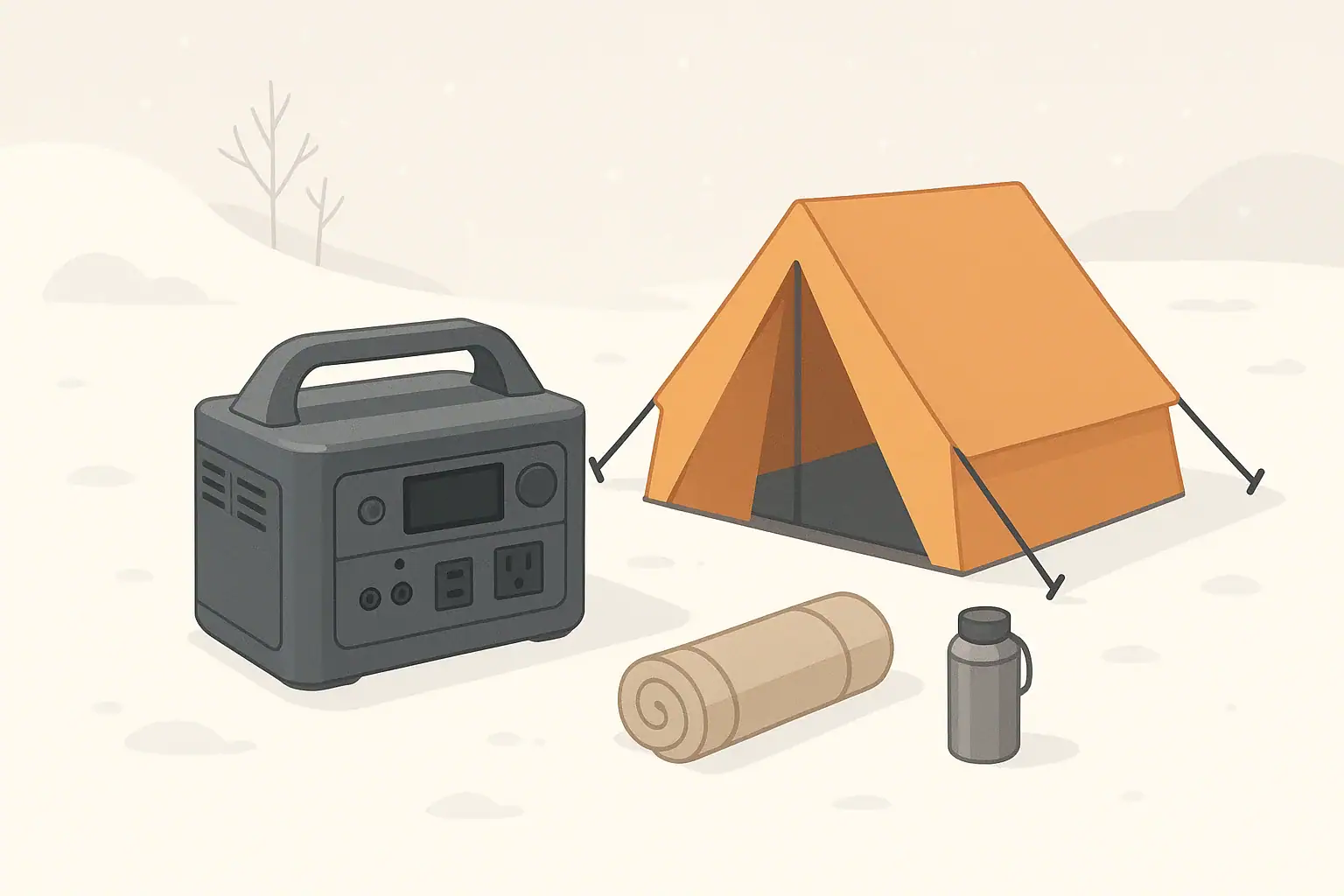
Portable power stations typically lose about 10–30% of their usable capacity around freezing and up to 40–50% in very cold weather, even when fully charged. This cold weather capacity loss is normal behavior for lithium batteries, not usually a defect, but it can dramatically shorten the runtime you get for winter power outages, camping, or vanlife.
Understanding how low temperatures affect battery performance helps you plan realistic runtimes, avoid sudden shutdowns, and protect your investment. Instead of relying only on the rated watt-hours printed on the label, you can adjust for cold, load, and age to get a much closer estimate of what your portable power station will actually deliver.
This guide explains why batteries lose capacity in the cold, shows real-world examples, walks through common mistakes and troubleshooting cues, and finishes with safety basics, storage tips, and a practical specs checklist to use before your next winter trip or storm.
What Cold-Weather Capacity Loss Means and Why It Matters
Cold-weather capacity loss is the drop in usable energy you get from a portable power station when the battery is cold compared with its rated capacity at room temperature. The label might say 1,000 Wh, but in freezing temperatures you may only be able to use 600–800 Wh before the unit shuts down.
This matters because most people size their portable power station based on ideal conditions. In winter, that same setup can fall short for critical loads such as communication devices, medical equipment, or heating accessories. Knowing how much capacity you really lose lets you plan a margin of safety instead of being surprised by early cutoff.
Cold capacity loss is usually temporary and mostly reversible: when the battery warms back up, much of the apparent “missing” energy becomes usable again. However, repeatedly operating or charging at extreme low temperatures can contribute to long-term wear and permanent capacity loss over the life of the pack.
In practical terms, cold weather capacity loss affects:
- How long your lights, router, or fridge will run during a winter outage
- Whether your laptop and hotspot last through a remote workday in a cold cabin
- How much backup you need for overnight camping when temperatures drop below freezing
How Cold Affects Battery Chemistry and Performance
Portable power stations typically use lithium-based batteries. These cells are designed and rated around room temperature, often about 68–77°F (20–25°C). As temperature drops, the internal chemistry slows and resistance increases, which changes how the battery behaves under load and during charging.
Slower Chemical Reactions and Higher Internal Resistance
Inside each cell, lithium ions move between electrodes through an electrolyte. Cold temperatures slow this movement and increase internal resistance. The result is:
- Lower effective capacity under load: the pack cannot deliver as much energy before voltage drops to cutoff.
- Reduced peak power capability: the battery struggles more with sudden or heavy loads.
- More heat from internal losses: some energy is lost as heat instead of going to your devices.
Manufacturers rate capacity at a specific temperature and discharge rate. When you move away from those conditions—especially toward freezing or below—the real-world watt-hours you can draw decrease.
Voltage Sag and Early Shutoff
battery management system inside a power station constantly monitors voltage and temperature to keep operation within safe limits. In the cold, voltage under load sags more quickly. If voltage dips below a preset threshold, the system shuts output off to protect the cells, even if there is still some energy remaining.
This is why you might see a state-of-charge display that still shows 15–25%, but the unit suddenly turns off when you plug in a heavier device, especially in cold conditions. The cold exaggerates this effect, and high loads make it worse.
Cold Charging Limitations
Charging lithium batteries when they are very cold can cause internal damage, such as metallic lithium plating on the anode. To prevent this, most power stations:
- Reduce charge current at low temperatures
- Block charging entirely below a defined cutoff
- Display warnings or error codes when the pack is too cold
These behaviors are protective features, not faults. If your unit will not charge after being in a cold car or shed, it usually needs time to warm up internally before normal charging resumes.
Typical Capacity Loss by Temperature
The exact numbers vary by battery chemistry, pack design, and load, but many users see patterns like these under light-to-moderate loads:
- Around 50°F (10°C): small, often barely noticeable loss
- Around 32°F (0°C): roughly 10–30% less usable capacity
- Well below freezing: 30–50% or more loss, especially under higher loads
These effects stack on top of normal inefficiencies such as inverter losses, so the difference between the rated watt-hours and what you get in real winter use can be large.
| Battery temperature | Approx. usable capacity vs. rating | What you might notice in use |
|---|---|---|
| 77°F (25°C) | 90–100% | Performance close to spec sheet; minor losses only. |
| 50°F (10°C) | 85–95% | Most users see little difference for light loads. |
| 32°F (0°C) | 70–90% | Noticeable runtime reduction, especially with laptops or fridges. |
| 14°F (-10°C) | 50–70% | Shorter runtimes; more early shutdowns with high-wattage devices. |
| -4°F (-20°C) | 40–60% | Hard to power heavy loads; frequent low-voltage cutoff. |
Real-World Cold-Weather Runtime Examples
To make cold weather capacity loss more concrete, it helps to walk through specific scenarios. These examples assume a 1,000 Wh portable power station rated at room temperature and used after it has cooled to around freezing.
Example 1: Winter Power Outage With Home Essentials
Imagine a 1,000 Wh unit powering:
- Wi-Fi router and modem: 20 W total
- LED lamp: 10 W
- Phone charging: 10 W average over time
Total load is about 40 W. At room temperature and assuming 85% overall efficiency, you might expect roughly:
- 1,000 Wh × 0.85 ÷ 40 W ≈ 21 hours of runtime
At freezing, if usable capacity drops to about 80% of rated, the effective energy is closer to 800 Wh × 0.85 ≈ 680 Wh. That gives:
- 680 Wh ÷ 40 W ≈ 17 hours of runtime
The difference—about 4 hours—can matter if you are planning for an overnight outage.
Example 2: Cold-Weather Camping With a Laptop and 12 V Fridge
Consider the same 1,000 Wh station used in a camper at 28°F (-2°C) to power:
- Laptop for remote work: 60 W while in use
- 12 V compressor fridge: 45 W while running, 30% duty cycle
- Interior LED lights: 10 W
The average load is roughly:
- Laptop: 60 W for 8 hours ≈ 480 Wh
- Fridge: 45 W × 0.3 ≈ 14 W average over 24 hours
- Lights: 10 W for 6 hours ≈ 60 Wh
With cold-related loss to around 70–80% usable capacity and normal inefficiencies, you might only have about 650–750 Wh realistically available. That means a full 24-hour day of work, cooling, and lighting may nearly drain the battery, whereas the same setup in mild weather would have more margin.
Example 3: High-Wattage Loads in the Cold
High loads exaggerate cold weather capacity loss. If you try to run a 500 W space heater from a 1,000 Wh station at 20°F (-7°C), the unit may:
- Shut down early due to voltage sag
- Deliver far less than the expected 1–2 hours of runtime
- Run its fans hard while still not keeping up with the heating need
Even if the battery technically has enough watt-hours, the combination of cold, high current, and inverter losses can make the heater impractical. In most winter scenarios, prioritizing lower-wattage loads (insulation, sleeping bags, efficient clothing, and small electronics) is far more efficient than trying to heat air with battery power.
| Use case | Approx. load (W) | Room-temp runtime on 1,000 Wh | Freezing runtime on 1,000 Wh |
|---|---|---|---|
| Router + lamp + phones | 40 W | ~20–22 hours | ~15–18 hours |
| Laptop + lights | 80 W | ~10–11 hours | ~7–9 hours |
| 12 V fridge (average) | 30–40 W | ~22–28 hours | ~16–22 hours |
| Small power tool use (intermittent) | 150–300 W bursts | Several hours of mixed use | Noticeably fewer cuts/drills per charge |
| Compact space heater | 400–600 W | ~1–2 hours | Often under 1 hour before cutoff |
Common Cold-Weather Mistakes and Troubleshooting Cues
Most winter problems with portable power stations come from a few predictable mistakes. Recognizing the signs helps you decide whether you are seeing normal cold weather behavior or a true fault.
Mistake 1: Assuming Rated Capacity in Any Weather
Many users plan runtimes by dividing rated watt-hours by load watts without adjusting for temperature or inverter losses. In cold weather this leads to:
- Unexpectedly short runtimes
- Critical devices shutting off overnight
- Misjudging how many days of power a setup can provide
Troubleshooting cue: If your math says you should get 10 hours but you only see 6–7 in freezing conditions, that gap is often normal cold weather capacity loss plus efficiency overhead, not necessarily a defective battery.
Mistake 2: Leaving the Unit Cold-Soaked Before Use
Storing the power station in an unheated garage, vehicle trunk, or shed and then using it immediately in a cold environment means the internal cells start the day cold. The pack may warm slightly under load, but initial capacity and power delivery will be reduced.
Troubleshooting cue: If you move the unit into a warmer space for a few hours and runtimes improve, the issue was temperature, not a failing pack.
Mistake 3: Charging When the Battery Is Very Cold
Trying to fast-charge a cold battery is one of the easiest ways to shorten its life. Some units will refuse to charge or limit input power; others may charge but at the cost of long-term capacity.
Troubleshooting cue: If charging is very slow or blocked and the display shows a low-temperature warning, bring the station indoors, let it sit unplugged until the case feels close to room temperature, then try again.
Mistake 4: Running High-Wattage Devices Continuously
Space heaters, hair dryers, kettles, and large power tools draw a lot of current. In the cold, this triggers stronger voltage sag and earlier protective shutdown.
Troubleshooting cue: If the station shuts off quickly with a heavy appliance but runs fine with lighter loads, the behavior is usually normal. Reduce load, use lower power settings, or run heavy devices for shorter bursts.
Mistake 5: Blocking Vents With Insulation
Insulating the unit to keep it warm is helpful, but covering vents or fans can cause overheating or derating, especially when the inverter is working hard.
Troubleshooting cue: If the unit runs hot, throttles output, or shows over-temperature warnings even in cold air, check that vents are completely unobstructed and that there is some airflow around the case.
Cold-Weather Safety Basics for Portable Power Stations
Cold weather does not remove electrical or battery risks. It simply changes which issues are most likely. A few high-level safety habits go a long way.
Temperature and Placement
- Operate the power station within the manufacturer’s recommended temperature range whenever possible.
- Avoid leaving the unit for long periods in locations that regularly drop well below freezing.
- Keep the station on a dry, stable surface away from snow, ice melt, and standing water.
Ventilation and Enclosures
- Do not fully enclose the power station in blankets, boxes, or bags that block fans or vents.
- If you use an insulated cover, ensure there are clear openings for air intake and exhaust.
- Leave space around the unit so warm air from the inverter and charger can escape.
Extension Cords and Loads
- Use cords and power strips rated for the wattage you plan to draw.
- Route cables to avoid trip hazards on snow or ice, and keep connectors off wet ground.
- Avoid daisy-chaining multiple strips or adapters, especially with high-wattage devices.
Home Backup Considerations
- Do not attempt to backfeed a home electrical panel with improvised connections.
- Use dedicated, clearly labeled outlets on the power station to run individual appliances.
- If you plan to integrate with home circuits via a transfer switch, consult a qualified electrician.
Maintenance and Storage for Winter and Long-Term Use
maintenance and storage habits reduce both temporary cold weather capacity loss and permanent long-term degradation.
Short-Term Winter Handling
- Before a storm or trip, charge the station indoors to the recommended level.
- Keep the unit in a heated area until shortly before use, then move it to the colder environment.
- When possible, operate the station in a tent vestibule, vehicle cabin, or insulated compartment rather than fully exposed to the cold.
Off-Season and Between-Trip Storage
- Store the power station in a cool, dry place—not in direct sun, not next to heaters, and not in damp basements.
- Avoid long-term storage at 0% or 100% state of charge; a moderate charge level is often best for longevity.
- In very cold climates, avoid leaving the unit in unheated sheds or vehicles for months at a time.
Periodic Checks and Top-Ups
- Check the state of charge every few months during storage and top up if it has dropped significantly.
- Exercise the battery occasionally by running a moderate load and then recharging within the recommended temperature range.
- Inspect cables, ports, and the case for damage before winter season use.
Signs of Long-Term Degradation vs. Normal Cold Behavior
It is important to distinguish between normal cold weather performance and signs that the battery itself is aging or damaged.
- Likely normal cold behavior: runtimes improve noticeably when used in warmer conditions; charging resumes after warming up; shutdowns mainly occur with high loads in the cold.
- Possible long-term degradation: significantly reduced runtime even at room temperature; rapid drop from high to low state-of-charge; noticeable swelling, unusual noises, or persistent error codes.
If you observe symptoms that persist in mild temperatures, the issue is more likely wear, damage, or another fault rather than simple cold weather capacity loss.
Practical Takeaways and Specs to Look For
Cold weather does not have to make your portable power station unreliable. With realistic expectations, a bit of planning, and the right specs, you can get predictable winter runtimes and preserve long-term battery health.
Key Planning Takeaways
- Expect 10–30% capacity loss around freezing and more at very low temperatures.
- Use conservative runtime estimates that include both cold effects and inverter losses.
- Prioritize low- and moderate-wattage devices over continuous high-wattage loads.
- Keep the battery as close to room temperature as practical before and during use.
- Avoid charging when the pack is very cold; let it warm up first.
Specs to Look For on a Cold-Weather-Friendly Power Station
When comparing portable power stations with winter use in mind, pay attention to more than just watt-hours and peak watts. The following specs and features help determine how well a unit will handle cold weather capacity loss:
- Operating temperature range: especially minimum discharge and charge temperatures.
- Battery chemistry: some chemistries handle cold better than others, though all lithium types lose capacity in low temperatures.
- Battery management system protections: clear low-temperature charging and discharging safeguards.
- Display and monitoring: temperature indicators, error codes, and accurate state-of-charge readings.
- Inverter efficiency: higher efficiency means less wasted energy, which matters more when cold already reduces capacity.
- Continuous vs. surge power ratings: realistic continuous output for the devices you plan to run in winter.
- Pass-through charging behavior: how the unit behaves when powering devices while being charged in cold conditions.
- Physical design: handles, size, and shape that make it easy to keep indoors or in insulated compartments.
By combining these specs with the planning ideas in this guide, you can better match a portable power station to your winter use cases and avoid being caught off guard by cold weather capacity loss when you need reliable backup the most.
Frequently asked questions
Which battery specs should I prioritize for winter use?
Look for a documented operating temperature range (minimum discharge and charge temps), a robust battery management system with low-temperature protections, and a high inverter efficiency rating. Also consider the unit’s continuous output rating and any thermal management features that help the pack retain or shed heat safely.
Is charging a cold battery safe, and what should I do instead?
Charging a very cold lithium battery can cause internal damage such as lithium plating, so many units will limit or block charging until they warm. If your station won’t accept full charge, move it to a warmer location or let it warm up naturally before charging to protect long-term capacity.
What safety precautions should I take when using a portable power station in cold weather?
Operate the unit within the manufacturer’s temperature and ventilation guidelines, keep it dry and elevated off wet ground, and use properly rated cords and outlets. Avoid improvised connections to home panels and ensure vents aren’t blocked by insulation or snow.
How much runtime reduction should I expect at freezing temperatures?
Many users see roughly 10–30% less usable capacity around 32°F (0°C), with larger losses below freezing—often 30–50% under heavier loads. Exact reduction depends on battery chemistry, load size, age of the pack, and the unit’s thermal design.
Can insulating the unit improve cold performance?
Insulation can help the pack retain heat and reduce short-term capacity loss, but it must not block vents or fans. Use an insulated enclosure that allows airflow and monitor the unit during high loads to avoid overheating or inverter derating.
How can I minimize long-term capacity loss from winter use?
Avoid charging when the battery is very cold, store the unit at a moderate state of charge in a temperate location, and limit repeated deep cycling at extreme temperatures. Warming the pack before charging and doing occasional exercise cycles in recommended temperature ranges also helps preserve capacity.
Related guides
Browse this topic →
- Beginner-friendly sizing, runtime & specs
- Solar & charging (MPPT, fast charging, cables)
- Batteries (LiFePO4, cycles, care & storage)
- Safety, cold-weather performance, real-world tips
More in Cold Weather
See all →Keep reading
About this site
Portable Energy Lab publishes practical, independent guides about portable power—clear sizing, safe use, and real-world expectations.
Affiliate disclosure
Some links on this site may be affiliate links. If you buy through these links, we may earn a small commission at no extra cost to you. This helps support our content. Read our affiliate disclosure.