
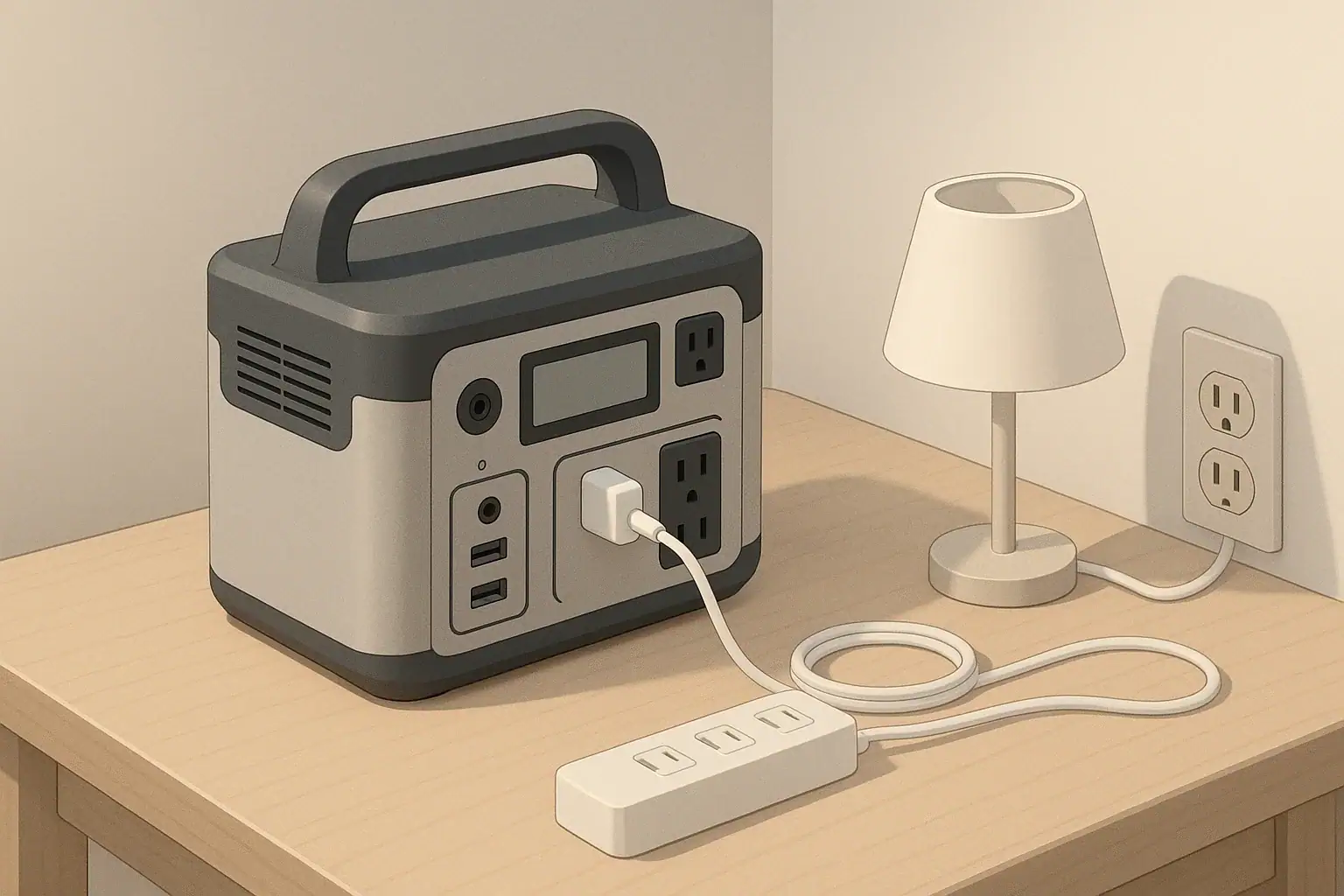
You can safely use extension cords and power strips with portable power stations as long as the total load stays within the ratings of the station, the cord, and the strip, and nothing overheats. The goal is to extend reach and add outlets without creating hidden overloads, voltage drop, or fire hazards.
This refreshed guide explains safe extension cord use with portable power stations for home, office, vehicle, and camping setups. It covers how to size cords, plan loads, spot trouble, and choose power strips that match your inverter output. The focus is on practical, real-world scenarios using the built-in AC outlets on your power station, not on any permanent wiring or DIY electrical work.
If you want reliable backup power or off-grid convenience, treating cords and strips as part of the system—not as afterthoughts—will keep your portable power station running safely and efficiently.
Why Extension Cords and Power Strips Matter With Portable Power Stations
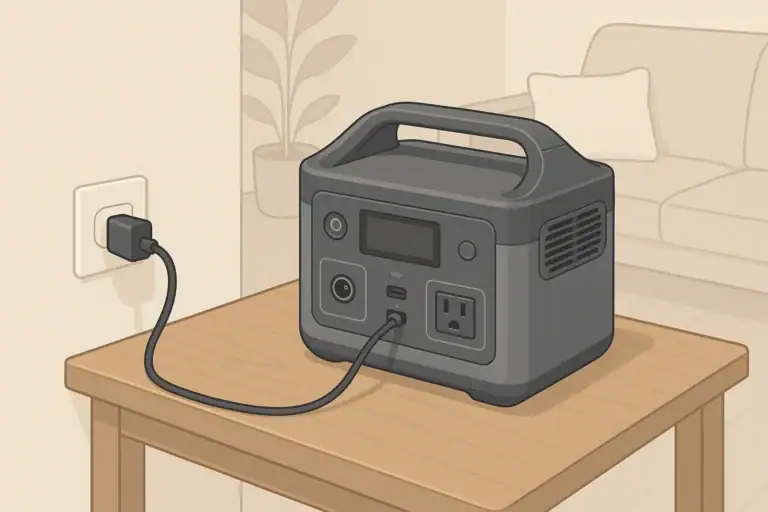
Portable power stations concentrate a lot of capability into a small box, but their built-in AC outlets are usually in one place. Extension cords and power strips let you move that power to where you actually need it: a workbench, a tent, a home office corner, or the far side of a living room.
Every extra cord, connector, and outlet adds resistance and potential failure points. If you ignore ratings or placement, you can end up with:
- Tripped overload protection on the power station
- Voltage drop that makes devices behave unpredictably
- Overheated cords, plugs, or power strips
- In extreme cases, risk of fire or electric shock
Used correctly, though, extension cords and power strips are powerful tools. They let you:
- Keep the power station in a cool, ventilated, safe location
- Distribute power to multiple small devices from a single outlet
- Organize cables in a predictable way during outages or camping trips
Thinking about cords and strips as part of your power plan, rather than last-minute add-ons, is the first step toward safe, repeatable setups.
Key Concepts: Ratings, Loads, and How Everything Works Together
Safe use starts with understanding how the power station, extension cords, and power strips interact.
Know Your Power Station Limits
- Battery capacity (Wh): Determines how long you can run devices. It does not change how many watts you can draw at once.
- Inverter continuous power (W): The maximum steady AC output. All devices on all AC outlets, cords, and strips combined must stay under this.
- Inverter surge power (W): Short bursts above the continuous rating to start motors or compressors.
- Outlet ratings (A): Individual AC outlets may have their own amp limits, which can be lower than the inverter’s total rating.
Add up the running watts of everything you plan to plug in at the same time. Stay comfortably below the continuous watt rating of the power station, especially if any device has a motor or heating element.
Extension Cords vs. Power Strips
- Extension cord: Extends reach. Its main safety factors are wire gauge, length, and jacket rating (indoor vs. outdoor).
- Power strip: Adds outlets. It often includes a short cord, an on/off switch, sometimes surge protection, and a clearly marked amp or watt rating.
You can plug a power strip into a portable power station directly or into a single heavy-duty extension cord. Each added piece should be at least as robust as the load it carries. It is safer to use one appropriately rated strip on a heavy-duty cord than to build chains of light-duty strips and cords.
Amps, Watts, and Wire Gauge
- Watts (W): Power. On 120 V systems, watts ≈ volts × amps.
- Amps (A): Current. Cords and strips are usually rated in amps.
- Wire gauge (AWG): Thickness of the copper conductors. Smaller numbers mean thicker wire (12 AWG is thicker than 16 AWG).
Thicker, shorter cords run cooler and waste less energy. Thinner, longer cords run hotter and drop more voltage. For higher loads or longer distances, choose a lower AWG number and avoid unnecessary length.
| Approx. Total Load on Cord | Typical Use Case | Suggested Minimum Gauge (up to ~25 ft) | Suggested Minimum Gauge (25–50 ft) |
|---|---|---|---|
| Up to 150 W (≈1.3 A) | Phone chargers, LED lamps, small speakers | 16 AWG light-duty | 16 AWG light-duty |
| 150–500 W (≈1.3–4.2 A) | Laptop, monitor, fan, router | 16 AWG or 14 AWG | 14 AWG |
| 500–1000 W (≈4.2–8.3 A) | Mini fridge, small power tools, small microwave | 14 AWG | 12 AWG |
| 1000–1500 W (≈8.3–12.5 A) | Space heater, hot plate, large kettle | 12 AWG heavy-duty | 12 AWG heavy-duty (shorter is strongly preferred) |
Real-World Setups and Load Planning Examples
Seeing how extension cords and power strips work in actual setups makes the ratings easier to apply. The examples below assume a 120 V portable power station.
Example 1: Home Office During a Power Outage
You place the power station in a hallway where it is cool and out of the way, then run one 25 ft 14 AWG extension cord to your desk, ending in a power strip.
- Laptop: 90 W charger
- Monitor: 40 W
- Desk lamp (LED): 10 W
- Wi-Fi router: 15 W
Total load: about 155 W. This is well within the rating of most power strips and extension cords, and far below the continuous output of many portable power stations. The strip gives you enough outlets to keep the desk organized, and the cord lets you keep the power station away from your feet.
Example 2: Camping With a Small Fridge and Lighting
The power station sits under a canopy, protected from direct sun and rain. You run one outdoor-rated 12 or 14 AWG cord to a small power strip at a camp table.
- Mini fridge: 70 W running, 200–300 W surge
- Two LED lanterns with AC adapters: 10 W each
- Occasional phone charger: 10–20 W (could also use the station’s USB ports)
Running load is around 100–110 W, but you plan for the fridge’s starting surge. You avoid plugging other motor loads (like an air pump) into the same strip so that the fridge can start reliably without nuisance shutdowns.
Example 3: High-Draw Appliance on a Dedicated Cord
You want to run a 1200 W electric kettle from a mid-sized power station. Instead of sharing a strip, you plug a short, heavy-duty 12 AWG extension cord directly into the power station and plug the kettle into that cord alone.
- Total load: about 1200 W
- Cord is short and thick, minimizing voltage drop and heat
- No other devices on the same cord or strip
This approach keeps the high current off your lighter-duty cords and strips. You also verify that 1200 W is within the station’s continuous rating before you start.
| Device or Setup | Approx. Total Watts | Better Cord/Strip Strategy |
|---|---|---|
| Two laptops + monitor + lamp | 180–250 W | One quality power strip on a 14–16 AWG cord |
| Mini fridge + fan | 120–200 W running | Single strip on 14 AWG cord; avoid other motor loads |
| Space heater on high | 1200–1500 W | Dedicated short 12 AWG cord, no strip, no other loads |
| Phone and tablet charging only | 20–60 W | Use power station USB ports; minimal or no AC cords needed |
Common Mistakes and Troubleshooting Cues
Most problems with extension cords and power strips on portable power stations come from the same few habits. Recognizing them early helps you fix issues before they become serious.
Overloading Cords or Strips
Symptoms:
- Cord or strip feels hot to the touch (not just slightly warm)
- Plastic around plugs looks discolored or soft
- Strip’s reset button or breaker trips repeatedly
What to do:
- Reduce the number of high-watt devices on that cord or strip
- Upgrade to a heavier-gauge cord or higher-rated strip
- Use a dedicated cord for any single device over about 1000 W
Daisy-Chaining Strips and Cords
Plugging one power strip into another, or building long chains of cords, makes it hard to see where the real limit is.
Risks:
- Hidden overload on the first strip in the chain
- Loose connections that heat up under load
- Difficulty tracing which device is causing trips or shutdowns
Better approach: Use a single, appropriately rated strip at the far end of one heavy-duty extension cord. If you need more reach, move the power station or use a single longer heavy-duty cord instead of multiple cords joined together.
Ignoring Starting Surges
Devices with motors and compressors (fridges, some pumps, some tools) draw a short surge when they start. If several start at once on the same strip, they can trip the power station’s protection even if the running watts look safe.
Warning signs include:
- Power station shuts down when the fridge or pump cycles on
- Strip or cord clicks off briefly when a motor starts
Fixes:
- Move motor loads to their own strip or cord
- Start motors one at a time instead of all together
- Leave extra headroom below the inverter’s continuous rating
Using Damaged or Inappropriate Cords
Old cords with cracked insulation, bent blades, or loose outlets are weak links in an otherwise safe setup.
- Do not tape over damaged spots; replace the cord.
- Avoid indoor-only cords in damp or outdoor areas.
- Avoid adapters that defeat the grounding pin on three-prong plugs.
If you notice buzzing, sparking, or a burning smell from any connection, unplug immediately and retire the suspect cord or strip.
High-Level Safety Basics for Cords, Strips, and Portable Power Stations
A few high-level rules dramatically reduce risk when combining portable power stations with extension cords and power strips.
Stay Within the Lowest Rating in the Chain
The safe limit is always set by the weakest component:
- If the power station can supply 1800 W but your strip is rated for 1200 W, treat 1200 W as your ceiling on that strip.
- If a cord is rated for 10 A (about 1200 W at 120 V), do not exceed that load even if the station and strip are rated higher.
Check the printed labels on the power station, strip, and cord, and plan for the lowest number.
Use Grounded, Appropriately Rated Equipment
- Prefer three-prong grounded cords and strips when your power station offers grounded outlets.
- Match indoor or outdoor ratings to the environment you are using.
- Use cords and strips that include built-in overload protection where possible.
Keep Everything Cool and Dry
- Place the power station on a stable, level surface with several inches of clearance around vents.
- Avoid coiling cords tightly while in use; lay them out loosely to dissipate heat.
- Keep cords and strips out of puddles, off wet ground, and away from standing water.
Do Not Backfeed or Modify House Wiring
Portable power stations are not designed to energize household wiring through a wall outlet. Avoid any setup that involves feeding power into a home circuit or panel without proper, code-compliant equipment installed by a qualified professional.
Maintenance, Storage, and Long-Term Use
Extension cords and power strips are consumable items. Treating them as part of your portable power system and maintaining them over time improves safety and reliability.
Routine Inspection Habits
- Before each use: Check for cuts, nicks, crushed sections, or exposed copper. Flex the cord lightly near the plugs to see if the jacket is splitting.
- After heavy loads: Once you unplug, feel the cord and strip. If any section is noticeably hot, reconsider your load or upgrade the cord.
- Annually: Retire cords or strips that are stiff, brittle, or discolored, even if they still work.
Storage Best Practices
- Coil cords loosely in large loops to avoid kinks and internal conductor damage.
- Store cords and strips in a dry, cool place away from direct sunlight and chemicals.
- Separate outdoor cords from indoor cords so you do not mix them up during quick setups.
Planning for Repeated Use
If you regularly use a portable power station for the same task (such as a weekly outdoor workbench or recurring campsite), consider building a repeatable kit:
- Label cords with their gauge and typical use (for example, “12 AWG – heater/fridge” or “16 AWG – lights/chargers”).
- Bundle each setup (office, camping, emergency) with its own cords and strip so you are not guessing under time pressure.
- Keep a small notepad or label on the power station listing typical loads and safe combinations you have already tested.
Practical Takeaways and Specs to Look For
Safe extension cord use with portable power stations comes down to matching ratings, minimizing heat, and keeping setups simple and visible.
Key Takeaways
- Treat the entire chain (power station, cord, strip, devices) as one system and respect the lowest rating.
- Use thicker, shorter cords for higher loads and longer runs; avoid unnecessary length and daisy-chains.
- Group low-power devices on shared strips, but give high-draw appliances their own dedicated cords.
- Watch for heat, smells, discoloration, or frequent tripping as early signs that something is undersized or failing.
- Plan repeatable setups for your most common use cases so you are not improvising under stress.
Specs to Look For When Buying Cords and Power Strips
When you shop for gear to pair with a portable power station, these specifications matter most:
- Wire gauge (AWG): Prefer 14 AWG or 12 AWG for higher loads and longer runs; 16 AWG is usually fine for light-duty use.
- Amp rating: Look for clear amp and watt ratings on strips and cords; match them to your typical loads with extra headroom.
- Grounding: Three-prong grounded plugs and outlets for grounded devices.
- Indoor/outdoor rating: Outdoor-rated jackets for camping, garages, or any damp or rough environment.
- Overload protection: Built-in resettable breakers or switches on power strips.
- Cord length: Short enough to minimize voltage drop, long enough to route safely without tension or trip hazards.
- Build quality: Firm, snug outlets; solid-feeling plugs; no loose parts or thin, flimsy jackets.
By matching these specs to how and where you use your portable power station, you can extend power safely, avoid nuisance shutdowns, and protect both your equipment and your surroundings over the long term.
Primary reference: The U.S. Consumer Product Safety Commission’s extension-cord guidance identifies minimum wire size, strain relief, polarity, continuity, and appropriate jacketing as important protections against shock and fire.
Frequently asked questions
Which cord and power-strip specifications most affect performance with a portable power station?
Wire gauge (AWG), amp and watt ratings, grounding, cord length, and indoor/outdoor jacket ratings are the most important. Thicker (lower AWG) and shorter cords reduce voltage drop and heat, and strips with clear amp ratings and overload protection provide safer, more reliable operation.
How can I tell if I’m overloading an extension cord or power strip?
Common signs include a cord or strip that feels hot to the touch, discolored or softened plastic, repeated tripping of breakers, buzzing, or a burning smell. If you notice any of these, unplug devices, reduce the load, and replace or upgrade the cord or strip before using it again.
What high-level safety precautions should I follow when using extension cords and power strips with a portable power station?
Respect the lowest-rated component in the chain, use grounded and appropriately rated equipment, keep the station and cords cool and dry, and avoid daisy-chaining. Also, never attempt to feed household wiring from a portable station without code-compliant equipment and a qualified electrician.
Can I use a long, thin extension cord if I keep the load low?
Long, thin cords still introduce voltage drop and can run hotter even at modest loads, so they are best limited to light-duty devices and short runs. For longer distances or higher loads, choose a thicker gauge to avoid inefficient operation and overheating.
Is it safe to plug motor-driven appliances like fridges or pumps into the same power strip as other devices?
Motor-driven appliances have starting surges that can trip protection or overload a strip. It’s safer to give them a dedicated heavy-duty cord or strip, or ensure the chosen strip and cord can handle the surge and start motors one at a time.
How often should I inspect and replace cords and power strips used with a portable power station?
Inspect cords before each use for cuts, nicks, or loose connections, feel for heat after heavy loads, and retire items at any sign of damage. As a rule of thumb, replace cords or strips that become stiff, brittle, discolored, or otherwise compromised, and treat outdoor- and indoor-rated cords separately to avoid mix-ups.
Related guides
Browse this topic →
- Beginner-friendly sizing, runtime & specs
- Solar & charging (MPPT, fast charging, cables)
- Batteries (LiFePO4, cycles, care & storage)
- Safety, cold-weather performance, real-world tips
More in Safety
See all →- Childproofing a Portable Power Station at Home: Cables, Heat, Buttons, and Pets
- Can You Take a Portable Power Station on a Plane? Battery Limits and Safer Travel Planning
- What to Do If a Portable Power Station Gets Wet
- Portable Power Station Fire Safety Checklist for Apartments
- UL 2743 Certification Explained for Portable Power Stations
Keep reading
About this site
Portable Energy Lab publishes practical, independent guides about portable power—clear sizing, safe use, and real-world expectations.
Affiliate disclosure
Some links on this site may be affiliate links. If you buy through these links, we may earn a small commission at no extra cost to you. This helps support our content. Read our affiliate disclosure.