
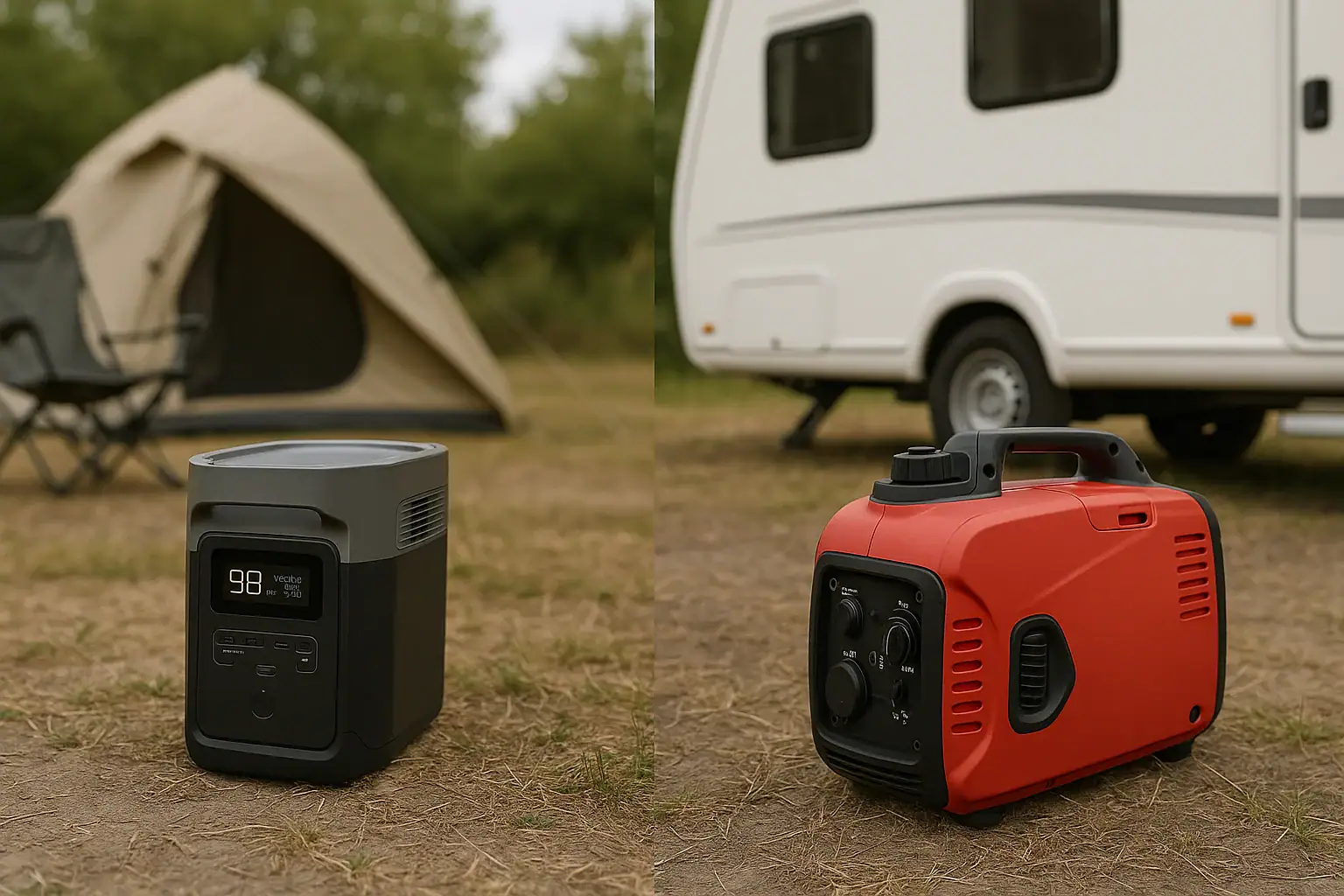
When you compare a portable power station vs inverter generator, the main differences are how they create power, noise level, fuel source, and maintenance needs, which all affect runtime, surge watts, and what devices you can safely run. Portable power stations use built-in batteries and inverters, while inverter generators burn fuel to make AC power continuously.
People often search for terms like backup power, off-grid camping power, clean power, total wattage, and starting watts when deciding between these two options. The right choice depends on whether you prioritize silent operation, low maintenance, and indoor-friendly use, or longer runtime, fast refueling, and higher continuous output. Understanding capacity, inverter quality, and load limits will help you size your system correctly and avoid overloads or short runtimes.
This guide breaks down how each option works, common use cases, safety basics, and the key specs—like wattage, battery capacity, and outlets—to focus on when you are ready to compare models later.
What a Portable Power Station and an Inverter Generator Are and Why the Difference Matters
A portable power station is a self-contained battery system with an inverter and multiple output ports. It stores energy in an internal battery (often lithium-based) and converts it into usable AC and DC power for electronics, appliances, and tools. You charge it from wall outlets, vehicle sockets, or solar panels, then discharge it later where grid power is unavailable.
An inverter generator is a fuel-powered machine (typically gasoline or propane) that spins an alternator to make AC electricity. Its built-in inverter cleans and stabilizes the output so it is safe for sensitive electronics. Unlike a power station, it does not store significant energy; it produces power as long as it has fuel and is running.
This distinction matters for several reasons:
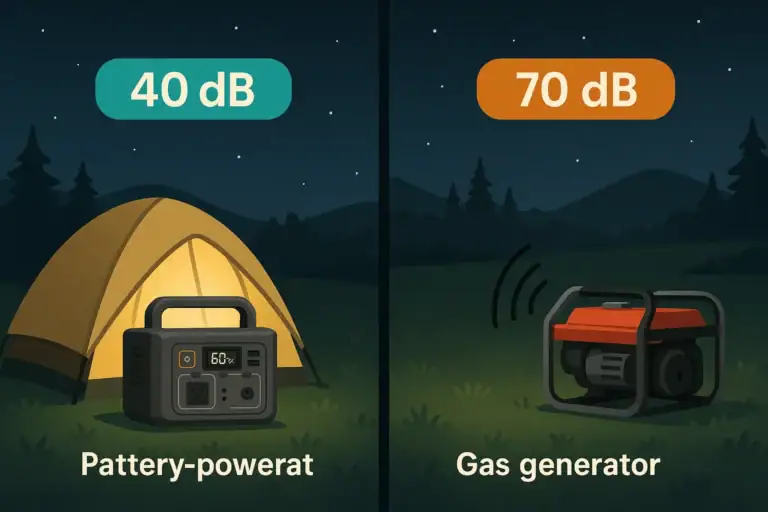
- Noise and location: Portable power stations are nearly silent and can be used indoors. Inverter generators are quieter than conventional generators but still produce noticeable noise and must be used outdoors.
- Fuel vs stored energy: Generators can run as long as you have fuel. Power stations are limited by battery capacity and charging speed.
- Maintenance and emissions: Power stations require minimal upkeep and produce no exhaust. Generators need regular engine maintenance and must be ventilated properly due to emissions.
- Use cases: Power stations excel for camping, small backup loads, and electronics. Inverter generators are better for higher loads and extended outages where refueling is practical.
Knowing these differences helps you match the right type of portable power to your situation, whether that is emergency backup, RV travel, job-site tools, or off-grid living.
How Portable Power Stations and Inverter Generators Work
Portable power stations and inverter generators both deliver AC power, but the internal processes are completely different. Understanding the basics of wattage, voltage, and inverter operation will help you interpret specs like surge watts, continuous watts, and runtime.
How a Portable Power Station Works
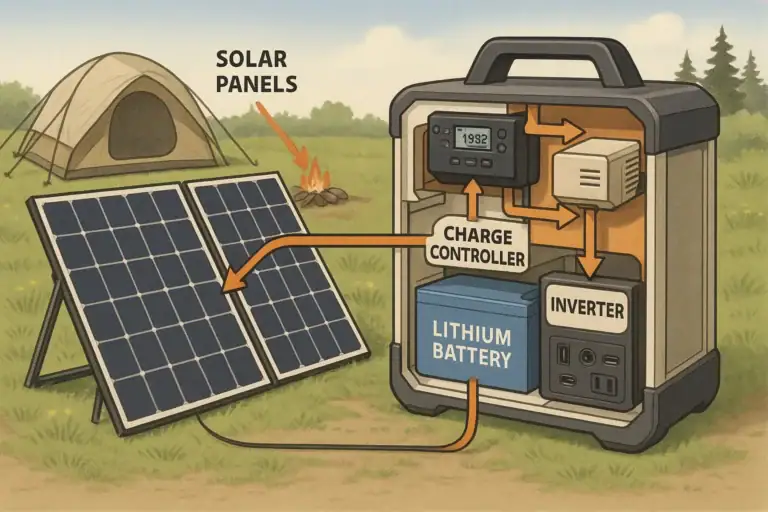
A portable power station is essentially a large rechargeable battery with power electronics around it. Its main components are:
- Battery pack: Usually lithium-ion or lithium iron phosphate, measured in watt-hours (Wh). This determines how much total energy the unit can store.
- Battery management system (BMS): Protects the battery from overcharge, over-discharge, overheating, and short circuits.
- Inverter: Converts DC battery power into AC power (typically 120V in North America) at a stable frequency for household devices.
- DC outputs: USB-A, USB-C PD, 12V car sockets, and sometimes high-current DC ports for specific devices.
- Charge controller: Manages charging from AC wall outlets, vehicle sockets, or solar panels, respecting input limits and voltage ranges.
When you plug in a device, the inverter draws DC from the battery, converts it to AC, and supplies it to the outlet. Total output is limited by the inverter’s continuous watt rating and short-term surge rating for starting loads like compressors or motors.
How an Inverter Generator Works
An inverter generator uses a small engine to spin a generator head, creating raw AC power. The process typically looks like this:
- Engine and fuel system: A combustion engine burns gasoline or propane to provide mechanical energy.
- Alternator: Converts mechanical energy into AC electricity.
- Rectifier and inverter: The raw AC is converted to DC, then back to clean, stable AC at a fixed voltage and frequency. This is what makes it an “inverter” generator.
- Throttle control (eco-mode): The engine speed adjusts based on load, improving fuel efficiency and reducing noise at lower loads.
Unlike a power station, an inverter generator does not have a large internal energy store; runtime is determined by fuel tank size and engine efficiency at a given load.
Key Power Concepts: Watts, Watt-Hours, and Surge
To compare the two technologies, it helps to understand a few core terms:
- Continuous watts: The maximum power a device can supply steadily. This limits how many appliances you can run at once.
- Surge watts (starting watts): The short burst of power available to start motors and compressors, which can be 2–3 times their running watts.
- Watt-hours (Wh): A measure of stored energy, mainly used for batteries and portable power stations. It determines how long you can run a given load.
- Runtime: For generators, often given as “hours at 25% load” or similar, based on fuel tank size and efficiency.
Portable power stations are defined mainly by storage (Wh) and inverter output (W), while inverter generators are defined by output (W) and fuel-based runtime.
| Feature | Portable Power Station | Inverter Generator |
|---|---|---|
| Power source | Internal battery (DC) | Fuel-powered engine |
| Typical rating | 300–2,000 W output | 1,000–4,000 W output |
| Energy measure | Watt-hours (e.g., 500–2,000 Wh) | Fuel tank & hours at % load |
| Noise level | Near silent (fan noise only) | Low to moderate engine noise |
| Emissions | No exhaust at point of use | Requires outdoor ventilation |
| Refueling / recharging | AC, DC, or solar charging | Gasoline or propane refills |
Real-World Use Cases: When a Power Station or Inverter Generator Fits Best
Once you understand how each system works, the next step is matching it to real-world scenarios. Capacity, peak load, and noise restrictions all influence what will serve you best.
Camping and Overlanding
For tent camping, car camping, and overlanding, a portable power station is often more convenient. It provides quiet, emission-free power for LED lights, phones, cameras, small fans, laptops, and portable fridges. Many campgrounds have noise rules, and a silent battery pack is easier to live with overnight.
Inverter generators can still be useful for RVs or large trailers where you need to run air conditioners or microwaves that exceed the typical output of small power stations. However, they must be placed outdoors, and their exhaust and sound may be restricted by campground rules.
Home Backup During Outages
For brief power outages and small backup loads, a portable power station can keep essentials like phones, a modem/router, a laptop, and a few LED lamps running. Larger units may power a refrigerator or CPAP machine for several hours if you manage the load carefully.
For extended outages or when you need to run higher-wattage appliances—such as a full-size refrigerator, sump pump, or portable heater—an inverter generator is usually more practical. You can refuel as needed and maintain higher continuous output. For any connection to home circuits, a qualified electrician should be involved to ensure safe and code-compliant installation.
RV and Vanlife Power
In RVs and camper vans, both technologies play a role. A portable power station can serve as a flexible, plug-and-play battery bank to run laptops, lights, fans, and low-wattage cooking gear. Solar charging on the roof or portable panels can extend off-grid time without fuel.
An inverter generator becomes attractive when you want to run rooftop air conditioning, electric water heaters, or other heavy loads for longer periods. Many travelers use a combination: a battery-based system for everyday use and a generator as a backup for high-demand situations or poor solar conditions.
Job Sites and Tools
On construction sites or remote work areas, the choice depends on tool type and duty cycle. A high-capacity portable power station can run lower-wattage tools, chargers, and electronics quietly, which may be important in residential neighborhoods with noise ordinances.
For continuous use of high-amp saws, compressors, or welders, an appropriately sized inverter generator usually offers more sustained output and faster “refueling” via fuel canisters. Some crews use a power station for lighter loads and a generator for heavy-duty tasks.
Events, Tailgating, and Outdoor Gatherings
For events where quiet operation is important—like backyard parties, outdoor movie nights, or tailgating—a portable power station is often preferred. It can run speakers, projectors, small cooking appliances, and lighting without engine noise or exhaust.
An inverter generator can support larger sound systems, multiple electric grills, or other high-demand setups, but it must be placed where noise and exhaust will not bother guests.
Common Mistakes, Limitations, and Troubleshooting Clues
Both portable power stations and inverter generators can be misused if their limits are not understood. Recognizing common mistakes helps you avoid overloads, short runtimes, or safety issues.
Underestimating Total Wattage and Surge Needs
A frequent mistake is adding up only the running watts of devices and ignoring starting watts. Appliances with compressors or motors—like refrigerators, air conditioners, and some power tools—can draw 2–3 times their running watts for a few seconds at startup.
Signs you are hitting surge or continuous limits include:
- Power station shutting off when a device starts.
- Generator bogging down, changing tone, or tripping its overload indicator.
- Lights flickering or electronics rebooting when a large load kicks on.
To avoid this, check appliance labels or manuals for starting watts, or assume a generous buffer above running watts when sizing your system.
Overlooking Battery Capacity and Realistic Runtime
With portable power stations, another common issue is expecting long runtimes from a small battery. For example, a 500 Wh unit running a 100 W load will last roughly 4–5 hours after accounting for inverter losses, not all day.
Clues that you are pushing capacity too hard include:
- Battery percentage dropping quickly under moderate loads.
- Unit warming up and fans running constantly.
- Low-battery or overload warnings when using several devices at once.
Reducing load, cycling devices (not running everything at once), and using more efficient appliances can stretch runtime.
Ignoring Fuel Quality and Load Management on Generators
For inverter generators, stale fuel, clogged filters, or running at maximum load for long periods can cause problems. Symptoms include:
- Hard starting or failure to start.
- Rough running, surging, or stalling under load.
- Overload lights illuminating or breakers tripping.
Keeping fresh fuel, observing recommended service intervals, and operating below the maximum continuous watt rating help maintain reliability.
Using the Wrong Outlets or Cables
Another issue is using cables or adapters that are not rated for the load. Overheating cords, warm plugs, or intermittent power can indicate an undersized extension cord or loose connection.
For portable power stations, make sure USB-C PD cables match the PD profile and wattage you expect. For generators, use heavy-gauge outdoor-rated cords sized for the current draw and distance.
Misinterpreting Eco-Modes and Power-Saving Features
Both technologies may have eco or power-saving modes. On power stations, these can shut off AC output after a period of low load, which may surprise users running small devices like routers or phone chargers.
On inverter generators, eco-mode lowers engine speed at low load. If the load suddenly spikes, the engine may take a moment to respond, potentially causing lights to flicker or sensitive devices to reset. Understanding how these modes behave helps you decide when to enable or disable them.
Safety Basics for Portable Power Stations and Inverter Generators
While portable power stations and inverter generators are designed with safety features, they still require responsible use, especially around moisture, heat, and enclosed spaces.
Ventilation and Exhaust
Portable power stations do not produce exhaust at the point of use and can be operated indoors, but they still need adequate airflow. Do not cover vents or place them in tightly enclosed spaces where heat can build up.
Inverter generators, by contrast, must always be used outdoors and away from windows, doors, and vents. Engine exhaust contains carbon monoxide, which is colorless and odorless but potentially deadly. Never run a generator in a garage, basement, or any enclosed or partially enclosed area, even with doors open.
Electrical Safety and Overload Protection
Both device types include overload protection, but users should still respect their ratings. Avoid daisy-chaining power strips, and do not exceed the rated amperage of any outlet. If a device repeatedly trips overload protection, reduce the load instead of bypassing or resetting repeatedly.
For any connection to a building’s electrical system, consult a qualified electrician. Improper backfeeding into home circuits can endanger utility workers and damage equipment.
Heat, Moisture, and Placement
Keep portable power stations and inverter generators dry. Avoid using them in standing water, heavy rain, or snow. Moisture can damage electronics and create shock hazards. If outdoor use in damp conditions is unavoidable, place the unit under a canopy or other cover that does not restrict airflow.
Do not place combustible materials close to an inverter generator’s exhaust or engine area. Hot surfaces and exhaust gases can ignite nearby items. Similarly, avoid placing a power station on soft surfaces that block vents or trap heat.
Battery Handling and Charging Practices
For portable power stations, use only the recommended charging methods and cables. Avoid exposing the unit to extreme temperatures, especially high heat, which can degrade batteries faster. If the case becomes unusually hot, emits a strong odor, or shows signs of swelling or damage, stop using it and follow the manufacturer’s guidance.
Do not attempt to open the case, modify the battery pack, or bypass built-in protections. Internal components are not user-serviceable and can pose shock or fire risks if tampered with.
Fuel Storage and Fire Risk
For inverter generators, store fuel in approved containers away from living spaces and ignition sources. Allow the generator to cool before refueling to reduce fire risk. Spilled fuel should be cleaned up before restarting the unit.
Having an appropriate fire extinguisher nearby, especially when running an engine-driven generator, adds an extra layer of safety.
Maintenance and Storage: Keeping Your Power Source Ready
Proper maintenance and storage practices extend the life of both portable power stations and inverter generators, ensuring they are ready when you need them.
Maintaining a Portable Power Station
Portable power stations require relatively little maintenance compared to engines, but a few habits make a big difference:
- Regular cycling: Periodically charge and discharge the battery within normal operating ranges to keep it healthy.
- Firmware and updates: Some units support firmware updates via apps or connections; keeping these current can improve performance and safety features.
- Clean ports and vents: Dust and debris can accumulate in vents and connectors. Gently clean these areas to maintain airflow and reliable connections.
Most modern battery systems manage cell balancing and protection automatically, so user maintenance focuses on usage patterns and storage conditions.
Storing a Portable Power Station
When not in use, store a portable power station in a cool, dry place away from direct sunlight. Many manufacturers recommend storing at a partial state of charge (often around 40–60%) rather than fully drained or fully charged for long periods.
Check the charge level every few months and top up if it has dropped significantly. Extremely low voltage for extended periods can damage lithium batteries.
Maintaining an Inverter Generator
Inverter generators need more traditional engine maintenance. Typical tasks include:
- Oil changes: Change engine oil at the recommended intervals or after extended use.
- Air filter cleaning/replacement: A clean filter improves performance and reduces wear.
- Spark plug inspection: Replace worn or fouled plugs to maintain easy starting and smooth operation.
- Fuel system care: Use fresh fuel and consider fuel stabilizers if the generator will sit unused for long periods.
Follow the service schedule in the documentation and keep records of maintenance to track when tasks are due.
Storing an Inverter Generator
For seasonal or long-term storage, many users either run the generator dry or treat the fuel with stabilizer and run it briefly to circulate treated fuel through the system. This helps prevent varnish and deposits in carburetors and injectors.
Store the generator in a dry, covered area where it is protected from dust and moisture. Disconnecting or maintaining the starter battery (if equipped) according to the instructions helps ensure it will crank when needed.
| Task | Portable Power Station | Inverter Generator |
|---|---|---|
| Routine checks | Charge level every 2–3 months | Fuel level and condition before use |
| Mechanical service | None (no engine) | Oil, air filter, spark plug |
| Storage charge | Partial charge (e.g., 40–60%) | Fuel stabilized or tank drained |
| Environment | Cool, dry indoor space | Dry, covered, ventilated area |
| Readiness check | Test outputs and ports | Test start and run under light load |
Related guides: Portable Power Station Buying Guide • Can a Portable Power Station Run a Refrigerator? • Portable Power Station vs Generator • Portable Power Stations for RV and Motorhomes
Practical Takeaways and Key Specs to Compare
Choosing between a portable power station and an inverter generator comes down to your priorities: silence and simplicity versus higher output and fuel-based runtime. For short-term, low-to-moderate loads—especially indoors or in noise-sensitive areas—a portable power station is often the better fit. For heavier loads and extended outages where refueling is practical, an inverter generator usually makes more sense. If you plan to recharge a power station from a generator, output frequency and grounding can determine compatibility.
Many users find that a combination of both provides the most flexibility: a quiet battery system for everyday or nighttime use and an engine-driven generator for peak loads or long emergencies. Whichever direction you lean, focusing on the right specifications will help you compare options effectively later.
Specs to look for
- Continuous AC output (watts): Look for a rating that exceeds your typical combined load by 20–30% (for example, 800–1,000 W for light use, 2,000+ W for larger setups). This buffer reduces overload risk.
- Surge/starting watts: Choose a unit with surge capacity 2–3 times the largest motor load you plan to start (such as a fridge or AC). Adequate surge helps prevent shutdowns during startup.
- Battery capacity or fuel runtime: For power stations, compare watt-hours (e.g., 500–2,000 Wh) against your hourly load to estimate runtime. For generators, look at hours of runtime at 25–50% load to gauge fuel efficiency.
- Output ports and receptacles: Ensure there are enough AC outlets, USB-A, USB-C PD, and 12V ports for your devices. The right mix reduces the need for adapters and power strips.
- Noise level: Check approximate decibel ratings where available (for generators, often 50–65 dB at a specified distance). Lower noise is important for camping, neighborhoods, and nighttime use.
- Weight and portability: Consider total weight and handle or wheel design. Sub-20 lb units are easy to carry; 40–80 lb units may need wheels or two-person lifting.
- Charging or refueling options: For power stations, look at AC input watts, solar input limits, and vehicle charging support. Faster input means quicker turnaround between uses. For generators, consider tank size and fuel type.
- Inverter quality and waveform: A pure sine wave inverter is preferred for sensitive electronics, reducing the risk of noise, overheating, or malfunction in laptops and medical devices.
- Environmental and safety features: Look for protections such as overload, over-temperature, low-oil shutdown (for generators), and clear ventilation requirements. These features help prevent damage and accidents.
By matching these specs to your actual devices and usage patterns, you can make an informed decision about whether a portable power station, an inverter generator, or a combination of both will best meet your portable power needs.
Frequently asked questions
Which specs and features matter most when comparing a portable power station vs inverter generator?
Prioritize continuous watts, surge/starting watts, and battery capacity (watt-hours) for power stations or fuel runtime for generators. Also check inverter waveform (pure sine preferred), available outlets/ports, charging input limits (for solar/AC), noise levels, and weight/portability. These specs determine what devices you can run, for how long, and how convenient the unit will be to use.
Why do people often overestimate how long a portable power station will run their devices?
Run-time is commonly overestimated because users ignore inverter losses, depth-of-discharge limits, and startup surges that consume extra energy. Calculating expected runtime requires dividing the battery’s usable watt-hours by the actual device load and including a safety buffer. Assuming ideal conditions or ignoring simultaneous device draws leads to disappointing runtimes.
Can I safely use a portable power station indoors, and what precautions should I take?
Portable power stations produce no exhaust and are generally safe for indoor use, but keep vents unobstructed and avoid extreme temperatures or high humidity. Use only recommended charging methods and do not attempt to open or modify the battery pack. Follow manufacturer safety guidance and monitor for overheating or unusual odors.
How do noise levels compare between portable power stations and inverter generators?
Portable power stations are near-silent aside from occasional fan noise, making them well suited to quiet environments. Inverter generators are much quieter than conventional generators but still produce engine noise, typically ranging from about 50–65 dB at a specified distance depending on load and model. If quiet operation is important, noise specs and real-world reviews are useful to compare.
Can I recharge a portable power station with solar panels during an outage?
Yes—many power stations accept solar input if the panels meet the unit’s voltage and current requirements and use an appropriate charge controller or MPPT. Charging speed depends on the station’s maximum solar input watts and available sunlight, so solar can extend runtime but may not fully replace fuel-based refueling for high continuous loads. Verify compatibility and recommended panel configurations before relying on solar for critical needs.
Do inverter generators require more maintenance than portable power stations?
Yes, inverter generators require routine engine maintenance such as oil changes, air filter and spark plug service, and fuel system care. Portable power stations have minimal mechanical maintenance, mostly firmware updates, keeping ports clean, and occasional cycling or topping charges to preserve battery health. The long-term upkeep and fuel storage needs are higher for engine-driven generators.
Related guides
Browse this topic →
- Beginner-friendly sizing, runtime & specs
- Solar & charging (MPPT, fast charging, cables)
- Batteries (LiFePO4, cycles, care & storage)
- Safety, cold-weather performance, real-world tips
More in Comparison
See all →- Modular vs All-in-One Portable Power Stations: Pros, Cons, and Best Use Cases
- Portable Power Station vs Gas Generator Noise Levels
- Portable Power Station vs Home Battery
- Can You Use Two Portable Power Stations Together? Parallel Use Explained
- Portable Power Station vs Power Bank vs UPS: What You Actually Need
Keep reading
About this site
Portable Energy Lab publishes practical, independent guides about portable power—clear sizing, safe use, and real-world expectations.
Affiliate disclosure
Some links on this site may be affiliate links. If you buy through these links, we may earn a small commission at no extra cost to you. This helps support our content. Read our affiliate disclosure.