
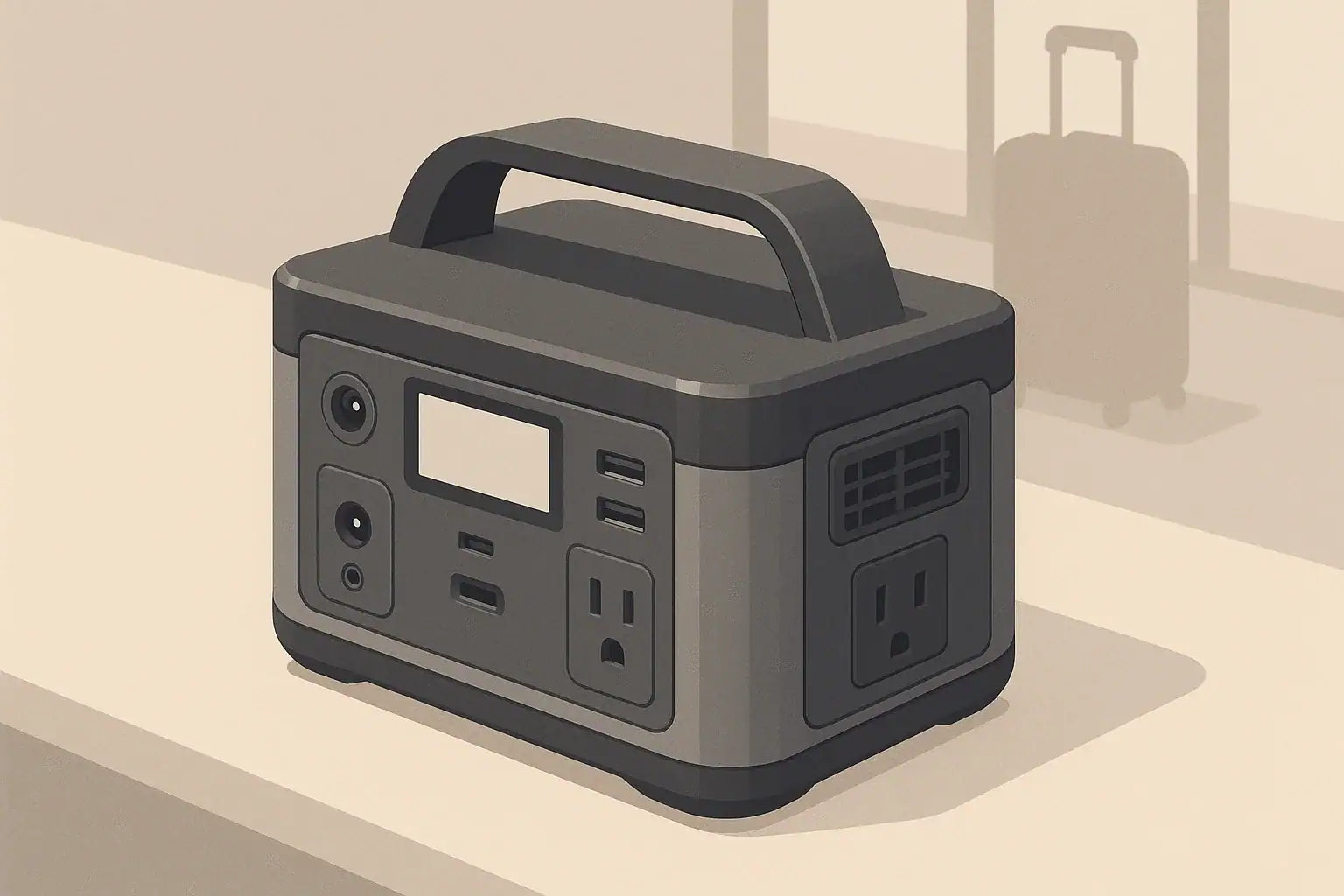
Can You Fly With a Portable Power Station?
Portable power stations use large rechargeable batteries, most often lithium-ion or lithium iron phosphate (LiFePO4). Because of their energy density and fire risk if damaged or shorted, airlines and regulators treat them differently from small power banks or laptop batteries.
In many cases, you cannot take a typical portable power station on a commercial passenger flight, especially in checked baggage. Whether a specific unit is allowed depends on its battery chemistry, how the battery is installed, and its watt-hour (Wh) capacity.
In the United States, rules are shaped by federal hazardous materials regulations and enforced by transportation security and airlines. Other countries use similar principles, though the details can vary. Always confirm with your airline before you fly.
Key Battery Rules That Affect Portable Power Stations
When airlines decide what is allowed on a plane, they focus on the battery, not the marketing term “portable power station.” Most models rely on lithium batteries, which have stricter limits than non-spillable sealed lead-acid batteries of similar capacity.
Lithium Battery Capacity Limits
Instead of amp-hours (Ah), aviation rules usually reference watt-hours (Wh), which measure stored energy. Many modern power stations list Wh directly on the case or specification label. If you only see voltage (V) and amp-hours (Ah), you can estimate:
Estimated watt-hours: V × Ah ≈ Wh
Common policy patterns for lithium batteries on passenger flights include:
- Under about 100 Wh: Usually allowed in carry-on in reasonable quantities, similar to laptop batteries or small power banks.
- 100–160 Wh range: Often allowed in carry-on only with airline approval, sometimes with a limit on how many you can bring.
- Above about 160 Wh: Commonly not allowed on passenger aircraft as personal baggage, whether checked or carry-on.
Many full-size portable power stations for camping, RV use, or home backup are well above 160 Wh. That makes them difficult or impossible to bring on most flights as a passenger.
Carry-On vs. Checked Baggage
Small lithium batteries, including most consumer power banks, generally must be in carry-on baggage, not checked. This allows crew to respond quickly if a battery overheats or malfunctions.
Important considerations:
- Carry-on only for lithium: High-capacity lithium devices are usually prohibited in checked bags.
- Terminals protected: Ports and exposed contacts should be covered or protected from short circuits.
- Device switched off: Power stations should be turned completely off and not actively charging anything during the flight.
Installed vs. Spare Batteries
Rules sometimes distinguish between:
- Installed batteries: Batteries permanently installed in a device, with a case designed for that battery.
- Spare or loose batteries: Individual battery packs or modules not inside a device.
Some portable power stations have removable battery packs. These may be treated as spare batteries if transported outside the housing, which can bring additional quantity and packaging limits. Never disassemble a power station to try to “fit” a rule; this can be unsafe and may violate airline policies.
| What to check | Why it matters | Notes |
|---|---|---|
| Lithium vs. non-lithium battery | Lithium has strict aviation limits | Most modern units are lithium-based. |
| Watt-hour capacity label | Determines if airline limits are exceeded | Under ~100 Wh is more likely to be accepted. |
| Carry-on vs. checked policy | Improper placement can lead to confiscation | Lithium is usually restricted to carry-on only. |
| Airline approval for mid-size batteries | Some sizes require pre-approval | Contact the airline before travel when near limits. |
| Device condition | Damaged batteries pose higher fire risk | Swollen, cracked, or wet units should not be flown. |
| Ports and switches protected | Prevents accidental activation or shorting | Turn off outputs and cover exposed connectors. |
| Local rules at destination | Import or safety rules may differ | Check regulations if flying internationally. |
Example values for illustration.
How to Tell if Your Portable Power Station Is Too Large to Fly
Because portable power stations vary widely in size, it helps to know where your unit falls compared with common travel limits.
Estimating Capacity From the Label
Look for a specification label on the device or in the manual. Common ways capacity may be listed include:
- Wh directly: For example, “Capacity: 500 Wh”
- Voltage and amp-hours: For example, “12 V, 40 Ah”
If only voltage and amp-hours are shown, multiply them to estimate watt-hours. For instance, a 12 V, 40 Ah battery would be roughly 480 Wh (12 × 40). If your calculation shows several hundred watt-hours or more, the device is likely too large for most passenger flight rules.
Typical Sizes vs. Airline-Friendly Ranges
Very broadly, you can group portable power sources like this:
- Small power banks: Often 20–100 Wh. Made mainly for phones and tablets. These are usually acceptable in carry-on baggage, though airlines may limit how many you bring.
- Compact power stations: Roughly 150–300 Wh examples. Often used for small electronics, light camping loads, or short outages. Many are above the most common 160 Wh limit and may not be allowed.
- Mid to large power stations: Roughly 500–2,000+ Wh. Designed for heavier loads like appliances, tools, or longer backup. These are typically far beyond passenger flight allowances.
These are only general ranges, not official categories. Always verify your exact unit’s capacity and compare it to the latest airline and regulatory guidance.
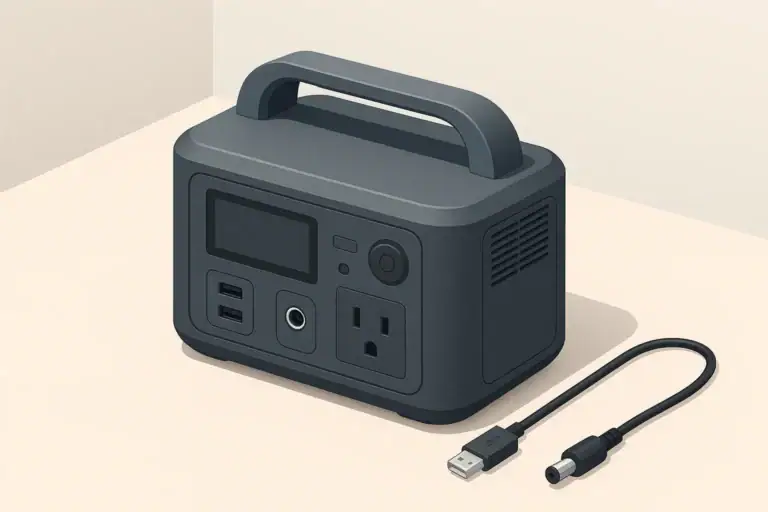
Installed Handles and Size Are Not Reliable Indicators
Some smaller units look bulky due to their cases, while some higher-capacity lithium packs are very compact. Visual size is not a reliable way to guess whether your power station is airline-compliant. Capacity labeling and chemistry matter far more than physical dimensions.
Practical Travel Alternatives to Flying With a Power Station
In many situations, the most realistic approach is to avoid flying with a high-capacity portable power station entirely. Instead, consider options that stay within typical airline rules or avoid those limits altogether.
Use Smaller Power Banks for Flights
If your main goal is keeping phones, tablets, or a lightweight laptop running during travel, a standard power bank can be more practical and compliant than a full power station. Look for:
- Clearly labeled Wh capacity that fits under typical carry-on limits.
- Built-in protections like overcurrent, overvoltage, and temperature control.
- USB-C or USB-A outputs sufficient for your devices.
Power banks do not offer AC outlets but fit more easily within capacity limits and baggage rules.
Rent or Borrow at Your Destination
For camping trips, remote work, or events, it may be easier to arrange power at your destination:
- RV parks and campgrounds often provide electrical hookups.
- Tool rental shops in some areas rent small generators or power equipment.
- Local friends or organizations may lend a power station for short use.
This approach avoids baggage uncertainty and can be more convenient for large, heavy units.
Ship Larger Units Separately
For longer stays or professional projects, some people choose to send large batteries or power stations through freight or ground carriers instead of taking them as baggage. Carrier rules still apply, and labeling must be accurate, but ground or cargo transport often has different limits from passenger flights.
When shipping:
- Check the carrier’s hazardous materials rules for batteries.
- Use robust packaging to prevent impact or crushing.
- Keep documentation of battery type and capacity accessible.
Follow the carrier’s instructions closely and avoid any modifications to the device or labeling.
Capacity, Outputs, and Why Airlines Care
Understanding how a portable power station is designed helps explain why airlines are cautious with them.
Energy Capacity vs. Output Power
Two important specifications often cause confusion:
- Capacity (Wh): How much energy is stored. This mostly affects airline rules and how long the unit can run devices.
- Output power (W): How much power can be delivered at once through AC or DC outlets.
A device with modest output (for example, enough to run a laptop) can still have a large capacity battery that exceeds common air travel limits. Airline rules focus on energy storage because it relates directly to potential heat and fire risk.
AC vs. DC Outputs on a Plane
Most portable power stations offer a mix of:
- AC outlets from an internal inverter.
- DC outputs such as 12 V ports.
- USB ports for phones and small electronics.
On a flight, you are generally not allowed to use large AC outlets or high-power DC ports from a power station during takeoff, landing, or sometimes at any time. Airlines want to avoid tripping cabin power outlets, interfering with onboard systems, or creating tripping hazards with cords. Even if the device is technically allowed onboard, plan on keeping it off and stored during most of the flight.
Charging Behavior and Pass-Through Use
Some portable power stations support pass-through charging, where you plug the power station into a wall outlet and power your devices from the station at the same time. On an aircraft, this is typically discouraged or prohibited because:
- Cabin outlets are often limited in wattage.
- Continuous charging and discharging can increase heat.
- Loose cords around seats can be a safety issue.
Expect to charge your devices directly from in-seat power or from small power banks, rather than running a full power station in pass-through mode during the flight.
Safety and Good Practices When Traveling With Batteries
Whether you bring a small compliant unit or ship a larger one separately, safe handling and storage are important.
Before You Travel
Take simple steps to reduce risk and avoid problems at security checkpoints:
- Inspect the case: Do not travel with a power station that is swollen, cracked, or has been exposed to water or crushing impacts.
- Check for recalls: Occasionally, battery-powered products are recalled for safety issues. Verify that your unit has no outstanding recall actions.
- Reduce charge level if recommended: Some manufacturers suggest storing or transporting lithium batteries at partial charge.
- Secure cables: Use cable ties or pouches to prevent accidental disconnection or shorting.
During the Flight
If your small power unit is allowed onboard and you choose to bring it in your carry-on:
- Keep it where cabin crew can easily access it if needed.
- Do not bury it deep under heavy objects where heat could build up.
- Ensure it remains switched off, unless crew specifically allows use.
If you notice unusual heat, smell, or visible smoke from any battery, alert crew immediately and follow their instructions.
After You Land
Once you arrive at your destination:
- Let the power station acclimate if you moved between very different temperatures.
- Avoid charging immediately if the unit feels cold or hot to the touch; let it reach room temperature first.
- Use only the recommended charger and cords in a stable, ventilated area away from flammable materials.
Routine inspection and proper storage (cool, dry, and out of direct sun) help extend battery life and reduce safety risks.
Planning Power Use at Your Destination Without Flying With a Station
If you leave your larger portable power station at home, planning becomes more important once you arrive.
Matching Wh Capacity to Realistic Loads
At your destination, whether you rent a unit or rely on smaller batteries, estimate how long it can run your devices:
- Add up the wattage of the devices you want to power.
- Compare that to the watt-hour capacity of the battery.
- Account for inverter losses and real-world conditions by building in a margin instead of assuming perfect efficiency.
For example, if a power source has a few hundred watt-hours of usable capacity, constantly running a 100 W device will use that energy in just a few hours. Lower-power devices like LED lights or routers will run much longer from the same energy store.
Charging Options at the Destination
Portable power stations can often be recharged by:
- Wall outlets: Fast and convenient in most accommodations.
- Vehicle 12 V outlets: Slower, but useful on road trips or in RVs.
- Solar panels: Helpful for camping or remote work, but dependent on weather and daylight.
When flying to a location and acquiring a power source there, check that the charging methods match what will be available to you, and that the input voltage and plug type are compatible with local outlets.
| Device type | Typical watt range (example) | Planning notes |
|---|---|---|
| Smartphone | 5–15 W | Multiple full charges from even a small power bank. |
| Tablet or e-reader | 10–25 W | Plan for 1–3 charges per day on trips with heavy use. |
| Lightweight laptop | 30–65 W | High screen brightness and heavy apps increase draw. |
| Portable Wi‑Fi router | 5–10 W | Low draw but often used continuously; budget time accordingly. |
| LED camping light | 3–10 W | Can run many hours from modest battery capacity. |
| Small DC fan | 10–30 W | Continuous use can add up over long nights. |
Example values for illustration.
Key Takeaways: Power Stations and Air Travel
Most full-size portable power stations are not practical to bring on passenger flights due to lithium battery capacity limits, carry-on requirements, and safety rules. Smaller power banks designed for personal electronics are typically the better option for air travel, while larger power solutions are best rented, borrowed, or shipped by appropriate ground or cargo services.
Before you fly, confirm your battery’s watt-hour rating, review current airline policies, and plan how you will power devices at your destination if you leave large power stations behind. This approach keeps you within regulations while maintaining the portable power you need for phones, laptops, and other essentials.
Frequently asked questions
Can I bring a portable power station on a plane in my carry-on?
Possibly, but it depends on the battery’s watt-hour (Wh) rating and your airline’s rules. Batteries under about 100 Wh are commonly allowed in carry-on, 100–160 Wh may require airline approval, and units above about 160 Wh are generally not permitted on passenger aircraft; always confirm with your carrier.
How do I calculate watt-hours if my power station lists only voltage and amp-hours?
Multiply the nominal voltage (V) by the amp-hour (Ah) rating to estimate watt-hours (Wh ≈ V × Ah). If the manufacturer lists Wh directly, use that value and check the manual for any notes about usable versus nominal capacity.
Are removable battery packs treated differently than batteries installed in the device?
Yes. Removable packs carried outside their housing are typically treated as spare batteries and are subject to stricter quantity, packaging, and carry-on rules. Do not disassemble a power station to try to meet rules, as this is unsafe and may violate airline policies.
Can I use a portable power station to power devices during the flight?
Generally no—airlines usually require such units to remain switched off and stored, and pass-through charging or running high-power AC/DC loads is typically discouraged or prohibited. Crew may permit limited use in rare cases, so ask if unsure.
What is the safest way to transport a large power station to my destination if I cannot fly with it?
Ship the unit via ground freight or cargo and follow the carrier’s hazardous materials requirements: declare battery chemistry and Wh capacity, use robust packaging, and include any required documentation and labels. Ground and cargo services often accept larger batteries than passenger airlines, but limits and paperwork still apply.
Recommended next:
- Can a Portable Power Station Replace a UPS?
- Do Portable Power Stations Work While Charging? Pass-Through vs UPS Mode
- Why Does My Power Station Turn Off? Auto-Shutoff Explained
- Why Won’t It Charge From Solar? A Troubleshooting Checklist
- Why Is the Fan So Loud? Cooling Behavior Explained
- Why Does AC Output Stop Under Load? Common Causes and Fixes
- More in FAQ →
Related guides
Browse this topic →

- Beginner-friendly sizing, runtime & specs
- Solar & charging (MPPT, fast charging, cables)
- Batteries (LiFePO4, cycles, care & storage)
- Safety, cold-weather performance, real-world tips
More in FAQ
See all →Keep reading
About this site
Portable Energy Lab publishes practical, independent guides about portable power—clear sizing, safe use, and real-world expectations.
Affiliate disclosure
Some links on this site may be affiliate links. If you buy through these links, we may earn a small commission at no extra cost to you. This helps support our content. Learn more.