
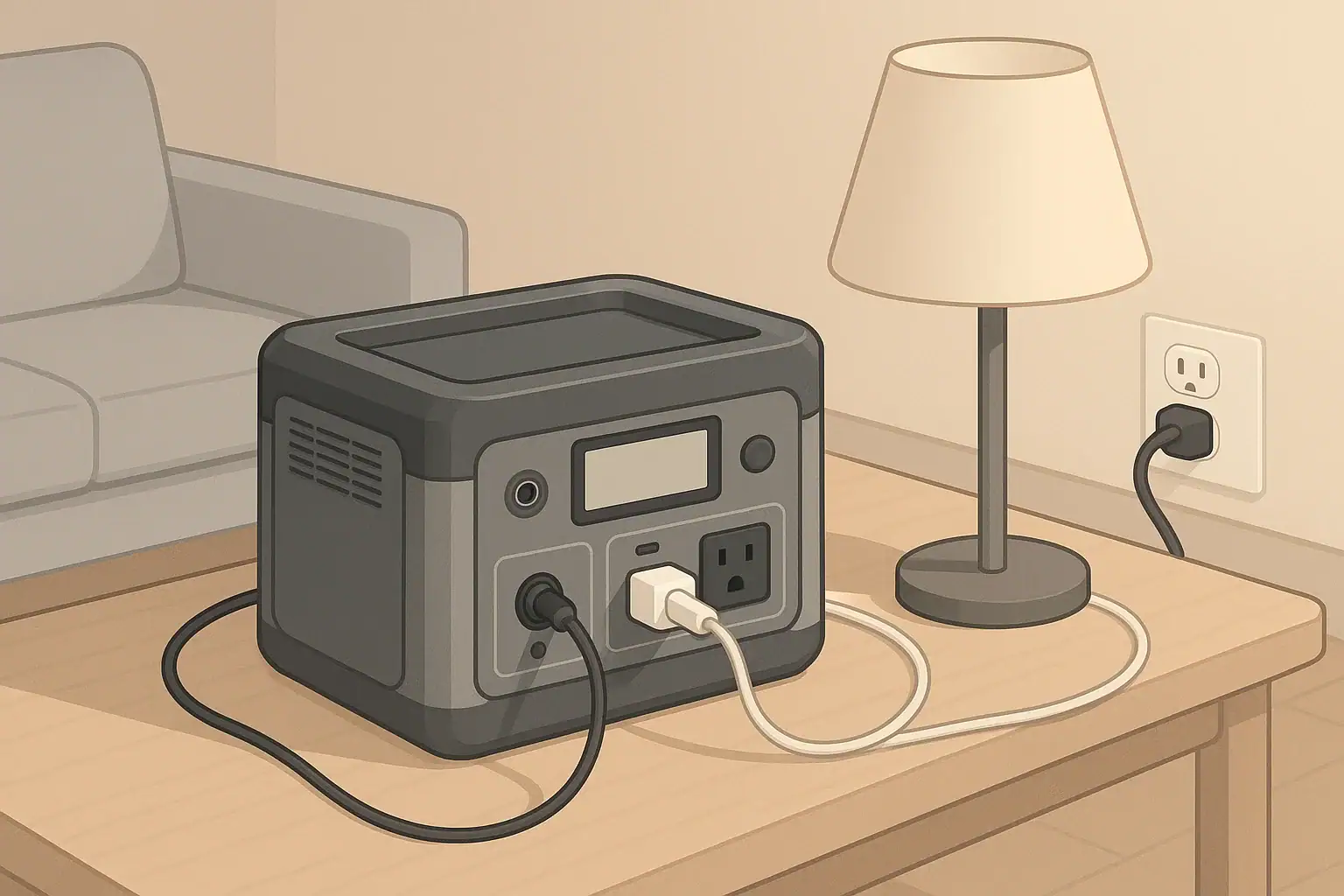
What Lithium Battery Safety Really Means for Portable Power Stations
Lithium batteries power most modern portable power stations, but they also attract a lot of alarming headlines and half-true stories. When people hear about fires or “exploding batteries,” they often assume that any lithium-powered device is risky by default. In reality, serious incidents are rare, and they usually involve very specific conditions that defeat built-in protections.
In simple terms, lithium battery safety is about keeping the battery within safe limits for temperature, voltage, and current, and making sure the device has room to manage heat. For portable power stations, this job is handled by an internal battery management system (BMS) plus mechanical design features like sturdy enclosures, spacing around cells, and controlled airflow.
Understanding what actually causes incidents helps you separate myths from reality. Most safety concerns can be traced to avoidable issues: physical damage, misuse, poor-quality charging equipment, or operation far outside the recommended conditions. Knowing these patterns allows you to choose safer setups, use your power station more confidently, and recognize early warning signs before something fails.
Because portable power stations are used during power outages, camping trips, and remote work, safe and reliable performance matters just as much as capacity. Learning the basics of how lithium batteries work, what stresses them, and which myths are exaggerated will help you plan runtimes, sizing, and placement without unnecessary fear.
Key Concepts Behind Lithium Safety: Watts, Watt-Hours, and Hidden Losses
Many lithium safety myths come from confusion about how much power a portable power station can really deliver. Two key numbers matter: watts (W) and watt-hours (Wh). Watts describe how much power an appliance draws at a given moment, while watt-hours describe how much energy a battery can supply over time. When people misjudge either number, they can overload a device, trigger protective shutdowns, or push the system into more stressful operating ranges.
Running watts describe the continuous power an appliance needs once it is operating. Surge watts, or starting watts, are the brief, higher power draw when a motor or compressor first turns on. Many portable power stations have an inverter rating that includes both a continuous (running) and a surge value. Exceeding the surge rating can cause the inverter or BMS to shut down abruptly. This is self-protection, not a sign of imminent fire, but it often gets misread as a dangerous failure.
Watt-hours are often used as a shorthand for “how long will this last,” but usable energy is never 100 percent of the printed capacity. Internal electronics, inverter efficiency, and voltage conversion create losses. For AC output, it is common to assume that only a portion of the rated Wh is available as usable energy. When people run a power station at or near its maximum continuous load for long periods, heat and stress increase, which is exactly what safety systems are designed to prevent.
Another important safety concept is battery C-rate, or how fast the battery is charged or discharged relative to its capacity. Very high charge or discharge rates produce more heat and chemical stress. Most consumer portable power stations are designed with conservative limits, but connecting too many devices, daisy-chaining power strips, or stacking multiple charging methods at once can still push toward those limits. Understanding these basic electrical ideas helps explain why devices shut off, why fans get loud, and how safety systems are supposed to behave.
| If you want to power… | Key sizing question | What to prioritize | Safety-related note |
|---|---|---|---|
| Phone, laptop, small electronics | Is total draw under ~150 W? | Modest Wh capacity, multiple USB ports | Low heat; watch for blocked vents on small units |
| Internet router and home office gear | Can AC output handle 200–300 W? | Medium inverter rating, 300–700 Wh battery | Avoid overloading with extra heaters on same unit |
| Refrigerator or small freezer | Is surge rating above compressor start watts? | Higher surge capacity, 800+ Wh battery | Allow space around vents; start fridge alone first |
| CPAP or medical support devices (non-life-support) | How many hours of runtime do you need? | Wh capacity, quiet cooling fans | Test runtime in advance; do not block airflow at night |
| Power tools on a job site | Do tool surges exceed inverter limits? | High surge rating, robust AC outlets | Inspect cords often; avoid dust buildup in vents |
| Space heaters or high-watt cookware | Is load near inverter maximum? | Very strong inverter and large battery | High heat and current; usually better to avoid if possible |
| RV or camper essentials via extension cords | Can you separate high and low loads? | Balanced capacity, multiple outlets | Use outdoor-rated cords; keep unit dry and ventilated |
| Whole-room backup expectations | Are loads realistically itemized? | Accurate load list, possible multiple units | Consult an electrician for any panel integration ideas |
Real-World Examples of Lithium Battery Use and Misuse
When people discuss lithium incidents, they often reference extreme cases that do not reflect typical portable power station use. Understanding a few realistic scenarios can help ground expectations. Consider a small setup used to power phones, a laptop, and a Wi-Fi router during a short outage. Loads stay under a few hundred watts, surfaces remain cool to the touch, and every component operates well within design specifications. In this case, the largest “risk” is usually just running out of energy sooner than expected.
Compare that to a scenario where a user plugs a space heater, toaster, and coffee maker into the same power station using a power strip. The combined running load can easily exceed the inverter rating. As soon as all devices switch on together, the surge might trip the BMS or inverter protection. The shutdown is a designed safety response, not a dangerous failure, but if the user repeatedly tries to restart under the same overload, temperatures and stress may increase.
Another example involves environmental conditions. A portable power station left for hours in direct summer sun inside a closed vehicle can heat far beyond its ideal operating range before it is ever turned on. If it is then asked to deliver a heavy load immediately, internal components and the battery can be under additional thermal stress. Most devices include over-temperature protection and cooling fans, but routine exposure to extreme heat can still shorten battery life and raise the likelihood of abnormal behavior.
On the other end of the spectrum, operating or charging in very cold conditions can temporarily reduce capacity and limit charge acceptance. People sometimes mistake slower charging or reduced runtime in cold weather as a defect, when it is actually the BMS protecting the cells. Warming the unit gradually to a normal indoor temperature usually restores performance and keeps charging within a safer chemical range.
Myths, Mistakes, and Troubleshooting Cues
Several recurring myths surround portable power stations. One is the idea that “lithium batteries randomly explode.” In practice, serious failures nearly always result from a chain of factors: underlying defects, severe physical damage, exposure to fire or extreme heat, incompatible chargers, or continued use after clear warning signs. Portable power stations are designed with multiple protective layers specifically to avoid runaway situations under normal use.
Another myth is that a unit shutting off under load means it is unsafe. In reality, automatic shutdown is a core safety behavior. Common triggers include overcurrent (too many watts), low voltage (battery is nearly empty), or over-temperature. If your power station turns off when a device starts, especially a motor or compressor, it is more often a sign of surge overload than a safety failure. Repeated shutdowns under the same conditions are a cue to reduce the load or spread appliances across separate circuits or devices.
A frequent mistake is daisy-chaining extension cords, adapters, and power strips. Every added connection introduces resistance, potential heat buildup, and extra failure points. For portable power stations, this can mean hotter cords, looser plugs, and sometimes intermittent power issues that get blamed on the battery. Keeping cable runs as short and direct as possible reduces both nuisance shutdowns and subtle risks like overheated outlets.
Charging-related problems also feed myths. Using third-party adapters or cables that are not rated for the device’s input current can lead to hot connectors or unreliable charging. Slow charging, flickering indicators, or unusual fan behavior while charging are cues to inspect connections, feel for hotspots at plugs, and let the unit cool before further use. If strange smells, discoloration, or hissing sounds ever appear, discontinue use and contact the manufacturer rather than trying to “force” the unit back into service.
Safety Basics: Placement, Ventilation, and Electrical Good Sense
Most lithium battery incidents can be made even less likely with practical placement and basic electrical habits. Portable power stations should be used on stable, nonflammable surfaces where vents remain clear on all sides. Tucking them into tight cabinets, closets, or piles of clothing traps heat and makes it harder for cooling systems to work. A few inches of clearance around ventilation grilles is usually enough in typical home conditions.
Because portable power stations often power multiple devices at once, cord management matters. Use properly rated extension cords and avoid routing them under rugs, furniture, or bedding where they can overheat unnoticed. Keep cords away from walkways where foot traffic can damage insulation or loosen plugs. For outdoor or damp locations, use cords and power strips clearly intended for outdoor use, and keep the power station itself protected from rain and standing water.
Heat is a central safety concern. While the exterior of a power station may feel warm during heavy use or charging, it should not be dangerously hot to the touch. Fans may cycle on to manage internal temperatures; this is normal. Avoid operating the unit next to heat sources like space heaters, stoves, or direct sunlight through windows for long periods. Similarly, avoid placing combustible materials like paper, cardboard, or blankets directly against the housing.
When connecting to home circuits, treat the power station as a standalone source. Plug individual appliances into it using appropriate cords rather than attempting any backfeeding into outlets or panels. GFCI outlets offer additional protection in wet or outdoor areas by cutting power if they sense leakage current. For any ideas involving your home’s wiring or a transfer switch, consult a qualified electrician and follow local codes instead of improvising connections.
Maintenance and Storage: Keeping Lithium Batteries Calm and Predictable
Safe lithium battery operation is not just about how you use a portable power station on a given day; it also depends on how you treat the battery over months and years. State of charge (SOC) during storage, ambient temperature, and how often the unit is cycled all influence both longevity and risk levels. Batteries that are consistently pushed to extremes of full and empty, or stored in hot locations, age faster and may become less predictable.
For most users, storing a portable power station partially charged is a good compromise between readiness and battery health. Many manufacturers recommend somewhere around the middle of the charge range for long-term storage, then topping up before a forecasted outage or trip. Leaving a unit at 100 percent SOC for very long periods, especially in a warm environment, can accelerate capacity loss over time, even if it does not cause acute safety problems.
Temperature management is just as important in storage as it is during operation. Ideal storage conditions are cool, dry, and away from direct sunlight. Unfinished garages, attics, or vehicles can swing from very hot in summer to freezing in winter, both of which stress lithium cells. While brief exposure to temperature extremes may not be catastrophic, routine storage in such conditions can degrade the battery and potentially increase the chance of abnormal behavior when it is later used under load.
Routine checks help catch minor issues before they grow. Every few months, power on the unit, confirm that displays and ports work, and verify that self-discharge has not dropped the battery to a very low level. Inspect cords and connectors for wear, kinks, or discoloration. If you ever smell burning plastic, see swelling, cracking, or leakage, or notice a unit that grows warm while idle and unplugged, discontinue use and contact the manufacturer or a qualified service provider rather than attempting repair yourself.
| Task | Suggested frequency | What to look for | Safety benefit |
|---|---|---|---|
| Top-up charge during storage | Every 3–6 months | SOC not near 0%, charger stays cool | Prevents deep discharge and stress on cells |
| Visual inspection of housing | Every 3 months | No cracks, swelling, or warping | Catches early signs of mechanical or thermal damage |
| Cord and plug check | Before major trips or outages | No frayed insulation, discoloration, or loose blades | Reduces risk of hot spots and shorts |
| Functional test under light load | Every 3–6 months | Stable output, normal fan behavior | Confirms BMS and inverter operate correctly |
| Storage environment review | Seasonally | Not left in hot car, attic, or damp area | Reduces thermal and moisture-related degradation |
| Cleaning vents and surfaces | 1–2 times per year | No dust blocking vents or ports | Promotes proper cooling and prevents overheating |
| Check for abnormal smells or noises | Whenever using after long storage | No burning odor, hissing, or crackling | Helps detect rare internal faults early |
Practical Takeaways: How to Keep Lithium Incidents Rare
Aligning expectations with how portable power stations are designed makes lithium safety more straightforward. These devices include multiple layers of electronic protection and are tested for demanding conditions, but they still depend on users to respect their limits. Most headline-grabbing incidents involve circumstances far outside typical home or camping use patterns.
Rather than focusing on worst-case scenarios, it is more practical to adopt a few conservative habits. Size the power station realistically for your loads, keep it cool and ventilated, and treat any unusual smells, noises, or visible damage as reasons to stop and seek expert input. Avoid improvising wiring into your home’s electrical system and rely instead on direct appliance connections using appropriate cords and outlets.
- Understand the difference between running and surge watts, and do not stack too many high-watt devices on one unit.
- Expect the device to shut down to protect itself; treat repeated shutdowns as a signal to reduce or rearrange loads.
- Place power stations on stable, nonflammable surfaces with vents unobstructed and away from heat sources.
- Use properly rated cords and avoid daisy-chaining multiple extension cords or power strips.
- Store the unit partially charged in a cool, dry place, and recharge it a few times per year.
- Inspect the housing, vents, and cords periodically for damage, swelling, or discoloration.
- Stop using the device and contact the manufacturer or a professional if you notice burning smells, hissing, or visible deformation.
- For any integration with home wiring or complex setups, consult a qualified electrician instead of attempting DIY solutions.
By focusing on these practical steps, you keep the real risks of lithium batteries extremely low while benefiting from the convenience and flexibility that portable power stations offer for outages, travel, and everyday backup power.
Frequently asked questions
What most commonly causes lithium battery incidents in portable power stations?
Incidents typically result from a chain of problems such as severe physical damage, exposure to extreme heat or fire, using incompatible or poor-quality chargers, manufacturing defects, or repeated misuse that defeats protective systems. Under normal use, built-in protections like BMS, temperature sensors, and inverter limits prevent most issues.
Which common lithium battery safety myths are most misleading?
Two misleading myths are that lithium batteries “randomly explode” and that any shutdown equals imminent danger. In reality, serious failures are rare and usually involve specific abuse or defects, while automatic shutdowns are often the device protecting itself from overload, low voltage, or high temperature.
Is it safe to charge a portable power station overnight or leave it plugged in?
Many portable power stations have charge-management and full-charge protection and can be left plugged in according to manufacturer guidance, but avoid charging in hot environments or with damaged cables. If the unit becomes unusually hot, emits odors, or shows other abnormal signs while charging, unplug it and inspect before further use.
Does a unit shutting off under load mean the battery will catch fire?
No; an automatic shutdown is typically a safety response to overcurrent, low battery, or over-temperature conditions and is intended to prevent harm. Treat repeated shutdowns as a signal to reduce load, check connections, and allow the unit to cool rather than assuming imminent danger.
How should I store a portable power station to reduce long-term safety risks?
Store the unit partially charged (often around mid-range), in a cool, dry place away from direct sunlight and extreme temperatures, and top it up every few months. Avoid long-term storage at 100% SOC in warm environments and inspect the unit periodically for signs of damage.
Do extension cords, power strips, or daisy-chaining increase fire risk?
Yes—each added connection increases resistance, potential heat buildup, and failure points, which can raise risk. Use properly rated, short cords, avoid daisy-chaining, and choose outdoor-rated cables when used outdoors to reduce heat and connection problems.
Recommended next:
- Indoor Use Safety: Ventilation, Heat, and Fire-Prevention Basics
- Extension Cords and Power Strips: Safe Practices With Portable Power Stations
- GFCI Tripping Explained: Why Power Tools and Appliances Trip on Power Stations (and Solutions)
- Neutral-Ground Bonding Explained for Portable Power Stations: When It Matters (and When It Doesn’t)
- Water, Humidity, and IP Ratings: What “Splash Resistant” Really Means
- Grounding and GFCI: Do You Need Them With a Portable Power Station?
- More in Safety →
Related guides
Browse this topic →
- Beginner-friendly sizing, runtime & specs
- Solar & charging (MPPT, fast charging, cables)
- Batteries (LiFePO4, cycles, care & storage)
- Safety, cold-weather performance, real-world tips
More in Safety
See all →Keep reading
About this site
Portable Energy Lab publishes practical, independent guides about portable power—clear sizing, safe use, and real-world expectations.
Affiliate disclosure
Some links on this site may be affiliate links. If you buy through these links, we may earn a small commission at no extra cost to you. This helps support our content. Learn more.