
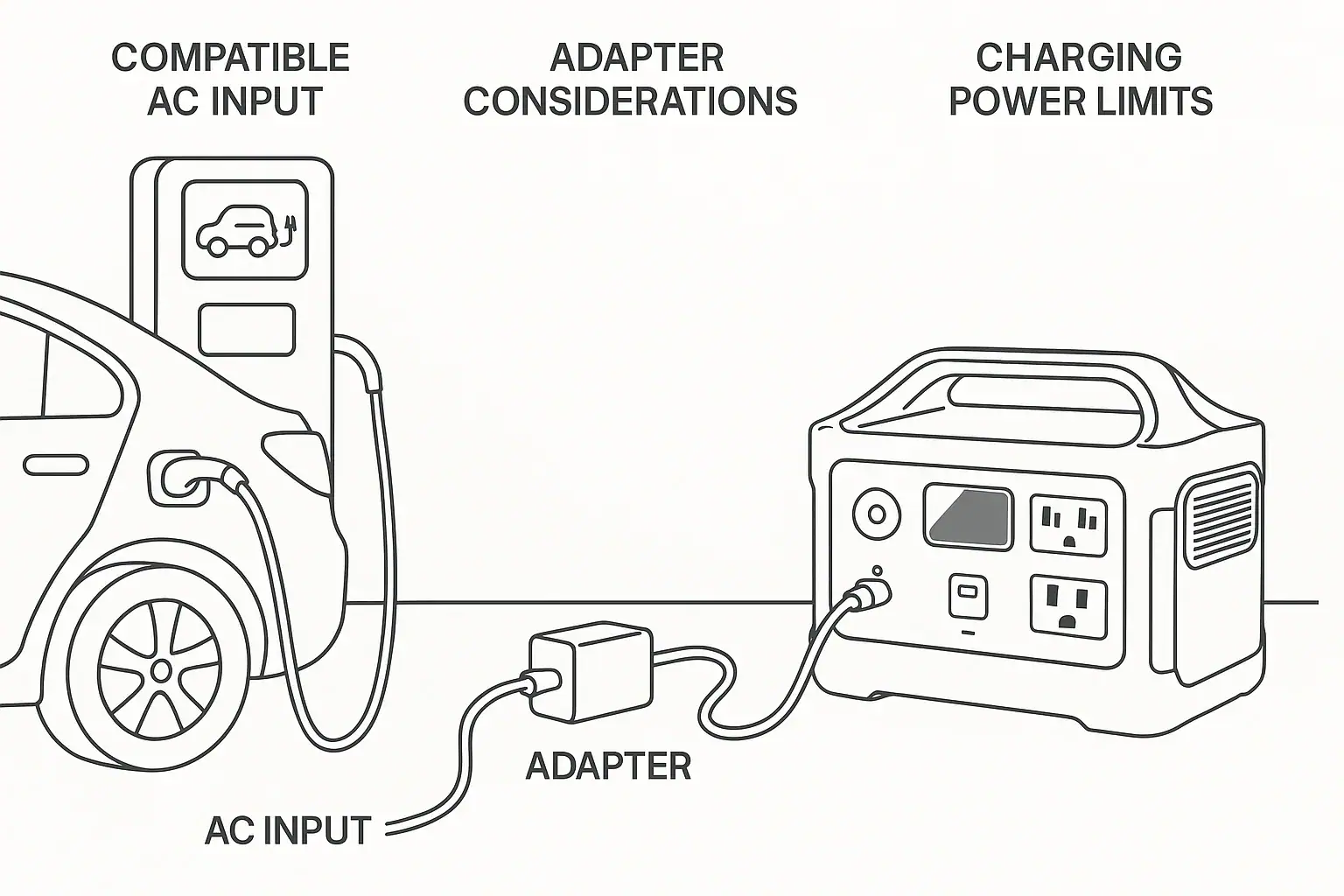
Yes, you can charge some portable power stations from an EV charger, but only when the charger type, voltage, adapter, and the station’s AC input are compatible. In real life, it is not as simple as plugging any power station into any EV charging handle. The limiting factors are usually the input limit of the power station, whether the EV charger is Level 1, Level 2, or DC fast charging, and whether a safe, rated adapter or built-in EV charging port exists.
The realistic answer is that standard wall-outlet charging is still the easiest method for most units. A Level 2 charger can be useful for certain larger power stations that accept 240-volt AC or have a compatible EV charging accessory, but it will not make a small unit charge at EV speeds. DC fast charging is generally not realistic for typical portable power stations because it uses high-voltage communication and battery management systems designed for vehicles, not small backup batteries.
What it means to charge a portable power station from an EV charger
Charging a portable power station from an EV charger means using electricity from equipment designed for electric vehicles to recharge a battery generator. The important distinction is that an EV charging station is not always delivering the same kind of power. Some chargers supply AC power that the vehicle converts internally. Others supply high-voltage DC power directly to an EV battery under tight electronic control.
Most portable power stations are designed around a few common charging inputs: a regular AC wall plug, solar DC input, vehicle 12-volt input, and sometimes higher-voltage AC or DC inputs. An EV charging connector is not the same as a household outlet. It may require signaling before it energizes, it may deliver 240 volts, and it may use connector designs that a portable power station cannot accept without a purpose-built adapter or inlet.
This matters because charging speed is controlled by the receiving device, not by the largest number printed on the EV charger. A Level 2 EV charger may be capable of several kilowatts, but a power station with a 600-watt AC input will still draw roughly 600 watts, assuming the voltage and connection are compatible. If the station can only accept 120 volts, connecting it to a 240-volt source is not a safe workaround.
How EV chargers and power station inputs actually work
Level 1 EV charging normally uses 120-volt AC power from a standard outlet. In that case, the portable power station is not really using the EV charger itself; it is using a normal household-style circuit. If the power station’s AC charging cord fits the outlet and the circuit can support the load, this is usually the most straightforward option.
Level 2 EV charging in North America is commonly 240-volt AC. The EV charging equipment communicates with the vehicle and tells it how much current is available. A portable power station cannot assume that role unless it has a compatible EV charging input or a properly rated adapter that provides the required signaling and a suitable receptacle. Even then, the power station must be rated for the voltage and current it will receive.
DC fast charging is different. It bypasses the vehicle’s onboard AC charger and transfers high-voltage DC directly to the EV battery after a communication handshake. Typical portable power stations are not built to accept that kind of input. Unless a power station system is specifically engineered for DC fast charging, it should be considered incompatible.
The practical charging time depends on battery capacity and input watts. A 1,000 watt-hour unit charging at 500 watts may take a little over two hours in idealized math, but real charging takes longer due to conversion losses, tapering near full, temperature management, and system overhead. A larger 3,000 watt-hour unit may benefit more from a higher-power input, but only if the unit is designed to accept it.
| EV charging source | What the power station needs | Realistic expectation |
|---|---|---|
| Standard 120-volt outlet near an EV charger | Normal AC charging cord and enough circuit capacity | Usually practical, but limited by the station’s AC input |
| Level 1 EV cord | Compatible outlet access, not the EV vehicle connector | Similar to household outlet charging |
| Level 2 AC charger | Built-in compatible inlet or properly rated EV-to-AC adapter, plus 240-volt support if applicable | Practical only for some larger or specially equipped units |
| DC fast charger | Specialized high-voltage DC charging architecture | Generally not realistic for typical portable power stations |
Real-world examples of what is realistic
Consider a compact 500 watt-hour power station with a 300-watt AC input. Even if you find a Level 2 charger capable of many kilowatts, that small unit cannot use that extra capacity. If it charges through a 120-volt wall outlet, a full charge may take roughly two hours or more depending on losses and charge taper. A Level 2 source would not help unless the unit specifically supports it, and many compact models do not.
Now consider a mid-size 1,000 to 1,500 watt-hour power station with a 1,000-watt or 1,500-watt AC input. If it can accept the available voltage, it may recharge much faster from a high-power AC source than from a low-current outlet. However, the connector must still be correct, the adapter must be rated, and the charging site must allow that use. The EV charger does not automatically turn into a universal generator outlet.
A large power station or modular backup battery with a 240-volt AC input is the most realistic candidate for Level 2 charging. Some systems are designed to accept higher AC charging rates, such as 3,000 watts or more. In that scenario, a compatible Level 2 source may be useful when a normal outlet would be slow. The key is that the feature must be built into the system or supported by an approved accessory.
At public EV charging locations, the practical issues are often not electrical at all. The charger may require vehicle-style activation, the connector may not energize without the correct handshake, the site may prohibit non-EV use, or the power station and cable setup may create a trip hazard. Even when the electrical theory works, the real-world setting may not.
Common mistakes and troubleshooting cues
The most common mistake is assuming that a charger’s maximum output determines the power station’s charging speed. It does not. The station’s input limit is the ceiling. A unit rated for 800 watts of AC input will not safely draw 3,000 watts just because the source can supply it.
Another mistake is confusing connector shape with compatibility. A physical adapter is not enough if it does not handle voltage, current, grounding, and EV signaling correctly. A mismatch can result in no charging, tripped protection, overheating, or damaged equipment.
If the power station does not charge, start with the basic cues. Check whether the charging source is energized, whether the station displays input watts, whether the EV charger has completed its activation process, and whether the adapter is rated for the voltage and current involved. If the station shows an input error or repeatedly starts and stops, that can indicate an unsupported voltage, unstable power, overheating, or a protection circuit doing its job.
If charging is much slower than expected, compare the displayed input watts to the station’s rated input. A power station may reduce input when the battery is nearly full, when temperatures are high or low, or when the unit is running heavy output loads at the same time. Running appliances while charging can also make the net battery gain look slower because some incoming power is being used immediately.
Do not try to solve compatibility problems by bypassing protections, altering plugs, opening devices, or forcing a nonmatching connector. If the documentation does not clearly support the charging method, treat it as unsupported. For permanent high-power charging setups, have a qualified electrician evaluate the circuit, receptacle, breaker capacity, grounding, and local code requirements.
Safety basics for EV charger use with portable power stations
The safest approach is to use only charging methods that the power station is designed to accept. That means staying within the listed input voltage range, frequency, current, and wattage. A 120-volt-only AC input should not be connected to 240 volts. A solar input should not be connected to an AC EV charger. A DC fast charger should not be adapted casually to a portable battery.
Use cables and adapters that are rated for the expected load and environment. High charging current creates heat, especially at connectors. Loose plugs, undersized cords, damaged insulation, or wet conditions increase risk. If a plug, cable, or adapter becomes hot to the touch, smells unusual, or shows discoloration, stop using it and have the setup inspected.
Grounding and ground-fault protection also matter. EV charging equipment is designed with safety checks, and many portable power stations include their own protective electronics. These systems may not behave as expected when combined through unsupported adapters. A charging setup that repeatedly trips a breaker, ground-fault device, or charger fault should be treated as a warning, not an annoyance to work around.
Location matters, too. Charge on a stable surface with ventilation around the power station. Keep cords out of walkways, avoid standing water, and protect the unit from rain unless it is specifically rated for that environment. Portable power stations contain lithium batteries and power electronics that should not be exposed to conditions beyond their design limits.
Maintenance and storage when using high-power charging sources
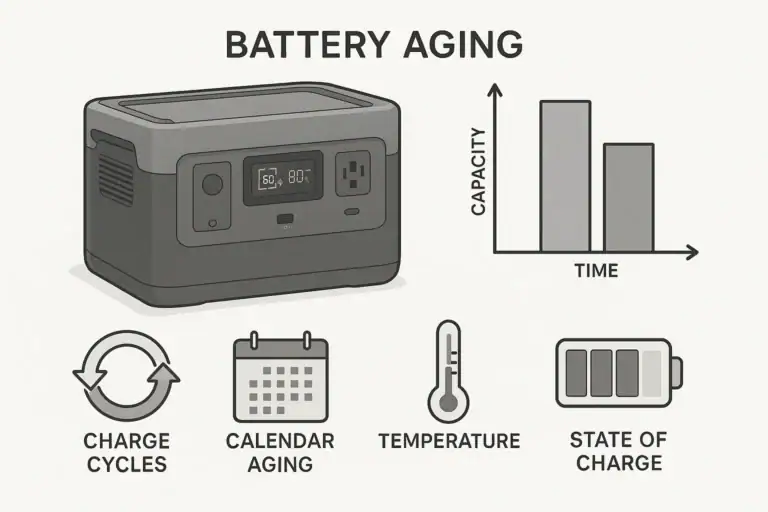
Frequent high-power charging is convenient, but it can create more heat than slower charging. Heat is one of the main factors that affects lithium battery aging. If the power station allows adjustable charging speed, using a lower input setting during routine charging can be gentler, while saving maximum input for times when speed matters.
For storage, avoid leaving the power station completely full or completely empty for long periods unless the manual specifically recommends it. A moderate state of charge is commonly preferred for lithium battery storage. Check the unit periodically because standby electronics and battery management systems can slowly reduce charge over time.
Keep charging ports clean and dry. Dust, corrosion, or bent contacts can cause poor connections and heat buildup. Inspect AC cords, EV adapters, and extension cords before use. Replace damaged accessories rather than trying to repair overmolded plugs or sealed connectors.
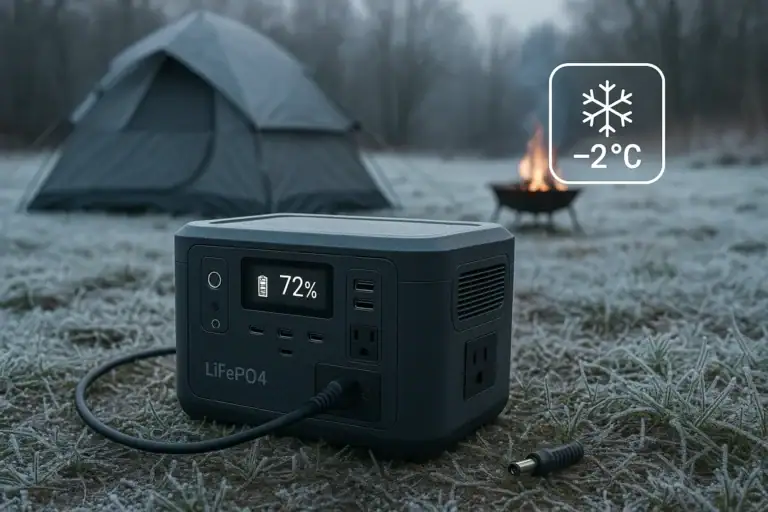
If the unit has been stored in very cold or hot conditions, let it return to an acceptable operating temperature before charging. Many power stations will block charging outside their safe temperature range. That protection helps prevent battery damage, so repeated temperature-related charging errors should be addressed by changing the charging environment, not by trying to override the device.
| Use pattern | Better habit | Why it matters |
|---|---|---|
| Routine home charging | Use a moderate input setting when available | Reduces heat during non-urgent charging |
| Occasional fast charging | Use only rated high-power inputs and adapters | Keeps voltage and current within design limits |
| Long-term storage | Store around a moderate charge level and check periodically | Helps limit deep discharge and battery stress |
| Outdoor or public charging | Keep equipment dry, ventilated, and away from foot traffic | Reduces electrical, heat, and trip hazards |
Related guides: Input Limits (Volts/Amps/Watts) Explained: How Not to Damage Your Unit • Fast Charging Explained: What “AC Input” and “DC Input” Speeds Mean • How Long Does It Take to Charge a Portable Power Station?
Practical takeaways and specs to look for
The realistic answer is that most portable power stations can charge from a normal AC outlet, some can charge from certain Level 2 EV charging setups, and typical units cannot use DC fast chargers. The deciding factors are not the size of the EV charger alone, but the input design of the power station and the safety of the connection between them.
If you want EV-charger compatibility, look for it before you buy. Do not assume it can be added later with a generic adapter. A power station intended for high-power AC charging should clearly state the supported voltage range, maximum input watts, connector type, and accessory requirements. For any fixed receptacle or high-current charging location, a qualified electrician can help confirm that the circuit is appropriate.
Specs to look for
- AC input voltage range: Look for clear support for 120 volts, 240 volts, or both; this determines whether Level 2 AC charging is even possible.
- Maximum AC input watts: Look for values such as 600, 1,500, or 3,000 watts; this sets the real charging speed ceiling regardless of charger capacity.
- EV charging compatibility: Look for a built-in compatible inlet or listed EV charging accessory; this matters because EV connectors often require signaling, not just plug adaptation.
- Adjustable charge rate: Look for selectable low, medium, and high input settings; this helps balance fast charging with heat and battery longevity.
- Battery capacity in watt-hours: Look for a size that matches your loads, such as 500 to 3,000 watt-hours; capacity determines how much energy you store and how long charging may take.
- Input temperature range: Look for a stated charging temperature window; lithium batteries may limit or block charging when too hot or too cold.
- Pass-through charging behavior: Look for clear guidance on using outputs while charging; this affects runtime planning and how fast the battery actually refills.
- Cable and adapter ratings: Look for matching voltage, amperage, grounding, and outdoor-use ratings when applicable; weak accessories can become the unsafe part of an otherwise capable system.
For most people, the best plan is simple: use a regular outlet when time allows, use higher-power AC charging only when the power station is designed for it, and treat DC fast charging as outside the scope of typical portable power stations. EV charging can be useful in the right setup, but compatibility and input limits decide what is realistic.
Frequently asked questions
Can any portable power station charge from an EV charger?
No. Only power stations with compatible input voltage, connector support, and charging electronics can use an EV charging source safely. Many units are limited to standard AC wall charging or low-voltage DC inputs. If the manual does not explicitly support EV-style charging, assume it is not compatible.
What specs matter most if I want to charge a portable power station from an EV charger?
The most important specs are the AC input voltage range, maximum input watts, and whether the unit supports a compatible EV charging accessory or inlet. You should also check the charging temperature range and any adapter or grounding requirements. These details determine whether the setup is possible and how fast it will charge.
Is it safe to use a public EV charger for a portable power station?
Only if the power station and adapter are specifically designed for that use and the charging site allows it. Public chargers may require vehicle-style communication before energizing, and unsupported adapters can create electrical or trip hazards. When in doubt, use a standard outlet or a charging method listed by the manufacturer.
What is the most common mistake people make with EV charging and power stations?
The biggest mistake is assuming the charger’s maximum output controls the charging speed. In reality, the power station’s input limit is the ceiling, so a large EV charger will not make a small unit charge faster than it is designed to accept. Connector shape alone also does not guarantee compatibility.
Can a Level 2 charger make my power station charge faster than a wall outlet?
Sometimes, but only if the power station supports 240-volt AC input or a compatible EV charging accessory. If the unit is limited to 120 volts or a lower wattage input, the Level 2 source will not increase speed beyond that limit. The station’s own charging design is what matters most.
Why does my power station stop charging or show an error with an EV charger?
That usually means the voltage, signaling, grounding, or adapter setup is not supported. It can also happen if the charger has not completed its activation process or if the power station is protecting itself from heat or an out-of-range input. Recheck the manual and the rated input specifications before trying again.
Related guides
Browse this topic →
- Beginner-friendly sizing, runtime & specs
- Solar & charging (MPPT, fast charging, cables)
- Batteries (LiFePO4, cycles, care & storage)
- Safety, cold-weather performance, real-world tips
More in Charging
See all →- Can You Daisy-Chain Portable Power Stations? Why It Usually Isn’t a Good Idea
- USB-C Input vs AC Input on Portable Power Stations: Which Charging Method Makes Sense?
- Car Alternator Charging vs Cigarette Lighter Charging: What Changes for Power Stations?
- Charging a Portable Power Station From an RV Outlet: 12V, 24V, and Safety Limits
- Fast AC Charging vs Battery Longevity: Should You Use Turbo Mode Every Time?
Keep reading
About this site
Portable Energy Lab publishes practical, independent guides about portable power—clear sizing, safe use, and real-world expectations.
Affiliate disclosure
Some links on this site may be affiliate links. If you buy through these links, we may earn a small commission at no extra cost to you. This helps support our content. Read our affiliate disclosure.