Can a Portable Power Station Run a Microwave? What to Check Before You Try

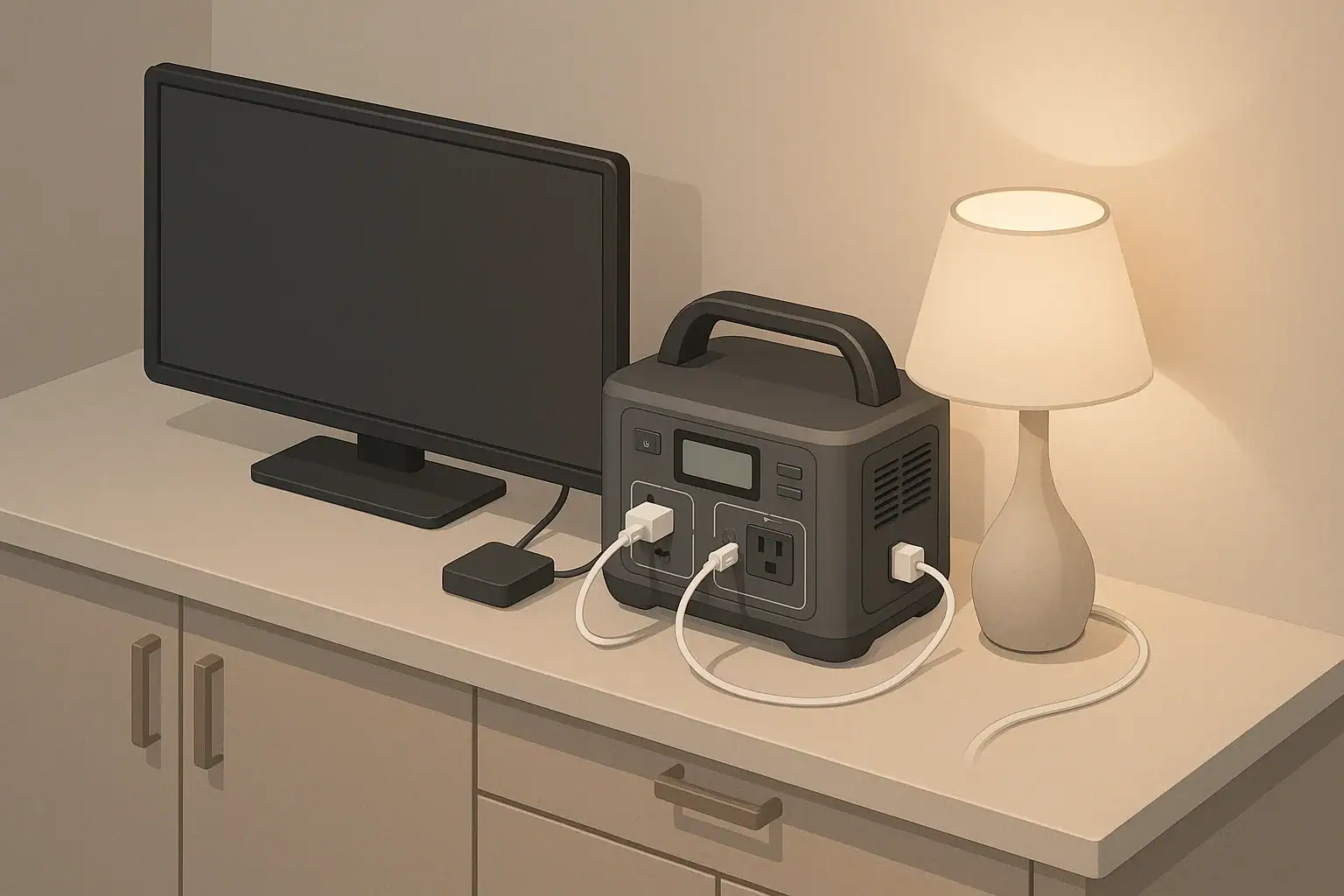
Portable power station running a microwave and lamp on counter

Yes, a portable power station can run a microwave, but only if the inverter output and battery capacity are big enough for the microwave’s real power draw. Many compact power stations are designed for phones and laptops, not high‑wattage cooking, so you need to match the microwave to the power station carefully.

This guide walks through how to check watts, surge power, and watt‑hours so you can tell, before you plug in, whether your setup is realistic. You will see how long a portable power station can run a microwave, what usually goes wrong, and how to avoid damaging your gear or draining your battery too quickly.

If you are planning for power outages, camping, vanlife, or RV use, understanding how a microwave behaves on battery power helps you decide whether it is worth the energy cost or if another cooking option makes more sense.

Can a Portable Power Station Really Run a Microwave?

Running a microwave from a portable power station is possible, but it is not as simple as “plug it in and see what happens.” Microwaves are one of the highest‑draw appliances people try to power from batteries, and they put stress on both the inverter and the battery pack.

Whether your portable power station can handle a microwave comes down to three checks:

  • Inverter continuous watts: Must be higher than the microwave’s electrical input watts.
  • Inverter surge (peak) watts: Must tolerate the short startup spike when the magnetron turns on.
  • Battery capacity (Wh): Must be large enough to support the cooking time you actually need.

Because microwaves usually run for only a few minutes at a time, they are more about power (watts) than long runtimes. A portable power station that is just big enough on paper may still shut down if the microwave’s surge is high or if other devices are sharing the same inverter.

Understanding these basics helps you decide if using a microwave on portable power is a good use of your limited energy budget, or if you should reserve that capacity for refrigeration, communications, or medical equipment instead.

Key Power Concepts: Microwaves, Inverters, and Battery Capacity

To size a portable power station for microwave use, you need to translate the labels on both devices into a simple power budget. Three concepts matter most: input watts, surge power, and watt‑hours.

Microwave cooking watts vs. input watts

Microwave boxes often advertise “700 W” or “1,000 W,” but that number usually refers to cooking power (output), not the electrical input. The input watts are what the portable power station must actually supply.

Typical examples you might see on a label or in a manual:

  • Cooking power: 700 W, Input: 1,050 W
  • Cooking power: 1,000 W, Input: 1,500 W

When planning, always use the input watts. If you cannot find them, assume the input is noticeably higher than the cooking watts and give yourself extra inverter headroom.

Startup surge and cycling behavior

When a microwave starts, the magnetron and transformer (or inverter electronics) draw a short surge above the normal running watts. Some microwaves also cycle fully on and off at lower power settings, causing repeated mini‑surges.

This matters because a portable power station has two ratings:

  • Continuous watts: What it can supply steadily.
  • Surge or peak watts: What it can supply briefly during startup spikes.

If your microwave’s startup surge is too close to the inverter’s surge rating, the power station may shut down as soon as you press Start, or partway through a cooking cycle when the power cycles back on.

Battery capacity and runtime (watt‑hours)

Battery size is usually listed in watt‑hours (Wh). This tells you how much total energy you have to work with. A simple way to estimate runtime for one appliance is:

Runtime (hours) ≈ Battery Wh ÷ Appliance watts × 0.8

The 0.8 factor accounts for inverter losses and other inefficiencies. It is a planning number, not a guarantee.

Because microwaves draw so much power, even short cooking times can use a noticeable chunk of your battery. A few three‑minute runs can add up quickly on a small power station.

Microwave and power station sizing overview – Example values for illustration.
Item Example rating What you need from the power station
Small microwave Cooking 700 W, Input 1,050 W >1,050 W continuous AC, higher surge rating
Mid‑size microwave Cooking 900 W, Input 1,350 W >1,350 W continuous AC, strong surge margin
Large microwave Cooking 1,100 W, Input 1,600 W >1,600 W continuous AC, large surge capacity
Compact power station 500 W continuous, 800 W surge, 500 Wh Generally unsuitable for most microwaves
Mid‑size power station 1,200 W continuous, 2,000 W surge, 1,000 Wh Can support many small to mid microwaves briefly
Large power station 2,000 W continuous, 3,000 W surge, 2,000 Wh Better for frequent microwave use and other loads

Real‑World Examples: Can This Power Station Run That Microwave?

Putting the numbers together is easier with a few concrete, real‑world style scenarios. These examples use rounded values to show how to think about your own setup.

Example 1: Small microwave on a mid‑size power station

Assume:

  • Microwave input: 1,050 W
  • Power station: 1,200 W continuous, 2,000 W surge, 1,000 Wh battery

Inverter match: The microwave’s 1,050 W input is below the 1,200 W continuous rating, so running watts are acceptable. The 2,000 W surge rating gives a healthy buffer for startup.

Estimated runtime:

  • Runtime ≈ 1,000 Wh ÷ 1,050 W × 0.8 ≈ 0.76 hours (about 45 minutes total cooking time).
  • A single 3‑minute run uses roughly 1,050 W × 0.05 h ≈ 52.5 Wh, before losses.

This setup is realistic for occasional reheating during a short outage or on a camping trip, as long as you are not also powering other large appliances at the same time.

Example 2: Mid‑size microwave on a borderline inverter

Assume:

  • Microwave input: 1,350 W
  • Power station: 1,500 W continuous, 2,000 W surge, 1,500 Wh battery

Inverter match: On paper, 1,350 W is under 1,500 W continuous, but there is little headroom. If the microwave has a strong startup surge or if you plug in another device (like a coffee maker), the inverter may overload and shut down.

Estimated runtime:

  • Runtime ≈ 1,500 Wh ÷ 1,350 W × 0.8 ≈ 0.89 hours (about 53 minutes).
  • Each 5‑minute run uses roughly 1,350 W × 0.083 h ≈ 112 Wh, before losses.

This combination can work, but you should avoid running other heavy loads at the same time and watch the power station’s display for high‑load warnings or overheating.

Example 3: Trying a microwave on a small power station

Assume:

  • Microwave input: 900 W
  • Power station: 500 W continuous, 1,000 W surge, 600 Wh battery

Inverter match: The microwave’s 900 W input is far above the 500 W continuous rating. Even though the surge rating is 1,000 W, the inverter is not designed to hold 900 W for more than a brief moment. It will likely shut down immediately or within seconds.

Estimated runtime (if it could run): 600 Wh ÷ 900 W × 0.8 ≈ 0.53 hours (about 32 minutes), but in practice the inverter limit makes this combination impractical.

This scenario shows why you cannot rely on surge ratings alone. For microwaves, the continuous rating is usually the hard limit.

Example runtimes for a microwave on different battery sizes – Example values for illustration.
Battery size Microwave input Approx. total runtime (0.8 factor) Rough number of 3‑minute heats
500 Wh 800 W ≈ 0.5 h (30 min) About 10 cycles
1,000 Wh 1,000 W ≈ 0.8 h (48 min) About 16 cycles
1,500 Wh 1,200 W ≈ 1.0 h (60 min) About 20 cycles
2,000 Wh 1,200 W ≈ 1.3 h (80 min) About 26 cycles

Use‑case perspective: outages, camping, and remote work

Short power outages at home: A mid‑size power station can comfortably support a compact microwave for quick meals, but every few minutes of cooking can use a noticeable percentage of your stored energy. You may decide to limit microwave use to preserve charge for refrigeration and communications.

Camping, vanlife, and RV use: A microwave is convenient but energy‑hungry. If you rely mostly on solar or limited vehicle charging, you might only use the microwave for occasional reheats and rely on other cooking methods for daily meals.

Remote work and light backup: If your main goal is to run laptops, monitors, and networking gear, adding microwave use might push you into a much larger and more expensive power station than you otherwise need. In that case, it can be more practical to cook with fuel or other low‑electric options.

Common Mistakes and Troubleshooting When Running a Microwave

Even when the numbers look good on paper, real‑world use can reveal weak spots. Recognizing common mistakes and symptoms helps you troubleshoot quickly and avoid damaging your equipment.

Typical mistakes people make

  • Using cooking watts instead of input watts: This leads to under‑sizing the inverter and unexpected shutdowns.
  • Ignoring other loads: Running a microwave plus a coffee maker, toaster, or space heater can easily exceed the inverter’s continuous rating.
  • Relying on surge watts for steady running: Surge ratings are for seconds, not for holding a high load like a microwave.
  • Using long, undersized extension cords: Thin or very long cords can overheat and cause extra voltage drop, making overloads more likely.
  • Over‑discharging the battery: Running the battery to empty repeatedly with high‑wattage loads can shorten its lifespan.

What common symptoms usually mean

If something does not feel right when you start the microwave, the behavior often points to a specific issue.

Microwave on portable power: symptoms and likely causes – Example values for illustration.
Symptom Likely cause Practical next steps
Power station shuts off as soon as you press Start Startup surge exceeds inverter surge rating Try a lower‑watt microwave, unplug other loads, or use a larger inverter
Microwave runs a few seconds, then stops Continuous draw is near or over inverter limit; thermal or overload protection trips Reduce microwave power setting if available, or upgrade to a higher‑watt power station
Microwave light dims, cooking seems weak Inverter struggling, voltage sag, or modified wave output Use a lower‑power setting, shorten cook times, or use a power station with more headroom
Power station fan runs loudly and case feels hot High sustained load pushing inverter and battery hard Allow cool‑down between runs, improve ventilation, avoid running other heavy loads
Battery percentage drops faster than expected Microwave input watts higher than assumed; inverter losses; other loads active Re‑check label watts, monitor live watt draw, and adjust cooking habits

Simple troubleshooting sequence

  1. Check the labels: Confirm the microwave’s input watts and the power station’s continuous and surge ratings.
  2. Run the microwave alone: Unplug all other AC loads and try again.
  3. Shorten cook time: Test with 10–20 seconds instead of several minutes to see if startup alone is the problem.
  4. Lower power level: If the microwave allows lower power settings, try those to reduce average draw.
  5. Feel for heat: After a short test, carefully check for excessive warmth around vents or cords and allow time to cool.

If the power station still trips or overheats after these steps, the combination is likely too demanding for that inverter or battery size.

Safety Basics for Running a Microwave on a Portable Power Station

High‑wattage appliances deserve extra caution, especially when powered from a battery‑based system that may be used indoors, in vehicles, or in small spaces.

Placement and ventilation

  • Place the power station on a firm, level, dry surface with its vents unobstructed.
  • Do not stack items on top of the power station or press it against walls or soft materials.
  • Give the microwave the same clearances you would on a kitchen counter so its vents can move hot air away.
  • Avoid operating both devices in tightly enclosed cabinets or storage compartments.

Cords, outlets, and load limits

  • Plug the microwave directly into the power station when possible.
  • If you must use an extension cord, choose a short, heavy‑duty cord rated for the current draw of the microwave.
  • Avoid daisy‑chaining power strips, splitters, or multiple adapters for a high‑wattage appliance.
  • Do not exceed the power station’s rated AC output by running too many large appliances at once.

Environment and weather

  • Keep both the power station and microwave away from rain, splashes, and condensation.
  • Avoid placing the power station directly on wet ground or in standing water.
  • Follow recommended operating temperature ranges. Extreme heat increases the risk of overheating; extreme cold can reduce available battery capacity.

Respecting built‑in protections

  • Most portable power stations include protections for overload, short circuit, and temperature. If the unit shuts down, treat this as a warning, not an inconvenience.
  • Allow the power station to cool before restarting after a heavy microwave session.
  • Do not attempt to bypass fuses, modify the battery pack, or open the enclosure. Internal servicing should be left to qualified technicians.

Managing Battery Health and Long‑Term Use

Microwave use is one of the harsher tasks you can ask of a portable power station. With a few habits, you can still preserve battery health and keep performance predictable over time.

Limiting deep discharges

High‑wattage loads can pull the battery from a high state of charge down to low percentages quickly. Repeatedly running the battery to empty can shorten its lifespan.

  • Plan microwave use so you do not routinely drain the battery to 0%.
  • During outages, consider reserving a minimum “floor” (for example, 20–30%) for essentials.

Charging strategy after microwave use

After several microwave runs, it is common to see a large drop in state of charge. How you refill that energy matters, especially off‑grid.

  • Wall charging: When grid power is available, it is usually the fastest way to recover from heavy microwave use.
  • Vehicle charging: Often best for slow top‑ups during travel days, not for quickly recovering large amounts of energy.
  • Solar charging: Works well over a full day, but a few microwave sessions can easily consume a large share of what your panels collect.

Storage and periodic maintenance

  • Store the power station in a cool, dry place away from direct sunlight and moisture.
  • If the manufacturer recommends storing at a partial charge, follow that guidance and top up periodically.
  • Run a test session every so often: power the microwave for a short time and confirm that the inverter, display, and protections behave as expected.

Monitoring over time

As batteries age, available capacity slowly decreases. You may notice that the same microwave routine uses a larger percentage of the battery than it did when the power station was new.

  • Watch for signs like faster‑than‑expected percentage drops or more frequent overload warnings.
  • Adjust your cooking habits or consider a larger battery if microwave use is a regular part of your energy plan.

Practical Takeaways and Specs to Look For

When you put all of this together, running a microwave on a portable power station can be practical in short bursts, as long as the inverter and battery are sized with enough margin. The key is to treat the microwave as a high‑priority, high‑impact load instead of “just another appliance.”

In many setups, the most efficient strategy is to use the microwave sparingly for quick reheats, while relying on lower‑wattage or fuel‑based cooking methods for everyday meals. This keeps your battery available for refrigeration, communications, and other essentials during outages or off‑grid trips.

Specs to look for when pairing a portable power station with a microwave

  • Microwave input watts: Find the electrical input rating on the label or in the manual. Use this number, not just the advertised cooking watts.
  • Inverter continuous watts: Choose a power station with a continuous AC rating comfortably above the microwave’s input watts, especially if you plan to run other loads at the same time.
  • Inverter surge watts: Look for a surge rating significantly higher than the microwave’s running draw to handle startup spikes.
  • Battery capacity (Wh): Estimate how many minutes per day you will run the microwave and use the runtime formula (Wh ÷ watts × 0.8) to size the battery.
  • Inverter waveform: A pure or true sine wave output is preferable for high‑wattage kitchen appliances and can reduce noise and waste heat.
  • Number and type of AC outlets: Ensure there is at least one outlet dedicated to the microwave, with room to spare for other devices if needed.
  • Cooling and ventilation design: Fans, vents, and thermal protections should be robust enough for sustained high‑load operation.
  • Charging options: Consider how quickly you can recharge after heavy microwave use using wall, vehicle, or solar inputs.

If you match these specs carefully and monitor how your system behaves under real loads, you can use a microwave on a portable power station confidently, without guesswork or repeated overloads.

Frequently asked questions

What specs and features matter when choosing a portable power station for running a microwave?

Focus on the inverter’s continuous watt rating, its surge (peak) capacity, and the battery size in watt‑hours (Wh). A true sine wave output, adequate AC outlets, strong cooling, and practical recharge options (wall, vehicle, or solar) are also important.

What is a common mistake that causes unexpected shutdowns when using a microwave with a power station?

Relying on the microwave’s advertised cooking watts instead of its higher electrical input watts commonly leads to undersized inverters and shutdowns. Another frequent error is running other heavy loads simultaneously or depending on surge ratings for sustained operation.

What high‑level safety precautions should I follow when operating a microwave on a portable power station?

Ensure both devices have clear ventilation, avoid wet or confined spaces, and plug the microwave directly into the station or use a heavy‑duty short extension cord. Treat any shutdown, overheating, or unusual noises as a warning and allow cooling before retrying.

How long can a typical portable power station run a microwave?

Runtime depends on the battery Wh and the microwave’s input watts; estimate it with Wh ÷ watts × 0.8 to include losses. For example, a 1,000 Wh battery powering a 1,000 W microwave would run roughly 0.8 hours (about 48 minutes) under ideal conditions.

Can I run other appliances at the same time as the microwave?

Running other large appliances simultaneously can quickly exceed the inverter’s continuous rating and cause overloads, so it’s safest to run the microwave alone or ensure your station has significant headroom. Monitor the station’s live draw and avoid daisy‑chaining multiple high‑watt devices.

Portable Power Station vs Home Backup Battery: Best Choice for Apartments

Two portable power stations side by side in minimal scene

For most apartments, a portable power station is the better fit than a home backup battery because it is plug-and-play, requires no wiring, and easily powers essential devices during outages. A larger, semi-permanent home backup battery only makes sense in apartments with supportive building rules, long outages, and enough space for a fixed installation.

If you live in a rental or condo and want backup power for internet, work-from-home gear, lighting, and small appliances, a compact portable power station usually covers those needs with fewer headaches. Home backup batteries shine when you can legally integrate them with your electrical panel and need to support heavier loads like a refrigerator for longer periods.

This guide looks at apartment power backup in plain language, comparing portable power stations and home backup batteries in terms of capacity, runtime, charging, safety, and long-term practicality so you can match the system to your actual apartment life.

Apartment Backup Power: What These Systems Are and Why It Matters

Both portable power stations and home backup batteries are rechargeable battery systems designed to keep things running when the grid goes down. They replace noisy fuel generators, which are often banned on balconies and in shared buildings, with quieter, indoor-friendly battery storage.

Portable power station in this context means a self-contained, moveable unit with handles, built-in inverter, and AC/USB/DC outlets. You plug devices directly into it, just like a power strip. It is sized mainly for low to moderate loads and short to medium outages.

Home backup battery usually means a larger, heavier system that is meant to stay in one place. Some are wired into a home’s electrical panel to power selected circuits automatically. Others are large floor or wall units with multiple AC outlets that behave like oversized portable stations but are not meant to move often.

For apartment dwellers, the choice is less about maximum wattage and more about space, rules, and how you actually use power during an outage. Understanding those trade-offs up front prevents buying an impressive-looking battery that you cannot legally install or realistically use.

How Portable Power Stations and Home Backup Batteries Work

Under the covers, both options follow the same basic idea: store energy in a battery, then convert it back into usable AC and DC power when needed. The differences lie in scale, wiring, and how they integrate into your apartment.

Core Components and Power Flow

Most systems share these building blocks:

  • Battery pack: Measured in watt-hours (Wh). Higher Wh means more stored energy and longer runtimes.
  • Inverter: Converts DC battery power to AC, providing household-style outlets. Rated in watts (continuous and surge).
  • DC outputs: Often 12 V sockets or barrel jacks for certain electronics and coolers.
  • USB ports: USB-A and USB-C for phones, tablets, and some laptops.
  • Charging input: Accepts power from wall outlets, and sometimes car or solar.

When the grid is up, you charge the battery. When power fails, the battery discharges through the inverter and ports to keep devices running.

Portable Power Stations in Apartment Context

Portable power stations are designed for direct device connection, not panel wiring. In apartments, this has several practical effects:

  • No electrician required: You simply plug your devices into the unit.
  • Manual switchover: When the power goes out, you move the plugs from the wall to the station.
  • Flexible placement: You can keep it under a desk, in a closet, or roll it between rooms if it has wheels.

They are optimized for what apartment dwellers usually care about in a blackout: connectivity, lighting, and a few comfort items.

Home Backup Batteries in Apartment Context

Home backup batteries span a range from panel-integrated systems to large plug-in floor units:

  • Panel-integrated systems: Installed by an electrician with transfer switches or subpanels. They can power selected circuits (for example, the refrigerator circuit, some lights, and outlets) automatically when the grid fails.
  • Large plug-in units: Not wired into the panel but heavier and higher capacity than typical portable stations. They may sit in one corner and feed several devices or a small transfer switch via cords.

In apartments, panel integration is often limited by building ownership, common electrical rooms, and lease rules. That is why many residents end up treating even “home battery” products as large, mostly stationary portable units.

Capacity, Power, and Runtime Basics

Two numbers matter most when comparing systems:

  • Capacity (Wh): How much energy the battery can store. This controls total runtime.
  • Inverter power (W): How much power the system can deliver at once. This controls what you can plug in at the same time.

A simple way to estimate runtime is:

Estimated runtime (hours) ≈ Usable capacity (Wh) ÷ Total load (W)

Real runtimes are lower because of inverter and system losses. Many users assume about 10–20% overhead.

Typical apartment loads on portable power stations vs home backup batteries. Example values for illustration.
Device or load Approx. power draw (W) Better match Why it fits that option
Wi‑Fi router + modem 15–30 Portable power station Low, steady draw; easy to plug in directly near your desk
1–2 laptops + monitor 60–150 Portable power station Common work-from-home setup for short to medium outages
LED lamps (2–3) 10–40 Portable power station Very efficient; barely dents battery runtime
Small fan 20–50 Portable power station Useful for comfort; manageable draw for most units
CPAP or similar medical device 30–80 Portable or home battery Needs reliable runtime; sizing and redundancy matter more than type
Apartment refrigerator 80–200 running, higher surge Home backup battery Startup surge and longer runtimes favor higher-capacity, higher-power systems
Portable space heater 750–1500 Generally neither Drains batteries very quickly; usually not practical for backup
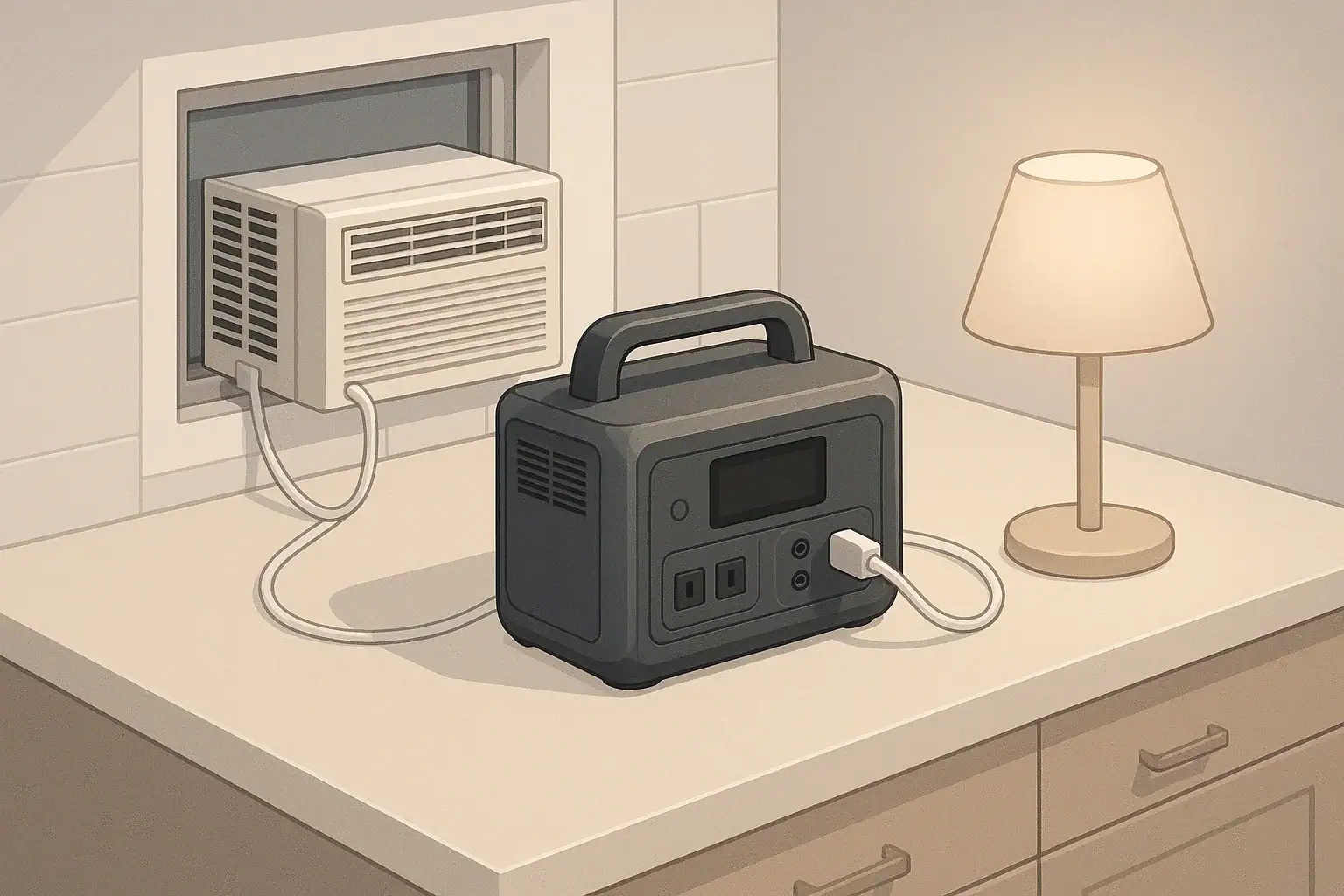
Window A/C (small) 400–800 Home backup battery High draw and startup surge; requires strong inverter and capacity

Real-World Apartment Examples and Sizing Scenarios

To see how portable power stations and home backup batteries behave in practice, it helps to walk through realistic apartment scenarios. These examples use approximate numbers so you can adapt them to your own devices.

Scenario 1: Short Outages in a Studio Apartment

Imagine a studio apartment where outages usually last a few hours. The resident mainly wants to keep working and stay connected:

  • Wi‑Fi router + modem: 25 W
  • Laptop: 50 W
  • LED desk lamp: 10 W

Total load is roughly 85 W. A portable power station with around 500 Wh of usable capacity could provide an estimated:

500 Wh ÷ 85 W ≈ 5.8 hours (before efficiency losses). With overhead, planning for about 4.5–5 hours is realistic.

In this scenario, a home backup battery would be overkill. The resident benefits more from a compact, easily stored portable unit that can also be used for travel or outdoor activities.

Scenario 2: One-Bedroom Apartment with Work-from-Home Setup

Consider a one-bedroom apartment where someone works from home and wants power for:

  • Router + modem: 25 W
  • Laptop + external monitor: 90 W
  • Two LED lamps: 20 W
  • Small fan: 30 W

Total load is about 165 W. A portable power station with around 1000 Wh usable capacity might provide:

1000 Wh ÷ 165 W ≈ 6.1 hours (ideal). Planning for 5–5.5 hours is more realistic.

If outages in this building are rare but sometimes stretch into the evening, a single mid-size portable power station or two smaller units rotated between rooms can comfortably cover essential needs without any panel work.

Scenario 3: Frequent Multi-Day Outages with Refrigerator Priority

Now imagine a ground-floor apartment in an older building where storms regularly cause 12–24 hour outages. The resident’s priorities include:

  • Apartment refrigerator: 120 W average, higher surge
  • Router + modem: 25 W
  • One laptop: 50 W
  • One LED lamp: 10 W

Average combined load might be around 200–230 W when the refrigerator cycles. A high-capacity home backup battery, possibly with panel integration or a dedicated circuit for the refrigerator, becomes more attractive here because:

  • The refrigerator’s startup surge could trip smaller portable inverters.
  • Daily energy use is high enough that a small portable unit would drain quickly.
  • Automatic switchover to keep food cold without moving cords is valuable.

However, this setup only works if the building allows installation, there is space for the equipment, and a qualified electrician can access the relevant circuits.

Scenario 4: Shared Apartment with Multiple Small Devices

In a shared apartment with several roommates, the combined load often comes from many small devices rather than one big appliance:

  • 3–4 phones and 2 tablets charging
  • 2 laptops
  • Router + modem
  • Two small fans

Here, a single large portable power station placed in a central location, or two smaller units assigned to different rooms, can work well. The flexibility to move units between bedrooms and the living area is often more useful than a fixed system in a building where you might not stay long term.

Common Apartment Backup Mistakes and How to Avoid Them

Many apartment residents buy a battery system, plug a few things in once, and do not think about it again until the next storm. That is when problems show up. Being aware of common mistakes helps you troubleshoot before the lights go out.

Mistake 1: Overestimating What the Battery Can Run

One of the biggest issues is assuming any “big-looking” battery can run anything in the apartment. Signs you are pushing the limits include:

  • Inverter shutting off when you start a device with a motor or compressor.
  • Battery percentage dropping much faster than expected.
  • Warning beeps or overload indicators on the display.

To avoid this, check the watt rating on each appliance and add them up. Keep your total well below the inverter’s continuous rating, and be especially careful with devices that have high startup surges, such as refrigerators or some fans.

Mistake 2: Ignoring Building Rules and Fire Codes

Some residents attempt DIY panel connections or store multiple large batteries in cramped closets without checking building policies. This can create safety and legal issues. If your plan involves anything beyond plug-in operation, check with management and, if needed, an electrician familiar with local regulations.

Mistake 3: Poor Placement and Cord Management

In small apartments, it is easy to end up with cords across walkways or units tucked into corners without airflow. Symptoms include:

  • Tripping over extension cords in the dark.
  • Units running hot to the touch during charging or discharge.
  • Fans on the battery running constantly or sounding unusually loud.

Address this by planning one or two “backup spots” in advance where the unit can sit on a hard surface with clear airflow and short, direct cord runs.

Mistake 4: Treating the Battery Like a Power Strip for High-Wattage Appliances

Plugging in a space heater, hair dryer, or electric kettle may technically work for a moment but will drain a battery extremely quickly or trigger an overload. In an apartment backup plan, it is usually better to:

  • Use battery power for low-wattage essentials only.
  • Rely on blankets, extra layers, or non-electric heating methods approved for indoor use instead of electric heaters.

Mistake 5: Never Testing the Setup Until an Emergency

Waiting for an actual outage to test your system often reveals problems at the worst time: wrong cables, incompatible plugs, or devices that draw more power than you thought. A simple test run while the grid is up helps you:

  • Confirm which outlets and ports you will use.
  • See how quickly the battery drains under your real load.
  • Adjust what you plan to power so you are not surprised later.
Common apartment backup issues and simple troubleshooting cues. Example values for illustration.
Symptom Likely cause What to check Simple next step
Battery shuts off when fridge or fan starts Startup surge exceeds inverter rating Inverter continuous and surge watt specs Move high-surge loads to a higher-power unit or remove them from the plan
Runtime is much shorter than expected Total load higher than assumed; efficiency losses Actual device wattage vs labeled values Reduce the number of devices or step up to a higher-capacity battery
Unit feels hot and fan runs constantly High load or poor ventilation Placement, clearance around vents Move to a cooler, open spot and reduce load if possible
Breaker trips when charging the battery High wall-charging input on a shared circuit Other devices on the same outlet or circuit Use a different outlet or schedule charging when other loads are off
Battery appears dead after long storage Self-discharge and deep depletion Last time it was charged; any status lights Try a full recharge and adopt a regular top-up schedule

Safety Basics for Battery Backup in Apartments

Using a battery system in a multi-unit building involves shared safety responsibilities. While modern lithium-based systems include protections, good habits reduce risk further and help you comply with building expectations.

Placement, Heat, and Ventilation

Safe placement is especially important in tight apartments:

  • Set units on a hard, flat surface such as a floor or sturdy shelf, not on beds or couches.
  • Keep at least a few inches of clear space around vents so cooling fans can move air.
  • Avoid direct sunlight, radiators, and other heat sources that can raise battery temperature.
  • Do not operate units in damp locations like bathrooms or directly next to kitchen sinks.

Fire and Overload Prevention

While serious incidents are rare with quality equipment used correctly, it is smart to treat batteries with the same respect you give other large electrical devices:

  • Use only manufacturer-approved charging cables and adapters.
  • Do not bypass built-in protections or modify the casing.
  • Avoid daisy-chaining power strips or plugging one strip into another.
  • Keep flammable materials (paper stacks, bedding, curtains) away from the unit.

If you notice unusual smells, swelling, smoke, or repeated unexplained shutdowns, disconnect the unit from the wall, unplug all devices, move it to a clear area if safe to do so, and contact the manufacturer or a qualified professional.

Respecting Building and Lease Rules

Building management may have policies about large batteries, storage in hallways or shared closets, and any changes to electrical systems. To stay compliant:

  • Keep portable units inside your rented space, not in common areas.
  • Get written approval before mounting any fixed battery to walls or tying into panels.
  • Clarify whether car charging is allowed in enclosed garages and under what conditions.

Using Pass-Through Power Safely

Some portable power stations support pass-through charging, where the unit charges from the wall while powering devices. In apartments, this can mimic an uninterruptible power setup for your router and laptop, but:

  • Do not exceed the manufacturer’s combined input and output limits.
  • Understand how the unit prioritizes charging vs powering loads, especially during brownouts.
  • Use a single, well-placed outlet rather than running long extension cords from other rooms.

Maintenance, Storage, and Long-Term Use in Apartments

Battery systems are relatively low maintenance, but a few habits keep them ready for the next outage and extend their useful life, especially when space and temperature vary across seasons.

Charging and Storage Habits

For most apartment users who rely on occasional backup:

  • Aim to keep the battery at a moderate state of charge when stored, not at 0% for long periods.
  • Top up every few months according to the manufacturer’s guidance.
  • Store in a cool, dry indoor location away from direct sun and heaters.

If you have a balcony or unheated storage room, avoid leaving the unit there for long stretches, especially in very hot or cold weather.

Cold and Hot Weather Considerations

Temperature affects both performance and longevity:

  • In cold conditions, expect reduced runtime and avoid charging if the unit is extremely cold unless allowed by the manufacturer.
  • In hot conditions, avoid leaving the unit in direct sun or near windows where temperatures can spike.
  • Bring the unit to room temperature before heavy use or charging whenever possible.

Periodic Testing and Inspection

Because apartment outages may be months apart, a simple routine helps ensure the system still works when you need it:

  • Every few months, plug in a lamp or laptop and confirm the unit powers it normally.
  • Check cables and plugs for nicks, bent prongs, or loose connections.
  • Lightly dust vents and surfaces so fans are not blocked by debris.

Planning for Moves and Upgrades

Apartment living often involves moving between units or cities. When choosing between a portable power station and a home backup battery, consider:

  • How easy the system will be to transport when you move.
  • Whether you can use the same unit in a future home or different building with stricter rules.
  • Whether adding a second portable unit later might be more flexible than installing one large fixed system now.

Which Fits Apartments Best and Specs to Look For

In most apartments, a portable power station is the practical starting point. It covers the core needs of internet, work devices, lighting, and a few comfort items without requiring landlord approval or permanent wiring. A home backup battery becomes attractive only when you:

  • Experience frequent, long outages.
  • Have clear permission for installation and panel work.
  • Need to support heavier loads like a refrigerator or small air conditioner.
  • Plan to stay in the same unit for many years.

Many apartment residents start with one mid-size portable unit, learn how it performs during real outages, and then decide whether to add a second unit or eventually upgrade to a larger, more integrated system if their living situation allows.

Specs to Look For When Choosing an Apartment-Friendly System

When you compare models, focus on a short list of specifications that directly affect apartment use rather than getting lost in marketing terms.

  • Capacity (Wh): Match this to your estimated daily energy needs. For basic connectivity and lighting, many apartments do well with moderate capacities; frequent long outages or refrigerator loads justify larger systems.
  • Inverter rating (continuous and surge W): Ensure continuous watts comfortably exceed the combined wattage of devices you plan to run at once, and that surge watts can handle motor or compressor startups if needed.
  • Number and type of outlets: Look for enough AC sockets and USB ports to power your actual mix of laptops, routers, lamps, and phones without relying on multiple power strips.
  • Charging options and input power: Check how fast the unit can recharge from a wall outlet and whether car or solar charging is realistically usable in your building.
  • Noise level and cooling behavior: Fan noise matters in small apartments, especially if the unit will sit near a bed or workspace.
  • Size, weight, and handles: Consider whether you can move the unit between rooms or carry it down stairs during a move.
  • Display and status information: A clear readout of remaining capacity, input/output watts, and estimated runtime makes managing power during outages much easier.
  • Safety certifications and protections: Look for built-in protections such as overcurrent, overtemperature, and short-circuit safeguards appropriate for indoor residential use.

By matching these specs to your apartment layout, outage history, and building rules, you can choose between a portable power station and a home backup battery with confidence—and avoid paying for capabilities you cannot use in your current space.

Frequently asked questions

What specs and features should I prioritize when choosing a backup battery for an apartment?

Prioritize usable capacity in watt-hours (Wh) for runtime, and the inverter’s continuous and surge watt ratings so it can handle your expected loads. Also consider the number and type of outlets, recharge options, physical size/weight, cooling/noise, and safety certifications to match apartment constraints.

What common mistake do people make when planning backup power for an apartment?

Many people overestimate a unit’s capability and try to run high-wattage appliances like space heaters or refrigerators on small portable stations. To avoid this, add up actual device wattages, account for startup surges, and test your setup before an outage.

How can I use a battery backup safely in a multi-unit building?

Use units on hard, ventilated surfaces, keep clearance around vents, and use manufacturer-approved cables and chargers. Check building or lease rules before installing anything permanent, avoid storing units in common areas, and do not block exits or pathways.

Can a portable power station run a refrigerator in an apartment?

Some high-capacity portable stations can run a refrigerator for a limited time, but startup surge and longer runtime needs often favor a larger, higher-power system or panel-integrated backup. Verify the inverter’s surge rating and total capacity before relying on a portable unit for refrigeration.

How long will a portable power station typically run a router and laptop?

A router draws roughly 15–30 W and a laptop 50–90 W, so combined loads are often 65–120 W. A 500 Wh unit would theoretically provide about 4–7 hours before losses; expect real-world runtimes to be shorter due to inverter inefficiency and device variability.

Are Portable Power Stations the Future of Backup Power?

isometric portable power station charging devices

Portable power stations are becoming a core part of backup power, but they will complement rather than completely replace generators and whole‑home batteries. For many households, they are now the most practical way to keep essentials running during short outages, power camping setups, and support remote work off‑grid.

These compact battery power packs combine a rechargeable battery, inverter, and multiple outlets (AC, DC, and USB) in one box. Unlike traditional fuel generators, they are quiet, produce no exhaust at the point of use, and can often be recharged from solar panels. As power grids face more extreme weather and more people work from home, interest in portable backup power, solar generators, and battery stations has grown quickly.

This guide explains how portable power stations work, where they make sense, and where they fall short. You will see concrete runtime examples, common sizing mistakes, safety basics, and a practical checklist of specs to compare when deciding if a portable power station belongs in your backup plan.

What Portable Power Stations Are and Why They Matter for Backup Power

A portable power station is a self‑contained battery system that stores electricity and delivers it through built‑in outlets. Think of it as a large, rechargeable power bank with enough capacity and inverter power to run household devices instead of just phones.

For backup power, portable stations matter because they fill a gap between small uninterruptible power supplies and permanently installed generators or home batteries. They are especially well suited for:

  • Short to medium power outages where you only need to run a few essential loads.
  • Apartment or condo living where fuel storage and hard‑wired generators are impractical.
  • Mobile use cases like camping, RVs, vanlife, and field work.
  • Supplementing existing systems, for example keeping networking and electronics up while a generator covers heavy loads.

However, portable power stations are usually not sized to run an entire home with central air conditioning, electric water heating, or electric cooking for many hours. Their strengths are flexibility, portability, and clean operation, not unlimited energy.

Key Concepts: How Portable Power Stations Work

To decide whether a portable power station fits your backup strategy, it helps to understand the main components and ratings you will see on spec sheets.

Battery capacity and chemistry

The battery is the energy tank. Capacity is usually given in watt‑hours (Wh). Roughly speaking:

  • 300–600 Wh: occasional charging, small lights, short router backup.
  • 700–1,500 Wh: basic essentials for several hours, small fridge for part of a day.
  • 2,000+ Wh: larger fridges, more devices, or longer runtimes.

Common chemistries include lithium‑ion and lithium iron phosphate. While the details differ, both are lighter and more energy‑dense than lead‑acid batteries. Cycle life (how many full charge‑discharge cycles the battery can handle before losing capacity) is an important factor for long‑term value.

Inverter power and surge

The inverter converts DC power from the battery into AC power for household devices. Two ratings matter:

  • Continuous watts: how much power the station can deliver steadily.
  • Surge watts: short bursts for startup spikes, such as compressors and motors.

If your combined running loads exceed the continuous rating, the unit may shut down. If a device’s startup surge exceeds the surge rating, it may fail to start or cause an overload error.

Charging inputs and power management

Most portable power stations support several charging methods:

  • Wall charging: fastest and most convenient before a storm.
  • Vehicle charging: useful while driving but usually slower.
  • Solar charging: essential for extending runtime during long outages or off‑grid use.

Internal charge controllers and battery management systems regulate how the battery charges and discharges, protect against over‑current and over‑temperature, and may allow you to prioritize certain outputs or limit charge rates to preserve battery health.

Use case Example devices Approx. load (W) Estimated daily energy (Wh) Suggested battery size (Wh)
Basic communications Router (24h), 2 phones, 1 laptop 40–60 300–500 500–700
Essentials during outage Router, 2 LED lights (6h), laptop (4h), fan (4h) 120–180 600–900 1,000–1,500
Fridge + essentials Energy‑efficient fridge, router, lights 150–250 avg. 1,200–1,800 1,500–2,500
RV / van weekend 12 V fridge, lights, phones, laptop, small fan 80–150 800–1,200 1,000–2,000
Typical energy needs and suggested portable power station sizes for common scenarios. Example values for illustration.

Real‑World Backup Power Examples

Abstract watt‑hours can be hard to visualize. The examples below show how portable power stations behave in practical situations. Actual results will vary with device efficiency, ambient temperature, and depth of discharge.

Keeping internet and lighting on during a short outage

Scenario: You want to stay connected and keep a couple of rooms lit during a 6‑hour evening outage.

  • Wi‑Fi router and modem: 20 W.
  • Two LED bulbs: 10 W each (20 W total), used for 6 hours.
  • Phone charging: 10 W average over 3 hours.

Energy use estimate:

  • Router: 20 W × 6 h = 120 Wh.
  • Lights: 20 W × 6 h = 120 Wh.
  • Phones: roughly 30 Wh.

Total is about 270 Wh. Allowing for inverter losses and some buffer, a station with around 400–500 Wh usable capacity can comfortably cover this scenario.

Running a refrigerator through an overnight outage

Scenario: A modern, efficient refrigerator that averages around 120 W over time (including compressor cycling) needs to stay cold for 10 hours.

  • Fridge: 120 W × 10 h = 1,200 Wh.
  • Router and a light: add another 200–300 Wh.

You are now in the range of 1,400–1,500 Wh or more. A portable power station with at least 1,500–2,000 Wh capacity is more appropriate, especially if you cannot recharge during the outage.

Supporting remote work and small appliances

Scenario: You work remotely and need to keep a laptop, monitor, and networking equipment powered for an 8‑hour workday during an outage.

  • Laptop: 60 W × 8 h = 480 Wh.
  • Monitor: 30 W × 8 h = 240 Wh.
  • Router: 15 W × 8 h = 120 Wh.
  • Occasional phone charging and a small desk fan: 100–150 Wh.

Total is roughly 950–1,000 Wh. A station around 1,200–1,500 Wh gives a comfortable margin, particularly if you want to avoid fully draining the battery.

Extending runtime with solar

If your portable power station supports solar charging, even a modest solar array can significantly extend runtime in a multi‑day outage. For example, a 200 W solar panel in good sun might produce 800–1,000 Wh per day. That is enough to offset light loads like communications and lighting indefinitely, but not enough to run high‑draw appliances continuously without careful load management.

Scenario Symptom Likely cause Practical next step
Fridge will not start Unit clicks or shows overload error Startup surge exceeds inverter surge rating Test with smaller loads; consider a higher‑power station or running fewer devices at once
Shorter than expected runtime Battery drains in a few hours Loads underestimated or capacity quoted is nominal, not usable Measure or re‑check device wattage; assume 10–20% losses when sizing
Slow solar charging Battery barely gains charge during the day Panel under‑sized, poor sun angle, or input limit reached Improve panel orientation, reduce loads while charging, or add panel wattage within input specs
Unit shuts down in cold weather Warning icon or no output Battery management system protecting against low temperature Move the station indoors or into a temperature‑moderated space before use
Fan runs constantly Noticeable noise even at low loads High ambient temperature or internal heat buildup Provide better ventilation, keep away from direct sun, and avoid enclosing the unit
Typical portable power station issues, likely causes, and quick troubleshooting steps. Example values for illustration.

Common Mistakes and Troubleshooting Cues

Many disappointing experiences with portable power stations come from planning errors rather than hardware failures. Being aware of common pitfalls helps you avoid overspending or under‑preparing.

Undersizing capacity and inverter power

A frequent mistake is buying a unit based on peak advertised watts instead of actual energy needs. Signs you may be undersized include:

  • The station shuts down when a fridge or power tool starts.
  • Runtime is only a fraction of what you expected.
  • You constantly juggle which devices can be plugged in.

Fix: Add up the running watts of devices you want to power at the same time, check their startup surges, and size both inverter power and battery capacity with a margin.

Ignoring usable capacity and efficiency losses

Not all of the quoted watt‑hours are usable. Battery management systems may reserve a portion to protect the battery, and inverters are not 100% efficient. If you rely on the printed Wh number without accounting for 10–20% losses, runtimes will fall short.

Fix: When planning, multiply the rated capacity by about 0.8–0.9 to estimate usable energy, then divide by your expected average load.

Overloading AC outlets or mixing incompatible loads

Plugging too many devices into a single AC bank or running inductive loads (like pumps and compressors) alongside sensitive electronics can trigger overload or cause voltage dips.

Fix: Spread loads across outlets where possible, avoid starting multiple heavy loads at the same time, and keep critical electronics on separate ports from large motors when feasible.

Expecting generator‑like performance without a recharge-plan

Portable power stations cannot run large resistive loads such as electric ovens, baseboard heaters, or central air conditioning for long. Treating them like fuel generators leads to rapid depletion.

Fix: Reserve the station for high‑value loads (communication, refrigeration, medical devices that are compatible, and essential lighting) and pair it with a recharge strategy such as solar or grid pre‑charging.

Basic troubleshooting checklist

  • If a device will not power on: Check that the correct output (AC, DC, or USB) is enabled and that the device’s wattage is below the port limit.
  • If runtime is unexpectedly short: Confirm actual device wattage with a plug‑in meter or manufacturer specs, and compare to your earlier estimates.
  • If charging seems slow: Verify input wattage on the display, panel orientation, and that cables are fully seated and undamaged.
  • If the unit feels hot: Move it to a shaded, ventilated area and reduce high‑draw loads until the fan cycles down.

Safety Basics When Using Portable Power Stations

Portable power stations remove many hazards associated with fuel generators, but they still store significant energy and must be treated with care.

Ventilation and placement

  • Operate the unit on a stable, dry surface away from flammable materials.
  • Allow space around air vents so internal fans can move heat away effectively.
  • Avoid placing the station in direct sunlight or enclosed cabinets during heavy use.

Temperature limits

Battery performance and safety are closely tied to temperature. Extreme cold can reduce available capacity and trigger low‑temperature protection, while extreme heat accelerates wear and can cause automatic shutdowns.

  • Do not charge or discharge outside the temperature range listed in the manual.
  • Bring the station indoors or into a moderated environment during very hot or very cold weather.

Cable and load safety

  • Use appropriately rated extension cords and avoid daisy‑chaining power strips.
  • Do not attempt to back‑feed a home electrical panel without a proper transfer mechanism installed by a professional.
  • Inspect cords and connectors for damage before use; replace damaged cables instead of taping them.

Using portable power with sensitive or critical equipment

Some devices, especially certain medical or laboratory equipment, have strict power quality and uptime requirements. Portable power stations may not be tested or certified for those uses.

  • Verify voltage and frequency requirements of critical devices.
  • Confirm that the station’s output waveform and transfer behavior are compatible.
  • Where uninterrupted power is essential, dedicated and appropriately rated backup systems may still be required.

Maintenance and Long‑Term Use

Unlike fuel generators, portable power stations need relatively little routine maintenance, but a few habits can significantly extend their useful life.

Regular cycling and state of charge

Batteries last longer when they are not left fully charged or fully empty for long periods. For most chemistries used in portable stations:

  • Store the unit partially charged when it will sit unused for months.
  • Top it up a few times per year and run a light load to exercise the battery.
  • Avoid repeatedly draining to 0% if you do not need the absolute maximum runtime.

Environmental storage conditions

Heat is a major driver of battery degradation. Long‑term storage in hot garages or vehicles can reduce capacity noticeably over time.

  • Store in a cool, dry place away from direct sunlight.
  • Avoid leaving the unit in a closed vehicle during hot weather.
  • Keep vents clear of dust; gently clean with a dry cloth if needed.

Periodic functional checks

Waiting until a storm hits to discover a problem is avoidable. A simple quarterly check can confirm everything still works as expected.

  • Charge the station to a moderate level.
  • Plug in a few representative devices and verify they power on normally.
  • Confirm the display, ports, and fans behave as usual.
  • Note any changes in noise, heat, or runtime and adjust your plans accordingly.

Battery aging expectations

All rechargeable batteries slowly lose capacity with use and time. After several hundred or thousand cycles (depending on chemistry and depth of discharge), the station may still function but run for fewer hours. Planning with some margin in your original sizing helps maintain useful performance even as capacity gradually declines.

Practical Takeaways and Specs to Look For

Portable power stations are likely to remain a major part of the future of backup power, especially for targeted, high‑value loads and mobile use. They are not a universal replacement for whole‑home systems or large generators, but they offer a flexible, low‑maintenance way to add resilience.

When deciding how a portable power station fits into your overall backup strategy, think in terms of roles: communications and lighting, refrigeration, remote work, or mobile living. Matching the station to a clear role leads to better sizing, more realistic expectations, and better value.

Use the checklist below to compare models and ensure the specs align with your needs.

Specs to look for checklist

  • Battery capacity (Wh): Does the usable capacity (after losses) cover your estimated daily energy needs with some margin?
  • Inverter continuous watts: Is it higher than the total running watts of all devices you plan to power at the same time?
  • Surge watts: Can it handle the startup surge of fridges, pumps, or other motor loads you intend to run?
  • Number and type of outlets: Are there enough AC, DC, and USB ports for your devices without relying on unsafe adapters?
  • Charging options: Does it support wall, vehicle, and solar input at rates that fit your recharge plan?
  • Solar input limits: Are the maximum input watts and voltage compatible with the solar panels you plan to use?
  • Battery chemistry and cycle life: Is the rated cycle life appropriate for how often you expect to use the station?
  • Weight and portability: Can you comfortably move the unit where you need it, especially in an emergency?
  • Display and controls: Is it easy to see remaining capacity, input/output watts, and error indicators at a glance?
  • Built‑in protections: Look for over‑current, over‑voltage, over‑temperature, and short‑circuit protection.

By focusing on these specifications and grounding your choice in realistic load estimates, you can decide where portable power stations belong in your backup power mix and how they can best support you during outages, travel, and everyday off‑grid tasks.

Frequently asked questions

What specifications and features should I prioritize when comparing portable power stations?

Prioritize usable battery capacity (Wh) after accounting for efficiency losses, inverter continuous and surge watt ratings, and the available charging inputs (wall, vehicle, and solar). Also check the number and types of outlets, solar input limits, battery chemistry and cycle life, and the unit’s weight and portability to match your intended use.

How can I avoid the common mistake of buying a unit that’s too small?

Calculate the combined running watts of devices you plan to power at the same time and note any startup surges for motors or compressors. Size both the battery capacity and inverter rating with a safety margin and account for usable capacity by subtracting roughly 10–20% for losses and reserves.

Are portable power stations safe to use indoors?

Portable power stations are generally safe indoors because they produce no exhaust, but they still store significant energy and must be used according to manufacturer guidelines. Ensure adequate ventilation for heat dissipation, avoid charging or discharging outside the recommended temperature range, and inspect cables and connections before use.

How long will a portable power station run my devices?

Runtime is roughly the station’s usable Wh capacity divided by the combined load in watts; for example, a 1,000 Wh usable capacity driving a 100 W load will last about 10 hours before losses. Remember to include inverter and conversion losses and avoid fully draining the battery to preserve cycle life.

Can solar panels reliably recharge a portable power station during a multi‑day outage?

Solar can extend runtime and sustain light loads, but daily recharge depends on panel wattage, available sun hours, and the station’s solar input limit. A modest 200 W array might produce 800–1,000 Wh on a good day, so plan for reduced output on cloudy days and confirm the station accepts the panel’s voltage and wattage.

Is it safe to power sensitive or medical equipment with a portable power station?

Possibly, but you must verify the equipment’s voltage, frequency, and power quality requirements and ensure the station’s output waveform and certifications are compatible. For critical medical devices or equipment with strict uptime needs, use dedicated, certified backup systems or consult a professional before relying on a portable station.