
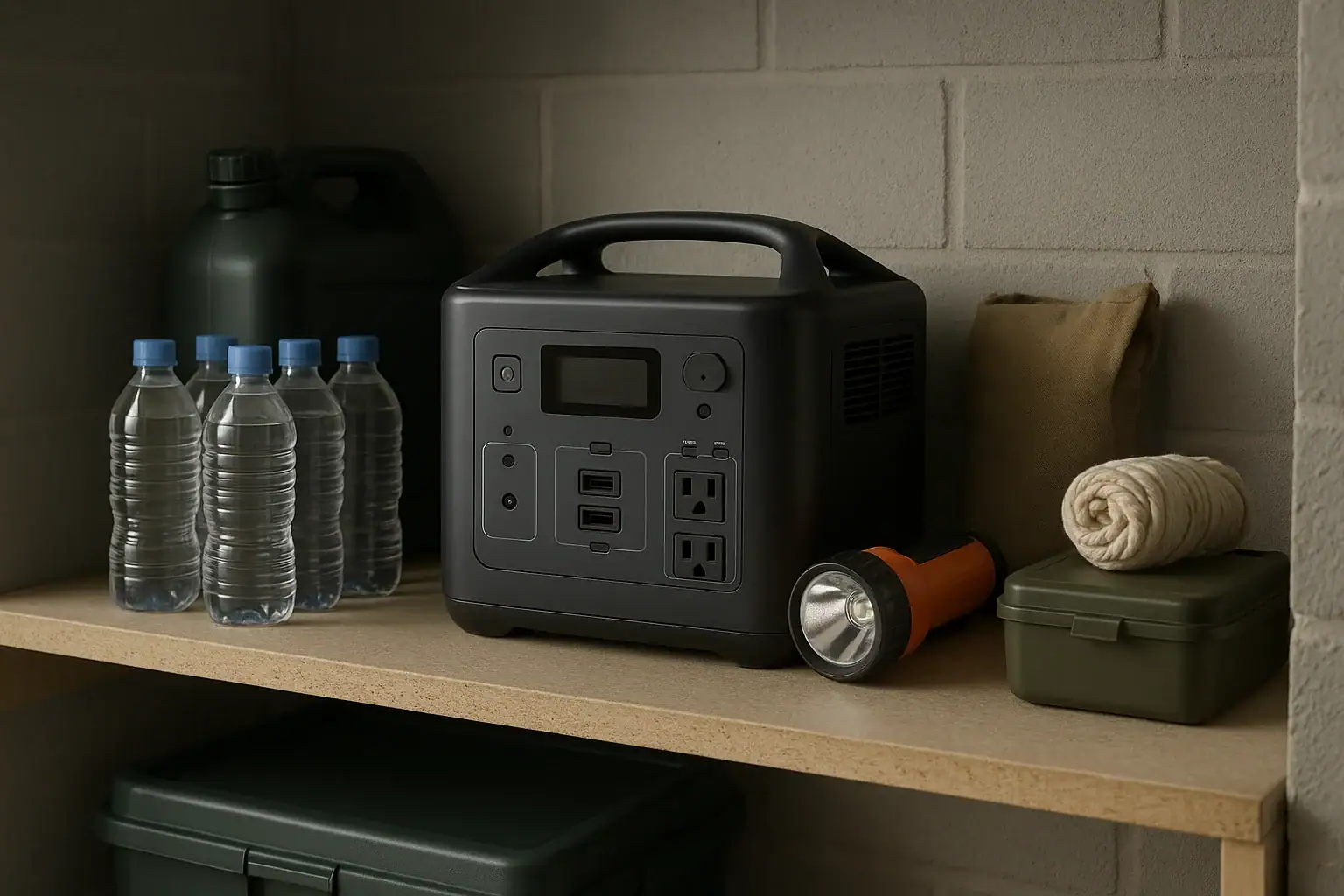
The best place to store a portable power station at home is a cool, dry, easy-to-reach indoor spot away from direct sun, heaters, wet floors, and clutter.
Good storage protects battery life, keeps the unit ready for an outage, and reduces avoidable problems such as moisture damage, swollen accessories, degraded runtime, or a low state of charge when you need backup power. Search terms such as storage temperature, humidity, ventilation, runtime, and battery maintenance all point to the same practical goal: keep the power station stable, accessible, and protected.
For most homes, that means a closet shelf, utility room, office cabinet, or interior storage area that stays comfortable year-round. Avoid garages, sheds, attics, bathrooms, laundry splash zones, and sunny windows unless the environment stays within a reasonable temperature and moisture range.
What home storage means and why it matters
Storing a portable power station is not just finding an empty corner. It means choosing a location that supports the battery, electronics, ports, display, cables, and safety protections over months or years of standby use. A power station is designed to be portable, but it still contains a high-capacity battery pack, inverter electronics, charge controller, cooling paths, and sensitive input and output ports.
The main storage goals are simple: limit heat, limit dampness, prevent physical damage, and keep the unit reachable. If it is buried behind holiday boxes or stored in a hot attic, it may not be ready during a storm, outage, or medical equipment backup situation. If it is kept on a basement floor where water can collect, moisture may reach the ports or accessories before anyone notices.
Storage also affects how predictable the unit feels. A well-kept power station usually holds its charge more reliably, charges more consistently, and gives a more realistic runtime estimate when used. Poor storage can cause nuisance issues such as unexpected self-discharge, charging pauses, warning lights, fan noise after sitting in a hot area, or adapters that look corroded or brittle.
How heat, humidity, and access affect a portable power station
Heat is usually the biggest storage concern. Batteries age faster when kept hot for long periods, especially in enclosed areas such as attics, sheds, cars, or garages exposed to summer sun. A power station that sits at high temperatures may still work, but long-term capacity and runtime can decline sooner. Charging a very hot or very cold unit may also be limited by built-in battery protection.
Humidity matters because a power station has ports, seams, buttons, screens, and ventilation openings. Normal indoor humidity is usually not a problem, but damp basements, bathrooms, laundry rooms, and areas near leaking pipes are poor choices. Moist air can encourage corrosion on metal contacts and may damage accessories or extension cords stored with the unit.
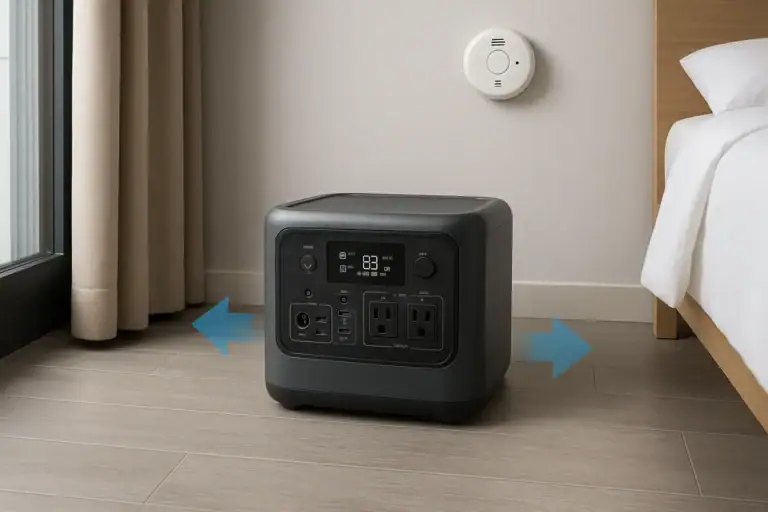
Access is the practical side of storage. During an outage, you should be able to reach the unit quickly, carry it safely, and find the needed cables. The best storage spot is close enough to living areas to be useful, but not in a walkway where it can be kicked, tipped, or covered. It should also be near a standard wall outlet for periodic top-ups without using a tangled or overloaded setup.
| Storage factor | Better home target | Why it matters |
|---|---|---|
| Temperature | Comfortable indoor range, often about 50 to 80 degrees Fahrenheit | Helps slow capacity loss and keeps the battery management system from limiting use |
| Humidity | Dry indoor air with no condensation, leaks, or splash risk | Reduces corrosion risk at ports, plugs, and cable ends |
| Ventilation | Open shelf or cabinet space with room around vents | Prevents trapped heat during charging or brief testing |
| Access | Reachable without moving heavy items | Makes the unit useful during emergencies and reduces drop risk |
| Surface | Sturdy, level, non-wet shelf or floor platform | Prevents tipping, impact damage, and water exposure |
Real-world examples of good and poor storage spots
A hall closet shelf is often a good choice if it stays dry and does not get hot. The unit can sit at waist height with charging cables in a labeled pouch nearby. This type of location is protected from sunlight, easy to reach, and unlikely to flood from minor floor seepage.
A home office cabinet can also work well, especially for smaller models used for routers, laptops, phones, or lighting during short outages. The cabinet should not be sealed tightly during charging, and the power station should not be surrounded by paper, fabric, or other items that block vents. If the cabinet is used only for storage and the door opens easily, it can keep dust and clutter under control.
A utility room can be suitable if it is dry and not excessively warm. Keep the unit away from water heaters, furnaces, open drains, sump pump areas, and chemical storage. A sturdy shelf is better than the floor. If the room becomes hot during equipment operation, choose a different location.
A basement can be acceptable only when it is finished, dry, and temperature-stable. Do not place the unit directly on concrete where condensation or seepage may occur. Use an elevated shelf and keep it away from laundry splash zones, dehumidifier drains, and windows that leak during storms.
A garage is a mixed choice. In mild climates with insulated garages, it may be acceptable for short-term storage. In many homes, however, garages see large temperature swings, high summer heat, freezing winter nights, dust, pests, gasoline fumes, and higher impact risk. For long-term battery health, an interior room is usually better.
An attic, shed, car trunk, or sunroom is usually a poor long-term storage choice. These spaces can become much hotter than the outdoor air and may expose the unit to humidity swings. They are also less accessible during bad weather, which defeats the purpose of emergency backup power.
Common mistakes and troubleshooting cues
One common mistake is storing the power station fully hidden and then forgetting it for a year. Even when turned off, many units slowly self-discharge. If the state of charge is too low when an outage starts, the available runtime may be far shorter than expected. A simple calendar reminder for periodic checks helps prevent this problem.
Another mistake is leaving the unit in direct sun, especially near a window. Sunlight can heat the case unevenly, fade plastics, and raise internal temperature. If the display, handle, or case feels warm before use, move the unit to a cooler place and let it return to room temperature before charging or discharging heavily.
Storing cables carelessly can also cause trouble. A damaged AC cord, loose DC adapter, or bent charging plug can mimic a power station problem. If the unit does not charge, check whether the outlet works, the power cord is fully seated, and the input port is clean and dry. Avoid forcing connectors or using unknown adapters with mismatched voltage or polarity.
Watch for cues that the storage environment is wrong. Musty smells, rust on nearby tools, condensation on windows, damp cardboard, pest droppings, or swollen cable insulation all suggest the location is not ideal. A power station that frequently shows temperature warnings, refuses to charge, or has an unusual odor should be moved to a stable indoor area and inspected according to its manual.
Do not ignore physical damage. A unit that was dropped from a shelf, soaked, crushed, or exposed to extreme heat should not be treated as normal storage inventory. Stop using it until you can confirm safe operation through the manufacturer guidance or qualified service support. Do not open the case or attempt to repair the battery pack yourself.
Safety basics for indoor storage
Store a portable power station where it will not block exits, stairs, vents, or walkways. The unit should sit flat and stable, with enough clearance that it cannot slide off a shelf when someone reaches for other items. For heavier models, low shelving may be safer than an overhead shelf.
Keep the area free of flammable clutter. You do not need an empty room, but avoid piling blankets, paper, cardboard, solvents, gasoline containers, aerosol cans, or paint supplies around the unit. During charging, the station should have space for airflow and should not be covered.
Keep children and pets in mind. A power station with exposed ports, buttons, cables, or a bright display can attract attention. Store it where small children cannot pull it down and where pets cannot chew cables. If the unit has a lockout feature, transport cover, or port covers, use them as intended.
Water exposure deserves special caution. Do not store the unit under plumbing, next to a sink, in a bathroom, or near areas where snowmelt, rainwater, or appliance leaks could reach it. If a power station becomes wet, do not plug it in simply to see if it works. Move it only if safe to do so, keep it isolated from use, and follow the product safety instructions.
For home circuits and backup power integration, keep the guidance high level. A portable power station can safely power devices plugged directly into it within its rated output. If you want to connect backup power to household wiring, use a qualified electrician and approved equipment. Do not improvise connections to a breaker panel, transfer switch, interlock, or wall outlet.
Maintenance checks while the power station is stored
A stored power station should be checked periodically, not ignored until an emergency. The most useful checks are state of charge, case condition, cable condition, and the condition of the storage area. These take only a few minutes and help you catch problems before the next outage.
Many owners store a lithium power station at a partial charge rather than empty. A middle range, such as roughly 40 to 80 percent, is commonly used for standby storage because it balances readiness with long-term battery care. If you rely on the unit for urgent backup, you may choose a higher state of charge, but understand that constant high charge in a hot area is not ideal for long-term health.
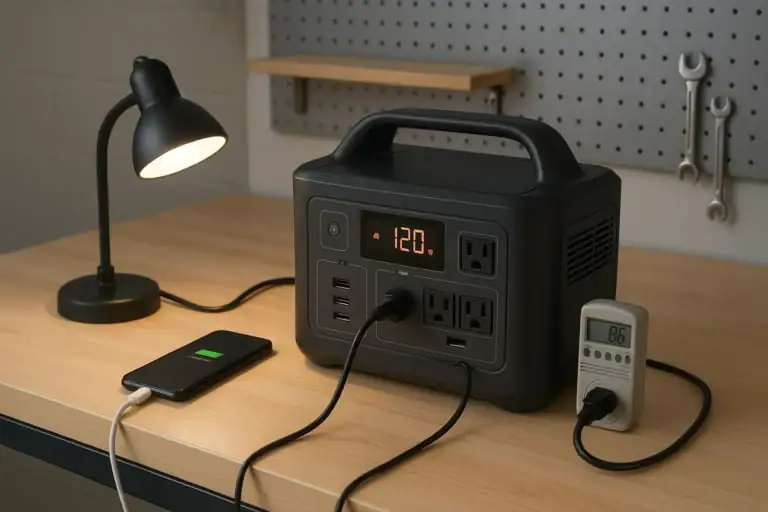
Test the unit occasionally with a simple load, such as a lamp or small appliance that is well below the output rating. This confirms that the display, outlets, and basic output functions are working. Do not use storage tests to push surge watts or maximum output. The goal is readiness, not stress testing.
Keep accessories organized with the unit. Store the AC charging cord, car charging cable, solar input adapter, and any device-specific cords in a dry pouch or bin. Labeling the pouch can save time in an outage. Do not wrap cords tightly around the power station, because tight bends can strain plugs and insulation.
| Check interval | What to check | Practical cue |
|---|---|---|
| Monthly | Storage area | Look for dampness, heat sources, dust buildup, pests, or blocked access |
| Every 2 to 3 months | State of charge | Top up if it has fallen below your readiness target |
| Every 3 to 6 months | Cables and ports | Check for bent plugs, corrosion, cracked insulation, or debris |
| Every 6 months | Basic output test | Run a small load briefly to confirm normal operation |
| Before storm season | Emergency kit readiness | Confirm cords, lights, phone cables, and user instructions are nearby |
Practical takeaways and specs to look for
The best home storage spot is cool, dry, stable, and reachable. If you would not store a laptop, camera, or battery tool in that location for months, it is probably not ideal for a portable power station either.
Related guides: Long-Term Storage Best Practices: Charge Level, Temperature, and Schedule • How to Maintain a Portable Power Station • Temperature Limits Explained: Safe Charging/Discharging Ranges and What Happens Outside Them
For most households, choose an interior closet, office shelf, or dry utility area over a garage, attic, shed, or damp basement. Keep the power station off wet floors, away from direct sun, and separate from heavy clutter. Store the charging accessories with it, and check the state of charge on a regular schedule.
When comparing portable power stations later, storage-friendly features matter because a unit that is easy to maintain is more likely to be ready when needed. Look beyond capacity alone and consider thermal limits, charging behavior, display information, and physical design.
Specs to look for
- Storage temperature range: Look for a practical range such as about 32 to 104 degrees Fahrenheit or wider; it helps you judge whether your closet, garage, or utility room is appropriate.
- Operating temperature range: Look for discharge and charging ranges listed separately, often with charging limits narrower than discharge limits; this matters if the unit may be used in a cold room or warm outage conditions.
- Battery chemistry and cycle life: Look for chemistry disclosure and cycle life examples such as hundreds to several thousand cycles to a stated remaining capacity; this helps estimate long-term durability.
- Capacity in watt-hours: Look for a capacity that matches your storage and runtime needs, such as 300 to 700 watt-hours for small electronics or 1,000 watt-hours and up for longer backup loads; larger units need more accessible storage space.
- Continuous output and surge watts: Look for both ratings, such as 600 watts continuous with a higher short surge; this matters for appliances with startup demand.
- Standby self-discharge guidance: Look for stated storage charge recommendations or maintenance intervals; this helps you plan top-ups and avoid finding an empty battery.
- Display information: Look for state of charge, input watts, output watts, temperature warnings, and estimated runtime; these make storage checks and troubleshooting easier.
- Port covers and case design: Look for protected ports, sturdy handles, and a stable base; these features reduce dust, impact, and handling problems while stored.
- Charging input options: Look for AC charging plus compatible DC or solar input ranges if relevant; flexible charging can restore readiness after a long outage.
A portable power station is most useful when it is treated like emergency equipment, not stored like seasonal clutter. Put it where the environment is gentle, the surface is stable, and the cables are easy to find. That one decision improves readiness, protects battery health, and makes the unit safer to use when the lights go out.
Frequently asked questions
Where should I store a portable power station in my house?
Store it in a cool, dry, indoor location that is easy to reach, such as a closet shelf, office cabinet, or utility room shelf. Keep it away from direct sunlight, heaters, wet floors, and areas with frequent temperature swings. The goal is to protect the battery while still making the unit easy to grab during an outage.
Is a garage a good place to store a portable power station?
A garage can work only if it stays relatively temperature-stable, dry, and protected from dust, fumes, and pests. In many homes, garages get too hot in summer or too cold in winter, which is harder on battery health. An interior room is usually the safer long-term choice.
What temperature is best for storing a portable power station?
A comfortable indoor range is usually best, often around 50 to 80 degrees Fahrenheit. Avoid prolonged exposure to heat, freezing conditions, or rapid temperature swings. Stable temperatures help reduce battery aging and lower the chance of charging limits or warning messages.
What features matter most when choosing a power station for home storage?
Look for a clear storage temperature range, a useful battery charge display, protected ports, and a sturdy case with a stable base. It also helps if the unit provides state-of-charge information and temperature warnings so you can monitor it while stored. Flexible charging options can make it easier to keep the unit ready.
What is a common mistake people make when storing a portable power station?
A common mistake is putting it somewhere convenient and then forgetting about it for months. That can leave the battery too low when you need it and may hide problems like heat damage, corrosion, or cable wear. Periodic checks are important even when the unit is turned off.
Is it safe to store a portable power station near water or in a bathroom?
No, it is better to keep it away from sinks, tubs, leaks, and other moisture sources. Water exposure can damage ports, cables, and internal components, and it can create a safety risk if the unit is later used without inspection. Choose a dry indoor area with no splash or condensation risk.
Related guides
Browse this topic →
- Beginner-friendly sizing, runtime & specs
- Solar & charging (MPPT, fast charging, cables)
- Batteries (LiFePO4, cycles, care & storage)
- Safety, cold-weather performance, real-world tips
More in Maintenance
See all →- How App Control and Smart Charging Affect Portable Power Station Battery Health
- How to Maintain a Portable Power Station
- How Long Do Portable Power Stations Last?
- Are Portable Power Stations Sustainable? Repairability, Recycling, and E-Waste
- When to Replace Cables and Adapters: Signs of Wear and Overheating
Keep reading
About this site
Portable Energy Lab publishes practical, independent guides about portable power—clear sizing, safe use, and real-world expectations.
Affiliate disclosure
Some links on this site may be affiliate links. If you buy through these links, we may earn a small commission at no extra cost to you. This helps support our content. Read our affiliate disclosure.