
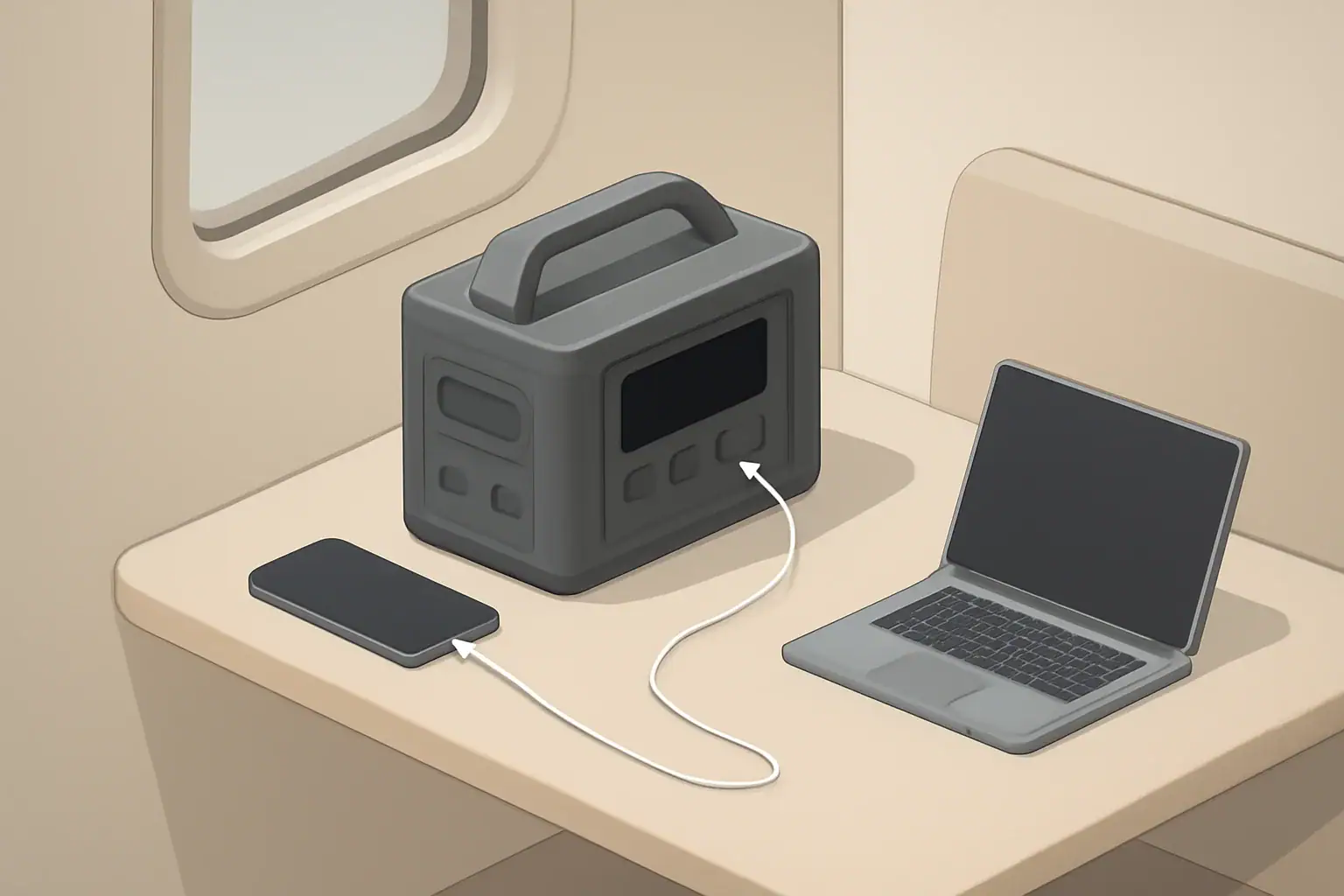
Portable power stations for RV and motorhomes are self-contained battery systems that let you run RV appliances and electronics without a generator or shore power. They combine a large battery, inverter, and multiple outlets in one box, so you can plug in gear much like you would at home. For many campers, they are the simplest way to add quiet off-grid power for boondocking, travel days, and overnight stops.
This guide explains how these units work in an RV context, how to size one for your rig, and what to expect from real-world runtime. You will see practical examples, common mistakes to avoid, key safety basics, and a clear checklist of specs to look for before you buy. The goal is to help you choose and use a portable power station that actually matches how you camp, instead of guessing based on marketing numbers.
What a Portable Power Station Does in an RV and Why It Matters
For RV and motorhome owners, a portable power station acts as a quiet, battery-based power source that can replace or supplement a generator and built-in house batteries. It is especially useful for:
- Boondocking or dry camping without hookups
- Overnight parking in rest areas or driveways where generator use is restricted
- Running critical loads like a CPAP, fridge, or furnace fan during power outages
- Powering outdoor cooking gear, tools, or devices away from the RV
Unlike a traditional RV battery bank, a portable station is plug-and-play: you place it where you need power, plug in your devices, and recharge it from shore power, solar, or your vehicle. This flexibility matters if you rent RVs, share rigs, or do not want to modify factory wiring.
However, capacity and inverter limits mean a portable power station will not replace every part of a full RV electrical system. Understanding what it can realistically power, and for how long, is the key to choosing the right size and avoiding disappointment.
Key Concepts: How Portable Power Stations Work in RVs
Most portable power stations share the same building blocks. Knowing these parts and units of measurement will help you match a station to your RV loads.
Core components
- Battery pack: Stores energy, usually rated in watt-hours (Wh). Common chemistries include lithium-ion and lithium iron phosphate (LiFePO4). More Wh means longer runtime.
- Battery management system (BMS): Electronic protection that prevents overcharge, over-discharge, overheating, and short circuits.
- Inverter: Converts DC battery power to 120V AC for household-style outlets. Rated in continuous watts and surge (peak) watts.
- Charge controller / input electronics: Manage incoming power from AC wall charging, solar panels, or a 12V vehicle outlet.
- Output ports: Typically include AC outlets, 12V DC ports, and USB ports for phones, tablets, and laptops.
Key electrical terms for RV use
- Watt (W): Power. How fast energy is used. A 60W laptop charger uses more power than a 10W phone charger.
- Watt-hour (Wh): Energy. Capacity of the battery. A 1000Wh station can theoretically power a 100W device for about 10 hours (1000 ÷ 100).
- Continuous vs surge power: Continuous is what the inverter can supply steadily; surge is a short burst for starting motors (fridges, pumps, some fans).
- Depth of discharge (DoD): How much of the battery’s capacity you regularly use. Shallower discharges generally extend battery life.
Waveform and why it matters in an RV
Most RV owners are better served by a pure sine wave inverter, which closely matches utility power and works well with sensitive electronics, induction motors, and many medical devices. Modified or stepped sine wave inverters can cause extra heat, noise, or malfunction in some RV appliances, especially those with motors or power bricks.
Simple sizing approach for RV loads
To estimate daily energy needs, use this basic process:
- List each device you want to run (fridge, CPAP, lights, laptop, fan, etc.).
- Find its power draw in watts (from the label or manual).
- Estimate how many hours per day each device will run.
- Multiply watts × hours for each device to get watt-hours per day.
- Add all device Wh, then add 10–20% to cover inverter and system losses.
| Device / Load | Approx. Power (W) | Daily Use (hours) | Daily Energy (Wh) | Suggested Station Capacity Range (Wh) |
|---|---|---|---|---|
| LED interior lights (set of 4) | 20 | 4 | 80 | 300–500 |
| Laptop + phone charging | 70 | 3 | 210 | 500–1000 |
| 12V compressor fridge (small) | 45 (average) | 12 (duty cycle) | 540 | 1000–1500 |
| CPAP (no heated hose) | 40 | 8 | 320 | 500–1000 |
| Microwave (short use) | 1000 | 0.25 | 250 | 1500–2000 (inverter must handle surge) |
Use your actual appliance ratings where possible; labels on RV fridges and microwaves often list both running watts and higher startup or input watts.
Real-World RV Examples and Use Scenarios
To make sizing more concrete, here are common RV and motorhome scenarios and what a portable power station typically handles in each.
Weekend boondocking (no hookups)
- Typical loads: LED lights, water pump, vent fan, small 12V or compact AC fridge, phone and laptop charging.
- Estimated daily energy: 600–1200Wh depending on fridge efficiency and fan use.
- Practical station size: Around 1000–2000Wh, possibly paired with 100–300W of solar to top up during the day.
- What this looks like in practice: You can run lights and fans in the evening, keep food cold, and charge devices, then recharge the station from solar and/or driving the next day.
Overnight stops and CPAP support
- Typical loads: One CPAP machine, a couple of phones, maybe a small reading light.
- Estimated daily energy: 300–500Wh per person using CPAP, plus 50–100Wh for small electronics.
- Practical station size: 500–1000Wh for one CPAP user; more for two users or multiple nights without recharging.
- Realistic expectation: A mid-size station can often run a CPAP for several nights if you disable heated humidification, which significantly cuts power draw.
Extended off-grid travel
- Typical loads: Larger fridge, laptops, router or hotspot, fans, occasional microwave or induction cooktop, maybe a TV.
- Estimated daily energy: 1500–3000Wh or more, depending on cooking style and climate.
- Practical station size: 2000–5000Wh total capacity, usually combined with a substantial solar array or occasional generator use.
- Reality check: Running high-draw items like air conditioning or long microwave sessions from a portable station alone is rarely practical; they drain batteries quickly and may exceed inverter limits.
Travel-day and outdoor power
- Typical loads: Charging tablets for kids, powering a 12V cooler, running an air compressor briefly, or using small tools at a campsite.
- Practical station size: 300–1000Wh is usually sufficient, especially if you can recharge from the vehicle alternator while driving.
- Benefit: Keeps the RV’s house batteries from being cycled hard for small, mobile loads.
What portable stations usually cannot do well
- Run a rooftop air conditioner for long periods (very high continuous and surge power)
- Support electric resistance heaters for more than very short bursts
- Replace a whole-house RV electrical system in large motorhomes without careful load management
Common Mistakes and Troubleshooting Cues
Many RV owners run into similar issues when they first start using portable power stations. Recognizing these patterns can save you time and frustration.
Frequent sizing and usage mistakes
- Confusing watts with watt-hours: Assuming a 1000W inverter means the station has 1000Wh of energy. In reality, inverter watts and battery Wh are separate specs.
- Ignoring startup surges: A fridge or pump may only list 100–200W running, but need 2–3 times that briefly to start.
- Overestimating solar input: A 200W panel rarely delivers 200W all day; shading, angle, and heat reduce real output.
- Running everything on AC: Using the inverter for small DC loads (like 12V lights or fridges) wastes energy in conversion losses.
- Discharging to 0% regularly: Deep cycling every day can shorten battery lifespan, especially with certain chemistries.
Typical problems and what to check
| Symptom | Likely Cause | What to Check First |
|---|---|---|
| Fridge will not start or clicks on and off | Inverter surge rating too low or cable run too long | Compare fridge startup watts to inverter surge spec; try shorter, heavier AC cord and limit other loads. |
| Station shuts down unexpectedly under load | Overload or low battery protection | Check total connected watts; reduce high-draw devices and confirm battery state of charge. |
| Charge time much longer than expected | Input limited by adapter, cable, or settings | Verify AC or solar input wattage on the display; confirm correct charging mode and adequate cable size. |
| CPAP stops overnight | Battery too small or humidifier power draw higher than expected | Check CPAP power rating with and without humidifier; consider direct DC use if available and reduce other loads. |
| Unit feels very hot during use | Poor ventilation or continuous high load near maximum rating | Improve airflow around the case, reduce load, and avoid enclosed compartments without ventilation. |
Charging pitfalls specific to RVs
- Alternator over-expectations: Vehicle 12V outlets often provide limited current; they are fine for topping off but not for fast charging a large station.
- Mixed charging sources: Some stations limit total input if AC and solar are used together; others allow higher combined input. Always confirm the rated maximum.
- Using undersized extension cords: Long, thin cords can drop voltage and reduce effective charging power or cause nuisance shutdowns.
Safety Basics for Portable Power Stations in RVs
Portable power stations are generally safer and cleaner than fuel-based generators, but they still store significant energy. Treat them as serious electrical equipment.
Placement and ventilation
- Set the unit on a stable, level surface and secure it so it cannot slide or tip while driving.
- Keep vents clear on all sides; do not stuff the station into a closed cabinet without airflow.
- Avoid areas exposed to direct water spray, condensation, or standing water (such as near leaky windows or plumbing).
- Keep away from direct heat sources like furnace outlets, ovens, or unshielded exhaust areas.
Temperature and environment
- Most batteries perform poorly in extreme heat or cold. Avoid charging below freezing or leaving the unit in a closed vehicle in hot sun.
- If camping in cold climates, keep the station inside the living space where temperatures are more moderate.
Connection and wiring practices
- Use appropriately rated cords and plugs; avoid daisy-chaining multiple power strips or adapters.
- Do not back-feed the RV’s shore power inlet by plugging the station into it without a proper transfer arrangement; this can create shock and fire hazards.
- If integrating with existing RV circuits, use a qualified technician and appropriate overcurrent protection.
- Do not modify the station’s internal wiring or bypass built-in protections.
Load management for safety
- Stay within the inverter’s continuous and surge ratings; regularly running at the limit increases heat and wear.
- Avoid plugging high-draw items (such as space heaters) into the station unless you have confirmed both power capability and runtime impact.
- Supervise children around the unit and keep small metal objects away from exposed ports.
Maintenance and Long-Term Use in RV and Motorhomes
Portable power stations require less maintenance than traditional multi-component battery systems, but a few habits will keep them reliable for RV travel.
Routine checks
- Inspect ports, cords, and plugs regularly for looseness, discoloration, or damage.
- Wipe dust and debris from vents and surfaces to maintain airflow.
- Monitor battery health indicators on the display if available, such as cycle count or capacity estimates.
Storage between trips
- Store the station in a cool, dry place out of direct sunlight.
- Avoid long-term storage at 0% or 100% charge; many manufacturers recommend storing around 40–60% state of charge.
- Top up the battery every few months if the unit sits unused to offset self-discharge.
Using the station through the seasons
- Summer: Pay attention to heat buildup in RV compartments and during solar charging. High temperatures accelerate battery aging.
- Winter: Avoid charging when the battery is below its specified minimum temperature. If needed, warm the unit inside the RV before charging.
- Shoulder seasons: These are ideal for frequent, moderate cycling, which many lithium batteries handle well.
When to consider replacement or upgrade
- Noticeably reduced runtime for the same loads, even after full charging.
- Frequent over-temperature or protection shutdowns at modest loads.
- New camping patterns (for example, longer boondocking trips) that push the station beyond its original role.
Practical Takeaways and Specs to Look For
Choosing a portable power station for RV or motorhome use is easier when you match specifications to your actual camping style instead of buying by capacity alone.
Key takeaways
- Start by listing your must-run devices (such as fridge and CPAP) and estimating daily energy use in watt-hours.
- Choose capacity with at least 20–30% buffer above your typical daily needs, especially if you rely on solar.
- Focus on inverter quality and surge capability if you plan to run fridges, pumps, or microwaves.
- Plan realistic charging: know how fast you can recharge from shore power, solar, and the vehicle alternator.
- Treat the station as a major electrical appliance: secure it, ventilate it, and follow safe wiring practices.
Specs to look for in an RV-ready portable power station
- Battery capacity (Wh): Match to your daily Wh estimate; common RV setups fall between 500 and 3000Wh per station.
- Inverter type: Pure sine wave is strongly preferred for sensitive electronics and motor loads.
- Inverter ratings: Check both continuous watts and surge watts; compare to the highest-draw appliance you plan to run.
- AC input power: Higher AC charging wattage means faster turnaround at campgrounds or when plugged into a home outlet.
- Solar input range and maximum watts: Ensure compatibility with the panel wattage and voltage you intend to use on your RV.
- 12V / vehicle charging options: Look for clear specs on charging via cigarette lighter or dedicated DC input, and note expected charge times.
- Number and type of outlets: Confirm you have enough AC outlets, 12V ports, and USB ports for your typical setup.
- Weight and form factor: Consider whether you can comfortably move the unit between storage and use locations in the RV.
- Display and monitoring: A clear screen showing input, output, and remaining time can simplify day-to-day energy management.
- Operating temperature range: Check that it aligns with the climates where you camp.
If you build your decision around these specs and your own load list, a portable power station can become a dependable part of your RV power system, giving you quiet, flexible energy wherever you park.
Frequently asked questions
What specs should I prioritize when choosing a portable power station for my RV?
Prioritize battery capacity in watt-hours (Wh) to meet your daily energy needs, the inverter’s continuous and surge watt ratings to handle your highest-draw appliances, and a pure sine wave inverter for sensitive electronics. Also check AC input charging watts and solar input limits so you can recharge as quickly as your camping style requires, plus weight, port selection, and operating temperature range.
What common mistakes do RV owners make when using portable power stations?
Common mistakes include confusing watts with watt-hours, ignoring equipment startup surges, and overestimating solar output or vehicle charging capability. Avoid these by calculating Wh needs from actual device ratings, comparing startup watts to inverter surge specs, and using realistic solar or alternator inputs.
Is it safe to use a portable power station inside an RV, and what precautions should I take?
Portable power stations are generally safe when used according to instructions: keep the unit ventilated, secure it against movement while driving, and avoid enclosed, unventilated compartments. Do not back-feed shore power, use properly rated cords, and avoid charging below the manufacturer’s minimum temperature to prevent damage or protection shutdowns.
Can I run my RV fridge or microwave from a portable power station?
You can run many small compressor fridges if the station’s inverter handles the fridge’s startup surge and the battery has sufficient Wh, but microwaves draw very high continuous power and deplete capacity quickly. Always compare the appliance’s running and startup watts to the station’s specs and estimate runtime from the station’s Wh capacity.
How should I charge a portable power station while on the road?
Charge from shore power when available for the fastest and most consistent input; solar is useful for daytime topping up but depends on panel size and conditions. Vehicle 12V or alternator charging can top off a station but is often limited in current—confirm the station’s DC input rating and use the recommended cable or a qualified installer for higher-power DC charging. For common low-voltage appliances, see the RV basics guide to 12V loads and house power.
How can I extend the battery life of my portable power station during long trips?
Use shallower depth-of-discharge cycles (avoid frequent 0% drains), keep the unit within its recommended temperature range, and maintain regular topping charges during storage or long trips. Also minimize conversion losses by using DC outputs for DC loads when possible and follow the manufacturer’s maintenance and storage recommendations.
Related guides
Browse this topic →
- Beginner-friendly sizing, runtime & specs
- Solar & charging (MPPT, fast charging, cables)
- Batteries (LiFePO4, cycles, care & storage)
- Safety, cold-weather performance, real-world tips
More in Beginners
See all →- Charging an Electric Wheelchair or Mobility Scooter From a Portable Power Station
- Portable Power Station for a Gaming PC: Runtime, Load Spikes, and UPS Considerations
- Portable Power Station for a Pop-Up Camper: Lights, Fans, Fridge, and Recharge Plan
- Portable Power Station for a Shed or Outbuilding: Lights, Chargers, and Security
- Portable Power Station for a Boat: 12V Loads, Salt Air, and Safer Storage
Keep reading
About this site
Portable Energy Lab publishes practical, independent guides about portable power—clear sizing, safe use, and real-world expectations.
Affiliate disclosure
Some links on this site may be affiliate links. If you buy through these links, we may earn a small commission at no extra cost to you. This helps support our content. Read our affiliate disclosure.