
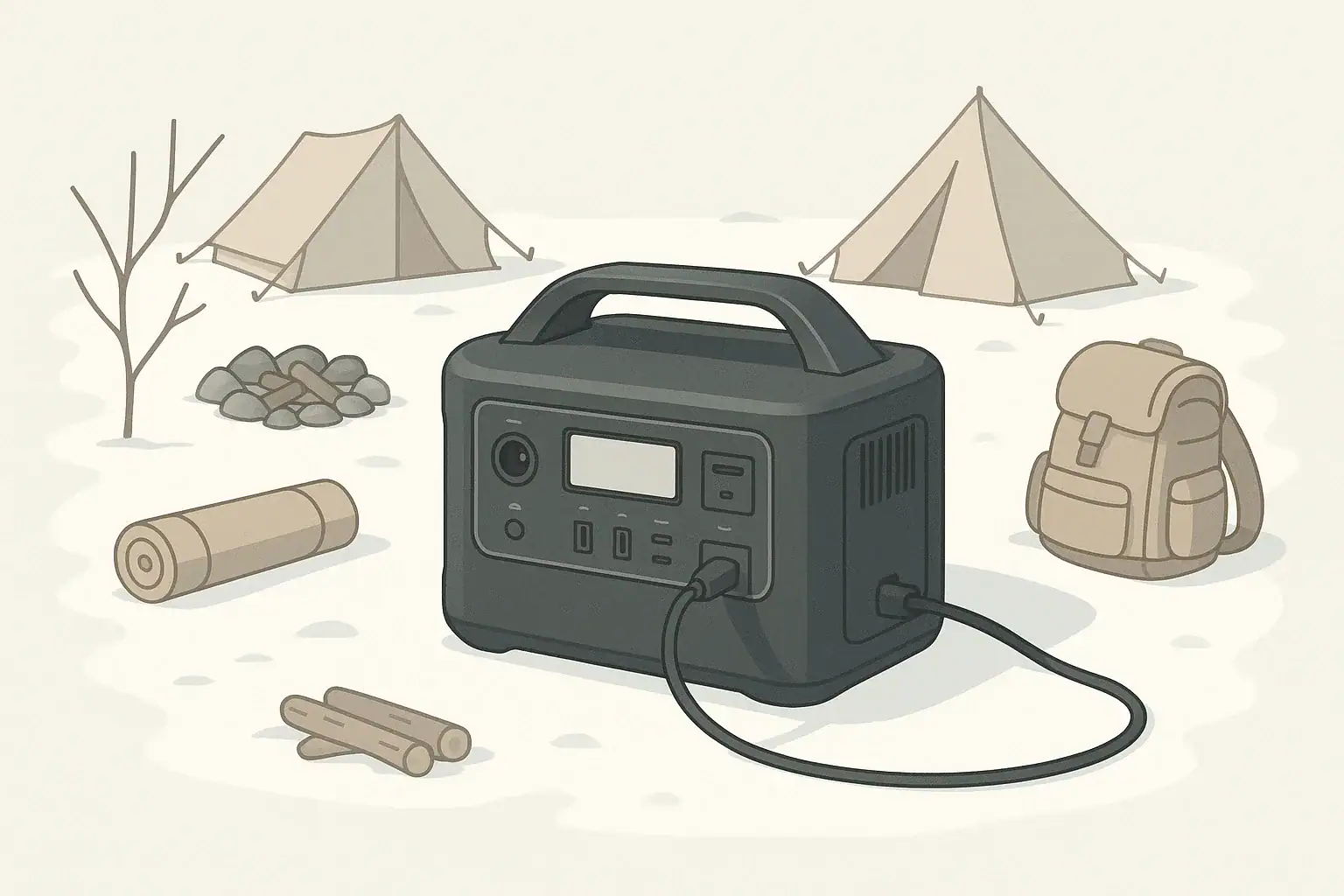
What the topic means and why heat in cars matters
Leaving a power station in a hot car means storing or transporting a portable power unit inside a vehicle that is parked in direct sun or warm weather. Interior car temperatures can climb far above the outdoor air temperature, especially on sunny days with closed windows. This creates a harsh environment for any battery-powered device, including portable power stations.
Portable power stations typically use lithium-based batteries, which are sensitive to temperature. Excessive heat accelerates chemical reactions inside the cells, which can speed up aging and raise the risk of failure. While devices include built-in protections, they are not designed to live in extreme temperatures for long periods.
This topic matters because many people use power stations for camping, road trips, and remote work, where leaving the unit in the vehicle seems convenient. Understanding how heat interacts with watt-hours, output loads, and charging efficiency helps you avoid performance loss and safety issues. With a few informed habits, you can reduce risk without giving up the flexibility that makes portable power stations useful.
Thinking about heat is part of a broader view of capacity, sizing, and safe use. The same concepts that guide you when matching wattage to appliances also apply when deciding how and where to store the unit. Heat is simply another load on the system, one that quietly affects lifespan, runtime, and reliability.
Key concepts and sizing logic under heat stress
Two capacity numbers matter when thinking about a hot car: watts and watt-hours (Wh). Watts describe how much power your devices draw at a moment in time, while watt-hours describe how much energy the battery can store. Heat does not change these ratings on the label, but it can reduce the usable capacity and efficiency you actually see, especially at the high and low ends of the temperature range.
Most appliances list watts as their running power, but they may also require surge power to start. A portable power station’s inverter needs to handle both the steady running watts and the short surge. In hot conditions, the inverter and internal electronics may reach thermal limits more quickly, forcing the unit to reduce output or shut down to protect itself. This means a setup that works fine in a cool room might struggle inside a hot vehicle.
Efficiency losses also increase with heat. Internal resistance rises as components get hotter, which means more energy is lost as heat instead of going to your devices. When left in a hot car, the battery may charge more slowly, stop charging altogether, or refuse to deliver full power until it cools down. These behaviors are usually built-in safeguards rather than failures.
State of charge (SOC) interacts with temperature as well. Keeping a battery at 100% and in high heat for extended periods can accelerate aging. From a sizing perspective, planning some extra capacity helps you avoid operating at extremes. Instead of sizing your system to be just enough under ideal conditions, consider a margin that accounts for heat-related losses and the reality that runtime in a hot environment can be shorter.
| What to check | Why it matters in heat | Notes |
|---|---|---|
| Label watt-hours (Wh) | Indicates stored energy; actual usable Wh can drop in very hot conditions. | Plan with a margin instead of assuming full label capacity. |
| Continuous watts rating | High loads generate more internal heat, stressing components faster. | Running near the limit in a hot car increases shutoff risk. |
| Surge watts capacity | Starting appliances in heat can trigger protections sooner. | Consider soft-start or lower-surge devices when possible. |
| Typical ambient temperature | Car interiors can exceed moderate ratings by a wide margin. | Use shade, ventilation, or remove the unit when practical. |
| Expected runtime | Heat and inverter losses shorten practical runtime. | Derate rough estimates instead of counting on ideal numbers. |
| Charging source (wall, car, solar) | Charging adds heat on top of a hot environment. | Allow time for cooling if the unit feels hot to the touch. |
| Duty cycle of your loads | Intermittent loads create less sustained heat inside the unit. | Continuous heavy loads are more likely to cause thermal throttling. |
Real-world examples of hot car impacts
Consider a mid-sized portable power station that might normally run a small 60 W fan for about 10 hours in a room at a comfortable temperature. In a hot car, with the internal temperature substantially higher, the same unit may run for noticeably fewer hours. Some of the stored energy is lost as heat within the battery and inverter rather than delivered to the fan, and the unit may shut down earlier to avoid overheating.
Now imagine using that same power station to charge a laptop and several phones during a road trip. While the car is moving with air conditioning on, the cabin stays relatively cool, and the unit operates near its rated efficiency. If the car is parked for a midday stop, and the power station is left charging in direct sunlight through the windows, its internal temperature can climb quickly. As it heats up, the car outlet charging rate may slow or stop, even though the devices plugged into it still appear connected.
A more demanding scenario would be running a compact portable refrigerator or cooler from a power station left in the back of a vehicle. The fridge cycles on and off, drawing more power in warmer conditions. Inside a hot car, the fridge runs more frequently, while the power station also runs hotter. The combined effect is shorter runtime than you would see at a campground table in the shade, even with the same starting battery level.
People using power stations for emergency backup see similar patterns. A unit that comfortably powers a few lights and a router for several hours indoors may behave differently if it is stored and used in a garage or trunk that gets very hot. Runtime can shrink, and the station might shut down unexpectedly if it does not have space to dissipate heat. Planning for these differences helps you avoid relying on best-case runtimes in worst-case conditions.
Common mistakes and troubleshooting cues in hot conditions
One common mistake is assuming that because a power station is rated for outdoor use, it is also fine to live in a closed, sunlit car. Outdoor ratings usually refer to splash resistance or dust protection, not the ability to sit for hours at temperatures far beyond typical room conditions. Leaving the unit fully charged in a hot trunk day after day can quietly shorten its lifespan.
Another frequent mistake is loading the power station near its maximum wattage while it is already hot from being in the vehicle. High load plus high ambient temperature pushes the internal components close to their thermal limits. The most common symptom is the inverter shutting off unexpectedly or the unit displaying an overload or temperature warning. Users sometimes interpret this as a defect, when it is usually a safety protection doing its job.
Charging behavior can also confuse people in hot cars. You might plug the station into a car outlet or solar panel and assume it is charging, but in reality the unit has reduced its charging current or stopped charging because it is too hot. Signs include a slower-than-expected increase in battery level, a charging indicator that turns off, or a fan that runs hard but the state of charge barely rises.
Finally, some users ignore ventilation needs. Placing the power station under a seat, stacked with bags, or wrapped in a blanket to hide it from view restricts airflow around the vents. In a hot vehicle, this can lead to aggressive fan noise, early thermal shutdowns, or warm plastic housing. When these cues appear, the safest response is to power down nonessential loads, move the unit to a cooler, shaded, and better-ventilated spot, and allow time for it to cool before resuming use.
Safety basics: placement, ventilation, cords, and heat
Proper placement is central to safe use, especially when vehicles and high temperatures are involved. A portable power station should sit on a stable, flat surface, with its vents unobstructed and away from soft materials that can insulate heat. Leaving it in a hot car under direct sun or pressed against upholstery makes it harder for internal fans to move air, increasing temperatures inside the unit.
Ventilation is important both while operating and while charging. If you must use a power station in a vehicle, it is safer to do so when the car interior is reasonably cool and there is some airflow. Avoid enclosing the device in tight compartments or stacking gear around it. Remember that inverters and chargers generate heat even at moderate loads; giving that heat somewhere to go lowers stress on the battery and electronics.
Cord management also plays a role. Power cords and extension cords should be rated for the loads you are running and routed to avoid pinching in doors, seats, or trunk lids. In a hot car, coiled cords can warm up more quickly, so try not to leave long cables tightly coiled under direct sun or near heat sources. For outdoor or damp environments, using cords with appropriate insulation and, where applicable, plugging into outlets protected by ground-fault circuit interrupters (GFCI) adds another layer of safety.
High-level electrical safety principles still apply: treat the power station’s AC outlets like any household outlet, avoid overloading circuits, and keep liquids away from both the unit and its cords. If you are considering any connection that goes beyond plugging individual devices into the power station, such as integrating it with home wiring, consult a qualified electrician rather than attempting do-it-yourself solutions. Built-in safety features will help, but thoughtful placement and attention to heat are what keep the system within its design limits.
Maintenance and storage in hot and cold conditions
Maintenance and storage practices greatly affect how well a portable power station tolerates occasional time in a vehicle. Batteries age more slowly when kept at moderate temperatures and moderate states of charge. Leaving a fully charged unit in a hot trunk all summer or in a freezing car all winter is harder on the cells than storing it indoors and only bringing it to the vehicle when needed.
Most lithium-based power stations self-discharge slowly over time, even when turned off. In a hot environment, self-discharge can be slightly faster, and the internal battery management system may periodically wake to perform checks, using a small amount of energy. Checking the state of charge every few months and topping up as needed helps keep the battery from sitting empty, which can be harmful if prolonged.
Temperature ranges matter for both storage and operation. While specific limits vary by model, a general pattern is that extreme cold can temporarily reduce available capacity, and extreme heat can permanently accelerate aging and increase risk. A car parked in direct summer sun can easily exceed common recommended storage temperatures. When possible, store the power station indoors and treat vehicle storage as temporary, not permanent.
Routine checks should include inspecting the housing, vents, and cords for damage, and listening for unusual fan noises under load. If the unit often feels very hot to the touch after being in the car, consider adjusting your habits: reduce the time it spends in parked vehicles, keep it out of direct sun, and avoid charging or running heavy loads until it cools to a more typical temperature. These small steps support both safety and long-term performance.
| Task | Suggested interval | Heat-related notes |
|---|---|---|
| Check state of charge (SOC) | Every 1–3 months | Avoid leaving at 0% or 100% in a hot car for long periods. |
| Top up charge | When SOC falls near 20–40% | Charge indoors in a cool, dry place when possible. |
| Visual inspection | Every 3–6 months | Look for discoloration, warping, or damage that could indicate heat stress. |
| Vent cleaning | Every 3–6 months | Gently remove dust so fans can move air efficiently in warm conditions. |
| Functional test under load | Before trips or storm season | Test in a moderate-temperature space, not inside a hot vehicle. |
| Vehicle storage review | Each season | Reconsider leaving the unit in the car during peak summer heat waves. |
| Long-term storage plan | For breaks over 6 months | Store partially charged, in a cool room, and avoid garages that overheat. |
Example values for illustration.
Practical takeaways and safer habits for hot cars
Managing heat risk with a portable power station is about habits rather than complex technical steps. Treat the unit like you would other sensitive electronics: avoid leaving it in parked cars during extreme heat if you can, and give it shade and airflow when you cannot. Even modest changes, like placing it on the cabin floor instead of the dashboard and cracking windows when safe to do so, can reduce temperature peaks.
When planning capacity and runtime for trips that involve vehicles, build in a buffer to account for heat-related losses. Assume that best-case runtimes will be shorter in a hot car, especially with continuous or high-power loads. Use the power station more heavily when the vehicle is occupied and cooler, and scale back expectations when it will sit parked in the sun.
- Avoid routine long-term storage in vehicles; bring the unit indoors between uses.
- Keep vents clear and avoid wrapping or burying the power station under gear.
- Let a hot unit cool before charging or running heavy loads.
- Watch for signs of thermal protection: fans running hard, reduced charging rate, or unexpected shutdowns.
- Maintain a moderate state of charge for storage, and check levels regularly.
- Use appropriately rated cords and avoid overloading outlets or circuits.
By understanding how watts, watt-hours, and temperature interact, you can make more realistic plans and use your power station with confidence. Respecting heat is simply part of using battery technology responsibly, whether your goal is camping convenience, road-trip comfort, or basic backup power at home.
Frequently asked questions
Is it safe to leave a power station in a hot car all day?
No — prolonged exposure to high interior car temperatures accelerates battery aging and can trigger thermal protections that reduce charging or shut the unit down. For safety and lifespan, avoid leaving the unit in parked vehicles during extreme heat and store it indoors when possible.
What temperature range is considered safe for operating or storing a portable power station in a vehicle?
Temperature limits vary by model, so check the manufacturer’s specifications for exact operating and storage ranges. As a rule of thumb, many lithium-based stations are designed for typical indoor ranges (often around 0–40°C for operation) and can degrade faster above those levels, so keep units shaded and ventilated in cars.
What signs indicate my power station is overheating while in a car?
Common signs include unusually hot housing to the touch, fans running loudly or continuously, reduced charging rates, temperature or overload warnings on the display, and unexpected shutdowns. If you see these cues, power down nonessential loads and move the unit to a cooler, ventilated area.
How should I position and ventilate a power station if I must leave it in a parked vehicle for a short time?
Place the unit on a stable, low surface out of direct sunlight—such as the cabin floor rather than the dashboard or rear window—and avoid covering vents or stacking gear around it. If safe, crack windows for airflow, and avoid charging or running heavy loads while the vehicle is parked in direct sun.
Can leaving a power station in a hot car cause a fire or explosion?
Severe thermal events like fire or thermal runaway are uncommon in modern units because of built-in battery management and thermal protections, but extreme heat and damaged or aging batteries increase risk. Avoid prolonged exposure to high temperatures and have units inspected if you notice warping, discoloration, or persistent overheating.
Related guides
Browse this topic →


- Beginner-friendly sizing, runtime & specs
- Solar & charging (MPPT, fast charging, cables)
- Batteries (LiFePO4, cycles, care & storage)
- Safety, cold-weather performance, real-world tips
More in Cold Weather
See all →Keep reading
About this site
Portable Energy Lab publishes practical, independent guides about portable power—clear sizing, safe use, and real-world expectations.
Affiliate disclosure
Some links on this site may be affiliate links. If you buy through these links, we may earn a small commission at no extra cost to you. This helps support our content. Read our affiliate disclosure.