
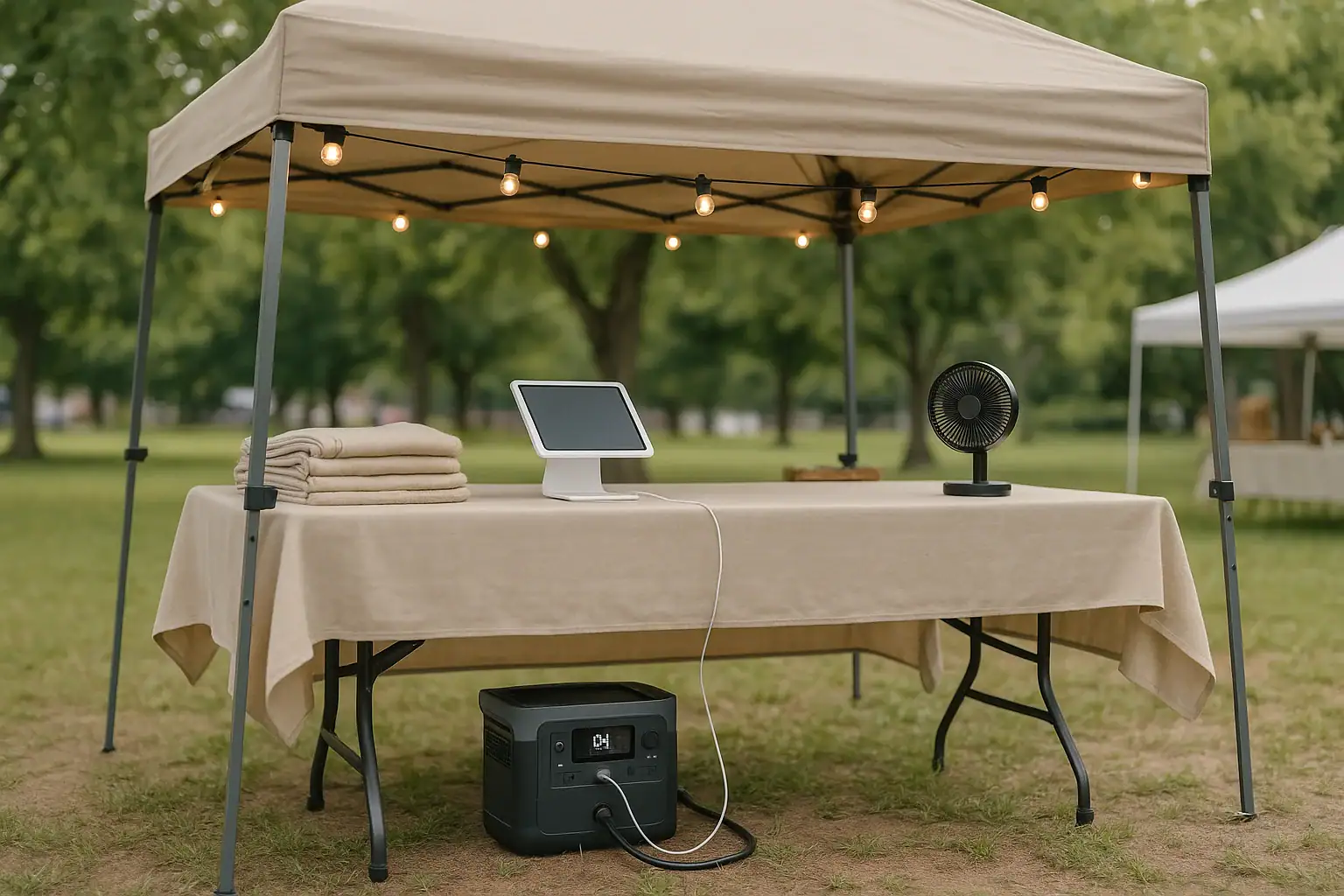
A portable power station can run a festival booth or vendor setup quietly if its battery capacity, output watts, surge watts, and outlets match the equipment you plan to use.
For craft fairs, farmers markets, art festivals, food sampling booths, and pop-up vendor events, the goal is not just having power. The goal is predictable runtime without noise, fumes, tripped ports, or a dead battery before closing time. A good plan accounts for AC outlets, USB-C PD charging, solar input, peak loads, weather exposure, and how long each device will actually be used.
Unlike a fuel generator, a battery power station is silent during operation and can often be used where engine noise is restricted. The tradeoff is that you must estimate loads before the event. If you know your watt-hours, continuous watts, inverter capacity, and charging options, you can build a quiet power plan that feels boring in the best possible way.
What quiet power planning means for festivals and vendor events
Quiet power planning means matching your temporary power source to the real demands of your booth before the event begins. A portable power station stores energy in a rechargeable battery and delivers it through AC, DC, and USB ports. For festival vendors, it can power lights, phones, tablets, card readers, label printers, fans, small displays, sound-limited electronics, and some low-wattage appliances.
This matters because event sites are often unpredictable. Some venues offer paid electrical hookups, some provide shared outlets, and others do not allow fuel generators near vendor areas. Even when power is available, cords may be long, outlets may be limited, or access may cost more than expected. A portable power station gives you a self-contained option, but only if it is sized for the job.
The biggest planning question is simple: how many watts will your booth use, and for how many hours? A phone charger may use only a few watts, while a spotlight, fan, printer, or heated display can raise the load quickly. Runtime depends on total energy use, not just the number of devices plugged in. A small, efficient setup may run all day on a modest battery, while one heat-producing device can drain the same unit in a short time.
Quiet power planning also affects customer experience. A silent booth is easier to talk in, more professional near neighboring vendors, and less likely to violate event rules. It also reduces the need for extension cords crossing walkways, which can improve booth layout when used correctly.
How portable power stations deliver quiet event power
A portable power station works by storing energy in watt-hours and converting it into the type of power your devices need. The battery capacity, commonly listed in watt-hours, indicates the energy stored. A 500 watt-hour unit can theoretically supply 500 watts for one hour or 50 watts for 10 hours, but usable runtime is usually lower because of inverter losses, temperature, device cycling, and reserve capacity.
The inverter is the part that creates household-style AC power. Its continuous watt rating tells you how much load it can support steadily. Its surge watt rating tells you how much short startup demand it may handle for a short moment. Surge watts vs running watts matters for motors, compressors, pumps, and some appliances. It matters less for phones, tablets, LED lighting, and other electronics with steady low demand.
Ports matter as much as capacity. AC outlets are useful for standard plugs, but they are not always the most efficient option. USB-C Power Delivery portable power stations can charge phones, tablets, some laptops, and point-of-sale devices without using the AC inverter. DC ports may run certain lights or coolers more efficiently if the voltage and connector match the device. The fewer unnecessary conversions you use, the better your runtime tends to be.
Charging strategy is the final part of how it works. Many vendors charge fully at home, use the station during the event, and recharge afterward. For multi-day festivals, charge a portable power station with solar panels, vehicle charging while driving, or access to overnight AC charging may be important. Solar can extend runtime, but it should be treated as variable support rather than guaranteed power because shade, clouds, panel angle, and booth location can reduce output.
| Booth item | Typical running watts | Planning note |
|---|---|---|
| LED string lights or small display lights | 10 to 60 watts | Often efficient enough for all-day use if total lighting is modest. |
| Phone, tablet, or card reader charging | 5 to 45 watts | USB-C or USB ports may be more efficient than AC adapters. |
| Small fan | 15 to 75 watts | Runtime depends heavily on speed setting and fan size. |
| Receipt or label printer | 20 to 150 watts while active | May draw more during printing than while idle. |
| Small refrigerator or cooler | 40 to 120 watts cycling | Startup surge and duty cycle should be checked before relying on battery power. |
Real-world vendor power examples
A jewelry booth may have a simple load: two LED display bars, a phone charger, a tablet, and a small card reader. If the lights use 30 watts total and the electronics average 15 watts, the booth may draw about 45 watts while open. Over an eight-hour day, that is roughly 360 watt-hours before conversion losses. A power station with extra capacity above that estimate can handle the day more comfortably than one sized to the exact number.
An art print booth may use brighter lighting, a tablet, a small label printer, and a fan. The label printer may not run continuously, so average draw is more useful than peak draw. If the booth averages 90 watts over six hours, it needs about 540 watt-hours plus a margin. If the fan is only used during afternoon heat, the load profile changes through the day. Planning by time block can give a more accurate estimate than assuming everything runs nonstop.
A farmers market vendor selling packaged foods may need a card reader, a scale, LED lighting, and possibly a small cooler. If the cooler has a compressor, startup surge and cycling behavior become important. Even if it averages 60 watts, it may briefly demand much more when the compressor starts. This is where inverter surge watts and appliance compatibility should be checked before event day.
A demonstration booth may use a laptop, monitor, small speaker at low volume, and occasional charging for visitors or staff. A laptop and monitor can create a steady draw, especially in bright outdoor settings where screen brightness is high. Reducing screen brightness, using efficient monitors, and charging devices before the event can noticeably extend runtime.
These examples show why vendor power is not one-size-fits-all. Two booths of the same size can have very different loads. The safest estimate comes from listing every device, checking its watt rating, deciding how many hours it will be used, and adding a realistic buffer.
Common mistakes and troubleshooting cues
The most common mistake is buying or bringing a power station based only on battery capacity while ignoring output watts. A large battery with an inverter that is too small may still shut off when a high-demand device starts. Capacity tells you how long power may last; output tells you whether the station can run the device at all.
Another frequent issue is underestimating heat-producing equipment. Kettles, coffee makers, hot plates, space heaters, heat sealers, and warming trays can use a lot of power. Many are poor fits for battery-only festival setups unless the power station is specifically sized for high continuous loads and the runtime expectation is short. If the event requires food preparation or heated service, review venue rules and power needs carefully.
If the station shuts down when a device turns on, look for overload, surge demand, or a port limit. Try removing other loads and checking whether the problem happens only at startup. If it does, the device may have a startup surge above the inverter capability. If the station runs for a while and then stops, the issue may be low battery, overheating, blocked ventilation, or a device cycling on and off with higher-than-expected draw.
If runtime is much shorter than expected, check whether AC outlets are being used for devices that could run from USB or DC. Also check idle loads. Printers, screens, chargers, and decorative lights can consume power even when they appear to be doing little. Bright sun can cause tablets and laptops to use more energy because screens run brighter and cooling fans work harder.
Charging confusion is another early warning sign. A station may have a maximum input limit that is lower than the combined rating of the panels or charger you hoped to use. Solar input also depends on voltage range, connector compatibility, and real sun conditions. For multi-day events, confirm the recharge schedule before assuming the battery will be full each morning.
Safety basics for crowded outdoor event spaces
Portable power stations are generally cleaner and quieter than fuel-powered options, but they still need basic electrical safety. Keep the unit dry, shaded when possible, and away from direct foot traffic. Do not place it where rain can pool, where drinks can spill into vents, or where customers can trip over cords. If weather is uncertain, plan a protected location that still allows ventilation.
Use cords rated for the environment and the expected load. safe extension cord use with portable power stations are preferable for outdoor booths, and cords should be routed to reduce trip hazards. Cable covers, booth edges, and taped-down low-traffic routes can help, but follow event rules. Avoid coiled extension cords under load because they can retain heat.
Do not overload a single outlet strip or adapter. The power station, outlet strip, and connected devices all have limits. If any plug, adapter, or cord feels hot, disconnect the load and investigate. Heat, buzzing, flickering power, repeated shutdowns, or burning smells are warning signs that the setup should not be used until the cause is understood.
Never open the power station, modify the battery pack, bypass protections, or attempt improvised wiring. If your booth needs fixed electrical distribution, hardwired equipment, or integration with venue power beyond normal plug-in use, involve event staff or a qualified electrician. High-level planning is appropriate for vendors; electrical installation work belongs to qualified professionals.
Also consider placement for theft prevention and emergency access. A power station should be accessible to staff but not easy for passersby to unplug or remove. Keep emergency exits, aisles, and neighboring booths clear.
Maintenance, charging, and storage between events
Good maintenance begins before the festival season. Test your complete booth setup at home with the same lights, chargers, printer, fan, and display devices you plan to use. Let it run for a realistic period and note the battery percentage used. This simple test often reveals hidden loads, noisy adapters, loose plugs, or equipment that draws more than expected.
Charge the station fully before event day unless the manufacturer recommends a different long-term storage level. For regular use, many vendors charge the night before and pack the unit where it will not be crushed or exposed to extreme heat. If you also use solar panels, inspect cables and connectors before leaving, because a missing adapter can make solar charging unavailable when you need it most.
Between events, store the station in a cool, dry place. Avoid leaving it in a hot vehicle for long periods, especially in summer. Extreme heat can reduce battery life and may trigger protective shutdowns. Extreme cold can reduce temporary output and charging performance. If the unit has a storage mode or recommended recharge interval, follow the general guidance provided with the device.
Keep ports clean and dry. Dust, lint, and debris can interfere with connections. Wipe exterior surfaces with a dry cloth and avoid harsh cleaning products. Check cords, adapters, and power strips for damage before each event. A reliable power plan includes the accessories, not just the battery.
It is also wise to keep a simple event power log. Record the event length, devices used, starting battery level, ending battery level, weather, and any problems. After a few events, you will know whether your setup has enough margin or whether your busiest days require more capacity or a different charging strategy.
| Maintenance task | Suggested timing | Why it matters |
|---|---|---|
| Test the full booth load | Before the first event and after major equipment changes | Reveals real runtime and overload issues before customers arrive. |
| Top off charge | Before each event day | Starts the day with maximum available energy. |
| Inspect cords and adapters | During packing and setup | Reduces failures caused by damaged or missing accessories. |
| Clean and dry ports | After dusty or wet events | Helps maintain reliable connections. |
| Review power log | After each event | Improves future capacity and runtime planning. |
Practical takeaways and specs to look for
Related guides: Portable Power Station Basics: Outputs, Inputs, and What the Numbers Mean • Surge Watts vs Running Watts: How to Size a Portable Power Station • USB-C Power Delivery (PD) Explained for Portable Power Stations
The best portable power station for a festival booth is the one that runs your actual equipment for the full event with a comfortable buffer. Start by listing every device, estimating watts, multiplying by hours, and adding extra capacity for losses and surprises. Then compare that number with battery capacity, inverter output, port selection, and recharge options.
For quiet events, efficiency is often more valuable than raw size. Charge phones and tablets directly from USB when possible, choose LED lighting, pre-charge laptops, and avoid heat-producing appliances unless they are essential and properly planned. A lower average load means longer runtime, less stress, and a smaller chance of mid-event troubleshooting.
Specs to look for
- Battery capacity: Look for enough watt-hours to cover your estimated load plus about 20 to 40 percent margin; this protects runtime when weather, screen brightness, or customer traffic increases use.
- Continuous AC output: Match the inverter rating to the total watts of devices running at the same time, such as 300 to 1000 watts for many light-to-medium booths; this determines whether the station can support the active load.
- Surge watts: Check startup capability for coolers, pumps, printers, or motorized equipment; a surge rating above the device startup demand helps prevent instant shutdowns.
- Port mix: Look for enough AC outlets, USB-A, USB-C PD, and DC ports for your setup; using the right port can reduce adapter clutter and improve efficiency.
- USB-C PD output: Consider 60 to 100 watts or more if charging tablets, laptops, or point-of-sale devices; higher PD output can keep work devices charged without using an AC brick.
- Solar input limit: For multi-day events, compare panel plans with the station input range and watt limit, such as 100 to 400 watts; this affects how much energy you can recover during daylight.
- Recharge time: Look at AC recharge time from empty to full or to 80 percent; faster recharging is useful when you have only overnight access to power.
- Weight and form factor: Choose a size you can safely carry, roll, and secure in the booth; portability matters when parking is far from the vendor area.
- Operating temperature range: Check that expected outdoor heat or cold fits typical operating conditions; temperature affects performance, charging, and protective shutdown behavior.
Before relying on any setup, run a realistic test. If your trial uses far less battery than expected, you have useful margin. If it ends close to empty, reduce loads, add charging options, or increase capacity before the event. Quiet power works best when it is planned early, tested once, and then kept simple on the day of the festival.
Frequently asked questions
How do I size a portable power station for a festival booth?
List every device you plan to run, note each device’s wattage, and estimate how many hours it will be used. Add the watts together to estimate total energy use in watt-hours, then choose a power station with extra margin for losses and unexpected demand. If any device has a motor or compressor, also check the inverter’s continuous and surge ratings.
What specs matter most when choosing a portable power station for festivals?
The most important specs are battery capacity in watt-hours, continuous AC output, surge watts, and the mix of ports available. USB-C PD output, recharge time, and solar input can also matter if you plan to charge devices directly or recover power during multi-day events. The right combination depends on whether your booth uses lights, electronics, a cooler, or other higher-draw equipment.
What is a common mistake people make with vendor event power?
A common mistake is focusing on battery size while ignoring inverter output. A large battery may still fail if the station cannot handle the startup demand or total watt load of the equipment. Another frequent issue is assuming devices will run all day without accounting for printers, screens, fans, and other hidden power use.
Is it safe to use a portable power station in a crowded outdoor booth?
Yes, if it is used with basic electrical and placement precautions. Keep the unit dry, ventilated, and out of walkways, and use outdoor-rated cords that are routed to reduce trip hazards. Do not overload outlets or modify the unit, and stop using the setup if cords or plugs become hot.
Can a portable power station run a cooler or small refrigerator at an event?
Sometimes, but it depends on the appliance’s running watts, startup surge, and cycling pattern. Compressor-based coolers can briefly draw much more power when starting, which may exceed a station’s surge limit. Check the appliance label and test the setup before relying on it for a full event.
How long will a portable power station last at a festival?
Runtime depends on battery capacity, total load, and how often devices cycle on and off. A small booth with efficient lighting and phone charging may last many hours, while a setup with a fan, printer, or cooler will drain faster. The most reliable way to estimate runtime is to test the full booth setup before the event.
Related guides
Browse this topic →
- Beginner-friendly sizing, runtime & specs
- Solar & charging (MPPT, fast charging, cables)
- Batteries (LiFePO4, cycles, care & storage)
- Safety, cold-weather performance, real-world tips
More in Beginners
See all →- Charging an Electric Wheelchair or Mobility Scooter From a Portable Power Station
- Portable Power Station for a Gaming PC: Runtime, Load Spikes, and UPS Considerations
- Portable Power Station for a Pop-Up Camper: Lights, Fans, Fridge, and Recharge Plan
- Portable Power Station for a Shed or Outbuilding: Lights, Chargers, and Security
- Portable Power Station for a Boat: 12V Loads, Salt Air, and Safer Storage
Keep reading
About this site
Portable Energy Lab publishes practical, independent guides about portable power—clear sizing, safe use, and real-world expectations.
Affiliate disclosure
Some links on this site may be affiliate links. If you buy through these links, we may earn a small commission at no extra cost to you. This helps support our content. Read our affiliate disclosure.