
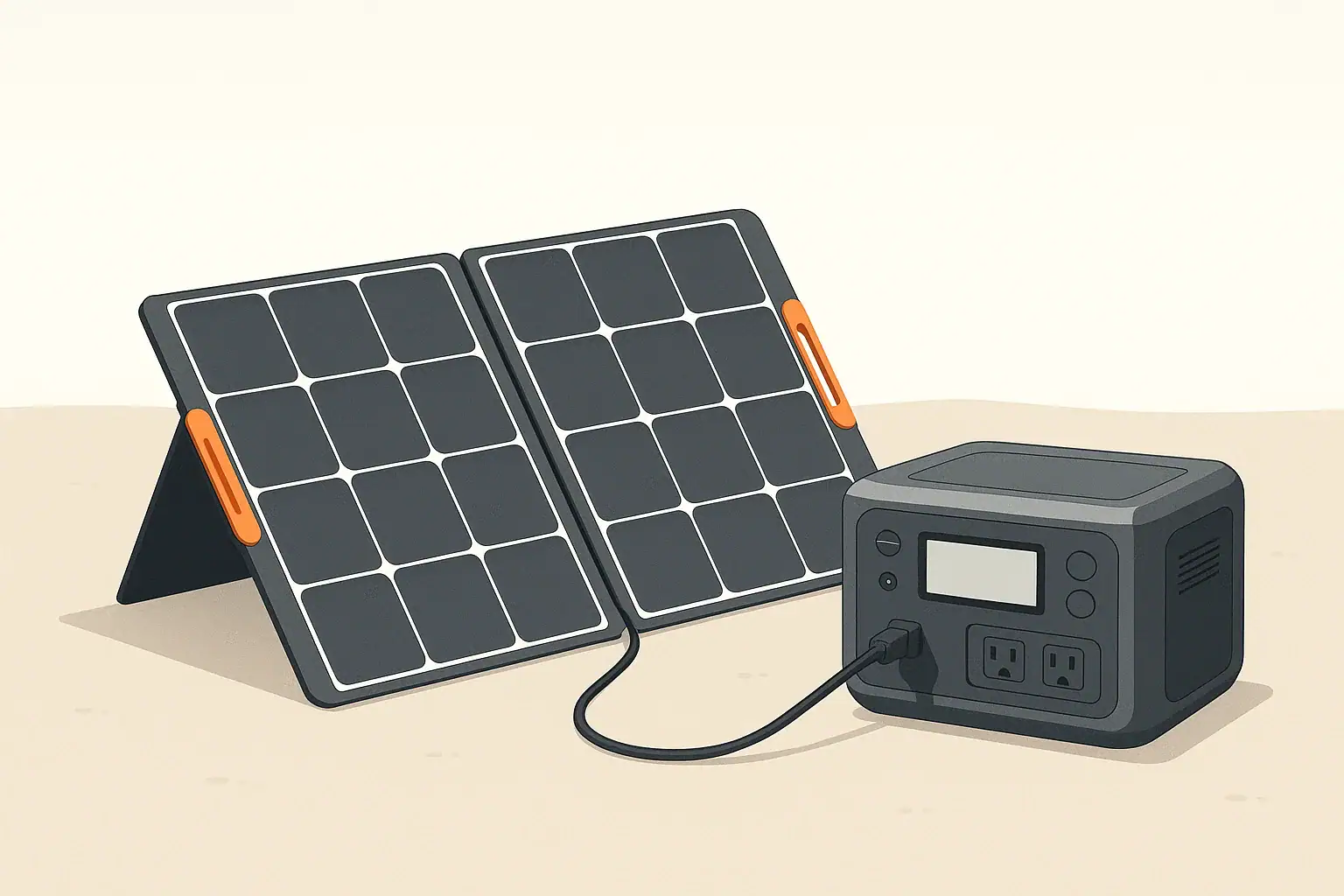
Solar panels and portable power stations are commonly paired for camping, remote work, emergency backup, and vehicle setups. Before you combine panels or purchase adapters, it helps to understand how wiring choices affect the voltage and current that reach the station. This article explains the practical differences between series and parallel connections, and how those differences influence compatibility, charge speed, cable sizing, and behavior under shade or changing temperatures. It also walks through how typical power station input limits — maximum voltage, wattage, and sometimes current — constrain your wiring options, and offers guidance for small portable setups up to larger RV and off-grid systems. Rather than prescribing a single answer for every scenario, the goal here is to equip you with the checks and trade-offs needed to choose the safest and most effective configuration for your gear and use case.
Why Solar Wiring Method Matters for Power Stations
How you connect solar panels together has a big impact on how well they charge a portable power station. The two basic options are series and parallel wiring. Each changes the voltage and current the power station sees, which affects:
- Whether the panels are compatible with the power station input
- How fast the battery can charge in good sun
- Performance in shade and mixed conditions
- Cable size and heat
- Safety margins around maximum voltage ratings
Most portable power stations are designed to accept a limited voltage range and a maximum solar wattage. Understanding series vs parallel helps you stay within those limits and get reliable charging at campsites, RV setups, and during power outages.
Series vs Parallel: The Core Electrical Differences
Solar panels produce direct current (DC) electricity. When you connect more than one panel, you can wire them in series, parallel, or a combination (series-parallel). The choice changes how voltage (V) and current (A) add up, while total watts (W) remain roughly the same under ideal conditions.
Series Connection
In a series connection, you connect the positive of one panel to the negative of the next, forming a chain. The remaining free positive and negative leads go to the power station or solar input controller.
With series wiring:
- Voltage adds (Vtotal ≈ V1 + V2 + …)
- Current stays roughly the same as one panel
- Power (watts) is voltage × current
Example (for illustration only): two similar 100 W panels with about 20 V and 5 A each:
- Series: ~40 V and ~5 A → ~200 W potential in ideal sun
This higher voltage can be useful if your power station allows it, because it helps overcome some voltage drop in longer cable runs.
Parallel Connection
In a parallel connection, all panel positives are tied together and all negatives are tied together. The combined pair then goes to the power station or controller.
With parallel wiring:
- Voltage stays about the same as one panel
- Current adds (Atotal ≈ A1 + A2 + …)
- Power (watts) remains total V × total A
Using the same example panels:
- Parallel: ~20 V and ~10 A → ~200 W potential in ideal sun
Parallel keeps voltage lower, which can be safer with devices that have a modest maximum input voltage, but it increases current, which affects connector ratings and cable sizing.
Example values for illustration.
| Factor | Series wiring | Parallel wiring |
|---|---|---|
| Voltage at power station | Increases with each panel; must stay below max input voltage | Similar to a single panel; usually easier to keep under limits |
| Current (amps) | Similar to one panel; often easier on connectors and cables | Adds with each panel; can approach connector or cable ratings |
| Performance with partial shade | One shaded panel can limit the whole string more noticeably | Each panel contributes more independently; shade impact is localized |
| Long cable runs | Higher voltage helps reduce voltage drop over distance | Lower voltage is more affected by cable length and resistance |
| Risk of exceeding voltage rating | Higher; more attention needed to open-circuit voltage and cold weather | Lower; usually within input voltage range for small systems |
| Typical small portable setups | Used when power station supports higher input voltage | Common when devices have low max voltage inputs |
| Complexity when mixing panel sizes | Generally best with closely matched panels only | Also prefers matched panels but can be a bit more forgiving |
How Power Station Solar Inputs Limit Your Choice
Portable power stations specify solar input limits. These usually include:
- Maximum input voltage (often listed as V or VOC max)
- Maximum input power (W)
- Sometimes maximum input current (A)
- Supported connection types (barrel, DC aviation, MC4 via adapter, etc.)
Voltage Window: The First Check
The maximum solar input voltage is a hard limit. If your series string voltage can exceed that limit (especially open-circuit voltage in cold weather), it can damage the device or cause it to shut down for protection.
When reviewing your setup:
- Look at each panel’s open-circuit voltage (VOC) specification.
- Multiply VOC by the number of panels in series.
- Ensure the result is comfortably below the power station’s max solar input voltage.
Parallel wiring usually stays closer to a single panel’s voltage, which often fits smaller power stations better. But parallel still must stay within any stated voltage minimums and maximums.
Maximum Solar Wattage and Practical Charging Speed
Power stations also cap usable solar watts. Even if your panels can produce more, the device will only accept up to its maximum rated solar input.
For planning, you can estimate charge time in full sun with:
- Charge time (hours) ≈ Battery capacity (Wh) ÷ Solar input (W)
This is a rough best-case estimate and does not include losses, shading, or weather. Series vs parallel generally does not change the total wattage potential from the panels in perfect conditions, but it can affect how often you hit the power station’s optimal input range in real-world conditions.
Current Limits, Connectors, and Cable Ratings
Parallel wiring raises current. Higher current:
- Increases cable heating if wires are undersized
- Can exceed connector ratings
- Leads to more power lost as heat in long cables
Series wiring increases voltage instead, so current remains closer to that of a single panel. This can be easier on connectors and cables if the power station is designed for higher-voltage solar input.
Shade, Weather, and Real-World Solar Performance
Perfect lab conditions rarely match real outdoor use. Clouds, shadows, temperature, and panel angle all affect solar output. Wiring choice changes how your system behaves under imperfect conditions.
Partial Shade Effects
Panels in a series string share the same current. If one panel is shaded and its current drops, the entire string current is limited to the weakest panel, even if others are in full sun. Many modern panels include bypass diodes that help, but shade still hurts series performance more noticeably.
In parallel wiring, each panel has its own path to the power station input. If one panel is shaded, its contribution drops, but the others can still output closer to their own best performance. This can make parallel preferable in locations with:
- Tree branches casting moving shadows
- Roof racks or antennas creating partial shade
- Campsites where only some panels can be placed in full sun
Temperature and Voltage Margins
Solar panel voltage varies with temperature; voltage tends to increase in cold weather and decrease when hot. A series string that is safe in mild weather can get closer to the power station’s voltage limit on cold, clear days with strong sun.
To maintain a safety margin:
- Avoid designing a series string that nearly equals the device’s max voltage rating.
- Consider some extra headroom to account for temperature swings.
Angle, Orientation, and Moving the Panels
Regardless of wiring, panel placement matters. Practical tips include:
- Face panels generally toward the sun’s path in the sky.
- Avoid placing panels flat on cold or hot surfaces that may cause uneven heating.
- Reposition folding panels a few times per day during camping or remote work sessions to keep them in better alignment with the sun.
These simple steps often yield larger gains than changing the wiring alone.
Series vs Parallel for Common Portable Power Station Setups
There is no single “best” wiring method. The right choice depends on your power station’s specifications, how many panels you have, and how you use the system.
Small Power Stations with Modest Solar Inputs
Smaller units used for phones, laptops, lights, and a few small AC loads often have:
- Lower maximum solar input voltage
- Lower maximum wattage (for example, a few hundred watts)
With these, parallel is often more straightforward because:
- Series may exceed the voltage limit with just two panels.
- Parallel lets you add another panel while staying in the safe voltage range.
- Partial shade performance tends to be better for casual, variable setups.
Mid-Sized Stations for Short Outages and Remote Work
Medium-capacity power stations used to run home essentials, networking gear, or remote work equipment may support higher solar input voltage and wattage. For these, series wiring becomes more attractive when:
- The manual lists a relatively high maximum solar voltage.
- You want to keep cable runs longer (for example, panels in the yard, unit indoors) while controlling voltage drop.
- You use two or more equal-wattage panels that match the recommended voltage range in series.
Parallel can still be useful if the device’s voltage limit is modest or if you frequently camp or park in areas with partial shade.
Larger Systems for RVs and Extended Off-Grid Use
Larger power stations with bigger battery capacity are often paired with multiple panels. These systems may use a series-parallel combination to balance voltage and current within the device’s limits. For RV or vanlife applications:
- Check whether the built-in solar controller specifies an ideal voltage window.
- Consider roof layout to minimize partial shading from vents or racks.
- Think about how many panels you realistically set up and transport.
In many RV scenarios, keeping roof-mounted panels wired to stay within the controller’s voltage limit while avoiding very high currents is a typical goal. This often means some panels in series and some of those strings in parallel, but that configuration should follow the controller’s documentation or be designed by a qualified installer.
Portable Foldable Panels for Camping
Foldable panels used mainly for camping and road trips are frequently designed to plug directly into a power station with minimal additional wiring. For these setups:
- The panel’s built-in connectors and ratings usually drive whether multiple panels should be combined in series or parallel.
- Parking position and campsite trees can cause frequent partial shade, which tends to favor parallel connections when more than one panel is used.
- Keep wiring simple, labeled, and easy to set up and pack away.
Safety and Practical Wiring Considerations
Any solar setup should prioritize safety and the long-term health of your gear. Portable power stations offer built-in protections, but correct wiring and component choices still matter.
Staying Within Component Ratings
Every part of the system has limits:
- Panels: maximum current and voltage, usually shown on a label.
- Cables: rated for a certain current and insulation voltage.
- Connectors and adapters: have maximum current ratings.
- Power station input: specified maximum voltage, wattage, and sometimes current.
Series wiring stresses voltage limits more, while parallel stresses current limits more. In both cases:
- Avoid using damaged, frayed, or overheated cables.
- Use connectors and adapters intended for outdoor solar use.
- Keep connectors dry and off the ground when possible.
Fuses, Disconnects, and Basic Protection
For small, portable setups directly feeding a power station, often there is minimal external protection because the power station manages many safety aspects internally. Still, some users add inline fuses or simple DC disconnects to:
- Protect wiring from accidental shorts.
- Provide a quick way to disconnect panels before adjusting wiring.
For anything beyond basic plug-and-play panel use, or for semi-permanent mounting (such as on an RV roof), consulting a qualified electrician or solar professional is recommended.
Never Bypass Built-In Safety Systems
Portable power stations are designed as sealed systems. Avoid:
- Opening the unit or modifying internal wiring.
- Bypassing built-in charge controllers with unapproved connections.
- Attempting to feed solar inputs beyond published limits.
Doing so can create fire risk, shock hazards, or permanent equipment damage.
Placement, Ventilation, and Weather
Panels are meant to be outdoors, but the power station usually is not fully weatherproof. Good practices include:
- Keep the power station under shade, cover, or indoors while panels stay in the sun.
- Avoid placing the unit directly on hot surfaces or in closed cars on hot days.
- Allow air to circulate around ventilation grilles during charging and discharging.
Planning Solar Charging Around Your Use Cases
Choosing series vs parallel is part of a bigger picture: how you size solar for the way you actually use your power station. Different use cases put different demands on solar charging.
Short Power Outages at Home
During brief outages, you may want to power:
- Routers and modems
- Phones and laptops
- A few LED lights
- Possibly a small fan or low-wattage appliance
In urban or suburban settings with limited outdoor space, total solar wattage may be modest. Parallel setups with one or two panels often suit these conditions, especially where shading from nearby buildings and trees is common.
Remote Work and Travel
For working remotely with laptops, monitors, and networking gear, you may:
- Consume a steady amount of power throughout the day.
- Rely on the power station both for AC and DC outputs.
Larger, more efficient solar arrays become more important. If campsites allow you to position panels in clear sun, a series configuration tuned to the power station’s preferred input voltage can be helpful for better performance with longer cables.
Camping, Vanlife, and RV Basics
For camping and RV use, consider:
- Whether panels are roof-mounted, portable, or both.
- How often you move the vehicle and whether you can aim panels toward the sun.
- Seasonal sun availability where you travel.
Parallel wiring can perform better in shaded campgrounds, while series or series-parallel configurations may shine in open, sunny locations with longer cable runs.
Example values for illustration.
| Device type | Typical draw (watts, example) | Daily use example | Planning note |
|---|---|---|---|
| Smartphone | 5–10 W | 2–3 hours total charging | Small load; even a modest panel can cover this easily. |
| Laptop | 40–80 W | 4–8 hours work session | Often a main daily draw; size solar so you can replace several hundred watt-hours. |
| Portable fridge | 40–70 W when running | Cycles on and off all day | Average daily energy can be significant; benefits from higher total panel wattage. |
| LED lighting | 5–20 W per light | Evening use for several hours | Efficient but can add up; easy to support with modest solar if managed. |
| Wi‑Fi router | 10–20 W | Many hours or continuous | Small but long-duration load; consider it in outage planning. |
| Small fan | 20–50 W | Several hours in warm weather | Comfort device; can noticeably increase energy use in hot climates. |
| Television (small) | 40–100 W | 1–3 hours | Occasional use; can be supported easily if solar is sized for work devices first. |
Putting It All Together: Choosing Series or Parallel
To decide between series and parallel for charging a portable power station, work through these points:
- Start with the manual: note maximum solar voltage, current (if listed), and wattage.
- Check panel specs: especially open-circuit voltage and current ratings.
- Model both options: estimate resulting string voltage (for series) and total current (for parallel).
- Consider shade patterns: more shade often favors parallel; consistently open sun may favor series.
- Account for cable length: longer runs may benefit from higher voltage (series) to reduce losses.
- Leave safety margins: avoid pushing up against maximum voltage or current ratings.
In many small portable systems, parallel wiring is simpler and more forgiving for occasional use, while in larger or more permanent setups, series or series-parallel configurations can offer better performance if designed within the power station’s limits. Keeping the system well within published ratings and adapting to your environment will matter more than any single wiring choice.
Frequently asked questions
Can I connect solar panels in series to any portable power station?
Not necessarily. You must check the power station’s maximum solar input voltage and compare it to the panels’ open-circuit voltage (Voc) multiplied by the number of panels in series; if the string Voc can exceed the device’s max, series wiring is not safe. Also allow extra headroom for cold-weather voltage increases.
Does parallel wiring perform better when panels are partially shaded?
Often yes; in parallel each panel feeds the input independently so a shaded panel reduces only its own contribution rather than limiting the entire array. However, bypass diodes and controller behavior can influence results, so parallel is usually preferable in moving-shade environments.
Will series or parallel wiring change the theoretical maximum charging speed?
Under ideal conditions total panel wattage is roughly the same regardless of wiring, so theoretical maximum charging power doesn’t change. In practice wiring affects whether the power station’s MPPT input sees the voltage and current range where it can extract full power, so one configuration may reach the device’s max input more reliably than the other.
What cable size and connector limits should I consider for parallel panel connections?
Parallel increases current, so you must choose wire gauge and connectors rated for the combined short-circuit and operating current of all panels to avoid overheating and voltage loss. Use outdoor-rated connectors and consider inline fusing and limiting cable length to reduce losses.
How do I account for temperature when checking series string voltage against a power station’s limit?
Panel open-circuit voltage rises in cold temperatures, so calculate worst-case Voc by multiplying the panel Voc by the number of series panels and add a safety margin rather than designing right at the device’s max. If available, use the panel’s temperature coefficient to estimate Voc in cold conditions and keep the string comfortably below the power station’s maximum input voltage.
Recommended next:
- Are Portable Power Stations the Future of Backup Power?
- Portable Power Stations and Renewable Energy
- How Many Solar Watts Do You Need to Fully Recharge in One Day?
- Overpaneling Explained: Can You Connect Bigger Solar Panels Than the Input Limit?
- Shading and Angle: How Placement Changes Solar Charging Speed
- MC4, Anderson, DC Barrel: Solar Connectors and Adapters Explained
- More in Solar →
Related guides
Browse this topic →
- Beginner-friendly sizing, runtime & specs
- Solar & charging (MPPT, fast charging, cables)
- Batteries (LiFePO4, cycles, care & storage)
- Safety, cold-weather performance, real-world tips
More in Solar
See all →- Solar Charging in Shade: Why Power Collapses and What You Can Do
- Can You Mix Different Solar Panels on One Power Station? A Safe Matching Checklist
- How to Read Solar Panel Specs for Power Stations: Voc, Vmp, Imp, and Why It Matters
- Solar Safety Basics: Cables, Heat, and Preventing Connector Melt
- Balcony Solar + Power Station: A Practical Setup for Apartments
Keep reading
About this site
Portable Energy Lab publishes practical, independent guides about portable power—clear sizing, safe use, and real-world expectations.
Affiliate disclosure
Some links on this site may be affiliate links. If you buy through these links, we may earn a small commission at no extra cost to you. This helps support our content. Learn more.