
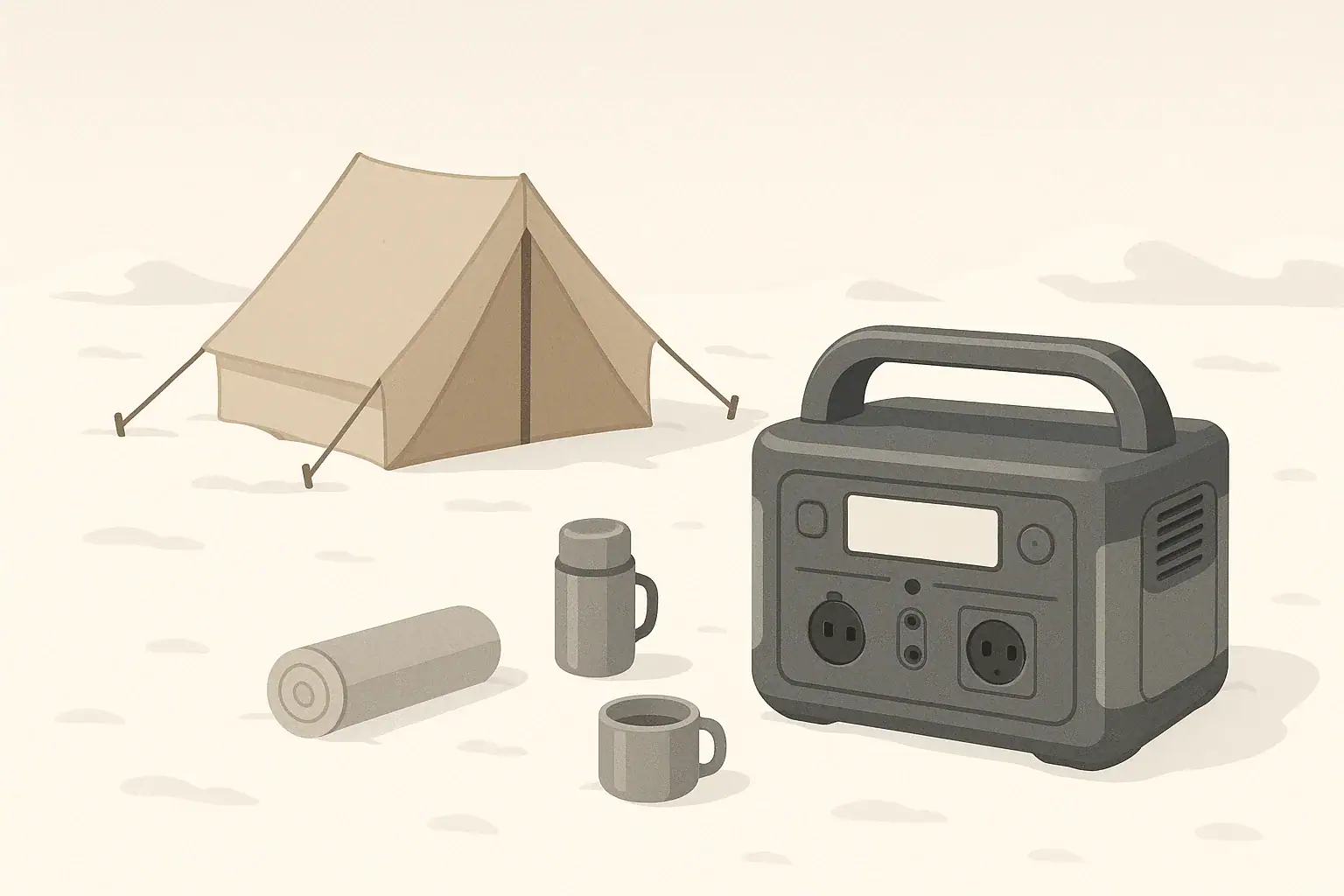
Winter can be hard on batteries and portable power stations in ways that are easy to overlook until you need them. This article gathers practical checks and seasonal maintenance steps so you can store, monitor, and use battery systems through cold months with confidence. It covers how temperature and state of charge affect capacity and charging behavior, what to inspect before and during storage, and how to size and operate gear to avoid unexpected shutoffs or damage. Use this checklist-driven guide to reduce the risk of deep discharge, condensation issues, cracked cases, or brittle cables, and to ensure your system will perform more predictably for outages, camping, or remote work in cold weather.
What winter storage means and why it matters for batteries
Winter storage is the period when your portable power station or standalone battery spends most of its time sitting unused in cold conditions, such as in a garage, RV, cabin, or vehicle. Even when you are not actively powering devices, the battery chemistry is still reacting to temperature and state of charge, which affects its long-term health.
Cold temperatures slow down the internal reactions in a battery, temporarily reducing available capacity and power output. Extremely low or high temperatures can also cause permanent damage, shortening the battery’s useful life. For portable power stations used for camping, remote work, or backup power, that loss of performance can leave you with less runtime than expected when you need it most.
Proper winter storage is about controlling three main factors: how full the battery is, how cold or hot its environment becomes, and how long it sits without being checked. A simple winter storage checklist can help you avoid deep discharge, swelling, cracked cases, or reduced capacity. Taken together, these practices extend the life of your system and make its behavior more predictable when you pull it back out in the spring.
Because winter often coincides with power outage season in many parts of the United States, keeping batteries healthy is not just about convenience. It is a reliability and safety issue, ensuring that your power station can start up, deliver power smoothly, and recharge at a normal speed when the weather is harsh.
Key concepts and sizing logic in cold conditions
To plan winter storage and winter use, it helps to understand a few key electrical concepts. Capacity is usually measured in watt-hours (Wh), which tells you how much energy the battery can store. Power output is measured in watts (W), which tells you how fast that energy can be delivered to your devices. A higher Wh rating means longer runtime; a higher W rating means the power station can run larger or more demanding devices at once.
Most appliances have two different power levels to consider: surge (or starting) watts and running (continuous) watts. Devices with motors or compressors, such as refrigerators or some power tools, draw a brief burst of higher power when they start. Your portable power station’s inverter must handle that surge without shutting down. This is especially important in the cold, where the battery may already have temporarily reduced capability.
Efficiency losses also matter more in winter. Every time energy is converted—from battery DC to 120 V AC, or through voltage converters for USB—some of it is lost as heat. Batteries themselves are less efficient at low temperatures, so you may see shorter runtimes and slower charging than the same setup delivers in mild weather. Planning with a safety margin becomes essential: a power station that runs a certain load for six hours in the summer might only manage four to five hours in freezing temperatures.
Finally, self-discharge is the slow loss of charge that happens even when the battery is turned off and unplugged. Rates vary by chemistry and design, but cold storage can affect this behavior. Some chemistries lose charge more slowly in cool environments, but the risk of damage from very low temperatures goes up. Good winter storage practice balances these factors by choosing moderate temperatures and checking state of charge periodically.
| What to check | Why it matters | Example notes |
|---|---|---|
| State of charge before storage | Prevents deep discharge during long idle periods | Store around half to three-quarters full, not at 0% or 100% |
| Storage temperature range | Reduces risk of permanent capacity loss or damage | Cool indoor area is often better than an unheated shed |
| Visible damage to case and ports | Cracks and warping can signal stress from temperature swings | Discontinue use and contact the manufacturer if severe |
| Battery level every 1–3 months | Catches slow self-discharge before the battery reaches empty | Top up with a short charge if the level drops noticeably |
| Moisture and condensation around unit | Moisture can lead to corrosion or short circuits | Allow to dry thoroughly before charging or use |
| Ventilation space around vents | Prevents overheating during any winter charging sessions | Keep several inches clear on all sides of vents |
| Cable condition and flexibility | Cold can make some cable jackets brittle | Inspect for cracks and replace damaged cords |
Example values for illustration.
Real-world examples of winter performance and sizing
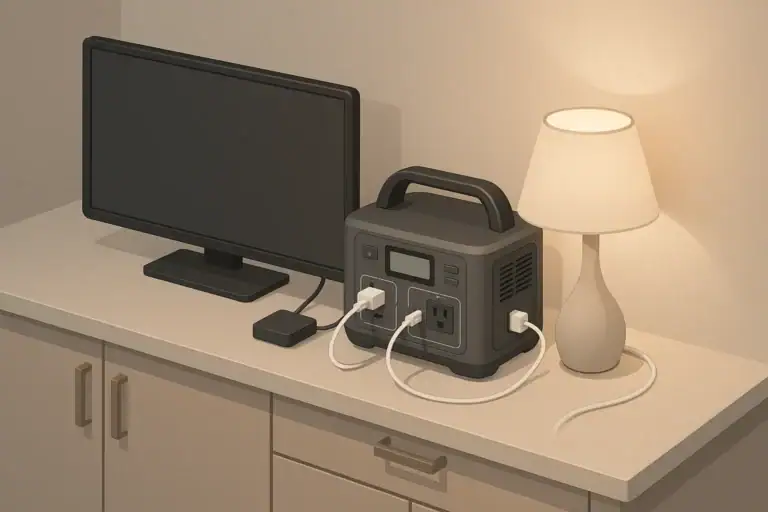
Imagine a portable power station rated for a few hundred watt-hours running indoor essentials during a winter power outage. In mild temperatures, it might power a 10 W LED lamp and a 60 W laptop for several hours. In a cold room or unheated cabin, you could still run the same devices, but the effective capacity may feel lower. You might see an hour or more of runtime difference compared to a warmer scenario, depending on the exact temperature and battery chemistry.
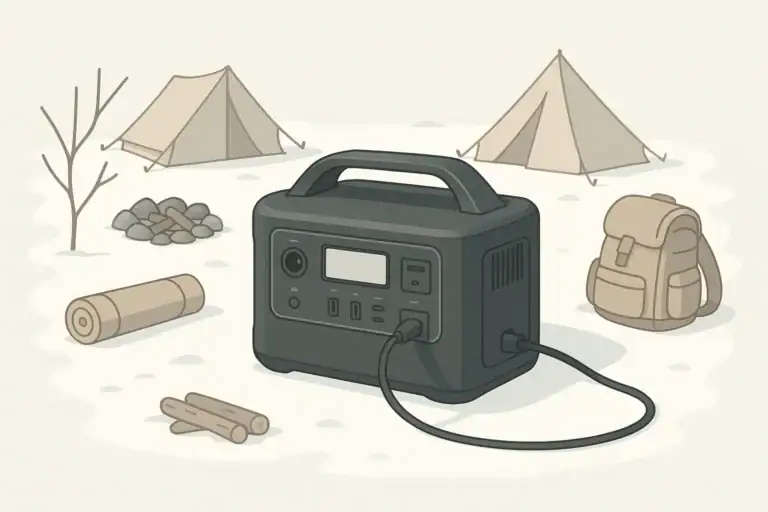
For camping or vanlife in cold climates, a similar unit might be used mainly for lighting, charging phones, and operating a small fan or device charger. When nighttime temperatures drop below freezing, the power station may display a lower remaining percentage or shut off earlier than you are used to. Planning ahead by reducing unneeded loads and starting with a higher state of charge can help offset that temporary capacity loss.
In an RV or off-grid cabin, households might rely on a larger capacity power station for a small refrigerator, router, and LED lights. Here, surge power becomes critical: refrigerators may draw several times their running watts for a second or two at start-up, and that starting behavior can be more demanding when the compressor oil is cold. A unit sized just barely to the running load might trip off on overload in winter, even if it seemed fine when tested in summer.
For remote work in a cold garage or workshop, a mid-sized power station can run a broadband modem, laptop, and a small space heater on low. However, resistive heaters draw a lot of wattage and can quickly drain the battery, especially in freezing weather. These examples show why winter storage and winter use planning go together: keeping the battery healthy in the cold makes runtime estimates more consistent when you depend on your power station most.
Common mistakes and troubleshooting cues in winter
One common winter mistake is leaving a portable power station fully charged or fully discharged for months. Storing at 100% can stress some battery chemistries, and storing at or near 0% can lead to deep discharge once self-discharge is added in. Both scenarios can reduce total cycle life. A moderate level, checked periodically, is usually a better choice.
Another frequent issue is trying to fast charge a very cold battery. Many systems include built-in protection that reduces charge rate or blocks charging altogether at low temperatures. If you plug in a cold unit and notice that charging seems unusually slow, or the charger cycles on and off, the device may be protecting itself. Allowing the power station to warm gradually to a more moderate temperature before charging can normalize behavior.
Unexpected shutoffs are also common in the cold. If your power station turns off when a device starts up, the inverter may be hitting its surge limit or a built-in low-temperature or low-voltage protection. If it shuts down after several hours at light load, the effective capacity may simply be reduced by the cold, or the battery management system may be keeping a reserve to prevent damage. These cues suggest you may need to reduce loads, provide a slightly warmer operating environment, or recharge earlier than usual.
Finally, storing a unit in a place with large temperature swings—such as an uninsulated attic or vehicle trunk—can lead to condensation when it is brought into a warm, humid room. Moisture on ports or vents can cause corrosion or shorts. If you see fogging, water droplets, or frost melting off the unit, let it rest in a dry, moderate environment until it reaches room temperature and surfaces are completely dry before charging or using it.
Safety basics for winter placement and operation
Safe use of portable power stations in winter starts with placement. Keep the unit on a stable, dry, and non-flammable surface. Avoid placing it directly on snow, ice, or wet concrete, where moisture can enter vents or cause the case to chill rapidly. Indoors, give it enough space around the sides and back for ventilation, especially if it will be charging or powering high-wattage loads.
Ventilation is important even in cold environments. While the surrounding air may be cool, the inverter and internal electronics can still produce heat under heavy load. Blocked vents can cause the unit to overheat and shut down or reduce output. Leave several inches of clearance and avoid draping blankets, clothing, or other insulating items over the power station, even if you are trying to shield it from cold drafts.
Use cords and extension cables rated for outdoor or cold-weather use if they will be exposed to low temperatures. Some cable jackets stiffen and crack in the cold, increasing the risk of exposed conductors or intermittent connections. Inspect cords for cuts, kinks, crushed sections, or discolored plugs. Do not run cords under rugs or through tightly closed doors or windows, where they can be pinched.
When plugging into household circuits, it is generally safer to connect appliances directly to the power station than to try to backfeed a home electrical system. If you need a more integrated backup solution, consult a qualified electrician about appropriate equipment such as transfer switches or interlocks. For outdoor or damp-area use, plugging sensitive devices into a power strip with built-in protection and using outlets with ground-fault protection can add a layer of safety, but this does not replace manufacturer instructions or local codes.
Maintenance and storage for healthy batteries through winter
Routine maintenance is the backbone of keeping batteries healthy through winter. Before storing a portable power station for the season, clean off dust and debris, inspect the case for cracks, and check that all ports are free of corrosion or bent contacts. Store the unit with a moderate state of charge, often around the middle of its capacity range, unless the manufacturer recommends otherwise. Avoid leaving it plugged in continuously for months unless the manual specifically permits that practice.
Storage temperature is just as important. Many units specify safe storage ranges that are wider than their charging and operating ranges. In general, a cool, dry indoor environment is better than a location that sees hard freezes or extreme heat. Avoid spots with wide daily temperature swings, such as attics or uninsulated sheds. If your only option is a cold area like a garage, consider placing the power station inside an insulated but ventilated container or cabinet to blunt temperature extremes, while still following all manufacturer ventilation guidance.
Self-discharge continues even when the power station is switched off. Plan a schedule to check the battery level every one to three months during the winter. If the level has dropped significantly, bring the unit to a moderate temperature and recharge it to your target storage level. This prevents it from slowly drifting to a deep-discharge state that can stress the cells and may trigger protective shutdowns that require special recovery procedures.
When taking a unit out of storage, let it acclimate to room temperature before charging or applying heavy loads, especially if it has been in a very cold space. Check for condensation, odors, unusual sounds from internal fans, or error indicators on the display. If anything seems off, stop using the device and contact the manufacturer or a qualified service provider rather than opening the unit yourself.
| Time frame | Action | Example notes |
|---|---|---|
| Before first freeze | Clean, inspect, and set storage charge level | Wipe with a dry cloth and avoid harsh cleaners |
| Monthly check | Verify charge level and environment | Look for signs of moisture, dust buildup, or rodent activity |
| Every 2–3 months | Top up charge if needed | Charge in a moderate indoor temperature, not a freezing garage |
| Mid-winter | Test basic operation with a light load | Power a small lamp or device briefly to confirm normal behavior |
| After major cold snap | Inspect case and cords for cracking | Do not use damaged cables; replace them promptly |
| End of winter | Bring to room temperature and fully check functions | Confirm outlets, USB ports, and display work as expected |
| Before heavy seasonal use | Charge to desired operating level | Plan for higher consumption in cold-weather outings or outages |
Example values for illustration.
Practical winter storage checklist and takeaways
Keeping batteries healthy in the cold comes down to a consistent routine. You do not need specialized tools or complex calculations for basic winter care, just some awareness of how temperature, charge level, and time interact. Building a seasonal checklist makes it easier to remember the small tasks that add up to longer battery life and more reliable performance.
Use the following checklist as a starting point and adapt it to your climate, storage locations, and how you actually use your portable power station. Always match these general guidelines with the specific instructions in your device’s manual, especially regarding recommended storage ranges and charging behavior in low temperatures.
- Store the power station in a cool, dry, and stable environment, away from direct heat sources and out of freezing temperatures when possible.
- Set the battery to a moderate state of charge before long-term storage and avoid leaving it at 0% or 100% for extended periods.
- Check the battery level every one to three months and recharge to your target storage level if it has dropped noticeably.
- Inspect the case, vents, and ports for cracks, dust buildup, or signs of moisture or corrosion; keep vents clear.
- Use cold-rated or outdoor-rated extension cords in winter, and replace any cables that feel brittle or show damage.
- Allow a cold-stored unit to warm to room temperature and dry completely before charging or putting it under significant load.
- Assume reduced runtime in cold conditions and plan a margin in your sizing for winter power outages, camping, or remote work.
- Do not attempt to open the battery or modify internal wiring; if you encounter persistent errors or abnormal behavior, contact the manufacturer or a qualified technician.
By combining these practical steps with a basic understanding of watts, watt-hours, and how cold affects battery performance, you can enter each winter season confident that your portable power station will be ready when you need it.
Frequently asked questions
What is the ideal state of charge for storing a portable power station over winter?
Aim for a moderate state of charge—typically around 40–70%—unless the device manufacturer gives a different recommendation. This avoids stress from being stored at 100% and reduces the risk of deep discharge that can occur if left near 0% for extended periods.
How often should I check and top up a battery kept in cold storage?
Check the battery level every one to three months and top up as needed to return to your target storage charge. When charging, bring the unit into a moderate, dry temperature first and perform a controlled charge rather than leaving it plugged in continuously.
Can I charge a battery immediately after bringing it inside from the cold?
It is best to let a cold battery warm to room temperature before charging because many systems reduce charge rate or block charging below safe temperatures. Charging while the unit is still cold can trigger protection circuits or result in slower or incomplete charging.
How do I prevent condensation when moving a cold-stored unit into a warm area?
Move the unit into a dry, moderate-temperature space and allow it to warm gradually, ideally while sealed or covered to minimize moisture settling on internal components. If you observe visible moisture or frost melting, let the surfaces dry completely before charging or using the unit.
Is it safe to store portable power stations in a garage or unheated shed during winter?
A garage or unheated shed can be acceptable if temperatures remain within the unit’s specified storage range and you avoid wide daily temperature swings. If extreme cold is likely, place the unit in an insulated but ventilated enclosure and monitor charge level more frequently to reduce risk of damage.
Recommended next:
Related guides
Browse this topic →
- Beginner-friendly sizing, runtime & specs
- Solar & charging (MPPT, fast charging, cables)
- Batteries (LiFePO4, cycles, care & storage)
- Safety, cold-weather performance, real-world tips
More in Cold Weather
See all →Keep reading
About this site
Portable Energy Lab publishes practical, independent guides about portable power—clear sizing, safe use, and real-world expectations.
Affiliate disclosure
Some links on this site may be affiliate links. If you buy through these links, we may earn a small commission at no extra cost to you. This helps support our content. Learn more.