
What the topic means (plain-English definition + why it matters)
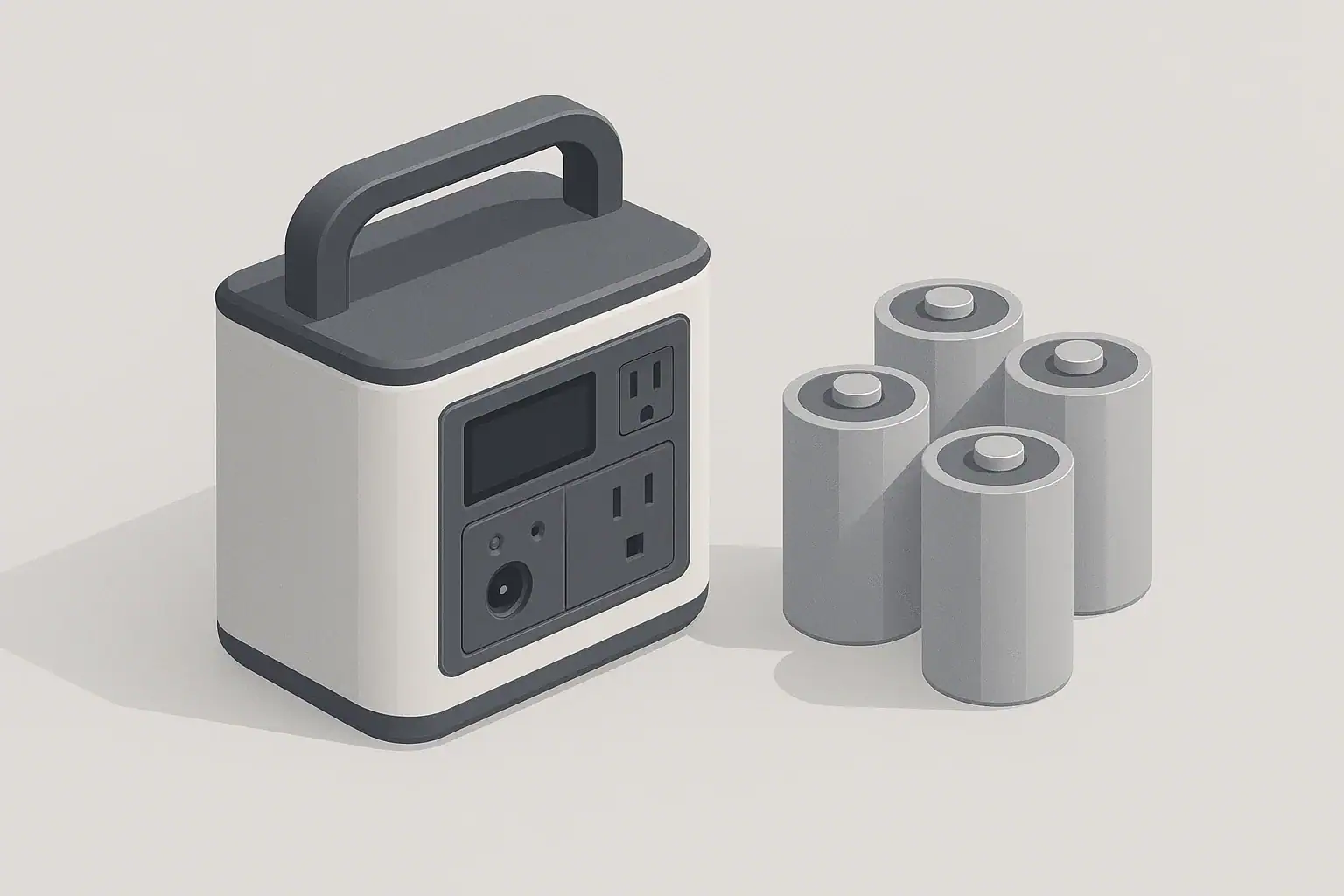
Portable power stations rely on rechargeable batteries that age over time. One of the biggest factors in how long they last is the percentage of charge you leave them at during storage, also called state of charge or SOC. Questions like whether 40%, 60%, or 80% is best for storage come down to how different battery chemistries respond to voltage, temperature, and time.
In simple terms, storage percentage is the amount of energy left in the battery while it is sitting unused for days, weeks, or months. Storing a battery full, nearly empty, or in the middle can change how quickly it loses capacity, how well it handles cold or heat, and how reliable your power station will be during an outage or camping trip.
For most modern portable power stations, the internal battery management system (BMS) tries to protect the cells from extreme conditions. However, the choices you make about charge level before long-term storage still matter. Different chemistries such as lithium iron phosphate (LiFePO4), nickel manganese cobalt (NMC), and older lead-acid designs each have different “comfort zones.”
Understanding how storage SOC interacts with chemistry, watt-hours (Wh), and your real-world needs helps you decide when to stop charging, when to top up, and what to expect over the life of the device. That way your power station can balance longevity, safety, and readiness whenever you need backup power.
Key concepts & sizing logic (watts vs Wh, surge vs running, efficiency losses)
Before deciding on the best storage percentage, it helps to understand how capacity and power work together. Capacity is usually expressed in watt-hours (Wh) and describes how much energy a battery can store. Power is expressed in watts (W) and describes how fast that energy is delivered at any moment. A power station with more Wh can run devices longer, while higher W capacity lets it run larger or more demanding loads.
When you plug in an appliance, it may have two kinds of power needs: running watts and surge watts. Running watts are what the device draws steadily during normal use, like a laptop or small fan. Surge watts are brief bursts of higher power needed at startup, common in devices with motors or compressors. A portable power station inverter must be sized to handle both the steady load and any short surge so it does not shut down.
Efficiency losses also matter. Energy is lost when converting DC battery power to AC household-style power, or when using adapters and chargers. These losses mean the usable runtime is less than the raw Wh rating suggests. The BMS and inverter also consume some energy while the unit is on, even with light loads. In practice, many users see perhaps 80–90% of the labeled Wh as usable, depending on how they operate the station.
These concepts tie back to storage percentage because the same battery that runs your loads must also be kept in a healthy range when sitting idle. Storing at very high SOC means the cells sit at a higher voltage for long periods, which can slowly stress them, especially in warm environments. Storing at very low SOC risks deep discharge over time as self-discharge and standby electronics slowly drain the pack. A mid-range SOC often provides a reasonable compromise between long-term health and immediate readiness.
| Battery chemistry | Typical storage SOC band (example) | When to consider 40% | When to consider 60% | When to consider 80% |
|---|---|---|---|---|
| LiFePO4 (LFP) | 30–70% | Long, warm storage when you do not need instant readiness | Balanced choice for most seasonal storage | Shorter storage periods when you want more standby energy |
| Lithium NMC / NCA | 40–60% | Maximizing calendar life in hot locations | General-purpose storage with moderate temperatures | Only if you expect to use it soon |
| Lithium polymer variants | 40–60% | When seldom used and kept indoors | Typical midpoint for backup use | Rarely needed for long-term storage |
| Sealed lead-acid (AGM, Gel) | 80–100% | Not generally recommended for storage | Short storage between uses | Helps reduce sulfation; recharge regularly |
| Hybrid or mixed packs | Follow manual | Use only if manufacturer suggests | Often safe default if unspecified | Use when fast deployment is likely |
| Unknown chemistry | ~50–60% | If rarely used and kept cool | Reasonable compromise for most users | If you prioritize readiness over maximum life |
How 40%, 60%, and 80% relate to chemistry
Different chemistries handle voltage stress differently. Many lithium-based cells are happiest long-term at a mid-range SOC, often near 40–60%. LiFePO4 tends to be robust and tolerant of slightly wider storage ranges, while NMC and similar cells typically benefit more from avoiding very high SOC in warm conditions. Lead-acid batteries, on the other hand, do not like sitting partially discharged because that encourages sulfation, so they are usually stored closer to full with periodic top-ups.
The best storage percentage is therefore not a single number, but a range tuned to your chemistry and situation. If your main goal is maximum lifespan and you live in a warm climate, something closer to 40–50% for lithium-based packs is often reasonable. If you want your power station ready for unplanned outages with minimal thought, 60–80% may be more practical, especially in cooler indoor storage.
Real-world examples (general illustrative numbers; no brand specs)
Consider a portable power station with a 1,000 Wh nominal capacity using a lithium-based battery. If you store it at 40% SOC, that is about 400 Wh of energy. At 60%, you have about 600 Wh, and at 80% about 800 Wh. Assuming typical efficiency losses, the usable AC energy might be closer to 320 Wh, 480 Wh, and 640 Wh respectively, depending on how you operate it.
At 40%, you could expect, for example, several laptop charges or many hours of a low-power light and router in an outage, but not a full night of heavier loads. At 60%, you might power a laptop, modem, and small fan through a typical evening. At 80%, you gain more buffer for unexpected longer outages or for powering a compact refrigerator for a few hours, if the inverter and surge capacity are adequate.
When thinking about storage SOC, it helps to match your target to the scenarios you care about most. If your power station is mainly for scheduled camping trips, you might store it near 40–50% and charge to a higher level a day before you leave. If you want coverage for surprise outages, you might accept some additional battery wear and leave it closer to 60–80%, checking it periodically so it does not drift down too low over time.
For a smaller unit, say 300 Wh, the same percentages give 120 Wh at 40%, 180 Wh at 60%, and 240 Wh at 80%. This might be enough for phones, a tablet, and a hotspot for remote work, but not for high-wattage tools. Larger home-oriented stations with several thousand Wh can support more demanding use at these same percentages, but the underlying tradeoff between storage SOC, readiness, and longevity remains similar.
Common mistakes & troubleshooting cues (why things shut off, why charging slows, etc.)
One common mistake is storing a lithium-based portable power station at 0–10% SOC for long periods. Even though the BMS usually reserves some hidden capacity, self-discharge and standby loads can bring the pack down far enough that it will not turn on or accept a charge easily. This can look like a dead unit even though the internal cells might be recoverable only with manufacturer-level service.
Another frequent issue is leaving the unit at 100% SOC in a warm garage or vehicle for weeks or months. High voltage combined with heat accelerates chemical aging, which may show up later as shorter runtime, faster voltage sag under load, or more aggressive shutoffs when you approach lower percentages. In extreme cases, built-in protections may limit charging speed or total capacity to protect the pack.
Users also sometimes misinterpret shutoffs and slow charging. If the power station turns off sooner than expected, it could be hitting a low-voltage cutoff even though the displayed SOC shows a seemingly comfortable number. This can happen after the battery has aged, if the load has significant surge demands, or if the temperature is low. Slow charging can occur when the BMS reduces current at high SOC to reduce stress, or when the pack is cold or hot and needs to stay within safe temperature limits.
Overfocusing on a single “perfect” storage percentage without considering temperature and actual usage can also lead to frustration. For example, aiming for exactly 50% but leaving the unit baking in a vehicle on summer days may still be harder on it than storing at 60% in a cool, dry indoor space. Battery health is the combination of SOC, temperature, and time, not a single number on a display.
Safety basics (placement, ventilation, cords, heat, GFCI basics at a high level)
Regardless of whether you store your power station at 40%, 60%, or 80%, safe placement and operation are essential. Use the unit on a stable, dry surface where air can move around it. Avoid burying it under blankets, inside tightly closed cabinets, or right up against walls or other heat sources. Batteries and inverters can warm up during use and charging, and good ventilation helps them manage that heat.
Pay attention to cords and extension cables. Use appropriately rated cords for the expected current, keep them uncoiled if they tend to get warm, and avoid running them under rugs or through doorways where they can be pinched or damaged. Damaged insulation or loose plugs can be a fire or shock hazard, regardless of how carefully you manage storage SOC.
When using the AC outlets on a portable power station around water, such as in kitchens, bathrooms, or outdoors, plug devices into outlets that are protected by ground-fault circuit interrupters (GFCI) where possible. Some portable power stations may incorporate their own protective features, but in many setups, the GFCI protection comes from the downstream devices or extension cords. If you are not sure, a qualified electrician can help you choose appropriate accessories.
Do not modify the power station, bypass built-in protections, or attempt to open the battery enclosure. If you need to connect a portable power station to part of a home electrical system, rely on listed equipment and a properly installed transfer mechanism handled by a licensed electrician. Improvised or backfed connections can create severe safety risks even if the storage SOC and battery chemistry are well managed.
Maintenance & storage (SOC, self-discharge, temperature ranges, routine checks)
Good maintenance practices work together with your chosen storage SOC to extend the life of a portable power station. Most lithium-based packs slowly lose charge over time through self-discharge and the small draw of the BMS. Checking the unit every one to three months and topping it up as needed helps prevent drifting into unhealthy low states, especially if you store near 40%.
Temperature is as important as SOC. Storing batteries in a cool, dry, indoor environment is usually easier on them than in hot garages, attics, or vehicles. For lithium chemistries, moderate room temperatures are generally preferable for long-term storage. Very cold environments can temporarily reduce apparent capacity and may slow charging, while very warm conditions can speed up permanent capacity loss.
For lithium iron phosphate (LiFePO4) packs, many users choose a storage range roughly between 30–70%, aiming around 40–60% if the unit will sit for months. For NMC or similar packs, a common approach is about 40–60%, avoiding long periods at 100% unless you expect to use the energy soon. For sealed lead-acid designs, manufacturers often recommend keeping them near full and topping up regularly to avoid sulfation, so 80–100% may be more appropriate.
Routine checks go beyond SOC. Inspect the case for cracks or swelling, feel for unusual warmth during light use, and listen for odd sounds from internal fans. If the display reports abnormal error codes or the unit refuses to charge or discharge, discontinue use and follow manufacturer guidance. Storage at a thoughtful SOC cannot fix a physically damaged pack, but it can slow the normal aging of a healthy one.
| Time frame | Suggested SOC band (lithium examples) | Temperature focus | Maintenance step | What to watch for |
|---|---|---|---|---|
| Short storage (up to 2 weeks) | 40–80% | Normal room temperature | Power down when not needed | Rapid self-discharge or unexpected drops |
| Medium storage (1–3 months) | 40–60% | Cool, dry indoor area | Check SOC once per month | Signs of swelling or unusual odor |
| Long storage (3–12 months) | 40–50% | Avoid hot garages or vehicles | Top up if it drifts near 20–30% | Failure to wake or accept charge |
| Seasonal use (camping gear) | 40–60% off-season | Indoor closet or storage room | Charge to use level a day before trip | Reduced runtime vs prior seasons |
| Emergency backup focus | 60–80% | Stable indoor location | Quick functional test every few months | Alarms, error codes, or fan anomalies |
| Lead-acid based units | 80–100% | Avoid deep discharge storage | Top up every 1–2 months | Cranking weakness or voltage sag |
| Very cold storage | 40–60% before cooling | Shield from condensation | Warm to moderate temp before charging | Charging refusal until warmed |
Example values for illustration.
Practical takeaways (non-salesy checklist bullets, no pitch)
The best storage charge percentage depends on battery chemistry, temperature, and how quickly you need power available. There is usually a reasonable range rather than a single perfect point. Most lithium-based portable power stations are comfortable in the middle of the pack, while lead-acid designs prefer to stay closer to full.
Balancing longevity and readiness means matching SOC to your usage pattern. If you cycle the station frequently, you may spend less time in storage and more in active use; if it is mainly for emergencies, you might accept some extra wear for higher standby charge. For any approach, consistent temperature control and periodic checks are just as important as the number on the display.
Use the following checklist as a quick reference when deciding whether 40%, 60%, or 80% makes sense for your situation:
- Identify your battery chemistry from the manual or specifications.
- For lithium chemistries, favor mid-range storage: often around 40–60%.
- Use about 60–80% storage SOC if you prioritize outage readiness.
- Keep sealed lead-acid designs near 80–100% with periodic top-ups.
- Store indoors at moderate temperatures whenever possible.
- Avoid leaving the unit at 0–10% or 100% for long periods, especially in heat.
- Check SOC and basic operation every one to three months.
- Stop using and seek guidance if you notice swelling, strong odors, or error codes.
By combining an appropriate storage SOC with good placement, temperature control, and occasional maintenance, you can help your portable power station deliver reliable service across many seasons of everyday use and unexpected power needs.
Frequently asked questions
What is the best storage charge percentage for lithium iron phosphate (LiFePO4) batteries?
LiFePO4 cells are typically happiest in a mid-range SOC—roughly 30–70%, with about 40–60% a practical target for long-term storage. Lower levels like ~40% reduce calendar aging while ~60–70% are acceptable when you want quicker deployment; always factor in storage temperature and duration.
How often should I check and top up a portable power station stored at 40–60%?
Check the SOC every one to three months and top up if the charge drifts toward about 20–30% to avoid deep discharge and BMS issues. In warmer storage conditions check more frequently because higher temperatures increase self-discharge and accelerate aging.
Is it bad to store a lithium battery at 100% or 0% for long periods?
Yes; storing at 100%—especially in warm conditions—accelerates chemical aging, while storage near 0% risks deep discharge and possible failure to accept a charge. Both extremes reduce calendar life compared with a mid-range SOC.
What storage SOC should I use if I need my power station ready for emergencies?
For emergency readiness, storing around 60–80% provides more standby energy while keeping reasonable longevity, and you should perform quick functional tests every few months. Keep the unit in a stable, cool indoor location to limit extra wear from high SOC combined with heat.
How does temperature affect the best storage charge percentage?
Temperature strongly modifies the optimal SOC: high temperatures make high SOC more damaging, so prefer lower mid-range SOC (e.g., ~40–50%) in warm climates, while cool storage tolerates slightly higher SOC for readiness. Also avoid charging or discharging in extreme cold until the pack warms to a safe operating range.
Recommended next:
- Battery Cycle Life Explained: What “Cycles” Really Mean
- Battery Management System (BMS) Explained: Protections Inside a Power Station
- LiFePO4 Charging Profile Explained (in Plain English)
- State of Charge (SOC) and Battery Calibration: Why Percent Readings Drift
- Idle Drain and “Phantom Loss”: Why Power Stations Lose Power When Not Used
- Temperature Limits Explained: Safe Charging/Discharging Ranges and What Happens Outside Them
- More in Battery →
Related guides
Browse this topic →
- Beginner-friendly sizing, runtime & specs
- Solar & charging (MPPT, fast charging, cables)
- Batteries (LiFePO4, cycles, care & storage)
- Safety, cold-weather performance, real-world tips
More in Battery
See all →- BMS Explained: What a Battery Management System Actually Does in a Portable Power Station
- Temperature Limits Explained: Safe Charging/Discharging Ranges and What Happens Outside Them
- State of Charge (SOC) and Battery Calibration: Why Percent Readings Drift
- Battery Management System (BMS) Explained: Protections Inside a Power Station
- Battery Cycle Life Explained: What “Cycles” Really Mean
Keep reading
About this site
Portable Energy Lab publishes practical, independent guides about portable power—clear sizing, safe use, and real-world expectations.
Affiliate disclosure
Some links on this site may be affiliate links. If you buy through these links, we may earn a small commission at no extra cost to you. This helps support our content. Learn more.