
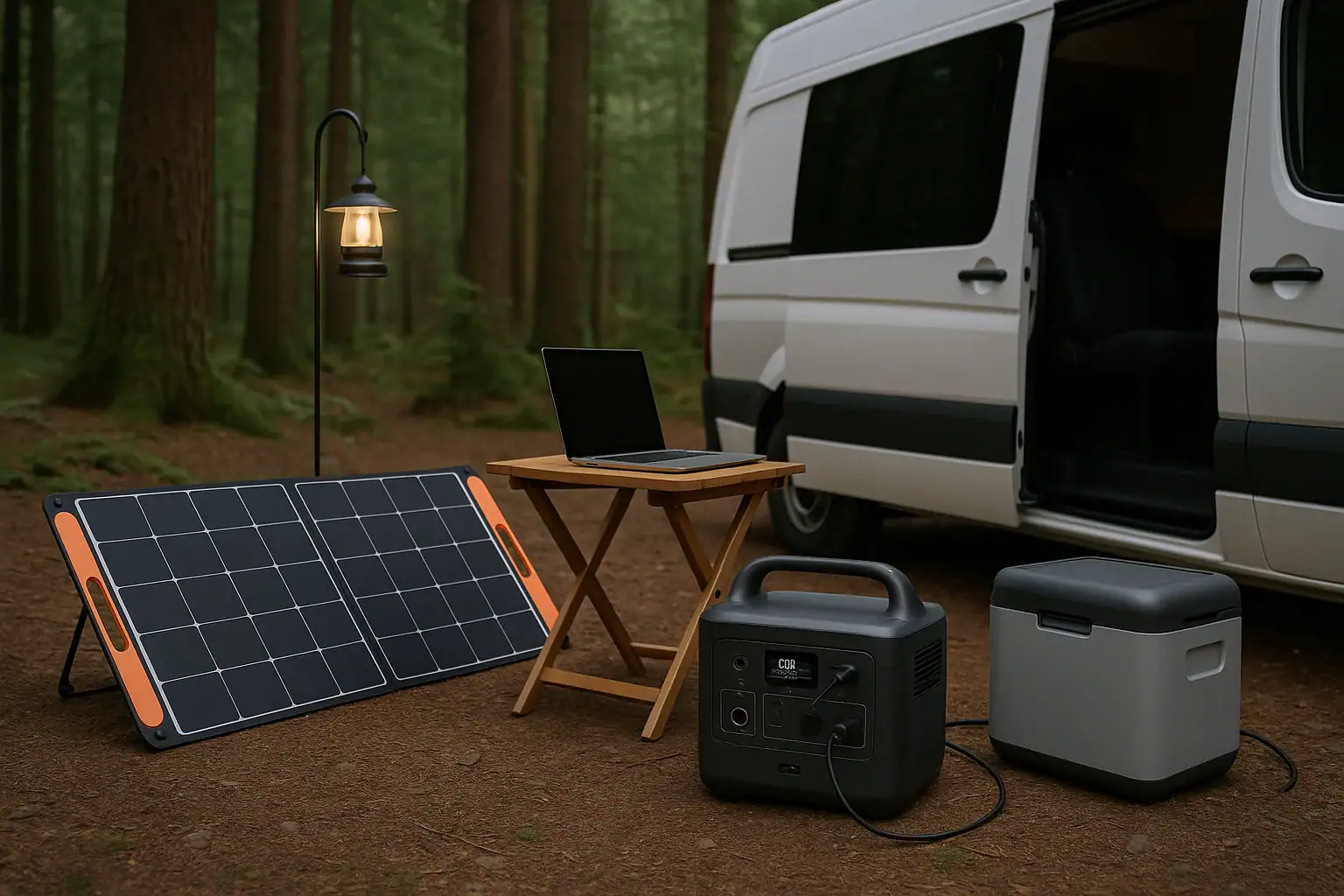
Portable power stations for camping and van life are compact battery systems that store energy and provide AC and DC power for your gear when you are off-grid. They turn stored battery capacity into usable watts through outlets, USB ports, and sometimes high-wattage DC outputs, letting you run lights, fridges, fans, laptops, and more without a noisy generator. When you understand watt-hours, surge watts, runtime estimates, and input limits, it becomes much easier to choose the right size unit and avoid running out of power in the middle of a trip.
For campers and van dwellers, a portable power station acts like a silent, rechargeable power bank for your entire setup. It can be charged from wall outlets, a vehicle 12V socket, or solar panels, then used to power devices through pure sine wave AC, USB-C PD profiles, and regulated 12V ports. The key is matching your daily energy use and peak loads to the station’s capacity and output ratings.
This guide explains what these systems are, how they work, how to size them for real-world camping and van life, what mistakes to avoid, and which specs matter most before you buy.
What Portable Power Stations Are and Why They Matter Off-Grid
A portable power station is a self-contained battery system with built-in inverters, voltage regulation, and multiple output ports designed to replace or supplement traditional fuel generators. Instead of burning fuel, it stores energy in a rechargeable battery (usually lithium-based) and converts that energy into AC and DC power on demand.
For camping and van life, this matters because it provides quiet, low-maintenance power that can be used in campgrounds, public lands, and urban stealth camping spots where generators are noisy, restricted, or inconvenient. You can charge the station during the day and have reliable power at night without idling your engine.
These systems are especially useful for:
- Short camping trips where you want to run lights, phones, cameras, and a laptop.
- Extended van life with a 12V fridge, fans, routers, and work electronics.
- Hybrid setups where a portable unit supplements a van’s built-in electrical system.
Understanding what a portable power station can and cannot do helps you avoid undersizing your system, overloading outlets, or expecting it to power full residential appliances that exceed its limits.
How Portable Power Stations Work for Camping and Van Life
Portable power stations combine several components in one enclosure: a battery pack, a charge controller, an inverter, and various output ports. Together, these manage energy flow in and out of the battery and convert stored DC energy into forms your devices can use.
Battery and capacity (Wh)
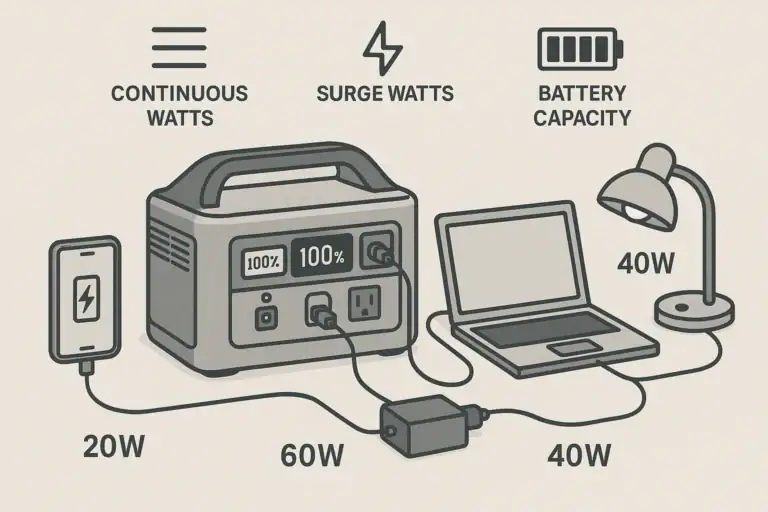
The battery is rated in watt-hours (Wh), which tells you how much energy it can store. A 500 Wh station can theoretically provide 500 watts for one hour, 250 watts for two hours, and so on, though real-world runtime is slightly less due to conversion losses and inverter efficiency.
Inverter and AC output (W)
The inverter converts DC battery power into AC power for standard household-style outlets. Two main ratings matter:
- Continuous output (W): the maximum power it can provide steadily.
- Surge watts (peak W): a short burst for starting motors or compressors.
For camping and van life, continuous output determines whether you can run items like an electric kettle or induction cooktop, while surge watts affect start-up of devices like small compressors.
DC outputs and USB ports
DC ports include 12V car-style sockets, barrel ports, and sometimes high-current outputs for fridges or other gear. USB-A and USB-C ports provide regulated power for phones, tablets, and laptops. USB-C PD (Power Delivery) profiles can supply higher wattage (for example, 60–100 W) for modern laptops and fast charging.
Charging inputs and input limits
Portable power stations can usually be charged via:
- AC wall outlet (fastest in many cases).
- 12V vehicle socket while driving.
- Solar panels through built-in or external solar charge controllers.
The input limit (in watts) controls how fast the station can recharge. If the input limit is 200 W and you connect 400 W of solar, the station will still only accept 200 W. For van life, higher input limits reduce downtime and help you recover from cloudy days.
Battery chemistry and cycle life
Most portable power stations use either lithium-ion (NMC/NCA) or lithium iron phosphate (LiFePO4) batteries. Lithium-ion typically offers higher energy density (more capacity in less weight), while LiFePO4 usually provides more cycle life and improved thermal stability. Both types require proper charge and temperature management, which the station handles automatically.
Built-in protections
Modern units include protections against overcharge, over-discharge, short circuits, and over-temperature. These help prevent damage to the battery and connected devices, which is especially important in the variable conditions of camping and van travel.
| Component | Typical Rating | Role in Camping/Van Life |
|---|---|---|
| Battery capacity | 300–2,000 Wh | Determines runtime for fridges, lights, and electronics. |
| AC continuous output | 300–2,000 W | Limits which appliances you can run at once. |
| AC surge output | 600–4,000 W | Handles start-up spikes from motors and compressors. |
| Solar input limit | 100–600 W | Controls how fast you can recharge from panels. |
| USB-C PD output | 30–100 W | Powers and fast-charges laptops and devices. |
Real-World Camping and Van Life Power Scenarios
Understanding real-world usage helps translate specs into practical decisions about capacity, runtime, and charging strategies.
Weekend camping with basic electronics
On a two- or three-night camping trip, you might power LED string lights, phones, cameras, a Bluetooth speaker, and occasionally a laptop. Daily energy use could look like this:
- LED lights: 10 W for 4 hours = 40 Wh
- Phone charging: 10 Wh per phone, 2 phones = 20 Wh
- Camera batteries: 20–30 Wh
- Laptop: 60 W for 2 hours = 120 Wh
Total daily draw might be around 200 Wh. A 500 Wh portable power station could comfortably cover this for two days without recharging, or longer with some solar input or vehicle charging.
Van life with a 12V fridge and fans
For van life, a 12V compressor fridge is often the biggest continuous load. A typical small fridge may average 30–50 W over 24 hours, depending on ambient temperature and insulation, using roughly 700–1,200 Wh per day. Add in:
- Vent fan: 20–40 W for several hours.
- Lights: 5–15 W in the evening.
- Electronics: 50–150 Wh for phones, laptops, routers.
Daily consumption can easily reach 1,000–1,500 Wh. In this scenario, a 1,000 Wh station might only cover a day of use without recharging, while a larger unit paired with solar would be better suited for continuous off-grid living.
Occasional high-wattage appliances
Some campers want to run high-wattage appliances like electric kettles, induction cooktops, hair dryers, or portable heaters. These draw large amounts of power:
- Electric kettle: 800–1,500 W
- Induction cooktop: 800–1,800 W
- Hair dryer: 800–1,500 W
- Space heater: 1,000–1,500 W
Even if your power station’s inverter can handle the wattage, these devices quickly drain capacity. For example, a 1,000 W heater running for one hour uses about 1,000 Wh, nearly the entire capacity of a 1,000 Wh station. Many van dwellers instead reserve high-draw tasks for shore power or use alternative cooking and heating methods.
Hybrid setups with solar and alternator charging
In van life, a common strategy is to charge the portable power station from both solar panels and the vehicle alternator. For example:
- Roof-mounted solar: 200–400 W, providing 600–1,600 Wh per sunny day depending on conditions.
- Alternator via 12V socket: 60–120 W while driving.
This combination can keep a medium-size station topped up, especially if your daily use is aligned with your charge input. Matching your solar array and driving habits to your average consumption is critical for sustained off-grid living.
Common Mistakes, Limits, and Troubleshooting Cues
Portable power stations are straightforward to use, but several recurring mistakes and misunderstandings can lead to poor performance or unexpected shutdowns.
Undersizing capacity and overestimating runtime
One of the most common mistakes is choosing a unit with too little capacity for your actual loads. People often assume that a few hundred watt-hours will last for days, then are surprised when a fridge or fan drains it quickly. To avoid this, estimate your daily watt-hour usage and look for a station with at least 1.5–2 times that amount, especially if you cannot recharge fully every day.
Ignoring continuous vs surge watts
Another frequent issue is focusing on surge watts instead of continuous output. If a station lists 1,000 W surge but only 500 W continuous, it cannot run a 700 W appliance for more than an instant. If your device causes the station to shut down or beep and cut power, check whether its running wattage exceeds the continuous rating.
Overloading DC or USB ports
Even when the AC inverter is under its limit, individual DC ports and USB outputs also have their own maximum ratings. Plugging too many devices into a single port cluster can cause those ports to turn off or the unit to display an overload warning. If this happens, unplug some devices, power-cycle the DC or USB section, and spread loads across different ports.
Slow charging and input limit confusion
Users sometimes expect faster charging than the input limit allows, especially when adding more solar panels. If your station is only accepting, for example, 150–200 W even though you connected 300 W of panels, it is likely capped by its internal charge controller. Check the stated input wattage limit and design your solar array around that value rather than the panel rating alone.
Temperature-related shutdowns
High or low temperatures can cause the station to reduce output or shut down to protect the battery. Symptoms include:
- Fans running at high speed and reduced output power.
- Error icons or temperature warnings on the display.
- Refusal to charge or discharge until cooled or warmed.
Storing or operating the unit in direct sun, near heaters, or in freezing conditions can trigger these protections. Move it to a shaded, ventilated area and allow time for temperature to normalize.
When to seek professional help
If your power station repeatedly shuts down under light loads, shows error codes you cannot clear, or physically swells, leaks, or smells unusual, stop using it. Do not open the unit or attempt internal repairs. Instead, contact the manufacturer or a qualified technician familiar with battery systems for guidance.
Safety Basics for Using Portable Power Stations Outdoors
Portable power stations are generally safer and cleaner than fuel generators, but they still store significant energy and must be used responsibly, especially in confined spaces like vans and tents.
Ventilation and heat management
These units generate heat when charging and discharging. Place them in a location with airflow around the vents, avoid covering them with bedding or gear, and keep them away from direct sun when possible. In a van, avoid placing the station in a fully sealed compartment without ventilation.
Moisture and dust protection
Most portable power stations are not fully waterproof. Keep them off wet ground, away from splashes, and protected from rain. If camping in humid or dusty environments, store the unit in a dry, elevated spot and avoid operating it in standing water, mud, or blowing sand.
Safe cable routing and trip hazards
At a campsite, AC cords and DC cables can become trip hazards or get pinched in doors. Route cables along edges, secure them where possible, and avoid running cords where vehicles or people are likely to cross. Damaged cables can overheat or short, so replace frayed cords instead of taping over them.
Proper load selection
Only connect devices that are compatible with the station’s voltage and wattage ratings. Avoid plugging in high-heat devices like large space heaters or hot plates unless your unit is specifically sized for them. Do not daisy-chain power strips into power strips, and avoid plugging another power station or large battery charger into the AC outlet unless the manufacturer explicitly allows it.
Safe use in vans and enclosed spaces
Unlike fuel generators, portable power stations do not emit exhaust, so they can be used inside vans and RVs with reasonable ventilation. However, avoid placing them where they could block exits, sit under bedding, or be crushed by shifting cargo. Secure the unit so it cannot slide or tip during driving.
High-level electrical safety
Do not attempt to hardwire a portable power station directly into a home or van AC electrical system without appropriate transfer equipment and expertise. If you want to integrate a portable unit with an existing electrical panel or complex van electrical system, consult a qualified electrician or professional van upfitter to design a safe solution.
| Safety Area | Good Practice | Risk Reduced |
|---|---|---|
| Ventilation | Keep vents clear and avoid enclosed boxes. | Overheating and thermal shutdown. |
| Moisture | Elevate off wet ground, protect from rain. | Short circuits and corrosion. |
| Cable management | Secure cords, avoid pinch points. | Trips, damaged insulation, shorts. |
| Load selection | Stay within rated watts and voltages. | Overload, shutdowns, potential damage. |
Related guides: Portable Power Station Buying Guide • How to Choose the Right Size Portable Power Station • Can You Charge a Portable Power Station with Solar Panels?
Maintaining and Storing a Portable Power Station for Travel
Proper maintenance and storage habits extend the life of your portable power station and keep it ready for trips.
Regular usage and cycling
Lithium batteries perform best when used periodically rather than left fully charged or fully empty for long periods. If you only camp a few times a year, plan to cycle the station every couple of months by discharging it partially and recharging it. This helps keep the battery management system active and the cells balanced.
Optimal state of charge for storage
For long-term storage between camping seasons, many manufacturers recommend storing the battery at a partial state of charge rather than 0% or 100%. A range around 40–60% is commonly suggested. Check the display, charge or discharge to roughly mid-level, then store the unit.
Temperature considerations in vans and storage spaces
Extreme heat and cold both accelerate battery wear. In van life, it is common for interior temperatures to rise significantly in the sun. Whenever possible, park in shade, use ventilation or window covers, and avoid leaving the power station in direct sunlight on the dashboard or near heaters. In cold climates, avoid charging the battery when it is below freezing; allow it to warm up inside the vehicle first.
Keeping ports, fans, and surfaces clean
Dust, sand, and pet hair can clog cooling fans and ports over time. Periodically inspect the intake and exhaust vents and gently clean them with a soft brush or compressed air, taking care not to force debris inside. Wipe the exterior with a dry or slightly damp cloth, avoiding harsh cleaners or solvents.
Monitoring health indicators
Many units display battery health, cycle count, or error codes. Pay attention to any changes in runtime, unusual noises, or repeated warnings. A noticeable drop in capacity over time is normal, but sudden, severe changes may warrant contacting the manufacturer or a professional.
Transport and mounting
When transporting your portable power station in a van or vehicle, secure it to prevent movement during braking or rough roads. Use straps, brackets, or dedicated storage compartments to keep it from tipping or sliding. Avoid stacking heavy gear on top of the unit to protect the case and ports.
Practical Takeaways and Specs to Look For
For camping and van life, the best portable power station is the one that reliably supports your specific loads, charging habits, and travel style. Weekend campers may prioritize light weight and simple USB/AC outputs, while full-time van dwellers often focus on larger capacity, robust solar input, and long cycle life.
When planning your setup, start by listing all the devices you want to power, their wattage, and how many hours per day you expect to use them. Convert that into a daily watt-hour estimate, then compare it to the station’s capacity and your expected solar or driving-based recharging. Remember that cloudy weather, shade, and seasonal changes can significantly affect solar production, so build in a buffer.
Also consider future needs. If you might add a 12V fridge, more work electronics, or additional lighting, it can be more cost-effective to choose a slightly larger unit now instead of upgrading later.
Specs to look for
- Battery capacity (Wh): For weekend camping, 300–700 Wh is often sufficient; for van life with a fridge, 1,000–2,000 Wh or more is typically more comfortable. Higher capacity extends runtime between charges.
- AC continuous output (W): Match this to your highest expected simultaneous load. For light use, 300–500 W may be enough; for small appliances or cooktops, 1,000–1,500 W is often more appropriate.
- Surge watts (peak W): Look for at least 1.5–2 times the continuous rating if you plan to run devices with motors or compressors. Adequate surge capacity helps avoid nuisance shutdowns at start-up.
- Solar input limit (W): For regular off-grid use, 200–400 W of solar input capacity provides more reliable daily recharging. Higher input limits shorten recovery time after cloudy days.
- USB-C PD output (W): If you charge modern laptops or tablets, aim for at least one USB-C PD port in the 60–100 W range to support fast, efficient charging without using the inverter.
- 12V output type and regulation: Regulated 12V outputs help keep fridges and sensitive DC gear stable, especially as the battery discharges. Check that the current rating supports your devices.
- Battery chemistry and cycle life: Compare estimated cycle life (for example, 500–3,000 cycles to a certain percentage of original capacity). Longer cycle life is valuable for daily van life use.
- Weight and form factor: For car camping, weights under 20–30 lb are easier to move. In van builds, consider dimensions and handle placement for secure mounting and access.
- Display and monitoring: A clear screen showing input/output watts, remaining runtime, and state of charge makes daily management easier and helps you fine-tune your energy use.
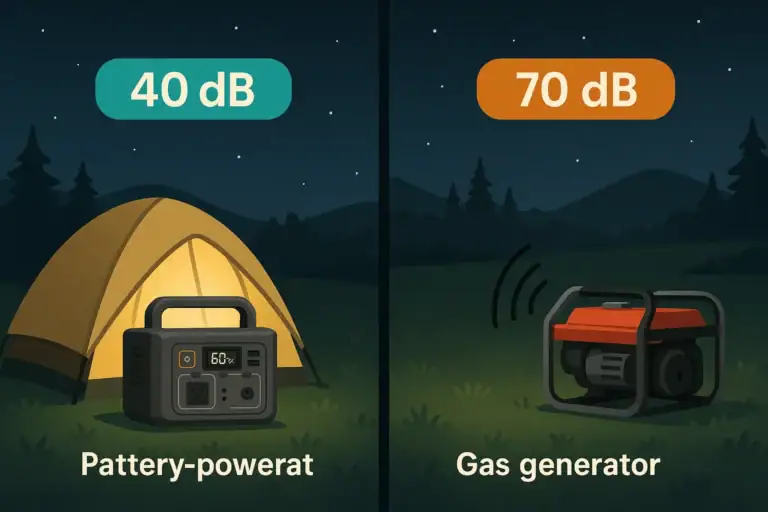
- Noise level (fans): If you plan to sleep near the unit, quieter cooling fans and adjustable charge rates can make nighttime operation more comfortable.
By matching these specs to your actual camping or van life routine, you can choose a portable power station that delivers quiet, dependable power wherever you park.
Frequently asked questions
Which specs and features matter most when choosing a portable power station for camping or van life?
Key specs include battery capacity (Wh) for runtime, continuous AC output (W) for simultaneous loads, and surge watts for motor start-ups. Also check solar input limits, USB-C PD output for fast laptop charging, battery chemistry/cycle life, and weight/form factor for portability. These together determine how the unit matches your devices and charging habits.
What is a common mistake people make when estimating how long a station will last?
Many people underestimate their total daily watt-hour usage and ignore inverter/conversion losses and surge events. Always calculate the combined Wh of all devices, add a safety buffer (about 1.5–2x), and factor in real-world inefficiencies to avoid running out of power unexpectedly.
Is it safe to use a portable power station inside a van or tent?
Portable power stations are generally safer than fuel generators because they do not emit exhaust, so they can be used inside vans and tents with reasonable ventilation. Still, place them where vents are clear, secure them against movement, and avoid covering them or placing them under bedding to prevent overheating. Follow the manufacturer’s safety guidelines and stop use if you notice swelling, leaks, or unusual smells.
How long will a portable power station typically run a 12V fridge?
Runtime depends on the fridge’s average draw; a small compressor fridge often averages 30–50 W, which translates to roughly 700–1,200 Wh per day. A 1,000 Wh station might therefore cover about one day of fridge use without recharging, and running the fridge from a regulated 12V output is more efficient than using the inverter. Always check your fridge’s spec sheet and add margin for warmer ambient temperatures and door openings.
Can I recharge a portable power station with roof solar panels and while driving at the same time?
Some stations support simultaneous charging from multiple inputs, but many have a combined input limit that caps total charging power. Check the unit’s stated input limits and supported input combinations before wiring panels and alternator sources. When configured correctly, solar plus alternator charging can significantly reduce downtime between uses.
How should I store and maintain the battery when I’m not traveling?
For long-term storage, keep the battery at a partial state of charge (commonly around 40–60%) and avoid leaving it fully charged or fully depleted. Cycle the unit every couple of months, store it in a cool, dry place away from extreme temperatures, and periodically check the charge level to maintain battery health. Regularly clean vents and ports to prevent dust buildup.
Related guides
Browse this topic →
- Beginner-friendly sizing, runtime & specs
- Solar & charging (MPPT, fast charging, cables)
- Batteries (LiFePO4, cycles, care & storage)
- Safety, cold-weather performance, real-world tips
More in Beginners
See all →- Charging an Electric Wheelchair or Mobility Scooter From a Portable Power Station
- Portable Power Station for a Gaming PC: Runtime, Load Spikes, and UPS Considerations
- Portable Power Station for a Pop-Up Camper: Lights, Fans, Fridge, and Recharge Plan
- Portable Power Station for a Shed or Outbuilding: Lights, Chargers, and Security
- Portable Power Station for a Boat: 12V Loads, Salt Air, and Safer Storage
Keep reading
About this site
Portable Energy Lab publishes practical, independent guides about portable power—clear sizing, safe use, and real-world expectations.
Affiliate disclosure
Some links on this site may be affiliate links. If you buy through these links, we may earn a small commission at no extra cost to you. This helps support our content. Read our affiliate disclosure.