
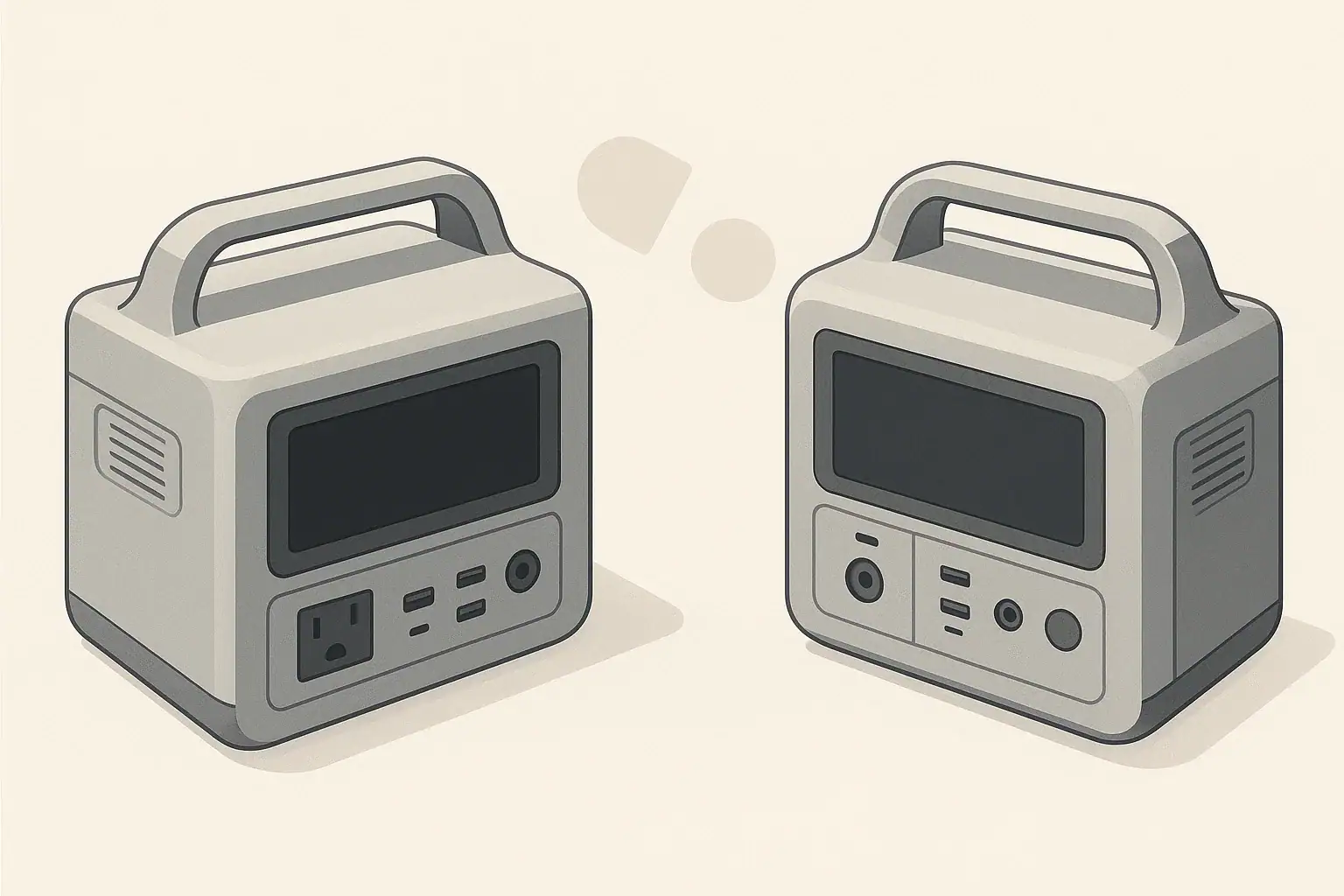
Portable power stations are increasingly charged from solar panels, but how the built-in charge controller manages panel-to-battery power can make a big difference in day-to-day performance. This article compares the two common controller strategies — PWM (Pulse Width Modulation) and MPPT (Maximum Power Point Tracking) — and explains what those differences mean for charging speed, energy harvest, panel choices, and system design in real-life use. Read on to see how each approach behaves under changing sunlight, variable temperatures, and longer cable runs, plus practical tips on when the added cost and complexity of MPPT are worth it. The sections below break down quick definitions, real-world examples, system implications, and guidance to help you pick the right portable power station setup for your solar needs.
Why MPPT vs PWM Matters for Portable Power Stations
When you charge a portable power station from solar panels, a built-in solar charge controller manages how energy flows from the panels into the battery. Most modern units use one of two controller types:
- PWM (Pulse Width Modulation)
- MPPT (Maximum Power Point Tracking)
On spec sheets this often appears as a small line, but it has clear effects on how quickly and efficiently your power station charges from solar in real-world conditions. Understanding the difference helps you size your solar setup correctly and avoid unrealistic expectations about charging time.
Quick Definitions: PWM and MPPT
What a Solar Charge Controller Does
A solar charge controller sits between your solar panels and the battery in a portable power station. Its main jobs are to:
- Protect the battery from overcharging
- Match the panel output to the battery voltage
- Control charging stages (bulk, absorption, float) for battery health
MPPT and PWM are two different control strategies for doing this.
PWM in Simple Terms
A PWM controller connects the solar panel directly to the battery and then rapidly switches the connection on and off (modulation) to control the charging current.
Key characteristics:
- Simple electronics and usually lower cost
- Operates the panel close to the battery voltage
- Wastes potential panel voltage above battery voltage
MPPT in Simple Terms
An MPPT controller is more sophisticated. It continuously measures the panel voltage and current and adjusts the operating point to extract the maximum possible power from the panels.
Key characteristics:
- Uses DC-DC conversion to transform higher panel voltage into extra charging current
- Actively tracks the “maximum power point” as sunlight changes
- Improves energy harvest, especially in suboptimal conditions
How MPPT and PWM Behave With Solar Panels
Voltage Matching and What It Means
Solar panels have a voltage at which they produce the most power (often called Vmp). Batteries also have a nominal voltage (for example, around 12 V, 24 V, or internal pack voltages inside a power station).
What each controller does with this mismatch is the core difference:
- PWM: Pulls the panel voltage down close to the battery voltage. If the panel is rated for a much higher voltage than the battery, that extra voltage is mostly lost as heat or unused potential.
- MPPT: Lets the panel operate at or near Vmp, then converts the higher voltage down to the battery voltage while increasing the current. This preserves more of the panel’s potential wattage.
Simple Real-World Example
Assume a solar panel has these approximate ratings under good sun:
- Voltage at max power (Vmp): 18 V
- Current at max power (Imp): 5.5 A
- Panel power: 18 V × 5.5 A ≈ 99 W
Now connect it to a battery that is charging at around 13 V:
- With PWM: Panel is pulled down to roughly 13 V. Maximum power becomes about 13 V × 5.5 A ≈ 71.5 W. You lose the remainder as unused potential.
- With MPPT: Controller keeps panel near 18 V and converts it to battery voltage. In an ideal case, you could get close to 99 W into the battery (minus small conversion losses).
Over the course of a full day of sunlight, that difference adds up to noticeably more watt-hours stored with MPPT.
Efficiency and Energy Harvest in Real Life
Typical MPPT vs PWM Gain
Under many conditions, MPPT controllers can harvest about 15–30% more energy than PWM controllers from the same solar array. The actual gain depends on factors like:
- Panel voltage relative to battery voltage
- Cell temperature
- Shading and cloud cover
- Time of day (angle of the sun)
The benefit is largest when there is a significant voltage difference between the solar panel and the battery and when conditions are not ideal.
Partial Shade and Changing Conditions
Portable power stations often see variable conditions:
- Panels moved around a campsite or yard
- Clouds passing overhead
- Panels tilted at non-optimal angles
An MPPT controller can respond to these changes by constantly seeking the best operating point. When the sun weakens, the voltage-current curve of the panel changes; MPPT tracks this and keeps power output closer to the maximum. PWM simply follows the battery voltage and does not adapt to the changing shape of the curve.
Cold and Hot Weather Impact
Panel voltage rises in cold temperatures and falls in hot temperatures. This is where the technology differences show up again:
- In cold weather: Voltage can be significantly higher than nominal. MPPT can turn that higher voltage into more current, boosting wattage harvested. PWM cannot use the extra voltage and simply wastes it.
- In hot weather: Panel voltage drops closer to battery voltage. The advantage of MPPT shrinks somewhat, but it still generally does better at maintaining optimal power.
Impact on Charging Time
Translating Efficiency Into Hours
Charging time for a portable power station from solar depends on:
- Battery capacity (in watt-hours)
- Total solar array power (in watts)
- Average sun hours per day
- System efficiency, including controller type
Because MPPT harvests more energy from the same panels, it shortens charging time compared to PWM in many real-world setups.
Illustrative Scenario
Consider a 500 Wh portable power station and a 100 W solar panel in reasonably good sun:
- Assume about 5 peak sun hours in a day
- Assume wiring and conversion losses outside the controller are similar
Approximate daily energy into the battery:
- With PWM: Effective panel power might average ~70 W → 70 W × 5 h = 350 Wh
- With MPPT: Effective panel power might average ~90 W → 90 W × 5 h = 450 Wh
In this simplified model, MPPT could bring the power station close to full in one good day, while PWM may need closer to a day and a half under similar conditions.
The exact numbers will vary in reality, but the pattern—shorter charging times with MPPT from the same panel—is typical when using modest to large solar panels compared to the battery size.
System Design: Panel Choices and Cable Runs
Panel Voltage Flexibility
MPPT controllers work best with solar panels that have a higher voltage than the battery. In the context of portable power stations, this has practical effects:
- With PWM: You generally want panel voltage close to the battery-equivalent input voltage to minimize wasted potential.
- With MPPT: You can use higher-voltage panels or combine panels in series (within the unit’s voltage limits) and still capture most of the extra voltage as useful power.
This flexibility can be useful when repurposing existing panels or scaling up an array.
Cable Length and Voltage Drop
Running low-voltage DC over longer cables causes voltage drop and power loss. MPPT can help manage this:
- Higher input voltage: MPPT allows you to run panels at a higher voltage (within spec), which reduces current for the same power and therefore reduces losses in the cables.
- PWM limitation: Because PWM forces panel voltage nearer to battery voltage, current is higher for the same power. That means thicker cables or shorter runs are needed to limit voltage drop.
For many small portable setups with short cables, this may not be a significant factor. For larger panels located farther from the power station (for example, to reach a sunny spot), MPPT can preserve more energy.
Cost, Complexity, and Reliability Considerations
Price and Internal Complexity
MPPT controllers use more complex electronics and control algorithms than PWM controllers. Inside a portable power station, that generally translates into:
- Higher component cost for the manufacturer
- More sophisticated firmware and control circuits
PWM controllers are simpler and often less expensive to implement. This is one reason some lower-cost or smaller-capacity portable power stations use PWM for their solar input.
Reliability in Practice
Both PWM and MPPT controllers can be highly reliable when designed and built well. The reliability differences in real-world portable power stations tend to depend more on overall product design and component quality rather than solely on the choice of PWM vs MPPT.
However, there are a few practical points:
- More complex electronics (MPPT) can theoretically have more failure modes, but proper engineering and thermal management mitigate this.
- PWM controllers are simpler and may run cooler at lower power levels, but can still be stressed if used near or beyond their design limits.
When MPPT Makes a Noticeable Difference
Larger Solar Arrays Relative to Battery Size
The more solar panel capacity you have relative to the battery size, the more meaningful the efficiency gain from MPPT becomes. For example:
- Small power station with a modest 50 W panel: the difference between MPPT and PWM may be modest in absolute watt-hours per day.
- Mid-size power station with 200–400 W of panels: the daily energy gain from MPPT can be significant, especially if you rely mostly on solar.
Situations With Limited Sunlight
When sunlight is scarce or inconsistent, more efficient energy capture matters:
- Short winter days
- Cloudy climates
- Heavily shaded campsites or urban balconies
In these scenarios, MPPT can help you make the most of brief or weak sun windows, improving the odds of reaching a useful state of charge.
Long-Term Off-Grid or Heavy Solar Dependence
If your portable power station is part of a frequent or semi-permanent off-grid setup—such as a van, RV, remote cabin, or regular camping with solar as the main energy source—MPPT’s improved harvest typically pays off in convenience and system performance.
When PWM Can Be Acceptable
Occasional or Light Solar Use
If you use solar only occasionally, or primarily as a backup to wall charging or vehicle charging, a PWM-based solar input can still be adequate. Examples include:
- Charging the power station from the wall most of the time
- Using a small panel just to slow battery drain on trips
- Rarely relying on solar as the sole energy source
In these cases, the extra efficiency of MPPT may not dramatically change your day-to-day experience.
Very Small Setups
For compact portable power stations with small batteries and small panels, the absolute difference in watt-hours can be relatively small. If your expectations are modest—such as topping up phones, tablets, or a small laptop—PWM may perform adequately within those limits.
Reading Portable Power Station Specs
Identifying MPPT vs PWM in Specifications
Product documentation or spec sheets typically mention the solar charging type. Look for phrases like:
- “MPPT solar charge controller” or “built-in MPPT”
- “PWM charge controller” or no explicit mention of MPPT
If the controller type is not clearly stated, detailed manuals or technical datasheets may provide more information, including:
- Maximum solar input wattage
- Supported input voltage range (for example, 12–30 V)
- Maximum charging current
Higher allowable input voltages and explicit references to “tracking” or “MPPT” are indicators of an MPPT design.
Solar Input Limits Still Apply
Even with MPPT, you cannot exceed the maximum solar input specifications of the portable power station. Key limits include:
- Maximum input power (W): The upper bound of solar wattage the unit can safely use.
- Maximum input voltage (V): A hard limit you must not exceed with panel configurations, especially when wiring panels in series.
- Connector type and rating: The physical plug and wiring must handle the current.
The controller type does not override these constraints; it simply changes how efficiently energy is used within them.
Practical Tips for Choosing Between MPPT and PWM
Questions to Ask Yourself
When evaluating a portable power station’s solar charging, consider:
- How often will I rely primarily on solar charging?
- How large a solar array do I plan to use, now or later?
- Will my panels be in suboptimal conditions (shade, winter sun, long cables)?
- Is faster solar charging important for my use case?
If you expect frequent or heavy solar use, MPPT usually offers more flexibility and better real-world performance for the same panel investment.
Designing Around a PWM Input
If you already own or choose a power station with PWM solar charging, you can still optimize performance:
- Use panels with voltage close to the recommended input voltage to reduce wasted potential.
- Keep cable runs short and use appropriately thick wire to minimize voltage drop.
- Position panels for the best sun exposure and adjust tilt during the day if practical.
- Manage expectations about charging speed, especially in marginal sunlight.
Designing Around an MPPT Input
With an MPPT-equipped power station, you can often:
- Use higher-voltage panels or series combinations (within voltage limits) to reduce current and cable loss.
- Get more usable energy on cloudy, cold, or partially shaded days.
- Scale up your solar array more effectively if the input wattage rating allows it.
Summary: Real-Life Changes You Will Notice
In everyday use, the difference between MPPT and PWM in portable power stations shows up as:
- Faster solar charging: MPPT generally fills the battery more quickly from the same panels.
- Better performance in less-than-ideal sun: MPPT maintains higher output under changing conditions.
- More flexibility in panel choice and cable length: MPPT handles higher voltages and longer runs more efficiently.
- Simpler, often cheaper hardware with PWM: Adequate for light or occasional solar use with realistic expectations.
Choosing between MPPT and PWM is ultimately about matching your solar charging expectations and environment to how you plan to use your portable power station over time.
Frequently asked questions
How much faster will MPPT charge my portable power station compared to PWM?
MPPT typically harvests about 15–30% more energy than PWM under many real-world conditions, which often translates to roughly 15–30% shorter charging times. For example, with a 100 W panel in decent sun you might get ~450 Wh with MPPT versus ~350 Wh with PWM over a day, so MPPT can sometimes fill a medium-size station in one day that PWM would need more than a day to reach.
Can I use higher-voltage solar panels with a PWM-equipped portable power station?
Physically you can only use panels that stay within the unit’s stated input voltage limits, but PWM will pull panel voltage down toward the battery voltage and waste the excess. For PWM systems you should choose panels with a Vmp close to the battery input voltage to avoid losing potential power.
Will MPPT still provide benefits in hot weather or partial shade?
Yes; MPPT is especially beneficial in partial shade, cloudy conditions, and cold weather because it actively tracks the panel’s maximum power point. In hot weather the panel voltage falls and the relative advantage shrinks, but MPPT usually still extracts more usable energy than PWM in varying conditions.
Is MPPT worth the extra cost if I only use solar occasionally?
If solar use is occasional or you rely mainly on wall or vehicle charging, PWM can be adequate and the added cost of MPPT may not be justified. However, if you expect to scale up panels, depend on solar in poor conditions, or want faster charging, MPPT typically pays off over time.
How do cable length and voltage drop influence the MPPT vs PWM decision?
Longer cable runs increase voltage drop; using higher input voltage with an MPPT controller reduces current for the same power and therefore lowers cable losses. PWM forces panels to operate near battery voltage so current is higher and cable losses become more significant unless thicker wiring or very short runs are used.
Recommended next:
- USB-C Power Delivery (PD) Explained for Portable Power Stations
- Charging From a Car: What’s Safe, What’s Slow, and What Can Break
- Input Limits (Volts/Amps/Watts) Explained: How Not to Damage Your Unit
- Can You Use a Higher-Watt Charger Than Rated? Understanding Input Headroom
- Why Charging Slows Down Near 80–100%: A Simple Explanation
- More in Charging →
Related guides
Browse this topic →

- Beginner-friendly sizing, runtime & specs
- Solar & charging (MPPT, fast charging, cables)
- Batteries (LiFePO4, cycles, care & storage)
- Safety, cold-weather performance, real-world tips
More in Comparison
See all →- Portable Power Station vs Power Bank vs UPS: Which Backup Fits Your Gear?
- Portable Power Station vs Power Bank vs UPS: Which One You Actually Need for Home/Travel
- LiFePO4 vs NMC Batteries: Weight, Cold Performance, Safety, and Real Cycle Life Differences
- Portable Power Station vs Home Backup Battery: Which Fits Apartments Best?
- Portable Power Station vs DIY Solar Battery Box: When DIY Makes Sense
Keep reading
About this site
Portable Energy Lab publishes practical, independent guides about portable power—clear sizing, safe use, and real-world expectations.
Affiliate disclosure
Some links on this site may be affiliate links. If you buy through these links, we may earn a small commission at no extra cost to you. This helps support our content. Learn more.