
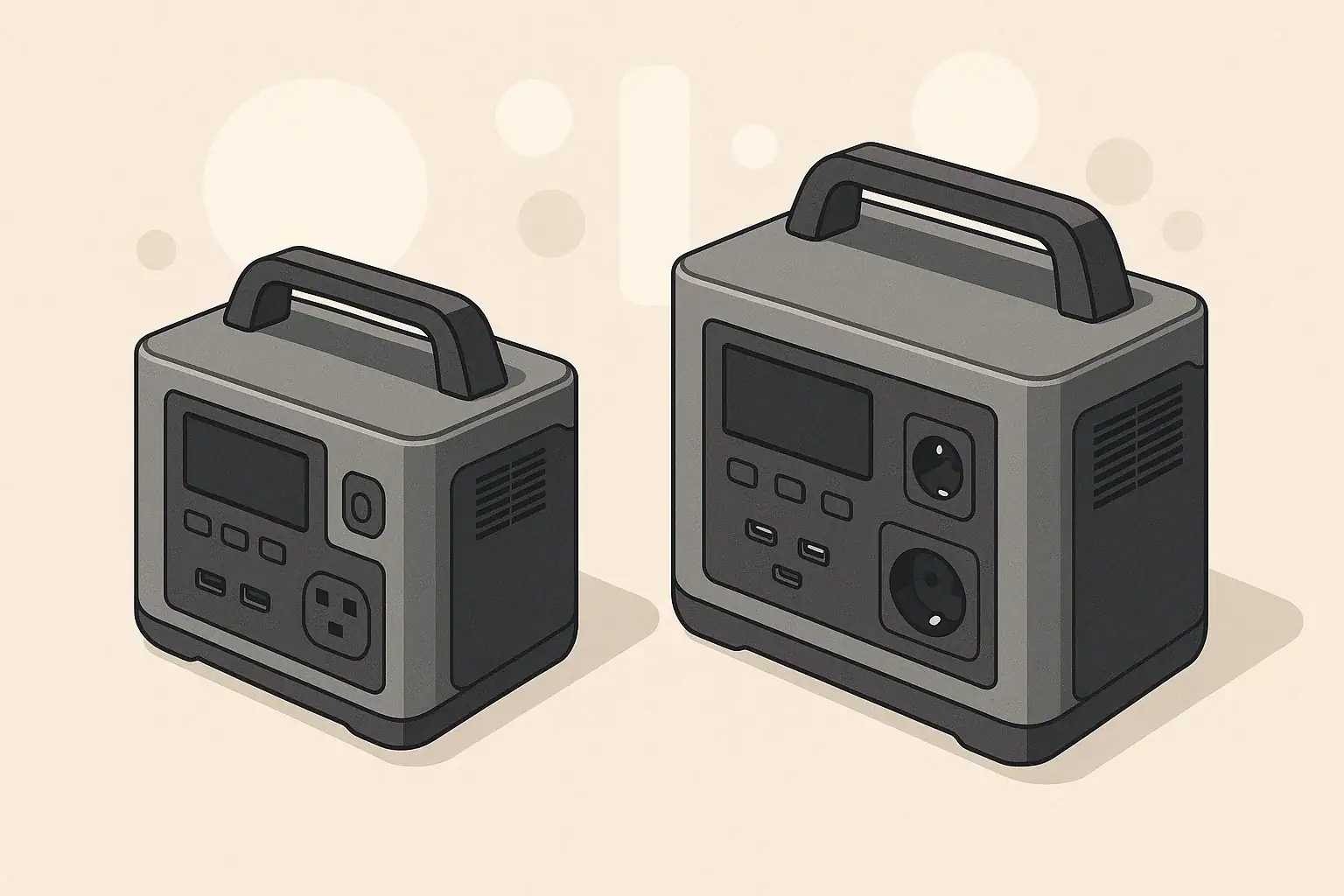
Choosing between a portable power station and a home backup battery in an apartment is less about maximum power and more about space, noise, safety, and building rules. Both options use rechargeable batteries, but they are designed for different types of backup.
In most apartments, you cannot install fuel-powered generators on balconies or wire major equipment into the building electrical system without permission. That makes battery-based solutions attractive, but the right setup depends on what you need to keep running, how long typical outages last, and how much room you can give up to equipment.
This guide compares portable power stations and home backup battery systems specifically from an apartment perspective, focusing on capacity, outputs, charging, safety, and everyday practicality.
Apartment Power Backup: The Real-World Constraints
Choosing between a portable power station and a home backup battery in an apartment is less about maximum power and more about space, noise, safety, and building rules. Both options use rechargeable batteries, but they are designed for different types of backup.
In most apartments, you cannot install fuel-powered generators on balconies or wire major equipment into the building electrical system without permission. That makes battery-based solutions attractive, but the right setup depends on what you need to keep running, how long typical outages last, and how much room you can give up to equipment.
This guide compares portable power stations and home backup battery systems specifically from an apartment perspective, focusing on capacity, outputs, charging, safety, and everyday practicality.
What Is a Portable Power Station?
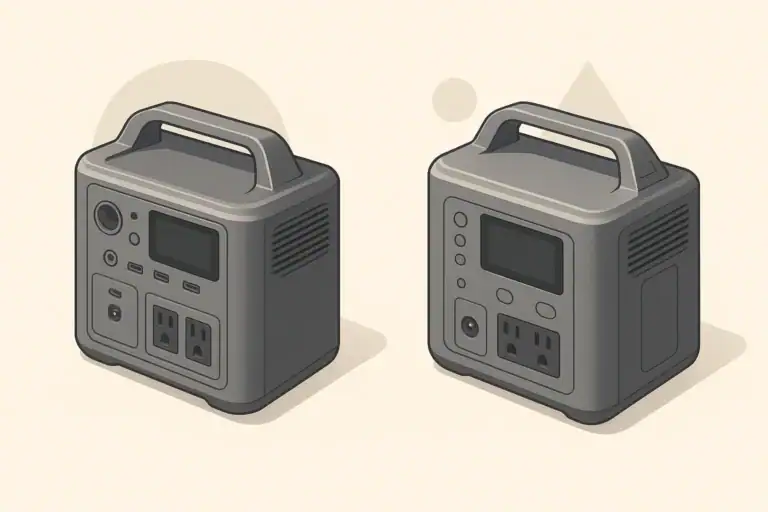
A portable power station is a self-contained battery unit with built-in inverter, multiple output ports, and simple plug-and-play operation. It is usually designed to be moved easily and used indoors or outdoors.
Key Components
Most portable power stations include:
- Battery pack measured in watt-hours (Wh), which represents total stored energy.
- Inverter that converts battery DC power to household-style AC outlets.
- DC outputs such as 12 V car-style sockets and barrel connectors.
- USB ports for phones, tablets, and small electronics.
- Charging inputs for wall charging, vehicle charging, and often solar.
Typical Apartment Use Cases
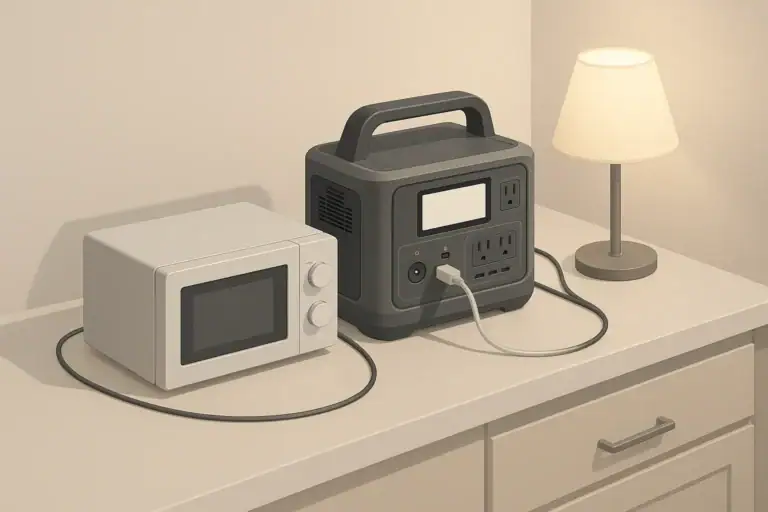
Portable power stations are commonly used in apartments for:
- Short power outages (several hours to a day).
- Remote work continuity for laptops, monitors, and a modem/router.
- Keeping phones, tablets, and small devices powered.
- Running low-wattage appliances such as desk lamps or small fans.
- Occasional portable use outside the apartment, such as camping or travel.
Advantages for Apartment Dwellers
- Plug-and-play: No permanent installation or wiring into your panel.
- Portable and compact: Easier to store in a closet or under a desk.
- Flexible: Can be used both for backup and for mobile power.
- No building modifications: Usually does not require landlord approval when used as a standalone device.
Limitations to Consider
- Limited capacity compared to whole-home systems; best for essentials, not everything at once.
- Finite output power: Each unit has a maximum continuous watt rating and surge rating.
- Manual operation: You typically move cords and plug devices in when the power goes out.
| What to check | Why it matters | Notes |
|---|---|---|
| Available floor and closet space | Both systems occupy physical space | Measure where you plan to keep the unit |
| Typical outage length in your area | Determines needed battery capacity (Wh) | Longer outages may justify larger or multiple units |
| Critical devices and their watt usage | Prevents overloading and disappointment | List items like router, laptop, lamp, fan, CPAP as needed |
| Building and landlord rules | Some systems may require approval | Ask about restrictions on fixed batteries or wiring |
| Noise and heat tolerance | Fans and inverters make some noise | Consider placement away from sleeping areas if possible |
| Budget and upgrade path | Costs vary between portable and fixed systems | Plan for future devices or a potential move |
Example values for illustration.
What Is a Home Backup Battery System?
When people refer to a “home backup battery,” they often mean a larger battery system intended to support multiple household circuits or even an entire home. These are usually stationary, wall- or floor-mounted, and often integrated with a home electrical panel and sometimes solar panels.
Key Characteristics
- Higher capacity: Typically several times the watt-hours of a portable power station.
- Panel integration: Often connected to specific household circuits via transfer equipment.
- Automatic operation: Many systems can switch on automatically when the grid goes down.
- Fixed location: Not intended to be carried around.
Apartment-Specific Challenges
In detached houses, these systems can be mounted in a garage or utility room and wired directly to a panel by an electrician. In apartments, there are several extra considerations:
- Building ownership: You rarely control the main electrical infrastructure.
- Space limitations: Many apartments do not have dedicated utility spaces.
- Installation rules: Wall mounting, conduit runs, and panel work often require landlord and building approvals.
- Common-area panels: Some apartments have shared panels that are not easily modified for individual units.
Because of these factors, full-scale home backup systems are less common in apartments, although smaller, non-panel-integrated “home battery” units that plug into outlets or have multiple AC sockets do exist. Those behave more like large portable power stations but are not designed to be moved often.
Pros and Cons in an Apartment Context
Potential advantages:
- Can provide more energy for longer outages if allowed and properly installed.
- Less manual switching if integrated with selected circuits.
- May support higher loads such as multiple rooms of lighting or a refrigerator.
Potential drawbacks:
- Requires professional installation when tied into a panel.
- May not be permitted in some buildings or rental agreements.
- Less flexible if you move to a new apartment or different city.
- Upfront cost and installation complexity are usually higher.
Capacity, Runtime, and Sizing for Apartment Use
Whether you choose a portable power station or a home backup battery, the core concept is the same: capacity in watt-hours (Wh) determines how long you can run devices of a given wattage.
Understanding Watt-Hours and Watts
- Watt-hours (Wh): Total energy stored in the battery.
- Watts (W): How fast energy is used or delivered at a given moment.
As a rough example, if a battery has 1000 Wh of usable capacity and you run a 100 W load continuously, you might expect around 10 hours of runtime, minus efficiency losses. Real runtimes are lower because inverters and electronics use some energy.
Prioritizing Apartment Essentials
To size a system for an apartment, start with the devices you consider essential:
- Internet modem/router.
- One or two laptops.
- Phone chargers.
- One or two LED lamps.
- A small fan, if needed for comfort.
- Medical or sleep-related devices, if applicable (consult the device manufacturer for power requirements).
Most of these draw relatively low power compared to large appliances. That is why portable power stations are often a good match for apartments: they target exactly these smaller loads that matter most during short outages.
When a Larger Home Battery Might Make Sense
A higher-capacity home battery may be more appropriate if:
- Your area experiences frequent, multi-day outages.
- Your building and landlord allow installation and panel work.
- You want to support higher loads such as a refrigerator or multiple rooms.
- You plan to stay in the same unit long term, making permanent installation more reasonable.
In many apartments, however, a moderate-size portable power station (or a pair of them) is easier to justify and manage.
Outputs, Inverters, and What You Can Safely Power
For apartment use, output types and inverter capabilities are often more important than sheer capacity. You need the right ports and enough continuous wattage to run your chosen devices safely.
AC, DC, and USB Outputs
Most portable power stations and home backup batteries include a mix of outputs:
- AC outlets: To plug in lamps, laptops, small appliances, and power strips (within rated limits).
- DC outputs: 12 V car-style sockets and barrel jacks for some electronics and coolers.
- USB-A and USB-C: Ideal for phones, tablets, wireless speakers, and some laptops.
For apartment backup, having several AC outlets plus multiple USB ports helps avoid using too many extension cords. However, avoid daisy-chaining power strips or overloading any single outlet.
Inverter Basics: Continuous vs Surge
Inverters are rated for:
- Continuous watts: Power the unit can supply steadily.
- Surge watts: Short bursts to start devices with higher startup draw, such as some fans.
For typical apartment electronics, continuous power is the key number. Sum the watt ratings of the devices you want to run at the same time and keep that total under the inverter’s continuous rating. Always leave some margin instead of running at the absolute maximum.
What Not to Run in an Apartment Backup Setup
High-wattage appliances can drain batteries quickly or overload inverters. Use caution or avoid running:
- Space heaters.
- Electric stoves and ovens.
- Large air conditioners.
- Clothes dryers and irons.
Even if a battery could technically support these for a short time, they usually are not an efficient use of limited stored energy in an apartment backup plan.
Charging Options and Apartment-Friendly Strategies
How you recharge your portable power station or home backup battery matters just as much as capacity. In apartments, the most practical charging methods are wall outlets and, in some cases, small portable solar panels.
Wall Charging
Wall charging is the default for most systems. Key ideas:
- Charging rate: Higher input watts mean faster charging, but also more strain on circuits if several high-draw devices share the same outlet.
- Planning window: After an outage, you may have limited time before the next one. Knowing roughly how many hours it takes to recharge is helpful.
- Dedicated outlet where possible: Avoid using the same outlet for other heavy loads while charging.
Car Charging
Some portable power stations can recharge from a vehicle 12 V outlet. In an apartment, this is only practical if:
- Your parking spot is close enough and accessible.
- You are able to safely run the cable and supervise charging.
Running a vehicle engine for long periods just to charge a battery is usually inefficient and may not be allowed in enclosed parking areas, so check building rules and ventilation conditions.
Solar Charging in Apartments
Portable solar panels are attractive but tricky in apartments. Consider:
- Sun exposure: Balconies can work if they receive several hours of direct sun.
- Safety: Panels must be secured so they cannot fall or blow away.
- Rules: Some buildings restrict items mounted on railings or exterior walls.
Solar can extend runtime during prolonged outages but rarely replaces wall charging entirely for most apartment residents.
Pass-Through Charging Concepts
Many portable power stations offer pass-through charging, where the unit can be plugged into the wall while powering devices. For apartment use, this can turn the station into a kind of advanced surge strip with battery backup.
However, pass-through behavior varies between products. Some prioritize powering loads first, then charging the battery. Others may limit output while charging. Consult the manufacturer’s documentation and avoid overloading the unit just because it is plugged in.
Safety, Placement, and Building Rules
Battery safety and proper placement are especially important in multi-unit buildings where a problem can affect neighbors as well.
Ventilation and Heat
Most modern battery systems are sealed and do not require open-air ventilation the way fuel generators do, but they still produce heat. Good practices include:
- Place units on a hard, flat surface.
- Keep them away from radiators, heaters, and direct sunlight.
- Do not cover with blankets or store in tightly packed closets while operating.
- Leave clearance around cooling vents so internal fans can do their job.
Cord Management
In tight apartment spaces, tripping hazards and overloaded outlets are common risks. To keep things safer:
- Avoid running cords where people walk frequently.
- Use heavy-duty extension cords only when necessary and within rated limits.
- Do not daisy-chain power strips or plug one power strip into another.
- Keep cords away from water sources like sinks and bathtubs.
Panel Integration and Professional Help
Some home backup batteries are designed to connect to a home electrical panel through transfer switches or similar hardware. In an apartment setting:
- Do not attempt any panel wiring or modifications yourself.
- Consult building management before planning any permanent installation.
- Use a qualified electrician familiar with local codes if integration is permitted.
Many apartment residents choose stand-alone portable power stations specifically to avoid the need for panel work and associated approvals.
Cold Weather, Storage, and Maintenance
Even in apartments, temperature and long-term storage conditions affect battery health and performance.
Cold Weather Performance
Battery capacity usually decreases in cold conditions. If your apartment is well heated, this is less of a concern indoors, but it matters if you keep a unit in a colder storage area or use it on a balcony. In general:
- Avoid charging batteries at very low temperatures unless the manufacturer states it is safe.
- Bring the unit into a moderate temperature environment before charging.
- Expect shorter runtimes if the unit is used in cold spaces.
Storage and Self-Discharge
All batteries slowly lose charge over time when stored. For apartment users who mainly rely on backup power during occasional outages:
- Store the unit in a cool, dry place away from direct sun.
- Top up the charge every few months, according to the manufacturer’s guidance.
- Avoid leaving the battery at 0% for long periods.
Basic Maintenance Practices
Battery systems are generally low maintenance, but you can extend their useful life by:
- Keeping vents free of dust.
- Inspecting cords and plugs for visible damage.
- Testing the system briefly every few months so you know it’s ready for an outage.
| Task | Interval idea | Why it matters | Quick note |
|---|---|---|---|
| Top up battery charge | Every 2–3 months | Reduces stress from sitting at very low charge | Unplug after it reaches a full or near-full level |
| Short functional test | Every 3–6 months | Confirms outputs and display operate normally | Run a lamp or laptop for a short time |
| Visual inspection of cords | Every 6 months | Catches frayed or damaged insulation early | Replace damaged cords instead of taping them |
| Dusting vents and surfaces | Every 3–6 months | Helps cooling fans work efficiently | Use a dry cloth; avoid liquid cleaners on ports |
| Check storage location | Once a year | Ensures it stays dry and within temperature limits | Move away from heaters or direct sun if needed |
| Review building rules | When lease renews | Reflects any updated safety or equipment policies | Confirm that your setup still complies |
Example values for illustration.
Which Fits Apartments Best: Portable Power Station or Home Backup Battery?
In most apartments, a portable power station is the more practical choice. It requires no permanent installation, can be stored in small spaces, and is well suited to the lower-power essentials that matter most during short to moderate outages.
A home backup battery system may be appropriate if your building explicitly allows it, you can work with a qualified electrician, and you need higher capacity for frequent or prolonged outages. Even then, many residents prefer to start with a portable power station and adjust their setup over time based on real-world experience.
By mapping your critical loads, understanding capacity and charging options, and respecting building rules and safety basics, you can choose a backup approach that fits both your apartment and your daily life.
Frequently asked questions
Can a portable power station run a refrigerator in an apartment?
It depends on the refrigerator size and the power station’s continuous and surge ratings as well as its capacity in watt-hours. Many full-size refrigerators have high startup currents that can overload small inverters, and even if they run, they will deplete the battery quickly, so verify appliance wattage and expected runtime before attempting it.
Do I need landlord or building permission to keep or use a battery backup in my apartment?
Small, standalone portable power stations are often allowed without formal approval, but rules vary by building and lease terms. Always check with your landlord or building management if you plan a permanent installation, panel integration, or to store equipment in common areas.
How do I estimate runtime for my essential devices?
Divide the battery’s usable watt-hours by the combined wattage of the devices to get a rough runtime, and then factor in inverter and system losses of around 10–20%. For example, a 1000 Wh usable battery powering a 50 W router and laptop might run roughly 15–18 hours after accounting for efficiency losses.
Can I charge a portable power station with solar panels from my balcony?
Solar charging is possible from a balcony if you have adequate sun exposure and a safe, secure setup, but output is often limited compared with wall charging. Check building rules about mounting or securing panels, and expect solar to supplement rather than fully replace wall charging for most apartment use cases.
Are multiple small portable power stations better than one larger battery for apartment living?
Multiple units offer portability, redundancy, and flexible placement, while a single larger battery can provide higher capacity and simpler management if installation is permitted. Choose based on space, budget, and whether you prioritize ease of use or maximum runtime and integration.
Recommended next:
- Portable Power Station vs Power Bank
- Portable Power Station vs UPS: What Changes for Computers and Networking?
- Portable Power Station vs Power Bank: Where the Line Really Is
- Portable Power Station vs Inverter + Car Battery: Pros, Cons, and Safety
- Portable Power Station vs DIY Solar Battery Box: When DIY Makes Sense
- More in Comparison →
Related guides
Browse this topic →
- Beginner-friendly sizing, runtime & specs
- Solar & charging (MPPT, fast charging, cables)
- Batteries (LiFePO4, cycles, care & storage)
- Safety, cold-weather performance, real-world tips
More in Comparison
See all →- Portable Power Station vs Power Bank vs UPS: Which Backup Fits Your Gear?
- Portable Power Station vs Power Bank vs UPS: Which One You Actually Need for Home/Travel
- LiFePO4 vs NMC Batteries: Weight, Cold Performance, Safety, and Real Cycle Life Differences
- Portable Power Station vs DIY Solar Battery Box: When DIY Makes Sense
- Portable Power Station vs Inverter + Car Battery: Pros, Cons, and Safety
Keep reading
About this site
Portable Energy Lab publishes practical, independent guides about portable power—clear sizing, safe use, and real-world expectations.
Affiliate disclosure
Some links on this site may be affiliate links. If you buy through these links, we may earn a small commission at no extra cost to you. This helps support our content. Learn more.