Portable Power Stations and Renewable Energy: How to Size, Charge, and Use Them Effectively

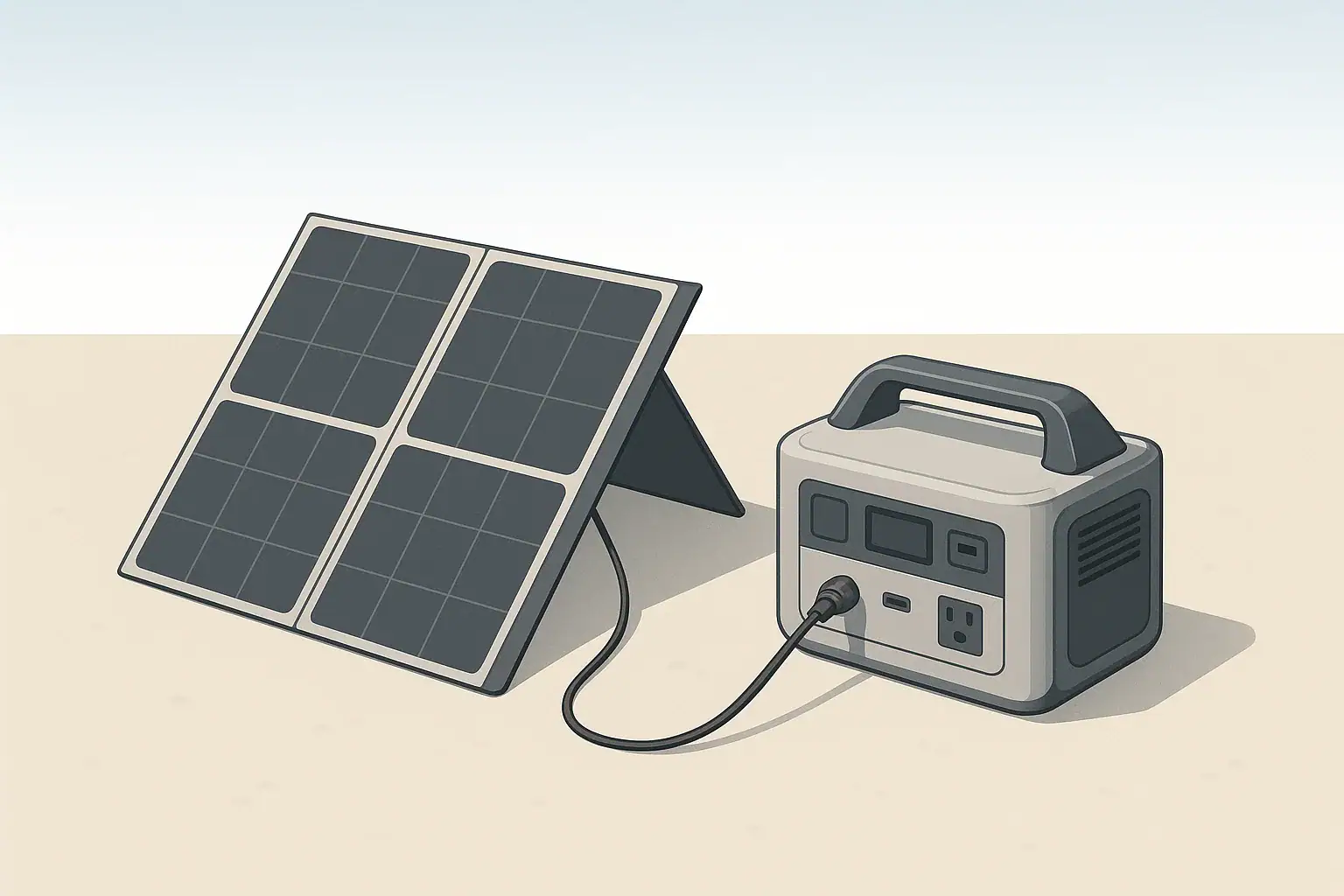
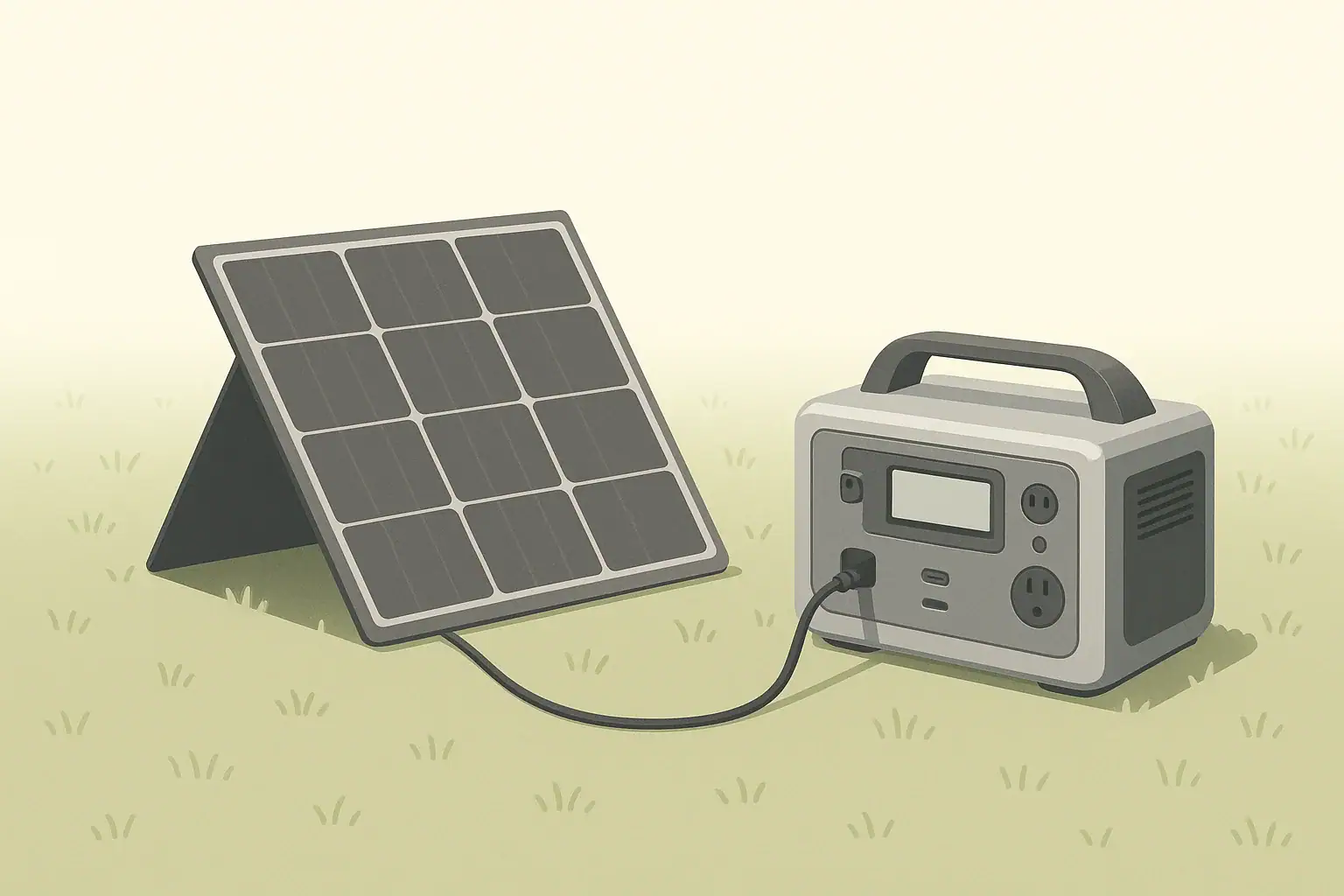
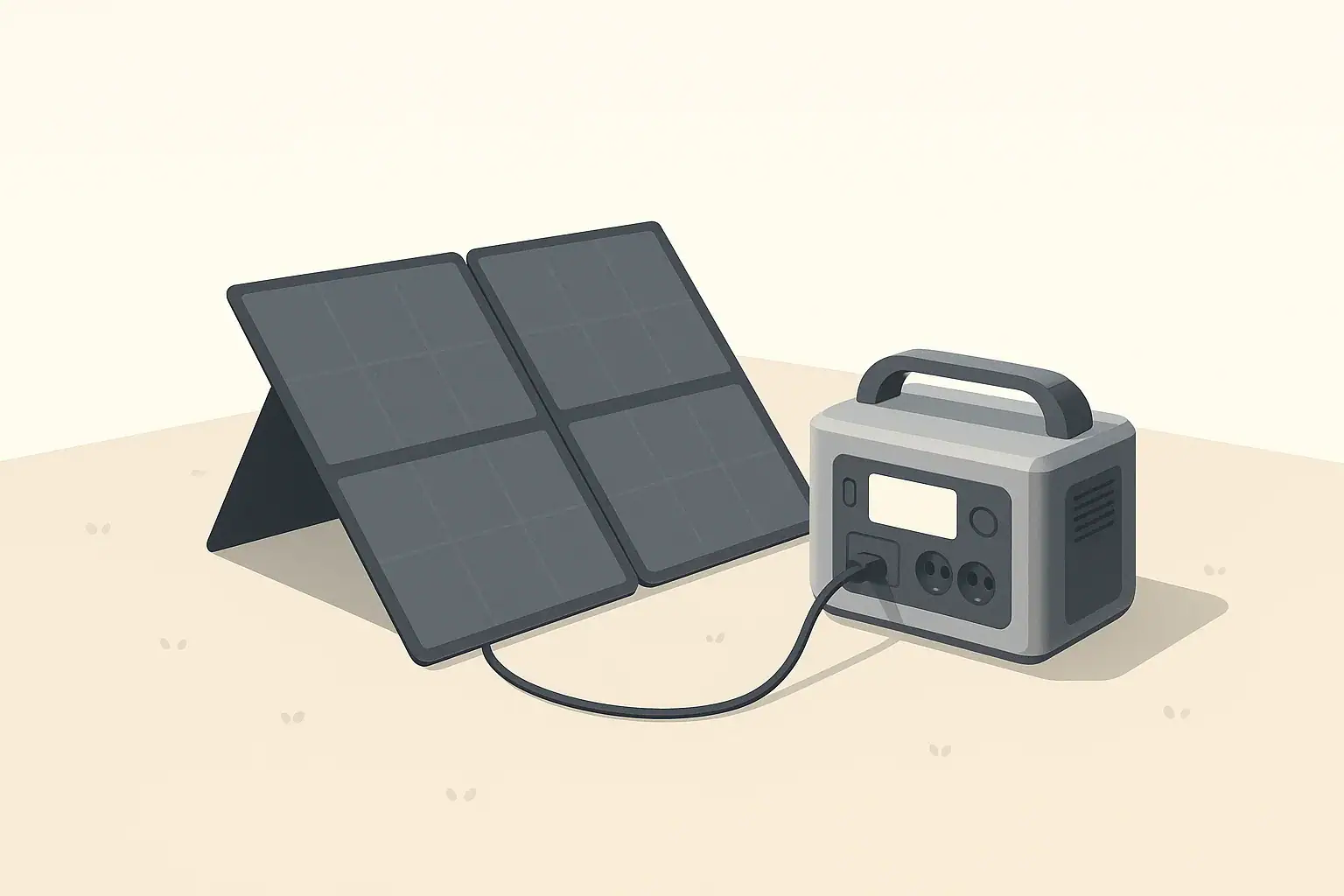
Isometric illustration of power station with solar panel

Portable power stations work well with renewable energy when the battery size, inverter, and charging inputs are correctly matched to your solar, wind, or vehicle setup. Used this way, they can provide reliable off‑grid power for camping, emergency backup, and remote work without depending on fuel or a wired grid.

This guide explains how portable power stations integrate with renewable sources, how to size a system for real-world use, and what to watch for so you do not damage batteries or overload components. You will see concrete examples, simple calculations, and checklists you can copy into your own planning notes.

Whether you are building a small solar generator for weekend trips or adding a portable station to a home backup system, the goal is the same: convert intermittent renewable energy into stable, usable electricity for your devices and appliances.

What a Portable Power Station Is and Why It Matters for Renewable Energy

A portable power station is a self-contained battery system with built-in electronics that stores energy and delivers it through AC outlets, DC ports, and USB outputs. When paired with renewable inputs like solar panels or small wind turbines, it becomes a compact off-grid power system.

Compared with loose batteries and separate inverters or charge controllers, portable stations offer:

  • Simpler setup: One box handles storage, conversion, and protection.
  • Predictable capacity: Battery size is clearly labeled in watt-hours (Wh).
  • Multiple charging options: Wall AC, vehicle DC, and renewable inputs on a single unit.
  • Built-in safety: A battery management system (BMS) limits overcharge, deep discharge, and overheating.

For renewable energy, this matters because solar and wind are variable. A portable power station acts as a buffer: it absorbs energy whenever the sun or wind is available and releases it later at a steady voltage and frequency your devices can use. This makes renewable power practical for everyday tasks like running a laptop, a small fridge, or communications gear.

Key Concepts: How Portable Power Stations Work with Renewable Sources

When you connect a renewable source to a portable power station, you are creating a small energy system with three main parts: generation, storage, and loads. Understanding how these pieces interact helps you size and operate the system correctly.

Core components inside a portable power station

  • Battery pack: Stores energy, usually rated in watt-hours (Wh). This determines how long you can power your devices.
  • Battery management system (BMS): Monitors cell voltage, current, and temperature to prevent damage.
  • Inverter: Converts DC battery power into AC power for household-style outlets.
  • DC-DC converters: Provide regulated DC outputs (for 12 V sockets and USB ports).
  • Charge controller: Manages solar or other DC input to safely and efficiently charge the battery.

Energy flow: from panel or turbine to your devices

A typical renewable setup follows this path:

  • Solar panel or small turbine produces variable DC power depending on sun or wind.
  • The charge controller inside (or connected to) the power station adjusts voltage and current to match the battery’s needs.
  • The battery stores energy until you plug in a device.
  • The inverter and DC outputs deliver stable AC or DC power to your loads.

Battery chemistry and renewable integration

  • Lithium-ion (NMC and similar): High energy density and relatively light. Well suited for portable use, but more sensitive to high temperatures and repeated deep discharges.
  • LiFePO4 (lithium iron phosphate): Lower energy density and slightly heavier for the same Wh, but very long cycle life and good tolerance for frequent charge/discharge cycles common with solar.
  • Lead-acid (AGM, gel): Heavier and lower usable capacity per rated Wh because deep discharges shorten life. More common in older or budget systems.

For renewable-heavy use (daily solar charging, frequent cycling), LiFePO4 is often preferred for its longevity, while lighter lithium-ion can be attractive when weight and compact size matter more than maximum cycle life.

Matching solar input to the station

Every portable power station specifies a maximum solar input in watts, voltage, and current. Staying within these limits is critical:

  • Voltage (V): Exceeding the maximum PV voltage can damage the charge controller.
  • Current (A): Exceeding the input current limit can trigger protection or reduce efficiency.
  • Power (W): The station will only use up to its rated solar wattage, even if your panel array is larger.

Basic sizing method

To size a portable power station for renewable use, you need to balance three numbers: daily energy consumption, usable battery capacity, and renewable generation potential. The table below shows a simple planning process.

Step What to calculate Example value
1. List devices Note each device’s power (W) and hours of use per day. Laptop 60 W × 4 h, fridge 80 W (duty cycle), lights 10 W × 5 h
2. Daily energy (Wh) Multiply watts × hours and add everything. Laptop 240 Wh + fridge 400 Wh + lights 50 Wh ≈ 690 Wh
3. Add losses Multiply by 1.2–1.4 for inverter and system losses. 690 Wh × 1.3 ≈ 900 Wh
4. Choose battery size Pick a station with usable capacity ≥ step 3. 1,000 Wh station gives margin above 900 Wh need
5. Size solar Daily Wh ÷ peak sun hours ÷ efficiency. 900 Wh ÷ 5 h ÷ 0.8 ≈ 225 W of panels
Basic sizing workflow for a portable power station with solar input. Example values for illustration.

Real-World Examples of Portable Power Stations with Renewable Energy

Abstract numbers are easier to understand when tied to real scenarios. Below are three common setups and how a portable power station and renewables work together in each case.

Example 1: Weekend camping with solar

Use case: A small group on a two-night camping trip wants to power phones, a tablet, LED lights, and a small 12 V cooler.

  • Loads: 4 phones (charging 10 W each for 2 h), 1 tablet (20 W for 3 h), LED strip lights (10 W for 5 h), 12 V cooler averaging 40 W for 8 h/day.
  • Daily energy: Phones 80 Wh + tablet 60 Wh + lights 50 Wh + cooler 320 Wh ≈ 510 Wh.
  • Battery size: With a 1.3 factor, 510 Wh × 1.3 ≈ 660 Wh. A station around 700–1,000 Wh gives comfortable margin.
  • Solar input: In an area with roughly 5 peak sun hours, 660 Wh ÷ 5 ÷ 0.8 ≈ 165 W. A 160–200 W folding solar panel is practical.

Result: The group can run the cooler, charge devices, and fully recharge the station each day in good sun. If a cloudy day occurs, they still have enough stored energy for one night.

Example 2: Home outage backup with rooftop solar

Use case: A household wants to keep essential loads running during short grid outages, using an existing small solar array and a portable station as a flexible battery.

  • Loads: Wi-Fi router (10 W), laptop (60 W for 4 h), LED room lights (30 W for 4 h), small fridge averaging 80 W for 8 h.
  • Daily energy: Router 240 Wh + laptop 240 Wh + lights 120 Wh + fridge 640 Wh ≈ 1,240 Wh.
  • Battery size: 1,240 Wh × 1.3 ≈ 1,612 Wh. A 1,600–2,000 Wh station is appropriate.
  • Solar input: With 4 peak sun hours and 80% efficiency, 1,612 Wh ÷ 4 ÷ 0.8 ≈ 504 W. A 500 W solar input (from rooftop or portable panels) can refill the station daily.

Result: During a daytime outage, solar keeps the station topped up. Overnight, stored energy runs essentials. For longer outages, careful load management (shorter laptop use, fewer lights) extends runtime.

Example 3: Remote work site with mixed charging

Use case: A small field crew runs measurement instruments, a laptop, and battery chargers at a site without grid power for several days.

  • Loads: Laptop 60 W for 6 h, instruments 50 W for 8 h, battery charger 40 W for 2 h, LED work light 20 W for 6 h.
  • Daily energy: Laptop 360 Wh + instruments 400 Wh + charger 80 Wh + light 120 Wh ≈ 960 Wh.
  • Battery size: 960 Wh × 1.3 ≈ 1,248 Wh. A 1,200–1,500 Wh station works.
  • Charging: 200–300 W of solar for daytime, plus vehicle DC charging while driving between sites.

Result: Even if clouds reduce solar output, vehicle charging can top up the station during transit, keeping equipment powered without a fuel generator.

Common Mistakes and Troubleshooting When Using Renewables

Many problems with portable power stations and renewable energy come from a few predictable mistakes. Recognizing them early helps you troubleshoot quickly and avoid permanent damage.

Frequent mistakes to avoid

Mistake Typical symptom What to check or change
Overestimating solar output Battery never reaches full charge; devices shut off at night. Use realistic sun hours (often 3–5), and consider panel orientation and shading. Increase panel wattage or reduce loads.
Exceeding PV voltage limit Station refuses to accept solar input or shows error codes. Re-wire panels from series to parallel or reduce panel count so open-circuit voltage stays within the station’s PV limit.
Ignoring inverter surge ratings Station shuts down when starting a fridge, pump, or power tool. Check appliance startup (surge) watts; choose a station with sufficient surge capacity or avoid that load.
Running batteries to 0% regularly Noticeably reduced runtime after a few months of heavy use. Aim to keep discharge above 10–20% when possible, especially for non-LiFePO4 chemistries.
Using thin or long DC cables Panels show good sun but charging is slow; cables feel warm. Use appropriately sized cables for current and distance to reduce voltage drop and heating.
Common issues when pairing portable power stations with solar and how to correct them. Example values for illustration.

Troubleshooting slow or no solar charging

  • Check panel orientation: Point panels directly at the sun and tilt them according to your latitude and season.
  • Inspect for shading: Even small shadows from branches or roof rails can drastically cut output.
  • Verify connections: Confirm all connectors are fully seated and polarity is correct.
  • Measure open-circuit voltage: If you have a meter, compare panel voltage in sun to its rated value; a large difference may indicate damage.
  • Confirm input settings: Some stations have multiple DC inputs or modes. Ensure the correct input is selected and enabled.

Troubleshooting fast battery drain

  • Identify hidden loads: Check for devices left plugged in (routers, chargers, small heaters) that run continuously.
  • Monitor inverter use: AC inverters are less efficient at low loads. If possible, power small devices from DC or USB instead of AC.
  • Watch for cold temperatures: Cold batteries deliver less usable capacity. Expect reduced runtime in freezing conditions.
  • Compare actual vs. planned use: Log your daily Wh usage for a day or two to see if it matches your earlier estimates.

When to reduce load vs. increase generation

If you frequently hit low battery before the end of the day, you can either reduce consumption or add more solar (or other charging). Often, a mix works best: switch some devices to DC, shorten run times on high-power loads, and increase panel wattage if your station can accept it.

Safety Basics with Batteries, Solar, and Inverters

Portable power stations are designed to be user friendly, but they still store and move substantial energy. Following basic safety practices protects both your equipment and the people around it.

Electrical and thermal safety

  • Avoid overloading outputs: Stay within the continuous and surge watt ratings of the inverter and DC outputs.
  • Provide ventilation: Do not cover vents or operate the station in tightly enclosed spaces where heat cannot escape.
  • Keep away from flammable materials: Place the station on a stable, nonflammable surface, especially under high loads or while fast charging.
  • Use appropriate extension cords: For AC loads, use cords rated for the current and length required to minimize heating.

Safe use with external generators and vehicles

  • Never run fuel generators indoors: Only use them outside and away from windows and doors to avoid carbon monoxide buildup.
  • Protect against backfeed: Do not connect a portable station directly into household wiring unless a proper transfer mechanism and qualified installation are in place.
  • Vehicle charging: Ensure cables are routed to avoid pinch points, sharp edges, and hot engine components.

Environmental and handling considerations

  • Moisture protection: Keep the station and connections dry. If you must operate in damp conditions, protect the unit under a shelter with adequate ventilation.
  • Transport: Handle the station carefully, avoid dropping it, and follow any transport restrictions for large lithium batteries, especially for air travel.
  • End-of-life: When the battery reaches the end of its useful life, use appropriate recycling or disposal channels according to local regulations.

Maintenance and Long-Term Use with Renewable Charging

Regular maintenance extends the life of both your portable power station and your renewable charging equipment. Most tasks are simple and can be done with basic tools.

Battery care over time

  • Avoid extreme states of charge: For frequent cycling, operating mostly between about 20% and 80% can reduce wear, especially on non-LiFePO4 chemistries.
  • Limit heat exposure: Do not leave the station in hot vehicles or in direct sun for long periods.
  • Exercise the battery: If stored for months, run a partial discharge and recharge cycle a few times per year to keep cells balanced.

Solar panel and wiring upkeep

  • Clean panel surfaces: Dust, pollen, and bird droppings can noticeably reduce output. Clean gently with water and a soft cloth when cool.
  • Inspect connectors: Look for corrosion, bent pins, or loose locking mechanisms.
  • Check cable strain relief: Ensure cables are not hanging by their connectors or under constant tension.

Storage best practices

  • State of charge for storage: Many lithium-based stations prefer storage around 30–60% charge rather than full or empty.
  • Temperature: Store in a cool, dry place away from direct sunlight and freezing conditions.
  • Periodic checks: Every few months, verify charge level and top up if it has dropped significantly due to self-discharge.

Simple maintenance schedule

  • Before each trip or season: Test the station with typical loads, confirm solar input works, and inspect cables.
  • Every 3–6 months: Clean panels, check for firmware updates if available, and run a controlled discharge/recharge cycle.
  • Annually: Review your energy needs; if your usage has grown, consider whether your current station and solar setup still match your requirements.

Practical Takeaways and Specs to Look For

Bringing everything together, a good portable power and renewable setup starts with realistic expectations about energy use and solar or wind availability, then matches equipment to those needs.

Key takeaways

  • Size your station by daily watt-hours, not just by peak watts or marketing labels.
  • Plan for real-world solar output using conservative sun-hour estimates and some margin.
  • Respect input voltage and current limits to protect the built-in charge controller.
  • Use DC outputs where possible to minimize conversion losses from the inverter.
  • Prioritize battery chemistries and capacities that fit how often and how deeply you will cycle the system.

Specs to look for when choosing a portable power station for renewables

  • Battery capacity (Wh): Compare to your calculated daily energy needs with at least 20–30% headroom.
  • Battery chemistry: LiFePO4 for frequent cycling and longevity; other lithium chemistries when weight and compact size are more important.
  • AC inverter rating: Continuous watts at least equal to your largest expected load, with surge capacity for motors and compressors.
  • Solar input rating: Maximum watts, voltage, and current that match the panels you plan to use.
  • Charge controller type: MPPT generally harvests more energy from solar than simpler control methods, especially in variable conditions.
  • DC output options: 12 V sockets, regulated DC outputs, and multiple USB ports for efficient low-voltage use.
  • Display and monitoring: Clear readouts for input watts, output watts, and state of charge to help manage energy use.
  • Cycle life rating: Number of cycles to a given remaining capacity (for example, 80%) to estimate long-term durability.
  • Operating temperature range: Suitability for your climate, especially if you plan to use the station in hot vehicles or cold environments.
  • Physical form factor: Weight, handle design, and overall size, particularly if you will move the station frequently.

By focusing on these specifications and applying the simple sizing and troubleshooting steps in this guide, you can build a portable renewable power system that is reliable, efficient, and well matched to how you actually use electricity off the grid.

Frequently asked questions

What specs and features matter most when selecting a portable power station for renewable charging?

Prioritize usable battery capacity (Wh), inverter continuous and surge ratings, and the station’s maximum solar input (watts, voltage, current). Also consider charge controller type (MPPT vs. PWM), battery chemistry and cycle life, available DC outputs, and monitoring features to manage real-world energy flows.

How can I avoid overestimating the solar output for daily charging?

Use conservative peak-sun-hour estimates for your location, account for panel orientation, seasonal variation, and shading, and include system losses in your calculations. Plan a margin of extra panel capacity or reduce loads to avoid shortfalls on cloudy days.

Are portable power stations safe to use indoors or in enclosed spaces?

Portable battery stations are generally safer indoors than fuel generators because they do not emit exhaust, but they still produce heat and must be ventilated. Avoid covering vents, keep units away from flammable materials, and follow manufacturer guidance on operating temperature and placement.

How do I size a portable power station for my daily energy needs with solar panels?

Estimate your total daily watt-hours for all loads, multiply by a factor for inverter and system losses (typically 1.2–1.4), and choose a station with usable capacity at or above that number. Size solar wattage by dividing required daily Wh by peak sun hours and panel-to-battery efficiency to determine needed panel power.

Can I charge a portable power station from solar panels and a vehicle at the same time?

Some stations support multiple simultaneous inputs, but you must check the combined input limits and the BMS behavior. Using both sources can speed charging if the total does not exceed the station’s rated voltage, current, or overall power input limits.

What routine maintenance helps extend the life of a power station used with renewables?

Store the battery at a moderate state of charge (often 30–60%), avoid exposing it to extreme temperatures, clean and inspect solar panels and connectors regularly, and perform occasional controlled discharge/recharge cycles. Also check for firmware updates and address any connector corrosion or cable strain issues promptly.

Are Portable Power Stations the Future of Backup Power?

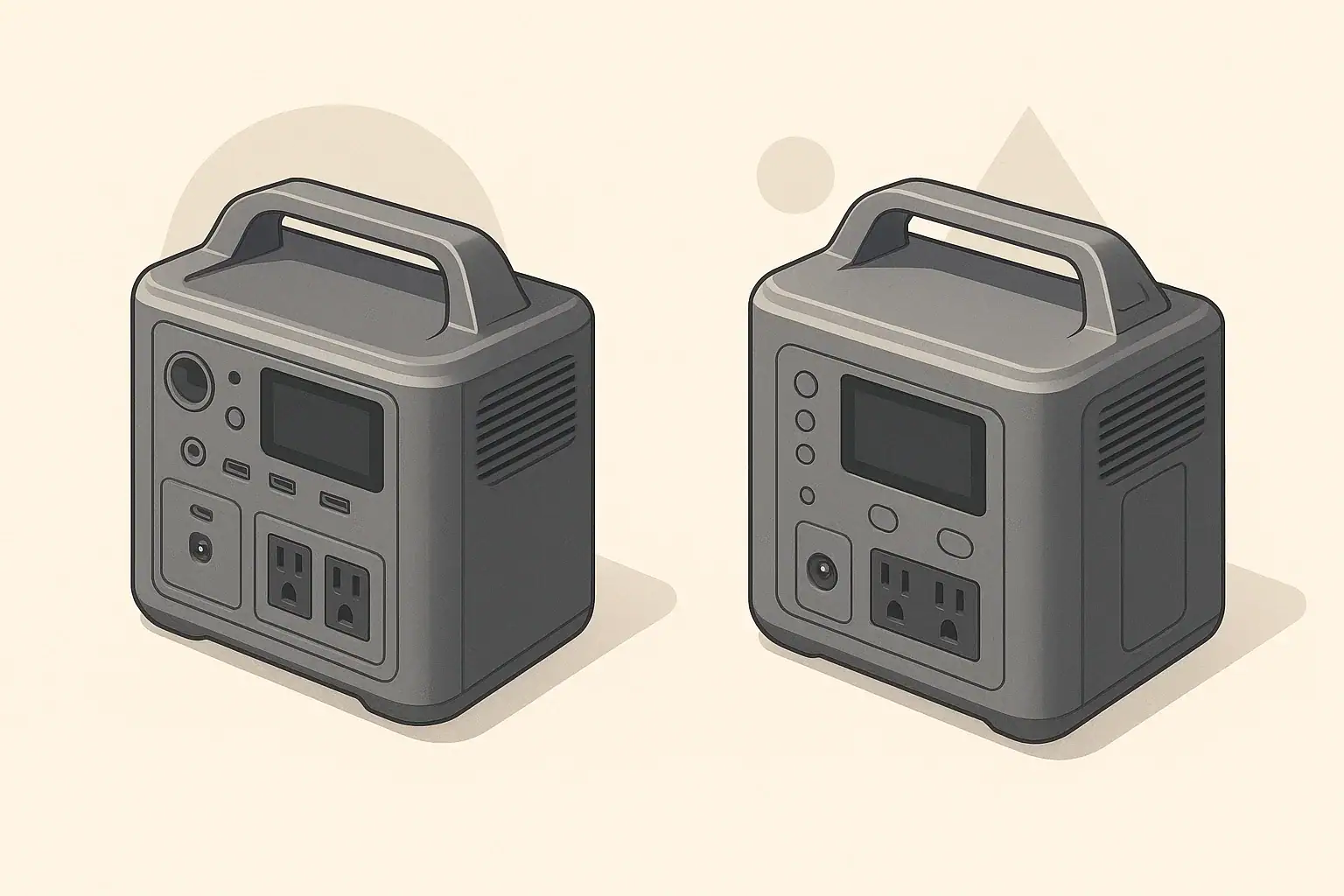
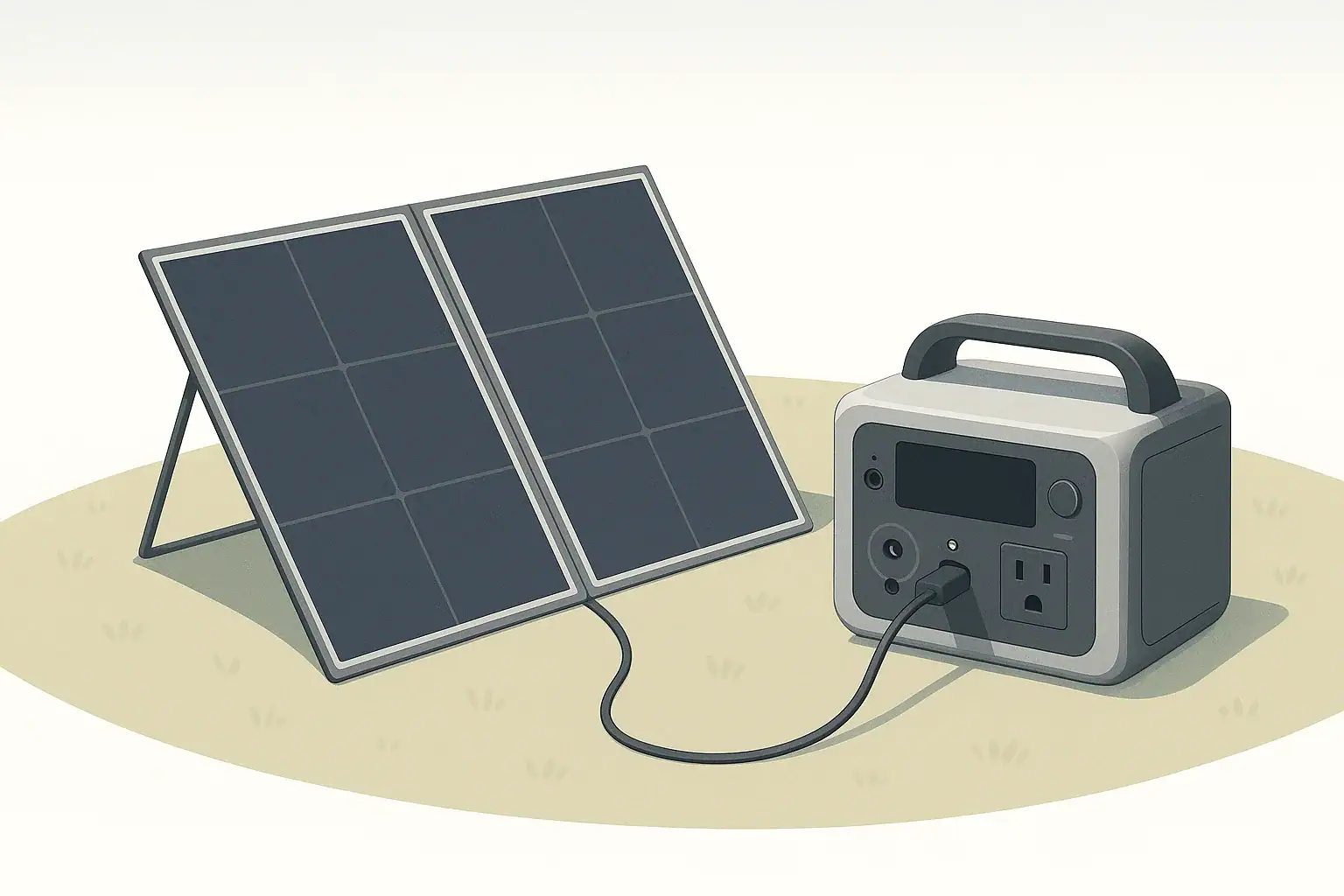
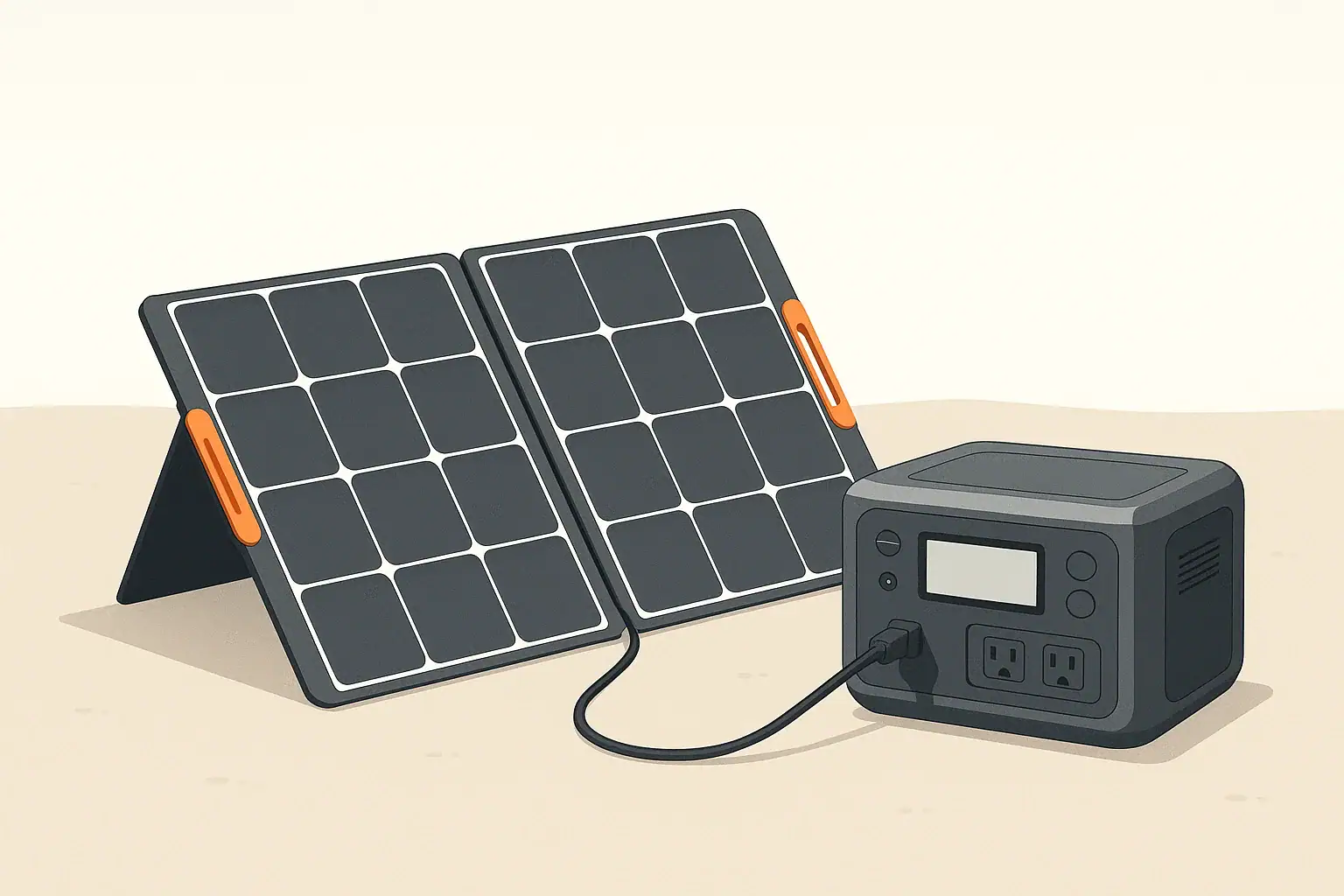
isometric portable power station charging devices

Portable power stations are becoming a core part of backup power, but they will complement rather than completely replace generators and whole‑home batteries. For many households, they are now the most practical way to keep essentials running during short outages, power camping setups, and support remote work off‑grid.

These compact battery power packs combine a rechargeable battery, inverter, and multiple outlets (AC, DC, and USB) in one box. Unlike traditional fuel generators, they are quiet, produce no exhaust at the point of use, and can often be recharged from solar panels. As power grids face more extreme weather and more people work from home, interest in portable backup power, solar generators, and battery stations has grown quickly.

This guide explains how portable power stations work, where they make sense, and where they fall short. You will see concrete runtime examples, common sizing mistakes, safety basics, and a practical checklist of specs to compare when deciding if a portable power station belongs in your backup plan.

What Portable Power Stations Are and Why They Matter for Backup Power

A portable power station is a self‑contained battery system that stores electricity and delivers it through built‑in outlets. Think of it as a large, rechargeable power bank with enough capacity and inverter power to run household devices instead of just phones.

For backup power, portable stations matter because they fill a gap between small uninterruptible power supplies and permanently installed generators or home batteries. They are especially well suited for:

  • Short to medium power outages where you only need to run a few essential loads.
  • Apartment or condo living where fuel storage and hard‑wired generators are impractical.
  • Mobile use cases like camping, RVs, vanlife, and field work.
  • Supplementing existing systems, for example keeping networking and electronics up while a generator covers heavy loads.

However, portable power stations are usually not sized to run an entire home with central air conditioning, electric water heating, or electric cooking for many hours. Their strengths are flexibility, portability, and clean operation, not unlimited energy.

Key Concepts: How Portable Power Stations Work

To decide whether a portable power station fits your backup strategy, it helps to understand the main components and ratings you will see on spec sheets.

Battery capacity and chemistry

The battery is the energy tank. Capacity is usually given in watt‑hours (Wh). Roughly speaking:

  • 300–600 Wh: occasional charging, small lights, short router backup.
  • 700–1,500 Wh: basic essentials for several hours, small fridge for part of a day.
  • 2,000+ Wh: larger fridges, more devices, or longer runtimes.

Common chemistries include lithium‑ion and lithium iron phosphate. While the details differ, both are lighter and more energy‑dense than lead‑acid batteries. Cycle life (how many full charge‑discharge cycles the battery can handle before losing capacity) is an important factor for long‑term value.

Inverter power and surge

The inverter converts DC power from the battery into AC power for household devices. Two ratings matter:

  • Continuous watts: how much power the station can deliver steadily.
  • Surge watts: short bursts for startup spikes, such as compressors and motors.

If your combined running loads exceed the continuous rating, the unit may shut down. If a device’s startup surge exceeds the surge rating, it may fail to start or cause an overload error.

Charging inputs and power management

Most portable power stations support several charging methods:

  • Wall charging: fastest and most convenient before a storm.
  • Vehicle charging: useful while driving but usually slower.
  • Solar charging: essential for extending runtime during long outages or off‑grid use.

Internal charge controllers and battery management systems regulate how the battery charges and discharges, protect against over‑current and over‑temperature, and may allow you to prioritize certain outputs or limit charge rates to preserve battery health.

Use case Example devices Approx. load (W) Estimated daily energy (Wh) Suggested battery size (Wh)
Basic communications Router (24h), 2 phones, 1 laptop 40–60 300–500 500–700
Essentials during outage Router, 2 LED lights (6h), laptop (4h), fan (4h) 120–180 600–900 1,000–1,500
Fridge + essentials Energy‑efficient fridge, router, lights 150–250 avg. 1,200–1,800 1,500–2,500
RV / van weekend 12 V fridge, lights, phones, laptop, small fan 80–150 800–1,200 1,000–2,000
Typical energy needs and suggested portable power station sizes for common scenarios. Example values for illustration.

Real‑World Backup Power Examples

Abstract watt‑hours can be hard to visualize. The examples below show how portable power stations behave in practical situations. Actual results will vary with device efficiency, ambient temperature, and depth of discharge.

Keeping internet and lighting on during a short outage

Scenario: You want to stay connected and keep a couple of rooms lit during a 6‑hour evening outage.

  • Wi‑Fi router and modem: 20 W.
  • Two LED bulbs: 10 W each (20 W total), used for 6 hours.
  • Phone charging: 10 W average over 3 hours.

Energy use estimate:

  • Router: 20 W × 6 h = 120 Wh.
  • Lights: 20 W × 6 h = 120 Wh.
  • Phones: roughly 30 Wh.

Total is about 270 Wh. Allowing for inverter losses and some buffer, a station with around 400–500 Wh usable capacity can comfortably cover this scenario.

Running a refrigerator through an overnight outage

Scenario: A modern, efficient refrigerator that averages around 120 W over time (including compressor cycling) needs to stay cold for 10 hours.

  • Fridge: 120 W × 10 h = 1,200 Wh.
  • Router and a light: add another 200–300 Wh.

You are now in the range of 1,400–1,500 Wh or more. A portable power station with at least 1,500–2,000 Wh capacity is more appropriate, especially if you cannot recharge during the outage.

Supporting remote work and small appliances

Scenario: You work remotely and need to keep a laptop, monitor, and networking equipment powered for an 8‑hour workday during an outage.

  • Laptop: 60 W × 8 h = 480 Wh.
  • Monitor: 30 W × 8 h = 240 Wh.
  • Router: 15 W × 8 h = 120 Wh.
  • Occasional phone charging and a small desk fan: 100–150 Wh.

Total is roughly 950–1,000 Wh. A station around 1,200–1,500 Wh gives a comfortable margin, particularly if you want to avoid fully draining the battery.

Extending runtime with solar

If your portable power station supports solar charging, even a modest solar array can significantly extend runtime in a multi‑day outage. For example, a 200 W solar panel in good sun might produce 800–1,000 Wh per day. That is enough to offset light loads like communications and lighting indefinitely, but not enough to run high‑draw appliances continuously without careful load management.

Scenario Symptom Likely cause Practical next step
Fridge will not start Unit clicks or shows overload error Startup surge exceeds inverter surge rating Test with smaller loads; consider a higher‑power station or running fewer devices at once
Shorter than expected runtime Battery drains in a few hours Loads underestimated or capacity quoted is nominal, not usable Measure or re‑check device wattage; assume 10–20% losses when sizing
Slow solar charging Battery barely gains charge during the day Panel under‑sized, poor sun angle, or input limit reached Improve panel orientation, reduce loads while charging, or add panel wattage within input specs
Unit shuts down in cold weather Warning icon or no output Battery management system protecting against low temperature Move the station indoors or into a temperature‑moderated space before use
Fan runs constantly Noticeable noise even at low loads High ambient temperature or internal heat buildup Provide better ventilation, keep away from direct sun, and avoid enclosing the unit
Typical portable power station issues, likely causes, and quick troubleshooting steps. Example values for illustration.

Common Mistakes and Troubleshooting Cues

Many disappointing experiences with portable power stations come from planning errors rather than hardware failures. Being aware of common pitfalls helps you avoid overspending or under‑preparing.

Undersizing capacity and inverter power

A frequent mistake is buying a unit based on peak advertised watts instead of actual energy needs. Signs you may be undersized include:

  • The station shuts down when a fridge or power tool starts.
  • Runtime is only a fraction of what you expected.
  • You constantly juggle which devices can be plugged in.

Fix: Add up the running watts of devices you want to power at the same time, check their startup surges, and size both inverter power and battery capacity with a margin.

Ignoring usable capacity and efficiency losses

Not all of the quoted watt‑hours are usable. Battery management systems may reserve a portion to protect the battery, and inverters are not 100% efficient. If you rely on the printed Wh number without accounting for 10–20% losses, runtimes will fall short.

Fix: When planning, multiply the rated capacity by about 0.8–0.9 to estimate usable energy, then divide by your expected average load.

Overloading AC outlets or mixing incompatible loads

Plugging too many devices into a single AC bank or running inductive loads (like pumps and compressors) alongside sensitive electronics can trigger overload or cause voltage dips.

Fix: Spread loads across outlets where possible, avoid starting multiple heavy loads at the same time, and keep critical electronics on separate ports from large motors when feasible.

Expecting generator‑like performance without a recharge-plan

Portable power stations cannot run large resistive loads such as electric ovens, baseboard heaters, or central air conditioning for long. Treating them like fuel generators leads to rapid depletion.

Fix: Reserve the station for high‑value loads (communication, refrigeration, medical devices that are compatible, and essential lighting) and pair it with a recharge strategy such as solar or grid pre‑charging.

Basic troubleshooting checklist

  • If a device will not power on: Check that the correct output (AC, DC, or USB) is enabled and that the device’s wattage is below the port limit.
  • If runtime is unexpectedly short: Confirm actual device wattage with a plug‑in meter or manufacturer specs, and compare to your earlier estimates.
  • If charging seems slow: Verify input wattage on the display, panel orientation, and that cables are fully seated and undamaged.
  • If the unit feels hot: Move it to a shaded, ventilated area and reduce high‑draw loads until the fan cycles down.

Safety Basics When Using Portable Power Stations

Portable power stations remove many hazards associated with fuel generators, but they still store significant energy and must be treated with care.

Ventilation and placement

  • Operate the unit on a stable, dry surface away from flammable materials.
  • Allow space around air vents so internal fans can move heat away effectively.
  • Avoid placing the station in direct sunlight or enclosed cabinets during heavy use.

Temperature limits

Battery performance and safety are closely tied to temperature. Extreme cold can reduce available capacity and trigger low‑temperature protection, while extreme heat accelerates wear and can cause automatic shutdowns.

  • Do not charge or discharge outside the temperature range listed in the manual.
  • Bring the station indoors or into a moderated environment during very hot or very cold weather.

Cable and load safety

  • Use appropriately rated extension cords and avoid daisy‑chaining power strips.
  • Do not attempt to back‑feed a home electrical panel without a proper transfer mechanism installed by a professional.
  • Inspect cords and connectors for damage before use; replace damaged cables instead of taping them.

Using portable power with sensitive or critical equipment

Some devices, especially certain medical or laboratory equipment, have strict power quality and uptime requirements. Portable power stations may not be tested or certified for those uses.

  • Verify voltage and frequency requirements of critical devices.
  • Confirm that the station’s output waveform and transfer behavior are compatible.
  • Where uninterrupted power is essential, dedicated and appropriately rated backup systems may still be required.

Maintenance and Long‑Term Use

Unlike fuel generators, portable power stations need relatively little routine maintenance, but a few habits can significantly extend their useful life.

Regular cycling and state of charge

Batteries last longer when they are not left fully charged or fully empty for long periods. For most chemistries used in portable stations:

  • Store the unit partially charged when it will sit unused for months.
  • Top it up a few times per year and run a light load to exercise the battery.
  • Avoid repeatedly draining to 0% if you do not need the absolute maximum runtime.

Environmental storage conditions

Heat is a major driver of battery degradation. Long‑term storage in hot garages or vehicles can reduce capacity noticeably over time.

  • Store in a cool, dry place away from direct sunlight.
  • Avoid leaving the unit in a closed vehicle during hot weather.
  • Keep vents clear of dust; gently clean with a dry cloth if needed.

Periodic functional checks

Waiting until a storm hits to discover a problem is avoidable. A simple quarterly check can confirm everything still works as expected.

  • Charge the station to a moderate level.
  • Plug in a few representative devices and verify they power on normally.
  • Confirm the display, ports, and fans behave as usual.
  • Note any changes in noise, heat, or runtime and adjust your plans accordingly.

Battery aging expectations

All rechargeable batteries slowly lose capacity with use and time. After several hundred or thousand cycles (depending on chemistry and depth of discharge), the station may still function but run for fewer hours. Planning with some margin in your original sizing helps maintain useful performance even as capacity gradually declines.

Practical Takeaways and Specs to Look For

Portable power stations are likely to remain a major part of the future of backup power, especially for targeted, high‑value loads and mobile use. They are not a universal replacement for whole‑home systems or large generators, but they offer a flexible, low‑maintenance way to add resilience.

When deciding how a portable power station fits into your overall backup strategy, think in terms of roles: communications and lighting, refrigeration, remote work, or mobile living. Matching the station to a clear role leads to better sizing, more realistic expectations, and better value.

Use the checklist below to compare models and ensure the specs align with your needs.

Specs to look for checklist

  • Battery capacity (Wh): Does the usable capacity (after losses) cover your estimated daily energy needs with some margin?
  • Inverter continuous watts: Is it higher than the total running watts of all devices you plan to power at the same time?
  • Surge watts: Can it handle the startup surge of fridges, pumps, or other motor loads you intend to run?
  • Number and type of outlets: Are there enough AC, DC, and USB ports for your devices without relying on unsafe adapters?
  • Charging options: Does it support wall, vehicle, and solar input at rates that fit your recharge plan?
  • Solar input limits: Are the maximum input watts and voltage compatible with the solar panels you plan to use?
  • Battery chemistry and cycle life: Is the rated cycle life appropriate for how often you expect to use the station?
  • Weight and portability: Can you comfortably move the unit where you need it, especially in an emergency?
  • Display and controls: Is it easy to see remaining capacity, input/output watts, and error indicators at a glance?
  • Built‑in protections: Look for over‑current, over‑voltage, over‑temperature, and short‑circuit protection.

By focusing on these specifications and grounding your choice in realistic load estimates, you can decide where portable power stations belong in your backup power mix and how they can best support you during outages, travel, and everyday off‑grid tasks.

Frequently asked questions

What specifications and features should I prioritize when comparing portable power stations?

Prioritize usable battery capacity (Wh) after accounting for efficiency losses, inverter continuous and surge watt ratings, and the available charging inputs (wall, vehicle, and solar). Also check the number and types of outlets, solar input limits, battery chemistry and cycle life, and the unit’s weight and portability to match your intended use.

How can I avoid the common mistake of buying a unit that’s too small?

Calculate the combined running watts of devices you plan to power at the same time and note any startup surges for motors or compressors. Size both the battery capacity and inverter rating with a safety margin and account for usable capacity by subtracting roughly 10–20% for losses and reserves.

Are portable power stations safe to use indoors?

Portable power stations are generally safe indoors because they produce no exhaust, but they still store significant energy and must be used according to manufacturer guidelines. Ensure adequate ventilation for heat dissipation, avoid charging or discharging outside the recommended temperature range, and inspect cables and connections before use.

How long will a portable power station run my devices?

Runtime is roughly the station’s usable Wh capacity divided by the combined load in watts; for example, a 1,000 Wh usable capacity driving a 100 W load will last about 10 hours before losses. Remember to include inverter and conversion losses and avoid fully draining the battery to preserve cycle life.

Can solar panels reliably recharge a portable power station during a multi‑day outage?

Solar can extend runtime and sustain light loads, but daily recharge depends on panel wattage, available sun hours, and the station’s solar input limit. A modest 200 W array might produce 800–1,000 Wh on a good day, so plan for reduced output on cloudy days and confirm the station accepts the panel’s voltage and wattage.

Is it safe to power sensitive or medical equipment with a portable power station?

Possibly, but you must verify the equipment’s voltage, frequency, and power quality requirements and ensure the station’s output waveform and certifications are compatible. For critical medical devices or equipment with strict uptime needs, use dedicated, certified backup systems or consult a professional before relying on a portable station.