Battery Calibration Explained: When (and How) to Do a Full Discharge Without Damaging the Pack

portable power station with abstract energy blocks in isometric view

Battery calibration, in the context of portable power stations, is about aligning the internal battery management system with the actual usable capacity of the battery pack. Modern lithium batteries do not need calibration to work, but the electronics that estimate remaining runtime and state of charge can drift over time. Calibration helps the percentage meter and runtime estimates become more accurate again.

When people talk about doing a “full discharge” for calibration, they usually mean running the power station down close to empty and then charging it back to full in a controlled way. This does not create new capacity inside the battery; it simply helps the device learn where “empty” and “full” really are. If done too often or too aggressively, deep discharges can stress the pack, so it is important to understand when it is useful and when it is unnecessary.

For most portable power stations used around the home, for camping, or for remote work, frequent calibration is not required. The internal battery management system is designed to protect the cells and provide safe operating limits. You usually only consider a calibration cycle when the percentage reading or runtime predictions become obviously inaccurate, such as shutting off with 20% still showing or staying at 100% for a very long time before dropping.

Understanding how calibration fits with capacity, power draw, and charging behavior helps you plan realistic runtimes and avoid habits that shorten battery life. Instead of chasing perfect percentage readings, focus on correct sizing, safe operation, and gentle use patterns that preserve the pack over many years.

What Battery Calibration Really Means and Why It Matters

Key Concepts: Capacity, Power, and Why Meters Drift

To make sense of battery calibration and full discharge cycles, it helps to separate power (watts) from energy (watt-hours). Wattage describes how fast you are using energy at any moment, like the speed of water flowing from a hose. Watt-hours describe how much energy is stored in the battery, like the size of the tank. A portable power station with 500 watt-hours of storage can, in theory, run a 100-watt device for about five hours, before considering losses.

Real-world runtimes are always lower than simple math suggests because of inverter and conversion losses. Most portable power stations convert the battery’s DC power to AC for household-style outlets, and that conversion is not perfectly efficient. You might only get 80–90% of the rated watt-hour capacity as usable output, depending on load size, temperature, and how the unit is designed. Calibration does not change these losses; it only helps the meter report them more accurately.

Another key distinction is between running watts and surge watts. Many devices, especially those with motors or compressors, require a short burst of higher power at startup. Your portable power station’s inverter has limits on both continuous power and short surges. If a load exceeds those limits, the power station may shut down even if the battery still has plenty of energy. Users sometimes misinterpret this as a battery problem when it is actually a power (wattage) issue, not capacity.

The state-of-charge meter can drift over time because the system estimates capacity based on current, voltage, and past usage patterns. Small errors accumulate, especially if the power station is often used in partial cycles, stored at high or low temperatures, or rarely allowed to reach full charge. A purposeful, controlled discharge followed by a full charge can give the system clear reference points for “top” and “bottom,” improving the accuracy of the remaining percentage and runtime estimates.

Portable power station sizing and calibration checklist. Example values for illustration.
What to review Why it matters Typical example
Total wattage of planned loads Prevents inverter overload and shutdowns Phone (10 W) + laptop (60 W) + router (10 W) ≈ 80 W
Surge vs running watts of appliances Avoids trips when motors or compressors start Small fridge: 60–100 W running, several times higher surge
Energy (Wh) vs expected hours of use Helps determine if capacity meets your scenario 500 Wh pack powering 100 W for about 4 hours, after losses
Inverter efficiency and conversion losses Explains why real runtime is less than basic math Plan on 10–20% less than rated Wh for AC loads
Observed meter accuracy Signals if a calibration discharge may help Shuts off at 15–25% displayed charge repeatedly
Usage pattern over last few months Frequent small top-offs can increase meter drift Many partial charges, rarely below 50% before recharging
Battery age and cycle count Helps separate normal aging from calibration issues Older unit with many cycles may show reduced runtime

How Calibration Relates to Portable Power Station Sizing

If your power station is undersized for your loads, no amount of calibration will prevent shutdowns when you exceed inverter limits or drain the pack quickly. The most reliable way to reduce surprises is to size capacity and output appropriately from the start. Calibration is a fine-tuning tool for the meter, not a fix for poor sizing or heavy loads.

Real-World Examples of Calibration and Full Discharge

Consider a remote work setup using a laptop, monitor, and internet router drawing around 120 watts combined. With a 600 watt-hour portable power station, basic math suggests five hours of runtime. After factoring in conversion losses, realistic runtime might be closer to four hours. If the display initially shows eight hours remaining and then suddenly drops to two, that inconsistency may indicate that the meter would benefit from recalibration.

In another scenario, a household uses a portable power station for short power outages to run a small refrigerator and a few LED lights. The fridge may draw about 80 watts running, with occasional higher surges, while the lights use around 10 watts total. With a 1000 watt-hour unit, they might expect around eight to nine hours of combined operation after losses. If the unit begins shutting off when the display still shows 25% charge in repeated outages, a controlled discharge and full recharge can help the state-of-charge estimate line up better with reality.

Cold-weather camping provides a different set of challenges. A power station used to run a small 12-volt heater fan and charge phones might appear to drain much faster in low temperatures. Part of this is real, because lithium batteries are less efficient and provide less usable capacity when cold. The state-of-charge meter can also become less accurate if the unit spends long periods in low temperatures and partial charge. A calibration cycle performed later at moderate room temperature can help restore more reliable readings.

It is important to distinguish between normal battery aging and meter drift. Over years of use, any lithium battery will gradually lose capacity. If your once-new power station used to power a device for six hours and now lasts four, even after a careful full charge and a calibration discharge, that is likely normal wear rather than a calibration problem. Calibration can correct the gauge, but it cannot reverse chemical aging in the cells.

Common Mistakes and Troubleshooting Cues

A frequent mistake is treating full discharge as routine maintenance. Modern lithium-based portable power stations are generally healthier when kept away from extreme high and low states of charge. Regularly running the battery to zero for no clear reason can add unnecessary stress and may shorten its overall lifespan. Calibration cycles should be occasional, not part of everyday use.

Another common issue is assuming any unexpected shutdown is a sign the battery is “bad” or needs calibration. If the power station turns off as soon as a high-draw device starts, the inverter may be hitting its surge limit. If the unit heats up and reduces output or charging speed, it may be protecting itself from high temperature, not misreading remaining capacity. These are normal safety behaviors, and calibration will not change their thresholds.

Slow charging is another area where users sometimes suspect a calibration problem. In reality, charging can slow down for several reasons: the power source may be limited (such as a car outlet), the battery may be near full and tapering current to protect itself, or the unit may be warm and reducing charge rate to manage temperature. If the percentage climbs steadily but slowly, that usually reflects real limits of the power source or battery protection, not a miscalibrated meter.

Signs that may point toward a useful calibration cycle include repeated shutdowns with a relatively high state of charge displayed, long periods where the percentage appears “stuck” at a certain level, or runtime estimates that are obviously out of proportion to your typical loads. Before assuming calibration is needed, it is wise to review your load wattage, inverter limits, and ambient temperature to rule out other causes.

Safety Basics: Using Power Stations and Calibration Wisely

Safe operation of a portable power station begins with placement. Use the unit on a stable, dry surface with adequate space around it for ventilation. Batteries and inverters generate heat during charging and discharging, and blocking vents can lead to higher internal temperatures, faster fan cycling, or protective shutdowns. Avoid placing the power station in enclosed cabinets, near heaters, or where direct sunlight can significantly raise its temperature.

Cords and connected devices deserve just as much attention. Use appropriately rated power cords and avoid daisy-chaining multiple power strips or extension cords in ways that can overload wiring. Check that plugs are fully seated in outlets, both on the power station and on your devices. During any intentional calibration discharge, monitor connected loads and make sure that critical devices, such as medical or safety equipment, are not relying solely on a battery that is being purposefully run low.

Electrical safety also extends to moisture and grounding. Keep the power station away from standing water, rain, and very humid conditions unless it is specifically designed for outdoor exposure. When using near sinks, garages, or outdoor outlets, look for receptacles protected by ground-fault circuit interrupters (GFCI). These are typically installed and maintained by qualified electricians and help reduce the risk of shock in damp environments. Portable power stations themselves may have protective circuitry, but they do not replace properly installed building wiring.

It is crucial not to backfeed home wiring or attempt to connect a portable power station directly into household circuits without appropriate equipment and professional installation. Some households use transfer switches or dedicated inlets to safely connect backup power, but any design or installation related to the main electrical panel should be handled by a licensed electrician. Battery calibration and full discharge procedures should always be done with portable, plug-in loads, not through improvised connections to home wiring.

Maintenance and Storage: Protecting Capacity and Meter Accuracy

Good maintenance practices help both battery health and calibration accuracy. Portable power stations generally prefer being stored at a moderate state of charge, often somewhere in the middle range rather than at 0% or 100% for long periods. Many users aim to leave the battery around 40–60% if it will sit unused for several months, though you should also consider the manufacturer’s guidance for your particular unit. This reduces stress on the cells and slows capacity loss.

Self-discharge is another factor. Even when switched off, batteries gradually lose charge over time. The rate depends on design and temperature, but it is common for a stored power station to slowly drop several percentage points per month. Periodically checking and topping up the charge prevents it from drifting all the way to empty in storage. Very deep, unintentional discharge during long storage can be harder on the pack than normal shallow cycling.

Temperature during storage and use has a big impact on performance and lifespan. Extreme heat accelerates aging and can cause protective circuits to limit charging or discharging. Very low temperatures reduce available capacity and can lead to sluggish performance until the battery warms up. Storing your power station in a cool, dry indoor area, away from direct sunlight and unheated outbuildings that swing between hot and cold, helps preserve both the cells and the accuracy of the meter.

A calibration discharge, when needed, can be woven into normal maintenance rather than treated as a separate, frequent task. For example, once or twice a year, during regular use, you might allow the battery to run down under light to moderate load until the unit shuts itself off, then recharge it fully without interruptions. Between these rare calibration cycles, prioritize gentle use: avoid routinely running to empty, avoid leaving the battery at full for weeks on end, and keep the unit within comfortable room temperatures whenever possible.

Storage and maintenance planning for portable power stations. Example values for illustration.
Situation Suggested approach Notes
Storing for a few weeks Keep at moderate charge in a cool, dry place Avoid leaving at 0% or 100% for extended time
Storing for several months Charge to mid-level and check every 1–3 months Top up if display drops significantly
Using in hot environments Provide shade and ventilation, avoid closed cars High heat can increase aging and trigger slowdowns
Using in cold environments Keep unit insulated, warm gradually before heavy use Expect reduced runtime until temperature normalizes
Noticing meter inaccuracy Plan a careful discharge and full recharge Limit calibration cycles to occasional use
After many partial charges Allow a full cycle during normal use Helps the system re-learn top and bottom points
Before storm or outage season Fully charge, test runtime with typical loads Confirms capacity and reveals possible meter drift

Practical Takeaways: When and How to Use Full Discharge

Battery calibration is mainly about making the percentage and runtime estimates more trustworthy, not about fixing or expanding the battery’s real capacity. Most portable power station users do not need frequent calibration cycles. Instead, focus on correctly sizing your unit for the wattage and surge requirements of your devices, understanding that real runtimes will be somewhat lower than simple watt-hour math because of conversion losses.

Full discharge should be occasional and deliberate. Letting the unit run down naturally under light to moderate loads, then recharging it fully without interruptions, can help reset the meter if you see clear signs of drift. Avoid repeatedly forcing the battery to zero, especially with heavy loads or in very hot or very cold conditions, because that can add unnecessary wear.

  • Match your power station’s continuous and surge watt ratings to your planned loads.
  • Use watt-hours as a planning tool, then apply a margin for inverter and efficiency losses.
  • Treat unexpected shutdowns as a cue to check load size, temperature, and inverter limits before assuming a calibration issue.
  • Store the battery at a moderate state of charge in a cool, dry location, and avoid long periods at 0% or 100%.
  • Plan calibration discharges only when the meter behaves inconsistently, not as routine maintenance.
  • Keep safety first: ensure good ventilation, appropriate cords, dry conditions, and avoid any improvised connections to building wiring.

By combining right-sized capacity, sensible operating habits, and occasional calibration when truly needed, you can keep your portable power station both accurate and reliable across a wide range of everyday and emergency uses.

Frequently asked questions

Is a full discharge necessary for battery calibration on portable power stations?

No. Routine full discharges are not required for modern lithium-based power stations. A controlled full discharge and subsequent full charge are only useful occasionally when the state-of-charge display or runtime estimates show consistent, obvious errors.

How often should I perform a calibration full discharge?

Perform calibration discharges sparingly—typically only when you notice persistent meter drift such as repeated shutdowns at a seemingly high displayed charge or long periods where the percentage is “stuck.” For many users, once a year or after long periods of partial charging is sufficient; don’t make it a regular maintenance routine.

Will doing a full discharge restore the battery’s real capacity?

No. A full discharge only helps the battery management system better estimate top and bottom points; it does not reverse chemical aging or recover lost cell capacity. Frequent deep discharges can actually accelerate capacity loss, so limit them to diagnostic or calibration needs.

What is the safest way to perform a calibration discharge?

Use light to moderate resistive loads, monitor the unit and ambient temperature, avoid running critical devices on the battery being discharged, and allow the unit to shut off on its own before fully recharging without interruption. Perform the cycle in a ventilated, dry area at moderate room temperature for best results.

Does temperature affect meter accuracy and calibration timing?

Yes. Cold reduces apparent capacity and can cause inaccurate state-of-charge readings, while heat accelerates aging and may alter charging behavior. Perform calibration at moderate room temperature and avoid calibrating while the unit is very cold or very hot to get useful reference points.

Idle Drain and “Phantom Loss”: Why Power Stations Lose Power When Not Used

Person cleaning a portable power station on a minimal tabletop

Portable power stations often lose a noticeable amount of charge even when nothing seems to be plugged in. This effect is commonly called idle drain or phantom loss. It describes any loss of stored energy while the unit is sitting unused, powered off, or on standby.

Some amount of idle drain is normal and unavoidable. However, excessive phantom loss can be frustrating, especially if you rely on a power station for emergencies, camping, or occasional backup use.

Understanding where this energy goes helps you store and use your power station more effectively, extend its battery lifespan, and avoid unpleasant surprises when you need power most.

What Is Idle Drain in a Portable Power Station?

Self-Discharge vs. Phantom Loss: Two Different Things

People often use “idle drain,” “phantom loss,” and “self-discharge” interchangeably, but they refer to slightly different processes.

Self-Discharge: Built-In Battery Chemistry Loss

Self-discharge is the gradual loss of charge that happens inside the battery cells themselves, even when completely disconnected from any device. It is a property of the battery chemistry.

Typical modern portable power stations use either:

  • Lithium-ion (NMC or similar) cells
  • Lithium iron phosphate (LiFePO4) cells

Approximate self-discharge rates under normal room-temperature storage:

  • Lithium-ion: Often around 1–3% per month
  • LiFePO4: Often around 1–2% per month

These are broad ranges; actual values depend on cell quality, age, and temperature. Self-discharge is relatively slow. If your power station is losing 10–20% in a week, the main culprit is usually not self-discharge alone.

Phantom Loss: Electronics That Never Fully Sleep

Phantom loss usually refers to the battery drain caused by electronic components in the power station, not the battery cells themselves. Even when you press the power button to turn the unit “off,” some internal circuits often remain active:

  • Battery management system (BMS)
  • Display controller
  • Standby power for inverters and DC/DC converters
  • Wireless modules or monitoring chips, if present

These background circuits may consume a small but continuous current, sometimes adding several percent of drain per week or more, depending on the design.

Where the Power Actually Goes When the Unit Is “Off”

Inside a portable power station, multiple systems can draw power even with no active load. How much they consume depends on hardware design and firmware behavior.

Battery Management System (BMS)

The BMS is always near the center of idle drain. It monitors and protects the battery pack by tracking:

  • Cell voltages
  • Current in and out
  • Temperature
  • Charge and discharge limits

Because safety is critical, the BMS rarely turns completely off. Instead, it usually enters a low-power state. Even then, it needs a trickle of energy to keep its microcontroller and sensing circuits alive.

Control Electronics and Display Circuits

Power stations include a main control board that handles buttons, modes, and often some kind of display. Depending on design, this circuitry can draw power even when the screen is dark, including:

  • Microcontroller or embedded processor
  • Real-time clock (to track time or logs)
  • Interface chips for USB ports and other connectors

In some models, the display backlight and processing logic enter a deeper sleep mode only after a timeout, so idle drain can be higher right after use and then drop later.

AC Inverter Standby Loss

The AC inverter converts battery DC to household-style AC. This is one of the most power-hungry components during active use. Even in standby, some inverters:

  • Keep parts of their circuitry energized for fast wake-up
  • Maintain internal reference voltages
  • Drive small control transformers or power supplies

If the AC output switch stays on, the inverter may continuously draw idle power even without anything plugged in. Turning the AC output off separately (if supported) usually reduces phantom loss significantly.

USB and DC Output Electronics

DC outputs such as USB-A, USB-C, 12 V car sockets, and barrel ports often have their own regulators or small converters. Many USB power-delivery controllers stay partially active to detect when a device is plugged in.

In some power stations, the DC section can be turned off independently from AC. If DC remains on, expect a low but non-zero standby draw from these circuits.

Wireless and Smart Features

Power stations with wireless or “smart” features may have extra always-on components, such as:

  • Bluetooth or Wi‑Fi chips
  • Low-power radios for remote monitoring
  • Logging or telemetry hardware

Even low-power wireless modules consume some energy to broadcast or listen for connections, contributing to phantom loss when left enabled.

How Temperature and Storage Conditions Affect Idle Drain

Environment plays a major role in how quickly a stored power station loses charge.

High Temperatures Increase Self-Discharge

Heat accelerates chemical reactions in batteries. At elevated temperatures:

  • Self-discharge of the cells increases
  • Electronics become less efficient
  • Long-term battery aging speeds up

Leaving a power station in a hot car, attic, or direct sun can noticeably increase idle drain. It also shortens overall battery lifespan over time.

Cold Temperatures Slow the Battery but Stress It

Cold environments tend to reduce self-discharge rates, but they also:

  • Increase internal resistance, reducing available output
  • Can interfere with accurate state-of-charge (SOC) readings
  • May cause BMS protections to limit charging or discharging

In very cold conditions, idle drain might appear smaller because capacity is temporarily less accessible. Once the unit warms up, the SOC reading can change unexpectedly.

State of Charge During Storage

The SOC at which you store the battery influences both idle drain behavior and long-term health:

  • Storing at 100% for long periods can raise aging and degradation, especially in warm conditions.
  • Storing near 0% risks the battery dropping too low from idle drain, potentially triggering BMS cutoff or damaging cells if left too long.
  • Many manufacturers recommend a 40–60% charge level for long-term storage.

How Much Idle Drain Is Normal?

Each model behaves differently, but you can use general ranges as a reference. Assuming a healthy battery stored at room temperature with outputs turned off:

  • A few percent per month: Typical for self-discharge plus very low-power electronics.
  • 5–10% per month: Common for many power stations with moderate standby systems.
  • More than 10% per week: Often indicates AC or DC outputs left on, active wireless, or a design with relatively high electronic standby draw.

Frequent fluctuations or rapid drops may also reflect inaccurate SOC calibration rather than pure energy loss. The BMS estimates remaining charge, and its calculation can drift over time.

How to Measure Idle Drain on Your Own Unit

You can perform a simple at-home test to understand your power station’s phantom loss.

Step-by-Step Idle Drain Test

  1. Charge the power station to a known SOC, for example 80% or 100%.
  2. Turn all outputs off (AC, DC, USB) and ensure no devices are connected.
  3. Note the exact time and SOC shown on the display.
  4. Store the unit at room temperature, away from heat or direct sun.
  5. Leave it untouched for a specific period, such as 7 days.
  6. After the period, power it on (if needed) and record the new SOC.

From this, you can estimate the weekly idle drain. For example, if SOC went from 90% to 85% over a week, idle drain is about 5% per week under those conditions.

Testing the Impact of Individual Features

You can repeat the test while intentionally leaving certain features on to see how much extra they add:

  • AC output on vs. off
  • USB section on vs. off
  • Wireless or app connectivity enabled vs. disabled

This helps identify which functions contribute most to phantom loss on your particular model.

Common Situations That Increase Phantom Loss

Certain everyday habits make idle drain worse without being obvious.

Leaving Outputs Switched On

For many units, the largest controllable contributor to idle drain is leaving AC or DC sections switched on between uses. Symptoms include:

  • Battery dropping overnight even with no loads plugged in
  • Noticeable drain during short storage (a few days)

Turning off each output mode when you are done using it usually reduces phantom loss significantly.

Always-Connected Chargers and Adapters

Even small devices or adapters can draw a trickle continuously, such as:

  • USB wall-style chargers left plugged into the AC outlets
  • 12 V adapters or extension cables
  • Smart devices that stay in standby mode

These loads may be easy to forget, but they count as constant drains. Physically unplugging them when storing the power station helps reduce loss.

Background Wireless Features

If your model supports app control, remote monitoring, or wireless updates, these features may keep radio modules running. Depending on design, phantom loss can increase when:

  • Bluetooth or Wi‑Fi stays enabled by default
  • The unit searches for connections even while otherwise idle

Check your settings; disabling wireless features when not needed can lower standby consumption.

Frequent Waking to Check the Display

Turning the display on repeatedly during storage spins up components that might otherwise stay in deep sleep. Over many days, this can add measurable extra drain.

Checking charge occasionally is good practice, but constant status checks out of curiosity can subtly increase loss.

Is Idle Drain Damaging to the Battery?

Idle drain itself is not inherently harmful. However, what it does to the state of charge over time can be.

Risk of Deep Discharge During Long Storage

If you store a power station nearly empty and leave it for months, idle drain can push the cells below the safe voltage range. The BMS may then:

  • Shut the system down to prevent damage
  • Refuse to start charging until revived carefully
  • In severe cases, be unable to recover all capacity

Repeated or prolonged deep discharge shortens battery life and can make the pack unstable or unusable.

High SOC Plus Heat Accelerates Aging

Keeping a battery at full charge for long periods, especially in warm conditions, increases internal stress. If idle drain is low but you habitually store the unit at 100% in a hot environment, the battery can still age faster.

Balancing SOC and temperature is more important for longevity than minimizing every last bit of phantom loss.

Practical Ways to Reduce Idle Drain

While some phantom loss is built-in, simple habits can keep it under control.

Turn Off Outputs After Use

After each session:

  • Switch off the AC output
  • Switch off DC/USB outputs if your unit has separate controls
  • Unplug any adapters or chargers left connected

This single habit often makes the biggest difference for most users.

Use Storage Mode or Deep Sleep Features

Some power stations offer:

  • A dedicated storage mode that lowers SOC and enters deeper sleep
  • Automatic shutdown after a period of low or no load
  • Settings to disable wireless functions or limit background activity

Consult your manual to see if your model includes such features and how to activate them before long-term storage.

Store at a Moderate State of Charge

For storage longer than a few weeks:

  • Aim for around 40–60% SOC before storing.
  • If your unit allows, set a custom target charge level instead of always topping to 100%.
  • Schedule periodic top-ups to keep SOC within a safe band.

Keep It in a Cool, Dry, Shaded Place

For everyday and seasonal storage:

  • Avoid direct sunlight and hot closed spaces (car trunks, attics).
  • Keep away from sources of moisture and condensation.
  • Room temperature environments typically offer the best balance.

Check and Recharge Periodically

Long-term storage still requires occasional attention. Many manufacturers recommend:

  • Checking SOC every 1–3 months.
  • Recharging back to the recommended storage range when it falls too low.

This prevents the battery from drifting into dangerously low charge levels due to slow, cumulative idle drain.

When Phantom Loss Seems Abnormally High

Sometimes idle drain is much higher than expected even after you follow best practices. Signs of a potential issue include:

  • Loss of 20% or more in just a couple of days with all outputs off
  • Battery dropping to zero during a short period of non-use
  • Rapid SOC swings that do not match actual usage

Possible Causes

Unusual phantom loss can result from:

  • Aging batteries with reduced capacity and unstable voltage behavior
  • Firmware bugs that keep circuitry awake unnecessarily
  • Defective BMS or inverter components drawing excess current
  • Hidden loads you forgot were plugged in

Basic Troubleshooting Steps

If you suspect a problem:

  • Disconnect everything from all ports.
  • Turn off AC and DC sections individually.
  • Disable wireless features, if possible.
  • Perform a fresh idle drain test over several days.

If drain remains high, check the manufacturer’s documentation for guidance on recalibrating SOC readings or updating firmware.

Key Takeaways About Idle Drain and Phantom Loss

Portable power stations cannot hold charge indefinitely. A combination of unavoidable self-discharge and always-on electronics gradually reduces stored energy, even in perfect storage conditions. By learning how your specific unit behaves, turning off unnecessary outputs, storing at moderate SOC, and maintaining a suitable environment, you can limit phantom loss and keep power available when you need it.

Frequently asked questions

How much charge will a portable power station typically lose per month when unused?

Typical idle drain ranges from a few percent per month for well-designed units with outputs off, up to 5–10% per month for models with moderate standby systems. Losses above about 10% per week usually indicate outputs left on, active wireless features, or a fault. Ambient temperature and battery age also materially affect these numbers.

Does pressing the power button fully stop portable power station idle drain?

No — the power button often places the unit into a low-power state but does not remove all standby currents. The BMS and some control electronics usually remain powered to protect the battery and track state-of-charge. Using a dedicated storage mode or turning individual outputs (AC/DC/USB) off will reduce phantom loss further.

What state of charge is best for storing a portable power station to minimize idle drain and aging?

For long-term storage, aim for roughly 40–60% state-of-charge, which balances reduced chemical stress and headroom against accidental deep discharge. Avoid storing at 100% in warm conditions or near 0% for long periods, both of which accelerate degradation or risk BMS cutoff. Check the unit’s manual for any manufacturer-specific storage recommendations.

Can wireless app connectivity significantly increase phantom loss?

Yes — Bluetooth or Wi‑Fi modules and remote monitoring radios can draw continuous current and noticeably increase idle drain when left enabled. Disabling wireless features when not needed or using a storage/deep-sleep mode can substantially lower standby consumption. The exact impact varies by model and radio design.

How do I test whether my unit has excessive idle drain?

Charge the unit to a known SOC, turn off all outputs and wireless features, record time and SOC, then store at room temperature and recheck after a fixed interval (for example 7 days). Compare the SOC change to the expected monthly/weekly ranges; repeat tests while enabling individual features to isolate contributors. If drain is unusually high, follow troubleshooting steps or contact support.

State of Charge (SOC) and Battery Calibration: Why Percent Readings Drift

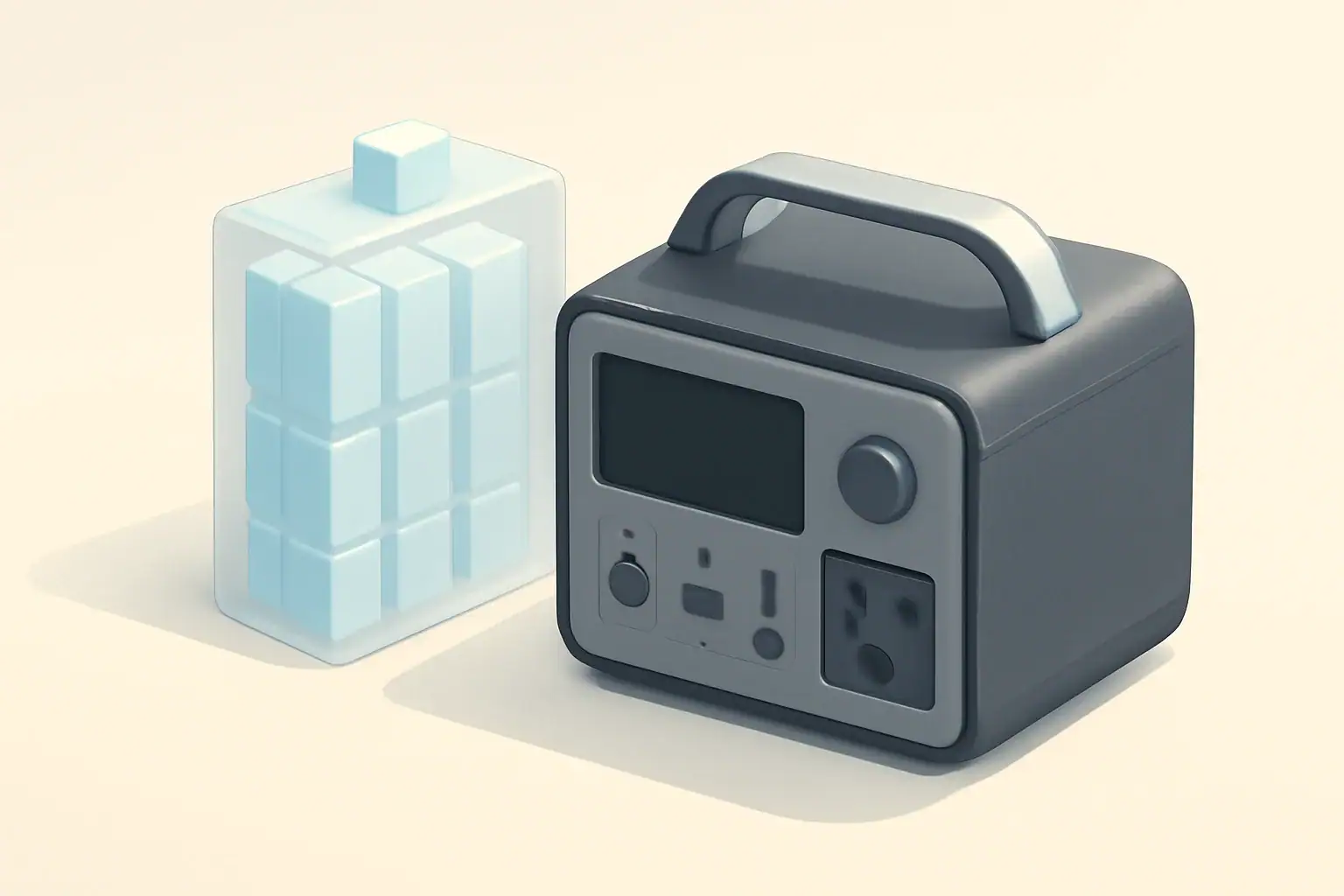
Isometric illustration of portable power station and internal battery cells

Why State of Charge on Portable Power Stations Is Not Exact

The battery percentage on a portable power station looks simple: 100% means full, 0% means empty. In reality, that number is an estimate based on internal measurements and calculations. Over time, this estimate can drift, so the state of charge (SOC) reading no longer matches the true amount of energy in the battery.

Understanding why SOC drifts helps explain common questions, such as:

  • Why the display might drop from 100% to 90% quickly, then slow down
  • Why a unit may shut off even though it still shows 5–10% remaining
  • Why the same battery seems to last different amounts of time between charges

This article explains how SOC is estimated in modern lithium-ion and LiFePO4 portable power stations, why readings drift, and what battery calibration really means.

What State of Charge (SOC) Actually Means

State of charge is a way to express how full a battery is relative to its usable capacity.

In basic terms:

  • 100% SOC: the battery is at its allowed upper charge limit
  • 0% SOC: the battery has reached its allowed lower discharge limit
  • 50% SOC: about half of the usable capacity is available

Important details:

  • SOC refers to usable capacity, not the absolute chemical limits of the cells.
  • Battery management systems (BMS) keep a safety margin at the top and bottom to protect the cells.
  • The percentage you see is already shaped by those safety limits and internal assumptions.

SOC vs. State of Health (SOH)

SOC is often confused with state of health (SOH).

  • SOC: how full the battery is right now.
  • SOH: how much capacity the battery can store compared to when it was new.

As SOH declines with age, 100% SOC can represent less total energy than it did when the battery was new. SOC may still read accurately as a percentage, even though runtime is shorter.

How Portable Power Stations Estimate SOC

Modern portable power stations use a combination of methods to estimate SOC. None of these can measure the exact number of remaining watt-hours directly, so the BMS relies on models and assumptions.

Method 1: Voltage-Based Estimation

The most basic method uses battery voltage. A charged lithium-ion or LiFePO4 battery sits at a higher voltage than a discharged one. The BMS compares the measured voltage to an internal lookup table that maps voltage to SOC.

However, voltage is affected by many factors:

  • Load current: high loads cause voltage sag
  • Temperature: cold batteries show lower voltage
  • Cell chemistry: different chemistries have different voltage curves
  • Rest time: voltage recovers after the load is removed

LiFePO4 batteries in particular have a very flat voltage curve over much of their SOC range. That means a small change in voltage may correspond to a large change in SOC, which makes pure voltage-based estimation unreliable.

Method 2: Coulomb Counting (Current Integration)

To improve accuracy, many systems use coulomb counting. The BMS measures current going in and out of the battery and integrates it over time to track the net charge.

Conceptually:

  • When charging, the BMS adds amp-hours (Ah) to the internal counter.
  • When discharging, it subtracts amp-hours from the counter.
  • The counter is referenced to a known full or empty point to express SOC as a percentage.

Coulomb counting works well over short periods, but:

  • Measurement errors accumulate over time.
  • Actual usable capacity changes with temperature, age, and discharge rate.
  • Self-discharge during storage may not be perfectly tracked.

Method 3: Hybrid Algorithms and Battery Models

Most portable power stations use a hybrid approach that combines coulomb counting, voltage measurements, temperature sensing, and predefined battery models.

Typical behavior:

  • During active use, SOC follows coulomb counting, adjusted for efficiency losses.
  • When the battery rests, the system compares resting voltage to its model and may correct the SOC estimate.
  • At well-defined points, such as a controlled full charge or low-voltage shutdown, the BMS sets reference points for 100% or 0% SOC.

These internal models are designed around expected behavior of lithium-ion or LiFePO4 cells, but every real battery deviates slightly from the model. Over many cycles, these deviations cause SOC errors unless the system is periodically recalibrated.

Why SOC and Battery Percentage Drift Over Time

SOC drift is the gradual mismatch between the displayed percentage and the true remaining capacity of the battery. This is normal and expected for all batteries that rely on estimation.

1. Measurement and Rounding Errors Add Up

The BMS measures current, voltage, and temperature at discrete intervals. Each measurement is subject to:

  • Sensor accuracy limits
  • Rounding inside the microcontroller
  • Sampling delays, especially under rapidly changing loads

Over dozens of cycles, even small errors in coulomb counting accumulate, especially if the battery is rarely taken to clear reference points like a full charge.

2. Capacity Changes with Age and Use

As a lithium-ion or LiFePO4 battery ages, its total usable capacity gradually decreases. However, the BMS’s internal model may still assume a higher capacity unless the firmware adapts or is recalibrated.

This leads to issues such as:

  • Battery reaching low-voltage cutoff before the display hits 0%
  • Unexpectedly short runtime at low SOC
  • Power station shutting down earlier than the percentage suggests

3. Temperature Effects

Temperature has a major influence on both voltage and effective capacity:

  • Cold temperatures reduce available capacity and lower the voltage curve.
  • High temperatures can temporarily increase capacity but accelerate aging.

If the BMS uses temperature-compensated models, it may still not perfectly match the real behavior of the particular cells. SOC estimated at one temperature may not align well when conditions change.

4. Self-Discharge and Storage

When a portable power station sits unused, the battery slowly self-discharges. The BMS itself consumes a small standby current, and connected devices in low-power modes may draw additional energy.

If the system does not fully track these small, continuous currents, SOC may be overestimated after long storage periods. Users may see:

  • Display still showing a high percentage after weeks or months
  • Rapid drop in SOC once power draw resumes

5. Irregular Charge and Discharge Patterns

Many users operate their power stations in partial cycles: topping up from 40% to 80%, or discharging only from 100% to 60% repeatedly. While this can be gentle on the battery, it provides fewer clear reference points for the SOC algorithm.

Over time, this can cause:

  • SOC staying “stuck” around certain ranges
  • Percentage suddenly jumping after an unusually deep discharge or full charge
  • Mismatch between the displayed percentage and expected runtime from experience

What Battery Calibration Really Means

Battery calibration in the context of portable power stations is about calibrating the SOC estimate, not changing anything inside the cells.

Calibration aligns the BMS’s internal model with the actual behavior of the battery pack by providing clear reference points.

Common Calibration Steps in Practice

Although specific procedures vary, many systems benefit from a periodic controlled cycle:

  1. Charge to 100%
    Allow the unit to charge until it reaches a stable full state and remains there for a while (often 1–2 hours after first reaching 100%). This lets the BMS confirm its top-of-charge reference.
  2. Discharge under a moderate load
    Use the power station at a moderate, continuous load (not extremely high or extremely low) down to a low SOC level or until it shuts off normally. This helps the BMS observe the full discharge curve.
  3. Recharge fully without interruption
    After shutdown, recharge to 100% again in one session if possible. The full cycle gives the BMS data points to adjust its estimates.

Some devices have built-in learning algorithms that automatically refine SOC over time without a deliberate calibration cycle. Others benefit from an intentional recalibration if you notice persistent inaccuracies.

What Calibration Cannot Fix

Calibration cannot:

  • Restore lost capacity from aging or heavy use
  • Change the battery’s chemistry or safety limits
  • Override low-temperature or high-temperature protections

It only improves how well the displayed percentage matches the real usable energy under typical conditions.

How Drift Appears in Everyday Use

SOC drift often shows up as specific behaviors that users notice when running appliances or charging devices from a portable power station.

Nonlinear Percentage Drop

A common observation is that the first 10–20% seems to drop quickly, then the percentage appears to move slowly through the middle, and then may drop quickly again near the bottom.

This nonlinearity comes from:

  • The shape of the voltage curve for lithium-ion and LiFePO4 chemistries
  • How the SOC algorithm smooths or averages readings
  • Different loads at different times (for example, starting a high-wattage appliance briefly)

Even with perfect calibration, SOC will not always decrease at a steady rate because power draw and internal efficiency are not constant.

Early Shutdown with Percentage Remaining

Another common concern is a power station shutting down with 5–15% still showing on the display. This usually indicates that:

  • The battery has reached its low-voltage cutoff under the current load.
  • Actual capacity is lower than assumed, often from age or temperature.
  • The SOC algorithm has drifted and is overestimating remaining energy.

After cooling or resting, the battery’s voltage may recover, and the display might still show a nonzero percentage, even though the BMS will not allow further discharge.

Different Runtime at the Same SOC

Users may notice that 50% SOC sometimes powers a device for several hours, and other times only for a short period. Factors include:

  • Load level: high wattage draws reduce effective capacity due to internal resistance and heat.
  • Temperature: cold reduces usable capacity, especially for lithium-ion chemistries.
  • Recent usage: a heavily loaded battery may experience more voltage sag at the same SOC.

SOC is a snapshot of remaining charge, not a guarantee of runtime. Runtime always depends on power draw and conditions.

Best Practices to Keep SOC Readings Reasonably Accurate

Some drift is inevitable, but you can help your portable power station maintain more reliable SOC estimates through your usage patterns.

Occasionally Run a Full Calibration Cycle

If the manufacturer’s guidance allows it, consider:

  • Charging fully to 100% until the charger clearly stops
  • Discharging to a low percentage or automatic shutdown with a moderate, steady load
  • Recharging to 100% in one uninterrupted session

Doing this a few times per year can give the BMS better data to align its internal model with reality.

Avoid Extreme Temperatures During Critical Measurements

If you want the most reliable reading:

  • Charge and discharge near room temperature when possible.
  • Avoid calibrating in very cold or very hot environments.
  • Let a cold or hot unit rest indoors before relying on the SOC reading.

Store at Moderate SOC and Check Periodically

For storage:

  • Many lithium-ion and LiFePO4 batteries prefer storage around 30–60% SOC.
  • If left unused for months, expect SOC to be less accurate due to self-discharge and standby loads.
  • Periodically power the unit on and top it up if needed.

Long-term storage at 100% or near 0% SOC can increase degradation, which in turn complicates accurate SOC estimation as the battery’s capacity changes.

Understand That SOC Is an Estimate, Not a Fuel Gauge

Unlike a tank of liquid fuel, a battery’s energy content is not directly measurable with a simple sensor. Treat SOC as an educated estimate that:

  • Is very helpful for planning
  • Will never be mathematically perfect
  • Can shift slightly as the BMS refines its model

Key Takeaways for Portable Power Station Users

Portable power stations rely on complex algorithms to display state of charge. Lithium-ion and LiFePO4 batteries change over time with use, temperature, and age, so some drift in SOC is normal.

By recognizing that SOC is an estimate, occasionally allowing full charge and controlled discharge cycles, and operating within reasonable temperatures, you help the battery management system stay better calibrated. This leads to more predictable runtimes and fewer surprises, even as the battery naturally ages and its true capacity gradually declines.

Frequently asked questions

Why does my power station drop from 100% to 90% quickly?

That behavior is usually caused by how the SOC estimate is calculated: initial voltage and coulomb-counting corrections, rounding, and the battery model can make the top percentiles move faster. A brief voltage sag under load or the BMS applying efficiency corrections can make the displayed percentage fall quickly at first and then stabilize.

Why can the unit shut off while the display still shows 5–15% remaining?

The BMS enforces a low-voltage cutoff to protect cells, and under real load the battery can reach that cutoff before the SOC estimate reaches 0%. This can be due to capacity loss from age, temperature-related capacity reduction, or SOC drift that overestimates remaining energy.

How often should I run a calibration cycle to reduce SOC drift?

For most users, performing a full charge→controlled discharge→full recharge cycle a few times per year is sufficient, or whenever you notice persistent inaccuracies. Follow the manufacturer’s guidance and avoid extreme temperatures during calibration for the best results.

Can calibration restore lost battery capacity?

No — calibration only improves the accuracy of the SOC estimate by aligning the BMS model to observed full and empty points. It cannot reverse capacity loss caused by age, cycling, or cell degradation.

Does temperature make SOC readings unreliable?

Yes. Temperature changes affect cell voltage and usable capacity, so SOC estimated at one temperature may not match performance at another. Avoid calibrating in very hot or cold conditions and expect shorter runtimes in cold environments.

LiFePO4 Charging Profile Explained (in Plain English)

Isometric illustration of power station charging

LiFePO4 (lithium iron phosphate) is a lithium‑ion battery chemistry commonly used in portable power stations. It behaves differently from lead‑acid and other lithium chemistries when it comes to voltages, charging stages, and temperature sensitivity.

Understanding the charging profile helps you charge safely, extend cycle life, and get predictable run times from your equipment.

A charging profile describes how voltage and current are controlled during charge. Most modern chargers use a CC‑CV approach: constant current (CC) followed by constant voltage (CV).

Key ideas:

  • CC (Constant Current): Charger supplies a steady current until the battery reaches a target voltage.
  • CV (Constant Voltage): Charger holds a target voltage while current gradually tapers down.
  • Charge termination: Charging ends when current falls below a threshold or a timer expires.

What LiFePO4 means for charging

Basic charging concepts in plain English

A charging profile describes how voltage and current are controlled during charge. Most modern chargers use a CC‑CV approach: constant current (CC) followed by constant voltage (CV).

Key ideas:

  • CC (Constant Current): Charger supplies a steady current until the battery reaches a target voltage.
  • CV (Constant Voltage): Charger holds a target voltage while current gradually tapers down.
  • Charge termination: Charging ends when current falls below a threshold or a timer expires.

LiFePO4 CC‑CV profile: what it looks like

LiFePO4 follows the CC‑CV pattern, but with different voltage targets and tolerances than other battery types. The battery accepts a high current in the CC phase and then the charger reduces current as the battery approaches the CV voltage.

Typical stages

  • Bulk/CC: Apply a steady charging current (often expressed as a fraction of capacity, e.g., 0.2C).
  • Absorption/CV: Hold the pack voltage at the recommended value while the current tapers.
  • Float: Rare for LiFePO4—most systems do not use a continuous float charge the way lead‑acid does.

LiFePO4 cells have nominal voltages near 3.2–3.3 volts per cell. Most packs are series configurations of 4 cells for 12.8V nominal, 8 cells for 25.6V nominal, etc.

Common voltage targets

  • Per cell full charge voltage: about 3.60–3.65 V.
  • 12.8V (4S) pack CV voltage: roughly 14.4–14.6 V.
  • 24–26V packs and higher scale similarly (multiply cell voltage by series cell count).

Charging current guidelines

  • Recommended charge current: often 0.2C to 0.5C (where C is the battery capacity). For a 100 Ah pack, 20–50 A.
  • Maximum charge current: some cells tolerate 1C, but pack design and manufacturer limits may be lower.
  • Slow charging (≤0.2C) reduces stress and can improve longevity.

How charge termination and balancing work

battery management system (BMS) LiFePO4 packs are usually protected by a battery management system (BMS). The BMS enforces safe voltages, balancing, and temperature limits.

Charge termination

Unlike lead‑acid, LiFePO4 charging is often terminated when the charge current falls to a low percentage of the CC current (for example 1–3% of C) while the pack is at CV voltage. Some chargers also use a timer.

Cell balancing

Cell balancing equalizes voltages across series cells. LiFePO4 is tolerant of imbalance, but balancing is still useful to maintain capacity and prevent overvoltage on individual cells.

Balancing can be passive (bleeding off a bit of charge from higher cells) or active. Many BMS units provide passive balancing during or after full charge.

BMS, protections, and temperature effects

The BMS is the gatekeeper. It prevents overcharge, overdischarge, overcurrent, and charging below safe temperatures. Relying on the BMS as part of your charging strategy is essential.

Temperature limitations

  • LiFePO4 should not be charged below approximately 0°C (32°F) unless the pack has a built‑in heater or the BMS allows low‑temperature charging—charging at subfreezing temperatures risks lithium plating and permanent damage.
  • High temperatures accelerate aging. Chargers and pack enclosures should avoid excessive heat during charge.

Typical BMS protections

  • Cell overvoltage lockout (stops charging if any cell exceeds safe voltage).
  • Low‑temperature charge inhibit.
  • Charge current and short‑circuit protection.
  • Balancing during or near full charge.

Charging from different sources

Portable power stations often receive charge from wall chargers (AC), car outlets (DC), or solar panels via MPPT controllers. Each source affects the charging profile in practice.

AC (wall) charging

AC chargers are usually designed to provide the CC‑CV profile appropriate for the pack voltage. They often integrate with the unit’s internal BMS and stop when charge termination conditions are met.

DC fast charging

DC charging can provide higher currents for faster charging. The pack and BMS must support the higher power. Fast charging increases heat and can shorten cycle life if used repeatedly at high rates.

Solar charging and MPPT

Solar inputs are variable. MPPT charge controllers try to supply the optimal current given the panel output and the battery’s charging stage. On cloudy days the charger may remain in CC longer or never reach CV.

When using solar:

  • Expect slower transitions to CV due to variable input.
  • MPPT controllers should be set or configured for LiFePO4 pack voltages.
  • Ensure the controller recognizes LiFePO4 so it doesn’t apply lead‑acid float behavior.

Practical tips for charging portable power stations with LiFePO4

  • Use chargers and controllers that support LiFePO4 chemistry and the pack voltage target.
  • Charge at conservative currents (0.2–0.5C) to balance speed and longevity.
  • Avoid charging below freezing unless the BMS and pack include heating or cold‑charge capabilities.
  • Avoid continuous float charging; LiFePO4 does not need float like lead‑acid does.
  • Monitor pack temperature during fast charging and reduce current if overheating occurs.
  • Allow the charger to finish the CV taper — stopping partway leaves the pack with less stored energy and can increase imbalance over many cycles.

How long will charging take?

Estimate charging time roughly with this simple formula: time (hours) = usable capacity (Wh) ÷ input power (W). For a capacity‑based estimate use time (hours) = capacity (Ah) ÷ charge current (A).

Example: a 100 Ah 12.8 V pack at 0.5C (50 A) would go from near empty to CV in about 2 hours, plus additional time for the taper in CV stage.

Common myths and clarifications

  • Myth: LiFePO4 needs a float charge. Fact: LiFePO4 has low self‑discharge and doesn’t require continuous float charging; a periodic top‑up is sufficient.
  • Myth: All chargers for lithium batteries are the same. Fact: Voltage targets and charge termination differ across lithium chemistries — use a charger set for LiFePO4 voltages.
  • Myth: Faster is always better. Fact: High‑rate charging stresses cells and raises temperature; moderate rates prolong life.

Storage and long‑term care

For long‑term storage keep LiFePO4 packs at a partial state of charge, typically around 30–50% SOC. This minimizes calendar aging while allowing for BMS monitoring and occasional balancing.

LiFePO4 self‑discharge is low, so infrequent topping‑up is usually adequate. Periodically check voltage and cycle if necessary to maintain health.

Frequently asked quick questions

Is float charging safe for LiFePO4?

Continuous float is unnecessary and generally not recommended. If float is used, it must be at an appropriate low voltage tailored for LiFePO4 and monitored by the BMS.

Can I use a lead‑acid charger?

Not directly. Lead‑acid chargers typically use higher CV voltages and float schemes that are inappropriate for LiFePO4. Use a charger configured for LiFePO4 or programmable to correct voltage/current.

What happens if a LiFePO4 cell exceeds CV voltage?

The BMS should prevent overvoltage by cutting charge or disconnecting the pack. Repeated overvoltage on any cell shortens life and can trigger safety mechanisms.

Is cell balancing required?

Balancing is recommended to maintain capacity and prevent individual cell overvoltage. LiFePO4 tolerates imbalance well, but regular balancing extends useful life over many cycles.

Key takeaways

LiFePO4 charging uses a CC‑CV profile with lower voltage targets than many other battery types. Proper voltage, controlled current, BMS protections, and attention to temperature are the main factors that keep charging safe and maximize battery life.

Follow manufacturer recommendations for pack voltage and charge current, avoid charging in freezing conditions unless designed for it, and prefer chargers or MPPT controllers that explicitly support LiFePO4 chemistry.

Frequently asked questions

What is the correct CV voltage for a 12.8 V (4S) LiFePO4 charging profile?

A typical CV target for a 12.8 V (4S) LiFePO4 pack is about 14.4–14.6 V (approximately 3.60–3.65 V per cell). Always confirm the exact value with the pack manufacturer or BMS documentation because tolerances and recommended setpoints can vary by design.

How should I choose the charging current for a LiFePO4 pack?

Set the charge current relative to capacity; common routine rates are 0.2C–0.5C (for example, 20–50 A on a 100 Ah pack). Some cells and packs tolerate up to 1C, but using lower currents (≤0.2C) reduces stress and typically extends cycle life.

Can I leave a LiFePO4 battery on float charge long term?

Continuous float charging is generally unnecessary and not recommended for LiFePO4 packs. If float is required by a specific system, it must use a low, LiFePO4‑appropriate voltage and be supervised by the BMS to avoid overcharge and cell imbalance.

How does temperature influence the LiFePO4 charging profile?

Do not charge LiFePO4 below about 0°C unless the pack includes a heater or the BMS explicitly allows cold charging, because low‑temperature charging risks lithium plating. High temperatures accelerate aging and can trigger BMS limits, so monitor temperature and reduce charge current if the pack overheats.

Is cell balancing necessary for LiFePO4 packs, and when does it occur?

Cell balancing is recommended to keep series cells within safe voltage differences and preserve usable capacity over many cycles. Most BMS units perform passive balancing near or after the CV stage; regular balancing prevents small imbalances from growing and risking individual cell overvoltage.