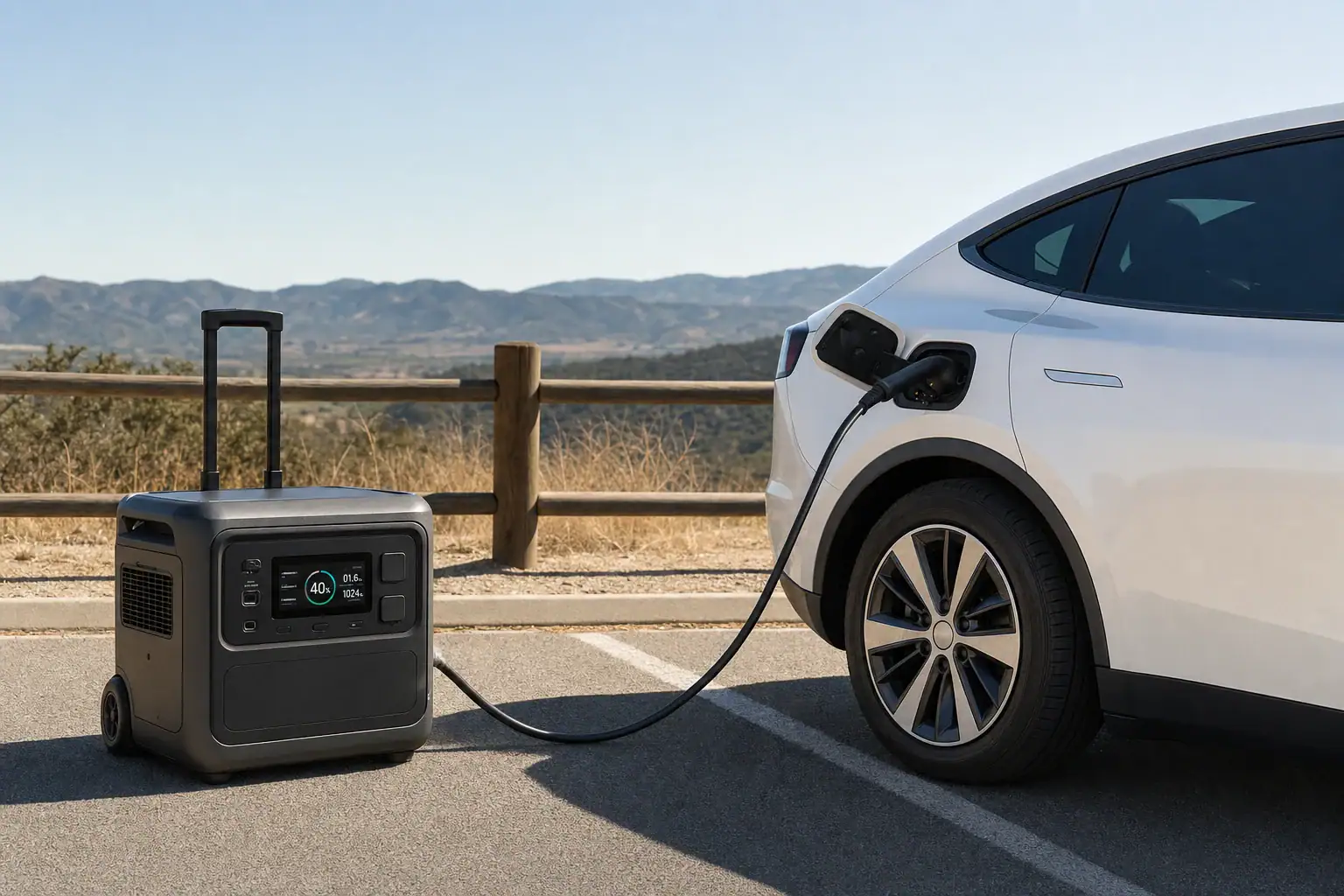
Are Portable Power Stations Allowed Indoors?

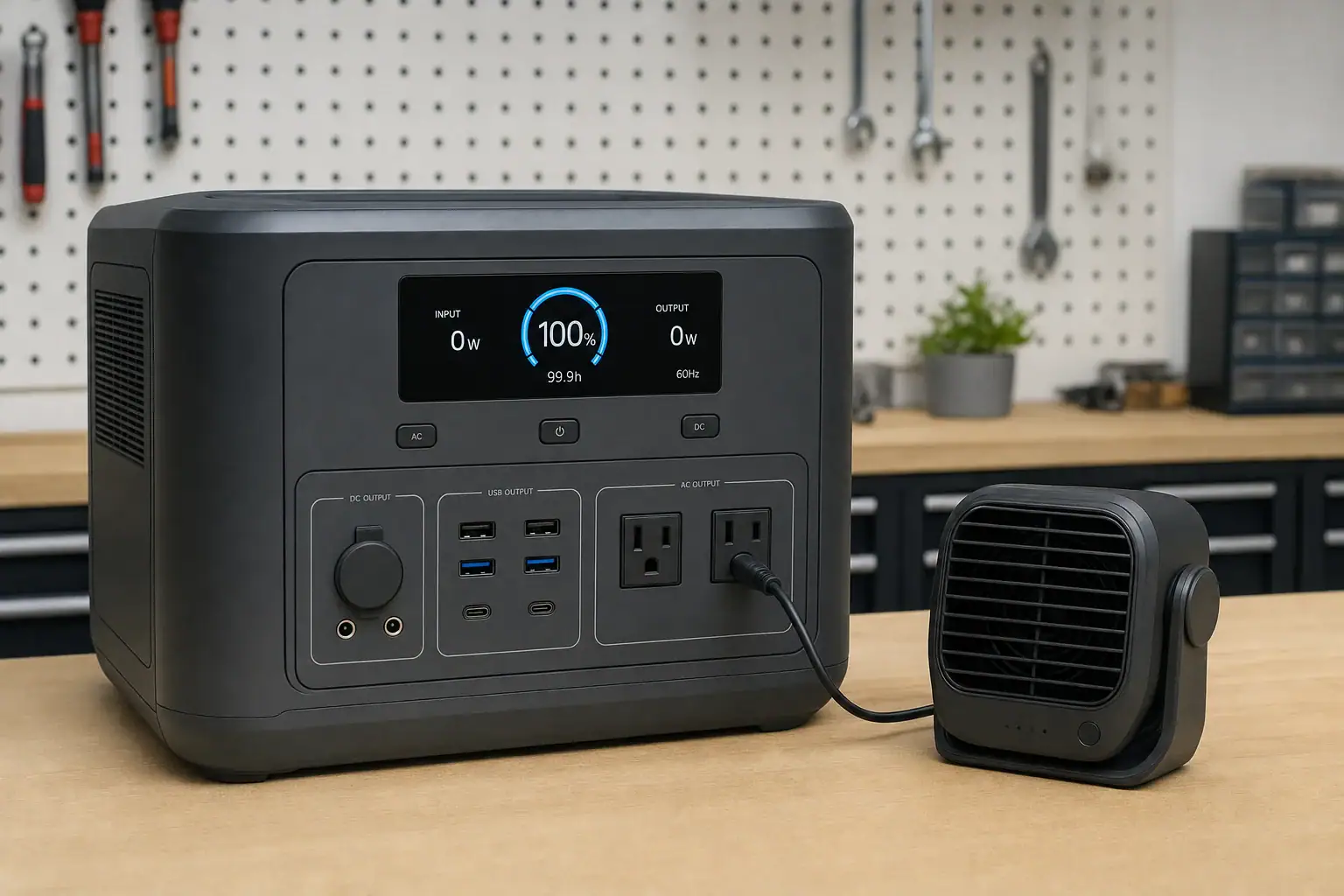
Portable power station used safely indoors with proper clearance

Portable power stations are generally allowed indoors as long as they are battery-based units with no fuel-burning engine and are used within their safety limits. Many people rely on them for backup power, off-grid work, and charging electronics where wall outlets are not available. Understanding indoor use rules helps you avoid fire hazards, overloads, and ventilation problems.

When people search terms like “indoor safe power station,” “battery generator inside,” “surge watts limits,” or “runtime for fridge,” they are usually asking if these devices can run safely in bedrooms, apartments, or offices. The short answer is yes for modern battery power stations, but no for gasoline or propane generators because of carbon monoxide. The details come down to wattage, ventilation, heat buildup, and what you plug in.

This guide explains how portable power stations work indoors, what loads they can realistically handle, how to spot misuse, and which specs matter most so you can choose and operate one safely in any room.

What It Means To Use a Portable Power Station Indoors and Why It Matters

Using a portable power station indoors means operating a self-contained battery power unit inside an enclosed space such as a house, apartment, RV, office, or workshop. These devices store energy in a rechargeable battery and provide AC outlets and DC ports for running or charging devices without a wall outlet.

Indoor use matters because enclosed spaces change the risk profile. There is less airflow, more flammable materials, and closer contact with people, pets, and sensitive electronics. While battery-based power stations do not emit exhaust fumes like fuel generators, they can still overheat, be overloaded, or be used in ways that increase fire and shock risk.

Indoor suitability depends on:

  • Power source type – Battery power stations are generally indoor-safe; engine-driven generators are not.
  • Electrical load – How many watts you draw and for how long affects heat, noise, and runtime.
  • Environment – Temperature, humidity, and available airflow around the unit.
  • User behavior – Where the device sits, how it is plugged in, and whether limits are respected.

Understanding these factors helps you decide what is safe to run in a bedroom versus a garage, and how to plan for outages without turning your power station into a hazard.

Key Concepts: How Portable Power Stations Work Indoors

Portable power stations are essentially large rechargeable batteries with built-in electronics that convert stored energy into usable power for your devices. Knowing the core concepts makes it easier to judge whether indoor use is safe and appropriate.

Battery chemistry and capacity

Most modern power stations use either lithium-ion (often NMC) or lithium iron phosphate (LiFePO4) batteries. Capacity is usually expressed in watt-hours (Wh), which describes how much energy is stored. For example, a 500 Wh unit can theoretically supply 500 watts for 1 hour, or 100 watts for 5 hours, before losses.

Indoors, capacity determines how long you can run essentials like lights, routers, laptops, or a CPAP machine without recharging. Larger capacities support more devices but are heavier and may produce more heat under high loads.

Inverter output and surge handling

The inverter converts the battery’s DC power to AC power similar to a household outlet. It has two important ratings:

  • Continuous output (watts) – The power it can supply steadily, such as 500 W or 1500 W.
  • Surge output (peak watts) – Short bursts above the continuous rating to start devices with motors or compressors.

Indoors, continuous output determines what you can run at the same time (for example, laptop + TV + fan), while surge output determines whether appliances like small refrigerators or power tools will start without tripping protection.

AC and DC ports

Power stations typically provide:

  • AC outlets for standard plugs.
  • USB-A and USB-C ports for phones, tablets, and laptops.
  • 12 V DC ports (car-style) for certain appliances.

Using DC ports where possible is more efficient and produces less waste heat, which is beneficial in enclosed indoor spaces.

Charging methods and indoor considerations

Common charging inputs include wall AC, car 12 V, and solar panels. Indoors, wall charging is most common. Charging generates heat, so units should not be covered or pushed into tight cabinets while fast charging. High input wattage (for example, 300–800 W) can warm the unit quickly, especially in small rooms.

Built-in protections

Quality power stations include protections against overcurrent, overvoltage, short circuits, overheating, and overcharging. These are essential for indoor use where a failure could damage nearby property. However, protections are not a substitute for proper placement, ventilation, and respecting ratings.

ConceptTypical ExampleIndoor Impact
Battery capacity500–1500 WhDetermines runtime for lights, router, and small appliances
Continuous AC output300–1500 WLimits how many devices you can run at once
Surge output600–3000 WAffects ability to start fridges, pumps, or tools
AC charging input100–800 WHigher input = faster charging and more heat
USB-C PD output60–140 WEfficient laptop charging with less heat and noise
Example values for illustration.

Indoor Use Examples: What You Can Safely Power

Real-world examples make it easier to see how portable power stations fit into everyday indoor scenarios. The key is matching your devices’ wattage and runtime needs to the unit’s capacity and output ratings.

Quiet backup in a bedroom or home office

In a bedroom or office, people often want to keep critical low-wattage devices running during an outage:

  • Wi-Fi router and modem (10–30 W total)
  • Laptop (30–90 W depending on use)
  • Phone chargers (5–20 W each)
  • LED desk lamp or bedside lamp (5–15 W)
  • CPAP machine without heated humidifier (30–60 W)

A mid-sized power station can often run these loads quietly overnight. Because the wattage is low, heat output is modest, making this scenario well-suited to indoor use as long as the unit has some open space around it.

Living room entertainment and small appliances

In a living room, common loads include:

  • Television (60–150 W)
  • Streaming device or game console (15–200 W depending on model and usage)
  • Soundbar or small speakers (20–50 W)
  • LED floor lamp (10–25 W)

These can typically be powered safely indoors as long as you stay below the continuous watt rating. The main concern is not overloading the unit or daisy-chaining too many power strips, which can create messy wiring and tripping hazards.

Kitchen essentials during an outage

Kitchen appliances draw more power and require more attention to surge watts:

  • Refrigerator or mini-fridge (50–150 W running, much higher surge)
  • Coffee maker (600–1200 W while heating)
  • Microwave (700–1200 W while cooking)
  • Blender (300–1000 W depending on model)

Running a refrigerator indoors from a power station is common, but you must ensure surge capacity is sufficient to start the compressor. High-draw appliances like microwaves and coffee makers may be used briefly if the inverter rating allows it, but not at the same time as other heavy loads.

RV, camper, and small cabin use

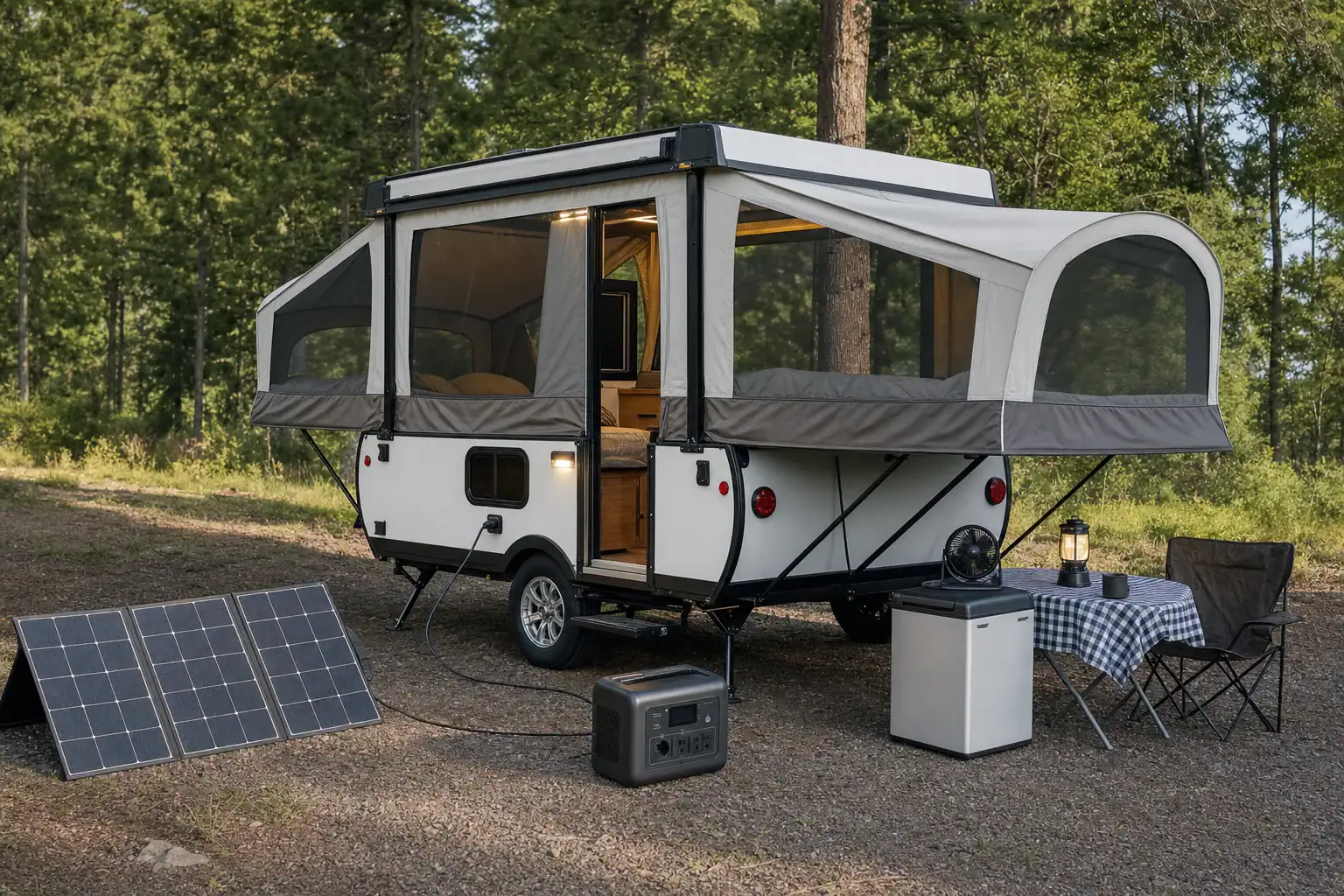
In RVs and small cabins, portable power stations often supplement or replace built-in systems. Typical indoor loads include lights, fans, device charging, and sometimes a small induction cooktop or electric kettle for short periods. Because these spaces are compact, good ventilation and avoiding placing the unit near bedding or curtains is especially important.

Workshops and hobby rooms

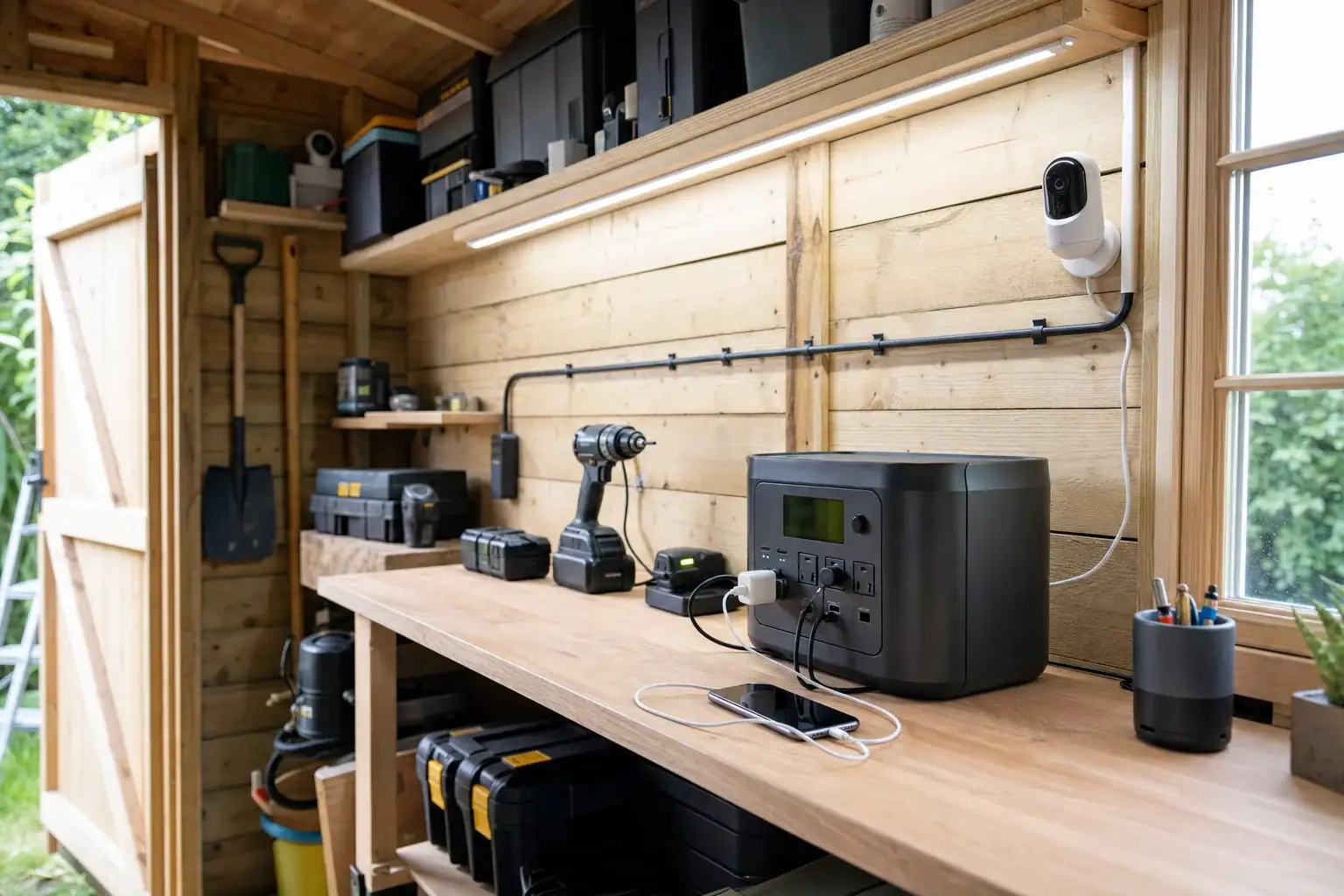
Indoors, power stations can run tools like soldering irons, low-wattage power tools, or 3D printers. The main constraints are continuous wattage and the duty cycle of the tool. Long, high-load sessions in a small room can warm both the unit and the room itself; leaving extra clearance around vents helps avoid thermal throttling or shutdowns.

Common Indoor Use Mistakes and Warning Signs

Most portable power stations are designed with indoor use in mind, but misuse can still lead to nuisance shutdowns or, in the worst case, safety issues. Recognizing common mistakes and early warning signs helps you correct problems before they escalate.

Using fuel generators indoors by mistake

One of the most dangerous errors is confusing a battery power station with a fuel-powered generator. Any device that burns gasoline, diesel, or propane must remain outdoors because of carbon monoxide and exhaust fumes. Only fully enclosed battery power stations with no exhaust are appropriate for indoor use.

Overloading the inverter

Plugging in too many devices, or a single device that exceeds the inverter’s continuous output rating, can cause:

  • Frequent shutdowns when high-wattage appliances start.
  • Warning icons or overload messages on the display.
  • Warm cables and power strips as they carry more current than intended.

If you see the lights flicker on connected devices or the unit shuts off when a motor starts, you are likely at or above the surge limit. Reduce the load or run high-draw appliances one at a time.

Poor placement and blocked ventilation

Placing the unit in a tight cabinet, under bedding, or pressed against a wall can block airflow. Warning signs include:

  • Loud or constantly running cooling fans.
  • Hot surfaces around vents or on the case.
  • Thermal shutdowns under moderate loads.

Always allow open space around intake and exhaust vents, especially during charging or when running near the upper wattage limit.

Stacking items on top of the unit

Stacking books, clothing, or electronics on top of a power station can trap heat and increase fire risk. It also raises the chance of spills if drinks are placed nearby. Indoors, keep the top and sides clear and avoid using the unit as a table or shelf.

Improper extension cord and power strip use

Using cheap, undersized extension cords or daisy-chaining power strips is a common indoor mistake. Symptoms include warm cords, discolored plugs, or intermittent power. Use properly rated extension cords and avoid creating a web of adapters and splitters that is difficult to inspect or unplug quickly.

Ignoring humidity and condensation

Running or charging a power station in damp basements, bathrooms, or near open windows during rain can introduce moisture. Condensation on ports or casing is a warning sign. Power electronics and moisture do not mix; move the unit to a dry, stable environment before use.

Indoor Safety Basics for Portable Power Stations

Safe indoor operation comes down to a few high-level practices: correct placement, appropriate loads, and respect for environmental limits. These basics apply regardless of battery chemistry or capacity.

Placement and clearance

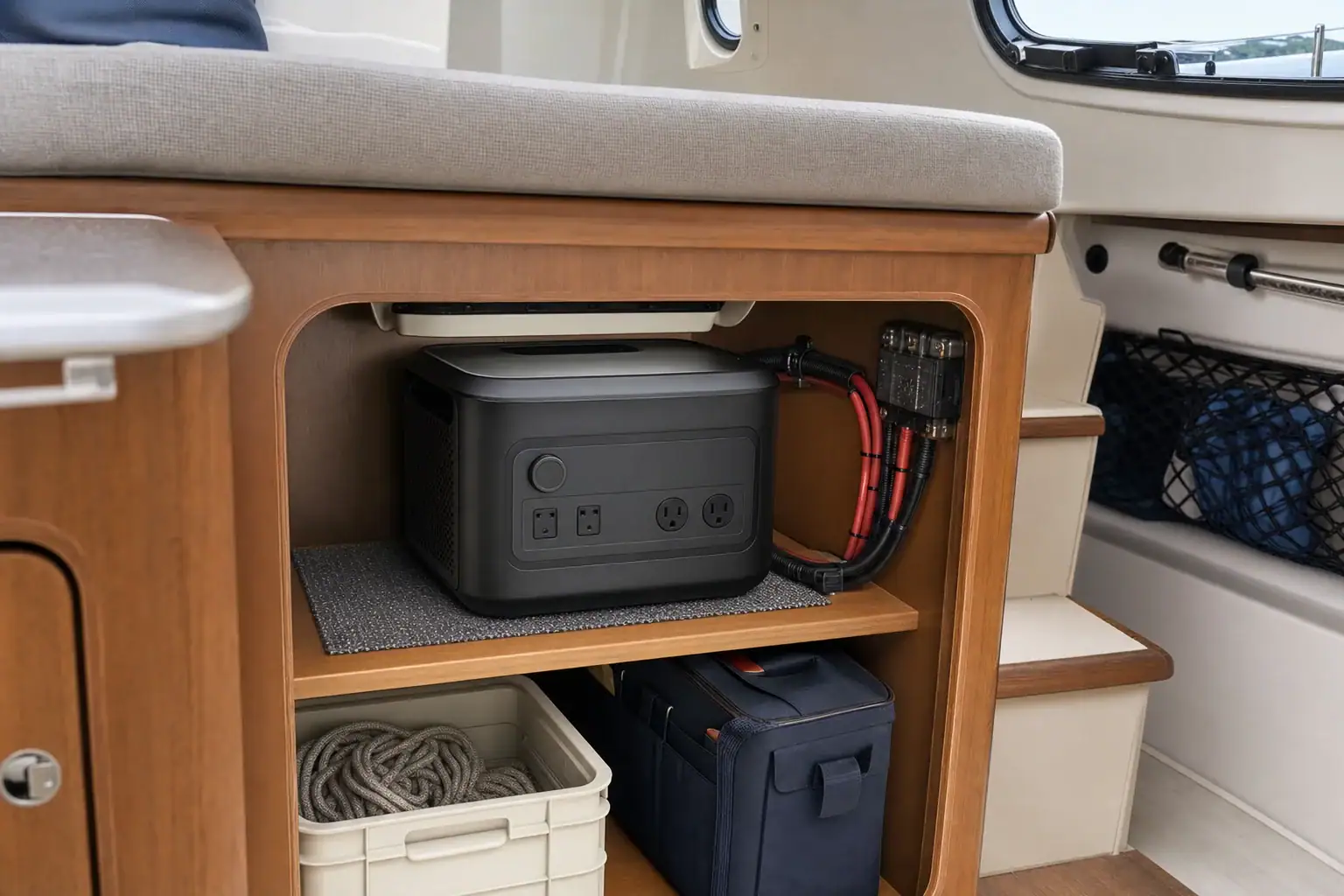
Indoors, place the power station on a stable, flat, non-flammable surface such as a floor or sturdy shelf. Maintain clear space around all sides, especially near cooling vents. Avoid carpets with long fibers that can obstruct airflow or collect dust inside vents over time.

Ventilation and temperature

Even though power stations do not produce exhaust, they do generate heat. Operate them in rooms within the manufacturer’s recommended temperature range, typically around typical indoor temperatures. Avoid direct sunlight, proximity to heaters, or enclosed cabinets. If the room feels stuffy or hot, improve airflow by opening doors or using a fan, but do not blow dust directly into vents.

Load management and device selection

Indoors, prioritize essential and low-wattage loads. Use LED lighting, efficient electronics, and DC outputs when possible. For high-draw appliances like space heaters, hair dryers, or large microwaves, consider whether the power station is the right tool at all; many of these loads can quickly drain the battery and stress the inverter.

Cable routing and trip hazards

Running cords across walkways or under rugs is risky. Indoors, position the power station close enough to devices that cords can run along walls or behind furniture. Keep the unit where you can easily access the power button and display without stepping over cables.

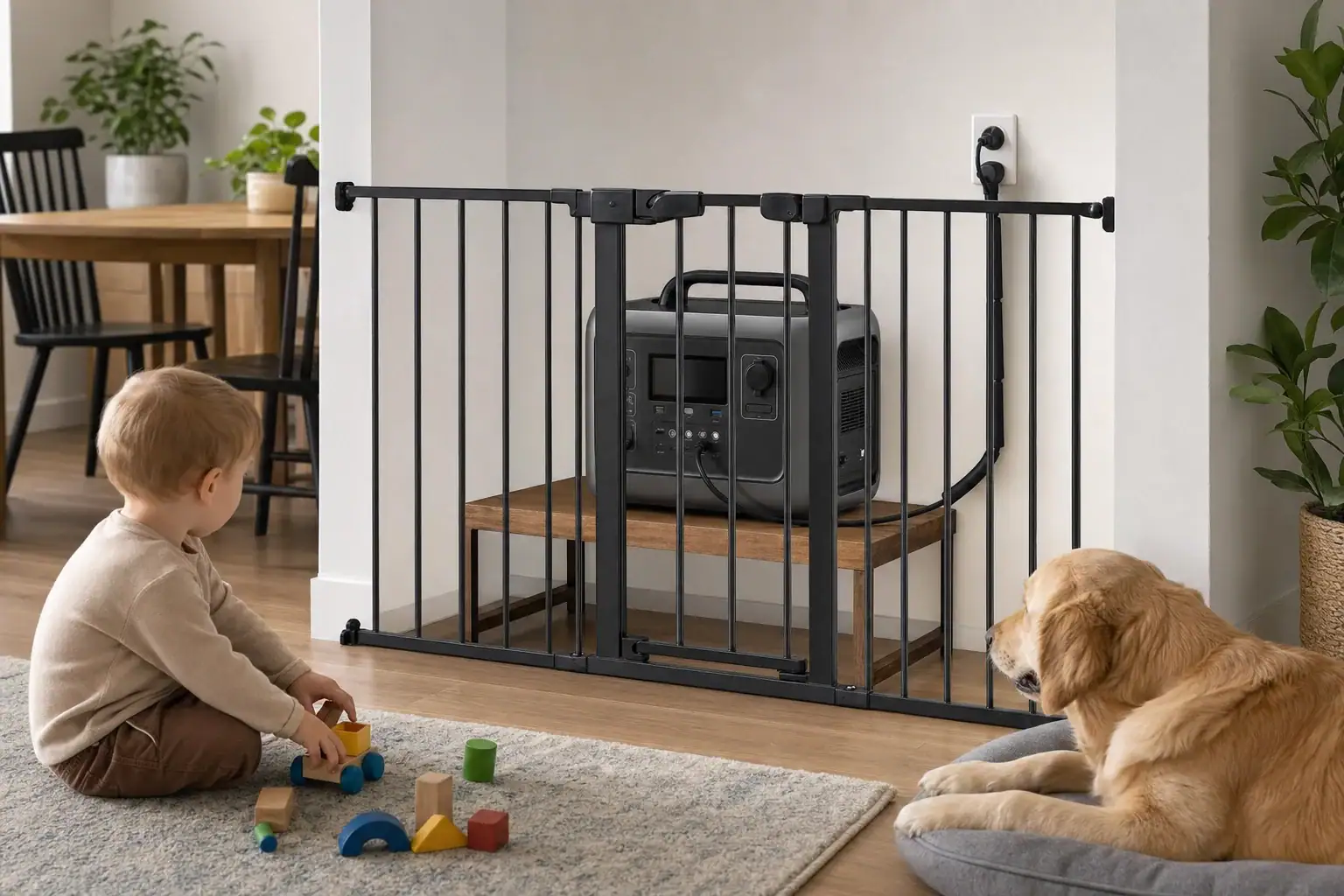
Child and pet safety

In homes with children or pets, avoid placing the power station on high shelves that could be pulled down by cords. Use outlet covers where appropriate and discourage tampering with buttons and ports. Some units have locking or eco modes that can reduce accidental activation.

Electrical system boundaries

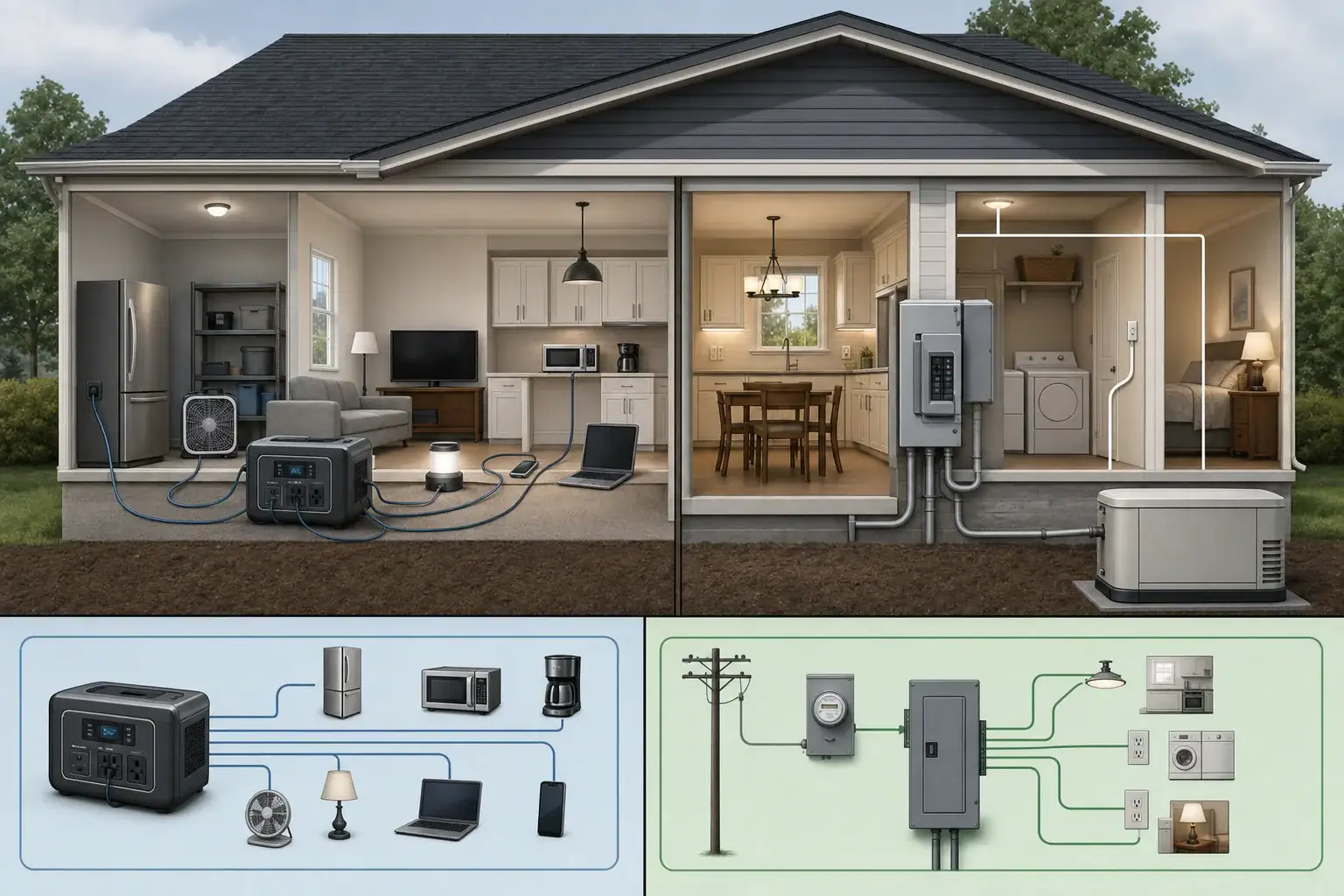
Do not attempt to wire a portable power station directly into household circuits or breaker panels. Backfeeding a home’s wiring without proper equipment and permits is dangerous and may be illegal. If you want a whole-home backup solution, consult a qualified electrician for appropriate options.

Safety AreaGood Indoor PracticeRisk if Ignored
PlacementFlat, stable, open surfaceTipping, blocked vents, overheating
Load limitsStay below continuous and surge ratingsShutdowns, tripped protection, damaged devices
CablingShort, rated cords routed along wallsTrips, warm cords, loose connections
EnvironmentDry, moderate temperature roomCondensation, corrosion, thermal stress
SupervisionAccessible, periodically checkedUndetected faults or overheating
Example values for illustration.

Related guides: Portable Power Stations for ApartmentsPortable Power Station Buying GuideIndoor Use Safety: Ventilation, Heat, and Fire-Prevention Basics

Indoor Storage, Charging, and Long-Term Care

How you store and maintain a portable power station indoors has a direct impact on safety, lifespan, and performance. Treat it as both a power appliance and an energy storage device.

Ideal indoor storage conditions

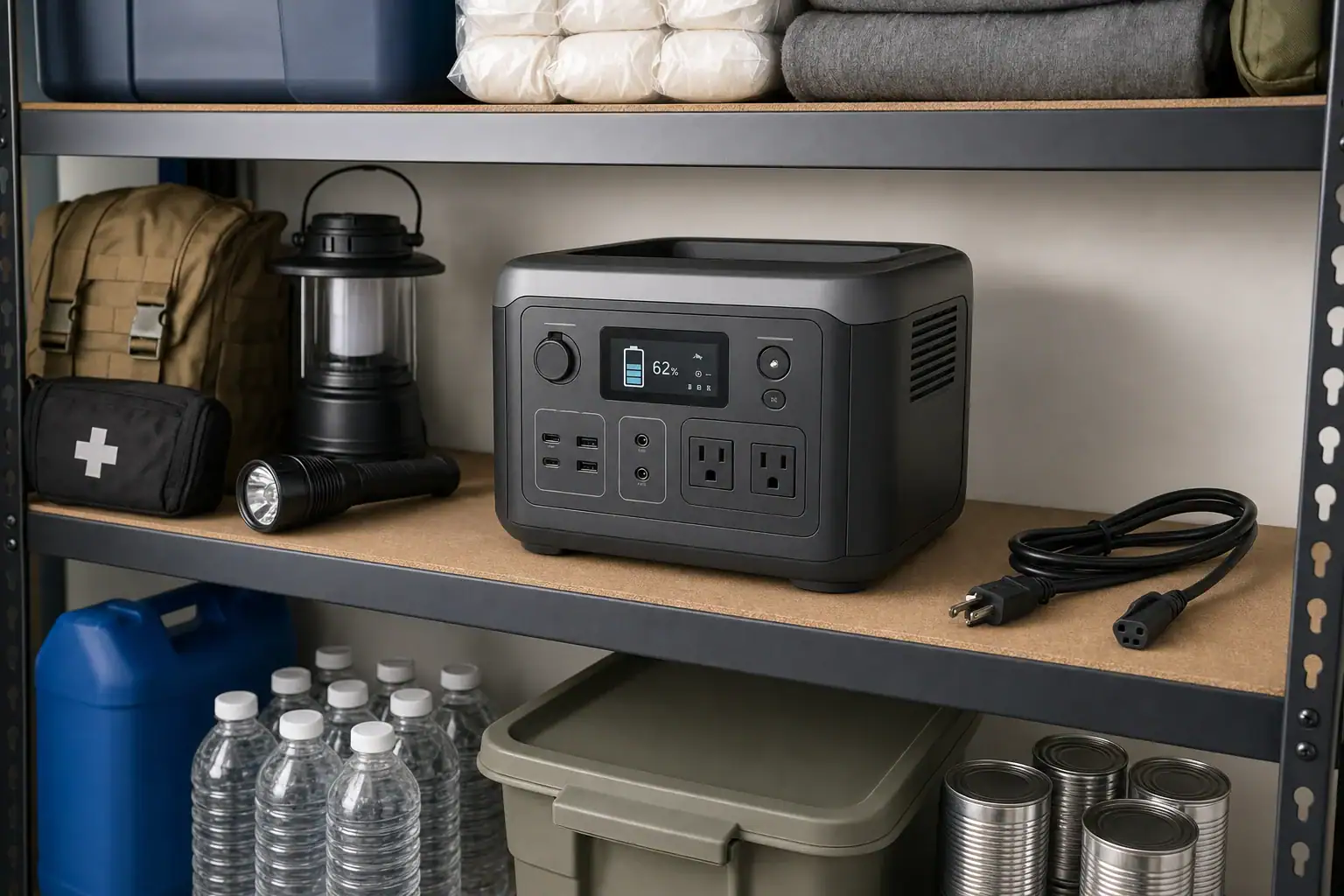
For long-term storage, choose a cool, dry, and well-ventilated indoor location away from direct sunlight and heat sources. Avoid attics that experience extreme temperatures or damp basements. A closet or interior room with stable temperatures is usually best.

Store the unit where it will not be buried under boxes or clothing. Easy access encourages regular checks and prevents accidental damage.

State of charge for storage

Most lithium-based batteries prefer being stored partially charged rather than at 0% or 100%. Many manufacturers recommend a mid-range charge level. Indoors, you can conveniently top up the battery every few months to maintain this range and compensate for natural self-discharge.

Indoor charging habits

Charging indoors is normal, but a few habits improve safety:

  • Place the unit on a hard, non-flammable surface while charging.
  • Avoid covering the unit with blankets, papers, or clothing.
  • Do not charge in cramped cabinets or tightly packed shelves.
  • Unplug from the wall once charging is complete if you will not use it for a while.

Monitor the first few full charge cycles in a new environment to understand how warm the unit becomes and how long it takes.

Periodic inspection and cleaning

Indoors, dust accumulation is a common issue. Every few months, visually inspect the unit:

  • Check vents for dust buildup and gently clean around them without forcing debris inside.
  • Inspect cables and plugs for discoloration, cracks, or loose connections.
  • Confirm that buttons and the display operate normally.

If you notice swelling, unusual odors, or visible damage to the casing or ports, discontinue use and contact the manufacturer or a qualified professional.

Rotation and readiness for outages

To ensure your power station is ready for indoor emergency use, periodically discharge it under light to moderate loads (for example, powering a laptop and lamp) and then recharge it. This keeps the battery active and familiarizes you with real-world runtimes so you can plan which devices to prioritize during an outage.

End-of-life considerations

When a power station no longer holds useful charge, do not dispose of it with household trash. Most regions require special handling for large lithium batteries. Store the unit in a safe indoor location until it can be taken to an appropriate recycling or collection point.

Practical Takeaways and Indoor “Specs to Look For” Checklist

Portable power stations can be used indoors safely when they are true battery-based units, placed correctly, and operated within their limits. Think of them as large, smart batteries rather than indoor generators. Match your expected loads to the unit’s capacity and inverter ratings, give it room to breathe, and treat it with the same respect you would give to any high-energy electrical device.

For bedrooms and offices, focus on quiet operation, modest wattage, and long runtimes for small electronics. For kitchens and workshops, pay closer attention to surge watts and continuous output, and run high-draw appliances one at a time. Store and charge the unit in a stable, dry indoor environment, and periodically test it so you know exactly what it can handle before you need it in an emergency.

Specs to look for

  • Battery capacity (Wh) – Look for a capacity that comfortably covers your critical loads for several hours (for example, 300–1500 Wh). Higher capacity means longer indoor runtime but more weight and size.
  • Continuous AC output (W) – Choose a rating that exceeds your expected simultaneous indoor load (for example, 300–2000 W). This prevents overloads when multiple devices are running.
  • Surge/peak output (W) – Ensure surge capacity is at least 1.5–2 times the continuous rating for starting fridges, pumps, or tools. Adequate surge helps avoid nuisance shutdowns when motors kick on.
  • AC charging input (W) – A moderate to high input (for example, 100–800 W) enables faster indoor recharging between outages. Higher input shortens downtime but can generate more heat, so ventilation space matters.
  • USB-C PD output (W) – Look for at least one high-wattage USB-C port (for example, 60–140 W) for efficient laptop and device charging indoors without extra adapters.
  • Noise level and cooling design – Fan-cooled units should remain relatively quiet under typical indoor loads. A well-designed airflow path and multiple vents help manage heat in small rooms.
  • Display and monitoring – A clear screen showing input, output, and remaining runtime helps you manage indoor loads and avoid surprises during outages.
  • Port layout and quantity – Sufficient AC outlets and USB ports reduce the need for extra power strips indoors, simplifying cable management and lowering trip and overload risks.
  • Operating temperature range – A range that covers typical indoor conditions ensures reliable performance in bedrooms, living rooms, and utility rooms throughout the year.
  • Safety certifications and protections – Look for built-in protections (overcurrent, overvoltage, short circuit, overtemperature) and recognized safety markings to support safe long-term indoor use.

Frequently asked questions

Are portable power stations safe to use inside apartments and homes?

Battery-based portable power stations without combustion engines are generally safe for indoor use when you follow the manufacturer’s guidelines. Keep vents clear, avoid damp locations, and stay within the unit’s continuous and surge wattage limits to reduce risk of overheating or electrical faults.

What specifications and features should I prioritize when choosing a power station for indoor use?

Prioritize battery capacity (Wh) for runtime, continuous AC output and surge rating for the loads you plan to run, and AC charging input for recharge speed. Also consider USB-C PD ports, cooling/noise characteristics, port layout, and safety certifications to ensure reliable and convenient indoor operation.

What happens if I overload the inverter by plugging in too many appliances?

Overloading typically triggers the station’s protection system, causing shutdowns, warning messages, or tripped circuits; cables and power strips may become warm under sustained overload. To avoid repeated trips or potential damage, reduce the simultaneous load and run high-draw devices one at a time.

How should I position and ventilate a power station when using it indoors?

Place the unit on a flat, non-flammable surface with several inches of clearance around intake and exhaust vents and avoid enclosed cabinets or stacking items on it. If the room is warm or the unit gets hot during charging, improve room airflow but don’t direct dusty air into the vents.

Is it safe to backfeed my home’s wiring with a portable power station?

No. Connecting a portable power station directly to household circuits or a breaker panel without a proper transfer switch and professional installation can be dangerous and may be illegal. Consult a qualified electrician for whole-home backup options and to prevent risks to utility workers and equipment.

How should I store and maintain a power station indoors when it’s not in use?

Store it in a cool, dry, well-ventilated location away from direct heat and moisture, and keep it accessible for periodic checks. Maintain a mid-range state of charge, exercise the battery occasionally, and inspect vents, cables, and the case for damage or dust buildup.

Do Portable Power Stations Lose Charge Over Time?

Portable power station in storage showing remaining battery charge

Portable power stations do lose charge over time, even when they are turned off and not in use. This gradual loss, called self-discharge, is normal for lithium batteries and affects runtime, backup reliability, and long-term battery health. If you depend on a power station for camping, off-grid work, or emergency backup, understanding self-discharge, idle drain, and battery aging helps you avoid unpleasant surprises.

People often notice their unit’s battery percentage dropping in storage, slower charging, or shorter runtime compared with when it was new. These changes are usually linked to battery chemistry, charge cycles, and storage conditions, not a single defect. Knowing how many watt-hours you actually have available, what standby power draw looks like, and how often to top up the battery can dramatically extend useful life.

This guide explains why charge loss happens, how fast it is likely to occur, what’s normal versus a problem, and what settings and specs matter when you choose or maintain a portable power station.

Do Portable Power Stations Lose Charge Over Time and Why It Matters

Portable power stations lose charge over time in two main ways: natural self-discharge of the battery cells and small, continuous power draw from internal electronics. On top of that, all lithium batteries slowly lose capacity over years of use and storage, even if they are rarely discharged. Together, these factors mean a unit left at 100% today will not stay at 100% forever.

This matters because many people buy portable power stations as emergency backup or for occasional camping trips. If the battery has self-discharged or aged significantly, the displayed state of charge (SOC) may not match the actual energy available. That can shorten runtime for devices like CPAP machines, fridges, or laptops when you need them most.

Understanding charge loss over time helps you:

  • Set realistic expectations for storage and standby use.
  • Decide how often to recharge in the closet, garage, or RV.
  • Protect battery health with better charging and storage habits.
  • Evaluate specs like battery chemistry, cycle life, and warranty more confidently.

Instead of thinking in terms of “full or empty,” it is better to think in terms of gradual change: small monthly losses from storage and long-term reduction in total capacity over years.

Key Battery Concepts: Self-Discharge, Idle Drain, and Aging

To understand why portable power stations lose charge, it helps to separate three related but different concepts: self-discharge, idle or standby drain, and long-term capacity fade (aging). Each affects how much usable energy you have at different times.

Self-discharge is the natural chemical loss of charge inside the battery cells, even when nothing is connected. Lithium-based batteries typically have a relatively low self-discharge rate compared with older chemistries, but they still lose a small percentage of charge per month. The rate depends on cell type, temperature, and how close the battery is to full charge.

Idle or standby drain comes from the electronics in the power station itself. The battery management system (BMS), display, wireless connectivity (if present), and internal converters can all draw a small amount of power even when the AC or DC outputs are switched off. Some units have very low standby consumption; others may drop several percentage points per month or faster.

Battery aging (capacity fade) is the gradual loss of maximum capacity over months and years. Even if you keep the battery at a perfect storage level and rarely use it, chemical changes still reduce the total watt-hours it can hold. Aging is accelerated by high temperatures, frequent deep discharges, and keeping the battery at 100% charge for long periods.

These processes interact. For example, a warmer battery self-discharges faster and also ages faster. A high-capacity pack with a power-hungry display may lose more percentage points per week in standby than a simpler design, even if the underlying cell chemistry is similar.

When you see the battery percentage drop during storage, it is usually a mix of natural self-discharge plus idle drain. When you notice the power station no longer runs your fridge as long as it did two or three years ago, that is usually capacity fade.

Example values for illustration.
Concept What It Means Typical Example Range What You Notice
Self-discharge Natural loss of charge in cells while unused ~1–3% per month at moderate temperatures Slow SOC drop in storage
Idle / standby drain Power used by internal electronics when “off” ~0.5–5 W continuous draw Faster SOC drop, especially over weeks
Capacity fade Permanent loss of maximum battery capacity ~10–30% after several hundred cycles Shorter runtime than when new
Temperature effects How heat or cold changes behavior Faster loss in hot storage; reduced output in cold Less runtime in extreme conditions

Real-World Examples of Charge Loss and Runtime Changes

Charge loss over time feels abstract until you see how it affects real use cases. Here are some typical scenarios that illustrate what users often observe.

Example 1: Emergency backup stored in a closet

Imagine a mid-sized portable power station charged to 100% and stored in a hallway closet for emergency outages. It is not checked for six months. When finally powered on, the display shows 80–90% instead of 100%. This drop likely comes from a combination of low self-discharge and modest idle drain from the internal electronics. The unit still has plenty of energy, but not as much as expected if you assumed “off” meant “no loss.”

Example 2: Seasonal camper use

A camper charges a power station after a summer trip, then leaves it in an RV over winter. The storage area gets hot in late fall and cold in winter. In spring, the unit shows a significantly reduced charge, and when powering a small fridge, the runtime is shorter than last year. Part of this is normal self-discharge accelerated by temperature swings. If the battery was stored at 100% and in high heat for weeks, some permanent capacity loss may also have occurred.

Example 3: Daily portable workstation

Someone uses a compact power station daily to run a laptop and monitor outdoors. They cycle the battery from about 80% down to 20% most days and recharge overnight. After a year of near-daily use, the battery no longer lasts as long on the same workload. This is classic capacity fade from repeated charge cycles. The unit still functions, but instead of, for example, five hours of runtime, it now delivers closer to four on the same devices.

Example 4: Long storage at low charge

Another user stores a nearly empty power station (around 10–15% SOC) in a garage for many months. When they try to turn it on again, the display does not light up or shows 0%. The battery may have self-discharged below the minimum safe voltage, triggering protection circuits. In some designs, the unit can be revived by carefully recharging; in others, the battery may be permanently damaged. This is why storing at very low charge for long periods is discouraged.

These examples show that perceived “charge loss” is a mix of gradual drain in storage and long-term capacity reduction from how and where you use the power station.

Common Mistakes, Warning Signs, and Troubleshooting Charge Loss

Many issues that look like a “defective” portable power station are actually common usage or storage mistakes. Recognizing them early can prevent permanent damage and help you troubleshoot more accurately.

Common mistakes that accelerate charge loss

  • Storing fully charged for months in heat: Keeping the battery at 100% in a hot car, shed, or attic speeds up both self-discharge and aging.
  • Leaving the unit near empty in storage: Very low state of charge plus time can push cells below their safe voltage, potentially causing irreversible damage.
  • Never turning off unused outputs: Leaving the AC inverter, DC ports, or wireless charging pad enabled adds continuous idle drain.
  • Frequent deep discharges: Regularly running the battery close to 0% shortens its overall cycle life compared with shallower cycles.
  • Ignoring temperature limits: Operating or charging in very hot or very cold conditions stresses the cells and can permanently reduce capacity.

Warning signs that deserve attention

  • Rapid drop from 100% to 90% or 80% while idle: Some immediate settling is normal, but large, repeated drops may indicate calibration issues or high standby draw.
  • Battery percentage jumping around under light load: This can mean the state-of-charge estimation is off or the battery is aging.
  • Noticeably shorter runtime on the same devices: Over months or years, this points to capacity fade; over days, it could be new background loads or higher idle drain.
  • Unit will not turn on after long storage: The battery may be deeply discharged or the protection system has shut it down.

High-level troubleshooting steps

  • Fully charge and rest: Charge the unit to 100%, let it rest powered off for several hours, then check if the SOC stabilizes.
  • Minimize idle drain: Turn off all outputs, dim or time-limit the display if possible, and recheck self-discharge over a week or two.
  • Test with a known load: Use a simple, steady device (like a small light or fan) and measure approximate runtime to compare against the battery’s rated watt-hours.
  • Avoid repeated deep discharges: If you can, recharge when the battery reaches around 20–30% instead of waiting for it to hit near zero.
  • Seek professional help for electrical issues: If the unit shows error codes, abnormal heat, swelling, or odd smells, stop using it and contact the manufacturer or a qualified professional. Do not open the unit yourself.

These steps will not reverse aging, but they can help you distinguish between normal behavior, calibration quirks, and genuine faults.

Safety Basics Around Stored and Aging Portable Power Stations

Even as portable power stations lose charge over time, they still store significant energy, and safety should remain a priority. Modern units include built-in protections, but user habits play a large role in preventing problems.

Respect temperature limits

High temperatures accelerate self-discharge and aging and can, in extreme cases, contribute to thermal runaway. Very low temperatures reduce available power and can make charging unsafe. Keep your power station within the manufacturer’s recommended temperature range for both storage and operation. Avoid leaving it in hot vehicles, near heaters, or in direct sun for long periods.

Do not bypass safety features

Battery management systems, fuses, and thermal sensors are designed to prevent overcharge, over-discharge, and overheating. Avoid any attempt to open the case, modify the battery pack, or bypass internal protections. If you suspect a fault, use official support channels or a qualified technician rather than DIY modifications.

Use appropriate loads and cables

Match the power draw of your devices to the inverter’s continuous and surge watt ratings. Oversized loads can cause repeated shutdowns or stress internal components. Use cables and connectors rated for the current you are drawing, and avoid damaged cords or improvised adapters that could overheat or short-circuit.

Be cautious with long-term unattended charging

Many units are designed to be left plugged in, but it is still wise to charge on a stable surface, away from flammable materials, with adequate ventilation. Periodically check for abnormal heat or odors. If anything seems off, disconnect and investigate before continued use.

Consult professionals for home integration

If you plan to use a portable power station in conjunction with home circuits, do not attempt to wire it directly into your electrical panel or household wiring yourself. For any integration beyond plugging individual appliances into the unit’s outlets, consult a licensed electrician to ensure safe, code-compliant solutions.

Best Practices for Storing and Maintaining Charge Over Time

While you cannot stop batteries from aging, you can greatly slow charge loss and capacity fade with a few simple habits. Good storage and maintenance practices protect your investment and help ensure your power station works when you need it.

Store at a moderate state of charge

For long-term storage (more than a few weeks), many lithium batteries are happiest somewhere around the middle of their charge range rather than at 0% or 100%. A practical target is often in the 40–60% area, unless the manufacturer suggests otherwise. This reduces stress on the cells while still leaving enough energy to avoid deep discharge from self-discharge over time.

Top up periodically

Check the battery every one to three months, depending on how fast your unit tends to self-discharge. If the state of charge has dropped significantly, recharge it back to your chosen storage level. Avoid letting it drift down to very low percentages for extended periods.

Choose a suitable storage environment

Store the unit in a cool, dry place away from direct sunlight and extreme temperature swings. Indoors in a closet, office, or climate-controlled garage shelf is usually better than an uninsulated attic or a parked vehicle.

Turn off unused features

Before storing, switch off all power outputs and any optional features that can draw standby power, such as always-on AC inverters or wireless charging pads. Some models have an “eco” or sleep mode that further reduces idle consumption; use it if available and appropriate.

Avoid unnecessary full cycles

Using the full 0–100% range regularly is not always necessary and can shorten cycle life. Where practical, keep routine use between moderate charge levels (for example, 20–80%) and reserve full discharges for when you truly need maximum runtime.

Monitor performance over time

Pay attention to how runtime changes over months and years. A gradual reduction is normal; a sudden drop may indicate a problem. Keeping simple notes about typical runtimes for key devices can help you notice changes early.

Example values for illustration.
Practice Suggested Target Benefit
Storage state of charge ~40–60% for multi-month storage Reduces stress and aging
Check / top-up interval Every 1–3 months Prevents deep discharge in storage
Storage temperature Cool, dry indoor space Slows self-discharge and capacity fade
Routine discharge depth Stop around 20–30% when possible Improves cycle life

Related guides: Long-Term Storage Best Practices: Charge Level, Temperature, and ScheduleHow to Test Real Capacity at Home: A Simple Step-by-Step MethodCan You Leave a Portable Power Station Plugged In?

Key Takeaways and Specs to Watch When Choosing a Power Station

Portable power stations do lose charge over time, but most of that loss is predictable and manageable. Natural self-discharge, idle drain from electronics, and long-term capacity fade are all normal parts of battery behavior. By storing at moderate charge, avoiding extreme temperatures, and checking in periodically, you can keep charge loss slow and extend the useful life of your unit.

When selecting a portable power station, it helps to think ahead about how you will use and store it. Look for clear information on battery chemistry, cycle life, and protection features, and match the capacity and inverter size to your real-world loads. A well-chosen and well-maintained unit can remain reliable for many years, even though its maximum capacity will gradually decline.

Specs to look for

  • Battery chemistry: Check whether it uses lithium iron phosphate or other lithium chemistries; options with higher cycle life can better tolerate frequent use and slower capacity fade over years.
  • Usable capacity (Wh): Look for clear watt-hour ratings and, if available, estimated usable capacity; higher Wh means longer runtime, but consider your typical loads so you are not carrying more weight than needed.
  • Cycle life rating: Seek a stated number of cycles to around 80% capacity (for example, 500–3,000+ cycles); more cycles suggest slower long-term capacity loss under regular use.
  • Standby / idle consumption: If provided, compare idle power draw in watts or estimated monthly self-discharge; lower standby usage means the unit holds charge longer in storage.
  • Operating and storage temperature range: Check recommended temperature limits; wider, well-defined ranges make it easier to store and use the unit safely in your climate.
  • Battery management and protections: Look for overcharge, over-discharge, short-circuit, and temperature protections; robust BMS features help prevent damage from misuse or extreme conditions.
  • Charge management options: Features like adjustable charge limits (for example, capping at 80–90% for daily use) and eco modes can reduce stress on the battery and slow aging.
  • Display and monitoring accuracy: A clear, reasonably accurate state-of-charge display and, if available, app monitoring help you track self-discharge, runtime, and overall battery health more effectively.
  • Warranty length and coverage: A multi-year warranty that specifically addresses battery performance can give a practical indication of expected lifespan under normal use.

By paying attention to these specs and following basic storage and maintenance practices, you can minimize unwanted charge loss and keep your portable power station dependable for both everyday and emergency use.

Frequently asked questions

How long will a portable power station hold a charge in storage?

Typical lithium-based power stations lose a small percentage of charge each month from self-discharge plus any standby electronics draw, so expect noticeable reduction over several months. Exact time depends on cell chemistry, idle consumption, and storage temperature; cooler, stable environments slow the loss. Check and top up every 1–3 months for most units.

Which specs and features should I prioritize to reduce charge loss and aging?

Look for battery chemistry with higher cycle life (for example, LFP), a clear usable Wh rating, and a stated cycle life to ~80% capacity. Also check standby/idle power draw, operating and storage temperature ranges, and BMS protections; features like adjustable charge limits and eco modes help slow aging over time.

What is a common storage mistake that shortens battery life?

Storing a unit fully charged in a hot environment is one of the most common mistakes because high temperature plus 100% state-of-charge accelerates both self-discharge and permanent capacity loss. Conversely, leaving a unit at very low charge for months can push cells below safe voltages and cause irreversible damage.

How often should I check or top up a power station in storage?

For most units, checking every 1–3 months is sufficient; items with higher standby draw or stored in warm places should be checked more frequently. Recharge back to your chosen storage target (often around 40–60%) rather than full to reduce stress on the cells.

Can a portable power station be revived after long storage at very low charge?

Sometimes a unit can be revived by a careful, controlled recharge if protection circuits simply shut the pack down, but prolonged deep discharge may have caused irreversible cell damage. If the unit will not accept charge, shows swelling, or emits odors, stop and consult a professional rather than attempting aggressive reconditioning.

Are stored or aging portable power stations safe, and what precautions should I take?

Stored power stations still contain significant energy and can pose risks if abused, so follow manufacturer temperature limits, do not bypass safety circuits, and avoid opening the unit. Monitor for unusual heat, swelling, or smells, and contact a qualified technician or the manufacturer if you suspect a fault.

Do Portable Power Stations Work in Cold Weather?

Portable power station operating in cold weather at a snowy campsite

Portable power stations do work in cold weather, but their battery capacity, runtime, and charging performance usually drop as temperatures fall. In freezing conditions you may see slower charging, reduced watt-hours, and limits on output power or surge watts, especially during startup loads. Understanding how temperature affects lithium batteries helps you avoid surprises and extend usable runtime when it is cold.

People search terms like “portable power station in winter,” “cold weather performance,” “battery degradation,” and “low temperature cutoff” because they want reliable backup power for camping, RVs, tailgating, or emergencies. The key is knowing how cold impacts battery chemistry, inverter efficiency, and the built-in battery management system (BMS), then planning your usage and storage around those limits.

This guide explains what really happens to portable power stations in cold weather, how to troubleshoot weak performance, and which cold-weather specs and features matter most when you are deciding what to buy or how to use the unit you already own.

Cold Weather Performance of Portable Power Stations: What It Means and Why It Matters

Cold weather performance describes how well a portable power station can charge, discharge, and deliver its rated watt-hours when temperatures drop, especially around freezing and below. While datasheets often list an operating temperature range, real-world behavior in winter can be very different from room-temperature lab numbers.

Most portable power stations use either lithium-ion or lithium iron phosphate (LiFePO4) cells. Both types are affected by temperature because ion movement inside the battery slows down when it is cold. That leads to:

  • Higher internal resistance: The battery has a harder time delivering current, which can trigger voltage sag under load.
  • Reduced apparent capacity: Less of the rated watt-hours are available before the voltage hits the BMS cutoff.
  • Charging risk at low temps: Charging below freezing can cause lithium plating and long-term capacity loss.

Manufacturers typically define a recommended charge and discharge temperature range. Discharge limits are usually broader than charge limits, meaning you can often draw power at colder temperatures than you can safely recharge.

Inverter and DC output in the cold

The inverter converts DC battery power to AC power for household devices. In cold weather:

  • Efficiency can drop slightly, meaning more energy is lost as heat inside the unit.
  • Peak surge handling may be lower, especially if the battery voltage sags quickly under heavy startup loads.
  • Idle consumption stays constant, which can be a bigger percentage of total capacity when the battery is already limited by cold.

DC outputs (like USB, USB-C PD, and 12V sockets) depend directly on battery voltage and BMS limits. You might see:

  • USB-C PD profiles stepping down to lower wattage.
  • 12V ports shutting off earlier than expected when the battery appears “empty” in the cold.

The role of the battery management system (BMS)

The BMS is the protective brain inside the power station. In cold weather it may:

  • Prevent charging below a certain temperature.
  • Limit discharge current to protect the cells.
  • Shut down the unit if internal temperature sensors report conditions outside the safe range.

Some models include internal heaters or preheating modes that gently warm the battery before charging or heavy discharge. Others rely on ambient warmth from the environment or from light loads over time.

Because of these protective behaviors, a portable power station might refuse to charge, stop output, or show reduced available capacity even though nothing is “broken” in the traditional sense. It is simply enforcing cold-weather safety limits.

ConditionTypical Effect in Cold WeatherWhat You May Notice
Battery at or below freezingCharging restricted or blockedUnit will not accept charge from wall, solar, or car
Heavy load at low temperatureVoltage sag and BMS cutoffDevice shuts off earlier, shorter runtime
Moderate load in mild coldReduced effective capacityBattery percentage drops faster than in warm weather
Unit stored in very cold vehicleSlow warm-up needed before normal useDelayed charging, limited output until it warms
Cold temperature effects on portable power station behavior. Example values for illustration.

Real-World Cold Weather Scenarios and What to Expect

Cold weather behavior becomes much clearer when you look at common use cases. These scenarios illustrate how portable power stations often perform in winter conditions, and what you can realistically expect in terms of runtime and reliability.

Winter camping and overlanding

For winter camping or overlanding, people often power LED lights, phone chargers, small fans, and occasionally a low-wattage electric blanket or heater. In below-freezing temperatures:

  • Light loads (phones, headlamps, radios) usually work fine, but the displayed battery percentage may drop faster than in summer.
  • Electric blankets or small heaters draw high continuous watts. The BMS may shut down earlier than expected if the battery voltage sags in the cold.
  • Solar charging can be limited if the unit’s internal temperature is too low, even when panels are producing power.

A practical approach is to keep the power station inside a tent, vehicle, or insulated box so it stays closer to room temperature. Even a small temperature increase can noticeably improve performance and runtime.

Cold-weather RV and van life

In vans or RVs, portable power stations often support fridges, fans, routers, and laptops. Refrigerators and 12V coolers are especially sensitive to cold-weather performance because they cycle on and off over many hours.

  • Compressor fridges may run less often in cold weather, which helps offset the reduced battery capacity.
  • Inverter idle draw becomes more important. If the inverter is left on continuously, the combination of idle draw and reduced cold capacity can shorten overnight runtime.
  • Vehicle charging through a 12V socket may be limited or disabled until the battery inside the power station warms up.

Mounting or storing the power station inside the living space, rather than in an uninsulated compartment, helps keep the battery within a more comfortable temperature range.

Emergency backup during winter storms

During winter power outages, portable power stations are often used for:

  • Phones, radios, and internet equipment.
  • LED lamps and emergency lighting.
  • Medical devices with modest power draw.
  • Occasional use of small space heaters or kettles.

In these situations, the biggest cold-weather issues are:

  • Overestimating runtime based on nameplate watt-hours instead of cold-adjusted capacity.
  • Attempting to recharge a frozen unit directly from a generator or wall source.
  • Running high-wattage resistive loads (heaters, toasters, kettles) that quickly drain the battery in the cold.

For emergency use, it is wise to treat the rated capacity as optimistic in winter. Plan for a noticeable reduction and prioritize low-watt, high-importance loads over comfort appliances.

Common Cold Weather Problems and Troubleshooting Clues

Many cold-weather complaints about portable power stations come down to a few recurring issues. Recognizing the symptoms helps you decide whether you are seeing normal low-temperature behavior or a real fault that needs support or repair.

Problem: Power station will not charge in the cold

What you see: You plug into wall, car, or solar, but the power station refuses to charge or charges at a very low rate.

Likely cause: The BMS is blocking or throttling charging because the internal battery temperature is too low.

What to do (high-level):

  • Bring the unit indoors or into a warmer space.
  • Allow it to sit unplugged until the internal temperature rises.
  • Try charging again once the casing feels closer to room temperature.

If the unit still will not charge at normal temperatures, that may indicate a different issue unrelated to cold weather, and you should follow the manufacturer’s support process.

Problem: Capacity and runtime seem much lower than rated

What you see: Battery percentage drops quickly, and devices shut off sooner than expected compared to warm-weather use.

Likely causes:

  • Reduced effective capacity due to cold battery chemistry.
  • Voltage sag under load causing early BMS cutoff.
  • Higher relative impact of inverter idle draw and conversion losses.

What to do (high-level):

  • Warm the unit slightly by moving it indoors, into a tent, or into an insulated container (without blocking vents).
  • Reduce peak loads by staggering device usage instead of running everything at once.
  • Turn off the AC inverter when not needed; use DC outputs where possible.

Problem: Unit shuts down under heavy load in the cold

What you see: A space heater, kettle, or power tool causes the power station to shut off or trip protection, especially shortly after startup.

Likely causes:

  • High inrush or surge watts exceeding what the inverter can handle at low temperature.
  • Battery voltage drop triggering low-voltage cutoff.

What to do (high-level):

  • Avoid running high-wattage resistive loads for long periods in deep cold.
  • Use lower power settings if available on the device.
  • Let the unit warm up before attempting heavy loads.

Problem: Battery gauge behaves oddly in cold weather

What you see: The percentage display jumps up or down, or the unit shows low battery but later appears to “gain” capacity when warmed.

Likely cause: Battery state-of-charge estimation is less accurate in the cold due to changing voltage behavior and internal resistance.

What to do (high-level):

  • Use the percentage display as a rough guide, not a precise meter, in very cold conditions.
  • Pay attention to actual runtime and device behavior rather than the exact number.
  • Whenever possible, recharge and calibrate the unit at moderate temperatures.

Cold Weather Safety Basics for Portable Power Stations

Cold weather introduces specific safety considerations for portable power stations. While these devices include built-in protections, safe handling and placement are still important, especially around snow, moisture, and enclosed spaces.

Avoid charging frozen batteries

Charging lithium batteries below freezing can cause internal damage that may not be immediately visible but will reduce long-term capacity and can, in extreme cases, create safety risks. Many power stations prevent cold charging automatically, but you should still avoid forcing a charge on a unit that feels very cold to the touch.

Allow the device to warm gradually in a dry, ventilated area before connecting to wall power, solar, or a vehicle socket.

Keep units dry and off snow or ice

Moisture is a bigger safety concern than cold itself. Snow, slush, or condensation can create short circuits or corrosion over time.

  • Place the power station on a dry, stable surface, not directly on snow or ice.
  • Protect it from blowing snow and sleet, while keeping ventilation openings clear.
  • Avoid sealing the unit inside airtight plastic bags that can trap condensation.

Ventilation and heat buildup

Even in cold weather, the inverter and internal components can generate heat under heavy load. If you insulate the unit to keep it warm, be careful not to block vents or cooling fans.

  • Use breathable covers or insulated boxes that allow airflow.
  • Do not stack blankets or clothing directly over vents.
  • Monitor the unit for any unusual smells, noises, or error messages.

Safe use of heaters and high-watt devices

Portable power stations can technically run some small heaters, but this is where cold-weather and safety concerns overlap:

  • Heaters draw high continuous watts and can quickly deplete the battery.
  • Improper placement of heaters in tents, vehicles, or small rooms can create fire or carbon monoxide risks (for fuel-burning heaters).
  • Extension cords should be rated for outdoor or cold-weather use if used outside.

Use electric heaters cautiously, follow the heater’s safety instructions, and never leave high-wattage devices unattended.

When to involve a professional

If you plan to integrate a portable power station with a home electrical system for winter backup, consult a qualified electrician. Do not attempt to wire a power station directly into a breaker panel or modify transfer equipment yourself. Properly installed transfer devices and circuits help prevent backfeed and other hazards.

Cold Weather Storage and Maintenance for Portable Power Stations

How you store and maintain a portable power station in cold climates has a big impact on battery health and long-term performance. Good habits can reduce capacity loss and help the unit perform more predictably in winter.

Off-season storage in cold climates

For long-term storage during colder months:

  • Avoid deep cold when possible: Store the unit indoors or in a temperature-moderated space instead of an unheated shed or trunk that regularly drops well below freezing.
  • Store at partial charge: Many lithium batteries fare best when stored around 30–60% state of charge rather than completely full or empty.
  • Top up periodically: Every few months, bring the unit to room temperature and recharge to the recommended storage level.

These practices help slow battery degradation and preserve capacity over years of use.

Before a winter trip or storm

Prior to winter camping or an expected storm:

  • Charge the power station at room temperature so it starts from full capacity.
  • Test key devices (lights, communication gear, critical electronics) to confirm they work as expected.
  • Check that all fans and displays function normally and that there are no error codes.

Doing this indoors gives you a baseline for comparison once you are in the cold.

During use in cold weather

While using the power station in the cold:

  • Keep it insulated but ventilated: For example, inside a tent, vehicle, or insulated box with open vents.
  • Avoid repeated freeze-thaw cycles: Rapid temperature swings can increase condensation inside and outside the unit.
  • Let it warm before recharging: If it has been sitting in sub-freezing conditions, allow time for the internal temperature to rise before connecting chargers.

After cold exposure

When you bring a very cold power station into a warm, humid room, condensation can form on surfaces. To reduce risk:

  • Let the unit sit unplugged until it reaches room temperature and visible moisture evaporates.
  • Avoid charging or running heavy loads while the casing is still damp or fogged.
  • Inspect ports for moisture before plugging in cables.
SituationRecommended ActionReason
Storing over winterKeep at 30–60% charge in a cool, dry roomHelps preserve long-term battery health
Using in sub-freezing tempsKeep unit insulated but ventilatedReduces capacity loss while avoiding overheating
Recharging after cold useWarm to room temperature before chargingPrevents damage from charging frozen cells
Bringing indoors from snowLet condensation evaporate before useMinimizes moisture-related electrical issues
Cold weather storage and handling guidelines. Example values for illustration.

Related guides: Cold-Weather Capacity Loss: How Much Power You Really LoseTemperature Limits Explained: Safe Charging/Discharging Ranges and What Happens Outside ThemWinter Use: Why Charging Slows in Cold Weather and How to Plan Around It

Key Takeaways and Cold-Weather Specs to Look For

Portable power stations can absolutely work in cold weather, but you should expect reduced capacity, slower charging, and stricter protection behavior as temperatures drop. The closer you keep the unit to moderate temperatures, the more it will behave like it does in mild weather. Planning for lower effective watt-hours and prioritizing efficient, low-watt loads will help you get the most from your system in winter.

When comparing or using portable power stations for cold-weather scenarios, focus on realistic expectations and the right features rather than just headline capacity numbers. The following checklist highlights the most relevant specs and design details for reliable winter performance.

Specs to look for

  • Operating temperature range: Look for clearly stated charge and discharge temperature ranges (for example, charging above 32°F and discharging down to around 14°F or lower). This tells you how the unit is designed to behave in real cold.
  • Battery chemistry: Note whether the unit uses standard lithium-ion or lithium iron phosphate (LiFePO4). LiFePO4 can offer longer cycle life and stable performance, but both chemistries lose capacity in the cold, so compare expectations accordingly.
  • Usable capacity vs. rated capacity: A higher watt-hour rating (such as 800–1,500 Wh) provides more buffer against cold-related capacity loss. Assume a meaningful reduction in freezing conditions when planning runtimes.
  • Continuous and surge output: Check continuous watts and surge watts, especially if you plan to run devices with high startup loads. Choosing a unit with comfortable headroom above your typical load helps avoid cold-related shutdowns.
  • Low-temperature charging protection: Look for mention of low-temp charge cutoff or smart BMS protection. This helps prevent accidental charging when the battery is too cold, protecting long-term health.
  • Built-in preheating or thermal management: Some designs include internal heaters or thermal control to bring batteries into a safe range before charging or heavy discharge. This can significantly improve winter usability.
  • Inverter efficiency and idle draw: Higher efficiency and lower idle consumption (for example, under 20–30 W when AC is on with no load) are important when capacity is already reduced by cold weather.
  • DC output options: Multiple DC outputs (12V ports and USB-C PD with higher wattage profiles like 60–100 W) let you power devices more efficiently than through AC, stretching runtime in cold conditions.
  • Clear display and error indicators: A screen that shows temperature warnings, input/output watts, and error codes helps you understand when cold is limiting performance versus when something else is wrong.
  • Physical design for winter use: Consider weight, handle design, and casing layout so it is easy to move with gloves, keep off snow, and position in sheltered but ventilated spots.

By paying attention to these cold-weather factors and specs, you can choose and use portable power stations that remain dependable in winter, whether you are camping in the snow, living off-grid in a van, or riding out a winter storm at home.

Frequently asked questions

Which specifications and features matter most for reliable cold-weather performance?

Key specs include separate charge and discharge temperature ranges, usable watt‑hours versus rated capacity, continuous and surge output ratings, and low‑temperature charge cutoff implemented by the BMS. Built‑in thermal management or preheating, inverter efficiency and idle draw, and available DC outputs (like high‑watt USB‑C or 12V ports) are also important for winter reliability.

What is the most common mistake people make when using portable power stations in cold weather?

The most common mistake is assuming the nameplate watt‑hours and warm‑weather runtime will be the same in freezing conditions. That often leads to undersized capacity or attempting to run high‑watt devices that cause early voltage sag or BMS shutdowns.

Is it safe to charge a portable power station outdoors during freezing temperatures?

Charging in below‑freezing conditions can damage lithium batteries, so many units will block charging automatically. Best practice is to move the unit to a warmer, dry location and allow it to reach a safe temperature before charging to avoid long‑term harm.

How much runtime loss should I expect when using a power station in below‑freezing conditions?

Runtime loss varies with temperature, battery chemistry, and load, but it is common to see noticeably reduced usable capacity—often on the order of tens of percent at deep cold. Light, efficient loads will be less affected than heavy continuous draws like heaters.

How can I keep a portable power station functioning better overnight in a cold tent or vehicle?

Keep the unit insulated but ventilated by placing it inside the tent or vehicle living area or an insulated box with open vents, avoid blocking cooling passages, turn off the AC inverter when not needed, and use DC outputs for efficiency. Warming the unit slightly can significantly reduce voltage sag and improve runtime.

Can I use high‑wattage heaters or kettles with a portable power station in winter?

Technically some stations will run small resistive heaters briefly, but high‑wattage devices rapidly deplete capacity and increase the chance of shutdowns, especially in the cold. Prioritize low‑watt essential loads and avoid relying on portable power stations as the primary source for continuous high‑power heating.

Can You Leave a Portable Power Station Plugged In?

Portable power station plugged into wall outlet and fully charged

You can usually leave a portable power station plugged in, but how you do it and for how long affects both safety and battery lifespan. Modern units have built-in charge controllers, BMS protection, and idle power draw that determine what “always plugged in” really means for cycle life, runtime, and long-term capacity.

People search this because of concerns about trickle charging, standby power, float voltage, fire risk, and whether keeping a power station at 100% will shorten battery life. The right answer depends on battery chemistry, charging profile, and how you actually use the device during outages, camping, or as a UPS-style backup.

This guide explains when it is safe to leave a portable power station on the charger, how the internal electronics manage input and output, what habits wear the battery faster, and the best maintenance practices to get the longest usable life from your portable power station.

What “Leaving a Portable Power Station Plugged In” Really Means

“Leaving a portable power station plugged in” can describe several different situations, and the risks and battery impact are not the same for each one. Understanding the context is the first step toward deciding what is safe and what is good for long-term performance.

In practice, people usually mean one or more of the following:

  • Plugged into the wall but turned off – AC input connected, internal charger available, but DC/AC outputs switched off.
  • Plugged into the wall and turned on – AC input connected, screen and inverter may be active, ready to power devices.
  • Plugged into the wall and powering loads – Power station is acting like a small UPS, charging its battery while simultaneously running laptops, routers, or appliances.
  • Plugged in at 100% for storage – Used only occasionally, but left connected to maintain a full charge “just in case.”

Each scenario hits the battery and electronics differently. The key questions are:

  • Does the charger keep the battery at 100% state of charge (SoC) constantly?
  • Is the inverter or DC-DC circuitry idling and generating heat?
  • Is the unit in a well-ventilated, temperature-controlled location?

These factors matter because lithium batteries age faster at high SoC and high temperature. So while many manuals say continuous connection is acceptable, “safe” is not the same as “best for maximum battery lifespan.”

How Portable Power Stations Manage Charging and Standby

battery management system (BMS) and a charge controller that decide how current flows in and out. Knowing the basics of how these systems work helps explain why some units handle continuous plugging better than others.

Battery chemistry and charge profile

Most modern power stations use one of two chemistries:

  • Lithium-ion (NMC or similar) – Higher energy density, lighter, but more sensitive to high voltage and heat. They typically prefer not to sit at 100% SoC for long storage.
  • Lithium iron phosphate (LiFePO4) – Heavier for the same watt-hours, but more cycle-stable and generally more tolerant of frequent full charges and deeper discharges.

The charge controller typically follows a constant-current/constant-voltage (CC/CV) profile. Once the battery approaches full, current tapers down and the BMS decides whether to:

  • Stop charging entirely and let the battery rest at near-full, or
  • Maintain a “top-off” state, re-adding small amounts of energy as self-discharge or standby draw occurs.

Idle draw, inverter behavior, and pass-through

When left plugged in, a power station may still consume some power even with no external devices attached. This can come from:

  • Idle inverter draw – The AC inverter uses power just to stay ready, especially if AC output is left on.
  • DC standby draw – USB ports, 12 V sockets, and the display electronics can draw a small amount even when “off” or in eco mode.
  • Cooling fans – Fans may cycle on occasionally if internal temperatures rise.

Some models offer pass-through functionality, where AC input both charges the battery and powers connected devices. In this mode, the unit may:

  • Prioritize powering loads from the wall and only top up the battery as needed, or
  • Route power through the battery more often, adding extra mini-cycles that count against cycle life.

Charge limits and user settings

More advanced units let you set:

  • Maximum charge percentage (for example, stop at 80–90%) to reduce stress on the battery.
  • Charge current or input limit to manage heat and circuit load.
  • Eco or sleep modes that shut off outputs after a period of low load to cut idle draw.

These controls significantly affect whether always-on charging is merely acceptable or truly optimized for long-term use.

Example values for illustration.
Operating StateTypical BehaviorImpact When Left Plugged In
Plugged in, outputs offBattery charges to target SoC, then charger idlesLow wear if room temperature and not stored at 100% for months
Plugged in, outputs on (no load)Inverter and electronics idle, small standby drawMinor extra cycling and heat, slightly faster aging
Plugged in, powering light loadsActs like small UPS, occasional top-up cyclesModerate cycling; fine for daily use with quality BMS
Plugged in, powering heavy loadsHigh internal temps, frequent fan useMore heat and cycles; long-term impact depends on cooling and design

Real-World Ways People Leave Power Stations Plugged In

How you actually use a portable power station day to day matters more than any single rule. Here are common real-world scenarios and what they imply for leaving the unit on the charger.

Using a power station as an emergency backup

Many owners keep a power station charged and ready for grid outages. Typical patterns include:

  • Always plugged in at 100% in a closet or garage, rarely discharged.
  • Checked and topped off monthly, stored mostly unplugged at partial charge.

For pure emergency use, it is usually better for battery health to store the unit around 40–80% charge and top it up every few months rather than leave it at 100% indefinitely. However, if you live in an area with frequent outages, you may accept some battery wear in exchange for always-on readiness.

Using a power station as a mini UPS

Some people leave their router, modem, or small electronics connected 24/7 so the internet stays up during brief outages. In this case, the power station:

  • Stays plugged into AC input continuously.
  • Feeds a small but steady load (often 10–50 watts).
  • Experiences many shallow charge/discharge cycles.

With a well-designed BMS and adequate cooling, this is generally safe. Over several years, the battery will gradually lose capacity, but many users consider that an acceptable tradeoff for uninterrupted power.

Continuous use for RVs, vans, and cabins

In mobile or off-grid setups, power stations are often:

  • Left plugged into shore power when available.
  • Charged via solar during the day and used at night.
  • Occasionally charged from vehicle DC while driving.

Here, the unit may be connected to some form of input most of the time. The main considerations are:

  • Temperature in confined spaces (RVs, vans) on hot days.
  • Combined load from AC, DC, and USB outputs while charging.
  • Whether the system regularly cycles or just sits at full.

Good airflow and avoiding chronic overloading are more important than whether the AC cord stays plugged in.

Desk or workshop power hub

Some users keep a power station on a desk or bench, plugged into the wall, serving as a hub for laptops, tools, or test gear. It may:

  • Spend hours per day at moderate loads.
  • Stay near full charge most of the time.
  • See frequent plug-and-unplug of devices.

In this scenario, leaving it plugged in is common and usually fine, but it is wise to:

  • Turn off unused outputs to reduce idle draw.
  • Avoid stacking items on top that trap heat.
  • Occasionally let the battery cycle through a partial discharge to keep the gauge calibrated.

Common Mistakes When Leaving a Power Station Plugged In

Most damage to portable power stations does not come from a single event, but from repeated habits that slowly stress the battery and electronics. Recognizing these mistakes early helps with troubleshooting and longevity.

Keeping the battery at 100% forever

Leaving a lithium battery at full voltage for months accelerates chemical aging, especially in warm environments. Common signs include:

  • Noticeably shorter runtime at the same load.
  • Battery percentage dropping quickly from 100% to 90% under light use.
  • Needing to recharge more often for the same tasks.

While occasional full charges are normal and sometimes necessary, storing at slightly lower SoC and only topping up when needed is gentler on the cells.

Ignoring heat and poor ventilation

Placing a plugged-in power station in a tight cabinet, next to a heater, or in direct sunlight can raise internal temperatures. Over time, this can lead to:

  • Fans running more often or louder.
  • Thermal throttling (reduced charge or output power).
  • Premature capacity loss or, in extreme cases, shutdowns and error codes.

If the casing feels consistently hot to the touch while just sitting plugged in, ventilation or ambient temperature should be improved.

Overloading circuits and daisy-chaining

Some users plug a loaded power strip into the power station, then plug the power station into another power strip or extension cord. This can cause:

  • High current on household circuits not designed for continuous heavy loads.
  • Warm or discolored plugs and outlets.
  • Tripped breakers or nuisance shutoffs.

Even if the power station can technically handle the wattage, the household wiring and extension cords might not. If you see flickering lights, warm outlets, or frequent tripping, reduce the load and simplify the connections.

Ignoring warning messages and odd behavior

When left plugged in, watch for troubleshooting cues such as:

  • Battery percentage stuck and not increasing.
  • Unexpected shutdowns even with AC input connected.
  • Repeated error codes related to temperature, overvoltage, or charger faults.
  • Fans running at high speed with no obvious load.

These signs suggest something is wrong with the charger, BMS, or internal sensors. In that case, disconnect from power, let the unit cool, and consult the manual or a qualified technician before continued use.

Safety Basics for Leaving a Portable Power Station Plugged In

Modern portable power stations are designed with multiple safety layers, but they still store significant energy. Treat them with the same respect you would give other high-capacity electrical devices.

Built-in protections and what they do

Typical safety features include:

  • Overcharge protection – Stops charging when the battery reaches its upper voltage limit.
  • Overcurrent and short-circuit protection – Limits or cuts off output if a device draws too much or a fault occurs.
  • Overtemperature and undertemperature protection – Reduces power or shuts down charging in extreme heat or cold.
  • Cell balancing – Keeps individual battery cells at similar voltages to avoid stress and imbalance.

These systems make it generally safe to leave a power station connected to a proper outlet, but they are not a substitute for basic electrical safety.

Placement and environment

When leaving a unit plugged in for extended periods:

  • Place it on a stable, non-flammable surface.
  • Keep it away from flammable materials like curtains, bedding, or paper stacks.
  • Allow several inches of clearance around vents and fans.
  • Avoid damp locations, standing water, or unprotected outdoor exposure.

For garages, sheds, or RVs, consider both temperature extremes and the risk of dust buildup in vents.

Electrical safety and household circuits

To minimize risk:

  • Use properly grounded outlets and avoid damaged extension cords.
  • Do not exceed the circuit’s typical continuous rating, especially if other appliances share the same breaker.
  • Do not attempt to backfeed a home’s electrical system through a wall outlet or improvised connection.

If you want to integrate a power station into a home backup setup beyond simple plug-in loads, consult a qualified electrician to design a safe solution.

When to unplug or power down

Unplugging is a good idea if you notice:

  • Unusual smells, smoke, or visible damage.
  • Rapid heating when idle and plugged in.
  • Repeated tripping of breakers or GFCI outlets.
  • Cracked housings, loose ports, or evidence of liquid ingress.

In such cases, disconnect from power, move the unit to a safe area, and seek professional assessment before further use.

Best Practices for Maintenance and Storage While Plugged In

Good maintenance habits extend the useful life of a portable power station, whether you leave it plugged in regularly or only occasionally.

Balancing readiness and battery health

If you need the unit ready for emergencies:

  • Consider keeping it between roughly 60–90% charge instead of locked at 100% for months.
  • Top up to full when severe weather or expected outages are forecast.
  • After the event passes, allow it to rest back at a more moderate SoC.

This compromise maintains reasonable readiness while easing long-term stress on the cells.

Periodic cycling and calibration

Battery gauges can drift over time if the unit mostly sits at one charge level. Every few months:

  • Use the power station down to a moderate level (for example, 20–40%).
  • Then recharge it fully under normal conditions.

This helps the internal electronics keep a more accurate estimate of remaining runtime, especially after many partial cycles.

Temperature management

For long-term storage or continuous plug-in use:

  • Aim for a cool, dry environment, roughly room temperature when possible.
  • Avoid leaving the unit in a closed car, attic, or sunlit window where temperatures can spike.
  • If the unit feels warm even when idle, improve airflow or move it to a cooler spot.

Temperature has a strong influence on calendar aging, independent of how often you cycle the battery.

Inspecting cables and ports

Since a plugged-in unit relies on its AC cord and connectors, periodically:

  • Check for frayed insulation, bent prongs, or loose plug fit.
  • Inspect input and output ports for dust, corrosion, or wobble.
  • Replace damaged cords and avoid forcing tight or misaligned plugs.

Clean, undamaged connections reduce resistance, heat, and the chance of intermittent faults while charging.

Example values for illustration.
Usage PatternSuggested Charge Level for StorageMaintenance Habit
Emergency-only40–80% most of the yearTop to 100% before storms; cycle every 3–6 months
UPS-style for small electronics70–100% with regular cyclingCheck vents and cords monthly; keep in cool room
Frequent outdoor/camping use30–80% between tripsInspect ports after each trip; avoid full discharge
Workshop/desk hub60–100% with daily useTurn off unused outputs; ensure clear airflow

Related guides: Can a Portable Power Station Replace a UPS?How to Maintain a Portable Power StationIndoor Use Safety: Ventilation, Heat, and Fire-Prevention Basics

Key Takeaways and Specs to Look For

Leaving a portable power station plugged in is generally safe when you follow the manufacturer’s instructions, provide good ventilation, and avoid overloading circuits. The main tradeoff is between maximum readiness and long-term battery health. Continuous full charge and high temperatures accelerate aging, while moderate charge levels, occasional cycling, and cool storage extend lifespan.

For most users, a practical approach is:

  • Keep the unit plugged in when you need constant backup power or frequent use.
  • Aim for moderate storage SoC when it will sit unused for weeks or months.
  • Monitor for heat, odd noises, or error codes and address them early.

Specs to look for

  • Battery chemistry (Li-ion vs LiFePO4) – Look for clear labeling of chemistry; LiFePO4 often offers more cycles and tolerates frequent charging better, which helps if you plan to leave it plugged in often.
  • Cycle life rating – Values around 500–3,000+ cycles to 80% capacity indicate how well the battery handles repeated charge/discharge while plugged in and in use.
  • Charge management features – Settings like adjustable max charge (for example, 80–90%), eco modes, and input limit controls help reduce stress and heat during long-term plug-in use.
  • Continuous AC output vs idle draw – Check rated continuous watts and any published standby or no-load consumption; lower idle draw means less unnecessary cycling and heat when left on.
  • Thermal management and ventilation – Multiple vents, intelligent fan control, and clear temperature operating ranges support safer, cooler operation while connected to power for long periods.
  • Pass-through or UPS-like capability – If you plan to power devices while charging, look for explicit support for simultaneous input/output and any transfer time specs that affect sensitive electronics.
  • AC input range and charge power – Input wattage in the 100–800 W range (depending on capacity) balances reasonable charge times with manageable heat and household circuit load.
  • Protection and safety certifications – Overcharge, overcurrent, short-circuit, and temperature protections, along with recognized safety markings, add confidence for continuous plug-in scenarios.
  • Display and monitoring – A clear screen or indicators for input watts, output watts, battery percentage, and error codes make it easier to spot problems when the unit stays plugged in.
  • Recommended storage guidelines – Well-documented storage SoC and temperature recommendations indicate the manufacturer has considered long-term maintenance and plug-in behavior.

By matching these specs to how you intend to use and store your portable power station, you can safely decide when to leave it plugged in and how to maximize its useful life.

Frequently asked questions

Which specs and features should I prioritize if I plan to leave a portable power station plugged in?

Prioritize battery chemistry (LiFePO4 typically tolerates prolonged full charging better than common Li-ion), a high cycle-life rating, adjustable max-charge or eco modes, good thermal management, low idle draw, and support for simultaneous input/output if you will run devices while charging. Verified safety certifications and a clear display for monitoring input/output and battery percent are also important to spot issues quickly.

Will keeping a power station at 100% constantly damage the battery?

Storing a lithium battery at 100% for long periods accelerates chemical aging, especially for common Li-ion cells and in warm environments. Reducing long-term storage to a moderate state of charge (for example 40–80%) and using max-charge limits when available helps preserve capacity while still maintaining readiness.

Is it safe to leave a portable power station plugged in overnight or for days?

Generally yes with modern units that include overcharge, overtemperature, and overcurrent protections, provided the unit is placed on a stable, well-ventilated surface and plugged into a proper grounded outlet. Regularly check for excessive heat, unusual smells, or error codes and unplug if any warning signs appear.

Can I use a portable power station as a UPS for a router or modem 24/7?

Many users run small networking gear continuously from a power station; this typically causes shallow, frequent cycles and gradual capacity loss over years but is generally safe if the unit supports pass-through or simultaneous input/output. Confirm the model’s specs for continuous output, cooling, and charge management to avoid excess wear or overheating.

How often should I cycle or top up a power station that’s mostly plugged in?

For balance between readiness and longevity, top up before expected outages and perform a moderate discharge/recharge cycle every 3–6 months to help calibrate the battery gauge and exercise the cells. If storage temperatures are high or the battery is standard Li-ion, consider slightly more frequent checks and avoid leaving it at full charge constantly.

How to Maintain a Portable Power Station

Portable power station on a workbench during routine maintenance check

To maintain a portable power station, keep the battery within its recommended charge range, store it in a cool, dry place, and use it regularly so capacity and runtime stay reliable. Good care habits help preserve cycle life, protect surge watts performance, and keep both AC and DC output stable when you need backup or off‑grid power.

Proper maintenance is not complicated, but it does require paying attention to state of charge, input limit, charging profile, and how hard you push the inverter. Whether you use your unit for camping, emergency backup, tools, or electronics, the same principles apply: avoid extreme temperatures, avoid deep discharges, and follow safe charging practices.

This guide explains what portable power station maintenance really means, how these systems work, what to do in real-world scenarios, and which specs to watch. By the end, you will know how to keep your power station healthy for years and what to look for when comparing future models.

What Portable Power Station Maintenance Really Means and Why It Matters

Maintaining a portable power station means managing how you charge, discharge, store, and physically handle the unit so its internal battery, inverter, and electronics stay within healthy operating limits. Unlike disposable power banks, these devices use higher-capacity batteries and more complex circuitry, so small habits can add up to big differences in lifespan and reliability.

The battery is the heart of the system. Most modern portable power stations use lithium-based chemistries designed for hundreds or even thousands of charge cycles. However, pushing the battery to 0% repeatedly, leaving it at 100% for months, or exposing it to high heat can reduce its usable capacity over time. Maintenance focuses on staying in the middle ground where the battery experiences less stress.

Maintenance also matters for performance. If you take care of your unit, it is more likely to deliver its rated watt-hours, handle surge loads without tripping, and provide stable voltage for sensitive electronics. Neglect can lead to reduced runtime, unexpected shutdowns, inaccurate battery percentage readings, and, in extreme cases, safety issues such as overheating or swelling.

For people who rely on portable power stations for emergency backup, medical devices, or work equipment, maintenance is about more than just saving money; it is about confidence that the system will turn on and perform as expected when the power goes out or when you are far from the grid.

Key Concepts: How Portable Power Stations Work and What Affects Longevity

Understanding a few core concepts makes it much easier to maintain a portable power station correctly. These devices combine several subsystems: a battery pack, a battery management system (BMS), a DC-DC converter, an AC inverter, and various input and output ports. Each part has limits that influence how you should use and care for the unit.

Battery chemistry and cycle life

Most units use either lithium-ion (NMC or similar) or lithium iron phosphate (LiFePO4) cells. Lithium-ion batteries typically offer higher energy density but fewer cycles, while LiFePO4 batteries often trade a bit of size and weight for a longer cycle life. Cycle life is the number of full charge/discharge cycles the battery can handle before its capacity drops to a defined percentage of its original value.

Depth of discharge (DoD)

Depth of discharge is how much of the battery’s capacity you use before recharging. Regularly running the battery from 100% to near 0% is more stressful than cycling between, for example, 30% and 80%. Shallower cycles generally extend battery life, which is why partial charging and discharging are usually recommended for long-term health.

Charge rate and input limit

The input limit is the maximum power (in watts) the station can accept from wall charging, solar panels, or a vehicle outlet. Charging below or at the recommended rate is safe; trying to exceed it by using non-matching chargers or adapters can cause overheating or force the BMS to throttle or shut down charging. High charge rates are convenient but can create more heat, which accelerates battery wear if ventilation is poor.

Inverter load, surge watts, and continuous watts

The inverter converts DC battery power into AC household-style power. It has two key ratings: continuous watts (what it can supply steadily) and surge watts (short bursts to start motors or compressors). Routinely running close to the continuous limit or frequently triggering surge capacity raises internal temperatures and stresses components. Keeping average load below about 70–80% of continuous rating is usually gentler on the system.

Temperature and ventilation

Portable power stations operate best within a defined temperature range, typically around normal room temperatures. Heat is a major enemy of battery and electronics longevity. Cold temperatures temporarily reduce available capacity and may prevent charging entirely until the pack warms up. Good ventilation around the device during charging and heavy use helps the cooling system manage heat.

Battery management system (BMS)

The BMS monitors cell voltage, temperature, and current to prevent overcharge, over-discharge, and short circuits. It is your last line of defense against misuse. While the BMS helps prevent catastrophic damage, it cannot fully eliminate wear from repeated deep discharges, high temperatures, or constant high loads. Good maintenance works with the BMS rather than relying on it to fix bad habits.

Key operating characteristics of portable power stations. Example values for illustration.
ConceptTypical RangeImpact on Maintenance
Battery capacity300–2,000 WhDetermines runtime; larger packs benefit more from proper storage charge.
Cycle life500–3,000+ cyclesImproved by shallow discharges and moderate temperatures.
Continuous AC output200–2,000 WRunning below max reduces heat and component stress.
Surge output1.5–3× continuousFrequent surges can warm the inverter and shorten life.
Recommended storage charge30–60%Helps slow long-term capacity loss during inactivity.

Real-World Use Cases: How Maintenance Looks Day to Day

In everyday life, maintaining a portable power station means adjusting how you use it for camping, emergency backup, work, or travel so the battery and electronics are not pushed harder than necessary.

Occasional emergency backup at home

If you primarily keep a portable power station for outages, it might sit for months without use. In this case, maintenance focuses on storage and periodic cycling. Instead of leaving it at 100% plugged in all year, charge it to around 50–60%, unplug it, and store it in a cool, dry location. Every three to six months, top it up, run a light to moderate load for a short period to exercise the battery and inverter, then return it to its storage charge level.

During an outage, try not to drain it all the way to 0% if you can avoid it. Power only the essentials rather than everything at once. When the grid returns, allow the unit to cool to room temperature before recharging fully.

Frequent camping and off-grid use

For campers and van users who cycle the battery regularly, the main concern is avoiding constant deep discharges and excessive heat. Use the display or indicators to keep the battery above very low levels, ideally recharging when it reaches around 20–30% instead of waiting for automatic shutdown.

If you charge with solar, size your panels and input so the station charges at a reasonable rate within its input limit. Position the unit in the shade or inside a ventilated area while leaving the panels in the sun. Avoid placing it on hot surfaces like metal truck beds in full sun, which can quickly raise internal temperatures.

Powering tools, appliances, and electronics

When running power tools, small appliances, or electronics, maintenance is about managing load and startup surges. For example, using a portable power station to run a compact refrigerator or small power tool is fine if the continuous and surge watts are within the inverter’s ratings. However, starting multiple high-draw devices at once can cause overloads.

To reduce stress, stagger startup times and keep high-surge devices on separate cycles when possible. For sensitive electronics such as laptops, cameras, or communication equipment, avoid using the unit when it is extremely low on battery, as voltage drops during sudden heavy loads can trigger shutdowns and potential data loss.

Vehicle and travel charging

Many users top up portable power stations from a vehicle’s 12 V outlet. Here, maintenance involves respecting the vehicle outlet’s current limit and the station’s DC input specs. Use appropriate cables and avoid long, thin extension cords that can cause voltage drop and heat. If the unit warms noticeably during driving, ensure it has airflow and is not buried under luggage or blankets.

In all these scenarios, consistent habits—avoiding extremes, managing load, and giving the unit time to cool—are far more important than occasional perfect behavior. Small, repeated improvements in how you use the power station will pay off over years of service.

Common Maintenance Mistakes and Early Troubleshooting Signs

Many performance and longevity problems with portable power stations trace back to a few predictable maintenance mistakes. Recognizing them early helps you correct course before permanent damage occurs.

Letting the battery sit at 0% or 100% for long periods

Leaving a portable power station fully discharged for weeks or months can allow cell voltages to fall below safe levels, sometimes to the point where the BMS will not allow charging. On the other hand, storing it at 100% for long periods, especially in warm conditions, can accelerate capacity loss. A balanced storage state of charge, typically around the middle of the range, is much healthier.

Early signs: noticeably shorter runtime, the battery percentage dropping quickly from full, or the unit shutting down earlier than expected under modest loads.

Ignoring temperature limits

Using or charging a unit in a hot car, direct sun, or near heaters is a common mistake. High temperatures speed up chemical aging inside the battery and can stress the inverter and other electronics. Very cold conditions may temporarily reduce capacity and can make charging inefficient or blocked until the pack warms.

Early signs: the cooling fan running constantly, warm casing to the touch, temperature warning icons on the display, or the unit refusing to charge until it cools down.

Overloading the inverter

Consistently pushing the inverter to or beyond its rated continuous output can cause frequent overload shutdowns and extra heat. Attempting to start large compressors, heaters, or other high-surge devices that exceed the surge rating can trip protections repeatedly, which is hard on components and frustrating in use.

Early signs: overload warnings, sudden shutdowns when certain devices start, or the unit resetting when multiple appliances turn on together.

Using poor-quality or mismatched charging sources

Cheap or mismatched chargers, adapters, or cables can cause unstable voltage, excessive current, or heat at connectors. While the BMS often prevents major damage, repeated stress at the input ports or internal DC-DC circuitry can reduce reliability and, in some cases, damage connectors.

Early signs: intermittent charging, loose or hot connectors, the unit frequently starting and stopping charging, or unexpected error messages related to input.

Neglecting ports, vents, and physical handling

Dirt, dust, and moisture can accumulate in cooling vents and ports, reducing airflow and increasing the chance of poor contact. Dropping or striking the unit can damage internal connections, even if the outer case seems intact.

Early signs: fans becoming louder than usual, the device running hotter at lower loads, ports that feel loose or fail to hold plugs securely, or rattling sounds when the unit is moved.

When you notice these cues, respond by adjusting your usage: reduce load, improve ventilation, clean the exterior carefully, and change your storage habits. If warnings persist, consult professional service rather than attempting internal repairs.

Essential Safety Basics While Maintaining and Using Your Unit

Safety should guide every aspect of portable power station maintenance. While these devices are designed with protections, safe practices help prevent accidents and equipment damage.

Respect electrical limits

Never exceed the rated output of the AC or DC ports. Do not use adapters or splitters that encourage you to plug in more devices than the unit is designed to handle. Avoid daisy-chaining power strips and extension cords from a single outlet on the power station, as this can make it easy to overload the system without realizing it.

Keep away from moisture and flammable materials

Do not operate or charge a portable power station in standing water, heavy rain, or near flammable materials such as fuel, solvents, or piles of paper. Even if the casing looks robust, moisture can create short circuits or corrosion, and heat from the inverter and battery can be a risk near combustible items.

Use proper ventilation

Place the unit on a stable, flat surface with clearance around its vents. Do not cover it with clothing, blankets, or bags while in use or charging. Good airflow helps the cooling system manage internal temperatures, which is critical for both safety and longevity.

Avoid unauthorized modifications

Do not open the casing, bypass fuses, or attempt to modify the battery pack or wiring. Internal servicing should be left to qualified technicians. Altering the device can defeat built-in protections and create fire or shock hazards.

Be cautious when integrating with household circuits

If you intend to power parts of a home during an outage, use appropriate, code-compliant methods and consult a qualified electrician. Never backfeed power into household outlets or panels with improvised cords, as this can endanger utility workers and damage equipment.

Handle and transport carefully

When moving the unit, use handles or wheels as designed, and avoid dropping or crushing it under heavy objects. During transport in a vehicle, secure it so it cannot slide or tip, which could stress internal connections or damage ports.

By following these safety basics alongside good maintenance habits, you reduce the risk of accidents and help ensure that the power station is ready for use whenever needed.

Maintenance and Storage Best Practices for Long-Term Reliability

Long-term reliability depends on how you treat your portable power station between uses as much as during active operation. A few consistent maintenance and storage habits can significantly extend its useful life.

Optimal charging habits

Whenever possible, avoid running the battery to automatic shutdown. Instead, recharge when it reaches a moderate level, such as 20–30%. Similarly, there is usually no need to keep the unit at 100% all the time if you are not about to use it. For routine use, partial cycles are generally easier on the battery.

Allow the unit to cool to room temperature before starting a full charge, especially after heavy use. During charging, keep it on a hard, flat surface with room for airflow. Use charging sources and cables that match the manufacturer’s recommendations for voltage and current to avoid stressing the input circuitry.

Regular exercise cycles

Even if you rarely use your portable power station, it is good practice to exercise it a few times per year. A simple routine might be:

  • Charge the unit to a moderate level.
  • Run a small to medium load (such as lights or electronics) for an hour or two.
  • Monitor temperature and fan behavior.
  • Recharge to your preferred storage level.

This helps keep the BMS calibrated, ensures that the inverter and ports remain functional, and gives you a chance to spot any issues before an emergency.

Cleaning and physical inspection

Every few months, visually inspect the casing, handles, vents, and ports. Look for cracks, deformation, or signs of impact. Use a soft, dry cloth to wipe dust from the exterior and gently clear vents. For ports, avoid inserting metal tools; instead, use compressed air at a safe distance if needed to dislodge debris.

Check that plugs fit snugly into ports and that there is no discoloration or melting around connectors, which could indicate overheating. If you notice damage or persistent heat at a specific port, discontinue use of that port and seek professional inspection.

Ideal storage conditions

For storage longer than a few weeks, aim to keep the battery at a moderate state of charge, typically around 30–60%. Store the unit in a cool, dry environment away from direct sunlight, heaters, or freezing temperatures. Avoid damp locations such as basements with condensation or unprotected outdoor sheds.

If you live in a region with extreme temperatures, consider storing the power station in a climate-controlled area. Mark a reminder on your calendar to check and top up the charge every three to six months, adjusting the level back into the recommended storage range.

When to seek professional service

If you observe swelling of the case, strong chemical odors, repeated error messages, rapid self-discharge, or unusual noises from inside the unit, discontinue use and consult professional service support. Do not attempt to open or repair the battery pack or internal electronics yourself.

Maintenance and storage habits that support long-term performance. Example values for illustration.
PracticeRecommended RangeMaintenance Benefit
Storage state of charge30–60%Reduces long-term capacity loss.
Check and top-up intervalEvery 3–6 monthsKeeps battery from drifting too low.
Operating temperature~50–86 °F (10–30 °C)Minimizes thermal stress on cells and electronics.
Typical discharge depth20–80% of capacityImproves cycle life versus full 0–100% swings.
Load versus continuous rating<70–80% on averageLowers heat and inverter strain.

Related guides: Long-Term Storage Best Practices: Charge Level, Temperature, and ScheduleHow Does a Portable Power Station Work?Best Storage Charge Percentage: 40% vs 60% vs 80% (What Battery Chemistries Prefer)

Practical Takeaways and Specs to Watch When Comparing Units

Maintaining a portable power station comes down to a few practical rules: avoid extremes of charge and temperature, keep loads within comfortable limits, store the unit properly, and inspect it periodically. If you follow these habits, your power station is more likely to deliver its rated capacity, maintain consistent runtime, and stay safe and reliable over the long term.

When you eventually compare or upgrade units, understanding which specifications influence maintenance and longevity will help you choose a model that fits your usage patterns and is easier to care for.

Specs to look for

  • Battery capacity (Wh) – Look for a capacity that comfortably covers your typical daily usage (for example, 300–1,000 Wh for light use, 1,000–2,000+ Wh for heavier loads). Sizing correctly means you avoid deep discharges that shorten battery life.
  • Battery chemistry and cycle life – Check whether the unit uses standard lithium-ion or LiFePO4 and note the rated cycle count (e.g., 500–3,000+ cycles to 70–80% capacity). Higher cycle life gives more usable years, especially if you cycle the battery often.
  • Continuous and surge AC output (W) – Compare continuous output (such as 300–2,000 W) and surge capacity (often 1.5–3× continuous). Having headroom above your typical loads reduces the chance of overloads and keeps the inverter running cooler.
  • Charging input limit and methods – Look at maximum AC and solar input power (for example, 100–800 W) and supported charging methods (wall, vehicle, solar, USB-C). Adequate input power lets you recharge efficiently without pushing the system to its thermal limits.
  • Operating and storage temperature ranges – Favor units with clearly stated safe temperature ranges that match your climate. Wider operating ranges and protections for cold charging reduce the risk of damage in hot summers or cold winters.
  • Display and monitoring features – A clear screen showing remaining percentage, estimated runtime, input/output watts, and warnings makes maintenance easier. Good visibility helps you avoid overloading and recognize when the battery is being pushed too hard.
  • Port selection and rated currents – Check the number and type of AC, DC, and USB ports along with their maximum currents or wattage. Appropriately rated ports mean you are less likely to rely on daisy-chained adapters that complicate safe loading and maintenance.
  • Cooling and ventilation design – Look for visible vents, fan controls, and thermal protections. Effective cooling systems help maintain safe temperatures during charging and heavy use, which directly affects long-term reliability.
  • Self-discharge and standby behavior – Some units hold charge better than others when stored. Lower self-discharge and an efficient standby mode mean less frequent top-ups and simpler long-term storage routines.

By combining these spec considerations with the maintenance practices outlined above, you can choose and care for a portable power station that remains dependable across camping trips, workdays, and unexpected outages year after year.

Frequently asked questions

Which specs and features should I prioritize when choosing a portable power station?

Prioritize battery capacity (Wh) to match your typical runtime needs, battery chemistry and rated cycle life, continuous and surge AC output, and the maximum charging input. Also consider port selection and current ratings, cooling/ventilation design, operating temperature ranges, and monitoring features for easier maintenance and safer use.

Is it harmful to store a portable power station fully charged or fully discharged?

Storing a unit fully discharged can allow cell voltages to fall too low and may prevent later charging, while storing at 100% in warm conditions accelerates capacity loss. A moderate storage state (commonly around 30–60%) in a cool, dry place is generally safer for long-term health.

How often should I exercise or test a power station if I only use it for emergencies?

If used seldomly, perform an exercise cycle every 3–6 months: charge to a moderate level, run a small to medium load for an hour or two, check for warnings, then return to the storage charge. This keeps the BMS calibrated and lets you spot issues before an emergency.

Can I safely charge a portable power station from my car or solar panels?

Yes, provided you respect the station’s DC input limits and the vehicle or panel output specifications, use correct cables, and avoid excessive voltage drop or overheating. Ensure the unit has ventilation while charging and do not exceed recommended currents to prevent thermal stress.

What early warning signs indicate battery or inverter problems?

Watch for rapid self-discharge, inaccurate or fluctuating battery percentage readings, frequent overload shutdowns, persistent high temperatures or fans running constantly, hot or loose ports, and any swelling, odors, or unusual noises. If these appear, stop using the unit and seek professional inspection.

How should I handle and transport a portable power station to avoid damage?

Use built-in handles or wheels, secure the unit during transport so it cannot slide or tip, and avoid dropping or packing heavy items on top of it. Keep it dry, ventilated, and protected from impacts to preserve internal connections and port integrity.

How Long Do Portable Power Stations Last?

Portable power station with indicators for battery lifespan and runtime

Most portable power stations last about 5–10 years and 500–3,000 charge cycles, and each charge can power devices from a few hours to a couple of days depending on capacity and load. Actual lifespan and runtime depend on battery chemistry, depth of discharge, charge rate, inverter efficiency, and how well the unit is maintained. When people ask how long a portable power station lasts, they may mean battery lifespan, runtime in hours, or shelf life in storage.

Understanding these differences helps you estimate runtime, compare watt-hours, and decide if a station can handle your typical watt draw, surge watts, and charging needs. With proper care—avoiding extreme temperatures, over-discharging, and constant max loads—portable power stations can remain a reliable backup power source for years. This guide breaks down what “lasting” really means, how the technology works, what shortens life, and how to keep your unit performing as long as possible.

1. What “How Long Do Portable Power Stations Last?” Really Means

When people search for how long portable power stations last, they are usually asking about three related but different timeframes:

  • Battery lifespan in years – How many years until the battery noticeably degrades.
  • Cycle life – How many full charge–discharge cycles it can handle before capacity drops significantly.
  • Runtime per charge – How many hours it can power specific devices on a single full charge.

Each of these matters for different reasons:

  • Battery lifespan affects long-term value. A unit that lasts 8–10 years under normal use typically offers better total cost of ownership than one that fades after 3–4 years.
  • Cycle life is critical if you use the power station often—for camping, work sites, or as frequent backup power.
  • Runtime determines whether it can cover your use case, such as overnight CPAP support, laptop workdays, small fridge backup, or power tools.

There is also shelf life—how long the unit can sit in storage and still hold a useful charge. For emergency backup, this is just as important as cycle life, because a high-capacity station is not helpful if it self-discharges too quickly while stored.

To evaluate how long a portable power station lasts, you need to look at all four dimensions: years, cycles, runtime, and shelf performance. The rest of this guide explains how these are determined and how you can influence them.

2. Key Factors That Determine Portable Power Station Lifespan

Portable power stations are essentially battery systems with built-in inverters, chargers, and protection electronics. How long they last is controlled by a mix of design choices and user behavior. The most important factors include:

Battery chemistry and quality

Most modern units use one of two lithium-based chemistries:

  • Li-ion (NMC or similar) – Higher energy density (more watt-hours per pound), generally 500–1,000 cycles to about 80% capacity under moderate use.
  • LFP (LiFePO4) – Lower energy density but higher cycle life, often 2,000–4,000 or more cycles to around 80% capacity under proper conditions.

Higher-quality cells and better battery management systems (BMS) usually translate into longer usable life, more stable performance, and better safety margins.

Depth of discharge (DoD)

Depth of discharge is how much of the battery’s capacity you use before recharging. Deeper discharges shorten battery life:

  • Regularly using 80–100% DoD stresses the battery more.
  • Staying closer to 20–70% DoD (partial cycles) can greatly extend cycle count.

Even if the manufacturer allows full discharge, avoiding frequent 0%–100% swings generally helps the battery last longer.

Charge and discharge rates

Fast charging and heavy loads generate heat and chemical stress:

  • High input wattage (fast AC or DC charging) is convenient but may slightly reduce long-term cycle life if used constantly.
  • Running near maximum output watts for long periods keeps the inverter and cells under sustained load, which can accelerate aging.

Using moderate charge rates when you have time and avoiding constant max output can help preserve lifespan.

Temperature and environment

Temperature is one of the biggest aging accelerators for lithium batteries:

  • High heat (for example, a hot car in summer) can permanently reduce capacity.
  • Charging below freezing can damage cells if not properly controlled by the BMS.
  • Long-term storage is best in a cool, dry place, typically around 50–77°F (10–25°C).

Usage pattern and calendar aging

Even if you rarely use a portable power station, its battery slowly ages with time—a process called calendar aging. Frequent deep cycles, constant high loads, or leaving it at 0% or 100% charge for months can all accelerate this natural decline.

In typical mixed use, many portable power stations remain functional for 5–10 years, though they may hold less charge toward the end of that period.

AspectTypical RangeImpact on How Long It Lasts
Battery chemistryLi-ion vs. LFPLFP usually offers more cycles; Li-ion is lighter
Cycle life500–4,000 cyclesHigher cycles = more years of regular use
Depth of discharge20–100% per useShallower discharges extend lifespan
Operating temperature32–95°F (0–35°C)Extreme heat or cold shortens battery life
Average load25–80% of rated wattsConstant max load increases wear and heat
Storage habits40–60% charge, cool placeGood storage slows capacity loss
Key factors that influence how long portable power stations last. Example values for illustration.

3. Real-World Lifespan and Runtime Examples

To make lifespan and runtime easier to understand, it helps to look at concrete examples. These are simplified scenarios using round numbers to illustrate how capacity, load, and usage patterns interact.

Example 1: Small station for light electronics

Consider a compact portable power station with a 300 Wh battery and a 300 W inverter:

  • Phone (10 Wh per full charge): roughly 20–25 charges.
  • Laptop (60 Wh per charge): about 3–4 charges.
  • LED light (10 W): around 20–24 hours of runtime.

Assuming moderate use—fully cycling it a few times per month—it might see 50–100 cycles per year. With a cycle life of 500–1,000 cycles, it could remain useful for 5–8 years, though capacity may decline to 70–80% toward the end.

Example 2: Mid-size station for overnight backup

Now take a mid-size unit with 1,000 Wh capacity and a 1,000 W inverter, used for:

  • CPAP machine (40 W average): ~20–22 hours.
  • Wi-Fi router (10 W): ~80–90 hours.
  • Small fridge cycling (average 60 W): ~12–14 hours.

In practice, inverter losses and standby draw reduce these ideal runtimes by about 10–20%. If you use this station as backup power during occasional outages, you might only cycle it 20–40 times per year. With a multi-thousand-cycle battery, it could easily last a decade in this light-duty role, even as capacity slowly tapers.

Example 3: Large station for frequent off-grid use

Consider a larger unit with 2,000 Wh capacity, used heavily for camping and off-grid work:

  • Average daily load of 400 W for 4–5 hours (about 1,600–2,000 Wh per day).
  • Used 150 days per year.

This is close to 150 full cycles per year. If the battery supports 2,500 cycles to 80% capacity, you might see:

  • About 15–17 years of use before reaching 80% capacity, in theory.
  • In practice, heat, storage habits, and occasional deeper discharges may shorten this to around 8–12 years.

Example 4: Shelf life for emergency-only units

Some people keep a portable power station primarily for emergency use. In that case:

  • The unit may only see a handful of full cycles per year.
  • Calendar aging and self-discharge become more important than cycle count.
  • Checking and topping up the charge every 3–6 months helps ensure it still works when needed.

Even with very light use, expect some capacity loss over 5–10 years. A station that started at 1,000 Wh might hold closer to 700–800 Wh after many years, but still be valuable for shorter outages.

4. Common Mistakes That Shorten Lifespan (and Signs of Trouble)

Several user habits can significantly reduce how long a portable power station lasts. Recognizing and avoiding these mistakes can add years of useful life.

Frequent full discharges and overloading

  • Running to 0% regularly puts extra strain on the cells, especially if followed by fast charging.
  • Consistently drawing near or above rated output (for example, pushing a 500 W inverter with 450–500 W loads for hours) generates more heat and stress.
  • Ignoring surge ratings and plugging in devices with high startup watts (like some compressors or pumps) can cause repeated overload shutdowns and stress components.

Try to stay within a comfortable margin of the station’s continuous watt rating and avoid treating 0% as a normal stopping point.

Leaving it fully charged or fully empty for months

Keeping lithium batteries at extremes accelerates aging:

  • Long-term storage at 100% charge can gradually reduce capacity.
  • Leaving the unit at or near 0% for extended periods increases the risk of deep discharge damage.

For storage longer than a few weeks, aim for a mid-range state of charge instead of the extremes.

Heat and poor ventilation

  • Operating in hot, enclosed spaces (like a closed car or tent in direct sun) elevates internal temperatures.
  • Blocking cooling vents or fans can cause the inverter and battery to heat up under load.

High temperatures are one of the fastest ways to shorten battery life, even if you stay within rated loads.

Ignoring early warning signs

Pay attention to cues that the station is struggling or degrading:

  • Noticeably reduced runtime at the same load compared to when it was new.
  • Frequent thermal shutdowns or fan running at maximum most of the time.
  • Inconsistent state-of-charge readings (jumping percentages, sudden drops).
  • Unusual smells, swelling, or hot spots on the case.

If you see these, reduce load, improve ventilation, and avoid fast charging until you understand what is happening. For serious symptoms like swelling or burning smells, stop using the unit and contact a qualified professional for guidance.

5. Safety Basics While Extending Lifespan

Extending how long a portable power station lasts should never come at the expense of safety. Following basic safety practices protects both the device and the people using it.

Operate within rated limits

  • Stay within the continuous watt rating for AC output and respect surge limits.
  • Do not daisy-chain multiple high-draw devices on power strips if their combined load approaches or exceeds the station’s rating.
  • Check that the input wattage for charging (AC adapters, car charging, or solar) stays within the manufacturer’s recommended range.

Use in safe environments

  • Keep the unit on a stable, dry, and well-ventilated surface.
  • Avoid placing it near flammable materials or in direct sunlight for long periods.
  • Protect it from rain, snow, and condensation unless it is specifically designed for exposure.

Avoid unsafe modifications

  • Do not open the case, bypass the BMS, or modify the battery pack.
  • Avoid homemade wiring into home electrical panels or circuits. For any connection to household wiring, consult a qualified electrician and use appropriate, code-compliant equipment.
  • Use only compatible charging sources and cables rated for the voltage and current involved.

Monitor during heavy use and charging

  • During high-load operation or fast charging, periodically check for excessive heat or unusual noises.
  • Ensure cooling fans are not obstructed and that air can circulate around the unit.
  • Disconnect devices that cause repeated overloads or tripped protections until you confirm they are safe to use with the station.

Safe, moderate use not only protects people and property, it also helps the power station last longer by keeping thermal and electrical stress under control.

6. Maintenance and Storage to Maximize Lifespan

Good maintenance and storage habits can add years to the effective life of a portable power station. These practices are simple but often overlooked.

Regular charging and exercise

  • Top up the battery every 3–6 months if the station is stored and not used regularly.
  • Run a light to moderate load test occasionally to confirm it still performs as expected.
  • Avoid letting the unit sit unused for years; occasional cycling helps keep the battery and electronics in working order.

Optimal storage state of charge

For storage longer than a few weeks:

  • Aim for around 40–60% charge rather than 0% or 100%.
  • If the unit has a display, note the percentage before storing and recheck every few months.
  • Recharge to mid-level if it falls too low due to self-discharge.

Temperature and environment control

  • Store in a cool, dry location, away from direct sunlight and heat sources.
  • Avoid freezing conditions for extended storage, especially if the battery is low.
  • Keep dust and debris away from cooling vents and ports.

Cleaning and physical care

  • Wipe the exterior with a dry or slightly damp cloth; avoid harsh chemicals.
  • Inspect ports and plugs for dirt, corrosion, or damage and clean gently if needed.
  • Protect the unit from drops, impacts, and crushing loads during transport.

Monitoring capacity over time

  • Periodically note how long it runs a known load (for example, a 50 W light) to track capacity changes.
  • If runtime declines significantly, adjust expectations and plan for shorter backup duration.
  • Consider using the older unit for lighter tasks if you later obtain a newer one for critical loads.
Maintenance AreaRecommended PracticeEffect on Longevity
Charging interval in storageEvery 3–6 monthsPrevents deep discharge damage
Storage charge levelAbout 40–60%Reduces long-term stress on cells
Storage temperatureCool, dry, out of sunSlows chemical aging
Usage frequencyOccasional light cyclingKeeps battery and BMS active
VentilationUnblocked vents, open spacePrevents overheating during use
Physical handlingAvoid drops and impactsProtects internal components
Maintenance habits that help portable power stations last longer. Example values for illustration.

Related guides: Portable Power Station Buying GuideCan a Portable Power Station Replace a UPS?How to Estimate Runtime for Any Device: A Simple Wh Formula + 5 Worked Examples

7. Practical Takeaways and Key Specs to Watch

How long a portable power station lasts depends on both design and behavior. In normal conditions, many units provide reliable service for 5–10 years, with cycle life ranging from a few hundred to several thousand full charges. Runtime per charge is determined by watt-hour capacity, inverter efficiency, and the actual watt draw of your devices.

To get the most from any portable power station:

  • Match its capacity and output to your real-world loads instead of running at the limit.
  • Avoid repeated full discharges and extreme temperatures.
  • Store it partially charged and test it periodically, especially if used for emergency backup.
  • Respect safety limits and use it in well-ventilated, dry environments.

Specs to look for

  • Battery capacity (Wh) – Look for a capacity that comfortably covers your typical daily watt-hour usage with a margin (for example, 500–2,000 Wh). This determines runtime per charge.
  • Battery chemistry – Compare Li-ion versus LFP options. LFP often offers higher cycle counts and longer lifespan, while Li-ion is lighter and more compact.
  • Rated cycle life – Seek clear cycle life numbers (for example, 500–1,000+ cycles for Li-ion, 2,000–4,000+ for LFP) to estimate how many years of regular use you can expect.
  • Continuous and surge output (W) – Ensure continuous watts exceed your combined device load by at least 20–30%, and that surge watts can handle startup spikes from motors or compressors.
  • Inverter efficiency – Higher efficiency (often 85–90% or more) means less energy lost as heat and longer runtimes from the same watt-hour capacity.
  • Charging input options and limits – Check maximum AC, car, and solar input wattage so you know how quickly you can recharge in different situations.
  • Operating and storage temperature ranges – Favor units with clearly stated safe temperature ranges, especially if you plan to use or store them in hot or cold environments.
  • BMS protections and safety features – Look for protections against overcharge, over-discharge, overcurrent, short circuit, and over-temperature to help prevent damage and extend lifespan.
  • Self-discharge and standby draw – Lower self-discharge and efficient standby operation help preserve charge during storage and improve shelf life for emergency use.
  • Port selection and output types – Multiple AC outlets, regulated DC ports, and USB-C PD outputs make it easier to run devices efficiently without adapters that can add extra losses.

By understanding these specs and following good usage and maintenance habits, you can maximize how long your portable power station lasts and get more reliable power from every charge.

Frequently asked questions

Which specifications and features most affect runtime and long-term lifespan?

Battery capacity (Wh) determines runtime, while battery chemistry (LFP vs. Li-ion), rated cycle life, and inverter efficiency influence long-term lifespan. Also consider continuous and surge watt ratings, input charging limits, and the quality of the battery management system for safety and durability.

What’s the most common user mistake that shortens a power station’s lifespan?

Regularly running the battery to 0% and repeatedly drawing near the unit’s maximum output are common mistakes that increase heat and chemical stress on cells. Combined with frequent fast charging and poor ventilation, these habits accelerate capacity loss.

What basic safety precautions should I take when using a portable power station?

Operate within the rated continuous and surge limits, keep the unit on a stable, dry, and well-ventilated surface, and avoid opening or modifying the internals. If you notice swelling, burning smells, or severe overheating, stop use and seek professional guidance.

How often should I check and recharge a power station kept in long-term storage?

Check and top up stored units every 3–6 months and aim to store them at about 40–60% charge to reduce stress on the battery. Recharging before the state of charge drops too low helps prevent deep-discharge damage.

How can I estimate how long a power station will run a particular device?

Divide the station’s watt-hour capacity by the device’s average watt draw, then adjust for inverter and system losses (typically 10–20%). For example, a 1,000 Wh battery powering a 50 W load will run about 16–18 hours after accounting for losses.

What signs indicate a portable power station is reaching the end of its useful life?

Watch for noticeably reduced runtime at familiar loads, frequent thermal shutdowns, inconsistent state-of-charge readings, or physical signs like swelling and unusual smells. If you see severe symptoms, stop using the unit and get professional advice.

Are Solar Generators Worth It?

Portable solar generator with solar panels powering devices at a campsite

Solar generators are worth it for quiet, low-maintenance backup and off-grid power, but only if their capacity, solar input, and inverter watts match how you actually use electricity. Many people compare runtime, surge watts, charge rate, and battery cycle life without first sizing the system to their real loads.

If you mostly need to keep phones, laptops, LED lights, and a small fridge running during outages or camping, a solar power station can be an efficient, clean alternative to gas. If you expect whole‑home backup, long runtimes in bad weather, or heavy power tools, a small “solar generator” may disappoint. Understanding input limits, solar charging efficiency, and realistic daily energy use is the key to deciding.

This guide explains what solar generators are, how they work with portable power stations, where they shine, where they fall short, and which specs matter most before you spend money.

What Is a Solar Generator and Why It Matters

Despite the name, a solar generator is not a traditional fuel-powered generator. It is usually a portable power station (battery plus inverter and charge controller) paired with solar panels. The panels convert sunlight into DC power, the charge controller regulates charging, and the battery stores energy that the inverter turns into AC power for your devices.

This matters because marketing often implies a solar generator is a limitless power source. In reality, it is a finite energy storage system that refills slowly, depending on sun conditions and the system’s solar input rating. Understanding that it is a battery-first device helps set realistic expectations about runtime, recharge time, and what you can safely power.

For many users, especially renters, RV owners, and campers, a portable solar generator offers three main advantages over fuel generators: it is quiet, it produces no exhaust, and it can be used safely indoors for most everyday electronics. These benefits make it attractive for backup power, but only if its capacity and output match your needs.

From a cost perspective, the value of a solar generator depends on how often you use it and what you are replacing. If you rarely lose power and mainly want peace of mind, a modest unit might be enough. If you regularly camp off-grid or live in an area with frequent outages, investing in a larger system with faster solar charging can pay off over time compared with fuel, noise, and maintenance of a gas generator.

How Solar Generators Work With Portable Power Stations

At the core of a solar generator is a portable power station, which integrates several components that used to require separate boxes and wiring.

Battery pack: This is the energy reservoir, usually based on lithium-ion or lithium iron phosphate (LiFePO4) cells. Its capacity is measured in watt-hours (Wh). A 1,000 Wh battery can theoretically deliver 1,000 watts for one hour, or 100 watts for ten hours, minus conversion losses.

Inverter: The inverter converts the battery’s DC power to AC power for household-style outlets. Its continuous watt rating tells you how much power it can deliver steadily; its surge watts rating tells you how much it can handle briefly for motor start-up spikes, like fridges or pumps.

Solar charge controller: This regulates the power coming from solar panels into the battery. Two main types are used: PWM (simpler, cheaper, less efficient) and MPPT (more efficient, especially in variable sunlight). The charge controller, along with the unit’s design, defines the maximum solar input in watts and volts.

Input options: Most portable power stations can be charged from solar panels, wall outlets (AC), and sometimes vehicle DC ports. The input limit (in watts) determines how quickly the battery can be refilled. Higher input means faster recharge, especially important during short daylight windows.

Output ports: These include AC outlets, USB-A, USB-C (often with Power Delivery / PD profiles for fast charging), and 12 V DC ports. The total output limit and per-port ratings determine which devices you can run simultaneously.

In daily use, solar panels feed energy into the power station during the day, either recharging the battery or directly powering loads while topping up storage. At night or in cloudy weather, the battery supplies power until it is depleted. The balance between your daily energy use and the energy you can harvest from the sun determines whether a given solar generator setup will feel “worth it.”

ComponentTypical RangeRole in a Solar Generator
Battery capacity300–2,000 WhDetermines total runtime for your devices
Inverter output300–2,000 W continuousLimits what you can run at once
Solar input100–800 WControls how fast you can recharge from the sun
Battery chemistryLi-ion or LiFePO4Affects cycle life, weight, and cost
Cycle life500–3,000+ cyclesIndicates long-term durability
Example values for illustration.

Real-World Scenarios: When Solar Generators Are and Aren’t Worth It

Whether a solar generator is worth it depends heavily on your use case, local climate, and expectations. Looking at real-world scenarios helps clarify the trade-offs.

Short Power Outages at Home

If your area has occasional outages lasting a few hours, a mid-sized portable power station with optional solar can be a good fit. You might use it to keep phones, a Wi‑Fi router, a laptop or two, and a few LED lights running. In this case, solar is often a bonus rather than the primary charging method, since you can recharge from the wall between outages.

Here, a solar generator is usually “worth it” for the convenience and quiet operation, especially if you live in an apartment or cannot use a fuel generator. You are not trying to run high‑draw appliances like central air or electric ovens, so a modest inverter and battery capacity can cover your needs.

Extended Outages and Emergency Preparedness

For multi-day outages from storms or grid instability, solar becomes more important. A setup with larger battery capacity and higher solar input can keep a small fridge, lights, communications, and medical devices running day after day, as long as you manage loads and have reasonable sun.

This is where sizing matters. If your fridge uses 80 W on average and you want it to run 24 hours, that alone is around 1,920 Wh per day, plus other loads. In cloudy conditions, a small panel set may not keep up, and you may find the system less “worth it” if you expected near-unlimited power. In sunny climates, a well-sized solar generator can be an effective part of an emergency plan.

Camping, Van Life, and RV Use

For off-grid camping and van or RV use, solar generators often deliver strong value. Quiet operation is essential in campgrounds, and the ability to charge from solar during the day fits naturally with outdoor living. A portable power station can handle lights, fans, small cooking appliances, and electronics without running a loud engine.

In these scenarios, paying more for higher cycle life, better solar input, and efficient MPPT charging often makes sense, because the system is used frequently. Over time, the cost per kWh of stored and used energy can be reasonable, especially when compared to campground hookups or fuel costs.

Whole-Home Backup and Heavy Loads

If your goal is to run central air conditioning, electric heating, or a whole house during long outages, a typical portable solar generator may not be the right tool. The inverter output and battery capacity required for whole‑home backup are far beyond most consumer units, and solar panel area becomes a limiting factor.

In these cases, people sometimes buy a solar generator and feel it was not worth it because it cannot handle large loads or long runtimes without major compromises. For heavy-duty backup, more complex systems or fuel generators are often more appropriate, sometimes in combination with portable solar for smaller, critical loads.

Common Misconceptions, Mistakes, and Troubleshooting Cues

Many disappointments with solar generators come from misunderstandings rather than inherent flaws. Knowing the common pitfalls helps you avoid feeling like your purchase was a waste.

Overestimating Runtime

A frequent mistake is assuming the watt-hour rating equals usable runtime without losses. In practice, inverter efficiency, battery management, and discharge depth reduce usable energy. For example, a 1,000 Wh unit running a 200 W load might provide closer to 4–4.5 hours than a perfect 5 hours. High surge loads, like starting a fridge, can also briefly draw more power than expected.

Troubleshooting cue: If your runtime seems too short, add up the actual wattage of each device, check if any are cycling on and off (like compressors), and consider that continuous and peak draws differ.

Underestimating Solar Input Limits

Another misconception is that you can just add more panels to recharge faster. The power station’s solar input limit, measured in watts and volts, caps how much solar power it can accept. Connecting more panel wattage than the rated input does not necessarily speed up charging and can be unsafe if voltage limits are exceeded.

Troubleshooting cue: If charging seems slow, compare your panel array’s rated watts to the power station’s maximum solar input, and remember that real-world solar output is often 60–80% of panel rating due to angle, temperature, and clouds.

Ignoring Weather and Seasonal Variability

Solar performance depends heavily on location and season. A system that feels generous in summer can struggle in winter with shorter days and lower sun angles. In cloudy or forested environments, relying solely on solar can be frustrating without oversizing panels and storage.

Troubleshooting cue: Track how many watt-hours you harvest on clear versus cloudy days using the power station’s display. If winter production is consistently low, adjust expectations, add alternative charging (AC or vehicle), or reduce loads.

Overloading the Inverter

Plugging in devices that exceed the inverter’s continuous watt rating can cause the unit to shut down or display overload warnings. High-surge devices like microwaves, hair dryers, and some power tools can trip protections even if their average wattage appears acceptable.

Troubleshooting cue: Check the power draw of each appliance (often printed on a label). Keep total continuous watts below the inverter rating and avoid starting multiple high-draw devices at the same time.

Mismanaging Battery State of Charge

Frequently draining the battery to very low levels or leaving it empty for long periods can shorten its lifespan, especially with some chemistries. Relying on the last few percent of charge can also lead to unexpected shutdowns.

Troubleshooting cue: Aim to recharge before the battery drops to single digits when possible, and use built-in eco or power-saving modes to reduce phantom loads.

Safety Basics for Using Solar Generators

Solar generators are generally safer and easier to use than fuel generators, but they still store significant energy and require basic precautions.

Ventilation and heat: While they do not emit exhaust, portable power stations can generate heat under heavy load or during fast charging. Use them in well-ventilated areas, avoid covering vents, and keep them out of direct, intense sun whenever possible to protect the battery and electronics.

Moisture and outdoor use: Most consumer units are not fully waterproof. Keep the main unit away from rain, puddles, and condensation. If using solar panels outdoors, follow the manufacturer’s guidance on weather resistance and ensure connectors stay dry and properly seated.

Load limits and extension cords: Do not exceed the rated output of AC outlets or DC ports. Use appropriately rated extension cords and avoid daisy-chaining multiple power strips, which can create fire risks. If you need to power many small devices, distribute them across different ports and circuits on the unit.

Grounding and household wiring: Avoid improvised backfeeding into home wiring through outlets, which is dangerous and often illegal. For any permanent or semi-permanent connection to household circuits, consult a qualified electrician and use appropriate transfer equipment.

Battery integrity: Never attempt to open the battery compartment, bypass protections, or modify internal wiring. Damaging or puncturing battery cells can cause thermal runaway and fire. If the unit is dropped hard, exposed to water, or shows swelling or unusual smells, discontinue use and follow the manufacturer’s safety guidance.

Children and pets: Keep small children and pets away from cords, ports, and panels. Tripping hazards and accidental unplugging can damage equipment or interrupt critical loads like medical devices.

Care, Maintenance, and Storage to Protect Your Investment

Proper care and storage significantly affect whether a solar generator remains “worth it” over several years. Neglect can shorten battery life and reduce performance.

Regular cycling: Lithium batteries generally prefer regular, moderate use over long periods of complete inactivity. If you only use your unit for emergencies, consider running a few charge/discharge cycles every few months to keep the battery and electronics in good condition.

Storage charge level: For long-term storage, many manufacturers recommend keeping the battery around 40–60% state of charge rather than full or empty. This helps reduce stress on the cells. Check the manual for specific guidance, and set a reminder to top up the battery every few months.

Temperature management: Store and use the unit within recommended temperature ranges. Avoid leaving it in hot vehicles, direct summer sun, or freezing conditions for extended periods. Extreme temperatures can permanently reduce capacity and cycle life.

Panel care: Keep solar panels clean and free of debris. Dust, pollen, and bird droppings can noticeably reduce output. Gently wipe panels with a soft cloth and water when they are cool. Avoid abrasive cleaners that can scratch the surface.

Cable and connector checks: Periodically inspect solar and power cables for wear, kinks, or damage. Ensure connectors click firmly into place and show no signs of corrosion or overheating. Replacing a damaged cable early is cheaper and safer than dealing with intermittent faults later.

Firmware and feature updates: Some modern power stations support firmware updates that can improve performance, fix bugs, or add features. When available, follow the manufacturer’s instructions to keep the system up to date, as long as the process is supported and safe.

Maintenance TaskSuggested IntervalBenefit
Battery top-up during storageEvery 3–6 monthsPrevents deep discharge damage
Full charge/discharge cycleEvery 3–6 monthsKeeps battery management calibrated
Panel cleaningAs needed, often seasonallyMaintains higher solar output
Cable inspectionEvery 6–12 monthsReduces risk of failures and hotspots
Functional test under loadBefore storm seasons or tripsConfirms readiness for emergencies
Example values for illustration.

Related guides: How Solar Generators Really WorkPortable Power Station Buying GuideHow Many Solar Watts Do You Need to Fully Recharge in One Day?

Are Solar Generators Worth It? Practical Takeaways and Key Specs

Solar generators are worth it when you match the system to your actual needs, climate, and usage patterns. They excel for quiet, clean backup of small to medium loads, off-grid camping, and supplemental emergency power. They are less suitable as one-box solutions for whole-home backup or very high-demand appliances.

Before buying, estimate your daily energy use in watt-hours, identify your critical loads, and think about how often you will rely on solar versus wall charging. In sunny regions with frequent outdoor use, paying more for higher capacity and better solar input can make sense. In areas with rare outages, a smaller, more affordable unit may deliver most of the benefits at lower cost.

Specs to look for

  • Battery capacity (Wh): Look for 500–1,500 Wh for basic backup or camping; 2,000+ Wh if you need to run a fridge and multiple devices. Higher capacity increases runtime but adds weight and cost.
  • Inverter output (continuous and surge watts): Aim for at least 500–1,000 W continuous for mixed household loads; 1,500–2,000 W if you plan to run a fridge, microwave, or power tools. Adequate surge rating helps start motors without overloads.
  • Solar input rating (W and V): Seek 200–600 W solar input for practical daytime recharging. Higher input shortens charge times and makes the system more resilient during partly cloudy conditions.
  • Battery chemistry and cycle life: Compare standard lithium-ion versus LiFePO4. LiFePO4 often offers 2,000–3,000+ cycles to 80% capacity, which is valuable for frequent use, though it may be heavier.
  • AC and DC output options: Ensure enough AC outlets and a mix of USB-A, USB-C PD (e.g., 60–100 W), and 12 V ports for your devices. The right ports reduce the need for extra adapters and increase efficiency.
  • Charging flexibility and speed: Look for multiple charging methods (AC, solar, vehicle) and combined input options where supported. Faster AC charging (e.g., 400–1,000 W) is useful between outages or trips.
  • Display and energy monitoring: A clear screen showing input watts, output watts, and remaining runtime helps you manage loads and avoid surprises during emergencies.
  • Weight, form factor, and handles: For camping or frequent moving, aim for a balance of capacity and portability. Units under 30–40 lb are easier to carry; larger ones may need wheels or two-person lifting.
  • Operating temperature range: Check that the unit can safely charge and discharge in the temperatures typical for your climate, especially if you plan to store it in a garage, vehicle, or RV.

By focusing on these specs and aligning them with realistic expectations, you can decide whether a solar generator is a smart, long-term addition to your portable power setup.

Frequently asked questions

Which specifications and features should I prioritize when choosing a solar generator?

Prioritize battery capacity (Wh) for runtime, inverter continuous and surge watts to cover the devices you plan to run, and the solar input rating (W and V) plus MPPT for recharge speed. Also consider battery chemistry and cycle life, the mix of AC/DC/USB outputs, charging flexibility, and the unit’s weight or portability.

What common mistake makes solar generators feel insufficient?

Many people overestimate runtime by ignoring inverter inefficiency, depth-of-discharge limits, device cycling, and surge draws. Accurately total actual device wattages and include conversion losses to size capacity and input appropriately.

Are solar generators safe to use indoors and around the home?

Solar generators are generally safer than fuel generators because they produce no exhaust, but they still require precautions: ensure ventilation for heat, keep units dry, avoid modifying batteries, and never backfeed household wiring without proper transfer equipment. Keep cords and panels away from children and pets and follow the manufacturer’s safety instructions.

Can I add more solar panels to charge my unit faster?

Charging speed is limited by the power station’s maximum solar input and voltage range, so adding panels beyond that limit often won’t help and can be unsafe. Match panel wattage and voltage to the unit’s specs and remember real-world output is lower than panel ratings due to angle, temperature, and clouds.

How long do solar generator batteries typically last, and can I extend their lifespan?

Battery life varies by chemistry: LiFePO4 packs commonly reach thousands of cycles to 80% capacity, while standard lithium-ion often offers hundreds to low thousands. Extend lifespan by avoiding deep discharges, storing at roughly 40–60% state of charge for long periods, keeping temperatures moderate, and performing occasional charge/discharge cycles.

What should I check if my solar generator shuts down unexpectedly?

Unexpected shutdowns often stem from overload, low battery state of charge, over-temperature, or input-voltage faults. Check total appliance draw against the inverter rating, verify battery SOC and any fault codes, ensure adequate ventilation, and consult the manual for reset or service steps.

How Solar Generators Really Work

Diagram showing how a portable solar generator works from panels to battery to AC outlets

Solar generators work by converting sunlight into electricity with solar panels, storing that energy in a battery, and then turning it into usable power through an inverter and DC ports. In practice, their performance depends on solar input watts, battery capacity, inverter efficiency, and real-world runtime under your typical loads.

Understanding how solar generators really work helps you predict charging time, avoid overloading surge watts, and match panel input limits to your power needs. Whether you call them solar power stations, solar battery generators, or portable solar systems, the basic components and power flow are the same.

This guide breaks down the core concepts in plain language: how solar charging works, what affects efficiency, how long devices can run, and which specs matter most when comparing models. That way, you can choose and use a solar generator confidently for camping, RVs, tailgating, or backup power.

What Is a Solar Generator and Why It Matters

A solar generator is a self-contained power system that combines solar panels, a battery, and power electronics to provide portable electricity without fuel. In many cases, the term refers to a portable power station paired with solar panels, but the same principles also apply to semi-permanent off-grid setups.

Unlike traditional gas generators, solar generators create electricity silently from sunlight, then store it in a rechargeable battery for later use. They typically include AC outlets, DC ports, and USB outputs, making them flexible for phones, laptops, small appliances, and emergency backup loads.

Solar generators matter because they solve three common problems:

  • Quiet, low-maintenance backup power: No fuel storage, no engine oil, and minimal moving parts.
  • Portable off-grid power: Useful for camping, RVs, van life, work sites, and outdoor events.
  • Clean energy source: They reduce reliance on fossil fuels and can operate indoors since there are no exhaust fumes.

However, solar generators are not magic. Their usefulness depends on matching solar input, battery capacity, and inverter output to your actual energy needs. Knowing how they work makes it easier to size a system correctly and avoid unrealistic expectations about runtime and charging speed.

Core Components and How Solar Generators Work

All solar generators follow the same basic energy path: sunlight → solar panel → charge controller → battery → inverter/DC ports → your devices. Each stage affects overall performance and efficiency.

Solar panels: capturing sunlight

Solar panels (photovoltaic modules) convert sunlight into direct current (DC) electricity. Key ideas:

  • Rated wattage (W): The maximum power under ideal conditions (for example, 100 W or 200 W per panel). Real-world output is usually 60–80% of the rating due to angle, temperature, and clouds.
  • Voltage and current: Panels have a working voltage (Vmp) and current (Imp). Panels can be wired in series or parallel to reach the voltage and current ranges that the solar generator accepts.
  • Input limit: The solar generator has a maximum solar input wattage and voltage window it can safely handle.

Charge controller: managing solar input

The charge controller sits between the solar panels and the battery. Its job is to safely regulate voltage and current to charge the battery without overcharging or overheating. There are two main types:

  • PWM (Pulse Width Modulation): Simpler, usually cheaper, and less efficient, especially when panel voltage is much higher than battery voltage.
  • MPPT (Maximum Power Point Tracking): More efficient, especially in variable light and with higher-voltage arrays. It actively tracks the panel’s optimal operating point to harvest more energy.

Battery: storing energy

The battery is the energy reservoir of the solar generator. Common chemistries include lithium iron phosphate (LiFePO4) and other lithium-ion variants. Important concepts:

  • Capacity (Wh): Watt-hours tell you how much energy the battery can store. For example, a 1,000 Wh battery can theoretically power a 100 W device for about 10 hours, before accounting for losses.
  • Depth of discharge (DoD): How much of the battery’s capacity can be used regularly without harming its lifespan. Many lithium batteries are rated for deep discharge compared to lead-acid.
  • Cycle life: How many full charge/discharge cycles the battery can endure before its capacity significantly declines.

Inverter and DC outputs: delivering usable power

Most household devices expect alternating current (AC). The inverter converts the battery’s DC into AC power at standard household voltage and frequency. Key points:

  • Continuous watts: The maximum power the inverter can supply steadily (for example, 500 W, 1,000 W, 2,000 W).
  • Surge watts: Short-term peak power for starting motors or compressors (such as fridges, pumps, or power tools). Surge ratings are usually higher than continuous ratings.
  • Waveform: Pure sine wave inverters are best for sensitive electronics and inductive loads.

In addition to AC outlets, solar generators typically offer DC outputs: 12 V car-style ports, barrel connectors, and USB ports, including USB-C with Power Delivery (PD) profiles for fast charging laptops and phones.

Energy flow in real use

During sunny hours, the panels feed the charge controller, which charges the battery while your loads draw power through the inverter and DC ports. If solar input exceeds your load, the battery charges; if loads exceed solar input, the battery makes up the difference. At night or in shade, the battery alone powers your devices until it is depleted.

Example values for illustration.
Component Typical Spec Range Role in Solar Generator
Solar Panel Array 100–400 W portable Captures sunlight and produces DC power
Solar Input Limit 100–800 W Maximum solar power the unit can accept
Battery Capacity 300–2,000 Wh Stores energy for use when the sun is weak or absent
Inverter Output 300–2,000 W continuous Supplies AC power to household devices
USB-C PD Output 30–100 W Fast-charges phones, tablets, and laptops

How Solar Generators Work in Real-World Scenarios

Understanding theory is useful, but it helps to see how solar generators behave in everyday situations. These simplified examples show how input limits, loads, and battery capacity interact.

Example 1: Weekend camping with light loads

Imagine a compact solar generator with a 500 Wh battery and 300 W inverter, paired with a 100 W folding panel. You use it to run LED lights, charge phones, and top off a laptop.

  • Daily energy use might be around 150–200 Wh.
  • In good sun, the 100 W panel might average 60–70 W over 5 hours, yielding about 300–350 Wh per day.
  • The system easily replaces what you use each day and keeps the battery reasonably full.

In this case, the solar generator works very well because your loads are small and predictable, and the panel is sized to comfortably cover daily consumption.

Example 2: Running a small fridge and devices in an RV

Consider a 1,000 Wh solar generator with a 1,000 W pure sine inverter and a 200 W solar array on the roof. You run a 60 W compressor fridge (with a higher starting surge) plus phones and a laptop.

  • The fridge might average 30–40 W over 24 hours, using roughly 720–960 Wh per day.
  • Your 200 W of panels might deliver 120–140 W for 5–6 hours of good sun, or about 600–840 Wh per day.
  • On sunny days, solar almost keeps up with the fridge plus light device charging, but cloudy days will leave a deficit.

Here, the system can run the fridge and small devices, but you may need to manage usage, tilt panels, or add more solar capacity to stay energy-neutral over multiple days.

Example 3: Short-term backup for a power outage

Now picture a larger unit with a 2,000 Wh battery and 2,000 W inverter. You connect a fridge, some LED lights, a Wi-Fi router, and occasionally a microwave.

  • Baseline loads (fridge, router, lights) might average 150–250 W.
  • At 200 W average, the 2,000 Wh battery could theoretically last about 10 hours, minus inverter losses.
  • Using a microwave at 1,000 W for 10 minutes uses roughly 167 Wh, which adds up if used frequently.

With limited or no solar input (for example, at night or in storms), you must prioritize critical loads and accept that a solar generator of this size is best for short-term backup rather than whole-house power.

Example 4: Daytime worksite power

On a remote job site, a solar generator with 1,500 Wh and 400 W of solar runs cordless tool chargers, a laptop, and a small fan.

  • Loads may be intermittent, averaging 150–200 W over the workday.
  • In strong sun, 400 W of panels might average 250–300 W for 5 hours, delivering 1,250–1,500 Wh.
  • The system can stay close to energy-neutral, especially if heavy loads are timed during peak sun.

Here, understanding solar generator behavior lets you plan work around charging cycles and avoid overtaxing the system.

Common Misunderstandings, Mistakes, and Troubleshooting Clues

Solar generators are often misunderstood, which can lead to frustration or underperformance. Recognizing common mistakes and warning signs helps you troubleshoot quickly.

Overestimating solar panel output

A frequent misconception is assuming a 200 W panel will always provide 200 W. Real output depends on sun angle, shading, temperature, and cleanliness.

  • Symptom: Charging takes much longer than expected.
  • Check: Compare real-time solar input on the display to panel rating; clean and reposition panels; avoid partial shading.

Ignoring the solar input limit

Adding more panels than the solar generator’s input limit will not increase charge speed and can be unsafe if voltage limits are exceeded.

  • Symptom: Display shows a capped solar input (for example, stuck around 200 W even with larger array).
  • Check: Confirm the maximum solar input wattage and voltage range; reconfigure panels to stay within limits.

Confusing battery capacity with inverter size

Some users focus only on inverter watts and forget about battery capacity. A powerful inverter with a small battery can run big loads for only a short time.

  • Symptom: High-wattage devices work but drain the battery very quickly.
  • Check: Estimate runtime by dividing usable battery Wh by average watt draw, then adjust expectations.

Overloading surge watts

Appliances with motors or compressors can draw several times their running watts at startup.

  • Symptom: Inverter shuts down or displays overload when starting a fridge, pump, or power tool.
  • Check: Ensure surge watts rating exceeds the device’s startup demand; avoid starting multiple heavy loads at once.

Misinterpreting state-of-charge

Battery percentage displays are estimates and can vary with load.

  • Symptom: State of charge seems to drop quickly under heavy loads.
  • Check: Look at actual watt draw and remaining watt-hours, not just percent; expect faster percentage swings at high loads.

Basic troubleshooting cues

  • No solar charging: Verify panel connections, polarity, and that the solar input port is selected or enabled if required by the unit.
  • No AC output: Confirm the AC output is switched on, check for overload icons, and reduce load if necessary.
  • Frequent shutdowns: Look for overheating indicators, blocked ventilation, or running close to maximum continuous output for long periods.

If problems persist, consult the user manual and consider contacting the manufacturer or a qualified technician rather than attempting internal repairs.

Safety Basics When Using Solar Generators

Solar generators are generally safer than fuel-powered generators, but they still store significant electrical energy. Following basic safety practices helps prevent damage and injury.

Electrical and load safety

  • Stay within rated limits: Do not exceed the inverter’s continuous or surge watt ratings. Overloading can cause shutdowns or stress components.
  • Use appropriate cords: Choose extension cords rated for the load and length, and avoid daisy-chaining multiple strips.
  • Avoid DIY internal modifications: Do not open the battery pack or bypass built-in protections. High-energy lithium batteries require proper management systems.

Ventilation and heat management

  • Allow airflow: Keep vents unblocked and provide clearance around the unit to help cooling fans work effectively.
  • Avoid extreme heat: Do not leave the solar generator in direct, enclosed sun (such as a closed car) where internal temperatures can rise dramatically.
  • Monitor under heavy loads: During sustained high-power use, periodically check for overheat warnings on the display.

Safe solar panel handling

  • Secure placement: Prevent panels from tipping or sliding, especially in windy conditions.
  • Weather awareness: Most portable panels are weather-resistant but should not be immersed in water or left in severe storms.
  • Correct polarity: Follow markings on connectors; reversed polarity can trigger protection circuits or damage equipment.

Connection to home circuits

Using a solar generator for home backup requires caution. Plugging individual devices directly into the unit is generally safe. However, connecting it into a home electrical panel or backfeeding household circuits without proper equipment can be dangerous and may violate electrical codes.

For any connection involving home wiring, transfer switches, or interlocks, consult a qualified electrician and follow local regulations. Avoid improvised solutions that could energize utility lines or create shock hazards.

Example values for illustration.
Safety Area Good Practice Potential Risk if Ignored
Load Management Keep total draw under 80% of continuous rating Frequent overload shutdowns and component stress
Ventilation Maintain several inches of clearance around vents Overheating, reduced performance, shortened lifespan
Panel Connections Match connectors and polarity as labeled Tripped protections, possible damage to electronics
Environment Store and operate in dry, stable locations Shock hazards, corrosion, or water damage

Related guides: Input Limits (Volts/Amps/Watts) Explained: How Not to Damage Your UnitHow Many Solar Watts Do You Need to Fully Recharge in One Day?Can You Charge a Portable Power Station With Solar Panels?

Maintenance, Storage, and Getting the Most from Your System

Solar generators require far less upkeep than fuel generators, but some basic care extends performance and lifespan.

Battery care and partial cycling

  • Avoid long-term full depletion: Do not leave the battery at 0% for extended periods. Recharge soon after use.
  • Partial discharge is fine: Lithium batteries generally prefer frequent shallow to moderate cycles rather than constant full-to-empty cycles.
  • Periodic top-ups: If stored, recharge every few months as recommended by the manufacturer.

Solar panel upkeep

  • Keep surfaces clean: Dust, pollen, and grime can noticeably reduce output. Wipe panels gently with a soft cloth and water when needed.
  • Inspect connectors: Check for loose, corroded, or damaged connectors and cables, and replace if necessary.
  • Protect hinges and frames: For folding panels, avoid forcing hinges and store them in protective cases when traveling.

Storage environment

  • Moderate temperatures: Store the solar generator in a cool, dry place away from direct sunlight and freezing conditions.
  • Dry conditions: Avoid damp basements or areas prone to condensation to reduce corrosion risk.
  • Transport protection: Use padding or cases during transport to prevent drops and impacts.

Using displays and apps effectively

  • Monitor watt input and output: Use the display to understand real-time solar input and load draw, helping you adjust usage.
  • Track runtime estimates: Many units show remaining runtime based on current load, which is useful for planning.
  • Firmware updates: If the unit supports updates through an app, installing them can improve performance or add features.

With basic care and occasional inspection, a solar generator can deliver reliable power for years, making it a practical part of your portable and backup power strategy.

Key Takeaways and Specs to Look For in a Solar Generator

Solar generators work by combining solar panels, a charge controller, a battery, and an inverter into a portable system that captures, stores, and delivers electricity. Their usefulness depends on sizing the system to your loads, respecting input and output limits, and maintaining realistic expectations about charging speed and runtime.

When you understand how each component contributes to overall performance, it becomes much easier to match a solar generator to specific tasks like camping, RV use, outdoor work, or emergency backup.

Specs to look for

  • Battery capacity (Wh): Look for a capacity that comfortably covers a full day of your expected use (for example, 500–2,000 Wh). More capacity means longer runtime between charges.
  • Inverter continuous and surge watts: Choose continuous output above your typical combined load (for example, 300–2,000 W) and surge watts high enough to start fridges or tools. This prevents overload shutdowns.
  • Solar input limit (W and V): Check that the maximum solar input (such as 100–800 W) and voltage window match the panels you plan to use. Higher input allows faster recharging in good sun.
  • Battery chemistry and cycle life: Compare lithium chemistries and rated cycles (for example, 2,000+ cycles at a given depth of discharge). Longer cycle life means better long-term value.
  • AC and DC port selection: Ensure the mix of outlets (AC, 12 V, USB-A, USB-C PD) fits your devices. Multiple high-watt USB-C ports are useful for modern laptops and tablets.
  • Efficiency and idle consumption: Look for units with efficient inverters and low idle draw, especially if you run small loads for long periods. Better efficiency extends usable runtime.
  • Display and monitoring: A clear display showing input watts, output watts, and remaining battery percentage or watt-hours helps manage energy use effectively.
  • Weight, size, and portability: Check total weight and form factor relative to your use case. Lighter, compact units are easier to move for camping or job sites.
  • Operating temperature range: Confirm the recommended temperature range if you plan to use the unit in hot summers or cold winters. Staying within range supports performance and battery health.
  • Expansion options: If available, external battery or solar expansion capability offers flexibility to grow your system later as your power needs increase.

By focusing on these practical specs and understanding how solar generators really work, you can choose a system that reliably meets your power needs without guesswork.

Frequently asked questions

What specs and features should I prioritize when choosing a solar generator?

Prioritize battery capacity in watt‑hours, inverter continuous and surge ratings, and the unit’s solar input wattage and voltage range. Also consider battery chemistry and cycle life, available AC/DC/USB ports, and monitoring features to match your typical loads and future expansion plans.

How long will a solar generator run my devices?

Runtime depends on usable battery watt‑hours divided by your device’s average watt draw, adjusted for inverter losses and depth-of-discharge limits. For a rough estimate, divide usable Wh by device watts; heavier or starting loads and inefficiencies will shorten that time.

What common mistakes lead to poor charging performance with solar generators?

Frequent mistakes include overestimating panel output, placing panels with poor tilt or shading, and exceeding the generator’s solar input limits. Verify real-time input on the display, reconfigure panels to proper voltage/current ranges, and clean or reposition panels to improve charging.

Are solar generators safe to use indoors or near living spaces?

Solar generators are generally safe for indoor use because they don’t produce exhaust, but they still store high electrical energy and can overheat if poorly ventilated. Follow rated limits, use proper cords, avoid internal modifications, and consult an electrician before connecting to household wiring.

Can I expand a solar generator with extra panels or batteries later?

Many systems support adding panels or external batteries, but expansion depends on the unit’s input limits and supported battery interfaces. Always check the manufacturer’s specifications for allowable wattage, voltage, and compatible battery chemistry before adding components.

Portable Power Station vs Inverter Generator

Portable power station next to inverter generator for side-by-side comparison

When you compare a portable power station vs inverter generator, the main differences are how they create power, noise level, fuel source, and maintenance needs, which all affect runtime, surge watts, and what devices you can safely run. Portable power stations use built-in batteries and inverters, while inverter generators burn fuel to make AC power continuously.

People often search for terms like backup power, off-grid camping power, clean power, total wattage, and starting watts when deciding between these two options. The right choice depends on whether you prioritize silent operation, low maintenance, and indoor-friendly use, or longer runtime, fast refueling, and higher continuous output. Understanding capacity, inverter quality, and load limits will help you size your system correctly and avoid overloads or short runtimes.

This guide breaks down how each option works, common use cases, safety basics, and the key specs—like wattage, battery capacity, and outlets—to focus on when you are ready to compare models later.

What a Portable Power Station and an Inverter Generator Are and Why the Difference Matters

A portable power station is a self-contained battery system with an inverter and multiple output ports. It stores energy in an internal battery (often lithium-based) and converts it into usable AC and DC power for electronics, appliances, and tools. You charge it from wall outlets, vehicle sockets, or solar panels, then discharge it later where grid power is unavailable.

An inverter generator is a fuel-powered machine (typically gasoline or propane) that spins an alternator to make AC electricity. Its built-in inverter cleans and stabilizes the output so it is safe for sensitive electronics. Unlike a power station, it does not store significant energy; it produces power as long as it has fuel and is running.

This distinction matters for several reasons:

  • Noise and location: Portable power stations are nearly silent and can be used indoors. Inverter generators are quieter than conventional generators but still produce noticeable noise and must be used outdoors.
  • Fuel vs stored energy: Generators can run as long as you have fuel. Power stations are limited by battery capacity and charging speed.
  • Maintenance and emissions: Power stations require minimal upkeep and produce no exhaust. Generators need regular engine maintenance and must be ventilated properly due to emissions.
  • Use cases: Power stations excel for camping, small backup loads, and electronics. Inverter generators are better for higher loads and extended outages where refueling is practical.

Knowing these differences helps you match the right type of portable power to your situation, whether that is emergency backup, RV travel, job-site tools, or off-grid living.

How Portable Power Stations and Inverter Generators Work

Portable power stations and inverter generators both deliver AC power, but the internal processes are completely different. Understanding the basics of wattage, voltage, and inverter operation will help you interpret specs like surge watts, continuous watts, and runtime.

How a Portable Power Station Works

A portable power station is essentially a large rechargeable battery with power electronics around it. Its main components are:

  • Battery pack: Usually lithium-ion or lithium iron phosphate, measured in watt-hours (Wh). This determines how much total energy the unit can store.
  • Battery management system (BMS): Protects the battery from overcharge, over-discharge, overheating, and short circuits.
  • Inverter: Converts DC battery power into AC power (typically 120V in North America) at a stable frequency for household devices.
  • DC outputs: USB-A, USB-C PD, 12V car sockets, and sometimes high-current DC ports for specific devices.
  • Charge controller: Manages charging from AC wall outlets, vehicle sockets, or solar panels, respecting input limits and voltage ranges.

When you plug in a device, the inverter draws DC from the battery, converts it to AC, and supplies it to the outlet. Total output is limited by the inverter’s continuous watt rating and short-term surge rating for starting loads like compressors or motors.

How an Inverter Generator Works

An inverter generator uses a small engine to spin a generator head, creating raw AC power. The process typically looks like this:

  • Engine and fuel system: A combustion engine burns gasoline or propane to provide mechanical energy.
  • Alternator: Converts mechanical energy into AC electricity.
  • Rectifier and inverter: The raw AC is converted to DC, then back to clean, stable AC at a fixed voltage and frequency. This is what makes it an “inverter” generator.
  • Throttle control (eco-mode): The engine speed adjusts based on load, improving fuel efficiency and reducing noise at lower loads.

Unlike a power station, an inverter generator does not have a large internal energy store; runtime is determined by fuel tank size and engine efficiency at a given load.

Key Power Concepts: Watts, Watt-Hours, and Surge

To compare the two technologies, it helps to understand a few core terms:

  • Continuous watts: The maximum power a device can supply steadily. This limits how many appliances you can run at once.
  • Surge watts (starting watts): The short burst of power available to start motors and compressors, which can be 2–3 times their running watts.
  • Watt-hours (Wh): A measure of stored energy, mainly used for batteries and portable power stations. It determines how long you can run a given load.
  • Runtime: For generators, often given as “hours at 25% load” or similar, based on fuel tank size and efficiency.

Portable power stations are defined mainly by storage (Wh) and inverter output (W), while inverter generators are defined by output (W) and fuel-based runtime.

Example values for illustration.
FeaturePortable Power StationInverter Generator
Power sourceInternal battery (DC)Fuel-powered engine
Typical rating300–2,000 W output1,000–4,000 W output
Energy measureWatt-hours (e.g., 500–2,000 Wh)Fuel tank & hours at % load
Noise levelNear silent (fan noise only)Low to moderate engine noise
EmissionsNo exhaust at point of useRequires outdoor ventilation
Refueling / rechargingAC, DC, or solar chargingGasoline or propane refills

Real-World Use Cases: When a Power Station or Inverter Generator Fits Best

Once you understand how each system works, the next step is matching it to real-world scenarios. Capacity, peak load, and noise restrictions all influence what will serve you best.

Camping and Overlanding

For tent camping, car camping, and overlanding, a portable power station is often more convenient. It provides quiet, emission-free power for LED lights, phones, cameras, small fans, laptops, and portable fridges. Many campgrounds have noise rules, and a silent battery pack is easier to live with overnight.

Inverter generators can still be useful for RVs or large trailers where you need to run air conditioners or microwaves that exceed the typical output of small power stations. However, they must be placed outdoors, and their exhaust and sound may be restricted by campground rules.

Home Backup During Outages

For brief power outages and small backup loads, a portable power station can keep essentials like phones, a modem/router, a laptop, and a few LED lamps running. Larger units may power a refrigerator or CPAP machine for several hours if you manage the load carefully.

For extended outages or when you need to run higher-wattage appliances—such as a full-size refrigerator, sump pump, or portable heater—an inverter generator is usually more practical. You can refuel as needed and maintain higher continuous output. For any connection to home circuits, a qualified electrician should be involved to ensure safe and code-compliant installation.

RV and Vanlife Power

In RVs and camper vans, both technologies play a role. A portable power station can serve as a flexible, plug-and-play battery bank to run laptops, lights, fans, and low-wattage cooking gear. Solar charging on the roof or portable panels can extend off-grid time without fuel.

An inverter generator becomes attractive when you want to run rooftop air conditioning, electric water heaters, or other heavy loads for longer periods. Many travelers use a combination: a battery-based system for everyday use and a generator as a backup for high-demand situations or poor solar conditions.

Job Sites and Tools

On construction sites or remote work areas, the choice depends on tool type and duty cycle. A high-capacity portable power station can run lower-wattage tools, chargers, and electronics quietly, which may be important in residential neighborhoods with noise ordinances.

For continuous use of high-amp saws, compressors, or welders, an appropriately sized inverter generator usually offers more sustained output and faster “refueling” via fuel canisters. Some crews use a power station for lighter loads and a generator for heavy-duty tasks.

Events, Tailgating, and Outdoor Gatherings

For events where quiet operation is important—like backyard parties, outdoor movie nights, or tailgating—a portable power station is often preferred. It can run speakers, projectors, small cooking appliances, and lighting without engine noise or exhaust.

An inverter generator can support larger sound systems, multiple electric grills, or other high-demand setups, but it must be placed where noise and exhaust will not bother guests.

Common Mistakes, Limitations, and Troubleshooting Clues

Both portable power stations and inverter generators can be misused if their limits are not understood. Recognizing common mistakes helps you avoid overloads, short runtimes, or safety issues.

Underestimating Total Wattage and Surge Needs

A frequent mistake is adding up only the running watts of devices and ignoring starting watts. Appliances with compressors or motors—like refrigerators, air conditioners, and some power tools—can draw 2–3 times their running watts for a few seconds at startup.

Signs you are hitting surge or continuous limits include:

  • Power station shutting off when a device starts.
  • Generator bogging down, changing tone, or tripping its overload indicator.
  • Lights flickering or electronics rebooting when a large load kicks on.

To avoid this, check appliance labels or manuals for starting watts, or assume a generous buffer above running watts when sizing your system.

Overlooking Battery Capacity and Realistic Runtime

With portable power stations, another common issue is expecting long runtimes from a small battery. For example, a 500 Wh unit running a 100 W load will last roughly 4–5 hours after accounting for inverter losses, not all day.

Clues that you are pushing capacity too hard include:

  • Battery percentage dropping quickly under moderate loads.
  • Unit warming up and fans running constantly.
  • Low-battery or overload warnings when using several devices at once.

Reducing load, cycling devices (not running everything at once), and using more efficient appliances can stretch runtime.

Ignoring Fuel Quality and Load Management on Generators

For inverter generators, stale fuel, clogged filters, or running at maximum load for long periods can cause problems. Symptoms include:

  • Hard starting or failure to start.
  • Rough running, surging, or stalling under load.
  • Overload lights illuminating or breakers tripping.

Keeping fresh fuel, observing recommended service intervals, and operating below the maximum continuous watt rating help maintain reliability.

Using the Wrong Outlets or Cables

Another issue is using cables or adapters that are not rated for the load. Overheating cords, warm plugs, or intermittent power can indicate an undersized extension cord or loose connection.

For portable power stations, make sure USB-C PD cables match the PD profile and wattage you expect. For generators, use heavy-gauge outdoor-rated cords sized for the current draw and distance.

Misinterpreting Eco-Modes and Power-Saving Features

Both technologies may have eco or power-saving modes. On power stations, these can shut off AC output after a period of low load, which may surprise users running small devices like routers or phone chargers.

On inverter generators, eco-mode lowers engine speed at low load. If the load suddenly spikes, the engine may take a moment to respond, potentially causing lights to flicker or sensitive devices to reset. Understanding how these modes behave helps you decide when to enable or disable them.

Safety Basics for Portable Power Stations and Inverter Generators

While portable power stations and inverter generators are designed with safety features, they still require responsible use, especially around moisture, heat, and enclosed spaces.

Ventilation and Exhaust

Portable power stations do not produce exhaust at the point of use and can be operated indoors, but they still need adequate airflow. Do not cover vents or place them in tightly enclosed spaces where heat can build up.

Inverter generators, by contrast, must always be used outdoors and away from windows, doors, and vents. Engine exhaust contains carbon monoxide, which is colorless and odorless but potentially deadly. Never run a generator in a garage, basement, or any enclosed or partially enclosed area, even with doors open.

Electrical Safety and Overload Protection

Both device types include overload protection, but users should still respect their ratings. Avoid daisy-chaining power strips, and do not exceed the rated amperage of any outlet. If a device repeatedly trips overload protection, reduce the load instead of bypassing or resetting repeatedly.

For any connection to a building’s electrical system, consult a qualified electrician. Improper backfeeding into home circuits can endanger utility workers and damage equipment.

Heat, Moisture, and Placement

Keep portable power stations and inverter generators dry. Avoid using them in standing water, heavy rain, or snow. Moisture can damage electronics and create shock hazards. If outdoor use in damp conditions is unavoidable, place the unit under a canopy or other cover that does not restrict airflow.

Do not place combustible materials close to an inverter generator’s exhaust or engine area. Hot surfaces and exhaust gases can ignite nearby items. Similarly, avoid placing a power station on soft surfaces that block vents or trap heat.

Battery Handling and Charging Practices

For portable power stations, use only the recommended charging methods and cables. Avoid exposing the unit to extreme temperatures, especially high heat, which can degrade batteries faster. If the case becomes unusually hot, emits a strong odor, or shows signs of swelling or damage, stop using it and follow the manufacturer’s guidance.

Do not attempt to open the case, modify the battery pack, or bypass built-in protections. Internal components are not user-serviceable and can pose shock or fire risks if tampered with.

Fuel Storage and Fire Risk

For inverter generators, store fuel in approved containers away from living spaces and ignition sources. Allow the generator to cool before refueling to reduce fire risk. Spilled fuel should be cleaned up before restarting the unit.

Having an appropriate fire extinguisher nearby, especially when running an engine-driven generator, adds an extra layer of safety.

Maintenance and Storage: Keeping Your Power Source Ready

Proper maintenance and storage practices extend the life of both portable power stations and inverter generators, ensuring they are ready when you need them.

Maintaining a Portable Power Station

Portable power stations require relatively little maintenance compared to engines, but a few habits make a big difference:

  • Regular cycling: Periodically charge and discharge the battery within normal operating ranges to keep it healthy.
  • Firmware and updates: Some units support firmware updates via apps or connections; keeping these current can improve performance and safety features.
  • Clean ports and vents: Dust and debris can accumulate in vents and connectors. Gently clean these areas to maintain airflow and reliable connections.

Most modern battery systems manage cell balancing and protection automatically, so user maintenance focuses on usage patterns and storage conditions.

Storing a Portable Power Station

When not in use, store a portable power station in a cool, dry place away from direct sunlight. Many manufacturers recommend storing at a partial state of charge (often around 40–60%) rather than fully drained or fully charged for long periods.

Check the charge level every few months and top up if it has dropped significantly. Extremely low voltage for extended periods can damage lithium batteries.

Maintaining an Inverter Generator

Inverter generators need more traditional engine maintenance. Typical tasks include:

  • Oil changes: Change engine oil at the recommended intervals or after extended use.
  • Air filter cleaning/replacement: A clean filter improves performance and reduces wear.
  • Spark plug inspection: Replace worn or fouled plugs to maintain easy starting and smooth operation.
  • Fuel system care: Use fresh fuel and consider fuel stabilizers if the generator will sit unused for long periods.

Follow the service schedule in the documentation and keep records of maintenance to track when tasks are due.

Storing an Inverter Generator

For seasonal or long-term storage, many users either run the generator dry or treat the fuel with stabilizer and run it briefly to circulate treated fuel through the system. This helps prevent varnish and deposits in carburetors and injectors.

Store the generator in a dry, covered area where it is protected from dust and moisture. Disconnecting or maintaining the starter battery (if equipped) according to the instructions helps ensure it will crank when needed.

Example values for illustration.
TaskPortable Power StationInverter Generator
Routine checksCharge level every 2–3 monthsFuel level and condition before use
Mechanical serviceNone (no engine)Oil, air filter, spark plug
Storage chargePartial charge (e.g., 40–60%)Fuel stabilized or tank drained
EnvironmentCool, dry indoor spaceDry, covered, ventilated area
Readiness checkTest outputs and portsTest start and run under light load

Related guides: Portable Power Station Buying GuideCan a Portable Power Station Run a Refrigerator?Portable Power Station vs GeneratorPortable Power Stations for RV and Motorhomes

Practical Takeaways and Key Specs to Compare

Choosing between a portable power station and an inverter generator comes down to your priorities: silence and simplicity versus higher output and fuel-based runtime. For short-term, low-to-moderate loads—especially indoors or in noise-sensitive areas—a portable power station is often the better fit. For heavier loads and extended outages where refueling is practical, an inverter generator usually makes more sense.

Many users find that a combination of both provides the most flexibility: a quiet battery system for everyday or nighttime use and an engine-driven generator for peak loads or long emergencies. Whichever direction you lean, focusing on the right specifications will help you compare options effectively later.

Specs to look for

  • Continuous AC output (watts): Look for a rating that exceeds your typical combined load by 20–30% (for example, 800–1,000 W for light use, 2,000+ W for larger setups). This buffer reduces overload risk.
  • Surge/starting watts: Choose a unit with surge capacity 2–3 times the largest motor load you plan to start (such as a fridge or AC). Adequate surge helps prevent shutdowns during startup.
  • Battery capacity or fuel runtime: For power stations, compare watt-hours (e.g., 500–2,000 Wh) against your hourly load to estimate runtime. For generators, look at hours of runtime at 25–50% load to gauge fuel efficiency.
  • Output ports and receptacles: Ensure there are enough AC outlets, USB-A, USB-C PD, and 12V ports for your devices. The right mix reduces the need for adapters and power strips.
  • Noise level: Check approximate decibel ratings where available (for generators, often 50–65 dB at a specified distance). Lower noise is important for camping, neighborhoods, and nighttime use.
  • Weight and portability: Consider total weight and handle or wheel design. Sub-20 lb units are easy to carry; 40–80 lb units may need wheels or two-person lifting.
  • Charging or refueling options: For power stations, look at AC input watts, solar input limits, and vehicle charging support. Faster input means quicker turnaround between uses. For generators, consider tank size and fuel type.
  • Inverter quality and waveform: A pure sine wave inverter is preferred for sensitive electronics, reducing the risk of noise, overheating, or malfunction in laptops and medical devices.
  • Environmental and safety features: Look for protections such as overload, over-temperature, low-oil shutdown (for generators), and clear ventilation requirements. These features help prevent damage and accidents.

By matching these specs to your actual devices and usage patterns, you can make an informed decision about whether a portable power station, an inverter generator, or a combination of both will best meet your portable power needs.

Frequently asked questions

Which specs and features matter most when comparing a portable power station vs inverter generator?

Prioritize continuous watts, surge/starting watts, and battery capacity (watt-hours) for power stations or fuel runtime for generators. Also check inverter waveform (pure sine preferred), available outlets/ports, charging input limits (for solar/AC), noise levels, and weight/portability. These specs determine what devices you can run, for how long, and how convenient the unit will be to use.

Why do people often overestimate how long a portable power station will run their devices?

Run-time is commonly overestimated because users ignore inverter losses, depth-of-discharge limits, and startup surges that consume extra energy. Calculating expected runtime requires dividing the battery’s usable watt-hours by the actual device load and including a safety buffer. Assuming ideal conditions or ignoring simultaneous device draws leads to disappointing runtimes.

Can I safely use a portable power station indoors, and what precautions should I take?

Portable power stations produce no exhaust and are generally safe for indoor use, but keep vents unobstructed and avoid extreme temperatures or high humidity. Use only recommended charging methods and do not attempt to open or modify the battery pack. Follow manufacturer safety guidance and monitor for overheating or unusual odors.

How do noise levels compare between portable power stations and inverter generators?

Portable power stations are near-silent aside from occasional fan noise, making them well suited to quiet environments. Inverter generators are much quieter than conventional generators but still produce engine noise, typically ranging from about 50–65 dB at a specified distance depending on load and model. If quiet operation is important, noise specs and real-world reviews are useful to compare.

Can I recharge a portable power station with solar panels during an outage?

Yes—many power stations accept solar input if the panels meet the unit’s voltage and current requirements and use an appropriate charge controller or MPPT. Charging speed depends on the station’s maximum solar input watts and available sunlight, so solar can extend runtime but may not fully replace fuel-based refueling for high continuous loads. Verify compatibility and recommended panel configurations before relying on solar for critical needs.

Do inverter generators require more maintenance than portable power stations?

Yes, inverter generators require routine engine maintenance such as oil changes, air filter and spark plug service, and fuel system care. Portable power stations have minimal mechanical maintenance, mostly firmware updates, keeping ports clean, and occasional cycling or topping charges to preserve battery health. The long-term upkeep and fuel storage needs are higher for engine-driven generators.

Portable Power Station vs Gas Generator Noise Levels

Comparison of portable power station and gas generator noise levels outdoors

Portable power stations are usually much quieter than gas generators, often close to silent while a gas unit can sound like a loud lawnmower. The real difference in noise levels, decibels (dB), and sound quality matters a lot for camping, RV use, home backup, and job sites. People search for terms like “quiet generator,” “silent power station,” “decibel rating,” “noise restrictions,” and “campground rules” because noise can make or break how usable your backup power really is.

This guide explains how portable power station and gas generator noise compares in real situations, what affects loudness, and how to read sound specs. You will see typical dB ranges, how load, distance, and enclosure design change the sound, and which features to prioritize if you want quieter runtime. The goal is to help you choose the right type of power source for your space, your neighbors, and your own comfort.

Understanding Noise Levels in Portable Power Stations vs Gas Generators

When comparing portable power stations and gas generators, the most important difference is how they create power. A portable power station uses a battery and inverter, so there is no combustion engine and almost no mechanical noise. A gas generator burns fuel in an engine, which produces continuous mechanical and exhaust noise.

Noise is typically measured in decibels (dB), a logarithmic scale where a 10 dB increase sounds roughly twice as loud to the human ear. This means a generator rated at 70 dB is perceived as about twice as loud as something at 60 dB, even though it may not look that different on paper. Because of this, small differences in dB ratings between models can translate into big differences in comfort.

For context, normal conversation is around 60 dB at arm’s length, while a typical open-frame gas generator can be 70–90 dB at 20–25 feet. Many portable power stations, by contrast, operate in the 30–45 dB range under moderate load, similar to a quiet room or a desktop computer fan. This gap is why battery power is often marketed as “silent” or “whisper-quiet,” even though there can still be some fan noise.

Noise matters for more than comfort. It affects where you can legally and practically use your power source. Campgrounds, residential neighborhoods, and some job sites have quiet hours or noise ordinances. Choosing between a portable power station and a gas generator often comes down to whether you need long runtime and high surge watts, or a quieter, cleaner source that will not disturb people nearby.

How Each System Creates Power and Noise

To understand noise differences, it helps to look at how each type of device actually makes electricity.

A portable power station stores energy in a battery pack, then converts it to usable AC power through an inverter. The main potential noise sources are internal cooling fans, the inverter’s switching electronics, and any minor vibrations from the housing. Under light loads, some units run fans at low speed or cycle them on and off, resulting in very low sound levels. Under heavy loads or high ambient temperatures, fans can ramp up, but overall noise usually stays closer to background room noise than to machinery.

A gas generator, on the other hand, uses a combustion engine connected to an alternator. The engine must spin at a relatively stable speed to maintain output frequency, which means constant mechanical noise. Exhaust, intake, and vibration all add to the sound. Even “inverter generators” with better mufflers and variable engine speed still rely on burning fuel, so they cannot be truly silent.

Several factors influence noise output for each type:

  • Load level: Higher wattage draw usually means higher fan speed for power stations and higher engine speed or load noise for generators.
  • Cooling design: Larger, slower fans and better airflow paths can reduce fan noise in power stations. Generators rely on both airflow and engine cooling, which is inherently louder.
  • Enclosure and insulation: Fully enclosed casings with sound-deadening materials help both types, but battery-based designs start from a quieter baseline.
  • Vibration isolation: Rubber feet and internal mounts can keep vibrations from turning into audible rattles, especially on generators.
  • Distance and placement: Sound drops significantly as you move away. Direction (where the exhaust points) and reflective surfaces (walls, vehicles) also change what you hear.

Because portable power stations skip the engine entirely, their “noise floor” is much lower. Most of what you hear is airflow, not combustion. Gas generators can improve with better mufflers and enclosures, but they cannot eliminate the core engine noise.

Power source typeTypical noise range (dB)Approximate loudness comparison
Portable power station (light load)30–40 dBQuiet room or soft fan
Portable power station (high load)40–50 dBOffice or normal conversation at a distance
Enclosed inverter gas generator55–70 dBConversation to loud vacuum at 20–25 ft
Open-frame gas generator70–90 dBLawnmower or louder at 20–25 ft
Typical noise ranges for portable power stations and gas generators in everyday use. Example values for illustration.

Real-World Noise Scenarios: Camping, Home Backup, and Work Sites

On paper, decibel ratings help, but real-world use gives a clearer picture of how noise affects you and people nearby. Here are common scenarios where the difference between a portable power station and a gas generator is especially noticeable.

Camping and RV Use

In a quiet campground, even a “quiet” gas generator can stand out. At night, background noise drops, and a 60–70 dB engine hum can feel intrusive, especially if several sites are close together. Many campgrounds restrict generator hours or ban louder models altogether.

A portable power station, by contrast, can usually run through the night without violating quiet hours. Fan noise is often masked by wind, distant traffic, or natural sounds. Because there are no fumes, you can place it closer to your tent or RV, reducing voltage drop on extension cords and making it easier to monitor.

Home Backup During Outages

For home backup, a gas generator can power large loads like refrigerators, sump pumps, and multiple circuits for many hours as long as you have fuel. The trade-off is engine noise that neighbors will hear, especially at night. In dense neighborhoods, that may be a concern during extended outages.

A portable power station used for home backup is quieter and can be kept indoors in a well-ventilated area, since it produces no exhaust. This allows you to power critical electronics, lights, and small appliances with minimal disruption. The limitation is total capacity and runtime; once the battery is drained, you must recharge from the grid, solar panels, or another source.

Work Sites and Mobile Professionals

On construction or job sites, gas generators are common because they deliver high surge watts for tools like saws, compressors, and welders. Noise is often accepted as part of the environment, but it can hinder communication, increase fatigue, and in some cases violate local noise limits.

Portable power stations are increasingly used for lighter-duty tasks such as running laptops, chargers, lighting, or lower-wattage tools. Their quiet operation improves communication and reduces fatigue, especially in indoor or partially enclosed spaces where generator noise would echo.

Events, Tailgating, and Outdoor Gatherings

At events or tailgates, people often place power sources near seating areas, TVs, and speakers. A gas generator may need to be moved farther away or partially shielded to keep noise from overpowering conversation or audio. This can complicate cord runs and placement.

A portable power station can sit directly under a table or next to your gear without dominating the soundscape. For low to moderate loads like speakers, cooking appliances, or small heaters, the quiet profile makes it easier to enjoy the event without a constant engine drone.

Whether you choose a portable power station or a gas generator, certain mistakes can make noise worse than it needs to be. Recognizing these issues early can help you adjust placement, load, and expectations.

Underestimating Decibel Ratings

One common mistake is assuming that a small difference in dB is not important. Because the scale is logarithmic, a 10 dB increase can sound roughly twice as loud. Choosing a generator rated at 70 dB instead of 60 dB can significantly change how disruptive it feels, especially at night.

For portable power stations, many users assume “silent” means absolutely no sound. In reality, cooling fans may still run under load, especially when charging and discharging at the same time or in hot weather. If you place the unit on a hard surface or in a corner, fan noise may be amplified or reflected.

Poor Placement and Surfaces

Placing a gas generator too close to walls, vehicles, or fences can reflect and concentrate sound toward living spaces. Hard surfaces also transmit vibration, making the unit seem louder. Similarly, setting a portable power station on a hollow table or thin floor can amplify fan vibrations.

A better approach is to position noisy equipment on firm, non-resonant surfaces and direct exhaust or airflow away from people. Even a small change in distance or angle can noticeably reduce perceived noise.

Overloading and Overheating

Running any power source near its maximum rated output can increase noise. Gas generators may rev higher or sound strained under heavy load. Portable power stations may ramp their fans to full speed to manage heat. If you notice a sudden jump in fan noise or engine sound when you plug in an additional device, it is a sign you are approaching the system’s comfort limit.

Consistently running at or near maximum output also generates more heat, which can shorten component life over time. If you frequently experience high fan speeds or stressed engine noise, consider spreading loads out, unplugging nonessential devices, or upgrading to a higher-capacity system.

Ignoring Warning Signs

Unusual sounds are often early warning signs of problems. On gas generators, rattles, knocking, or changes in exhaust tone may indicate loose components, mounting issues, or engine trouble. On portable power stations, grinding or irregular fan noises may point to debris, bearing wear, or airflow blockage.

If you hear new or worsening sounds, consult the user manual and, if needed, contact the manufacturer or a qualified service technician. Avoid opening sealed battery enclosures or bypassing built-in protections, as that can create safety hazards and void warranties.

Noise and Safety: What You Need to Keep in Mind

Noise is closely tied to safety, especially with gas generators. While portable power stations eliminate some major risks, both types require basic precautions.

Gas Generator Safety and Noise

Because gas generators produce exhaust, they must always be used outdoors and away from windows, doors, and vents to prevent carbon monoxide buildup. Trying to reduce noise by placing a generator in a garage, shed, or enclosed porch is extremely dangerous, even with doors open. Any noise solution that involves enclosing a generator must prioritize ventilation and exhaust routing, and should be designed or reviewed by qualified professionals.

Hearing protection may be appropriate when working near a loud generator for extended periods, especially with open-frame designs. Prolonged exposure to sound levels above roughly 85 dB can contribute to hearing damage over time. Positioning the generator farther from work or living areas is often the simplest way to reduce exposure.

Portable Power Station Safety and Noise

Portable power stations avoid exhaust fumes and are much quieter, but they are still high-energy electrical devices. Overheating from blocked vents or poor airflow can trigger protective shutdowns or, in rare cases, damage components. Avoid stacking items on top of the unit or placing it in tightly enclosed spaces where heat and fan noise can build up.

Because they are quiet, there is also a small risk of forgetting that the system is on and powering loads. Always check status indicators before moving or storing the unit, and unplug devices if you will be away for an extended period.

Shared Spaces and Noise Etiquette

In campgrounds, neighborhoods, or shared work spaces, following posted rules and basic etiquette is part of safe operation. Loud generators at night can lead to conflicts or complaints, and in some areas, noise violations can result in fines or forced shutdowns. Choosing a quieter power source or adjusting operating hours can prevent problems before they start.

Maintaining Quiet Operation Over Time

Both portable power stations and gas generators can get louder as they age if they are not maintained properly. Simple habits can help keep noise in check and extend the life of your equipment.

Gas Generator Maintenance for Noise Control

For gas generators, regular maintenance directly affects both performance and sound. Key tasks include:

  • Oil changes and tune-ups: Fresh oil and proper spark plug condition help the engine run smoothly, reducing knocking, misfires, and rough idle that can increase noise.
  • Air filter cleaning or replacement: A clogged filter can change intake sound and strain the engine, making it louder under load.
  • Muffler and exhaust checks: Loose or damaged mufflers and exhaust components can dramatically increase noise output. Inspect mounting hardware and gaskets periodically.
  • Fastener tightening: Vibration over time can loosen bolts and panels, causing rattles and resonance that add to perceived loudness.

Always follow the manufacturer’s recommended service intervals and use appropriate fuel and oil. If you suspect internal engine issues, consult a qualified technician rather than attempting complex repairs yourself.

Portable Power Station Care for Low Noise

Portable power stations require less mechanical maintenance, but a few practices help maintain quiet, reliable operation:

  • Keep vents clear: Dust, pet hair, and debris can block airflow, forcing fans to work harder and run louder. Periodically inspect and gently clean vent areas according to the manual.
  • Avoid extreme temperatures: High ambient temperatures increase fan use and noise. Store and operate the unit within the recommended temperature range whenever possible.
  • Manage load levels: If you frequently hear fans at full speed, consider reducing the number of devices connected at once or choosing a higher-capacity system for future needs.
  • Stable placement: Place the unit on a firm, level, non-resonant surface to minimize vibration noise. Soft pads or rubber feet can sometimes help.

Storage and Long-Term Use

For seasonal users, storage practices also influence long-term noise and reliability. Gas generators should be stored with stabilized fuel or drained according to the manual to prevent carburetor issues that can affect engine smoothness and noise. Portable power stations should be stored with a partial charge and topped up periodically as recommended to keep the battery and electronics healthy.

Power sourceKey maintenance focusNoise impact over time
Gas generatorEngine service, exhaust system, fastenersNeglect can lead to louder, rougher operation and rattling
Portable power stationVent cleanliness, load management, environmentPoor airflow and high heat can increase fan noise
Both typesProper storage and handlingGood care helps preserve original noise characteristics
How basic maintenance choices affect long-term noise behavior for different power sources. Example values for illustration.

Related guides: Portable Power Station vs GeneratorPortable Power Station vs Power BankHow Does a Portable Power Station Work?

Key Takeaways and Specs to Look For When Noise Matters

When comparing portable power station vs gas generator noise levels, the core trade-off is clear: portable power stations are much quieter and cleaner but have limited total energy storage, while gas generators can run longer and power larger loads at the cost of significantly higher sound levels and exhaust.

For quiet environments like campgrounds, residential neighborhoods, and indoor or semi-indoor workspaces, battery-based power often fits better. For extended outages or heavy-duty tools, a gas generator may still be necessary, but careful placement and maintenance are essential to manage noise.

Specs to look for

  • Noise rating (dB at a stated distance): Look for clear decibel values measured at 20–25 feet; aim for under ~60 dB for quieter use. This directly affects comfort and compliance with noise rules.
  • Rated and surge watts: Match continuous and peak output to your devices with some headroom. Under-sizing forces systems to run near max, increasing fan or engine noise.
  • Battery capacity or fuel tank size: For power stations, watt-hours; for generators, fuel tank volume and typical runtime at 25–50% load. More capacity reduces how often you need to refuel or recharge, limiting noisy operating periods.
  • Inverter type and efficiency: High-quality inverters in both power stations and inverter generators run cooler and often quieter, especially at partial loads.
  • Cooling and ventilation design: Larger, slower fans and well-placed vents tend to be quieter than small, high-speed fans. Good airflow reduces fan ramp-ups.
  • Enclosure and vibration isolation: Fully enclosed housings and rubber feet help dampen mechanical noise and rattles, especially on generators.
  • Operating temperature range: Wider acceptable temperature ranges reduce how often fans must run at full speed or engines struggle in extreme conditions, affecting noise.
  • Weight and form factor: Compact, well-balanced units are easier to place on stable surfaces away from reflective walls, helping control perceived loudness.
  • Monitoring and controls: Displays or apps that show load percentage and temperature help you manage output to keep noise within comfortable limits.

By focusing on these specs and thinking through where and how you will use your power source, you can choose between a portable power station and a gas generator in a way that balances noise, runtime, and capacity for your specific situation.

Frequently asked questions

Which noise and performance specs or features should I prioritize when comparing portable power stations and gas generators?

Prioritize a stated noise rating in dB measured at a specific distance, continuous and surge watt ratings, and the cooling/enclosure design. For battery systems, also check watt‑hours (capacity) and recharge options; for gas units, check fuel tank size and runtime at typical load.

How far should I place my power source to noticeably reduce perceived noise?

Sound level drops quickly with distance, so moving a generator or power station even 10–20 feet away can make it noticeably quieter. Also orient exhaust or intake away from people and avoid reflective surfaces like walls that can focus sound.

What common mistakes make noise worse than expected?

Typical mistakes include placing units near walls or on resonant surfaces, undersizing the system so it runs near maximum output, and letting vents become clogged with dust. These issues increase fan or engine strain and amplify vibration, raising perceived loudness.

Are there high-level safety precautions related to noise I should follow?

Yes—keep gas generators outdoors and away from doors or vents to avoid carbon monoxide hazards, and use hearing protection if you’re exposed to levels above ~85 dB for extended periods. For battery systems, ensure proper ventilation to prevent overheating and avoid blocking vents.

Can generator or power station noise cause hearing damage?

Prolonged exposure to sound levels above roughly 85 dB can contribute to hearing damage over time, and open-frame generators may reach or exceed that level at close range. Limiting exposure, increasing distance, and using hearing protection when necessary reduces risk.

How can I reduce fan noise on a portable power station without risking damage or voiding protections?

Keep vents clean, operate in recommended temperature ranges, and avoid overloading the unit to reduce fan duty cycles. Place the unit on a stable, non-resonant surface and use recommended spacing from walls to improve airflow rather than modifying or blocking the enclosure.