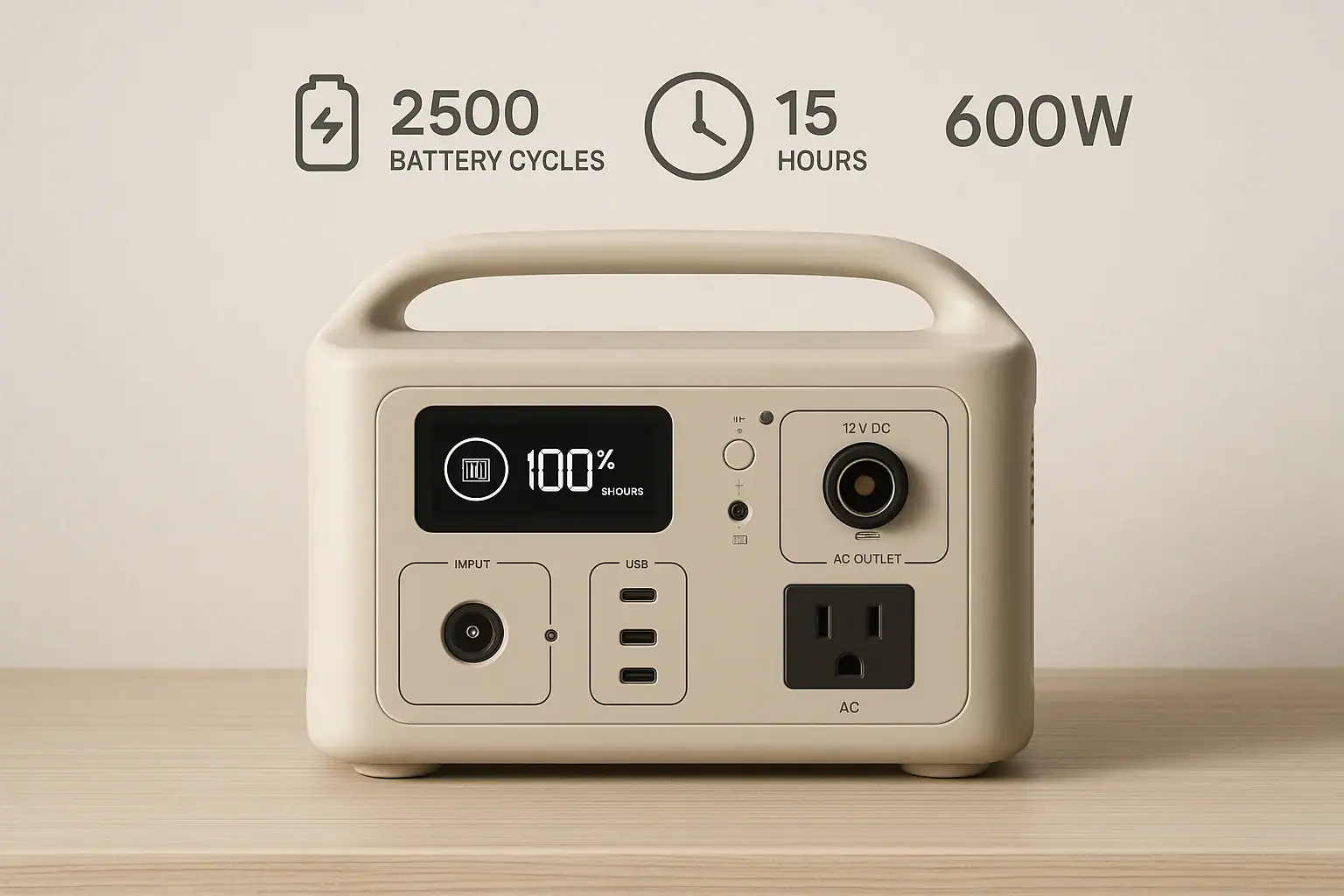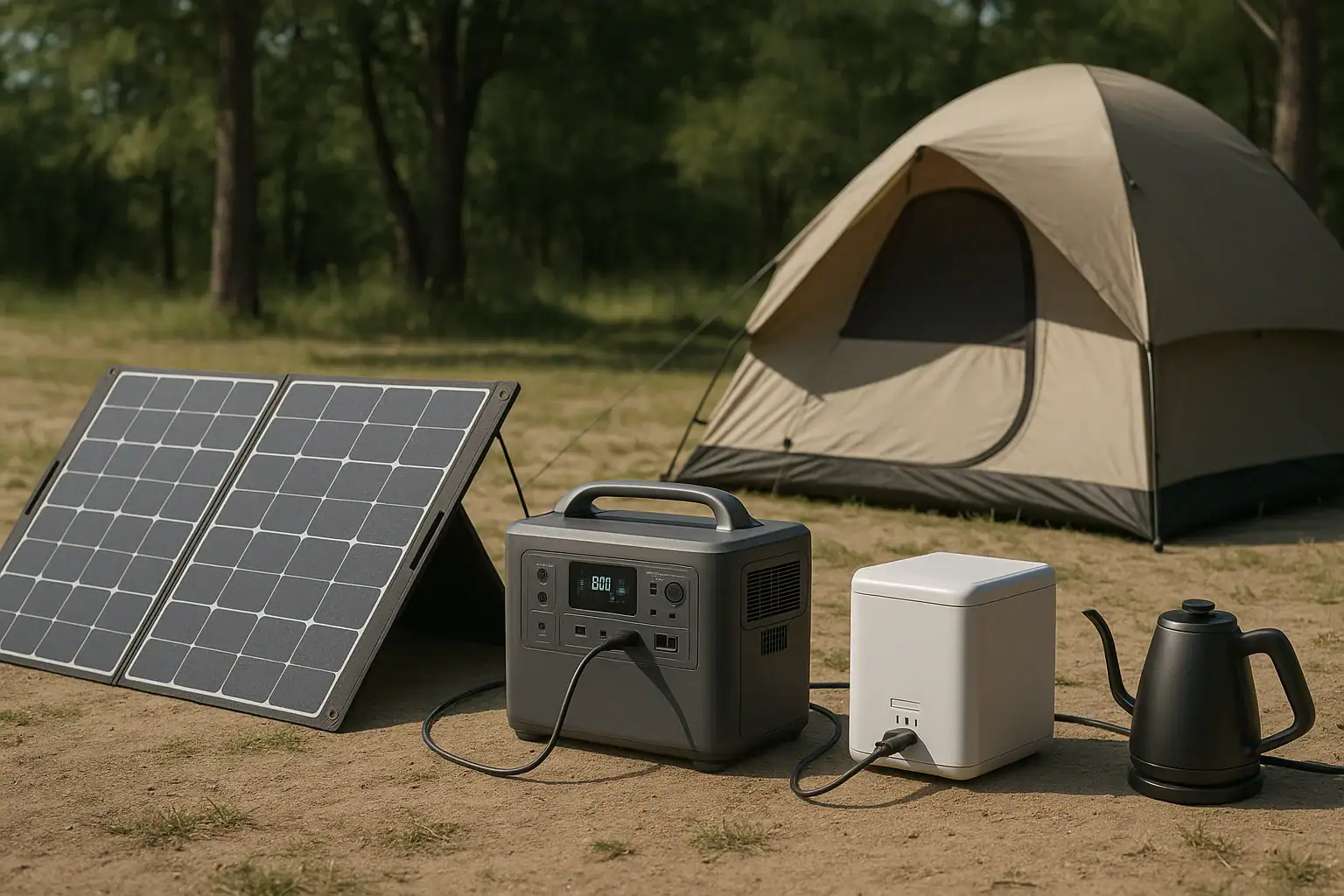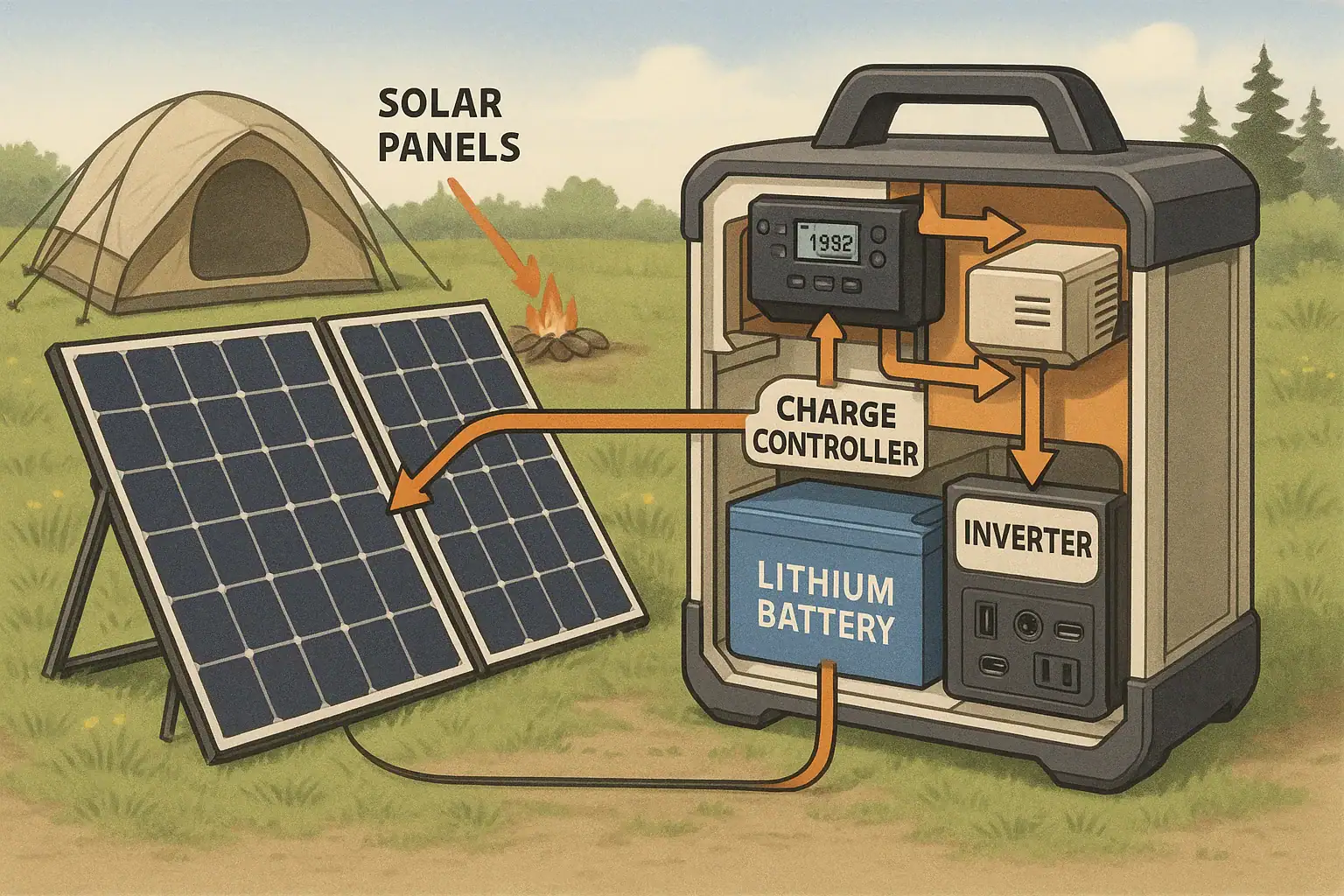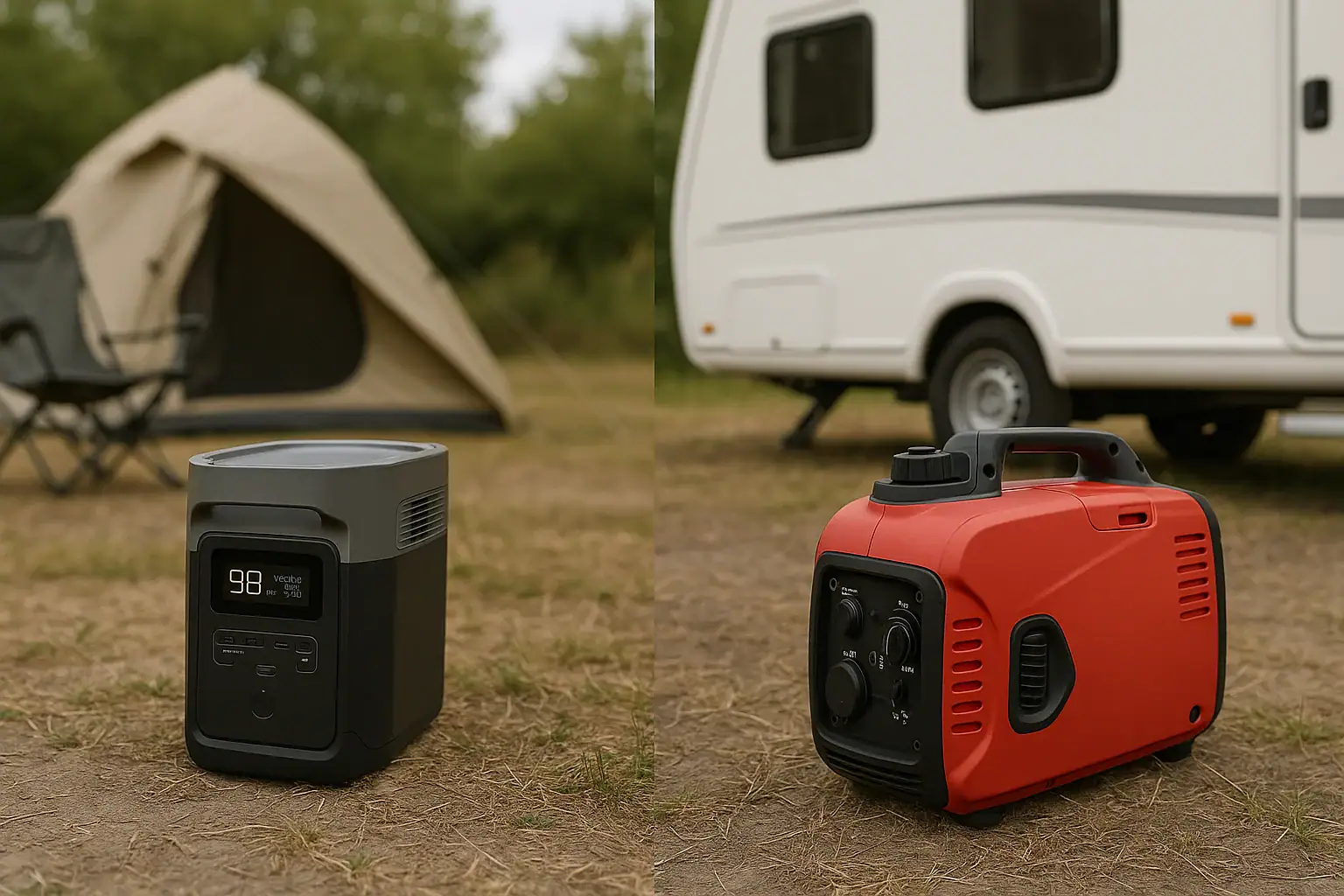
How Many Watts Do You Really Need?

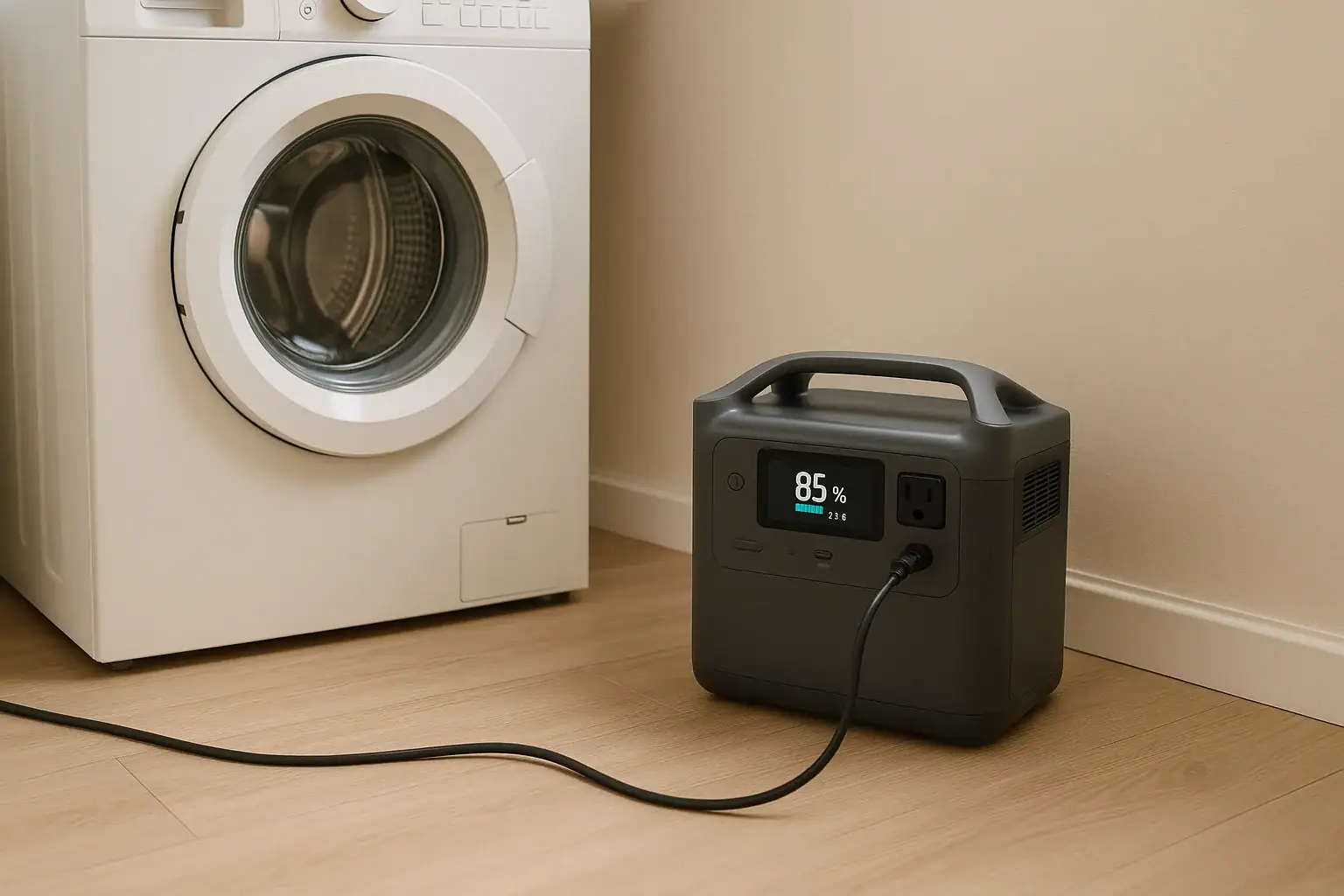
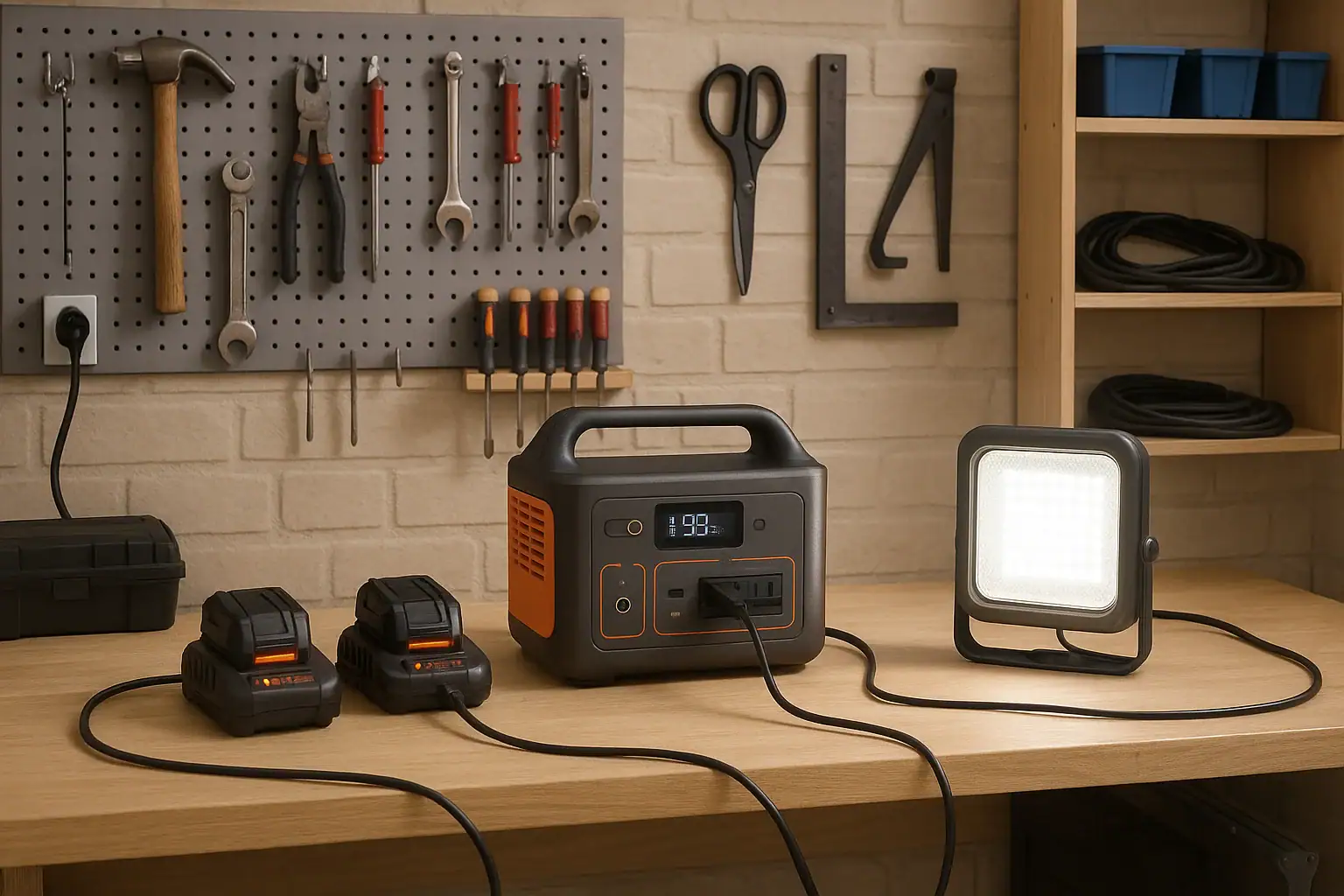
Portable power station showing watt usage for several devices

Most people need between 300 and 1,500 watts of usable power from a portable power station, depending on which devices they want to run and for how long. The right wattage depends on continuous watts, surge watts, battery capacity, and how you balance runtime with size and cost. Understanding your real watt needs helps you avoid overload errors, short runtimes, and confusing input limit or PD profile issues.

Instead of guessing, you can calculate your watt requirements based on the devices you actually use: phones, laptops, fridges, CPAP machines, power tools, and more. From there, you match those needs to a power station’s rated output watts and watt-hours of capacity.

This guide explains what watts really mean for portable power stations, how to read the specs, how to estimate runtime, and how to avoid common mistakes like mixing up surge watts and continuous watts. By the end, you will know how many watts you really need and which key specs to focus on.

Understanding Watts and Why They Matter for Portable Power Stations

Watts are a measure of power: how fast energy is being used or delivered at any moment. For portable power stations, watts tell you two critical things:

  • How much power you can draw at once (what you can plug in and run simultaneously).
  • How quickly you will drain the battery (which affects runtime).

When you ask, “How many watts do I need?” you are really asking two related questions:

  • Output power: What is the maximum continuous wattage the power station can safely deliver without tripping protection?
  • Energy capacity: How many watt-hours (Wh) are stored in the battery so you know how long devices can run?

These two ideas are easy to confuse. A unit with high output watts but low watt-hours can power big loads, but not for long. A unit with high watt-hours but low output watts can run smaller loads for a long time, but cannot start or run heavy appliances.

Knowing the difference between watts (W) and watt-hours (Wh), and between continuous and surge watts, is the foundation for sizing a portable power station correctly.

Key Power Concepts: Continuous Watts, Surge Watts, and Watt-Hours

To match a portable power station to your needs, you should understand a few key power and capacity terms that show up in spec sheets.

Continuous output watts

Continuous watts (sometimes called rated output) is the maximum power the inverter can supply steadily without overheating or shutting down. This tells you the total wattage of devices you can run at the same time.

Example: If your power station is rated for 600 W continuous, you can run up to 600 W of combined loads. A 300 W device plus a 200 W device plus a 50 W device (total 550 W) should be fine; adding another 200 W device (total 750 W) will likely trip the overload protection.

Surge watts (peak watts)

Surge watts (or peak watts) is the short burst of power the inverter can handle for a few seconds to start devices with high inrush current, like compressors and motors. Many appliances need more power to start than to run.

Example: A fridge might run at 80–120 W but need 400–600 W for a second or two when the compressor kicks on. If your surge rating is too low, the unit may shut down when the device starts, even though the running watts are within the continuous limit.

Battery capacity: watt-hours (Wh)

Watt-hours (Wh) measure stored energy. This tells you how long you can run a given load. In simple terms:

Runtime (hours) ≈ usable Wh ÷ device watts

Real runtime is always less than the math due to inverter losses and efficiency, so many users use 80–90% of the rated Wh as a realistic usable capacity.

AC vs DC output watts

Portable power stations often have multiple output types:

  • AC outlets: 110–120 V AC, used for most household devices; limited by inverter capacity.
  • DC outputs: 12 V car socket and barrel ports; more efficient for some devices.
  • USB-A and USB-C (including PD): 5–20 V DC, limited by each port’s watt rating and PD profile.

Manufacturers may also specify a total combined output limit across all ports. If you exceed it, the unit may reduce output or shut off ports.

Input watts and charging limits

Input watts describe how fast you can recharge the battery from AC, solar, or car charging. For off-grid or frequent-use scenarios, higher input watts mean faster turnaround time between discharges.

Example values for illustration.
TermWhat it MeansTypical Range
Continuous Output WattsMax sustained power to loads200–2,000 W
Surge WattsShort burst for startup1.5–2x continuous
Battery CapacityStored energy200–2,000 Wh
AC Input WattsMax charging rate from wall100–1,200 W
Solar Input WattsMax solar charging rate100–800 W

Real-World Wattage Examples: What Different Users Actually Need

The right wattage depends heavily on how and where you plan to use a portable power station. Here are typical scenarios and rough watt requirements to show how needs vary.

Light personal use: phones, tablets, and laptops

For basic everyday backup or travel use, loads are small and continuous watts can be modest.

  • Smartphone charging: 5–20 W (more with fast charging).
  • Tablet: 10–30 W.
  • Laptop (USB-C PD or AC): 45–100 W depending on model and workload.

If you plan to charge a phone (15 W), a tablet (20 W), and a laptop (60 W) at once, you only need around 100 W of continuous output, plus some headroom. A 200–300 W continuous inverter with 200–500 Wh of capacity is usually sufficient for this type of use.

Remote work or small office setup

Running a laptop, monitor, and networking gear requires more power but still stays in a moderate range.

  • Laptop: 60 W.
  • 24–27 inch monitor: 20–40 W each.
  • Router/modem: 10–20 W.
  • LED desk lamp: 5–10 W.

Total: roughly 100–150 W for a single-person setup. A power station with 300–600 W continuous and 500–1,000 Wh capacity gives reasonable runtime and flexibility to add a second monitor or charge other devices.

Camping and van life essentials

Off-grid camping often combines small electronics with a few larger items.

  • LED lights: 5–20 W total.
  • 12 V fridge or cooler: 30–60 W running, higher on startup.
  • Phone and camera charging: 20–40 W combined.
  • Occasional laptop use: 60–90 W.

Peak draw might be around 150–250 W, but the fridge cycling can cause short surges. A continuous rating in the 300–600 W range with 500–1,000 Wh capacity is common for this use. If you also want to run an induction cooktop, electric kettle, or microwave, your needs jump into the 1,000+ W range.

Home backup for small appliances

For short power outages, many people want to keep a few key appliances running:

  • Refrigerator: 80–150 W running, 400–800 W surge.
  • Wi-Fi router: 10–20 W.
  • LED room lighting: 10–40 W total.
  • Phone and laptop charging: 30–100 W.

Running a fridge plus a few small loads typically requires at least 500–800 W continuous and enough surge capacity to handle compressor startup. For several hours of runtime, 1,000–2,000 Wh of capacity is more realistic, especially if the fridge cycles frequently.

Power tools and jobsite use

Power tools and equipment often draw high watts and have strong surge demands.

  • Cordless tool battery charger: 50–150 W.
  • Small circular saw: 800–1,200 W surge, 500–800 W running.
  • Air compressor (small): 800–1,500 W surge, 300–800 W running.

For this type of use, a portable power station with 1,000–2,000 W continuous and robust surge capability is often necessary. Capacity needs depend on how long the tools will run; even 1,000 Wh can deplete quickly under heavy use.

Medical devices (high-level only)

Some users need portable power for critical medical devices such as CPAP machines. Power draw varies, but many CPAP units use 30–80 W depending on settings and whether a heated humidifier is enabled. For an 8-hour night at 50 W average, you might want at least 400–600 Wh of usable capacity, plus enough continuous output (typically 100+ W) for safety margin. Always check the device’s label and consult a qualified professional for critical medical applications.

Common Wattage Mistakes and Troubleshooting Overload Issues

Mismatching watts is one of the main reasons portable power stations shut down unexpectedly or deliver disappointing runtime. Understanding frequent errors can help you avoid frustration.

Confusing watts and watt-hours

Many users see a large Wh number and assume they can run anything. But watt-hours only tell you how long the battery can supply power, not how powerful the inverter is. A 500 Wh unit with a 300 W inverter cannot run a 700 W microwave, even briefly.

Ignoring surge watt requirements

Devices with motors or compressors, such as fridges, pumps, and some tools, may require 2–3 times their running watts at startup. If the surge exceeds the inverter’s limit, the unit may:

  • Click off or display an overload error.
  • Cycle the device on and off repeatedly.
  • Refuse to start the load at all.

If you see the display spike and then drop to zero when a device tries to start, surge watts are likely the issue.

Overloading by stacking small devices

It is easy to exceed continuous watts by adding many small loads. A few chargers, a fan, some lights, and a laptop can quietly add up. If your portable power station suddenly shuts off when you plug in “one last thing,” check the total watt draw shown on the display and compare it to the continuous rating.

Underestimating runtime at higher loads

Running near the maximum continuous watt rating drains the battery quickly and increases conversion losses. A 1,000 Wh unit powering a 1,000 W load will not run for a full hour in real-world conditions; 40–50 minutes is more typical. If your runtime is shorter than expected, consider:

  • Actual watts shown on the display vs the device label.
  • Inverter efficiency (usually 80–90%).
  • Battery management system keeping some capacity in reserve.

Troubleshooting cues

Common signs that your watts are mismatched include:

  • Overload or protection icons on the screen.
  • Repeated shutdowns when certain devices start.
  • AC output turning off while DC or USB still works.
  • Unusually short runtime compared to simple calculations.

When this happens, reduce the number of connected devices, unplug high-surge loads, and compare the total draw to the unit’s continuous and surge ratings. If problems persist, a higher-wattage power station may be required for your use case.

Safety Basics When Dealing With Watts and Loads

Portable power stations are designed with built-in protections, but using the correct wattage range is still important for safety and reliability.

Stay within rated output

Always keep your total load within the manufacturer’s continuous watt rating, with some margin. Running at the absolute limit for long periods can increase heat and wear. Aiming for 70–80% of the continuous rating for steady loads is a conservative approach.

Avoid daisy-chaining power strips and adapters

Plugging multiple power strips or high-draw adapters into one outlet can encourage overloads and make it harder to track total watts. Use the built-in outlets and ports as intended, and distribute loads across them when possible.

Use appropriate cords and connectors

Undersized extension cords or damaged cables can overheat even if your power station is within its watt rating. Use cables rated for the loads you plan to run, keep connections secure, and avoid pinching or sharply bending cords.

Respect surge loads and motor-driven devices

Repeatedly forcing a portable power station to start loads that exceed its surge rating can stress components. If a fridge, pump, or tool will not start reliably, do not keep trying to force it; instead, use a power source with adequate surge capability or consult a qualified electrician for alternatives.

Do not integrate directly into home wiring

Portable power stations are meant to power devices directly, not to be wired into a home’s electrical panel without proper transfer equipment. For any connection to household circuits, consult a licensed electrician and use approved transfer methods. Improper connections can create shock hazards and backfeed risks.

How Wattage Affects Maintenance, Charging, and Storage Habits

Your watt needs influence how often you cycle the battery, how fast you recharge, and how you care for the power station over time.

High-watt vs low-watt usage patterns

Running near maximum watt output frequently will cycle the battery more deeply and generate more heat. Over time, this can contribute to faster capacity loss compared to light, occasional use. If you regularly need high watt output, choosing a unit with some overhead can reduce stress on components.

Charging speed and input watts

If your usage regularly drains a large portion of the battery, higher input watts (from AC or solar) help you recover faster. However, fast charging can also generate more heat. Many users balance convenience and longevity by not always charging at the absolute maximum rate when time allows a slower charge.

Storage level and self-discharge

When storing a portable power station, most manufacturers recommend leaving the battery partially charged rather than full or empty. Because higher watt usage often means more frequent cycling, it is especially important to:

  • Top up the battery to a moderate level (often around 40–80%) before long storage.
  • Check and recharge every few months to counter self-discharge.

Staying aware of your typical watt draw helps you plan these maintenance charges before the battery gets too low.

Thermal management

High-watt loads warm the inverter and battery more quickly. Keep ventilation openings clear, avoid covering the unit during heavy use, and store it in a cool, dry place away from direct sun. Elevated temperatures can accelerate battery aging, especially if combined with high loads and fast charging.

Monitoring usage over time

Many portable power stations display real-time watts in and out. Watching these numbers during everyday use can teach you which devices are the biggest contributors to load. Over time, you may adjust habits, such as staggering high-watt devices instead of running them all at once, which reduces stress and can improve overall battery longevity.

Example values for illustration.
Usage PatternTypical LoadMaintenance Implication
Light Daily UseUnder 150 WLonger intervals between charges, slower aging
Moderate Mixed Use150–600 WRegular cycling, monitor temperature and charge level
Heavy High-Watt Use600+ WMore heat, more frequent cycling, benefit from higher input watts

Related guides: Surge Watts vs Running Watts: How to Size a Portable Power StationHow to Estimate Runtime for Any Device: A Simple Wh Formula + 5 Worked ExamplesHow to Choose the Right Size Portable Power Station

Practical Takeaways and How to Choose the Right Wattage

Choosing how many watts you really need comes down to listing your devices, adding up their running watts, accounting for surge, and deciding how long you want them to run on battery power. Then, you match those needs to a portable power station’s continuous output watts, surge watts, and watt-hour capacity.

For light personal use, a few hundred watts of output and a few hundred watt-hours of capacity may be enough. For home backup, camping fridges, or power tools, it is common to need 500–2,000 W of output and 500–2,000 Wh of capacity, depending on how many devices you use and for how long.

Specs to look for

  • Continuous AC output (W): Look for 200–500 W for light use, 500–1,000 W for fridges and small appliances, and 1,000+ W for tools; this sets what you can run at once.
  • Surge/peak watts: Aim for at least 1.5–2 times the continuous rating; higher surge helps start fridges, pumps, and some power tools without overloads.
  • Battery capacity (Wh): Choose 200–500 Wh for short sessions, 500–1,000 Wh for overnight use, and 1,000–2,000+ Wh for multi-device backup; higher Wh means longer runtime.
  • AC inverter type and efficiency: Look for a pure sine wave inverter with typical efficiency of 80–90%; better efficiency means more usable runtime from the same Wh.
  • Total DC and USB output watts: Ensure USB and 12 V ports can cover your phones, tablets, and 12 V devices simultaneously, often 60–200 W combined; this reduces reliance on AC outlets.
  • Input charging watts (AC/solar): For frequent or off-grid use, 200–600 W of input allows faster recharges; higher input is useful when you regularly drain most of the battery.
  • Display and monitoring: A clear screen showing real-time watts in/out and remaining percentage helps you avoid overloads and manage runtime more accurately.
  • Operating temperature range: A wide, clearly stated temperature range supports safe use in hot or cold environments; extreme temps can limit available watts and runtime.
  • Protection features: Built-in overload, over-temperature, and low-voltage protections help prevent damage when you approach watt limits or miscalculate loads.

By focusing on these watt-related specs and comparing them to your actual devices and usage patterns, you can select a portable power station that delivers the power you need without constant overloads or unexpectedly short runtimes.

Frequently asked questions

How do I calculate the wattage I need for my devices?

List the running watts of every device you plan to power and add them to get your total continuous load, then allow headroom (typically 20–30%). Estimate runtime by dividing usable watt-hours by the combined running watts and factor in inverter losses. Check surge requirements separately for motorized devices.

Which specs and features should I prioritize when choosing a portable power station?

Prioritize continuous AC output watts, surge/peak watts, and battery capacity in watt-hours because they determine what you can run and for how long. Also consider inverter type (pure sine), total DC/USB output, input charging watts, and monitoring features for real-time load and remaining runtime.

What is a common mistake that causes portable power stations to shut down unexpectedly?

A frequent error is underestimating surge watts or adding many small loads until the continuous rating is exceeded, both of which can trigger overload protection. Always compare the real-time draw to the unit’s continuous and surge ratings before adding more devices.

What safety precautions should I follow when using a portable power station?

Keep total loads within the continuous rating with some margin, use properly rated cords and avoid daisy-chaining power strips, and ensure good ventilation during heavy use. Do not wire the unit directly into home circuits without proper transfer equipment and a licensed electrician.

Can I charge a power station with solar while running appliances at the same time?

Some power stations support pass-through or simultaneous use while charging, but capabilities and efficiency vary by model and input limits. Check the unit’s specs for supported input watts and whether pass-through is allowed to avoid reduced charging speed or potential heat issues.

How much surge capacity do I need to start appliances with motors or compressors?

Many motorized appliances require 1.5–3 times their running watts at startup; check the appliance’s start-up current or manufacturer spec. Choose a power station with a surge rating that comfortably exceeds those startup needs to avoid startup failures.

Portable Power Station Watt-Hours Explained

Diagram explaining portable power station watt-hours and device runtimes

Watt-hours on a portable power station tell you how much total energy the battery can deliver, and they are the key to estimating runtime and matching capacity to your devices. Understanding watt-hours, wattage, surge watts, and input limits helps you avoid running out of power too soon or overpaying for capacity you do not need. When you know how watt-hours work, you can compare models, plan off-grid use, and troubleshoot why your runtime does not match the marketing claims.

People often search for terms like battery capacity, Wh rating, runtime calculator, AC output watts, and power draw when trying to figure out if a portable power station can handle a fridge, CPAP, laptop, or power tools. This guide explains watt-hours in plain language, walks through real-world examples, and highlights the specs that matter most so you can size a unit correctly for camping, outages, and everyday backup power.

What Watt-Hours Mean on a Portable Power Station and Why They Matter

Watt-hours (Wh) are a measure of energy. On a portable power station, the watt-hour rating tells you how much total work the battery can do before it needs to be recharged. Think of it as the size of the fuel tank, but for electricity instead of gasoline.

One watt-hour is one watt of power used for one hour. If a device draws 50 watts continuously for one hour, it consumes 50 watt-hours of energy. If you have a 500 Wh battery and you run that 50 W device, the simple math suggests up to 10 hours of runtime (500 Wh ÷ 50 W = 10 hours), before accounting for losses and inverter efficiency.

Watt-hours matter because they directly influence:

  • Runtime: How long you can power a device or combination of devices.
  • Use cases: Whether a station is suitable for phones and laptops only, or also for fridges, CPAP machines, or power tools.
  • Size and weight: Higher Wh capacity usually means a larger, heavier unit.
  • Charging needs: Bigger batteries take longer to recharge unless they support higher input wattage.

Without understanding watt-hours, it is easy to misinterpret marketing numbers like peak watts or surge power and end up with a station that can technically start a device but cannot run it for long.

Key Watt-Hour Concepts and How Portable Power Capacity Really Works

To make sense of watt-hours on a portable power station, it helps to break down a few related concepts: power (watts), energy (watt-hours), voltage, and efficiency.

Power (Watts) vs. Energy (Watt-Hours)

Watts (W) describe the rate of energy use at a given moment. A 100 W light bulb uses energy faster than a 10 W LED. Watt-hours (Wh) describe the total amount of energy used over time. If that 100 W bulb runs for 3 hours, it uses 300 Wh.

Portable power stations usually list both:

  • Battery capacity in Wh (for example, 300 Wh, 500 Wh, 1000 Wh, 2000 Wh).
  • Output power in W (for example, 300 W continuous, 600 W surge).

The Wh rating tells you how long; the W rating tells you how much at once.

Battery Capacity vs. Usable Capacity

The stated watt-hour capacity is usually based on the internal battery cells at their nominal voltage. However, what you can actually use at the AC outlets is lower because of:

  • Inverter losses: Converting DC battery power to AC typically wastes 5–15% of energy.
  • Electronics overhead: The internal electronics consume some power even at low loads.
  • Discharge limits: To protect the battery, the system may not let you use 100% of the stored energy.

A practical rule of thumb is that usable AC energy is often around 80–90% of the rated Wh, depending on design and how you use it. DC outputs (like USB or 12 V ports) are usually more efficient than AC.

How Voltage and Amp-Hours Relate to Watt-Hours

Sometimes capacity is described in amp-hours (Ah) at a certain voltage. The relationship is:

Watt-hours = Volts × Amp-hours

For example, a 12 V battery rated at 50 Ah has about 600 Wh (12 V × 50 Ah). Portable power stations often use battery packs with nominal voltages around 12 V or 24 V internally, but they convert that to standard AC and DC outputs for your devices.

Continuous Watts, Surge Watts, and Watt-Hours

Continuous watts is the maximum power the station can supply steadily. Surge watts is the short burst available to start devices with high inrush current, such as compressors or motors. Watt-hours are independent of these limits but interact with them in practice:

  • A station might have enough surge watts to start a fridge but not enough Wh to run it for many hours.
  • A unit with high Wh but low continuous watts might run small devices for days but cannot power a microwave.

Input Limits and Charging Watt-Hours

Charging the battery also involves watts and watt-hours:

  • Input watts (from wall, solar, or car) determine how fast energy flows into the battery.
  • To estimate charge time, divide battery Wh by input W, then adjust for efficiency and tapering near full charge.

For example, a 1000 Wh station charging at 200 W might take around 5–6 hours from low to full, depending on losses and charge profile.

TermTypical UnitWhat It DescribesSimple Example
PowerWatts (W)Rate of energy use100 W bulb
EnergyWatt-hours (Wh)Total energy over time100 W for 3 h = 300 Wh
Battery CapacityWhSize of energy “tank”500 Wh station
Continuous OutputWMax steady load600 W continuous
Surge OutputWShort start-up burst1200 W surge
Input PowerWCharging rate200 W wall charger
Example values for illustration.

Real-World Watt-Hour Examples: How Long Will a Portable Power Station Last?

To turn watt-hours into something practical, you need to estimate how much power your devices draw and for how long you will use them. The basic formula is:

Runtime (hours) ≈ Usable Wh ÷ Device Power (W)

Remember to adjust the Wh rating for efficiency, especially when using AC outputs.

Example 1: Charging Phones and Laptops

Imagine a compact 300 Wh portable power station used for light electronics:

  • Smartphone charging: about 10 Wh per full charge.
  • Laptop charging: around 50–70 Wh per full charge, depending on size and usage.

If we assume 85% usable energy from 300 Wh, that is about 255 Wh available. You could roughly:

  • Charge a phone 10–15 times (10–15 × 10 Wh = 100–150 Wh).
  • Charge a laptop 2–3 times (2–3 × 60 Wh = 120–180 Wh).

In practice, you might mix both uses and still have some reserve, depending on screen brightness, background tasks, and whether you are using the devices while charging.

Example 2: Running a CPAP Machine Overnight

Consider a CPAP drawing an average of 40 W without a heated humidifier, running for 8 hours:

  • Energy needed ≈ 40 W × 8 h = 320 Wh.

With a 500 Wh station and 85% usable energy (425 Wh), you might get:

  • 425 Wh ÷ 40 W ≈ 10.6 hours of runtime.

That is typically enough for a full night plus some margin. If you enable a heated humidifier and the draw rises to 80 W, the same station would provide:

  • 425 Wh ÷ 80 W ≈ 5.3 hours.

This is why knowing your device’s actual watt draw is critical.

Example 3: Powering a Mini Fridge or Small Fridge

A compact fridge might average 40–70 W over time but draw several hundred watts briefly when the compressor starts. Suppose the average is 60 W over 24 hours:

  • Daily energy ≈ 60 W × 24 h = 1440 Wh.

A 1000 Wh station with about 850 Wh usable AC energy would not run that fridge for a full day. You might see:

  • 850 Wh ÷ 60 W ≈ 14 hours of runtime, assuming typical cycling.

For occasional use (for example, keeping food cool for part of a day during an outage), that might be acceptable. For continuous 24/7 operation, you would need significantly more capacity or supplemental charging such as solar.

Example 4: Running a Router and Laptop During an Outage

Assume:

  • Wi-Fi router: 10 W.
  • Laptop in light use: 30 W average.

Total load is about 40 W. On a 500 Wh station with 85% usable (425 Wh):

  • 425 Wh ÷ 40 W ≈ 10.6 hours.

That is generally enough for a workday of connectivity and computing during a power cut.

Example 5: Power Tools and High-Draw Appliances

A small microwave might draw 800–1000 W. A circular saw might draw 900–1200 W while cutting. Even if your station’s continuous watt rating can handle that, watt-hours determine how long:

  • Using a 1000 W microwave for 15 minutes (0.25 h) uses about 250 Wh.
  • On a 1000 Wh station (850 Wh usable), that is nearly 30% of your usable capacity.

This is why high-power appliances drain even large portable power stations quickly. For short, occasional use, the capacity may be fine; for frequent or extended use, you will need much higher Wh or alternate power sources.

Common Watt-Hour Mistakes and Troubleshooting When Runtime Seems Wrong

Many users are surprised when their portable power station does not last as long as they expect based on the watt-hour rating. Most discrepancies come from a few common misunderstandings.

Mistaking Watts for Watt-Hours

One frequent error is confusing the station’s output watt rating with its energy capacity. A unit labeled “1000 W” might only have 500 Wh of battery capacity. That means it can power up to 1000 W of load, but only for a short time. To estimate runtime, you need the Wh figure, not just the watts.

Ignoring Inverter and Conversion Losses

Marketing numbers often assume ideal conditions. In reality:

  • AC output usually has 5–15% losses.
  • Running multiple converters (for example, AC to laptop brick to DC) adds more inefficiency.

If your calculations assume 100% of the rated Wh is usable, your runtime estimate will be too optimistic. Applying an 80–90% factor to account for losses yields more realistic numbers.

Underestimating Device Power Draw

Device labels often show maximum rating, not typical usage. Conversely, some devices draw more than expected under certain conditions:

  • Laptops can spike when charging and under heavy processing loads.
  • Fridges and freezers draw more in hot environments or with frequent door openings.
  • CPAP machines use more power with heated humidifiers or higher pressure settings.

To troubleshoot, use a plug-in power meter or the station’s built-in display (if available) to observe real-time watt draw.

Not Accounting for Standby and Idle Loads

Even when devices seem “off,” they may still draw some power. The power station itself also consumes energy to keep the inverter and control electronics running. Over many hours, those small draws add up and reduce effective runtime.

Running Near Maximum Output Continuously

Operating close to the station’s continuous watt limit for long periods can increase heat and reduce efficiency. In some designs, the inverter may throttle or shut down if temperatures climb too high, cutting runtime short or causing unexpected shutdowns.

Signs Your Watt-Hour Expectations Need Adjusting

Clues that your assumptions about watt-hours and runtime may be off include:

  • The station shuts down much sooner than your simple Wh ÷ W math predicted.
  • The display shows higher watt draw than the device’s label suggests.
  • The battery gauge drops quickly when using AC, but slowly when using DC ports.
  • Runtime varies a lot with ambient temperature or device settings.

If you see these signs, revisit your calculations using realistic watt draw, efficiency factors, and actual usage patterns.

Watt-Hours and Safety Basics for Portable Power Stations

Watt-hours describe energy capacity, and higher capacity means more stored energy. While portable power stations are designed with multiple safety features, it is important to respect the amount of energy they contain and use them within their intended limits.

Respecting Output Limits

Never exceed the continuous watt rating of the station’s AC or DC outputs. Drawing more than the rated power can:

  • Trigger overload protection and shut the unit down.
  • Cause excessive heat buildup in cables or connectors.
  • Stress internal components over time.

Always check both the watt-hour capacity and the continuous watt rating when planning which devices to connect.

Using Appropriate Cables and Connectors

Higher wattage and longer runtimes mean more current flowing through wires. To reduce risk:

  • Use cables and adapters rated for the expected current and voltage.
  • Avoid daisy-chaining multiple extension cords or power strips.
  • Keep connections secure and avoid pinched or damaged cords.

Undersized or damaged cables can overheat, especially during extended high-power use.

Ventilation and Heat Management

Portable power stations convert stored watt-hours into usable power, and some of that energy becomes heat. To maintain safe operation:

  • Place the unit on a stable, dry surface with good airflow.
  • Keep vents clear of dust, fabric, or other obstructions.
  • Avoid operating in direct sunlight or inside tightly closed containers.

High ambient temperatures and poor ventilation can reduce efficiency, shorten runtime, and trigger thermal protection.

Safe Charging Practices

Charging also involves significant energy transfer. To stay within safe limits:

  • Use charging methods and input wattages recommended by the manufacturer.
  • Avoid mixing incompatible chargers, adapters, or homemade wiring solutions.
  • Do not cover the unit while charging, and keep it away from flammable materials.

If you are integrating a portable power station with other electrical systems or external batteries, consult a qualified electrician for safe, code-compliant solutions, rather than attempting custom wiring yourself.

Environment and Placement

Because watt-hours represent stored energy, treat the station with the same respect you would give to other high-capacity batteries:

  • Keep away from standing water and excessive moisture.
  • Avoid exposure to extreme cold or heat beyond specified operating ranges.
  • Protect from impacts or crushing forces that could damage the housing or internals.

These precautions help ensure that the energy stored in the battery is released only through the intended outputs, under controlled conditions.

How Watt-Hours Affect Maintenance and Storage of Portable Power Stations

Watt-hour capacity is closely tied to battery health. Over time, all rechargeable batteries lose some capacity, which effectively reduces the number of watt-hours you can use per charge. Proper maintenance and storage can slow this process and preserve usable Wh. Before regular use, follow a first-time portable power station setup that verifies charging, outputs, firmware, and storage settings.

State of Charge for Storage

Storing a portable power station fully charged or fully depleted for long periods can accelerate capacity loss. Many battery chemistries are happiest when stored around the middle of their charge range. As general guidance:

  • Aim to store the unit at roughly 40–60% charge if it will sit unused for months.
  • Check the charge level every few months and top up if it has dropped significantly.

Following these habits helps maintain more of the original watt-hour capacity over the life of the station.

Temperature and Capacity Loss

Temperature strongly affects both immediate performance and long-term capacity:

  • Cold conditions can temporarily reduce available Wh and output power.
  • High heat can permanently reduce capacity and shorten battery life.

For storage, choose a cool, dry place out of direct sunlight. For operation, keep within the temperature ranges listed in the user documentation so the station can deliver its rated watt-hours more consistently.

Regular Cycling and Calibration

Some portable power stations estimate remaining watt-hours and runtime based on internal measurements and assumptions. Over time, the accuracy of these estimates can drift. Periodically:

  • Use the station under a moderate load and allow it to discharge to a low but safe level.
  • Recharge it fully using a recommended charging method.

This can help the internal management system recalibrate, providing more accurate readings of remaining Wh and runtime.

Monitoring Capacity Fade

As units age, you may notice:

  • Shorter runtimes for the same devices and usage patterns.
  • Faster drop from full charge to mid-level on the battery gauge.

These signs indicate that the effective watt-hour capacity has decreased. While some loss is normal over hundreds of cycles, extreme or rapid loss may suggest heavy use at high temperatures, deep discharges, or other stress factors.

Cleaning and Physical Care

Keeping the station clean and physically protected also supports safe, efficient use of its watt-hours:

  • Wipe dust and debris from vents and ports with a dry cloth.
  • Inspect cables and connectors for wear before long trips or critical use.
  • Avoid dropping or striking the unit, especially larger, high-capacity models.

Good physical care helps ensure that the stored energy can be delivered reliably when you need it.

PracticeEffect on Watt-HoursSuggested Habit
Store at mid chargeSlower long-term capacity lossKeep around 40–60% when unused
Avoid high heatPreserves usable WhStore in cool, shaded areas
Moderate discharge depthExtends cycle lifeAvoid frequent full drain
Periodic full chargeImproves gauge accuracyFully charge every few months
Clean vents and portsMaintains efficiencyDust off surfaces regularly
Example values for illustration.

Related guides: Inverter Efficiency Explained: Why Your Runtime Is Shorter Than Expected300Wh vs 500Wh vs 1000Wh: Choosing Capacity for Your Use Case (With Examples)How to Estimate Runtime for Any Device: A Simple Wh Formula + 5 Worked Examples

Practical Takeaways and Watt-Hour Specs to Look For

Understanding watt-hours turns the capacity number on a portable power station from a vague marketing claim into a practical planning tool. By combining Wh with your devices’ watt draw and expected usage time, you can estimate runtime, choose appropriate capacity, and avoid common surprises.

When comparing portable power stations, think in terms of your scenarios: how many hours of backup do you need for networking and a laptop, or how many nights of CPAP use without recharging, or how long you want to run a fridge during an outage. Then match those needs to realistic usable Wh, not just the printed capacity.

Specs to look for

  • Battery capacity (Wh) – Look for a watt-hour rating that covers your total daily energy use with some margin (for example, 1.3–1.5× your estimated need). This directly determines how long your devices can run.
  • Usable capacity estimate – Seek information or reviews that indicate real-world usable Wh (often 80–90% of rated). This helps you make more accurate runtime calculations than relying on the raw number alone.
  • Continuous AC output (W) – Choose a continuous watt rating comfortably above your maximum simultaneous load (for example, 30–50% headroom). This ensures the station can power everything you plan to run at once.
  • Surge / peak output (W) – Check that surge watts exceed the startup draw of inductive loads like fridges or pumps. Adequate surge capacity prevents nuisance shutdowns when motors start.
  • Charging input power (W) – Look for input wattage that can refill the battery in a reasonable time for your use (for example, 3–6 hours from wall or solar for daily cycling). Faster input makes large Wh capacity more practical.
  • Supported charging methods – Confirm compatibility with AC wall charging, vehicle DC, and solar input ranges that match your setup. Flexible charging options help you reliably replenish the watt-hours you use.
  • Display and monitoring – A clear screen showing remaining percentage, estimated runtime, and real-time watts in/out makes it easier to manage Wh usage and avoid unexpected shutdowns.
  • Battery chemistry and cycle life – Compare expected cycle counts at a given depth of discharge. Higher cycle life means the station will retain more of its original watt-hours after years of use.
  • Operating and storage temperature range – Check ranges that fit your climate and use cases. Staying within these limits helps preserve capacity and ensures the station can deliver its rated Wh when you need it.
  • Weight and form factor per Wh – Consider how much capacity you can realistically carry or move. A good balance of watt-hours to weight makes the station practical for camping, road trips, and home backup.

By focusing on these watt-hour related specs instead of just headline watt numbers, you can choose and use a portable power station that reliably meets your real-world power needs.

Frequently asked questions

What features and specifications should I prioritize when choosing a portable power station?

Prioritize battery capacity in watt-hours (Wh) for total energy, continuous AC output (W) for simultaneous device power, and surge watts for motor starts. Also consider usable capacity after inverter losses, input/charging wattage, cycle life, and weight/portability to match your use case.

How can mixing up power (watts) and energy (watt-hours) lead to wrong expectations?

Watts measure the rate of power at an instant, while watt-hours measure total energy over time. Confusing the two can make a unit that handles a high-watt load seem like it will run for long periods when its Wh capacity is actually small, producing overly optimistic runtime estimates.

What basic safety precautions should I follow when using and storing a portable power station?

Keep the unit on a stable, ventilated surface, avoid exceeding output limits, use cables rated for the expected current, and follow recommended charging practices. Store in a cool, dry place at mid state of charge for long-term storage and keep it away from water and heat sources.

How do I estimate runtime when running several devices at the same time?

Add the average power draw (watts) of all devices to get total load, then divide usable Wh by that total to estimate runtime (Usable Wh ÷ Total W). Remember to include inverter losses, standby loads, and a safety margin for more realistic results.

How does charging input wattage affect recharge time and daily use?

Higher input wattage charges the battery faster; estimate charge time by dividing battery Wh by input W and adjusting for efficiency and tapering near full. Also check the station’s maximum input limit and supported charging methods (AC, solar, vehicle) because practical recharge speed depends on both the charger and the unit’s input rating.

Why do runtimes sometimes differ between AC outlets and DC/USB ports?

DC and USB outputs bypass the inverter or use simpler conversion, so they typically have lower conversion losses and yield slightly longer runtimes. AC outputs require inverter conversion, which incurs additional energy loss and can make measured runtime shorter for the same stored Wh.

Can You Charge a Power Station While Using It?

Portable power station charging while powering devices

You can usually charge a power station while using it, but only if the design, input limit, and protections support what is often called pass-through charging. Whether this is safe or good for battery life depends on how much power you draw, the inverter load, and the battery management system. Many people search for terms like pass-through mode, input watts, output watts, runtime, and cycle life when trying to understand this behavior.

This article explains what it means to charge and discharge a portable power station at the same time, how it affects performance, and what specs to check before you rely on it. You will learn how to read the display, estimate runtime, avoid overloading the inverter, and protect the battery. By the end, you will know when simultaneous charging and use makes sense, when to avoid it, and which features matter if you plan to run devices while topping up your battery.

What Does Charging a Power Station While Using It Really Mean?

Charging a portable power station while using it means the battery is taking in energy through its inputs at the same time the inverter or DC ports are sending energy out to your devices. This is often described as pass-through charging or simultaneous charge and discharge.

In practice, three power flows are happening at once:

  • Input power: Energy coming from a wall outlet, vehicle socket, or solar panels into the power station.
  • Output power: Energy leaving the power station through AC outlets, DC ports, or USB ports to run your devices.
  • Battery power: The difference between input and output, which determines whether the battery is filling, draining, or holding steady.

If input watts are higher than output watts, the battery still charges, just more slowly. If output watts are higher than input watts, the battery continues to discharge, but at a reduced rate. If input and output are roughly equal, the battery percentage may stay nearly constant.

This matters because it affects runtime, heat, battery wear, and safety. Not all power stations are optimized for continuous pass-through use. Some limit charging speed when the inverter is on; others disable certain ports while charging. Understanding what your unit is designed to do is essential before you rely on it for critical loads like medical devices or refrigeration.

How Simultaneous Charging and Discharging Works

Inside a portable power station, several electronic systems coordinate when you charge and use it at the same time. The key players are the battery pack, the battery management system (BMS), the charge controller, and the inverter or DC converters.

The battery pack stores energy as direct current (DC). The BMS monitors cell voltage, temperature, and current, and it enforces safe limits by shutting down charging or discharging if anything goes outside its safe range.

The charge controller manages incoming power from AC adapters, vehicle chargers, or solar panels. It limits input current to match the station’s rated input watts and battery chemistry. The inverter converts DC from the battery into AC for standard outlets, while DC-DC converters supply regulated DC outputs and USB ports.

When you plug in a charger and turn on the outputs:

  • The charge controller sends power into the battery bus, up to the input watt limit.
  • The inverter and DC converters draw power from the same bus to feed your devices.
  • The BMS tracks net current into or out of the battery cells and adjusts behavior to stay within safe limits.

Some designs prioritize protecting the battery by reducing charge speed when the inverter load is high or by refusing to charge if the internal temperature is elevated. Others allow full input and full output simultaneously but may generate more heat and wear if used this way constantly.

Because of these differences, you should always assume that simultaneous charging and use is possible only within the power station’s published input and output ratings, and that long-term heavy pass-through loads may shorten battery life compared with gentler use.

Parameter Typical Value What It Affects
Battery capacity 500–1500 Wh How long you can run loads
Max AC output 300–2000 W What devices you can power
Max input power 100–800 W How fast the unit can recharge
Pass-through support Yes / Limited / No Whether you can charge while using it
Example values for illustration.

Real-World Scenarios of Charging While Using a Power Station

Understanding real-world scenarios helps clarify what happens when you charge a portable power station while using it. Here are common situations and how the power flows work in each.

Running a Laptop While Plugged Into the Wall

Imagine a 600 Wh power station rated for 300 W of AC output and 200 W of AC charging input. You plug it into a wall outlet and also plug in a 60 W laptop charger.

  • Input: about 200 W from the wall charger
  • Output: about 60 W to the laptop
  • Net battery charge: roughly 140 W into the battery

The battery still charges, just more slowly than if no devices were connected. Heat and stress are moderate because both input and output are well below their limits.

Powering a Mini Fridge on Solar

Now consider a campsite where a 1000 Wh station is connected to 300 W of solar panels, but cloudy conditions provide only about 150 W. A small fridge draws 80 W on average with occasional compressor surges.

  • Input: about 150 W from solar, fluctuating with clouds
  • Output: 80 W average, with brief higher spikes
  • Net battery charge: roughly 70 W into the battery on average

On sunny periods, the battery slowly charges while running the fridge. During heavy clouds or at night, the input drops to near zero, and the battery discharges instead. Over a full day, you might roughly balance, gaining or losing some percentage depending on weather and fridge duty cycle.

Trying to Run High-Wattage Tools While Recharging

Suppose a 500 Wh station has a 500 W continuous inverter and a 150 W input limit. You connect it to AC charging and then plug in a 450 W power tool.

  • Input: about 150 W from the wall
  • Output: about 450 W to the tool
  • Net battery discharge: roughly 300 W from the battery

The unit can technically run the tool because it stays under the 500 W inverter rating, but the battery still drains quickly even while plugged in. After around an hour (ignoring efficiency losses), the battery could be nearly empty. This scenario shows why “charging while using” does not always mean “infinite runtime.”

Maintaining a Steady Battery Level

Some users try to keep the battery percentage steady by matching input and output. For example, if a station accepts 200 W of solar input and you run a 200 W load, the display may hover around the same state of charge.

In reality, small variations in solar intensity, inverter efficiency, and fan activity cause the battery to drift up or down over time. Still, this approach can stretch limited capacity and is common in off-grid setups, as long as you monitor the display and avoid overconfidence in “balanced” numbers.

Common Mistakes and Troubleshooting When Charging While in Use

Many problems people experience with charging a power station while using it come from misunderstandings about power limits, heat, and protection behavior. Recognizing these issues can help you troubleshoot more quickly.

Mistake 1: Assuming Plugged In Means Not Using the Battery

A frequent misconception is that once the station is plugged into the wall or solar, the battery is “bypassed.” In reality, if your output load is higher than the input watts, the battery still discharges. Symptoms include the state of charge dropping even though the unit is plugged in.

What to check: Compare input watts and output watts on the display. If output is higher, expect the battery to drain.

Mistake 2: Overloading the Inverter During Pass-Through

Some users add up the input and output ratings and assume that is the total power available. Instead, the inverter’s continuous watt rating is the hard limit for AC loads, regardless of how much input power is available.

What to check: Add up the wattage of all AC devices. If the total approaches or exceeds the continuous inverter rating, reduce the load, even if the station is charging at the same time.

Mistake 3: Ignoring Heat Build-Up

Simultaneous charging and discharging generates more heat than either alone. If the station is in a hot room, in direct sun, or inside a cabinet, the internal temperature can rise quickly. The BMS may respond by reducing charge rate, shutting down the inverter, or turning on loud fans.

What to check: Feel the case for warmth (without blocking vents), listen for fans, and watch for thermal warnings on the display. Improve airflow or move the unit to a cooler spot.

Mistake 4: Expecting All Ports to Work While Charging

Some power stations disable certain ports while charging or limit high-wattage USB-C PD output when the AC adapter is connected. Users sometimes interpret this as a fault when it is actually a design choice.

What to check: Try different ports (for example, DC or USB only) while charging. If AC outputs shut off but DC continues, the unit may be designed that way to protect components.

Mistake 5: Misreading Runtime Estimates

Runtime estimates assume either charging or discharging, not both at once. When you charge while using the station, the display may show unstable or optimistic time remaining numbers as the internal algorithm tries to interpret fluctuating input and output.

What to check: For a rough estimate, use the net power: subtract input watts from output watts and divide battery watt-hours by that number. Treat the result as approximate, not exact.

Safety Considerations for Charging and Using a Power Station Together

Charging and using a portable power station at the same time is usually safe when you stay within the manufacturer’s limits and follow basic electrical safety practices. Still, the combination of charging circuits, inverters, and batteries in one enclosure deserves respect.

First, always operate within rated input and output limits. Do not exceed the maximum AC or DC input, and keep AC loads below the continuous inverter rating. Surges beyond these values can trip protections or, in extreme cases, damage internal components.

Second, manage heat carefully. Simultaneous charging and discharging is one of the most thermally demanding modes. Place the station on a hard, flat surface with unobstructed vents. Avoid direct sunlight, enclosed cabinets, or placing blankets and clothing over the unit. If the case feels hot or the fan runs constantly, reduce the load or pause charging.

Third, use only approved charging methods. Stick to the supplied AC adapter or properly rated DC or solar inputs. Avoid improvised adapters that could deliver the wrong voltage or polarity. Never attempt to hard-wire the power station into a building circuit or backfeed a home panel; that work belongs to a qualified electrician using proper transfer equipment.

Fourth, keep the station dry and away from flammable materials. Charging and inverting both generate heat, so maintain clearance from curtains, bedding, and combustible surfaces. Do not use the unit in wet environments or where it could be splashed.

Finally, respect the battery’s state of charge. Avoid running the battery to zero while also demanding maximum output, especially in high temperatures. Deep discharges combined with heavy use can accelerate wear and may trigger protective shutdowns at inconvenient times.

How Charging While in Use Affects Battery Life and Storage Practices

Using a power station while it charges can influence long-term battery health, especially if you do it frequently with high loads. Understanding how this affects cycle life can help you adjust your habits and storage practices.

Every charge and discharge cycle contributes to battery wear. When you charge and discharge simultaneously at high power, the battery experiences higher internal temperatures and greater current stress. Over time, this can reduce usable capacity and shorten the number of effective cycles compared with gentler use.

To minimize wear when you need pass-through operation:

  • Keep loads moderate instead of running the inverter near its maximum rating for long periods.
  • Allow the station to fully charge without heavy loads occasionally, so it can balance cells if designed to do so.
  • Avoid stacking multiple chargers and devices that push both input and output close to their limits at the same time.

Storage habits also matter. If you plan to store the power station for weeks or months, avoid leaving it in a constant pass-through setup. Instead, charge it to a partial state of charge (often around the middle of its range), turn off the outputs, and disconnect external chargers.

Store the unit in a cool, dry place away from direct sunlight. Extreme heat accelerates aging, while very low temperatures can temporarily reduce available capacity. During long-term storage, check the battery level every few months and top it up slightly if it has dropped significantly.

Using the station occasionally while it is charging, such as topping up phones and laptops during a recharge cycle, is unlikely to cause noticeable harm. Continuous, high-load pass-through use as a semi-permanent power solution, however, will typically age the battery faster than intermittent use with full rest periods between charge and discharge cycles.

Usage Pattern Typical Impact on Battery Recommended Practice
Light loads while charging Low additional wear Generally fine for daily use
Heavy loads during pass-through Higher heat and faster aging Limit duration and provide cooling
24/7 pass-through operation Noticeable capacity loss over time Use only when necessary
Stored fully charged and hot Accelerated long-term degradation Store cool and partially charged
Example values for illustration.

Related guides: Portable Power Station Buying GuideHow to Estimate Runtime for Any Device: A Simple Wh Formula + 5 Worked ExamplesCan You Charge a Portable Power Station with Solar Panels?

Key Takeaways and Specs to Look For If You Plan to Charge While Using

Charging a portable power station while using it is often possible and convenient, but it is not a magic way to get unlimited power. The real behavior depends on input limits, inverter capacity, battery size, and thermal design. If your loads are modest compared with the input power, the battery can still charge. If your loads are heavier, the battery will drain more slowly but will not hold steady forever.

For regular pass-through use, treat the station like a managed power hub rather than a permanent substitute for grid power. Keep loads within comfortable margins, pay attention to heat and fan noise, and avoid assuming that “plugged in” means “battery not in use.” When planning a setup for camping, backup power, or off-grid work, match your expected loads and charging sources to a station with the right specifications.

Specs to look for

  • Battery capacity (Wh): Look for enough watt-hours to cover your typical daily usage with a margin (for example, 500–1500 Wh for light to moderate use). This determines how long you can run devices when input power is low.
  • Continuous AC output (W): Choose an inverter rating comfortably above your combined device wattage (often 1.3–2x your expected load). This reduces the risk of overloads during pass-through operation.
  • Surge or peak output (W): Ensure the surge rating can handle startup spikes from fridges, pumps, or tools (often 1.5–3x continuous). This helps prevent shutdowns when motors kick on while charging.
  • Maximum input power (W): Higher input (for example, 200–800 W) lets you recharge faster and better offset loads while in use. This is critical if you plan to run devices continuously while topping up from AC or solar.
  • Pass-through charging support: Look for clear confirmation that AC and DC outputs can operate while charging, and note any limitations (such as reduced output or disabled ports). This tells you how practical simultaneous use will be.
  • Battery chemistry and cycle life: Compare estimated cycle counts and operating temperature ranges. Chemistries with higher cycle ratings generally tolerate frequent pass-through use better over time.
  • Thermal management and ventilation: Check for visible vents, fan behavior, and recommended operating temperatures. Good cooling helps maintain performance and battery health under combined load and charge.
  • Display and monitoring features: A clear screen showing input watts, output watts, and state of charge makes it easier to manage net power and avoid surprises during simultaneous charging and use.
  • Input flexibility (AC, DC, solar): Multiple charging options with adjustable input levels help you match available sources and avoid overloading weak circuits while still supporting pass-through operation.

By focusing on these specifications and using the station within its limits, you can safely charge your power station while using it, extend runtime, and preserve battery life for years of reliable service.

Frequently asked questions

Which specifications and features most affect whether you can safely charge a power station while using it?

Key factors are maximum input watts, the inverter’s continuous and surge ratings, explicit pass-through support, the BMS limits, and the unit’s thermal management. These determine whether the charging source can offset your load and how much stress the battery and electronics will endure.

How can I tell if the battery is still discharging even though the unit is plugged in?

Check the display for input and output wattage; if the output is higher than the input, the battery is discharging by the difference and the state of charge will fall. Some models also show a net charging or discharging indicator you can monitor.

What basic safety steps should I follow when charging and using a power station at the same time?

Always operate within the manufacturer’s input and output limits, keep the unit well ventilated and away from flammable materials, and use only approved charging methods. Watch temperature and warnings, and avoid hard-wiring the unit into household circuits without proper equipment and a qualified electrician.

Will charging a power station while using it significantly shorten the battery life?

Occasional pass-through use with light to moderate loads is unlikely to cause rapid damage, but frequent high-power simultaneous charge and discharge raises internal temperature and current stress, which accelerates aging. To limit wear, avoid sustained heavy loads during charging and allow periodic full-charge rest periods if the unit supports cell balancing.

Can I run high-wattage tools or appliances indefinitely if I keep the station plugged in?

No. Continuous operation is limited by the inverter’s continuous watt rating, available input power, and thermal constraints; if your load exceeds input watts the battery will still drain. Sustained heavy loads can also trigger thermal or overload protections even when plugged in.

Which charging sources work best to maintain a steady battery level while the station is in use?

High-wattage AC chargers and properly sized solar arrays with MPPT controllers are best for matching typical loads and keeping the battery balanced, while low-power chargers often can’t keep up. Choose a charging source capable of comfortably meeting or exceeding your usual output wattage and monitor for fluctuations.

Can You Charge a Portable Power Station with Solar Panels?

Portable power station charging from solar panels outdoors

Yes, you can charge a portable power station with solar panels as long as the voltage, wattage, and connectors are compatible. Matching the solar input rating, charge controller limits, and DC input range is what makes solar charging safe and efficient. Many users search for terms like solar generator, MPPT input, charge rate, recharge time, and off-grid runtime because they want to know how to size panels correctly and avoid damage.

Using solar to recharge a portable power station is one of the most effective ways to stay powered during camping, RV trips, power outages, or off-grid work. But not every panel will work with every unit, and the actual charging speed often differs from the advertised solar watts. Understanding how solar charging works, what specs matter, and the most common mistakes will help you get predictable performance and protect your equipment.

What It Means to Charge a Portable Power Station with Solar and Why It Matters

Charging a portable power station with solar panels means using sunlight, converted to DC electricity by the panels, to refill the internal battery through the power station’s solar or DC input. Instead of plugging into a wall outlet, you plug compatible solar panels into the unit and let the built-in charge controller manage the process.

This matters because solar charging directly affects how independent you can be from the grid. The right solar setup can:

  • Extend runtime during long camping trips or outages
  • Reduce how often you need to use a wall outlet or vehicle charger
  • Lower the total cost of ownership over time by using free sunlight
  • Provide quieter, cleaner power compared with fuel-based generators

However, there are limits. Every portable power station has a maximum solar input wattage and a safe input voltage range. If your panels are undersized, charging will be slow and your runtime will suffer. If your panels are oversized, or wired incorrectly, you can trigger protection circuits or potentially damage the equipment.

Knowing the basic terms used in solar charging helps you match gear correctly:

  • Battery capacity (Wh): How much energy the power station can store.
  • Solar input wattage (W): The maximum charging power the unit can accept from solar.
  • Input voltage range (V): The safe DC voltage window the solar input expects.
  • Charge controller type: Often MPPT (more efficient) or PWM (simpler, less efficient).
  • Connectors: Commonly DC barrel, Anderson-style, or multi-pin ports.

When these pieces line up, solar charging is straightforward, repeatable, and safe.

How Solar Charging a Portable Power Station Actually Works

Solar panels generate DC power based on sunlight intensity, panel size, and temperature. That raw DC power is sent into the portable power station’s solar or DC input, where an internal charge controller regulates voltage and current to safely charge the battery.

Here are the key concepts that determine whether your setup works well:

Voltage and input range

Every portable power station lists an acceptable DC input voltage range, such as 12–30 V or 10–60 V. Your solar panel or solar array must produce a voltage that stays within this range during normal operation. Too low, and the unit will not start charging. Too high, and it may shut down or, in extreme cases, be damaged.

Panel labels show an open-circuit voltage (Voc) and a voltage at maximum power (Vmp). The charge controller usually operates around Vmp. When wiring panels in series, voltages add; in parallel, voltage stays the same but current increases. This is why series wiring can easily overshoot the maximum input voltage if not planned correctly.

Wattage and charge rate

The power station also lists a maximum solar input wattage, such as 100 W, 200 W, or 400 W. Even if you connect more panel wattage than this, the unit will typically limit the actual charge rate to its internal maximum. For example, a 300 W array connected to a 200 W input will usually be capped at about 200 W in ideal conditions.

Real-world solar output is usually 60–80% of the panel’s rated watts due to angle, shading, heat, and clouds. This means a 200 W panel might only deliver 120–160 W most of the day. Your charge time estimates should be based on realistic, not theoretical, output. Bifacial solar panels may add useful output when the rear side receives reflected light and the station can accept the extra power.

Charge controller (MPPT vs PWM)

The charge controller is the component inside the portable power station that manages solar charging. Two common types are:

  • MPPT (Maximum Power Point Tracking): Actively adjusts voltage and current to extract more power from the panels, especially at higher voltages and in variable conditions.
  • PWM (Pulse Width Modulation): Simpler and cheaper, but typically less efficient, especially when panel voltage is much higher than battery voltage.

Most modern power stations use MPPT because it shortens charge times and makes better use of high-voltage solar arrays within the allowed input range.

Connectors and adapters

Solar panels often come with MC4 connectors, while portable power stations may use barrel plugs, Anderson-style ports, or proprietary connectors. Adapters are commonly used to bridge this gap. The key is to maintain correct polarity (positive to positive, negative to negative) and stay within the voltage and current ratings of both the cables and the input port.

In normal use, you simply connect the panel to the power station, place the panel in direct sun, and the display will show input watts. If the unit stays within its voltage and wattage limits, the process is automatic.

ComponentTypical SpecRole in Solar Charging
Portable power station battery300–1500 WhStores energy from solar input
Solar input wattage limit60–400 WCaps maximum solar charge rate
Input voltage range10–30 V or 12–60 VDefines safe panel/array voltage
Solar panel rating60–200 W per panelDetermines potential solar output
Charge controller typeMPPT or PWMRegulates charging efficiency
Basic solar charging components and their typical specifications. Example values for illustration.

Real-World Examples of Charging a Portable Power Station with Solar Panels

Understanding real-world scenarios helps translate specs into practical expectations. Here are a few illustrative examples of how solar charging works with different setups.

Small weekend camping setup

Imagine a compact portable power station with a 300 Wh battery and a solar input limit of 100 W at 12–30 V. You pair it with a single 100 W folding panel that has a Vmp around 18 V.

  • In strong midday sun, the panel might deliver 70–80 W.
  • At 80 W, fully charging 300 Wh (from empty) could take roughly 4–5 hours of good sun, not counting efficiency losses.
  • In mixed clouds or partial shade, average input might drop to 30–50 W, stretching charge time to most of the day.

This setup works well for charging phones, cameras, and a small laptop, plus running LED lights at night, as long as you get several hours of sun each day.

Medium off-grid workstation

Now consider a 700–1000 Wh portable power station with a 200–300 W solar input limit and an MPPT controller. You connect two 100–150 W panels, either in parallel or series depending on the required voltage range.

  • In good conditions, the array might average 150–220 W into the power station.
  • Recharging 800 Wh from 20% to 100% (about 640 Wh) could take around 3–5 hours of strong sun.
  • This can support a laptop, monitor, router, and small DC appliances during the day while still refilling the battery for evening use.

This type of setup is common for remote work, van life, or longer boondocking trips where reliable daily solar input is expected.

Larger emergency backup scenario

For home backup or extended outages, you might use a 1500–2000 Wh unit with a 400–600 W solar input limit. A solar array of three to four 150–200 W panels is typical.

  • In sustained sun, you might see 300–450 W of actual charging power.
  • Recovering 1200 Wh of used energy could take 3–5 hours of good sun, assuming efficient MPPT charging.
  • This can support essentials like a refrigerator (intermittently), lights, communications gear, and small medical devices.

In this situation, balancing loads with available solar is critical. You may decide to run high-draw devices only during peak sun, allowing the battery to refill.

What happens in poor conditions

Real-world solar charging is highly dependent on weather, panel orientation, and shading:

  • Overcast skies can cut solar input to 10–30% of rated wattage.
  • Low winter sun angles reduce daily energy harvest even in clear weather.
  • Partial shading (like a tree shadow across one panel) can dramatically drop output, especially in series-wired arrays.

In these cases, a portable power station may barely gain charge or simply slow down its rate of discharge while powering loads. Planning for less-than-ideal conditions is essential when sizing both your battery and solar array.

Common Mistakes and Troubleshooting When Charging with Solar Panels

Many issues with solar charging come from mismatched specs, unrealistic expectations, or minor setup errors. Recognizing the most common problems can save time and frustration.

No charging or very low input watts

If your portable power station shows 0–5 W from solar, consider these causes:

  • Insufficient sunlight: Panels not in direct sun, heavy clouds, or shading will reduce output. Try repositioning the panels toward the sun and removing shadows.
  • Incorrect connectors or polarity: If an adapter is wired backward, the unit may not charge and may trigger protection. Verify positive and negative leads match the input markings.
  • Voltage below minimum input: Some units will not start charging until panel voltage reaches a certain threshold. Early morning or late afternoon sun may be too weak.
  • Loose or corroded connections: Check all cable connections for firm seating and visible damage.

Unit shuts off or shows an error when panels are connected

This often points to voltage or wattage issues:

  • Input voltage too high: Panels wired in series may exceed the maximum voltage rating. Reconfigure in parallel or reduce the number of panels.
  • Short-term overcurrent: A very large array may cause a brief surge above the unit’s input rating, triggering protection. The controller may then limit power, but repeated trips can be a warning sign.
  • Incorrect port used: Some power stations have separate DC and solar inputs with different limits. Make sure you are using the designated solar/DC input according to the labeling.

Charging is much slower than expected

Slow charging is usually a mix of environmental and configuration factors:

  • Panel angle and orientation: Panels lying flat or not aimed at the sun will underperform. Tilting them toward the sun can significantly increase wattage.
  • High temperatures: Panels lose efficiency as they heat up. On hot days, expect lower output even in full sun.
  • Long or undersized cables: Thin or very long cables can cause voltage drop, reducing effective power at the input.
  • Simultaneous heavy loads: If you are running high-wattage devices while charging, the net battery gain will be lower than the solar input suggests.

When to seek professional help

If you repeatedly see error codes, overheating, or unexplained shutdowns when using solar, it may be time to consult the manufacturer’s documentation or a qualified electrician familiar with low-voltage DC systems. This is especially important if you are combining multiple panels or using custom wiring beyond simple plug-and-play adapters.

Safety Basics for Solar Charging Portable Power Stations

Charging a portable power station with solar panels is generally safe when you stay within published limits and use appropriate cables and connectors. Still, there are important safety considerations to keep in mind.

Respect voltage and wattage limits

The most important safety rule is to keep your solar array within the unit’s specified input voltage range and wattage limit. Exceeding either can cause:

  • Automatic shutdowns or error codes
  • Overheating of internal components
  • Potential long-term damage to the charge controller

Always calculate the combined voltage of panels in series and the combined wattage of the array before connecting it to your power station.

Use appropriate cables and connectors

Use cables rated for the maximum current and voltage they will carry. Undersized or damaged cables can overheat, melt insulation, or cause short circuits. Avoid makeshift wiring or exposed conductors. Adapters should be purpose-built for DC solar use, with clear polarity markings.

Avoid water and extreme environments

While many solar panels are weather-resistant, most portable power stations are not designed to sit in rain, snow, or standing water. Keep the power station in a dry, ventilated area, and avoid placing it directly on hot surfaces or in enclosed spaces where heat can build up.

Do not modify internal components

Opening a portable power station to alter the battery pack, bypass protection circuits, or change internal wiring can be dangerous and typically voids warranties. High-energy lithium batteries require carefully engineered protections that should not be altered by end users.

Know when to involve a professional

If you plan to integrate a portable power station into a larger electrical setup, such as an RV system or cabin wiring, do not attempt to interface it directly with breaker panels or household circuits on your own. For anything beyond using the built-in outlets and DC ports, consult a qualified electrician who understands both AC and DC systems.

Maintaining Your Solar Charging Setup and Storing Your Power Station

Proper maintenance of both the portable power station and the solar panels will keep your system charging reliably and extend its service life.

Panel care and positioning

Dirty or scratched panels can lose a noticeable amount of output. To maintain performance:

  • Wipe panels periodically with a soft cloth and mild, non-abrasive cleaner.
  • Avoid harsh scrubbing or sharp tools that can damage the surface.
  • Check hinges, stands, and mounting hardware for wear if you frequently fold or move the panels.

When in use, position panels to minimize shading and adjust their angle a few times a day if possible to follow the sun. Even small improvements in orientation can add up over long charge sessions.

Power station battery health

Portable power stations typically use lithium-based batteries that benefit from moderate use and proper storage:

  • Avoid leaving the battery at 0% for long periods; recharge after deep discharges.
  • For long-term storage, many manufacturers recommend storing around 30–60% charge.
  • Keep the unit in a cool, dry place away from direct sunlight and extreme temperatures.

Regularly cycling the battery (using and recharging it every few months) can help maintain capacity and keep the internal management system calibrated.

Cable and connector inspection

Solar charging relies on a chain of connections. Periodically inspect:

  • MC4 connectors and adapters for cracks, discoloration, or loose locking tabs.
  • Barrel plugs and DC ports for bent pins or debris.
  • Cables for cuts, kinks, or crushed sections.

Replace any damaged components promptly. Poor connections can cause intermittent charging, heat buildup, or arcing.

Storage with solar panels

When not in use, store folding or portable panels in a dry location, ideally in their protective case if provided. Avoid stacking heavy objects on top of them, as this can damage cells or wiring. Coil cables loosely rather than tightly wrapping them, which can stress conductors over time.

ItemMaintenance ActionSuggested Frequency
Solar panel surfaceClean dust and debrisEvery 1–3 months or after dirty conditions
Connectors and cablesInspect for wear or damageEvery 3–6 months
Power station batteryCharge/discharge cycleEvery 2–3 months in storage
Storage environmentCheck for dryness and moderate temperatureOngoing
Panel mounting/standsTighten and check stabilityEvery few deployments
Routine maintenance tasks that help keep solar charging systems reliable. Example values for illustration.

Related guides: How Many Solar Watts Do You Need to Fully Recharge in One Day?MC4, Anderson, DC Barrel: Solar Connectors and Adapters ExplainedHow to Read Solar Panel Specs for Power Stations: Voc, Vmp, Imp, and Why It Matters

Practical Takeaways and Specs to Look for in Solar-Ready Power Stations

Charging a portable power station with solar panels is not only possible but often the most flexible way to stay powered off-grid. The key is matching your battery capacity, solar input rating, and panel array so that daily energy harvested from the sun covers your expected use with some margin for bad weather.

In practice, that means:

  • Choosing a battery size that can comfortably support your must-have devices for at least a day.
  • Selecting solar panels that can realistically refill a large portion of that capacity during available daylight.
  • Ensuring the power station’s solar input voltage and wattage limits are compatible with your panel configuration.
  • Using quality cables and connectors, and keeping everything clean and well maintained.

When you understand how specs translate into real-world performance, you can design a system that delivers predictable charge times and reliable runtime without guesswork.

Specs to look for

  • Battery capacity (Wh): Look for a capacity that covers at least 1–2 days of your essential loads (for example, 300–600 Wh for light use, 1000+ Wh for heavier use). This determines how long you can run devices between charges.
  • Maximum solar input wattage (W): Aim for a solar input that is at least 25–50% of the battery capacity in watts (e.g., 200–400 W input for an 800 Wh unit). Higher input allows faster recovery after heavy use or cloudy days.
  • Solar/DC input voltage range (V): A wider range such as 12–30 V or 12–60 V offers more flexibility in panel wiring (series vs parallel) and supports longer cable runs without exceeding limits.
  • Charge controller type (MPPT vs PWM): MPPT is preferable for most users because it typically provides 10–30% better solar harvesting, especially with higher-voltage panels and variable conditions.
  • Supported connector types: Check for common DC ports (such as barrel or Anderson-style) and compatibility with standard solar connectors via adapters. This simplifies panel selection and reduces the need for custom wiring.
  • Display and monitoring features: A clear screen showing real-time solar input watts, battery percentage, and estimated time to full charge makes it easier to adjust panel positioning and manage loads.
  • Operating temperature range: Look for units that can safely charge in a moderate temperature window (for example, roughly 32–104°F / 0–40°C). This helps protect the battery when charging outdoors.
  • Pass-through charging behavior: If you plan to run devices while charging from solar, check that the unit supports this and understand whether it prioritizes loads or battery charging. This affects how quickly the battery refills.
  • Protection and safety features: Overvoltage, overcurrent, and temperature protections on the solar input are important for preventing damage from miswired panels or extreme conditions.

By focusing on these specifications and understanding how they interact, you can confidently pair a portable power station with the right solar panels and build a reliable, efficient off-grid power solution.

Frequently asked questions

Which specifications and features matter most when selecting a power station for solar charging?

Key specs are battery capacity (Wh), maximum solar input wattage, and the acceptable input voltage range because they determine how much solar energy the unit can accept and store. Also consider the charge controller type (MPPT vs PWM), connector compatibility, and monitoring features to make matching panels and troubleshooting easier.

Why won’t my portable power station start charging or shows very low input when connected to panels?

Common causes include insufficient sun or poor panel orientation, panel voltage below the unit’s minimum threshold, incorrect connector polarity, or loose/corroded connections. Check sun exposure, verify wiring and polarity, and measure panel voltage to isolate the issue.

Is it safe to charge a portable power station with solar panels?

Yes, it is generally safe if you stay within the power station’s specified voltage and wattage limits, use appropriate cables and connectors, and keep the unit dry and ventilated. Avoid modifying internal components and consult documentation or a qualified technician for persistent errors.

How should I size solar panels to reasonably recharge my power station in one day?

A practical approach is to size solar input at roughly 25–50% of the battery capacity in watts and then account for real-world losses (panels often deliver 60–80% of rated watts). Also factor in average peak sun hours for your location so the array can deliver the needed energy during available daylight.

Can I run devices from the power station while it is charging from solar?

Many units allow pass-through operation, but heavy loads can consume much of the solar input and slow or prevent net battery charging. Check the unit’s pass-through policy and monitor input and output watts to avoid overloading the system.

How Long Does It Take to Charge a Portable Power Station?

Portable power station charging from wall outlet solar panel and car charger

Most portable power stations take about 1.5 to 8 hours to charge, depending on battery size, input watts, and the charging method you use. Fast AC charging, solar input limits, and USB-C PD profiles all affect how long you wait before the battery is full.

People searching for how long it takes to recharge a portable power station often want to compare charge times, understand why their unit seems slow, or plan runtime between charges. The answer comes down to a few core specs: battery capacity in watt-hours, maximum input wattage, the type of charger (AC adapter, car charger, solar), and real-world efficiency losses.

This guide explains what those numbers mean, how to estimate charge time for any model, why your actual results may differ from the label, and which charging features matter most if you rely on a power station for camping, RVs, or backup power.

Understanding Charge Time for Portable Power Stations

When you ask “how long does it take to charge a portable power station,” you are really asking how quickly energy can be moved from a power source into the battery. Charge time is the result of three main factors working together: battery capacity, input power, and charging efficiency.

Battery capacity is usually measured in watt-hours (Wh). It describes how much energy the battery can store. A 300 Wh power station holds less energy than a 1000 Wh unit, so it can charge faster with the same input power simply because there is less capacity to fill.

Input power is measured in watts (W). This is the maximum rate at which the power station can accept energy from a specific source such as an AC wall charger, a USB-C PD charger, a 12 V car socket, or solar panels. The higher the input watts, the shorter the potential charge time, assuming the power source can actually supply that level.

Efficiency and charge curve also matter. Not all of the power going into the station ends up stored in the battery. Some is lost as heat or used to run internal electronics. Charging also usually slows down as the battery approaches full, so the last 10–20% can take longer than the first 50%.

Charge time matters because it determines how quickly you can recover from a full discharge, how many cycles you can realistically run in a day (important for solar setups), and how practical a unit is for travel or emergencies. If you rely on a power station for work equipment or critical devices, understanding realistic charge times helps you size both the battery and the charging system correctly.

How Portable Power Station Charging Actually Works

Portable power stations are essentially battery systems with built-in charge controllers and inverters. Different charging methods feed power into the battery through different circuits, each with its own limits and behaviors.

AC wall charging is usually the fastest method. The power station uses an internal or external AC adapter to convert grid power (typically 120 V AC in North America) into DC power for the battery. The adapter and the station’s firmware limit the maximum input watts to protect the battery and internal components. For example, a unit might accept up to 500 W from the wall, even if the outlet can technically supply more.

DC car charging uses a 12 V or 24 V vehicle socket. Because voltage is lower and many car sockets are limited to 8–10 A, car charging is usually slower, often in the 60–150 W range. This makes it convenient for topping up while driving but less ideal for quickly refilling a large battery.

Solar charging relies on a built-in MPPT or PWM charge controller that takes power from solar panels and optimizes it for the battery. The solar input has a maximum wattage and a voltage range. Real-world solar input is affected by panel size, orientation, shading, temperature, and weather, so the effective watts are often much lower than the panel’s rated output.

USB-C PD charging uses Power Delivery profiles to negotiate voltage and current between the charger and the power station. A USB-C PD input might accept up to 60–100 W from a compatible charger. Some power stations can combine USB-C PD with AC or DC input for faster total charge rates, but only within their overall input limit.

All of these methods feed into the battery management system (BMS), which controls charge rate, monitors temperature, and prevents overcharging. The BMS typically follows a constant-current, then constant-voltage profile, meaning the power station charges quickly up to a certain percentage, then gradually tapers off as it approaches full to protect the cells.

This is why manufacturers often quote a time to reach 80% and a slightly longer time to reach 100%. In daily use, many people focus on how quickly they can reach 70–80% rather than waiting for a complete top-off, especially with larger batteries.

Charging method Typical input range (W) Relative speed Best use case
AC wall outlet 200–800 W Fastest for most units Daily recharging, quick turnaround
DC car socket 60–150 W Slow to moderate Charging while driving
Solar panels 100–600 W (weather-dependent) Moderate, highly variable Off-grid, camping, RV
USB-C PD 45–100 W Slow to moderate Small stations, travel backup
Example values for illustration.

Real-World Charge Time Examples and Estimates

To estimate how long it will take to charge a portable power station, a simple starting point is:

Charge time (hours) ≈ Battery capacity (Wh) ÷ Input power (W) ÷ 0.85

The 0.85 factor roughly accounts for efficiency losses and tapering near full. Real results vary, but this gives a practical ballpark.

Small portable power stations (150–300 Wh)

Smaller units designed for phones, laptops, and small electronics often have modest input limits:

  • AC charging: With a 150–200 W input, a 240 Wh station might go from 0–80% in about 1–1.5 hours and reach full in around 2 hours.
  • Car charging: At 60–100 W, the same unit could take 3–4 hours or more from low to full.
  • USB-C PD: With 60–100 W PD, expect similar times to car charging, sometimes a bit faster if the station can fully use the PD profile.

Mid-size power stations (400–800 Wh)

These are common for camping, CPAP machines, and small appliances:

  • AC charging: With 300–500 W input, a 500 Wh station might charge in about 1.5–2.5 hours, while an 800 Wh unit could take 2–3.5 hours.
  • Car charging: At 100 W, a 500 Wh station may need 5–6 hours or more; an 800 Wh station could require most of a driving day.
  • Solar charging: With 200–300 W of panels in good sun, 500–800 Wh units often need 3–6 hours of strong sunlight, spread over a longer real-world day.

Large power stations (1000 Wh and above)

Larger units for RVs or home backup can have much bigger batteries and higher input limits:

  • AC charging: With 600–1200 W input, a 1000 Wh station might charge in 1–2 hours, while a 2000 Wh unit could take 2–3.5 hours.
  • Car charging: At 100–150 W, a 1000 Wh station may need 8–10 hours or more; a 2000 Wh unit can take well over a full day of driving time.
  • Solar charging: With 400–800 W of panels and good conditions, 1000–2000 Wh units often need 4–8 hours of strong sun, which usually means a full clear day or more.

These examples highlight that the same battery can have very different charge times depending on the input method. A large battery with a low input limit may charge more slowly than a smaller battery with a higher input limit, even from the same wall outlet.

In practice, you rarely charge from 0% to 100%. More often, you are topping up from 30–50% to 80–90%. That partial recharge can significantly shorten the effective wait time, especially with AC fast charging.

Common Charging Mistakes and Troubleshooting Slow Charge Times

Many users are surprised when their portable power station charges more slowly than the advertised “fast charge” time. Several common issues and misunderstandings can cause this gap between expectations and reality.

Using underpowered chargers or cables

If the station supports 500 W AC input but you are using a smaller adapter or a limited extension cord, the actual input may be much lower. Similarly, with USB-C PD, not all chargers and cables support high-wattage profiles. A 100 W-capable power station will still charge slowly if connected to a 30 W charger or a cable that cannot handle higher current.

Incorrect or weak power sources

Vehicle sockets can be limited by the car’s fuse rating, and some older vehicles provide lower, unstable voltage. Solar panels rarely deliver their full rated watts except under ideal conditions. Partial shade, low sun angles, dirt on the panels, or high temperatures can all reduce real input power, stretching charge times.

Charging while powering devices

If you are running appliances while charging (pass-through charging), some of the incoming power is used immediately rather than stored. For example, if the station accepts 300 W but is powering a 150 W load, only about half of the input goes into charging the battery. The display might show 300 W input, but the net charge rate is closer to 150 W.

High temperatures or poor ventilation

When a power station gets too warm, the BMS may reduce the charge rate to protect the battery. Placing the unit in direct sun, in a hot car, or in a confined space without airflow can lead to slower charging or intermittent pauses.

Firmware and battery protection behavior

Some units automatically slow charging at high or low states of charge, or when they detect voltage anomalies from solar or DC sources. This is normal behavior but can make it seem like the power station is not using the full rated input all the time.

If your unit charges much more slowly than expected, basic troubleshooting steps include:

  • Check the display for actual input watts and compare with the rated maximum.
  • Try a different wall outlet, charger, or cable to rule out weak sources.
  • Move the station to a cooler, shaded, well-ventilated location.
  • Disconnect or reduce loads while charging to maximize net input.
  • Verify solar panel connections, orientation, and shading.

If problems persist, consult the user manual or contact the manufacturer rather than attempting any internal repairs or modifications.

Charging Safety Basics for Portable Power Stations

Safe charging is as important as fast charging. Portable power stations contain high-energy lithium batteries, and their charging systems include built-in protections. Users still play a key role in keeping operation safe and reliable.

Use only compatible charging methods. Always follow the manufacturer’s guidance on acceptable input voltages, connectors, and adapters. Avoid improvised connections or using chargers not designed for the unit, especially with DC and solar inputs.

Provide adequate ventilation. Charging generates heat, especially at high input rates. Place the power station on a stable, hard surface with space around the vents. Do not cover the unit with blankets or place it in tightly enclosed cabinets while charging.

Avoid extreme temperatures. Charging in very hot or very cold environments can stress the battery and may trigger safety limits that reduce the charge rate or stop charging entirely. Whenever possible, charge between roughly room temperature and typical indoor conditions rather than in direct sun, near heaters, or in freezing conditions.

Protect from moisture and dust. Most portable power stations are not fully waterproof. Keep them away from rain, standing water, and very dusty environments while plugged in. Moisture and conductive dust can increase the risk of short circuits or corrosion over time.

Do not modify or open the unit. Internal components are not user-serviceable. Avoid attempts to bypass charge limits, connect directly to battery terminals, or integrate the unit into home electrical panels without proper equipment and professional help. For any permanent installation or integration with household circuits, consult a qualified electrician.

Monitor during high-rate charging. When using the fastest available AC or solar input, it is wise to remain nearby, periodically checking for unusual noises, smells, or excessive heat. Modern power stations are designed to shut down under fault conditions, but user awareness adds an extra layer of safety.

Maintaining Good Charging Performance Over Time

How long it takes to charge a portable power station can gradually change over the life of the battery. Good maintenance and storage habits help keep charge times predictable and extend overall battery lifespan.

Avoid frequent full discharges. Regularly running the battery to 0% and then charging to 100% puts more stress on lithium cells than shallower cycles. When possible, operate between roughly 20–80% for everyday use and reserve full cycles for occasional needs.

Store at partial charge. If you will not use the power station for several weeks or months, store it around 40–60% charge in a cool, dry place. Long-term storage at 0% or 100% can accelerate capacity loss, which indirectly affects how long charging feels because you are filling a smaller effective battery.

Top up periodically during storage. Many manufacturers recommend recharging every 3–6 months to compensate for self-discharge and keep the battery management system active. Letting a unit sit completely drained for long periods can make it difficult or impossible to recharge.

Keep ports and vents clean. Dust and debris around charging ports and cooling vents can lead to poor connections or increased operating temperatures. Gently clean with a dry cloth and avoid blowing moisture into ports.

Use appropriate charging rates. If the station offers adjustable or “eco” charging modes, consider using moderate rates for routine charging when time is not critical. Lower stress on the battery can help maintain capacity and consistent charge times over many cycles.

Watch for signs of aging. Over years of use, you may notice that the displayed capacity decreases or that charge time changes slightly. Mild changes are normal. Rapid capacity loss, swelling, or unusual heat during charging are warning signs; discontinue use and contact the manufacturer for guidance.

Practice Recommended approach Effect on charge time and lifespan
Daily cycling Keep between ~20–80% when practical Helps preserve capacity and consistent charge times
Long-term storage Store at ~40–60% in a cool, dry place Reduces aging, keeps future charge times predictable
Charging rate Use maximum rate only when needed Lower stress can slow degradation over time
Periodic checks Recharge every 3–6 months in storage Prevents deep discharge that can affect performance
Example values for illustration.

Related guides: Why Charging Slows Down Near 80–100%: A Simple ExplanationMPPT vs PWM in Portable Power Stations: What It Changes in Real LifeDual Input Explained: Can You Combine Wall + Solar Charging Safely?Fast Charging Explained: What “AC Input” and “DC Input” Speeds Mean

Key Takeaways and Specs to Look For When Comparing Charge Times

The time it takes to charge a portable power station depends mainly on battery capacity, maximum input watts, and the charging method you use. Small units often recharge in 1–3 hours from a wall outlet, mid-size models in 2–4 hours, and large stations in 2–8 hours or more, especially if limited to car or solar input.

When planning for camping, work, or backup power, match your expected daily energy use with both the battery size and how quickly you can realistically refill it from available sources. Fast AC charging is convenient at home, while higher solar input limits matter more for off-grid setups.

Specs to look for

  • Battery capacity (Wh): Look for a capacity that fits your daily usage (for example, 300–600 Wh for light use, 1000–2000 Wh for heavier loads). Larger capacity means longer runtime but generally longer charge times.
  • AC input wattage: Check the maximum AC charge rate (commonly 200–1200 W). Higher input shortens charge time; for example, 500 W can refill a 500 Wh unit in around 1–2 hours under ideal conditions.
  • Solar input rating (W and V range): Look for a solar input that supports at least 200–400 W for mid-size units and a voltage range compatible with common portable panels. Higher solar input allows faster off-grid recharging on sunny days.
  • Car charging power (12 V/24 V): Check the rated input from a vehicle socket (often 60–150 W). Higher values reduce the hours needed to recharge while driving, especially for larger batteries.
  • USB-C PD input (W): For travel and laptop use, a USB-C PD input of 60–100 W can provide flexible charging from modern chargers and reduce reliance on bulky adapters.
  • Combined input capability: Some units allow AC plus solar or AC plus USB-C at the same time, within a total input limit. This can significantly cut charge times when multiple power sources are available.
  • Display accuracy and data: A clear screen showing real-time input watts, output watts, and percentage or remaining time helps you understand actual charge speed and plan usage.
  • Battery chemistry and cycle life: Check for the expected cycle life at a given depth of discharge. Chemistries with higher cycle ratings can maintain capacity—and thus predictable charge times—over more years of use.
  • Thermal management and ventilation: Good cooling design helps the unit sustain higher charge rates without throttling, especially in warm environments.
  • Adjustable or eco charging modes: Optional lower-rate modes provide flexibility, allowing you to choose between fastest possible charging and gentler charging that may support longer battery life.

By focusing on these specifications and understanding how they interact, you can better estimate how long any portable power station will take to charge in real-world conditions and choose a model that fits your charging routine and power needs.

Frequently asked questions

What specifications and features most affect how long it takes to charge a portable power station?

The main specs are battery capacity (Wh) and the maximum input power (W) the unit accepts from AC, solar, car, or USB-C. Also consider combined-input capability, the charge controller type (MPPT vs PWM), and thermal/BMS limits because efficiency losses and charging tapering affect real-world times.

Why is my portable power station charging more slowly than the advertised time?

Common reasons include using an underpowered charger or cable, charging while running loads that consume incoming power, reduced solar output from shade or angle, and thermal/BMS throttling at high or low temperatures. The manufacturer’s quote often assumes ideal input power and conditions, so real-world times are typically longer.

Is it safe to charge a portable power station indoors or in hot conditions?

Charging indoors is generally safe if you follow the manufacturer’s instructions, allow ventilation, and keep the unit away from moisture and flammable materials. Avoid charging in very hot or confined spaces because elevated temperatures can trigger protection circuits or accelerate battery wear.

Can I charge a power station and power devices at the same time without affecting charge time?

Yes, many units support pass-through charging, but powering devices during charging reduces the net energy going into the battery, so overall recharge time will be longer. If you need the fastest refill, reduce or disconnect loads while charging.

How much does weather and panel placement affect solar charging speed?

Solar input is highly variable: cloud cover, panel angle, shading, temperature, and dirt can significantly lower output from rated watts. Using MPPT controllers and adding more panel capacity than the battery’s nominal input requirement helps compensate for real-world losses and speeds up charging on partly cloudy days.

How should I store my power station to keep charging performance steady over time?

Store the unit at a partial state of charge (around 40–60%) in a cool, dry place and recharge it every 3–6 months to prevent deep discharge. Avoid long-term storage at 0% or 100% and keep it away from extreme temperatures to preserve capacity and predictable charge times.

Using a Portable Power Station During a Power Outage

Portable power station running essential home devices during a power outage

Using a portable power station during a power outage means matching its capacity, surge watts, and output ports to the devices you actually need to run and for how long. When you understand watt-hours, runtime estimates, and input limits for recharging, a portable power station can safely keep essentials like lights, phones, and small appliances powered until the grid comes back.

People search terms like “backup battery for home”, “portable generator alternative”, “runtime calculator”, and “how many watts do I need” because they want reliable, quiet power without fumes. A portable power station can do that, but only if you know its limits and avoid overloading it.

This guide explains what these units can realistically power in a blackout, how they work, common mistakes that drain them too fast, and the safety basics you should follow. It also outlines the key specs and features to look for so you can compare models later without guesswork.

What a Portable Power Station Is and Why It Matters in a Blackout

A portable power station is a rechargeable battery pack with built-in electronics that provide usable household and DC power during an outage. Unlike fuel-powered generators, it runs silently, produces no exhaust, and can be used indoors when properly ventilated and kept dry.

For home use, it matters because it can act as a compact backup power source to keep essentials running: charging phones and laptops, powering a Wi‑Fi router, running LED lights, and sometimes operating a refrigerator or medical devices within its power limits. Instead of losing all functionality when the grid fails, you can prioritize critical loads and stretch your backup runtime.

During a power outage, the most important concepts are how much energy the station stores (watt-hours), how much power it can deliver at once (watts and surge watts), and how efficiently your devices use that power. Understanding these basics helps you decide what to plug in, what to leave off, and when to recharge if you have access to wall power, car charging, or solar panels.

How Portable Power Stations Work During a Power Outage

At the core of a portable power station is a rechargeable battery, usually lithium-based, measured in watt-hours (Wh). Watt-hours describe the total energy stored. For example, a 1000 Wh station theoretically can deliver 100 watts for about 10 hours, or 500 watts for about 2 hours, before accounting for losses.

The unit includes an inverter that converts the battery’s DC power into AC power, similar to a wall outlet. The inverter has a continuous watt rating (how much power it can deliver steadily) and a surge watt rating (how much it can briefly supply to start motors or compressors). Devices like refrigerators, sump pumps, and some power tools may need a high surge to start, even if their running wattage is modest. A tankless gas water heater still needs electricity for ignition, controls, and sometimes fans or pumps, so check its running watts and startup behavior before relying on a power station. Motorized heating appliances need separate planning; review the starting surge and runtime requirements for running a pellet stove during an outage.

Most stations also provide DC outputs: USB-A, USB-C PD (Power Delivery) for faster laptop charging, 12 V car-style ports, and sometimes regulated DC barrel ports. Using DC outputs where possible is more efficient than converting to AC, which can extend runtime.

During a blackout, you connect devices directly to these ports. The station’s display typically shows remaining battery percentage, input watts (when charging), and output watts (what your devices are consuming). By monitoring output watts and remaining capacity, you can estimate how long the station will last and decide when to unplug non-essential loads.

Recharging options vary by model but usually include wall AC charging, car charging, and optional solar input. The input limit (maximum charging watts) determines how fast you can refill the battery. For extended outages, higher solar or AC input can be valuable, but you must still manage your usage so the station does not drain faster than you can recharge it.

ComponentTypical ValueRole During Outage
Battery capacity300–2000 WhDetermines total available energy
AC inverter (continuous)300–2000 WLimits what you can run at once
AC surge rating600–4000 WHelps start motors and compressors
Solar input limit100–800 WControls how fast you can recharge with solar
USB-C PD output30–100 WEfficient laptop and device charging
Key portable power station elements and their roles in a home outage. Example values for illustration.

Real-World Examples of Using a Portable Power Station at Home

To understand what a portable power station can realistically do in a home outage, it helps to look at practical scenarios. These examples assume moderate efficiency losses and are for illustration only, but they show how watt-hours and power draw affect runtime.

Example 1: Keeping Communications and Lighting On

Imagine a 500 Wh power station during an evening outage. You plug in:

  • Wi‑Fi router: 10 W
  • Two LED lamps: 10 W each (20 W total)
  • Two phones charging: 10 W combined
  • A laptop via USB-C PD: 40 W

Total draw is about 80 W. A 500 Wh station might power this setup for roughly 5–6 hours before reaching a low state of charge. If you turn off the laptop once it is charged and dim or reduce lighting, you could extend runtime further.

Example 2: Running a Refrigerator Intermittently

Now consider a larger 1000 Wh unit with a 1000 W continuous inverter. A typical modern refrigerator might use 80–150 W while running, but with a higher surge when the compressor starts.

Instead of running the refrigerator continuously, you could:

  • Run it 15–20 minutes every hour to maintain safe temperatures.
  • Limit door openings to reduce warm air entering.
  • Unplug non-essential loads while the fridge cycles.

If the fridge averages 100 W while running and you run it one-third of the time, the average draw is around 33 W. That 1000 Wh station might support this pattern for a full day or more, especially if you are not powering many other devices.

Example 3: Powering Medical or Comfort Devices

Some people rely on low-wattage medical devices, small CPAP machines, or fans for comfort. Suppose you have:

  • CPAP machine without heated humidifier: 30 W
  • Small DC fan: 10 W
  • Phone charging: 5 W

Total draw is about 45 W. A 500 Wh station could potentially run this setup for 8–10 hours, enough for a night’s sleep, with some reserve. If the CPAP uses a heated humidifier, its draw can increase significantly, so checking the device label or manual is important.

Example 4: Working From Home During a Daytime Outage

For remote work, you might power:

  • Laptop via USB-C PD: 40–60 W while in use
  • Monitor: 20–40 W (if necessary)
  • Router and modem: 15–20 W
  • Phone charging: 5–10 W

Total draw might be 80–120 W. With a 700–1000 Wh station, you could often work through a typical 8-hour day, especially if you dim the monitor, let the laptop battery share the load, or take breaks where the laptop is on battery only.

These examples show that the same station can feel either “small” or “large” depending on how you prioritize loads. Planning ahead and measuring your devices’ wattage (using labels or a plug-in power meter) lets you choose realistic combinations during an outage.

Common Mistakes When Using a Portable Power Station in an Outage

Portable power stations are straightforward to use, but a few common mistakes can shorten runtime, stress the battery, or create unsafe situations. Recognizing these issues early helps you avoid problems when the lights go out.

Overloading the Inverter

One frequent error is plugging in too many high-wattage devices at once, such as space heaters, hair dryers, microwaves, or full-size coffee makers. These appliances can easily exceed a station’s continuous watt rating, causing it to shut down or trip protections.

Before an outage, identify and label high-draw devices in your home. During a blackout, avoid plugging them into the station unless you are certain the inverter can handle both the running and surge watts. If the unit repeatedly shuts off when starting a device, that is a cue you are exceeding its limits.

Ignoring Standby and Phantom Loads

Many electronics draw power even when “off” or in standby mode. Plugging entire power strips or entertainment centers into a portable power station during an outage can quietly drain the battery without providing much benefit.

Instead, plug in only the specific items you need—such as a single TV, a router, or a laptop charger—directly into the station. If your station shows output watts, compare the reading when devices are actively used versus when they are supposedly idle. A higher-than-expected idle draw signals phantom loads you should unplug.

Not Prioritizing Essential Loads

Another mistake is treating the station like regular grid power and running non-essentials: gaming consoles, multiple TVs, or decorative lighting. In a long outage, this can mean losing refrigeration or communication later when the battery runs low.

Make a simple priority list before storms or planned outages. Essentials might include communications, lighting, refrigeration, and any health-related equipment. Secondary loads can wait until you are sure you have enough remaining capacity or reliable recharging options.

Misjudging Runtime

Users often assume the advertised watt-hours equal usable runtime without losses. In reality, inverter inefficiency, battery management, and higher loads can reduce effective capacity. For instance, drawing near the maximum inverter output can drain the battery faster than light or moderate loads.

If your station has a runtime estimate on its display, treat it as a rough guide, not a guarantee. Watch how quickly the percentage drops under different loads. If the battery level is falling faster than expected, reduce the number or size of devices connected.

Charging and Discharging in Extreme Temperatures

Using or charging a portable power station in very hot or very cold conditions can reduce performance and, over time, battery lifespan. Leaving it in a freezing garage or a hot car and then expecting full output during an outage is a common oversight.

If the station feels unusually warm, the fan runs constantly, or the display shows temperature warnings, move it to a cooler, well-ventilated indoor area away from direct sunlight or heaters. In cold conditions, allow it to warm gradually to room temperature before charging.

Safety Basics for Using a Portable Power Station at Home

Portable power stations are generally safer and easier to use indoors than fuel-powered generators, but they still store significant energy and must be treated with care. Following a few high-level safety principles helps protect both people and equipment during a blackout.

Use in Dry, Ventilated Areas

Always place the power station on a stable, dry surface away from sinks, bathtubs, open windows during storms, or damp basements. Moisture increases the risk of electrical shorts or corrosion. At the same time, ensure there is adequate airflow around the unit so its cooling system can work properly.

Avoid covering the device with blankets, clothing, or other materials, and keep vents clear. If you notice a strong chemical smell, unusual noises, swelling, or visible damage, stop using the unit and contact the manufacturer or a qualified professional for guidance.

Do Not Backfeed Your Home’s Electrical System

One critical safety rule is to never plug a portable power station into a wall outlet to try to energize household circuits. This can create dangerous backfeed that threatens utility workers, neighbors, and your own equipment.

High-level whole-home backup setups require proper transfer switches or interlock devices installed by a licensed electrician. If you want to power multiple circuits, consult a professional about safe options instead of improvising connections.

Use Appropriate Cords and Avoid Overheating

Use extension cords and power strips that are rated for the loads you plan to run. Thin or low-quality cords can overheat when carrying high current, especially over long distances. Check cords periodically for warmth, damage, or discoloration and replace any that show wear.

Do not coil long cords tightly while in use, as this can trap heat. Route cords to minimize tripping hazards and avoid pinching them under doors or heavy furniture.

Keep Away from Children and Pets

During an outage, children and pets may be curious about the glowing display and cables. Place the station where it cannot be easily knocked over, chewed on, or used as a step. Loose cords should be secured or routed along walls to reduce the chance of accidental disconnection or damage.

Follow Device and Station Ratings

Always check both your devices’ power requirements and the station’s output ratings. Do not bypass built-in protections or attempt to modify the battery pack, ports, or internal wiring. If a device repeatedly trips the station’s overload protection, treat that as a sign of incompatibility rather than something to “work around.”

Maintaining and Storing a Portable Power Station for Emergencies

To rely on a portable power station during a power outage, it must be charged, healthy, and easy to access. Proper maintenance and storage can significantly extend its useful life and ensure it is ready when you need it most.

Regular Charging and Battery Health

Most portable power stations benefit from being kept partially or fully charged when stored. Many manufacturers recommend maintaining the battery between about 40% and 80% for long-term storage, but always follow the specific guidance in your manual.

As a general rule, avoid letting the battery sit at 0% for extended periods. If you rarely use the station, set a reminder to check and top up the charge every few months. This helps prevent deep discharge, which can reduce capacity over time.

Storage Environment

Store the station in a cool, dry, indoor location away from direct sunlight, heaters, and freezing conditions. A closet, interior room shelf, or dedicated emergency storage area works well, provided it is easy to reach in the dark.

Avoid leaving the unit long-term in a car trunk, shed, or uninsulated garage where temperatures can swing widely. Extreme heat and cold both accelerate battery aging and can affect performance during the next outage.

Keeping Cables and Accessories Organized

During an emergency, searching for the right charging cable or adapter wastes time and battery. Keep commonly used cords—USB-C, phone cables, a short extension cord, and any DC adapters—stored together with the station in a labeled bag or compartment.

Consider including a small LED flashlight, spare batteries for it, and a simple list of which home devices are safe to run from the station. This turns the power station into a more complete, ready-to-deploy emergency kit.

Periodic Function Checks

A few times a year, do a quick function test. Plug in a light, charge a phone, and verify that the display, ports, and cooling fan behave normally. If your station supports solar charging and you plan to use it, test that connection on a sunny day so you are not troubleshooting for the first time during a prolonged outage.

If you notice reduced runtime compared to past use, faster-than-expected battery drain, or new error codes, consult the manual or contact customer support. Addressing issues early can prevent failure during a critical event.

End-of-Life Considerations

All batteries eventually lose capacity. When your station no longer holds enough charge for your needs, do not throw it in household trash. Look for local e-waste or battery recycling programs that accept large rechargeable batteries. Proper disposal reduces environmental impact and follows safety regulations.

Maintenance TaskSuggested FrequencyPurpose
Charge level checkEvery 2–3 monthsPrevent deep discharge
Function test with small loads2–4 times per yearConfirm ports and inverter work
Cable and accessory checkBefore storm seasonEnsure everything is accessible
Visual inspection for damageAnnually or after impactsCatch issues early
Storage environment reviewSeasonallyAvoid extreme temperatures
Basic maintenance tasks to keep a portable power station ready for home outages. Example values for illustration.

Related guides: Portable Power Station Buying GuideCan a Portable Power Station Run a Refrigerator?Energy Budget for a Power Outage: Lights, Phone, Internet, and Small Appliances

Practical Takeaways and Key Specs to Look For

Using a portable power station effectively during a power outage comes down to planning and realistic expectations. These units excel at running low- to medium-power essentials: communications, lighting, small electronics, and, with sufficient capacity, intermittent refrigeration or select medical and comfort devices.

Before an outage, identify which devices are truly essential, note their wattage, and estimate how long you need them to run. During a blackout, monitor output watts and remaining capacity, unplug non-critical loads, and recharge whenever grid, vehicle, or solar input is available. Treat the power station as a finite resource to be managed, not as an unlimited replacement for household power.

When comparing future models for home backup, pay close attention to the following specifications and features. They determine what you can run, for how long, and how easily you can keep the station charged during extended outages.

Specs to look for

  • Battery capacity (Wh) – Look for a range that matches your needs, such as 500–1500 Wh for basic home backup; higher capacity extends runtime for fridges and multiple devices.
  • Inverter continuous watts – Choose a continuous rating that exceeds your expected simultaneous load (for example, 600–1500 W) so the station can handle your essential devices without frequent overloads.
  • Surge watt rating – Ensure the surge rating is at least 1.5–2 times the continuous rating to better handle motor starts from refrigerators, fans, or small pumps.
  • AC outlet count and type – Look for enough grounded outlets (often 2–6) to plug in your critical devices without daisy-chaining multiple power strips, which can be less efficient and harder to manage.
  • DC and USB outputs (including USB-C PD) – Multiple USB-A and at least one 60–100 W USB-C PD port allow efficient charging of phones and laptops without using the inverter, improving overall runtime.
  • Recharge input limit and options – Higher AC and solar input limits (for example, 200–800 W combined) enable faster recharging between outages or during daytime solar windows.
  • Battery chemistry and cycle life – Chemistries with higher cycle life ratings (often 2000+ cycles to a given percentage) can be beneficial if you plan frequent use or long-term emergency readiness.
  • Display and monitoring features – A clear screen showing input/output watts, remaining percentage, and estimated runtime helps you manage loads intelligently during a blackout.
  • Weight, size, and handles – Consider whether you can comfortably move the station between rooms or floors; compact units (10–30 lb) are easier to deploy quickly in an emergency.
  • Operating temperature range and protections – Built-in overcurrent, overtemperature, and short-circuit protections, along with a reasonable operating temperature range, improve safety and reliability in varied home conditions.

By focusing on these specs and aligning them with your actual outage scenarios, you can choose and use a portable power station that provides dependable, quiet backup power when your home needs it most.

Frequently asked questions

What specs and features should I prioritize when choosing a portable power station for outages?

Prioritize battery capacity in watt-hours to match how long you need to run essentials, and ensure the inverter’s continuous and surge watt ratings exceed your peak loads. Also look for efficient DC/USB outputs (including USB-C PD) to avoid inverter losses and a sufficient recharge input limit so you can top up the battery faster with AC or solar.

How long can a portable power station realistically run essential devices like lights and phones?

Runtime depends on the station’s watt-hours and the combined wattage of connected devices; for example, a 500 Wh unit powering an 80 W load might last roughly 5–6 hours before losses. Actual time varies with inverter efficiency, standby draws, and whether you run devices continuously or intermittently.

Which typical user errors quickly drain a portable power station?

Common errors include overloading the inverter with high-wattage appliances, leaving standby or phantom loads plugged in, and running nonessential devices instead of prioritizing critical loads. Misjudging runtime and not monitoring output watts can also lead to unexpectedly fast depletion.

Is it safe to use a portable power station indoors during a blackout?

Yes—portable power stations are generally safer indoors than fuel generators because they produce no exhaust, but you should keep them dry, well-ventilated, and on a stable surface. Never backfeed the home electrical system and follow the unit’s operating and cord-rating guidance to avoid hazards.

Can I recharge a portable power station with solar panels during an extended outage?

Yes, many stations accept solar input, but charging speed is limited by the unit’s solar input rating and panel output. Make sure panel voltage and wattage match the station’s specifications and plan usage so the battery is not drained faster than it can be recharged.

What are signs that a portable power station needs service or replacement?

Warning signs include visible swelling, a strong chemical smell, unusual noises, rapidly reduced runtime, persistent error codes, or inability to hold charge. If you observe these, stop using the unit and consult the manufacturer’s guidance or a qualified technician, and recycle the unit properly at end of life.

Can a Portable Power Station Run a Refrigerator?

Portable power station running a refrigerator in a home kitchen

Yes, a portable power station can run a refrigerator, but only if its inverter wattage, surge watts, and battery capacity are matched to the fridge’s power draw and startup surge. To avoid overloads and short runtime, you need to understand running watts, surge watts, watt-hours, and duty cycle before you plug in. Many people search for terms like refrigerator wattage, power station size, surge rating, runtime calculator, and backup power for fridge because they want a simple, reliable answer.

In practical terms, small and efficient refrigerators are easy to run, while older or larger units may trip the inverter or drain the battery very quickly. The key is to compare your fridge’s label (or measured watts) to the portable power station’s continuous and peak output, then estimate runtime based on real-world cycling. Once you know what to look for, you can choose a setup that keeps food cold safely during outages or off-grid trips without guessing.

Understanding Whether a Portable Power Station Can Run Your Fridge

When people ask if a portable power station can run a refrigerator, they are really asking about three things: Can it start the compressor, can it keep it running, and for how long can it maintain safe temperatures? All three depend on the relationship between the refrigerator’s power needs and the power station’s capabilities.

A refrigerator does not draw a steady amount of power. It has two basic power levels:

  • Startup (surge) watts: A short spike when the compressor kicks on.
  • Running watts: The lower, steady draw once the compressor is running.

A portable power station has two matching ratings:

  • Continuous (running) output: How many watts it can provide steadily.
  • Peak (surge) output: A higher short-term wattage it can supply for startup surges.

It also has a battery capacity, usually listed in watt-hours (Wh), which tells you how much energy is stored. This is what determines runtime. If your refrigerator’s running watts are too close to the power station’s continuous limit, or its startup surge exceeds the peak output, the fridge may not start or may shut off the power station.

Understanding these basic definitions matters because it helps you quickly decide if your existing portable power station is suitable, or what size you would need for reliable home backup or off-grid use.

How Portable Power Stations Actually Run a Refrigerator

A portable power station is essentially a battery with a built-in inverter and charging electronics. To run a refrigerator, it must convert its internal DC battery power into AC power that mimics a household wall outlet.

Here is how the process works at a high level:

  • Battery stores energy: The battery capacity in watt-hours tells you how much energy is available.
  • Inverter outputs AC power: The inverter converts DC to AC at a specific voltage and frequency, providing continuous and surge watts.
  • Fridge compressor cycles: The refrigerator’s compressor turns on and off, creating periods of higher and lower power draw.
  • Duty cycle determines average draw: Over an hour, the fridge may only run its compressor part of the time, so its average watt draw is lower than its running watts.

To estimate whether a portable power station can run your refrigerator:

  1. Check fridge running watts: Many residential refrigerators use roughly 80–200 watts while running, though this varies.
  2. Check startup surge: Startup can be 2–3 times running watts, sometimes more for older units.
  3. Compare to inverter ratings: The power station’s continuous watts must exceed running watts, and surge watts must exceed startup watts.
  4. Estimate runtime from capacity: Divide battery watt-hours by the fridge’s average watt draw (not peak) to get a rough runtime in hours.

Because refrigerators cycle, their true energy use over time is better described in watt-hours per day or kWh per day. A portable power station with enough surge power but too little battery capacity may start the fridge just fine but only keep it cold for a short period.

Typical refrigerator and portable power station power values. Example values for illustration.
Appliance / Spec Running Watts (approx.) Startup Surge (approx.) Daily Energy Use
Compact mini fridge 50–80 W 120–200 W 0.3–0.6 kWh/day
Modern full-size fridge 80–200 W 300–800 W 0.8–1.5 kWh/day
Older full-size fridge 150–300 W 600–1200 W 1.5–2.5 kWh/day
Portable power station (example) 500–1500 W continuous 750–3000 W surge 500–2000 Wh capacity

Examples: What Size Power Station for Different Refrigerators?

Looking at real-world examples makes it easier to see what works and what does not. The exact numbers will vary by model and efficiency, but these scenarios show typical relationships between refrigerators and portable power stations.

Running a compact mini fridge

A small dorm-style fridge might use around 60 watts while running, with a 150-watt startup surge. If it runs its compressor 30% of the time, its average draw could be around 20 watts.

  • Inverter requirement: A portable power station with at least 150–200 watts continuous and 250–300 watts surge should be able to start and run it comfortably.
  • Runtime example: A 500 Wh power station divided by 20 watts average draw suggests about 25 hours of runtime, assuming the fridge is already cold and doors stay mostly closed.

Running a modern full-size refrigerator

A typical modern full-size unit might draw 120 watts running, with a 500-watt startup surge, and an average hourly draw around 40–60 watts depending on usage and ambient temperature.

  • Inverter requirement: A power station with at least 300–500 watts continuous and 800–1000 watts surge is usually needed for reliable starting.
  • Runtime example: With a 1000 Wh battery and 50 watts average draw, you might see around 20 hours of operation. Real-world results can be lower due to inverter losses and higher cycling in hot rooms.

Running an older or less efficient full-size fridge

Older refrigerators can be far more demanding, sometimes drawing 200–300 watts running and 800–1200 watts or more at startup.

  • Inverter requirement: A portable power station with 800–1200 watts continuous and 1500–2000 watts surge may be needed. Some older units may be difficult to start with smaller inverters.
  • Runtime example: With a 1500 Wh battery and 120 watts average draw, runtime might be around 10–12 hours, again reduced by system losses.

Adding other loads with the refrigerator

Many people want to power lights, routers, or small electronics along with a fridge. Every added device draws from the same limited continuous wattage and battery capacity.

  • Continuous wattage margin: If your fridge uses 120 watts running and your power station is rated for 500 watts continuous, you have roughly 380 watts left for other devices.
  • Battery sharing: A 1000 Wh battery powering a 50-watt average fridge plus 50 watts of other loads is now supporting 100 watts average, cutting runtime roughly in half.

These examples show why it is important not only to match surge watts but also to size the battery capacity to your expected outage length, fridge efficiency, and additional loads.

Common Mistakes When Running a Refrigerator on a Portable Power Station

Many problems people experience—like the fridge not starting, shutting off unexpectedly, or draining the battery much faster than expected—come from a few recurring mistakes.

Underestimating startup surge

  • Issue: Choosing a portable power station based only on the fridge’s running watts.
  • Result: The compressor tries to start, the surge exceeds the inverter’s peak rating, and the power station shuts down or never starts the fridge.
  • Troubleshooting cue: The power station display spikes and then shows an overload or error code when the fridge cycles on.

Ignoring duty cycle and average draw

  • Issue: Calculating runtime by dividing battery watt-hours by the fridge’s running watts instead of its average draw over time.
  • Result: Expecting much longer runtimes than are realistic, especially in hot weather or when doors are opened frequently.
  • Troubleshooting cue: Actual runtime is far shorter than your initial rough calculation.

Overloading the power station with extra devices

  • Issue: Plugging in multiple high-draw devices (like microwaves or space heaters) along with the refrigerator.
  • Result: The combined load exceeds continuous wattage, causing overload shutdowns or tripped protection.
  • Troubleshooting cue: System works with just the fridge, but fails when other appliances are added.

Starting the fridge from warm instead of already cold

  • Issue: Expecting the portable power station to cool a fully warm fridge or freezer from room temperature.
  • Result: The compressor runs nearly continuously at higher power draw, draining the battery much faster.
  • Troubleshooting cue: Battery level drops rapidly during the first few hours of operation.

Using long or undersized extension cords

  • Issue: Running the fridge through very long, thin-gauge extension cords.
  • Result: Voltage drop and heat in the cord, which can affect performance and safety.
  • Troubleshooting cue: Cord feels warm, or the fridge behaves erratically when far from the power station.

Avoiding these mistakes starts with realistic power measurements, conservative sizing of the power station, and limiting extra loads when running a refrigerator.

Safety Basics When Powering a Refrigerator from a Portable Power Station

Running a refrigerator from a portable power station is generally safer than using a fuel-powered generator, but there are still important safety practices to follow.

  • Use grounded outlets properly: Plug the refrigerator directly into the power station’s AC outlet or a suitable heavy-duty extension cord rated for the load.
  • Avoid backfeeding house wiring: Do not attempt to connect the power station to household circuits or panels without a proper transfer mechanism installed by a qualified electrician.
  • Maintain ventilation: Keep the power station in a well-ventilated area, away from heat sources and direct sunlight, to avoid overheating.
  • Protect from moisture: Place the power station off the floor in case of spills or leaks from the refrigerator, and keep it away from sinks or damp areas.
  • Monitor temperature and load: Watch the inverter temperature indicators and output wattage. If the unit becomes hot or shows repeated overloads, reduce the load and allow it to cool.
  • Respect rated limits: Do not exceed the listed continuous or surge ratings, and avoid daisy-chaining multiple adapters or power strips with heavy loads.

If you plan to integrate a portable power station more permanently into your home backup setup, consult a licensed electrician for safe, code-compliant options that do not involve improvised connections.

Maintaining Your Portable Power Station for Reliable Fridge Backup

To trust a portable power station with something as critical as keeping food cold, you need it to be ready and reliable over time. Proper maintenance and storage practices directly affect how well it will perform during an outage.

Battery care and storage

  • Keep charge within recommended range: Many units perform best when stored around a partial state of charge rather than 0% or 100% for long periods. Follow the manufacturer’s guidance.
  • Recharge periodically: Top up the battery every few months if it is not in regular use so it does not self-discharge to damaging levels.
  • Store in moderate temperatures: Avoid leaving the power station in very hot or freezing environments, such as attics or unconditioned sheds, which can shorten battery life.

Keeping the inverter and outlets in good condition

  • Inspect ports and cables: Check AC outlets and cords for signs of wear, looseness, or heat discoloration before relying on them for refrigerator loads.
  • Keep vents clear: Dust and debris can block cooling vents. Gently clean around vents so the inverter can dissipate heat effectively.

Testing your setup before you need it

  • Do a trial run: Connect your refrigerator to the portable power station during normal conditions to confirm it starts, runs, and cycles without overloads.
  • Measure real-world draw: Use the power station’s display or a plug-in power meter to see actual watts and estimate realistic runtime.
  • Note startup behavior: Pay attention to how high the wattage spikes when the compressor kicks on and how the power station responds.

Fridge-side habits that extend runtime

  • Pre-cool before outages: Keeping the refrigerator and freezer at proper temperatures before an outage reduces compressor run time on backup power.
  • Minimize door openings: Each opening lets in warm air, increasing compressor workload and battery use.
  • Load the fridge sensibly: A reasonably full fridge retains cold better than an almost empty one, but do not block airflow around internal vents.

Combining good power station maintenance with efficient refrigerator use can significantly extend how long your stored energy will keep food safe.

Maintenance and storage practices that affect backup runtime. Example values for illustration.
Practice Recommended Approach Impact on Performance
Battery top-up interval Every 3–6 months Helps preserve capacity for emergencies
Storage temperature Roughly 50–77°F (10–25°C) Reduces battery aging and inverter stress
Test run duration At least 1–3 full compressor cycles Confirms surge handling and real runtime
Ventilation clearance Several inches around vents Prevents thermal throttling and shutdowns

Related guides: Portable Power Station Buying GuidePortable Power Station Terminology ExplainedPortable Power Station Basics: Outputs, Inputs, and What the Numbers Mean

Key Takeaways and Specs to Look For When Matching a Power Station to a Refrigerator

Whether a portable power station can run your refrigerator depends on both power and energy: the inverter must handle the fridge’s startup surge and running watts, and the battery must hold enough watt-hours to cover the hours of runtime you need. Smaller, efficient fridges are relatively easy to support, while older or larger units may require higher-wattage inverters and larger batteries. Real-world factors like door openings, room temperature, and additional loads can significantly change runtime compared with simple calculations.

For home use, planning around your typical outage duration and your refrigerator’s actual energy use will help you decide if a single portable power station is enough, or if you should plan for supplemental charging or additional capacity. Careful sizing and realistic expectations are the best way to avoid overloads, short runtimes, and food spoilage when you rely on battery backup.

Specs to look for

  • Continuous AC output (watts): Look for a rating comfortably above your fridge’s running watts (often 300–1000 W range). This ensures the compressor can run without overloading the inverter.
  • Surge / peak output (watts): Aim for at least 2–3 times the fridge’s running watts (commonly 800–2000 W). Adequate surge capacity is critical for starting the compressor.
  • Battery capacity (Wh): Choose enough watt-hours to cover your desired runtime (for many households, 1000–2000 Wh or more). Higher capacity means longer operation between charges.
  • Inverter waveform: A pure sine wave inverter is preferable for compressors. It helps the refrigerator motor run smoothly and can reduce noise and heat.
  • Display and monitoring: Look for a clear readout of watts in/out and state of charge. Real-time data makes it easier to manage runtime and avoid surprises.
  • AC outlet rating and count: Ensure individual outlets are rated for the fridge’s draw and that you have enough outlets for any additional low-wattage devices.
  • Recharging options: Consider AC, solar, and vehicle charging inputs. Multiple options make it easier to replenish energy during extended outages.
  • Thermal management and protections: Overload, over-temperature, and short-circuit protection, plus good ventilation design, help protect both the power station and your appliances.
  • Operating temperature range: Check that the unit can operate reliably in the temperatures typical for your storage and use locations, such as warm kitchens or garages.

By matching these specs to your refrigerator’s actual needs and your outage scenarios, you can select and use a portable power station that provides practical, dependable backup for keeping food cold.

For another motor load with an even more demanding start, compare these refrigerator calculations with high-inrush sump pump loads.

Frequently asked questions

What specifications and features matter when choosing a portable power station for a refrigerator?

Key specs are continuous (running) watts, surge/peak watts, and battery capacity in watt-hours. Look also for a pure sine wave inverter, clear load/SoC monitoring, adequate outlet ratings, and thermal and overload protections to ensure reliable starting and safe operation.

How long will a portable power station typically run my refrigerator?

Runtime depends on the fridge’s average watt draw and the station’s watt-hour capacity; divide the battery Wh by the average watts to estimate hours, and account for inverter losses. Real-world factors like ambient temperature and door openings can reduce actual runtime.

Why does my power station sometimes shut down when the refrigerator compressor starts?

That usually indicates the fridge’s startup surge exceeds the power station’s peak/surge rating or the combined load triggers overload protection. Choosing a unit with higher surge capacity and avoiding other heavy loads during startup prevents shutdowns.

Is it safe to run a refrigerator from a portable power station indoors?

Yes, it is generally safe if you use grounded connections, avoid backfeeding home wiring, keep the station ventilated and dry, and respect the unit’s rated limits. For any permanent integration or complex setups, consult a licensed electrician.

Can I use a standard extension cord or power strip to connect my refrigerator to a power station?

Use a short, heavy-gauge extension cord rated for the refrigerator’s draw; avoid thin, long cords and power strips for high-draw appliances. Undersized cords can cause voltage drop, heat buildup, and erratic performance.

Will running a refrigerator on a power station damage the fridge or the battery?

If the inverter and surge rating are appropriate and the station is not repeatedly overloaded or overheated, it should not damage the refrigerator. However, insufficient surge capacity, repeated thermal stress, or deep battery depletion can shorten component life or cause protection shutdowns.

Lithium-Ion vs LiFePO4 Batteries Explained

Comparison of lithium-ion and LiFePO4 batteries for portable power stations

Lithium-ion and LiFePO4 batteries mainly differ in safety, cycle life, weight, and usable capacity, which directly affect runtime, recharge time, and long-term cost in portable power stations. Understanding these differences helps you choose the right battery chemistry for backup power, camping, off-grid use, and everyday charging.

When people compare lithium-ion vs LiFePO4, they are usually asking which lasts longer, which is safer, how many cycles they can expect, and whether the higher price is worth it. These factors influence watt-hour capacity, depth of discharge, charge rate, and how the battery behaves under heavy loads or surge watts from appliances.

This guide breaks down how each chemistry works, what it means for real-world runtime and performance, and which specs matter most so you can match a portable power station to your actual use instead of just buying by advertised watt-hours.

What Lithium-Ion and LiFePO4 Batteries Are and Why They Matter

Both lithium-ion and LiFePO4 are rechargeable lithium-based batteries used in portable power stations, but they use different cathode materials and have different strengths and trade-offs. In this context, “lithium-ion” usually refers to higher energy density chemistries such as nickel-manganese-cobalt or similar blends, while LiFePO4 stands for lithium iron phosphate.

For portable power stations, battery chemistry matters because it affects:

  • Cycle life: How many charge/discharge cycles before noticeable capacity loss.
  • Safety margin: How the battery handles abuse, high temperatures, and overcharge conditions.
  • Energy density: How much energy (Wh) fits into a given size and weight.
  • Voltage behavior: How stable the output voltage is as the battery discharges, which affects inverter performance and runtime.
  • Cost per cycle: Total usable energy over the battery’s life relative to price.

Choosing between lithium-ion and LiFePO4 is less about which is “best” and more about which is better matched to your priorities: maximum capacity in a compact package, or long life and stability for frequent deep discharges.

How Lithium-Ion and LiFePO4 Batteries Work in Portable Power Stations

Both lithium-ion and LiFePO4 batteries operate by moving lithium ions between a positive electrode (cathode) and a negative electrode (anode) through an electrolyte. During charging, ions move into the anode; during discharging, they move back to the cathode, releasing electrical energy.

In mainstream lithium-ion chemistries, the cathode typically includes nickel, manganese, cobalt, or similar metals, which provide high energy density. LiFePO4 uses an iron-phosphate cathode, which is more thermally stable and less prone to runaway but stores slightly less energy per unit of weight and volume.

Inside a portable power station, individual cells are connected in series and parallel to create a battery pack with a suitable voltage and capacity. A battery management system (BMS) monitors cell voltages, temperatures, and currents. It controls charging profiles, protects against overcharge and over-discharge, and limits input and output current to safe levels.

Key operational differences include:

  • Voltage curve: LiFePO4 has a flatter discharge curve, holding near its nominal voltage for most of the cycle, which can keep inverters operating efficiently longer. Many lithium-ion chemistries show a more gradual voltage drop.
  • Cycle life behavior: LiFePO4 typically tolerates more deep cycles (e.g., 2,000–4,000+ at moderate depth of discharge) compared with many lithium-ion packs that may be rated in the hundreds to low thousands of cycles under similar conditions.
  • Temperature sensitivity: Lithium-ion chemistries generally perform better in cold conditions but can be more sensitive to high temperatures; LiFePO4 is more stable at high temperatures but can see reduced charge acceptance at low temperatures.
  • Charge rate: Both can support relatively fast charging when designed correctly, but the BMS will enforce limits based on cell chemistry, pack design, and long-term durability targets.
Comparison of typical characteristics for lithium-ion vs LiFePO4 in portable power stations. Example values for illustration.
CharacteristicLithium-IonLiFePO4
Typical cycle life range~500–2,000 cycles~2,000–6,000 cycles
Energy density (relative)Higher (more Wh per lb)Lower (fewer Wh per lb)
Thermal stabilityGood, but more sensitive to abuseVery high, more tolerant of abuse
Weight for same WhLighterHeavier
Cost per Wh (upfront)Often lowerOften higher
Cost per Wh (lifetime)ModerateOften lower due to long life

Real-World Examples: Which Battery Chemistry Fits Which Use Case

In practice, the choice between lithium-ion and LiFePO4 in a portable power station comes down to how you use it and how often.

Occasional Backup Power and Travel

If you mainly use a portable power station for occasional power outages, light camping, or as a travel charger, a lithium-ion based unit can make sense. The higher energy density means more watt-hours in a smaller, lighter package, which is easier to carry and store. For example:

  • A compact 300–500 Wh lithium-ion unit can be light enough for carry-on luggage yet still power small devices, laptops, and low-wattage appliances for short periods.
  • Because you are only cycling the battery a few dozen times per year, the shorter cycle life is less of an issue.

Frequent Cycling, Off-Grid, and RV Use

For daily or near-daily use—such as in RVs, van life, off-grid cabins, or as part of a small solar setup—LiFePO4 often provides better long-term value. The higher cycle life and stable voltage are beneficial when you regularly run the battery down and recharge it:

  • A 1,000–2,000 Wh LiFePO4 power station used and recharged most days can remain serviceable for many years, even with deep discharges.
  • The flatter voltage curve helps maintain consistent inverter output, so devices see less voltage sag as the battery empties.

High-Power Loads and Surge Demands

When powering tools, small air conditioners, or appliances with high surge watts, both chemistries can work well if the pack and inverter are correctly sized. However, LiFePO4’s ability to handle high discharge rates with less stress can be an advantage for repeated heavy use. In contrast, a lithium-ion pack might be more optimized for short bursts and lighter average loads.

Weight-Sensitive vs Longevity-Sensitive Scenarios

If you prioritize minimum weight—such as carrying the unit long distances—lithium-ion’s higher energy density is appealing. If you prioritize longevity and total cost of ownership over many years, LiFePO4’s extended cycle life can outweigh the extra weight and initial cost.

Common Misconceptions, Mistakes, and Troubleshooting Clues

Users often run into performance issues not because of the chemistry itself, but because of misunderstandings about how lithium-ion and LiFePO4 behave in real use.

Mistake 1: Assuming All Watt-Hours Are Equal

Two power stations can have the same rated watt-hours but deliver different usable runtime. Differences in depth of discharge limits, inverter efficiency, and BMS settings mean that a LiFePO4 unit might allow more frequent deep discharges without noticeable degradation, while a lithium-ion unit may be tuned for shallower cycles to protect cycle life.

Troubleshooting cue: If runtime seems shorter than expected, check the rated usable capacity, depth of discharge limits, and whether high loads are triggering early shutoff.

Mistake 2: Ignoring Temperature Effects

Both chemistries are sensitive to temperature, but in different ways. Charging at very low temperatures can be restricted or blocked by the BMS, especially with LiFePO4, to prevent damage. High temperatures can accelerate aging for lithium-ion packs.

Troubleshooting cue: If charging slows down, stops, or the unit displays an error icon in cold or hot environments, let the battery return to a moderate temperature and try again. Many systems intentionally limit input current when cells are outside the optimal temperature range.

Mistake 3: Overestimating Fast-Charge Benefits

Fast charging is limited by both the charger and the battery chemistry. Pushing a lithium-ion pack at its maximum input limit repeatedly can increase heat and long-term wear. LiFePO4 can often handle higher charge rates relative to capacity, but the BMS may still cap input to protect longevity.

Troubleshooting cue: If the unit does not reach the advertised input watts, check whether the state of charge is already high, the temperature is elevated, or the BMS is throttling current to preserve the battery.

Mistake 4: Treating Cycle Life Ratings as Absolute

Cycle life ratings (for example, 500 cycles to 80% capacity, or 3,000 cycles to 80%) are estimates under specific test conditions. Real-world factors such as depth of discharge, average temperature, and charging habits can increase or decrease actual lifespan.

Troubleshooting cue: If capacity appears to drop faster than expected, review how deeply you are discharging the battery, how often you are fast charging, and whether the unit is frequently stored fully charged in high heat.

Safety Basics for Lithium-Ion and LiFePO4 Batteries

Both lithium-ion and LiFePO4 batteries used in portable power stations are designed with integrated safety systems. The BMS monitors voltage, current, and temperature to reduce the risk of overcharge, over-discharge, and overheating. Nonetheless, safe operation and storage are essential.

LiFePO4 chemistry is generally considered more thermally stable and less prone to thermal runaway than many lithium-ion chemistries. This does not mean it is immune to damage or misuse, but it provides a wider safety margin when properly designed and managed.

Key safety principles include:

  • Use only approved chargers and inputs: Follow the manufacturer’s guidance for AC adapters, car charging, and solar input limits. Mismatched voltage or current can stress the pack and BMS.
  • Avoid extreme temperatures: Do not operate or store portable power stations in direct sun inside vehicles or in freezing conditions without protection. Both chemistries age faster under heat, and charging in sub-freezing temperatures can damage cells.
  • Keep ventilation clear: Ensure vents and cooling fans are unobstructed so the unit can dissipate heat under heavy load or during fast charging.
  • Do not open or modify packs: Battery packs are not user-serviceable. Opening, rewiring, or bypassing protections can create fire and shock hazards.
  • Monitor for unusual behavior: Swelling, strong odors, excessive heat, or repeated error codes can indicate a problem. In such cases, discontinue use and contact qualified service support.

For integrating a portable power station with home circuits, consult a qualified electrician. Avoid makeshift connections to breaker panels or household wiring, regardless of battery chemistry.

Basic safety-related differences between lithium-ion and LiFePO4 batteries in portable power applications. Example values for illustration.
Safety AspectLithium-IonLiFePO4
Thermal runaway tendencyHigher if abused or damagedLower due to stable chemistry
BMS relianceCritical for safe operationCritical, but chemistry is more forgiving
High-temperature toleranceModerate, aging can accelerateGenerally better, but still limited
Abuse toleranceLess tolerant of overcharge/shortsMore tolerant, yet not immune
Typical use guidanceCareful with heat and fast chargeSimilar guidance, more margin

Related guides: LiFePO4 Charging Profile Explained (in Plain English)Depth of Discharge (DoD) ExplainedLiFePO4 vs NMC Batteries: Weight, Cold Performance, Safety, and Real Cycle Life Differences

Maintenance and Storage for Long Battery Life

Good maintenance practices extend the life of both lithium-ion and LiFePO4 batteries and help you get closer to their rated cycle life.

Depth of Discharge and Everyday Use

Both chemistries benefit from avoiding constant 0%–100% swings. While LiFePO4 tolerates deep cycles better, shallower discharges generally slow aging for any lithium-based battery. Keeping typical cycles in a moderate range—such as 20%–80% or 10%–90%—can improve long-term capacity retention.

Storage State of Charge

For long-term storage (weeks to months), storing at partial charge is usually better than leaving the battery full or completely empty. Many users aim for around 30%–60% state of charge when putting a portable power station away for a season. Check the battery level every few months and top up if it drops significantly.

Temperature Management

Store and use the power station in a cool, dry place away from direct sunlight and heat sources. High ambient temperatures accelerate capacity loss for both lithium-ion and LiFePO4, even when not in use. Extremely cold conditions can restrict charging and temporarily reduce available capacity.

Charging Habits

Using moderate charge rates when time allows can reduce heat buildup and stress. Fast charging is convenient, but relying on maximum input power for every cycle may shorten lifespan over many years. If the unit supports adjustable input limits, selecting a lower setting for everyday use can be beneficial.

Periodic Use and Self-Discharge

Lithium-based batteries have relatively low self-discharge, but they are not zero-loss systems. Cycling the power station periodically—rather than leaving it unused for very long periods—can help keep the BMS calibrated and the cells healthy. Avoid letting the battery sit at 0% for extended time, as very deep, prolonged discharge can trigger protective shutdowns that require specialized recovery.

Practical Takeaways and Specs to Look For

When comparing lithium-ion vs LiFePO4 portable power stations, start with how often you will cycle the battery, how much weight you can carry, and how critical safety margins and lifespan are for your use. Lithium-ion units often win on compactness and lower upfront cost, making sense for occasional or light-duty use. LiFePO4 units typically win on cycle life, thermal stability, and long-term value, especially for frequent deep discharges or semi-permanent off-grid setups.

Beyond the marketing labels, focus on measurable specs and how they align with your real-world needs—backup power duration, device wattage, surge watts, input charging time, and expected service life.

Specs to look for

  • Battery chemistry (Lithium-ion vs LiFePO4): Choose lithium-ion for lighter weight and compact size; choose LiFePO4 for higher cycle life and added thermal stability, especially for frequent daily use.
  • Usable capacity (Wh): Look for clear watt-hour ratings and, if available, usable capacity after BMS limits (for example, 90%–95% of nominal). More Wh means longer runtime for the same load.
  • Cycle life rating: Compare ratings such as 500+ vs 2,000+ cycles to 80% capacity at a stated depth of discharge. Higher cycle counts suggest better long-term value when used regularly.
  • Continuous and surge output (W): Ensure continuous watts comfortably exceed your typical load, and surge watts exceed startup demands of devices like fridges or power tools.
  • Charge input power and options: Check maximum AC, car, and solar input (for example, 200–800 W total). Higher input allows faster recharge, but moderate rates can be gentler on the battery.
  • Operating temperature range: Look for realistic charge and discharge temperature ranges. Wider ranges and built-in low-temperature charging protection are helpful in variable climates.
  • BMS protections listed: Confirm protections for over-voltage, under-voltage, over-current, short circuit, and temperature. These are critical regardless of chemistry.
  • Weight vs capacity ratio: Compare pounds per 100 Wh. Lithium-ion typically offers a lower weight per Wh; LiFePO4 will be heavier for the same capacity but may last more cycles.
  • Recommended depth of discharge: Some manufacturers specify an ideal discharge range. A design that supports deeper discharge (for example, down to 10–20%) without severe cycle life penalties can be beneficial.
  • Warranty duration and cycle terms: While not a performance spec, a longer warranty aligned with higher cycle life claims can provide added confidence in the stated ratings.

By aligning these specs with how often you plan to cycle the battery, the loads you need to power, and your tolerance for weight and cost, you can make an informed choice between lithium-ion and LiFePO4 portable power stations that fits your long-term needs.

Frequently asked questions

Which specs and features should I compare when choosing between lithium-ion and LiFePO4 batteries?

Compare usable watt-hours (not just nominal capacity), cycle life at a stated depth of discharge, continuous and surge output (W), charge input limits, operating temperature range, and listed BMS protections. These factors determine real runtime, how often the pack can be used over its life, and how it handles heavy loads and temperatures.

How can I avoid common mistakes when estimating real-world runtime?

Account for usable capacity after BMS limits, inverter efficiency, depth of discharge, and the impact of high loads or surge events rather than relying on nominal watt-hours alone. Also check whether advertised charge times assume ideal conditions—temperature and input power can change real performance.

Are LiFePO4 batteries safer than other lithium-ion chemistries?

LiFePO4 is generally more thermally stable and less prone to thermal runaway than many higher-energy-density lithium-ion chemistries, providing a wider safety margin. However, safe operation still depends on a properly designed BMS and correct charging, storage, and handling practices.

Is the higher upfront cost of LiFePO4 usually justified compared to lithium-ion?

LiFePO4 often costs more up front but can deliver lower cost per usable Wh over many years because of higher cycle life and better durability under deep discharges. Whether it’s justified depends on how frequently you’ll cycle the battery and whether longevity and safety margins are priorities.

Do extreme temperatures affect charging and performance for these batteries?

Yes. Charging can be limited or blocked at low temperatures (especially for LiFePO4) and high ambient heat accelerates aging for both chemistries. Look for realistic operating and charging temperature ranges and allow the unit to return to moderate temperatures if the BMS throttles input.

Which chemistry is generally better for frequent heavy loads and high-discharge use?

For repeated heavy loads and frequent deep discharging, LiFePO4 typically performs better due to higher cycle life and better tolerance for high discharge rates. Well-designed lithium-ion packs can handle high power too, but they may show faster capacity decline under the same demanding usage.

What Can a Portable Power Station Power?

Portable power station powering a laptop, phone, light, and small fridge

A portable power station can power anything that stays within its watt limit and battery capacity, from phones and laptops to mini fridges and CPAP machines. What really matters is matching device watts, surge watts, and expected runtime to the unit’s continuous output and watt-hour rating. Understanding limits like inverter capacity, DC output, and input limit for recharging helps you avoid overloads and disappointment.

People search for terms like “how many watts,” “runtime calculator,” “can it run a fridge,” or “can it power a TV” because they want to know exactly what a portable power station can handle. By learning how wattage, watt-hours, surge power, and efficiency losses work together, you can quickly tell whether a specific model will run your camping gear, home office, or emergency backup devices—and for how long.

This guide explains what you can realistically power, common mistakes that shorten runtime, and the key specs to compare before you buy or use a portable power station.

Understanding What a Portable Power Station Can Power and Why It Matters

A portable power station is a rechargeable battery box with built-in inverters and ports that lets you run or charge devices without a wall outlet. What it can power is determined by two main limits: how much power it can output at once (watts) and how much total energy it stores (watt-hours).

Continuous output is the maximum wattage the power station can deliver steadily without shutting down. This tells you how many and which devices you can run at the same time. A unit with a 300-watt inverter, for example, can handle a laptop, phone chargers, and some LED lights together, but not a microwave.

Battery capacity, usually given in watt-hours (Wh), tells you how long it can run those devices before needing a recharge. Higher Wh means longer runtime, but also more weight and cost.

Understanding these limits matters because it prevents overloads, protects sensitive electronics, and ensures you choose a power station that actually meets your needs—whether that is keeping a CPAP machine running overnight, running a mini fridge during an outage, or powering cameras and laptops on a remote shoot.

Key Power Concepts: Watts, Watt-Hours, and Device Compatibility

To know what a portable power station can power, you need to understand a few core concepts: watts, watt-hours, surge power, and the difference between AC and DC outputs.

Watts (W) measure power—the rate of energy use. Every device has a watt rating or at least a voltage (V) and current (A) you can multiply (V × A = W). A 60-watt laptop charger and a 100-watt TV together draw about 160 watts while running.

Watt-hours (Wh) measure stored energy. A 500 Wh power station can theoretically supply 500 watts for 1 hour, or 100 watts for 5 hours. In real use, inverter losses and inefficiencies mean you should assume about 80–90% of the rated capacity is usable, especially for AC loads.

Continuous vs. surge watts: Many devices, especially those with motors or compressors, draw a short burst of higher power when starting up. This is surge or peak wattage. For example, a small fridge might run at 60–80 watts but spike to 200–300 watts for a second when the compressor kicks on. Your portable power station’s inverter must handle both the running watts and the brief surge, or it will shut down.

AC vs. DC outputs:

  • AC outlets (the standard wall-style plugs) are powered by the internal inverter and usually support the highest wattage but waste some energy converting DC battery power to AC.
  • DC outputs (USB-A, USB-C PD, 12V car sockets, barrel ports) bypass the inverter and are more efficient. They are ideal for phones, tablets, laptops that accept USB-C PD, and 12V fridges or fans.

Input limit refers to how quickly the power station can be recharged from wall power, solar panels, or a car outlet. While it does not change what the unit can power at any moment, it affects how long you can keep using it in off-grid or extended outage scenarios.

To check compatibility, compare each device’s running watts and surge watts to the inverter rating, then compare the total running watts to the battery capacity to estimate runtime.

ConceptTypical RangeWhat It Affects
Battery capacity (Wh)200–2,000 WhHow long devices can run
Continuous AC output (W)200–2,000 WWhat devices you can run at once
Surge output (W)400–4,000 WAbility to start motors/compressors
USB-C PD output (W)18–100 WFast charging laptops/phones
12V DC car socket (A)8–10 A12V fridges, fans, pumps
Key portable power station specs and what they affect. Example values for illustration.

Real-World Examples: What You Can Typically Power

While exact capabilities depend on the specific model, it helps to see what different classes of portable power stations can usually handle. Below are common device categories and how they pair with small, medium, and larger units.

Small portable power stations (around 200–300 Wh, 150–300 W)

These compact units are best for light loads and short trips.

  • Phones and tablets: Easily charge multiple times. A 10 Wh smartphone battery can be recharged roughly 10–15 times from a 200 Wh unit, accounting for losses.
  • Laptops: A 60 W laptop can run or charge for 2–3 hours on a 200–250 Wh station.
  • LED lights: A 5 W LED bulb can run for dozens of hours.
  • Small USB fans: Typically 2–10 W, suitable for overnight use.

These units are not ideal for devices requiring high surge power, like most power tools or appliances with compressors.

Medium portable power stations (around 500–800 Wh, 500–800 W)

This range is popular for camping, van life, and short power outages.

  • CPAP machines: Often 30–60 W without a heated humidifier. A 500–600 Wh station can run a CPAP for 8–12 hours, longer if you use DC output and disable heating features.
  • Mini fridge or 12V fridge: Many draw 40–70 W when running, with intermittent cycles. A 500–700 Wh station can often keep them going for most of a day, depending on ambient temperature and usage.
  • TVs and streaming devices: A 100 W TV plus a small streaming box and router might total 130–150 W, giving 3–4 hours of use on a 500 Wh unit.
  • Small tools: Low-wattage tools like soldering irons or compact drills may work if their wattage stays below the inverter limit.

Larger portable power stations (around 1,000–2,000 Wh, 1,000–2,000 W)

These heavier units are suited for more demanding loads and longer runtimes.

  • Refrigerators: Many standard fridges use 100–200 W running, with higher surge. A 1,000+ W inverter with adequate surge capacity can often handle them, and a 1,000–2,000 Wh battery can keep them running for several hours to a day with careful door use.
  • Microwaves: Compact microwaves often draw 700–1,000 W. Only higher-output stations can run them, and runtime will be limited to short cooking bursts.
  • Coffee makers and kettles: These can draw 800–1,500 W. Again, only larger stations can power them, and they will drain the battery quickly.
  • Power tools: Some saws, drills, and air compressors can be run if their starting and running watts are within the inverter’s continuous and surge ratings.

Low-power essentials that almost any unit can handle

  • Phone chargers (5–20 W each)
  • LED lanterns and string lights (1–10 W)
  • Battery chargers for cameras and drones (10–60 W)
  • Bluetooth speakers and small radios (5–30 W)

For each device, check the label or power adapter for watts or volts and amps so you can add up the total and compare it to your portable power station’s ratings.

Common Mistakes and Signs You Are Overloading Your Power Station

Many issues with portable power stations come from misunderstanding what they can safely power. Recognizing these mistakes and troubleshooting cues can prevent shutdowns and premature battery wear.

Mistake 1: Ignoring surge watts

Users often look only at running watts and forget that devices with motors or compressors—like fridges, air pumps, and some power tools—draw a spike of power at startup. If the surge exceeds the inverter’s peak rating, the power station may:

  • Shut off the AC output immediately
  • Display an overload or error icon
  • Beep or flash a warning indicator

If this happens, try unplugging other loads, then restarting with only the high-surge device connected. If it still fails, the unit’s surge capacity is insufficient for that device.

Mistake 2: Overestimating runtime

Another common error is assuming the full watt-hour rating is usable at the device’s labeled wattage. In reality, inverter losses, conversion inefficiencies, and standby power reduce effective capacity.

A quick approximation is:

Runtime (hours) ≈ Battery Wh × 0.8 ÷ Device watts

If your 500 Wh station is running a 100 W load, expect around 4 hours, not 5. Signs you have overestimated runtime include the battery percentage dropping faster than expected or the unit shutting down sooner than your mental math predicted.

Mistake 3: Running too many AC devices instead of using DC

Using AC for everything forces the inverter to work constantly, wasting energy as heat. When possible, power devices directly from USB or 12V DC outputs. This is especially important for CPAP machines and 12V fridges that often have DC-compatible power options.

If you notice the fan in the power station running frequently or the case getting warm when driving small loads via AC, consider switching those loads to DC ports to extend runtime.

Mistake 4: Exceeding the continuous-output-rating

Adding devices one by one can quietly push total watts over the inverter limit. Typical warning signs include:

  • Overload icons or error codes on the display
  • AC output turning off while the DC ports still work
  • Repeated shutdowns when multiple devices are plugged in

To fix this, unplug everything, then reconnect devices starting with the most important ones, watching the wattage display as you go. Keep total draw well below the maximum continuous rating for reliability.

Mistake 5: Using incompatible or modified cords and adapters

Using mismatched voltage adapters, unregulated 12V accessories, or modified cables can cause devices not to start, run erratically, or even trip protections in the power station. If a device is not working:

  • Confirm its voltage matches the port (for example, 12V device on 12V socket).
  • Use the original or manufacturer-recommended adapter when possible.
  • Avoid daisy-chaining multiple power strips and adapters from a single outlet.

Safety Basics When Powering Devices with a Portable Power Station

Portable power stations are generally safer than fuel generators, but they still store significant energy and can cause damage or injury if misused. Following basic safety practices helps protect both you and your devices.

Respect wattage and current limits

Never intentionally exceed the listed continuous or surge watt ratings. Overloading can trigger protective shutdowns and, in extreme cases, stress components. Similarly, do not exceed current ratings on 12V or USB ports; using splitters to run multiple high-draw devices from a single port can cause overheating.

Use the correct ports for each device

Always match devices to suitable outputs:

  • Use USB or USB-C PD for phones, tablets, and compatible laptops.
  • Use the 12V car socket for 12V fridges, pumps, and fans.
  • Reserve AC outlets for devices that truly require them.

This reduces conversion losses and keeps components running cooler, which improves both safety and runtime.

Avoid blocking ventilation

Portable power stations often have built-in fans and vents. When powering higher loads, they can get warm. Place the unit on a stable, flat surface with several inches of clearance around vents. Do not cover it with blankets or place it in closed containers while in use.

Keep away from moisture and extreme temperatures

Most units are not waterproof. Avoid using them in heavy rain, near standing water, or where condensation can form. For outdoor use, shelter them from direct rain and splashes. Also, do not operate or charge them in extreme heat or cold outside the manufacturer’s recommended range, as this can reduce performance and stress the battery.

Do not attempt internal modifications

Never open the case, bypass built-in protections, or modify the internal battery pack. These actions can create fire and shock hazards and void warranties. If you suspect internal damage or a fault, discontinue use and contact a qualified service provider or the manufacturer.

High-power or household circuits

Do not attempt to hardwire a portable power station into home electrical panels, circuits, or outlets without a proper transfer mechanism installed by a licensed electrician. Incorrect connections can backfeed utility lines, posing serious risk to you and utility workers, and can damage both the power station and home wiring.

Maintenance and Storage to Preserve Power and Performance

Proper maintenance and storage help your portable power station deliver reliable power for years and retain its ability to run critical devices when you need it most.

Regular charging and cycling

Recharge the battery periodically, even if you are not using the station. Many lithium-based units perform best if kept between about 20% and 80% state of charge during regular use. For emergency backup, topping up to near 100% before a storm or planned outage is reasonable, but avoid leaving it fully discharged or fully charged for months on end.

Occasionally running devices from the station and then recharging it helps keep the battery management system active and provides a real-world check on runtime and performance.

Store in a cool, dry place

Heat accelerates battery aging. Store the unit in a cool, dry environment away from direct sunlight, heaters, and uninsulated attics or vehicles that can experience temperature extremes. Avoid damp areas that could encourage corrosion or condensation.

Inspect cables and ports

Periodically inspect AC cords, DC cables, and USB leads for fraying, bent connectors, or discoloration. Replace damaged cables promptly. Check ports for debris or corrosion and gently clean if necessary, following the manufacturer’s guidance.

Keep firmware and documentation handy

Some modern units allow firmware updates via apps or computers, which can improve charging profiles, efficiency, or compatibility. Keep any instructions or quick-start guides accessible so you can quickly review port limits, charging recommendations, and error codes during an outage or trip.

Pre-trip and pre-storm checks

Before relying on the station for camping, road trips, or emergency backup, perform a basic function test:

  • Charge it to a suitable level.
  • Plug in one or two key devices you plan to run.
  • Confirm they start correctly and note the displayed wattage and estimated runtime.

This quick check helps you avoid surprises when you truly need the power.

Maintenance TaskSuggested FrequencyBenefit
Top-up chargeEvery 1–3 monthsPrevents deep discharge damage
Full function test with loadsBefore trips/outage seasonsVerifies real-world performance
Cable and port inspectionEvery 3–6 monthsReduces risk of connection issues
Cleaning vents and surfacesAs neededMaintains cooling efficiency
Basic maintenance tasks to keep a portable power station reliable. Example values for illustration.

Related guides: Portable Power Station Buying GuidePortable Power Stations for CPAP and Medical Devices: What to Look ForHow to Estimate Runtime for Any Device: A Simple Wh Formula + 5 Worked Examples

Practical Takeaways and Specs to Look For

When you understand watts, watt-hours, and surge power, it becomes much easier to answer “What can this portable power station power?” and “For how long?” Start by listing your must-run devices, checking their wattage, and estimating runtime using the battery capacity. Then, choose a unit that comfortably meets those needs without constantly running at its limits.

Use DC outputs whenever possible for better efficiency, and keep expectations realistic—high-watt appliances will drain even large batteries quickly. For emergency backup, prioritize essentials like communications, medical devices, and refrigeration over comfort appliances.

Specs to look for

  • Battery capacity (Wh): Look for a capacity that covers your total watt draw for the desired hours (for example, 500–1,000 Wh for overnight essentials). This directly affects how long your devices can run.
  • Continuous AC output (W): Choose an inverter rating at least 25–50% higher than your expected simultaneous load (for example, 600–1,000 W for small appliances). This provides headroom and reduces overload shutdowns.
  • Surge/peak power (W): Ensure surge watts are roughly 2× the running watts of any motor or compressor device you plan to start. This helps fridges, pumps, and tools start reliably.
  • AC outlets and DC ports: Look for enough AC sockets plus multiple USB-A, USB-C PD, and 12V outputs so you are not forced to use inefficient adapters. More appropriate ports mean better flexibility and efficiency.
  • USB-C PD output (W): For modern laptops and fast-charging phones, a 45–100 W USB-C PD port allows direct, efficient charging without a bulky AC brick.
  • DC output ratings (V and A): Check that 12V ports can supply 8–10 A or more if you plan to run 12V fridges or pumps. Adequate DC current prevents voltage drops and unexpected shutdowns.
  • Recharge input limit (W): Higher input (for example, 100–400 W) lets you recharge faster from wall or solar, important for multi-day trips or extended outages.
  • Display and monitoring: A clear screen showing input/output watts and remaining capacity or runtime helps you manage loads and avoid surprises.
  • Weight and form factor: Consider 5–10 lb units for light travel and 20–40 lb units for home and vehicle-based use. Portability affects how often you will actually bring and use the station.

By matching these specs to your devices and usage patterns, you can confidently choose and use a portable power station that powers what you need, when you need it.

Additional practical example

Remote Worksites and DIY Projects

On construction sites or DIY projects away from outlets, portable power stations can run cordless tool chargers, small corded tools within their wattage limits, work lights, and measurement or testing equipment. For light carpentry or repairs, this can replace the need for long extension cords or small fuel generators.

Photographers, videographers, and event professionals also rely on power stations to run laptops, monitors, LED panels, audio gear, and battery chargers on location. The clean AC waveform and multiple USB ports simplify complex setups with many low-wattage devices.

Frequently asked questions

What specs and features matter most when choosing a portable power station?

Key specs are battery capacity (Wh) for runtime, continuous AC output (W) for what you can run at once, and surge/peak watts to start motors or compressors. Also check available ports (USB-C PD, USB-A, 12V), recharge input limit (for solar/wall recharge speed), and weight/portability to match your use case.

How can I tell if a power station will run my refrigerator?

Compare the fridge’s running watts and its startup surge to the station’s continuous and surge ratings, then estimate runtime using the battery Wh (allowing ~80% usable for AC loads). Account for compressor cycles and ambient temperature since those affect average power draw.

Why does my portable power station sometimes shut off unexpectedly?

Unexpected shutdowns commonly result from exceeding the inverter’s continuous or surge limits, overheating, or a depleted battery. Check the display for error codes, reduce or rearrange loads, and ensure proper ventilation and cable connections.

Is it safe to use a portable power station indoors during a power outage?

Yes—portable power stations are generally safer indoors than fuel generators because they produce no exhaust, but you should keep them dry, ventilated, and within the manufacturer’s temperature range. Never modify internal components and avoid connecting them to household wiring without a proper transfer switch installed by a professional.

What are practical ways to extend runtime when using a portable power station?

Use DC ports instead of AC when possible, run energy-efficient devices, lower screen brightness or heater settings, and stagger device use rather than running everything at once. Also reduce standby loads and keep the station charged to an appropriate level before extended use.

Can I recharge a power station with solar panels during an extended outage?

Many units support solar charging, but you must match panel wattage and voltage to the station’s input limits and connector type. Solar recharge rates depend on panel output, sunlight, and any built-in charge controller, so plan capacity and daily energy needs accordingly.

How Does a Portable Power Station Work?

Diagram showing how a portable power station works with battery, inverter, and outlets

A portable power station works by storing energy in a built-in battery, then converting that stored energy into usable AC and DC power through an inverter and voltage regulators. It manages charging, runtime, surge watts, and output limits using an internal control system.

People often search how these units work when comparing capacity, wattage, or PD profiles, or when they hit input limits and wonder why charging is slow. Understanding the basic components helps you predict runtime, choose the right size for camping or backup power, and avoid overloading the outputs. Once you know what watt-hours, continuous watts, and peak power really mean, the specs on the box become much easier to interpret.

This guide breaks down the inner workings of a portable power station in plain language, shows how power flows from charging to output, and explains the key features and safety protections. You will also see what specs matter most so you can compare models confidently later on.

What Is a Portable Power Station and Why It Matters

A portable power station is a self-contained, rechargeable battery system with built-in electronics that provide household-style AC outlets, DC ports, and USB charging without needing fuel. It functions like a compact, quiet alternative to a small generator, but with no exhaust and far less maintenance.

At its core, a portable power station does three main jobs:

  • Stores energy in a battery measured in watt-hours (Wh).
  • Controls charging from wall outlets, solar panels, or vehicle ports.
  • Delivers power at stable voltages and frequencies to your devices.

These units matter because more devices now rely on electricity: phones, laptops, CPAP machines, mini-fridges, cameras, and routers. During power outages, camping trips, road travel, or off-grid work, a portable power station can keep essential electronics running without the noise or fumes of a fuel generator.

They also give you more control over energy use. By learning the basic terminology—watt-hours, continuous watts, surge watts, input wattage, and efficiency—you can estimate how long devices will run and whether a specific power station can safely start and power them.

Core Components and How a Portable Power Station Works

Inside a portable power station, several components work together to move electricity from the charger to the battery, then from the battery to your devices. Understanding these parts helps explain why input limits, surge ratings, and runtime vary between units.

Battery pack: Energy storage in watt-hours

The battery pack is the energy reservoir. Its size is usually expressed in watt-hours (Wh), which indicates how much energy it can store. A 500 Wh battery, in theory, can provide 500 watts for one hour, 250 watts for two hours, and so on, before losses.

Most modern portable power stations use either lithium-ion or lithium iron phosphate (LiFePO4) cells. The battery management system (BMS) monitors cell voltage, temperature, and current to prevent overcharge, over-discharge, and short circuits.

Charge controller and input circuitry

The charge controller manages how power flows into the battery from different sources, such as AC wall adapters, car sockets, or solar panels. It enforces an input limit—the maximum watts the unit will accept while charging—to protect the battery and internal components.

With solar input, the controller may use maximum power point tracking (MPPT) to optimize power harvest from panels. With AC input, it regulates current to stay within safe charging profiles for the battery chemistry.

Inverter: DC to AC conversion

The battery stores direct current (DC), but many household appliances require alternating current (AC). The inverter converts DC from the battery into AC at a standard voltage and frequency. Two key ratings define how the inverter behaves:

  • Continuous watts: the maximum power it can supply steadily.
  • Surge watts: a short burst of higher power to start motors or compressors.

If total connected loads exceed continuous watts, the unit may shut down or alarm. If a device’s startup surge exceeds the surge rating, it may fail to start.

DC outputs and USB power delivery

Besides AC outlets, portable power stations typically provide DC barrel ports, 12 V car-style sockets, and USB ports. power delivery (PD) profiles on USB-C ports may support allowing laptops and phones to negotiate higher voltages (such as 9 V, 15 V, or 20 V) for faster charging.

Voltage regulators ensure each port delivers a stable output within its rated current. If you exceed a port’s limit, the station may shut that port off or reduce power.

Control system, display, and monitoring

A microcontroller coordinates all these parts. It tracks battery state-of-charge, input and output power, and temperatures. The display typically shows:

  • Remaining battery percentage or bars.
  • Estimated runtime or charge time.
  • Input and output watts.

Buttons and menus let you turn AC or DC groups on and off, change settings, and sometimes update firmware. Protection circuits work in the background to disconnect power if something goes wrong.

Key components of a portable power station and how they interact. Example values for illustration.
Component Main Role Typical Example Values
Battery pack Stores energy 300–2,000 Wh capacity
Inverter Converts DC to AC 300–2,000 W continuous, 600–4,000 W surge
Charge controller Manages charging 100–800 W max input
DC & USB outputs Power devices directly 5–20 V USB, 12–24 V DC ports
Control system Monitors and protects Displays watts, runtime, errors

How Portable Power Stations Work in Real-Life Scenarios

Once you understand the components, the next step is seeing how they behave in everyday situations. The same internal system can support very different use cases depending on load, runtime needs, and charging options.

Camping and off-grid recreation

On a camping trip, a portable power station might run LED lights, charge phones, power a small fan, and occasionally top off a camera battery. These are relatively low-wattage loads, so even a modest capacity can last through a weekend. The best uses for portable power stations include emergency backup, camping, remote work, and powering modest appliances within their ratings.

For example, if your total average draw is 50 W and your station is 500 Wh, you might get roughly 8–9 hours of usable runtime after accounting for inverter and conversion losses. If you add a portable solar panel during the day, the charge controller can replenish some of that energy, extending your trip without needing grid power.

Emergency backup for essential devices

During a power outage, you might use a portable power station to run a Wi-Fi router, charge phones, and power a CPAP machine or small medical device. Here, reliability and runtime overnight are critical.

The internal inverter provides clean AC power similar to a wall outlet, while the BMS ensures the battery is not over-discharged. You monitor the display to see output watts and remaining runtime, then decide which devices to prioritize. If the unit supports pass-through charging, you can keep it plugged into the wall so it stays topped up between outages.

Road trips, vans, and car camping

In vehicles, portable power stations often sit between the car’s alternator and your devices. You might charge the station from a 12 V socket while driving, then use it to power a portable fridge, laptop, or air pump when parked.

The charge controller limits how much current it draws from the car to avoid blowing fuses, while the inverter and DC outputs provide stable power to your gear. This setup keeps loads off the starter battery, reducing the risk of being stranded with a dead vehicle battery.

Worksites and field work

For photographers, surveyors, or technicians in the field, a portable power station can run laptops, drones chargers, test equipment, or low-wattage tools. The ability to see real-time output watts lets you estimate how long you can operate before needing to recharge.

Where AC power is unavailable or unreliable, the combination of battery storage, inverter, and solar input provides a flexible mobile workstation without fuel logistics.

Common Mistakes, Limits, and Troubleshooting Clues

Many questions about how portable power stations work come from hitting hidden limits or misreading specs. Understanding these typical pitfalls helps you troubleshoot issues quickly.

Overestimating runtime from watt-hours

Users often assume a 1,000 Wh station will run a 1,000 W appliance for one hour. In practice, inverter inefficiency, battery chemistry, and discharge rate reduce usable energy. A rough planning factor is to assume 80–90% of the rated watt-hours are actually available, and less if running near maximum load.

If your runtime is shorter than expected, check:

  • Actual output watts on the display.
  • Whether multiple devices are drawing power at once.
  • Inverter efficiency at high loads.

Ignoring continuous vs surge watts

Another common mistake is plugging in a device that needs more power than the inverter can continuously supply, or that has a high startup surge. Examples include refrigerators, power tools, or air conditioners.

Symptoms include the power station shutting off, beeping, or displaying an overload icon when the device starts. Always compare the device’s running wattage and estimated surge to the station’s continuous and surge ratings.

Exceeding port-specific limits

Each USB, DC, or AC outlet has its own current or wattage limit. Fast-charging laptops over USB-C may require specific PD profiles and wattage levels. If a laptop will not charge or charges slowly, it may be because the port cannot supply the voltage or watts the laptop is requesting.

Similarly, 12 V ports often have a maximum current rating. Plugging in too many devices through splitters can exceed that limit, causing the port to shut down.

Misunderstanding input limits and charge times

Charging speed is capped by the station’s input limit. Even if your solar panels or wall adapter can supply more power, the charge controller will only accept up to its rated maximum.

If charging feels slow, check:

  • The displayed input watts compared to the spec sheet.
  • Whether you are using all available input methods (for example, AC plus solar, if supported).
  • Cable quality and length, especially for solar setups.

Over-discharging and auto shutoff

When the battery reaches a low state of charge, the BMS will shut down outputs to protect the cells. This can surprise users who expect the unit to run until zero percent. In cold conditions, effective capacity also drops, causing earlier shutdowns.

If your station turns off sooner than expected, temperature, high load, or battery age may be contributing factors.

Safety Basics: How Protections Inside a Power Station Work

Portable power stations are designed with multiple layers of safety to manage the energy stored in their batteries. Knowing these basics helps you use them appropriately and recognize when to seek professional help.

Battery management system protections

The battery management system constantly monitors cell voltage, current, and temperature. It will disconnect charging or discharging if it detects:

  • Overcharge or over-discharge conditions.
  • Short circuits or very high currents.
  • Overheating or unsafe cold temperatures.

These protections reduce the risk of battery damage or thermal events. If the unit shuts down with an error code, it is usually the BMS preventing unsafe operation.

Inverter and output protections

The inverter includes overcurrent, overvoltage, and overtemperature safeguards. If you draw too many watts, or if internal temperatures rise too high, it will cut off AC output until conditions return to normal.

DC and USB ports often have their own current limiting and short-circuit protections. This is why a single misbehaving cable or device may only disable one port group rather than the entire station.

Ventilation and heat management

Converting and regulating power generates heat. Portable power stations rely on heat sinks, fans, and ventilation slots to keep components in a safe temperature range. Blocking vents or operating in very hot environments can trigger thermal throttling or shutdown.

For safe operation, place the unit on a stable, dry surface with space around the vents. Avoid enclosing it in tight spaces while running high loads.

Safe connection practices

Use properly rated cords and adapters, and avoid daisy-chaining multiple power strips or extension cords from a single outlet. Do not attempt to wire a portable power station directly into a building’s electrical panel or circuits. For any connection to home wiring or transfer equipment, consult a qualified electrician.

Finally, follow the manufacturer’s guidelines on maximum load, environmental conditions, and approved charging methods. The internal protections are robust, but they work best when paired with sensible use.

Maintenance and Storage: Keeping the System Working Well

Because portable power stations depend on battery health and electronics, basic maintenance and proper storage have a direct impact on performance and lifespan.

Battery care and usage patterns

Rechargeable batteries age over time and with cycles. To slow this process:

  • Avoid leaving the battery at 0% for long periods.
  • When possible, avoid storing long-term at 100% and high temperatures.
  • Use the station periodically instead of leaving it idle for years.

Many users aim to keep the battery between roughly 20% and 80% for everyday cycling, though in emergencies it is fine to use the full range.

Long-term storage practices

If you store a portable power station for months, charge it to a moderate level beforehand. Check it every few months and top it off as needed, since small self-discharge and system overhead can slowly reduce the state of charge.

Store the unit in a cool, dry place away from direct sunlight, and avoid freezing or very hot locations such as car trunks in summer. Extreme temperatures accelerate battery degradation and can affect plastics and seals.

Cleaning, inspection, and firmware

Keep vents and ports clear of dust and debris. Wipe the exterior with a dry or slightly damp cloth, avoiding harsh chemicals. Periodically inspect cables and connectors for damage, loose fits, or discoloration.

If the manufacturer provides firmware updates via app or computer, applying them can improve charging behavior, accuracy of runtime estimates, or compatibility with new devices. Follow official instructions and avoid interrupting power during updates.

Recognizing when to retire or service a unit

Over years of use, you may notice shorter runtime, slower charging, or frequent thermal shutdowns. These can be signs of battery aging or internal wear. If you observe swelling, unusual odors, or repeated error codes, discontinue use and contact the manufacturer or a qualified technician for guidance on safe disposal or service.

Basic maintenance and storage guidelines for portable power stations. Example values for illustration.
Practice Suggested Approach Typical Example Values
Storage charge level Store at moderate state of charge Around 40–60% before long-term storage
Storage temperature Keep in cool, dry place Roughly 50–77 °F (10–25 °C)
Check interval Recharge periodically Every 3–6 months
Usage Exercise the battery Full cycle every few months

Related guides: Portable Power Station Buying GuideSurge Watts vs Running Watts: How to Size a Portable Power StationBattery Management System (BMS) Explained: Protections Inside a Power Station

Key Takeaways and Specs to Look For in a Portable Power Station

Portable power stations work by combining a rechargeable battery, inverter, charge controller, and control system into one compact unit. They store energy, manage charging from various sources, and deliver stable AC and DC power to your devices. Once you understand watt-hours, continuous and surge watts, and input limits, you can better match a power station to your needs and avoid overloads or disappointing runtimes. If you are new to the topic, start with our complete beginner’s guide to portable power stations.

For practical use, think in terms of your most important devices, how many watts they draw, and how many hours you need them to run. Then compare that to the station’s capacity and inverter ratings, considering efficiency losses and safety margins. Finally, pay attention to charging flexibility and battery chemistry, which influence how convenient and long-lasting the system will be.

Specs to look for

  • Battery capacity (Wh): Look for a capacity that is at least 1.5–2 times your estimated daily energy use; this buffer accounts for inverter losses and unplanned loads.
  • Inverter continuous watts: Choose a rating comfortably above your highest expected simultaneous load, for example 300–500 W for light use or 1,000+ W for small appliances.
  • Surge watts: Ensure the surge rating is roughly 2–3 times the running watts of any motor-driven devices you plan to start, such as fridges or pumps.
  • Max input watts and charging options: Higher input limits (for example 200–800 W) allow faster recharging from wall or solar, which is crucial for frequent use or emergencies.
  • Battery chemistry and cycle life: Compare approximate cycle ratings (such as 500–3,000 cycles to 80% capacity) to gauge long-term durability and how often you plan to cycle the battery.
  • AC, DC, and USB-C PD ports: Look for a mix of outlets, including USB-C PD ports in the 60–100 W range if you power laptops, and 12 V ports with sufficient current for fridges or compressors.
  • Display and monitoring: A clear screen showing input/output watts, percentage, and estimated runtime makes it much easier to manage loads and troubleshoot issues.
  • Weight, size, and noise: Balance capacity with portability; lighter units (under 20 lb) are easier to carry, while larger ones trade mobility for longer runtime.
  • Operating temperature range: Check that the specified range matches your climate, especially if you plan to use the station in cold or hot environments.
  • Built-in protections and certifications: Look for overcurrent, overvoltage, short-circuit, and temperature protections, plus relevant safety certifications, to reduce risk during everyday use.

By focusing on these core specifications and understanding how the internal systems work together, you can select and use a portable power station with realistic expectations and greater confidence.

Frequently asked questions

Which specs and features matter most when choosing a portable power station?

Key specs to compare are battery capacity (Wh), inverter continuous and surge watt ratings, and max input watts for charging speed. Also consider port types (USB-C PD, 12 V), battery chemistry and cycle life, weight/portability, and whether the unit provides clear monitoring of input/output watts and state of charge.

Why does my portable power station run out faster than the rated watt-hours?

Rated watt-hours are nominal; usable energy is reduced by inverter and conversion losses, depth-of-discharge limits, battery age, and operating conditions like temperature. A practical planning factor is 80–90% of rated Wh under typical conditions, and less when running near maximum load or in extreme temperatures.

Are portable power stations safe to use indoors?

Yes—unlike fuel generators, portable power stations do not produce exhaust and are generally safe indoors when used as intended, thanks to built-in protections. Still keep vents clear, avoid extreme temperatures, use proper cables, and do not attempt wiring into household panels without a qualified electrician.

How long does it typically take to fully charge a portable power station?

Charging time depends on the station’s capacity and its maximum input watts; divide watt-hours by input watts and allow extra for conversion inefficiency. For example, a 500 Wh unit on a 200 W input could take roughly 2.5–3 hours, while lower input limits or weaker solar conditions will lengthen that time.

Can a portable power station start and run refrigerators or power tools?

Possibly, if the station’s continuous and surge watt ratings meet the device’s running and startup requirements. Check both running watts and peak surge—motor-driven devices often need 2–3× running power briefly—and ensure the battery capacity provides the runtime you need.

What common mistakes should I avoid when using a portable power station?

Avoid overestimating runtime from nominal Wh, exceeding port-specific limits, and relying on a single charging method without checking input limits. Also don’t block ventilation, daisy-chain power strips, or connect the unit directly to home wiring without appropriate transfer equipment and a qualified electrician.