State of Charge (SOC) and Battery Calibration: Why Percent Readings Drift

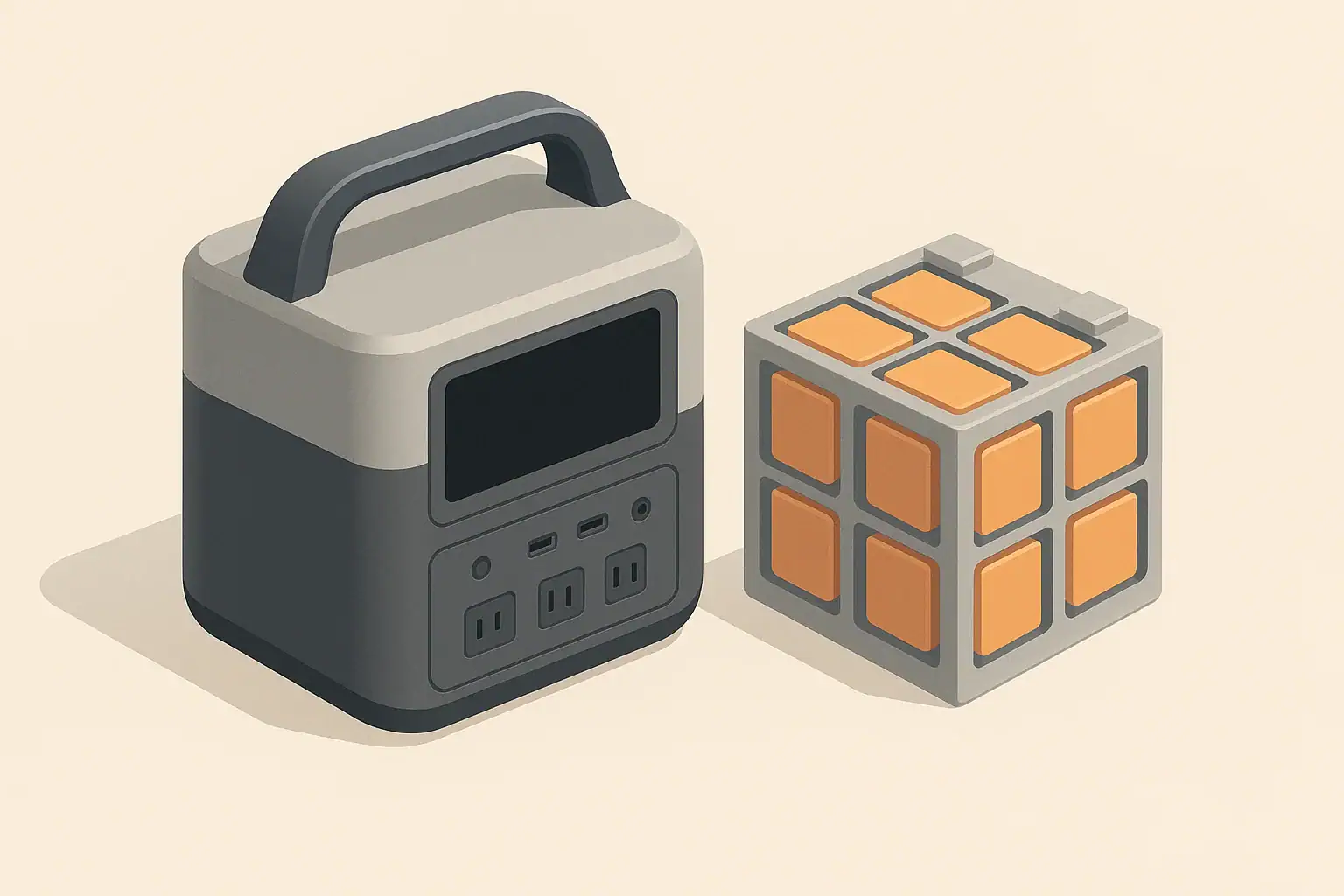
Isometric illustration of portable power station and internal battery cells

Why State of Charge on Portable Power Stations Is Not Exact

The battery percentage on a portable power station looks simple: 100% means full, 0% means empty. In reality, that number is an estimate based on internal measurements and calculations. Over time, this estimate can drift, so the state of charge (SOC) reading no longer matches the true amount of energy in the battery.

Understanding why SOC drifts helps explain common questions, such as:

  • Why the display might drop from 100% to 90% quickly, then slow down
  • Why a unit may shut off even though it still shows 5–10% remaining
  • Why the same battery seems to last different amounts of time between charges

This article explains how SOC is estimated in modern lithium-ion and LiFePO4 portable power stations, why readings drift, and what battery calibration really means.

What State of Charge (SOC) Actually Means

State of charge is a way to express how full a battery is relative to its usable capacity.

In basic terms:

  • 100% SOC: the battery is at its allowed upper charge limit
  • 0% SOC: the battery has reached its allowed lower discharge limit
  • 50% SOC: about half of the usable capacity is available

Important details:

  • SOC refers to usable capacity, not the absolute chemical limits of the cells.
  • Battery management systems (BMS) keep a safety margin at the top and bottom to protect the cells.
  • The percentage you see is already shaped by those safety limits and internal assumptions.

SOC vs. State of Health (SOH)

SOC is often confused with state of health (SOH).

  • SOC: how full the battery is right now.
  • SOH: how much capacity the battery can store compared to when it was new.

As SOH declines with age, 100% SOC can represent less total energy than it did when the battery was new. SOC may still read accurately as a percentage, even though runtime is shorter.

How Portable Power Stations Estimate SOC

Modern portable power stations use a combination of methods to estimate SOC. None of these can measure the exact number of remaining watt-hours directly, so the BMS relies on models and assumptions.

Method 1: Voltage-Based Estimation

The most basic method uses battery voltage. A charged lithium-ion or LiFePO4 battery sits at a higher voltage than a discharged one. The BMS compares the measured voltage to an internal lookup table that maps voltage to SOC.

However, voltage is affected by many factors:

  • Load current: high loads cause voltage sag
  • Temperature: cold batteries show lower voltage
  • Cell chemistry: different chemistries have different voltage curves
  • Rest time: voltage recovers after the load is removed

LiFePO4 batteries in particular have a very flat voltage curve over much of their SOC range. That means a small change in voltage may correspond to a large change in SOC, which makes pure voltage-based estimation unreliable.

Method 2: Coulomb Counting (Current Integration)

To improve accuracy, many systems use coulomb counting. The BMS measures current going in and out of the battery and integrates it over time to track the net charge.

Conceptually:

  • When charging, the BMS adds amp-hours (Ah) to the internal counter.
  • When discharging, it subtracts amp-hours from the counter.
  • The counter is referenced to a known full or empty point to express SOC as a percentage.

Coulomb counting works well over short periods, but:

  • Measurement errors accumulate over time.
  • Actual usable capacity changes with temperature, age, and discharge rate.
  • Self-discharge during storage may not be perfectly tracked.

Method 3: Hybrid Algorithms and Battery Models

Most portable power stations use a hybrid approach that combines coulomb counting, voltage measurements, temperature sensing, and predefined battery models.

Typical behavior:

  • During active use, SOC follows coulomb counting, adjusted for efficiency losses.
  • When the battery rests, the system compares resting voltage to its model and may correct the SOC estimate.
  • At well-defined points, such as a controlled full charge or low-voltage shutdown, the BMS sets reference points for 100% or 0% SOC.

These internal models are designed around expected behavior of lithium-ion or LiFePO4 cells, but every real battery deviates slightly from the model. Over many cycles, these deviations cause SOC errors unless the system is periodically recalibrated.

Why SOC and Battery Percentage Drift Over Time

SOC drift is the gradual mismatch between the displayed percentage and the true remaining capacity of the battery. This is normal and expected for all batteries that rely on estimation.

1. Measurement and Rounding Errors Add Up

The BMS measures current, voltage, and temperature at discrete intervals. Each measurement is subject to:

  • Sensor accuracy limits
  • Rounding inside the microcontroller
  • Sampling delays, especially under rapidly changing loads

Over dozens of cycles, even small errors in coulomb counting accumulate, especially if the battery is rarely taken to clear reference points like a full charge.

2. Capacity Changes with Age and Use

As a lithium-ion or LiFePO4 battery ages, its total usable capacity gradually decreases. However, the BMS’s internal model may still assume a higher capacity unless the firmware adapts or is recalibrated.

This leads to issues such as:

  • Battery reaching low-voltage cutoff before the display hits 0%
  • Unexpectedly short runtime at low SOC
  • Power station shutting down earlier than the percentage suggests

3. Temperature Effects

Temperature has a major influence on both voltage and effective capacity:

  • Cold temperatures reduce available capacity and lower the voltage curve.
  • High temperatures can temporarily increase capacity but accelerate aging.

If the BMS uses temperature-compensated models, it may still not perfectly match the real behavior of the particular cells. SOC estimated at one temperature may not align well when conditions change.

4. Self-Discharge and Storage

When a portable power station sits unused, the battery slowly self-discharges. The BMS itself consumes a small standby current, and connected devices in low-power modes may draw additional energy.

If the system does not fully track these small, continuous currents, SOC may be overestimated after long storage periods. Users may see:

  • Display still showing a high percentage after weeks or months
  • Rapid drop in SOC once power draw resumes

5. Irregular Charge and Discharge Patterns

Many users operate their power stations in partial cycles: topping up from 40% to 80%, or discharging only from 100% to 60% repeatedly. While this can be gentle on the battery, it provides fewer clear reference points for the SOC algorithm.

Over time, this can cause:

  • SOC staying “stuck” around certain ranges
  • Percentage suddenly jumping after an unusually deep discharge or full charge
  • Mismatch between the displayed percentage and expected runtime from experience

What Battery Calibration Really Means

Battery calibration in the context of portable power stations is about calibrating the SOC estimate, not changing anything inside the cells.

Calibration aligns the BMS’s internal model with the actual behavior of the battery pack by providing clear reference points.

Common Calibration Steps in Practice

Although specific procedures vary, many systems benefit from a periodic controlled cycle:

  1. Charge to 100%
    Allow the unit to charge until it reaches a stable full state and remains there for a while (often 1–2 hours after first reaching 100%). This lets the BMS confirm its top-of-charge reference.
  2. Discharge under a moderate load
    Use the power station at a moderate, continuous load (not extremely high or extremely low) down to a low SOC level or until it shuts off normally. This helps the BMS observe the full discharge curve.
  3. Recharge fully without interruption
    After shutdown, recharge to 100% again in one session if possible. The full cycle gives the BMS data points to adjust its estimates.

Some devices have built-in learning algorithms that automatically refine SOC over time without a deliberate calibration cycle. Others benefit from an intentional recalibration if you notice persistent inaccuracies.

What Calibration Cannot Fix

Calibration cannot:

  • Restore lost capacity from aging or heavy use
  • Change the battery’s chemistry or safety limits
  • Override low-temperature or high-temperature protections

It only improves how well the displayed percentage matches the real usable energy under typical conditions.

How Drift Appears in Everyday Use

SOC drift often shows up as specific behaviors that users notice when running appliances or charging devices from a portable power station.

Nonlinear Percentage Drop

A common observation is that the first 10–20% seems to drop quickly, then the percentage appears to move slowly through the middle, and then may drop quickly again near the bottom.

This nonlinearity comes from:

  • The shape of the voltage curve for lithium-ion and LiFePO4 chemistries
  • How the SOC algorithm smooths or averages readings
  • Different loads at different times (for example, starting a high-wattage appliance briefly)

Even with perfect calibration, SOC will not always decrease at a steady rate because power draw and internal efficiency are not constant.

Early Shutdown with Percentage Remaining

Another common concern is a power station shutting down with 5–15% still showing on the display. This usually indicates that:

  • The battery has reached its low-voltage cutoff under the current load.
  • Actual capacity is lower than assumed, often from age or temperature.
  • The SOC algorithm has drifted and is overestimating remaining energy.

After cooling or resting, the battery’s voltage may recover, and the display might still show a nonzero percentage, even though the BMS will not allow further discharge.

Different Runtime at the Same SOC

Users may notice that 50% SOC sometimes powers a device for several hours, and other times only for a short period. Factors include:

  • Load level: high wattage draws reduce effective capacity due to internal resistance and heat.
  • Temperature: cold reduces usable capacity, especially for lithium-ion chemistries.
  • Recent usage: a heavily loaded battery may experience more voltage sag at the same SOC.

SOC is a snapshot of remaining charge, not a guarantee of runtime. Runtime always depends on power draw and conditions.

Best Practices to Keep SOC Readings Reasonably Accurate

Some drift is inevitable, but you can help your portable power station maintain more reliable SOC estimates through your usage patterns.

Occasionally Run a Full Calibration Cycle

If the manufacturer’s guidance allows it, consider:

  • Charging fully to 100% until the charger clearly stops
  • Discharging to a low percentage or automatic shutdown with a moderate, steady load
  • Recharging to 100% in one uninterrupted session

Doing this a few times per year can give the BMS better data to align its internal model with reality.

Avoid Extreme Temperatures During Critical Measurements

If you want the most reliable reading:

  • Charge and discharge near room temperature when possible.
  • Avoid calibrating in very cold or very hot environments.
  • Let a cold or hot unit rest indoors before relying on the SOC reading.

Store at Moderate SOC and Check Periodically

For storage:

  • Many lithium-ion and LiFePO4 batteries prefer storage around 30–60% SOC.
  • If left unused for months, expect SOC to be less accurate due to self-discharge and standby loads.
  • Periodically power the unit on and top it up if needed.

Long-term storage at 100% or near 0% SOC can increase degradation, which in turn complicates accurate SOC estimation as the battery’s capacity changes.

Understand That SOC Is an Estimate, Not a Fuel Gauge

Unlike a tank of liquid fuel, a battery’s energy content is not directly measurable with a simple sensor. Treat SOC as an educated estimate that:

  • Is very helpful for planning
  • Will never be mathematically perfect
  • Can shift slightly as the BMS refines its model

Key Takeaways for Portable Power Station Users

Portable power stations rely on complex algorithms to display state of charge. Lithium-ion and LiFePO4 batteries change over time with use, temperature, and age, so some drift in SOC is normal.

By recognizing that SOC is an estimate, occasionally allowing full charge and controlled discharge cycles, and operating within reasonable temperatures, you help the battery management system stay better calibrated. This leads to more predictable runtimes and fewer surprises, even as the battery naturally ages and its true capacity gradually declines.

Frequently asked questions

Why does my power station drop from 100% to 90% quickly?

That behavior is usually caused by how the SOC estimate is calculated: initial voltage and coulomb-counting corrections, rounding, and the battery model can make the top percentiles move faster. A brief voltage sag under load or the BMS applying efficiency corrections can make the displayed percentage fall quickly at first and then stabilize.

Why can the unit shut off while the display still shows 5–15% remaining?

The BMS enforces a low-voltage cutoff to protect cells, and under real load the battery can reach that cutoff before the SOC estimate reaches 0%. This can be due to capacity loss from age, temperature-related capacity reduction, or SOC drift that overestimates remaining energy.

How often should I run a calibration cycle to reduce SOC drift?

For most users, performing a full charge→controlled discharge→full recharge cycle a few times per year is sufficient, or whenever you notice persistent inaccuracies. Follow the manufacturer’s guidance and avoid extreme temperatures during calibration for the best results.

Can calibration restore lost battery capacity?

No — calibration only improves the accuracy of the SOC estimate by aligning the BMS model to observed full and empty points. It cannot reverse capacity loss caused by age, cycling, or cell degradation.

Does temperature make SOC readings unreliable?

Yes. Temperature changes affect cell voltage and usable capacity, so SOC estimated at one temperature may not match performance at another. Avoid calibrating in very hot or cold conditions and expect shorter runtimes in cold environments.

LiFePO4 Charging Profile Explained (in Plain English)

Isometric illustration of power station charging

LiFePO4 (lithium iron phosphate) is a lithium‑ion battery chemistry commonly used in portable power stations. It behaves differently from lead‑acid and other lithium chemistries when it comes to voltages, charging stages, and temperature sensitivity.

Understanding the charging profile helps you charge safely, extend cycle life, and get predictable run times from your equipment.

A charging profile describes how voltage and current are controlled during charge. Most modern chargers use a CC‑CV approach: constant current (CC) followed by constant voltage (CV).

Key ideas:

  • CC (Constant Current): Charger supplies a steady current until the battery reaches a target voltage.
  • CV (Constant Voltage): Charger holds a target voltage while current gradually tapers down.
  • Charge termination: Charging ends when current falls below a threshold or a timer expires.

What LiFePO4 means for charging

Basic charging concepts in plain English

A charging profile describes how voltage and current are controlled during charge. Most modern chargers use a CC‑CV approach: constant current (CC) followed by constant voltage (CV).

Key ideas:

  • CC (Constant Current): Charger supplies a steady current until the battery reaches a target voltage.
  • CV (Constant Voltage): Charger holds a target voltage while current gradually tapers down.
  • Charge termination: Charging ends when current falls below a threshold or a timer expires.

LiFePO4 CC‑CV profile: what it looks like

LiFePO4 follows the CC‑CV pattern, but with different voltage targets and tolerances than other battery types. The battery accepts a high current in the CC phase and then the charger reduces current as the battery approaches the CV voltage.

Typical stages

  • Bulk/CC: Apply a steady charging current (often expressed as a fraction of capacity, e.g., 0.2C).
  • Absorption/CV: Hold the pack voltage at the recommended value while the current tapers.
  • Float: Rare for LiFePO4—most systems do not use a continuous float charge the way lead‑acid does.

LiFePO4 cells have nominal voltages near 3.2–3.3 volts per cell. Most packs are series configurations of 4 cells for 12.8V nominal, 8 cells for 25.6V nominal, etc.

Common voltage targets

  • Per cell full charge voltage: about 3.60–3.65 V.
  • 12.8V (4S) pack CV voltage: roughly 14.4–14.6 V.
  • 24–26V packs and higher scale similarly (multiply cell voltage by series cell count).

Charging current guidelines

  • Recommended charge current: often 0.2C to 0.5C (where C is the battery capacity). For a 100 Ah pack, 20–50 A.
  • Maximum charge current: some cells tolerate 1C, but pack design and manufacturer limits may be lower.
  • Slow charging (≤0.2C) reduces stress and can improve longevity.

How charge termination and balancing work

battery management system (BMS) LiFePO4 packs are usually protected by a battery management system (BMS). The BMS enforces safe voltages, balancing, and temperature limits.

Charge termination

Unlike lead‑acid, LiFePO4 charging is often terminated when the charge current falls to a low percentage of the CC current (for example 1–3% of C) while the pack is at CV voltage. Some chargers also use a timer.

Cell balancing

Cell balancing equalizes voltages across series cells. LiFePO4 is tolerant of imbalance, but balancing is still useful to maintain capacity and prevent overvoltage on individual cells.

Balancing can be passive (bleeding off a bit of charge from higher cells) or active. Many BMS units provide passive balancing during or after full charge.

BMS, protections, and temperature effects

The BMS is the gatekeeper. It prevents overcharge, overdischarge, overcurrent, and charging below safe temperatures. Relying on the BMS as part of your charging strategy is essential.

Temperature limitations

  • LiFePO4 should not be charged below approximately 0°C (32°F) unless the pack has a built‑in heater or the BMS allows low‑temperature charging—charging at subfreezing temperatures risks lithium plating and permanent damage.
  • High temperatures accelerate aging. Chargers and pack enclosures should avoid excessive heat during charge.

Typical BMS protections

  • Cell overvoltage lockout (stops charging if any cell exceeds safe voltage).
  • Low‑temperature charge inhibit.
  • Charge current and short‑circuit protection.
  • Balancing during or near full charge.

Charging from different sources

Portable power stations often receive charge from wall chargers (AC), car outlets (DC), or solar panels via MPPT controllers. Each source affects the charging profile in practice.

AC (wall) charging

AC chargers are usually designed to provide the CC‑CV profile appropriate for the pack voltage. They often integrate with the unit’s internal BMS and stop when charge termination conditions are met.

DC fast charging

DC charging can provide higher currents for faster charging. The pack and BMS must support the higher power. Fast charging increases heat and can shorten cycle life if used repeatedly at high rates.

Solar charging and MPPT

Solar inputs are variable. MPPT charge controllers try to supply the optimal current given the panel output and the battery’s charging stage. On cloudy days the charger may remain in CC longer or never reach CV.

When using solar:

  • Expect slower transitions to CV due to variable input.
  • MPPT controllers should be set or configured for LiFePO4 pack voltages.
  • Ensure the controller recognizes LiFePO4 so it doesn’t apply lead‑acid float behavior.

Practical tips for charging portable power stations with LiFePO4

  • Use chargers and controllers that support LiFePO4 chemistry and the pack voltage target.
  • Charge at conservative currents (0.2–0.5C) to balance speed and longevity.
  • Avoid charging below freezing unless the BMS and pack include heating or cold‑charge capabilities.
  • Avoid continuous float charging; LiFePO4 does not need float like lead‑acid does.
  • Monitor pack temperature during fast charging and reduce current if overheating occurs.
  • Allow the charger to finish the CV taper — stopping partway leaves the pack with less stored energy and can increase imbalance over many cycles.

How long will charging take?

Estimate charging time roughly with this simple formula: time (hours) = usable capacity (Wh) ÷ input power (W). For a capacity‑based estimate use time (hours) = capacity (Ah) ÷ charge current (A).

Example: a 100 Ah 12.8 V pack at 0.5C (50 A) would go from near empty to CV in about 2 hours, plus additional time for the taper in CV stage.

Common myths and clarifications

  • Myth: LiFePO4 needs a float charge. Fact: LiFePO4 has low self‑discharge and doesn’t require continuous float charging; a periodic top‑up is sufficient.
  • Myth: All chargers for lithium batteries are the same. Fact: Voltage targets and charge termination differ across lithium chemistries — use a charger set for LiFePO4 voltages.
  • Myth: Faster is always better. Fact: High‑rate charging stresses cells and raises temperature; moderate rates prolong life.

Storage and long‑term care

For long‑term storage keep LiFePO4 packs at a partial state of charge, typically around 30–50% SOC. This minimizes calendar aging while allowing for BMS monitoring and occasional balancing.

LiFePO4 self‑discharge is low, so infrequent topping‑up is usually adequate. Periodically check voltage and cycle if necessary to maintain health.

Frequently asked quick questions

Is float charging safe for LiFePO4?

Continuous float is unnecessary and generally not recommended. If float is used, it must be at an appropriate low voltage tailored for LiFePO4 and monitored by the BMS.

Can I use a lead‑acid charger?

Not directly. Lead‑acid chargers typically use higher CV voltages and float schemes that are inappropriate for LiFePO4. Use a charger configured for LiFePO4 or programmable to correct voltage/current.

What happens if a LiFePO4 cell exceeds CV voltage?

The BMS should prevent overvoltage by cutting charge or disconnecting the pack. Repeated overvoltage on any cell shortens life and can trigger safety mechanisms.

Is cell balancing required?

Balancing is recommended to maintain capacity and prevent individual cell overvoltage. LiFePO4 tolerates imbalance well, but regular balancing extends useful life over many cycles.

Key takeaways

LiFePO4 charging uses a CC‑CV profile with lower voltage targets than many other battery types. Proper voltage, controlled current, BMS protections, and attention to temperature are the main factors that keep charging safe and maximize battery life.

Follow manufacturer recommendations for pack voltage and charge current, avoid charging in freezing conditions unless designed for it, and prefer chargers or MPPT controllers that explicitly support LiFePO4 chemistry.

Frequently asked questions

What is the correct CV voltage for a 12.8 V (4S) LiFePO4 charging profile?

A typical CV target for a 12.8 V (4S) LiFePO4 pack is about 14.4–14.6 V (approximately 3.60–3.65 V per cell). Always confirm the exact value with the pack manufacturer or BMS documentation because tolerances and recommended setpoints can vary by design.

How should I choose the charging current for a LiFePO4 pack?

Set the charge current relative to capacity; common routine rates are 0.2C–0.5C (for example, 20–50 A on a 100 Ah pack). Some cells and packs tolerate up to 1C, but using lower currents (≤0.2C) reduces stress and typically extends cycle life.

Can I leave a LiFePO4 battery on float charge long term?

Continuous float charging is generally unnecessary and not recommended for LiFePO4 packs. If float is required by a specific system, it must use a low, LiFePO4‑appropriate voltage and be supervised by the BMS to avoid overcharge and cell imbalance.

How does temperature influence the LiFePO4 charging profile?

Do not charge LiFePO4 below about 0°C unless the pack includes a heater or the BMS explicitly allows cold charging, because low‑temperature charging risks lithium plating. High temperatures accelerate aging and can trigger BMS limits, so monitor temperature and reduce charge current if the pack overheats.

Is cell balancing necessary for LiFePO4 packs, and when does it occur?

Cell balancing is recommended to keep series cells within safe voltage differences and preserve usable capacity over many cycles. Most BMS units perform passive balancing near or after the CV stage; regular balancing prevents small imbalances from growing and risking individual cell overvoltage.

Battery Management System (BMS) Explained: Protections Inside a Power Station

Isometric illustration of battery cells inside module

What is a Battery Management System (BMS)?

A Battery Management System (BMS) is the electronic control and protection system that monitors and manages the cells inside a battery pack. In a portable power station the BMS is the central subsystem that keeps the battery operating safely, extends cell life, and enables reliable charging and discharging.

Why a BMS Matters in Portable Power Stations

Portable power stations combine one or more cell modules with an inverter, charger, and output circuitry. Cells are sensitive to voltage, current, temperature, and state of charge. The BMS ensures those conditions stay within safe limits.

Without an effective BMS, the battery pack risks reduced capacity, accelerated aging, thermal events, and sudden failure. The BMS is the primary safety layer to prevent those outcomes.

Core Protections Provided by a BMS

A modern BMS implements multiple overlapping protections. Each addresses a different risk to cells or to the user.

Overcharge Protection

Overcharging raises cell voltage beyond safe limits and can cause oxygen release, increased pressure, and permanent damage. The BMS monitors per-cell voltages and stops charging at a defined cutoff.

Overdischarge Protection

Deep discharge can damage cell chemistry and reduce usable capacity. The BMS blocks further discharge when cells reach a minimum safe voltage, protecting long-term health.

Overcurrent and Short-Circuit Protection

High discharge currents and short circuits generate heat and stress. The BMS detects excessive current and responds by opening switches, tripping contactors, or blowing fuses to interrupt flow.

Thermal Protection

Temperature affects performance and safety. The BMS uses temperature sensors to limit charge/discharge at extreme temperatures and to shut down the pack if temperatures exceed safe thresholds.

Cell Balancing

Individual cells in a pack drift apart in voltage over time. Balancing redistributes or bleeds off energy so cells remain matched, maximizing capacity and preventing weak cells from limiting the pack.

State Estimation and SoC Limits

The BMS estimates state of charge (SoC) and state of health (SoH) using voltage, current, and time-based algorithms. These estimates inform charge and discharge limits and user displays.

Isolation and Ground Fault Detection

Some BMS implementations check for isolation resistance and ground faults, particularly when the power station connects to external sources like solar panels or AC mains. This prevents hazardous leakage paths.

Communications and Diagnostics

Many BMSs expose telemetry to chargers, inverters, or a user interface. Communications enable coordinated control, fault logging, and firmware updates for improved performance and diagnostics.

How Protections Are Implemented

BMS designs combine sensors, power electronics, embedded software, and safety components. Key elements include:

  • Voltage sensing circuits that measure each cell or cell group.
  • Current sensors (shunts or hall-effect) for accurate charge and discharge monitoring.
  • Temperature sensors placed at cell groups or critical locations.
  • Switching devices such as MOSFETs or contactors to connect and disconnect the pack.
  • Passive or active balancing circuitry to equalize cell voltages.
  • Microcontrollers and firmware that execute protection logic and communications.
  • Hardware fuses or thermal fuses as last-resort fail-safes.

MOSFETs, Contactors, and Fuses

MOSFETs provide fast switching for charge/discharge control, while contactors or relays handle high-energy disconnects. Physical fuses provide irreversible protection in catastrophic events.

Passive vs Active Balancing

Passive balancing bleeds excess energy from high cells through resistors. It is simple and cost-effective. Active balancing transfers energy from higher cells to lower ones more efficiently, improving usable capacity especially on large packs.

Interaction with Charger and Inverter

The BMS must coordinate with the power station’s charger and inverter. Typical coordination tasks include:

  • Signaling when charging can occur and when to stop (charge enable/disable).
  • Limiting charger current based on pack temperature or cell imbalance.
  • Permitting inverter operation only when state of charge and cell conditions are safe.
  • Reporting faults and status to the user interface or remote monitoring system.

Monitoring, Logging, and Firmware

Logging events such as overcurrent trips, temperature excursions, and balancing activity is important for troubleshooting and warranty evaluation. Firmware implements algorithms for SoC/SoH estimation and must be validated to avoid erroneous shutdowns or missed faults.

Secure firmware update mechanisms are also important to fix bugs and improve algorithms over time.

Limitations and Failure Modes

A BMS reduces risk but does not eliminate it completely. Common limits and failure modes include:

  • Sensor failures giving false readings and inappropriate responses.
  • Firmware bugs that miscalculate SoC or miss fault conditions.
  • Physical damage to wiring or cells outside the BMS’s sensing area.
  • Component failures such as MOSFETs or current sensors failing short or open.
  • Environmental factors (water ingress, extreme mechanical shock) that bypass safeguards.

Robust designs use redundant sensors, watchdog timers, and hardware-level failsafes (fuses, thermal cutouts) to guard against single-point failures.

Standards and Testing

Battery packs and BMSs are typically designed to meet industry safety standards and undergo testing for abuse conditions, short circuits, thermal stability, and electrical isolation. Look for products that reference recognized standards and independent testing to ensure compliance.

Maintenance and Best Practices

Users can help a BMS keep the pack healthy by following some basic practices:

  • Store the power station at moderate state of charge (often 40–60%) if unused for long periods.
  • Avoid charging or discharging at extreme temperatures. Let the unit warm or cool before use if necessary.
  • Keep vents and cooling passages clean and unobstructed.
  • Update firmware when vendor-supplied updates are available, following official instructions.
  • Have cellular or battery pack service performed by trained technicians if the pack is damaged or shows repeated faults.

Common Misconceptions

Some users expect a BMS to be a cure-all. Clarify these points:

  • A BMS cannot prevent damage from physical puncture or severe mechanical abuse.
  • It cannot completely compensate for cells that are aged or defective; it can only limit operation to reduce risk.
  • Not all BMSs are equivalent—features and robustness vary by design and validation.

Frequently Asked Questions about BMS

How does the BMS detect a short circuit?

The BMS monitors current continuously. A sudden spike beyond configured thresholds triggers immediate disconnect through MOSFETs or contactors and may also blow a fuse if present.

Can the BMS be reset after a fault?

Some faults clear automatically when conditions return to normal; others require manual reset or service. Critical faults often need professional inspection before reuse.

Does cell chemistry change BMS settings?

Yes. Different chemistries (for example lithium ion versus LiFePO4) have different voltage and temperature ranges, and the BMS must be configured accordingly.

Further Reading

For technical users, topics to explore next include cell balancing algorithms, SoC estimation methods (Coulomb counting and model-based approaches), and standards for battery safety testing.

The BMS is a critical component inside any portable power station. Understanding its protections and limitations helps owners use and maintain their equipment safely and effectively.

Frequently asked questions

How does cell balancing extend the life and usable capacity of a battery pack?

Cell balancing keeps individual cells at similar state-of-charge so that no single cell reaches overcharge or deep-discharge limits before the pack as a whole. By preventing cells from hitting extreme voltages repeatedly, balancing reduces stress and uneven aging, which helps preserve usable capacity and cycle life. Active balancing is more efficient for large packs, while passive balancing is simpler and commonly used in smaller systems.

Can a BMS completely prevent thermal runaway in a battery pack?

No. A BMS significantly reduces the probability of thermal runaway by limiting charge/discharge, monitoring temperature, and shutting down the pack on unsafe conditions, and hardware safeguards (fuses, contactors) act as additional layers. However, it cannot guarantee prevention in cases of severe mechanical damage, manufacturing defects, or external abuse that bypass electronic controls.

What steps should I take if the BMS reports repeated overcurrent or cell imbalance faults?

Stop charging or discharging the pack and disconnect external loads if it is safe to do so. Inspect for obvious issues such as damaged cables, loose connections, or blocked cooling; check for firmware updates and review fault logs, and if the problem persists, have the pack inspected and serviced by trained technicians.

How does the BMS communicate charge and discharge limits to the charger or inverter?

The BMS typically communicates via digital buses (for example CAN or SMBus/I2C) or through dedicated enable/limit signals and telemetry lines. It reports parameters such as SoC, temperature, cell imbalances, and fault states so upstream chargers or inverters can adjust current, stop charging, or refuse to run until conditions are safe.

How often should BMS firmware and diagnostic logs be checked or updated?

Review diagnostic logs whenever a fault occurs and include a firmware/log check in routine maintenance; for many consumer units an annual inspection is reasonable, while critical installations may require more frequent reviews. Apply vendor-supplied firmware updates when they address safety fixes or documented reliability improvements, following the manufacturer’s instructions.

Battery Cycle Life Explained: What “Cycles” Really Mean

isometric illustration of battery cells inside portable power station

What Battery Cycle Life Really Means

When you shop for a portable power station, you will often see specifications like ‘3,000 cycles to 80%’ or ‘500 cycles to 70%’. These numbers are describing battery cycle life, one of the most important factors in how long your power station will remain useful.

Understanding what a ‘cycle’ is, how it is measured, and what those percentages mean will help you estimate long-term value, choose the right chemistry, and take care of your battery.

What Is a Battery Cycle?

A battery cycle is a complete use of energy equal to 100% of the battery’s rated capacity, followed by recharging. It is not necessarily one full discharge from 100% down to 0% in a single event.

Full cycles vs partial cycles

In practical use, you may rarely drain a portable power station from full to empty in one go. Instead, you might:

  • Discharge from 100% down to 60% one day (40% used)
  • Recharge to 100%
  • Discharge from 100% down to 60% again the next day (another 40% used)

Those two partial discharges (40% + 40% = 80%) plus another small discharge later would together count as roughly one full cycle. Battery cycle counting is based on the total energy moved in and out, not how many times you press the power button.

Depth of discharge (DoD)

Cycle life is closely tied to depth of discharge (DoD), which is how much of the battery’s capacity you use in each cycle.

  • 100% DoD: using the full capacity (for example, 100% down to near 0%)
  • 50% DoD: using half the capacity (for example, 100% down to 50%)
  • 20% DoD: shallow cycling (for example, 80% down to 60%)

In general, the shallower each cycle (lower DoD), the more total cycles the battery can deliver over its life.

How Manufacturers Define Cycle Life

Cycle life numbers in technical specifications are not guesses; they come from standardized test procedures performed under controlled conditions. However, real-world use often differs from the lab.

Typical cycle life specification format

Most data sheets express cycle life in a format similar to:

  • ‘X cycles to Y% capacity’

For example:

  • ‘500 cycles to 80% capacity’
  • ‘3,000 cycles to 80% capacity’

This means that after the stated number of cycles, the battery is expected to retain the given percentage of its original capacity, not that it will suddenly stop working.

End-of-life capacity threshold

Cycle life is usually defined up to an end-of-life (EOL) capacity threshold. Common thresholds are:

  • 80% of original capacity (most common)
  • 70% or sometimes 60% for certain applications

So if a battery starts with 1,000 Wh of usable capacity and is rated for 2,000 cycles to 80%, then at around 2,000 cycles it is expected to hold about 800 Wh. It may still operate for many more cycles, but with reduced runtime.

Standard test conditions

Cycle life testing is typically done with:

  • Controlled temperature (often around 25°C / 77°F)
  • Controlled charge and discharge currents (C-rate)
  • Fixed depth of discharge (for example, 100% or 80% DoD)

Manufacturers follow various international standards or internal protocols. In the field, portable power stations will face different temperatures, different power draws, and irregular use patterns, so actual cycle life can be higher or lower than the lab rating.

Cycle Life and Battery Chemistries

Portable power stations commonly use two broad categories of lithium-based batteries. Each has different typical cycle life characteristics.

Lithium-ion (NMC and similar)

Many compact or lightweight models use lithium-ion chemistries such as nickel manganese cobalt (NMC) or related blends.

Typical characteristics:

  • Energy density: higher, meaning more capacity for a given weight and size
  • Typical rated cycle life: often a few hundred to around 1,000 cycles to 80% under standard conditions
  • Sensitivity: more affected by high temperatures and deep discharges

Lithium iron phosphate (LiFePO4)

Many newer portable power stations use lithium iron phosphate (LiFePO4) cells.

Typical characteristics:

  • Energy density: lower than many other lithium-ion types, so units can be heavier
  • Typical rated cycle life: often in the thousands of cycles to 80% under standard conditions
  • Robustness: generally more tolerant of frequent cycling and higher temperatures

The exact numbers depend on cell quality, design, and how conservative the manufacturer is in its rating. Still, as a broad trend, LiFePO4 is associated with longer cycle life, while other lithium-ion chemistries tend to offer higher energy density.

How Cycle Life Affects Portable Power Station Lifespan

Cycle life is one of the main determinants of how long a portable power station will deliver useful runtime. The more often you cycle the battery and the deeper you discharge it, the faster capacity will decline.

High-use vs occasional-use scenarios

Consider two different usage patterns:

  • Daily use: running tools, appliances, or devices every day, for example during off-grid living or full-time vanlife
  • Occasional use: backup for power outages or weekend camping

A battery rated for 3,000 cycles to 80% could look very different in these scenarios:

  • At one cycle per day: 3,000 cycles is roughly 8+ years to reach 80% capacity
  • At one cycle per week: 3,000 cycles would span many decades, but calendar aging will limit practical life before that

For occasional emergency backup use, calendar aging (years of existence) can dominate over the cycle count. For intensive daily use, cycle life becomes the critical factor.

Calendar life vs cycle life

Batteries age in two main ways:

  • Cycle aging: capacity loss from charging and discharging
  • Calendar aging: capacity loss over time, even with minimal use

Calendar aging is influenced by:

  • Average state of charge (keeping batteries full or near empty for long periods)
  • Ambient temperature during storage
  • Time since manufacture

Portable power station manufacturers sometimes mention both cycle life and an expected calendar life (for example, certain capacity retained after a number of years). Both should be considered, especially for backup-only use.

What Actually Counts as a Cycle in Real Use

Cycle counting in a portable power station’s battery management system (BMS) is not always visible to the user, but the principle is the same: it tracks the amount of energy that flows in and out.

Example of multiple small discharges

Imagine the following usage pattern on a 1,000 Wh portable power station:

  • Morning: use 100 Wh to power a laptop
  • Afternoon: use 200 Wh for tools
  • Evening: use 300 Wh for lighting and a fan

Total discharge for the day: 600 Wh.

If you then recharge back to 100%, you have completed about 0.6 of a cycle (600 Wh out of 1,000 Wh). Over several days, the BMS will add these partial cycles together to estimate total cycle count.

Does turning the unit on and off matter?

Turning your portable power station on or off does not create cycles by itself. Cycles are all about energy throughput, not power button presses. However, devices that draw power in standby mode will still slowly discharge the battery, contributing to cycle usage over time.

Factors That Reduce or Extend Cycle Life

Cycle life ratings assume controlled conditions. Real-world conditions can either shorten or extend actual cycle life.

Factors that reduce cycle life

  • High temperatures: storing or operating the unit in hot environments accelerates chemical degradation
  • Very deep discharges: frequent discharges close to 0% state of charge (SoC) stress cells more
  • Staying at 100% for long periods: long-term storage or parking at full charge can increase calendar aging
  • High charge/discharge rates: repeatedly pushing the maximum output or fastest charging modes can increase wear

Factors that support longer cycle life

  • Moderate temperatures: storing and operating around room temperature is ideal
  • Moderate depth of discharge: cycling between, for example, 20–80% or 10–90% instead of 0–100% every time
  • Avoiding constant full charge storage: storing long term around 30–60% SoC when not in use (if supported by the device)
  • Smooth load profiles: using the unit within its comfortable continuous power range rather than near peak capacity

Cycle Life and Portable Power Station Sizing

Understanding cycle life can also inform how you size a portable power station for your needs. Choosing capacity that is too small may mean you push the battery to deeper discharges more often.

Using a larger battery for shallow cycling

If your daily energy needs are close to the full capacity of a small power station, you will routinely cycle at high depth of discharge. A larger-capacity unit lets you use the same amount of energy while cycling more shallowly.

Example:

  • Daily usage: 500 Wh
  • 1,000 Wh power station: about 50% DoD per day
  • 600 Wh power station: about 83% DoD per day

The unit with larger capacity will experience less stress per cycle, potentially extending its usable lifespan, even though both deliver the same daily energy.

Balancing weight, cost, and cycle life

Higher-capacity and longer-cycle-life batteries generally weigh more and cost more. Finding the right balance depends on:

  • How frequently you plan to use the power station
  • Whether it is for mobile use (where weight and size matter)
  • How many years of heavy service you expect

For rare emergency use, extreme cycle life might be less crucial. For daily off-grid power, high cycle life can be a key selection criterion.

How To Read Cycle Life Specs When Comparing Models

Not all cycle life claims are presented the same way. Paying attention to the details helps you compare models more accurately.

Key points to look for

  • End-of-life percentage: Is the rating to 80% capacity, 70%, or something else?
  • Number of cycles: How many cycles are claimed under that EOL definition?
  • Test conditions (if provided): Temperature, depth of discharge, and C-rates used for testing
  • Battery chemistry: Whether the unit uses LiFePO4 or another lithium-ion chemistry

Realistic expectations vs marketing numbers

Cycle life ratings are not a guarantee that at exactly that cycle count the battery will suddenly drop to the specified capacity. Instead, they are a benchmark based on standardized tests.

In real use:

  • Some units will retain more capacity than the spec suggests
  • Others may wear faster if operated in harsher conditions
  • Capacity generally declines gradually, not all at once

Practical Tips To Maximize Cycle Life

While you cannot stop battery aging, you can influence the rate with a few simple habits.

Storage and environment

  • Store the power station in a cool, dry place away from direct sunlight
  • Avoid leaving it inside hot vehicles or unventilated spaces
  • For long-term storage, aim for a moderate state of charge if the manual recommends it

Charging and discharging habits

  • Use recommended chargers and input settings provided by the manufacturer
  • Avoid running the battery to absolute empty whenever possible
  • Try not to leave the unit at 100% for months if it is not being used
  • Stay within the continuous power rating rather than near peak output for long periods

Routine checks

  • Turn the unit on periodically during long storage periods to check state of charge
  • Top up the battery as needed to prevent very low SoC over months
  • Follow any specific maintenance or firmware update guidance from the manufacturer

Why Cycle Life Matters in a Portable Power Station

Understanding battery cycle life helps you answer practical questions about a portable power station:

  • How many years of daily use can I expect before capacity noticeably drops?
  • Is this model better suited for occasional emergency backup or heavy routine use?
  • Does the battery chemistry align with my needs for longevity, weight, and size?

By looking beyond marketing phrases and examining cycle life specifications, chemistry type, and test assumptions, you can select and use a portable power station in a way that aligns with how often you plan to rely on it and how long you want it to last.

Frequently asked questions

How does depth of discharge (DoD) affect battery cycle life?

Depth of discharge significantly impacts cycle life: deeper discharges generally cause more wear per cycle than shallow discharges, so using a lower DoD typically yields more total cycles over the battery’s life. Manufacturers often specify cycle life at a fixed DoD (for example, 80% or 100%), so compare ratings that use the same DoD to get an accurate sense of longevity.

What typical cycle life can I expect from LiFePO4 compared with other lithium-ion chemistries?

LiFePO4 cells commonly offer thousands of cycles to a specified end-of-life threshold (often 80% capacity), whereas other lithium-ion chemistries like NMC typically offer several hundred to around a thousand cycles under similar test conditions. Actual numbers vary with cell quality, testing parameters, and real-world operating conditions such as temperature and charge rates.

Does storing a battery at 100% state of charge shorten its cycle life?

Yes — long-term storage at or near 100% state of charge accelerates calendar aging for many lithium-based batteries and can reduce effective cycle life over time. When storing a unit for extended periods, follow the manufacturer’s recommendation (often around 30–60% SoC) and store in a cool, dry environment.

How much does temperature affect battery cycle life in portable power stations?

Temperature has a large effect: high temperatures accelerate chemical degradation and reduce both cycle life and calendar life, while very low temperatures can temporarily reduce usable capacity and increase stress during charging. Operating and storing the battery near room temperature generally provides the best balance of performance and longevity.

Can charging behavior, like fast charging or staying at full charge, change the battery’s cycle life?

High charge and discharge rates (fast charging or sustained high power draw) and prolonged periods at full charge tend to increase wear and can shorten cycle life; avoiding repeated maximum-rate charging and not leaving the battery at 100% for long periods can help preserve capacity. Use the manufacturer’s recommended charging settings and avoid routinely operating at the battery’s limits when longevity is a priority.

How to Calculate Watt-Hours From Amp-Hours (and Avoid Common Mistakes)

Isometric portable power station with abstract energy blocks

Battery capacity is described in different units. Amp-hours describes charge quantity at a given voltage. Watt-hours describe energy. For sizing portable power stations, planning runtimes, or comparing batteries, watt-hours are the more useful unit because they incorporate voltage and represent actual energy available.

The core relationship is simple:

Watt-hours (Wh) = Amp-hours (Ah) × Voltage (V)

Use the nominal voltage of the battery or battery pack for quick calculations. For more accurate results, use the measured voltage under load or the battery’s average operating voltage.

  • Ah is amp-hours. 1 Ah = 1 amp supplied for 1 hour.
  • Wh is watt-hours. 1 Wh = 1 watt supplied for 1 hour.
  • If you have milliamp-hours (mAh), convert to Ah by dividing by 1000: 2000 mAh = 2 Ah.

Why convert amp-hours to watt-hours

Basic formula

Units and conversions

  • Ah is amp-hours. 1 Ah = 1 amp supplied for 1 hour.
  • Wh is watt-hours. 1 Wh = 1 watt supplied for 1 hour.
  • If you have milliamp-hours (mAh), convert to Ah by dividing by 1000: 2000 mAh = 2 Ah.

Worked examples

Example 1: Typical 12 volt lead-acid battery

Battery spec: 12 V, 100 Ah.

Wh = 100 Ah × 12 V = 1200 Wh.

This battery stores 1200 watt-hours of energy at the nominal voltage.

Example 2: Lithium-ion cell pack

Battery pack spec: 14.8 V nominal, 5 Ah.

Wh = 5 Ah × 14.8 V = 74 Wh.

Example 3: Converting from mAh

Phone battery: 3500 mAh, nominal 3.7 V cell.

First convert mAh to Ah: 3500 mAh ÷ 1000 = 3.5 Ah.

Wh = 3.5 Ah × 3.7 V = 12.95 Wh.

How to calculate runtime for a device

To estimate how long a battery will run a device, divide the battery Wh by the device power draw in watts. For AC devices powered through an inverter, account for inverter efficiency.

Runtime formula

Runtime (hours) = Battery Wh × Usable fraction × Inverter efficiency ÷ Load watts

Example runtime

Battery: 1200 Wh usable. Device: 60 W lamp. Inverter efficiency or DC conversion not needed if device is DC-compatible; for AC assume 90% efficiency.

  • If directly DC or no conversion losses: 1200 Wh ÷ 60 W = 20 hours.
  • If using an inverter at 90%: (1200 Wh × 0.9) ÷ 60 W = 18 hours.

Common mistakes to avoid

1. Forgetting voltage

People sometimes multiply Ah by a different voltage than the battery actually uses. Always use the pack or system voltage, not a single cell voltage, unless the Ah rating refers to that cell.

2. Using nominal voltage blindly

Nominal voltage is a convenient rating. Under load or near full/empty states the actual voltage can be higher or lower. For more precise energy estimates, use the average operating voltage over the discharge curve.

3. Ignoring usable capacity

Manufacturers list total capacity, but usable capacity depends on depth of discharge limits, battery management system cutoffs, and longevity strategies. For example, a 100 Ah, 12 V battery has 1200 Wh total, but if you only use 80% to protect the battery, usable energy is 960 Wh.

4. Not accounting for conversion losses

When converting DC battery energy to AC or another voltage, converters and inverters produce heat. Typical inverter efficiency ranges from 85% to 95%. Include those losses when calculating expected runtimes.

5. Confusing series and parallel wiring

When batteries are wired in series, voltages add while Ah stays the same. When wired in parallel, Ah adds while voltage stays the same. People often assume Ah always adds regardless of configuration, which leads to incorrect Wh calculations.

  • Two 12 V 100 Ah batteries in series => 24 V, 100 Ah => Wh = 24 × 100 = 2400 Wh.
  • Two 12 V 100 Ah batteries in parallel => 12 V, 200 Ah => Wh = 12 × 200 = 2400 Wh.

Both configurations yield the same total Wh, but the system voltage and current characteristics differ.

6. Using inconsistent units

Mixing mAh and Ah without converting, or mixing nominal and measured voltages, leads to arithmetic errors. Convert everything to the same base units before computing.

Advanced considerations that affect real-world energy

State of charge and discharge rates

Battery chemistry behaves differently at high discharge currents. Effective capacity can decrease at high discharge rates. Manufacturers sometimes specify capacity at a particular discharge rate; use that as a guide or correct for Peukert effects when necessary.

Temperature effects

Cold temperatures reduce available capacity. For critical applications, reduce estimated usable Wh at low temperatures or use battery chemistries rated for cold operation.

Battery age and cycling

Over time, batteries lose capacity. A pack that originally stored 1000 Wh may store less after many cycles. Use a conservative capacity estimate if the battery is not new.

Measurement method for accurate Wh

For the most accurate Wh measurement, use a coulomb counter or energy meter that logs voltage and current over time. Integrate power over the discharge period to get actual Wh rather than relying on nominal ratings.

Quick reference formulas

  • Wh = Ah × V
  • Ah = Wh ÷ V
  • mAh to Ah: Ah = mAh ÷ 1000
  • Estimated usable Wh = Rated Wh × Usable fraction (for example 0.7 to 0.9)
  • AC available Wh = Battery Wh × Inverter efficiency

Practical checklist before you calculate

  • Confirm the battery or pack nominal voltage.
  • Confirm Ah or convert mAh to Ah.
  • Decide on usable capacity fraction (based on chemistry and management system).
  • Account for conversion and inverter efficiencies if powering devices that require different voltages or AC.
  • Adjust for temperature and battery age if relevant.

Frequently asked questions

How do I calculate watt-hours from amp-hours for a battery pack?

Multiply the amp-hours by the pack voltage using Wh = Ah × V. If you have mAh, convert to Ah first by dividing by 1000, and use the system or pack voltage rather than a single cell voltage for correct results.

Is nominal voltage accurate enough when I calculate Wh?

Nominal voltage is fine for rough estimates and quick comparisons, but actual voltage varies during discharge. For precise Wh values use the average operating voltage or measure voltage under load over the discharge period.

How should I account for inverter or converter losses when estimating usable Wh?

Multiply battery Wh by the converter or inverter efficiency (for example 0.85–0.95) to get AC or converted-DC available energy. Also include additional losses such as wiring resistance or DC-DC conversion to avoid overestimating runtime.

Do series or parallel battery connections change total Wh?

In ideal conditions total Wh remains the same: series wiring increases voltage while keeping Ah the same, and parallel increases Ah while keeping voltage the same. Always use the combined system voltage and Ah when calculating Wh for the configured pack.

What is the best way to measure the actual watt-hours delivered by a battery?

Use an energy meter or coulomb counter that logs voltage and current and integrate power over time to get actual Wh. This captures real-world effects like voltage sag, conversion losses, and varying load, which nominal ratings do not reflect.

Final notes on accuracy

Converting Ah to Wh is straightforward, but real-world usable energy differs from theoretical numbers. Treat nominal Wh as a starting point and apply the adjustments described here for planning. For precise energy accounting, measure voltage and current over time with appropriate meters.

Understanding the distinction between amp-hours and watt-hours helps with proper sizing of portable power stations and batteries and reduces errors when estimating runtimes for devices.

AC vs DC Power: How to Maximize Efficiency and Runtime

Isometric illustration of two portable power stations

AC vs DC Power: How to Maximize Efficiency and Runtime

Portable power stations store DC energy in batteries and provide power to devices either as DC directly or converted to AC through an inverter. Choosing the right delivery method and managing conversions are key to maximizing runtime and overall efficiency. This article explains the technical differences, quantifies common losses, and gives practical strategies to get the most energy from a portable power station.

Fundamentals: What AC and DC Mean for Portable Power

Direct Current (DC)

DC is the form of electricity stored in batteries. Many devices and charging circuits accept DC directly: USB devices, 12 V appliances, LED lights, and some electronics with internal DC power supplies.

Alternating Current (AC)

AC is the form of electricity used by most household appliances. Portable power stations create AC by converting stored DC through an inverter. The inverter produces sinusoidal or modified wave AC at a specified voltage and frequency to match mains-powered devices.

Where Energy Is Lost: Conversion and Efficiency

Key stages of loss

  • Battery internal losses and chemical inefficiencies (affecting round-trip efficiency)
  • DC-DC conversion losses when stepping voltages for specific outputs
  • Inverter losses when converting DC to AC
  • Device inefficiency and power factor losses for AC loads

Typical efficiency ranges

Benchmarks vary by design and load size, but common ranges are useful for estimates:

  • Battery round-trip efficiency: roughly 85%–95%
  • DC-DC converter efficiency: about 90%–98% when well matched to the load
  • Inverter efficiency: typically 85%–95% under moderate loads; lower at very light or very heavy loads

These factors multiply when a device requires multiple conversions. For example, powering an AC device often uses battery → inverter → device, so overall usable energy can be reduced by the inverter inefficiency on top of battery losses.

Calculating Runtime: A Practical Formula

Basic runtime equation

To estimate runtime, use the battery capacity in watt-hours (Wh) and account for system efficiency and the device load in watts (W):

Estimated runtime (hours) = (Battery Wh × usable battery fraction × system efficiency) ÷ load W

Example calculation

Suppose a battery has 1,000 Wh usable, inverter efficiency is 90%, and round-trip battery efficiency is 90%. For an AC laptop charger drawing 60 W:

  • System efficiency = inverter (0.90) × battery (0.90) = 0.81
  • Estimated runtime = (1,000 Wh × 0.81) ÷ 60 W ≈ 13.5 hours

If the same laptop is charged via a direct DC port with a DC-DC converter at 95% efficiency instead of the inverter, the calculation becomes (1,000 Wh × 0.95 × 0.90) ÷ 60 W ≈ 15.8 hours, showing clear benefits to avoiding the inverter where possible.

Practical Strategies to Maximize Efficiency

Prefer DC outputs when compatible

Use direct DC ports (USB, 12 V, or dedicated DC outputs) for devices that accept them. That avoids inverter losses and often yields higher overall efficiency.

Match voltages to minimize conversion

Use devices whose input voltage closely matches the power station’s output. Fewer conversion stages reduce loss. For instance, run 12 V appliances from a 12 V output rather than through the inverter.

Manage load size and avoid light-load inefficiency

Inverters and converters often have optimal efficiency ranges. Very low loads can drive efficiency down because fixed standby losses become a larger share of consumption. Combine small loads or use higher-efficiency DC options for low-power devices.

Limit high inrush and motor loads

Appliances with motors, compressors, or heating elements have high startup currents and poor part-load efficiency. Choose units with lower starting surge or use devices rated for continuous operation within the power station’s output limits.

Use efficient appliances and power modes

  • Choose energy-efficient LED lights, low-power fans, and efficient chargers
  • Enable power-saving or eco modes on appliances when available

Reduce standby and phantom loads

Turn off unused outlets and devices. Even small standby draws can significantly reduce runtime over many hours.

Temperature and battery care

Batteries operate efficiently within a moderate temperature range. Cold reduces usable capacity and increases internal resistance. Keep the power station within recommended temperature limits to preserve efficiency and runtime.

When AC Is Necessary: Best Practices

Choose the right inverter mode

Some inverters offer economy or pure sine wave modes. Pure sine wave output is cleaner for sensitive electronics and often slightly more efficient under heavier loads. Economy modes reduce idle consumption but may introduce harmonic distortion; use them when appropriate.

Respect continuous and surge ratings

Ensure the continuous watt rating covers the intended load and the surge rating handles startup currents. Operating near maximum continuously lowers inverter efficiency and can shorten runtime due to higher conversion losses and heat generation.

Power factor and apparent power

Certain AC loads have a power factor less than 1, meaning apparent power (VA) differs from real power (W). Check device ratings and prefer devices with good power factor correction to avoid unexpected losses.

Application Guidance: Match Strategy to Use Case

Camping and vanlife

  • Favor DC for lighting, phones, and small appliances
  • Reserve AC for occasional appliances like a small blender or induction cooktop
  • Combine solar charging to extend runtime where possible

Home backup

  • Prioritize critical loads and use AC for larger necessary appliances
  • Reduce nonessential loads and consider efficient DC options for lights and communication gear

Medical devices

Follow manufacturer guidance. Some medical devices require stable AC sine wave power; others can run on DC. Ensure inverter sizing, battery capacity, and redundancy meet safety needs.

Practical Checklist to Improve Runtime

  • List essential devices and their real power draw in watts
  • Prefer DC connections for compatible devices
  • Calculate expected runtime using Wh and realistic efficiency figures
  • Avoid operating continuously near maximum inverter rating
  • Keep the unit in recommended temperature ranges and minimize standby draws
  • Use energy-efficient appliances and power-saving settings

Further Technical Terms to Know

  • Watt-hour (Wh): stored energy available in the battery
  • Watt (W): rate of energy consumption by a device
  • Inverter efficiency: ratio of AC power out to DC power in
  • Round-trip efficiency: losses from charge to discharge of the battery system

Understanding where conversions occur and how much energy they consume is the foundation of maximizing runtime. By matching loads to the most direct power path, managing load sizes, and accounting for conversion efficiencies, you can make practical decisions that extend usable runtime from a portable power station.

Frequently asked questions

How much energy do I lose when converting DC battery power to AC with an inverter?

Inverter efficiency is typically 85%–95% under moderate loads, so the inverter alone commonly wastes about 5%–15% of the DC energy. When you also include battery round-trip losses (commonly 5%–15%), the combined available energy for AC loads can be noticeably reduced, so include both factors in runtime estimates.

When should I use DC outputs instead of AC from a portable power station?

Use DC outputs whenever a device accepts DC directly or when the device’s input voltage matches the power station’s DC output; this avoids inverter losses and usually yields better runtime. Devices like USB-charged phones, 12 V appliances, and DC-powered LED lighting are good candidates.

How do I estimate runtime for an AC device using a portable power station?

Estimate runtime with: runtime (hours) = (Battery Wh × usable battery fraction × system efficiency) ÷ device load (W). Include inverter efficiency, battery round-trip efficiency, and any DC-DC conversion in system efficiency, and check device power factor if the load is AC.

Will running small devices through an inverter waste a lot of energy?

Very small loads can be inefficient because inverters and converters have fixed standby losses that make efficiency fall at light loads. To reduce waste, combine small loads, use DC ports, or enable an inverter economy mode if available.

How does temperature affect battery capacity and runtime?

Batteries deliver less usable capacity in cold temperatures and show higher internal resistance, reducing runtime; high temperatures can temporarily improve capacity but accelerate long-term degradation. Keep the power station in the manufacturer’s recommended temperature range to preserve efficiency and lifespan.

Inverter Efficiency Explained: Why Your Runtime Is Shorter Than Expected

Isometric illustration of power station and energy blocks

When you calculate how long a portable power station should run, the math often looks simple: divide the battery capacity in watt-hours by the appliance wattage. In practice, actual runtime is usually shorter. A major reason is inverter efficiency. The inverter converts stored DC battery power into AC power for most household devices, and that conversion is not perfectly efficient.

An inverter is the component that changes direct current (DC) from the battery into alternating current (AC) that most appliances use. It also adapts voltage and frequency to match household standards. This conversion consumes energy, so not all of the battery’s stored watt-hours reach your load.

Inverter efficiency is typically expressed as a percentage representing the ratio of AC power output to DC power input under specified conditions. An inverter rated at 90% efficiency outputs 90 watts of AC for every 100 watts drawn from the battery; the remaining 10 watts are lost, mostly as heat.

Why runtime is often shorter than expected

What an inverter does and why it matters

Types of losses during conversion

  • Conversion losses: Energy wasted as heat when the inverter changes DC to AC.
  • Standby or idle draw: Small continuous power used when the inverter is on but not heavily loaded.
  • Losses due to waveform and load type: Nonlinear or reactive loads can increase losses.
  • Inrush and surge inefficiencies: Motors and compressors draw high initial current that raises losses.

Understanding inverter efficiency numbers

Manufacturers often quote peak efficiency at a specific load (for example, 50% to 75% of rated power). Efficiency varies with load level, temperature, and age.

Typical efficiency behavior by load

  • Very low loads: Efficiency tends to be poor because standby losses and control circuitry consume a larger share of the total.
  • Moderate loads: Efficiency usually peaks in a middle range where the inverter operates optimally.
  • Near-rated or overload conditions: Efficiency can fall and protective limits may reduce output or shut the unit down.

Factors that reduce runtime beyond basic efficiency

Inverter efficiency is one factor among several that shorten runtime from theoretical values. Key factors include:

1. Idle consumption and system overhead

Most inverters have a small constant draw even when the load is low. Power management features, cooling fans, and control electronics add to consumption. Over a long period, this idle draw can reduce usable capacity significantly.

2. Power factor and reactive loads

Many appliances, especially motors and some electronics, have a low power factor. That means they draw apparent power that does not translate directly to useful work, increasing current and losses in the inverter and wiring.

3. Surge currents

Devices with motors, pumps, or compressors need a higher initial current to start. The inverter must supply this surge, which increases instantaneous losses and can trigger protective limits that affect performance.

4. Temperature and environment

Higher ambient temperatures reduce inverter efficiency and can trigger cooling fans, which themselves consume power. Colder temperatures can affect battery output, indirectly changing how long the system can supply power.

5. Battery state and age

Batteries do not always deliver their nominal capacity. Age, depth of discharge, temperature, and discharge rate all affect usable watt-hours available to the inverter.

How to measure or estimate real-world inverter losses

Estimating real runtime requires accounting for conversion losses and the other factors above. There are three practical approaches:

  • Manufacturer efficiency curves: If available, use the inverter’s efficiency versus load chart to find expected efficiency at your typical load.
  • Direct measurement: Use a power meter on the AC output and a DC clamp meter on the battery input to measure input and output simultaneously under representative loads.
  • Rule-of-thumb adjustments: Apply a conservative efficiency factor (for example 85% instead of 95%) and add a small allowance for idle draw.

Typical conservative efficiency assumptions

  • Light loads (<10% rated): 60–80% effective due to idle losses.
  • Moderate loads (25–75% rated): 85–95% effective depending on inverter design.
  • Heavy loads (near rated): 80–90% effective and possibly limited by thermal management.

How to estimate runtime with inverter losses

Use a simple step-by-step method to estimate runtime more realistically.

Step formula

Estimated runtime (hours) = (Battery usable watt-hours × inverter efficiency) ÷ appliance AC watts

Example

Suppose a battery has 1,000 Wh usable capacity. You run a 200 W appliance. If the inverter’s real-world efficiency at that load is about 90%, the calculation is:

  • Available AC power = 1,000 Wh × 0.90 = 900 Wh
  • Estimated runtime = 900 Wh ÷ 200 W = 4.5 hours

Ignoring inverter losses would give 5 hours, which overestimates runtime by about 11% in this example.

Factor in standby and other draws

If the inverter has a 10 W idle draw, subtract that from available AC power before dividing. For the same example:

  • Effective load = 200 W appliance + 10 W idle = 210 W
  • Runtime = 900 Wh ÷ 210 W ≈ 4.29 hours

Practical ways to maximize runtime

Reducing conversion losses and overall consumption will extend runtime. Consider these steps:

  • Run devices that accept DC directly from the battery when possible to avoid inversion losses.
  • Choose appliances with higher efficiency and better power factor.
  • Match inverter size to typical loads; oversized inverters can be inefficient at low loads.
  • Avoid frequent high-surge starts by staggering startup times for motors and compressors.
  • Keep the system cool and ventilated to limit thermal losses and reduce fan use.
  • Monitor real-world usage with meters to build an accurate picture of consumption and efficiency.

Common misconceptions about inverter efficiency

  • “All inverters have the same efficiency” — Efficiency varies by design, topology, and load.
  • “Quoted efficiency applies at all loads” — Ratings are usually under specific test conditions; real-world efficiency changes with load.
  • “Bigger inverter means longer runtime” — A larger inverter may have higher idle losses and lower efficiency at the loads you actually use.

Quick checklist to improve your runtime estimates

  • Identify the typical load and check inverter efficiency at that load level.
  • Subtract standby draw from usable capacity when calculating runtime.
  • Account for surge currents and power factor for motor-driven appliances.
  • Measure actual system draw when possible instead of relying solely on theoretical values.
  • Factor in battery health, temperature, and depth of discharge limits.

Applying these points to your calculations will give more realistic runtime expectations and help you plan loads and usage for a portable power station more effectively.

Frequently asked questions

How much does inverter efficiency typically reduce a power station’s runtime?

Typical inverter losses reduce runtime by roughly 5–20% compared with an ideal DC-only calculation, depending on load and unit design. At moderate loads many inverters operate around 85–95% efficiency, while light loads or extreme conditions can push effective efficiency lower.

How can I measure my inverter’s real-world efficiency?

Measure AC output with a wattmeter and the DC input with a DC clamp meter or DC power meter under the same representative load, then divide AC out by DC in to get efficiency. If direct measurement isn’t possible, use the manufacturer’s efficiency vs. load curve or apply a conservative estimate and include idle draw.

Does inverter efficiency change with load and temperature?

Yes. Efficiency typically peaks at moderate loads (often 25–75% of rated power) and falls at very low or near-rated loads; higher ambient temperatures also reduce efficiency and can increase fan or thermal losses. Battery temperature and health further affect the overall usable energy available to the inverter.

Should I size an inverter larger than my typical load to improve efficiency?

No — oversizing an inverter can lower overall efficiency at your typical lower loads because idle and control losses become a larger fraction of consumption. It’s better to match the inverter rating to the usual load or choose a model optimized for good low-load efficiency.

Can I avoid inverter losses by running devices directly from the battery?

Yes, using DC-native devices or DC-compatible chargers avoids DC-to-AC conversion losses and can extend runtime, but this requires devices that accept the battery voltage or suitable DC-DC regulation. Many household appliances require AC, so direct-DC operation is only practical for compatible equipment.

Surge Watts vs Running Watts: How to Size a Portable Power Station

Isometric portable power station with energy blocks

Introduction: why surge and running watts matter

When choosing a portable power station, two power ratings commonly appear: running watts (continuous watts) and surge watts (peak or starting watts). They are both necessary to understand because appliances draw power differently at startup and during steady operation. Selecting a unit without accounting for both can result in tripped inverters, failed startups, or undersized systems.

Definitions

Running watts (continuous watts)

Running watts refer to the continuous power required to keep an appliance operating after it has started. This is the steady-state electrical power draw measured in watts. Examples include LED lights, laptop chargers, and medical devices during normal operation.

Surge watts (starting or peak watts)

Surge watts describe the temporary higher power demand when some devices start or when they cycle on. Inductive loads such as motors, pumps, compressors, and some power tools often require significantly more power to start than to run. The surge duration is typically a fraction of a second to several seconds.

How surge and running watts interact with portable power stations

Portable power stations contain three main components that relate to these ratings: the battery (capacity), the inverter (converts DC to AC), and the output protection system (limits and responds to overloads). The inverter has two critical specs: continuous output rating and peak output rating. The continuous rating must meet or exceed the total running watts, and the peak rating must cover the highest combined surge watt requirement.

Step-by-step sizing process

1. List every appliance and device

Make a list of all devices you expect to power simultaneously. Include devices you may not think about, such as Wi-Fi routers, battery chargers, lights, and any medical equipment.

  • Device name
  • Quantity
  • Running wattage (or input current and voltage)
  • Surge wattage (if applicable)

2. Determine running and surge watts for each device

Check device nameplates, user manuals, or measure with a power meter. If only amps and volts are listed, calculate watts as watts = amps × volts. For many motorized appliances, the surge watt is 2–5× the running watt depending on the motor type.

  • Resistive loads (heaters, incandescent lamps): surge ≈ running
  • Inductive loads (motors, compressors): surge can be 3–6× running
  • Electronics with capacitors (power supplies): modest startup surge

3. Add up the total running watts

Sum the running watts for all devices you intend to run at the same time. This total must be below the portable power station’s continuous AC output rating. Leave headroom; operating an inverter at its maximum continuously can increase heat and reduce reliability.

4. Find the highest combined surge watt requirement

Some devices surge simultaneously, while others start at different times. Identify the worst-case simultaneous surge. The power station’s peak or surge inverter rating must meet or exceed that number. If multiple motors start at once, the combined surge can be substantial.

5. Verify battery capacity in watt-hours

Battery capacity is usually given in watt-hours (Wh). To estimate runtime, divide usable watt-hours by the total running watts adjusted for inverter efficiency:

Estimated runtime (hours) = usable Wh ÷ (running watts ÷ inverter efficiency)

Usable Wh is the battery capacity available for discharge; some chemistries and models limit usable depth of discharge for longevity.

Examples

Example A: Small camping setup

Devices: LED light (10 W), laptop (60 W), phone charger (10 W). Total running watts = 80 W. Surges minimal. An inverter with 200 W continuous and 400 W peak is sufficient. Battery capacity of 400 Wh gives about 4–5 hours depending on efficiency.

Example B: Refrigerator and essentials for short outage

Devices: mini fridge running 80 W but surge 600 W when compressor starts, LED lights 20 W, router 10 W. Total running = 110 W, highest surge = 600 W. The inverter needs at least 110 W continuous and 600 W peak. To run the fridge for 8 hours: 110 W × 8 = 880 Wh usable; allow inefficiencies and cycling, so consider 1,200 Wh usable.

Practical considerations and common pitfalls

Power factor and apparent vs real power

Many AC devices list current in amps and apparent power (VA). Real power in watts is VA × power factor. For accurate sizing, use the real watts the device consumes. Some electronics have a low power factor, so VA can overstate the actual watt demand.

Inverter overload protection and derating

Inverters may derate at high temperatures or continuous high loads. Peak ratings are typically for short bursts (seconds), so sustained near-peak operation can cause shutdown. Include a safety margin of 20–30% between calculated needs and inverter continuous rating.

Multiple startup events

If several motorized devices might start at once—air conditioners, pumps, compressors—ensure the combined surge is within the inverter peak rating. Staggering startups with timers or soft-start devices can reduce surge requirements.

Battery chemistry and usable capacity

Different battery technologies allow different depths of discharge. For example, some chemistries recommend limiting discharge to prolong cycle life. Confirm usable Wh rather than nominal capacity when calculating runtime.

Efficiency losses

Include inverter conversion losses (usually 85–95%), DC-DC conversion if used, and wiring losses. Add a conservative buffer to the estimated Wh consumption to account for these inefficiencies.

Special cases: high-startup loads and medical devices

Medical devices often have strict requirements for uninterrupted and stable power. When sizing for critical equipment, measure both running and surge requirements precisely and include redundancy. Consult device documentation and medical guidance where applicable.

Checklist for selecting a portable power station

  • List all devices and expected simultaneous use
  • Record running watts for each device
  • Record or estimate surge watts for starting loads
  • Sum running watts and compare to inverter continuous rating
  • Confirm peak inverter rating covers the highest simultaneous surge
  • Calculate required battery Wh using desired runtime and inverter efficiency
  • Include a safety margin for derating and inefficiencies
  • Consider soft-start devices or staged startups if surges exceed inverter peak

When to consult an expert

If you are sizing a system for critical loads, complex multi-device scenarios, or for integration with solar or home circuits, consult a qualified electrician or system designer. They can perform load studies, measure inrush currents accurately, and advise on protective devices and wiring practices.

Further reading and next steps

After you calculate running and surge requirements, compare those numbers to portable power station specifications: continuous AC output, peak output, and usable battery watt-hours. Also review charging sources and time to recharge if the station will be used off-grid or for extended outages.

Accurate measurements and conservative planning reduce the risk of overloads and ensure the portable power station meets your needs when you need it most.

Frequently asked questions

How do I calculate total surge watts when multiple motors start at the same time?

Add the surge watt values for each motor that might start simultaneously to determine the worst-case combined surge. If surge specs are uncertain, use conservative estimates and consider staggering startups or adding soft-start devices to reduce the combined peak.

What happens if a device’s surge watt exceeds the power station’s peak rating for a short moment?

If a startup surge exceeds the inverter’s peak rating, the inverter may trip or enter overload protection even for brief events. To avoid shutdowns, choose an inverter with a higher peak rating or employ soft-start methods to lower inrush current.

How much safety margin should I include between running watts and an inverter’s continuous rating?

Include about 20–30% headroom above your calculated running watts to allow for inverter derating, heat, and unexpected loads. This margin improves reliability and reduces the chance of overheating or nuisance shutdowns.

How can I estimate surge watts if the device specification doesn’t list them?

Measure startup current with a power meter or clamp ammeter, consult the appliance manual, or estimate based on type—resistive loads are near running watts while motors often surge 3–6× running. When in doubt use the higher end of the range and verify with direct measurement if possible.

Can soft-start devices or staggered startups let me pick a smaller portable power station?

Yes. Soft-start devices reduce inrush current and staggering startups prevents simultaneous surges, which can lower the required peak rating of the inverter. Confirm compatibility and that the reduced surge plus the battery capacity still meet your runtime and reliability needs.

Pure Sine Wave vs Modified Sine Wave: Does It Matter for a Portable Power Station?

Isometric illustration of two portable power stations

Portable power stations are widely used for camping, backup power, and mobile work. One key spec buyers encounter is the inverter waveform: pure sine wave or modified sine wave. This choice affects which appliances run reliably, how efficiently energy is used, and potential noise or heating in connected devices. Some devices tolerate modified waveforms, while sensitive electronics, medical equipment, and certain motors perform best with a pure sine output. Understanding the practical differences, compatibility considerations, and safety implications helps you choose the right power station for your needs. This article explains what each waveform is, technical differences that matter, examples of sensitive equipment, testing tips, and guidance on when the extra cost and weight of pure sine technology are justified.

Overview: why waveform type matters

Portable power stations convert stored DC battery energy into AC power with an inverter. The waveform the inverter produces matters because many electrical devices expect a clean alternating current similar to utility power. The two common inverter output types are pure sine wave and modified (or modified sine) wave. Understanding their differences helps you decide which is suitable for specific appliances and situations.

Basic definitions

What is a pure sine wave?

A pure sine wave is a smooth, continuous AC waveform that matches the shape of mains electricity from the grid. It alternates smoothly between positive and negative voltage and has low harmonic distortion. This waveform is the ideal reference for most electronic and electrical equipment.

What is a modified sine wave?

A modified sine wave approximates the sine wave using stepped or square-like segments. It is sometimes called a quasi-sine wave. The waveform changes in discrete jumps rather than a smooth curve, and typically has higher harmonic content and more abrupt transitions.

Technical differences that affect devices

Waveform shape and harmonics

Pure sine wave: smooth, low total harmonic distortion (THD). Clean for motors and sensitive electronics.

Modified sine wave: stepped waveform with higher THD. Creates more electrical noise and can interfere with devices designed for a smooth sine wave.

Voltage and frequency accuracy

High-quality pure sine inverters maintain stable voltage and frequency closer to utility standards. Modified sine inverters may still keep average voltage and frequency within limits but can have rapid transitions that stress some components.

Surge capability

Both inverter types can be engineered to supply surge current for short motor starts, but pure sine inverters often handle induction motor starting more reliably without overheating or tripping protective electronics.

Which devices are sensitive to waveform?

Some equipment requires or performs significantly better on a pure sine wave. These include:

  • Medical devices such as CPAP machines and certain home medical equipment
  • Variable-speed motor drives and some pumps
  • Audio equipment and amplifiers (distortion and hum can occur)
  • Modern electronics with active power supplies or power factor correction
  • Appliances with digital timers, microwaves, laser printers, or some LED drivers

Modified sine wave inverters can work for simpler resistive loads such as incandescent lights, heaters, and many basic power tools, but performance varies.

Practical impacts in a portable power station

Efficiency and battery drain

Pure sine wave inverters are usually more efficient when powering sensitive electronics because the waveform matches the load better. Modified sine wave inverters can introduce additional losses in connected devices, potentially increasing power draw and reducing run time.

Heat and noise

Higher harmonic content from modified sine outputs can lead to extra heating in motors and transformers. Some devices may produce audible buzzing, humming, or increased electromagnetic interference when powered by modified waveforms.

Device longevity and reliability

Using a waveform that stresses internal power supplies or motors may reduce lifetime or induce intermittent faults. Critical or expensive equipment is usually safer on pure sine wave output.

Compatibility checklist for common uses

Use the lists below as a quick guide when choosing a portable power station or deciding whether an inverter type matters for a particular device.

Prefer pure sine wave for:

  • Medical devices (CPAP machines, home oxygen concentrators where specified)
  • Computers and sensitive electronics
  • Refrigerators and freezers with electronic controls
  • Variable-speed power tools, pumps, and compressors
  • Microwave ovens and laser printers
  • High-fidelity audio systems and sensitive AV gear

Modified sine wave is often acceptable for:

  • Simple resistive loads such as incandescent heaters and basic light bulbs
  • Some power tools with simple AC motors
  • Charging USB devices via a DC port or dedicated charger (these often have their own regulation)
  • Basic camping appliances where manufacturers specify compatibility

How to test and verify compatibility

Before relying on a portable power station for critical equipment, test the device if possible. Steps to take:

  • Review the device manual for inverter compatibility recommendations.
  • Start the device on the inverter and watch for abnormal sounds, error messages, or failure to start.
  • Measure power draw and heat if you have a wattmeter or thermal probe; excessive draw or heating is a red flag.
  • For intermittent or timed devices, run a full cycle to ensure timers and sensors function correctly.

When modified sine wave might cause problems

Common symptoms of incompatibility include:

  • Buzzing, humming, or excessive motor noise
  • Device overheating or protective shutdowns
  • Distorted audio or flickering lights
  • Failure to power digital controls or sensors correctly

If any of these occur, switch to a pure sine wave inverter or a different power source.

Safety considerations

For medical devices and life-supporting equipment, always follow manufacturer guidance. Some medical devices require a true pure sine wave and/or a certified uninterruptible power supply (UPS) rated for medical use. Using an incompatible inverter can risk device malfunction or safety hazards.

Cost and weight trade-offs for portable power stations

Pure sine wave inverters typically add cost and slightly more weight due to higher-quality components and filtering. Modified sine inverter systems are often less expensive and lighter, which can matter for compact portable stations meant for simple tasks. Consider total system needs rather than just upfront cost.

When to choose one over the other

Choose pure sine wave if you plan to run sensitive electronics, medical gear, appliances with electronic controls, or audio equipment. Choose modified sine wave only when cost, weight, and simplicity outweigh the risk of incompatibility and you plan to power only simple resistive or robust inductive loads.

Practical tips for users

  • Check equipment manuals for inverter compatibility recommendations before connecting to a portable power station.
  • Use the DC ports on a power station when possible for charging phones and laptops via their original adapters, as many chargers handle DC well.
  • Test noncritical devices first to identify issues before attaching expensive or essential equipment.
  • For critical loads, consider a dedicated pure sine wave inverter or a UPS designed for that equipment.
  • Monitor temperature and performance during early use to catch problems early.

Further reading and resources

Understanding inverter specifications such as total harmonic distortion, continuous and surge watt ratings, and efficiency curves helps match a portable power station to your needs. Look for documentation that explains compatibility and performance under different loads.

Summary of key points

Pure sine wave outputs closely match grid power and are generally better for sensitive electronic and motor-driven devices. Modified sine wave outputs can work for many simple loads but may cause noise, inefficiency, or malfunction with more complex equipment. Assess your devices, test when possible, and prioritize safety for medical and critical applications.

Frequently asked questions

Can I run a CPAP machine on a modified sine wave portable power station?

Some CPAP machines and other medical devices require a true pure sine wave and can produce alarms, overheat, or behave erratically on a modified sine wave. Always check the device manual and for sleep-apnea equipment prefer a pure sine inverter or a medical-grade UPS to ensure reliable and safe operation.

Will a modified sine wave inverter damage my laptop or phone chargers?

Most modern phone and laptop chargers use switch-mode power supplies that tolerate modified sine wave power, though they may run warmer or be slightly less efficient. To be safe, use the device’s original charger and test briefly; using a power station’s DC output for USB charging often avoids inverter waveform issues.

How do I know if a motor will start on modified sine wave power?

Induction motors and compressor motors can sometimes start on modified sine wave power but with reduced starting torque, higher inrush current, and increased heating. Check the inverter’s surge rating, test the motor under observation, and choose a pure sine inverter if frequent motor starts are required.

Does using a modified sine wave inverter reduce battery runtime compared to pure sine?

Yes, in some cases modified sine wave output increases losses in the connected device (especially those with active electronics or motors), which can raise power draw and shorten runtime. The effect varies by load, so measure actual power consumption when possible to estimate runtime accurately.

How can I check an inverter’s waveform quality and surge capability before buying?

Review specifications such as total harmonic distortion (THD), continuous and surge watt ratings, and frequency stability. Where possible, request oscilloscope traces or independent test results, and read reviews that measure THD and real-world performance to ensure the inverter meets your device needs.

Portable Power Station vs Power Bank

isometric illustration of two portable power units

Introduction

Portable power stations and power banks both store electrical energy for on-the-go use, but they serve different needs. This article compares their capabilities, typical applications, and the factors to consider when choosing between them.

What each device is

What is a power bank?

A power bank is a compact rechargeable battery pack designed primarily to charge small electronics like smartphones, tablets, and some USB-powered accessories. They prioritize portability, low weight, and convenience.

What is a portable power station?

A portable power station is a larger battery system that often includes multiple output types such as AC outlets, 12V outlets, and high-current USB ports. These units are intended to power a wider range of devices, including laptops, small appliances, and tools, and are commonly used for outdoor activities, work sites, and emergency backup.

Key differences at a glance

  • Capacity: Power stations offer far higher energy capacity measured in watt-hours (Wh).
  • Output types: Power stations typically include AC inverters; power banks focus on USB outputs.
  • Portability: Power banks are smaller and lighter; power stations are bulkier but more capable.
  • Use cases: Power banks suit mobile device charging, power stations suit appliances and extended backup.
  • Charging methods: Power stations often support solar and AC charging; power banks mainly charge from USB or wall chargers.

Detailed comparison

Capacity and energy units

Capacity is the most important difference. Power banks are commonly in the 5–30 Wh to 20,000 mAh range (small to large), while portable power stations typically range from a few hundred Wh to several thousand Wh.

Capacity is usually expressed in watt-hours (Wh). To estimate runtime, divide the station’s Wh by the device’s power draw in watts. Real-world runtime is lower due to conversion losses and inefficiencies.

Output power and types

Power banks generally provide USB outputs with fixed voltage/current profiles, often supporting USB-C PD for higher wattage phone and laptop charging.

Portable power stations usually include a combination of outputs:

  • AC outlets through an inverter (for household appliances)
  • 12V DC outputs for car-style devices
  • USB-A and USB-C ports for phones and laptops

Important metrics:

  • Continuous output watts — how much sustained power the unit can deliver.
  • Surge watts — short bursts for devices with high startup current, like refrigerators or power tools.

Portability and form factor

Power banks are pocketable or small-bag friendly. They are easy to carry for daily use.

Portable power stations are heavier and often have handles or integrated wheels. They are portable in the sense that they can be moved between locations but not carried for long distances comfortably.

Charging methods and recharge time

Power banks charge from USB wall adapters, laptops, or car outlets. Higher-capacity power banks may support fast charging standards for quicker recharges.

Portable power stations offer more charging options:

  • AC wall charging
  • Car charging (12V)
  • Solar panel input for off-grid recharging
  • Some support pass-through charging (charging while powering devices)

Recharge time varies widely with input method. Solar input depends on panel wattage and sun conditions.

Safety and certifications

Both device types use lithium-based batteries and include protection circuitry. Look for safety features such as:

  • Overcharge, over-discharge, and short-circuit protection
  • Temperature monitoring and thermal cutoffs
  • Certified components and third-party testing

For medical device use or home backup, check device specs and relevant certifications.

Cost and value

On a per-Wh basis, power stations are usually more expensive than large power banks because they include inverters, more complex electronics, and often more rugged construction. For small daily charging needs, a power bank can be more economical. For appliance-level power and long runtimes, a power station provides better value despite higher upfront cost.

Typical use cases

When a power bank is the right choice

  • Charging phones, earbuds, and small USB devices during travel.
  • Daily carry for commuters and students.
  • Lightweight backup for short device top-ups.

When a portable power station is the right choice

  • Powering laptops, cameras, lights, and small appliances while camping or working remotely.
  • Home backup for routers, medical devices, or small refrigerators during outages.
  • Supporting power tools or field equipment at job sites.

How to choose between them

Consider these factors to match the device to your needs.

Match capacity to devices

List the devices you want to power and their power draw. Estimate required energy in Wh by multiplying wattage by hours of use.

  • Phone: ~5–15 Wh per full charge
  • Laptop: ~40–100 Wh for a single charge depending on model
  • Small fridge or CPAP: hundreds of Wh per day

Power banks are fine for phones and small devices. For day-long use or appliances, choose a power station sized in hundreds to thousands of Wh.

Consider outputs and peak power

Check continuous and surge watt ratings. If you need to run AC devices, ensure the inverter can handle startup surges. For laptop charging via USB-C PD, confirm port wattage.

Think about recharge options

If you will be off-grid, prioritize units with solar input and evaluate the supported solar wattage and charge controller type.

Evaluate weight and transport

For backpacking, power banks are usually the only practical option. For car camping or vehicle-based work, power stations are suitable despite their weight.

Maintenance and safety tips

  • Store batteries at moderate state of charge (around 40–60%) for long-term storage.
  • Avoid extreme temperatures; cold reduces performance, heat accelerates aging.
  • Follow manufacturer guidance on cycling and firmware updates if available.
  • Inspect cables and ports for damage and keep contacts clean and dry.

Common misconceptions

Power banks and portable power stations are sometimes thought of as interchangeable. They are not: differences in capacity, outputs, and safety features make each suited to distinct applications.

Another misconception is that higher capacity always means better. Oversizing increases cost and weight; choose capacity based on realistic needs.

Frequently asked questions

How many full phone charges can a portable power station provide compared to a power bank?

Estimate by dividing the unit’s watt-hours (Wh) by the phone battery’s Wh (a typical phone battery is about 10–15 Wh). Portable power stations with several hundred Wh will provide many more full charges than a common 20,000 mAh (roughly 60–75 Wh) power bank, but expect real-world totals to be lower due to conversion losses of 10–20%.

Can I power household appliances with a power bank?

Most power banks are designed for USB-powered devices and lack an AC inverter and the continuous/surge wattage needed for household appliances. A unit that includes AC outlets and high continuous/surge ratings functions as a portable power station rather than a typical power bank.

Are portable power stations safe for sensitive equipment like CPAP machines or medical devices?

Potentially, yes — but you should verify the station’s continuous output rating, whether it provides a pure sine wave AC output, and applicable safety certifications. Always check the medical device’s power requirements and consult manufacturer guidance before relying on a battery unit for critical devices.

How long does it typically take to recharge a power bank versus a portable power station?

Small to mid-size power banks usually recharge in 1–6 hours using standard or fast USB chargers. Portable power stations can take a few hours with a high-wattage AC charger but may require many hours (often 8–20+ hours) when charging via solar, depending on panel wattage and sun conditions.

Which is better for travel and which is better for emergency home backup?

For lightweight daily travel and quick phone or tablet top-ups, a power bank is usually the better choice due to its size and weight. For emergency home backup, running routers, medical devices, or small appliances, a portable power station sized in hundreds to thousands of Wh is more appropriate.

Final considerations

Decide by identifying which devices you need to power, for how long, and where you will charge the unit. Use watt-hours and continuous output ratings to compare real-world capability rather than relying on marketing labels.

Further reading

Look for resources on inverter efficiency, battery care, and solar charging basics to deepen your understanding before purchasing or deploying power equipment.