Pure Sine Wave vs Modified Sine Wave: Does It Matter for a Portable Power Station?

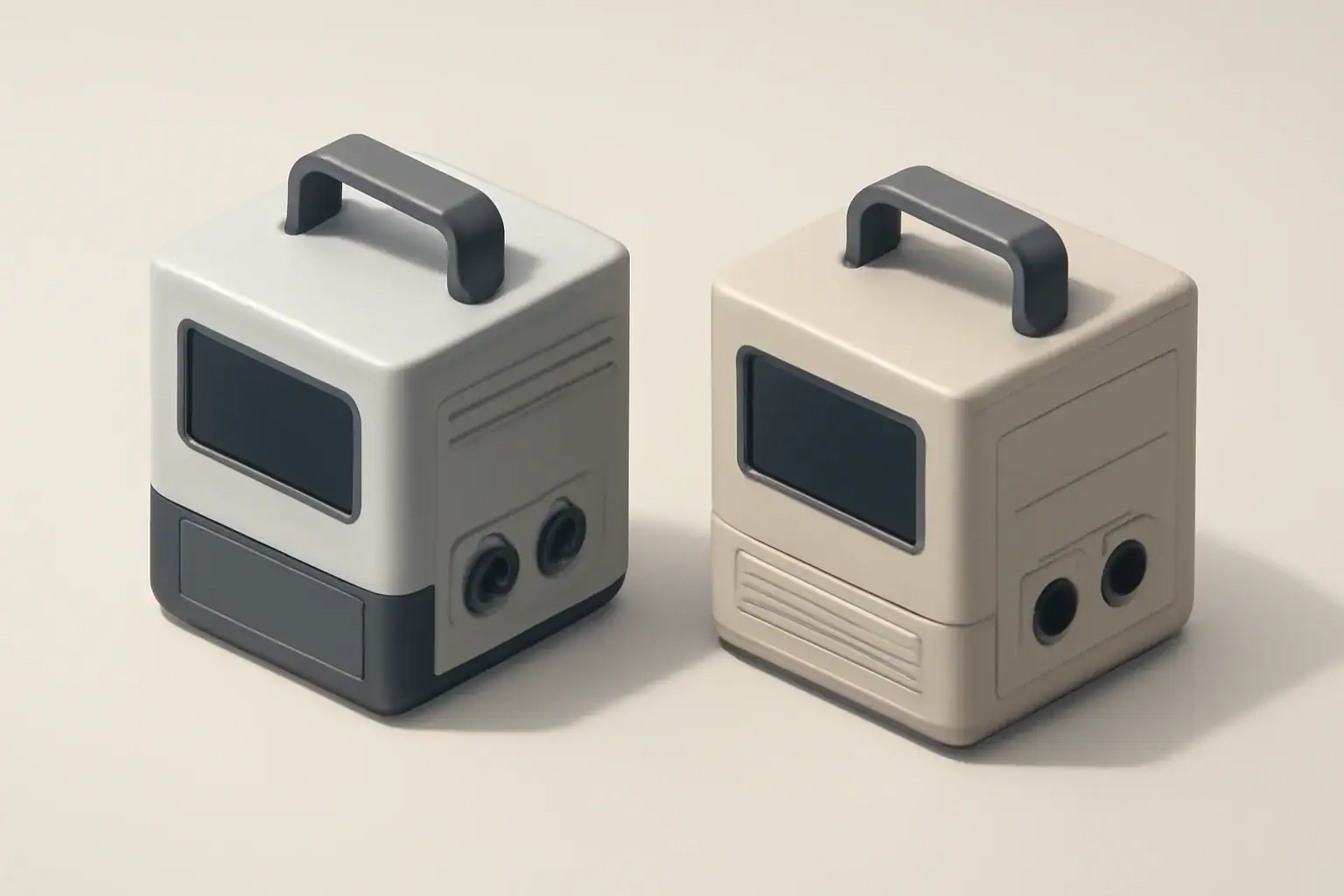
Isometric illustration of two portable power stations

Portable power stations are widely used for camping, backup power, and mobile work. One key spec buyers encounter is the inverter waveform: pure sine wave or modified sine wave. This choice affects which appliances run reliably, how efficiently energy is used, and potential noise or heating in connected devices. Some devices tolerate modified waveforms, while sensitive electronics, medical equipment, and certain motors perform best with a pure sine output. Understanding the practical differences, compatibility considerations, and safety implications helps you choose the right power station for your needs. This article explains what each waveform is, technical differences that matter, examples of sensitive equipment, testing tips, and guidance on when the extra cost and weight of pure sine technology are justified.

Overview: why waveform type matters

Portable power stations convert stored DC battery energy into AC power with an inverter. The waveform the inverter produces matters because many electrical devices expect a clean alternating current similar to utility power. The two common inverter output types are pure sine wave and modified (or modified sine) wave. Understanding their differences helps you decide which is suitable for specific appliances and situations.

Basic definitions

What is a pure sine wave?

A pure sine wave is a smooth, continuous AC waveform that matches the shape of mains electricity from the grid. It alternates smoothly between positive and negative voltage and has low harmonic distortion. This waveform is the ideal reference for most electronic and electrical equipment.

What is a modified sine wave?

A modified sine wave approximates the sine wave using stepped or square-like segments. It is sometimes called a quasi-sine wave. The waveform changes in discrete jumps rather than a smooth curve, and typically has higher harmonic content and more abrupt transitions.

Technical differences that affect devices

Waveform shape and harmonics

Pure sine wave: smooth, low total harmonic distortion (THD). Clean for motors and sensitive electronics.

Modified sine wave: stepped waveform with higher THD. Creates more electrical noise and can interfere with devices designed for a smooth sine wave.

Voltage and frequency accuracy

High-quality pure sine inverters maintain stable voltage and frequency closer to utility standards. Modified sine inverters may still keep average voltage and frequency within limits but can have rapid transitions that stress some components.

Surge capability

Both inverter types can be engineered to supply surge current for short motor starts, but pure sine inverters often handle induction motor starting more reliably without overheating or tripping protective electronics.

Which devices are sensitive to waveform?

Some equipment requires or performs significantly better on a pure sine wave. These include:

  • Medical devices such as CPAP machines and certain home medical equipment
  • Variable-speed motor drives and some pumps
  • Audio equipment and amplifiers (distortion and hum can occur)
  • Modern electronics with active power supplies or power factor correction
  • Appliances with digital timers, microwaves, laser printers, or some LED drivers

Modified sine wave inverters can work for simpler resistive loads such as incandescent lights, heaters, and many basic power tools, but performance varies.

Practical impacts in a portable power station

Efficiency and battery drain

Pure sine wave inverters are usually more efficient when powering sensitive electronics because the waveform matches the load better. Modified sine wave inverters can introduce additional losses in connected devices, potentially increasing power draw and reducing run time.

Heat and noise

Higher harmonic content from modified sine outputs can lead to extra heating in motors and transformers. Some devices may produce audible buzzing, humming, or increased electromagnetic interference when powered by modified waveforms.

Device longevity and reliability

Using a waveform that stresses internal power supplies or motors may reduce lifetime or induce intermittent faults. Critical or expensive equipment is usually safer on pure sine wave output.

Compatibility checklist for common uses

Use the lists below as a quick guide when choosing a portable power station or deciding whether an inverter type matters for a particular device.

Prefer pure sine wave for:

  • Medical devices (CPAP machines, home oxygen concentrators where specified)
  • Computers and sensitive electronics
  • Refrigerators and freezers with electronic controls
  • Variable-speed power tools, pumps, and compressors
  • Microwave ovens and laser printers
  • High-fidelity audio systems and sensitive AV gear

Modified sine wave is often acceptable for:

  • Simple resistive loads such as incandescent heaters and basic light bulbs
  • Some power tools with simple AC motors
  • Charging USB devices via a DC port or dedicated charger (these often have their own regulation)
  • Basic camping appliances where manufacturers specify compatibility

How to test and verify compatibility

Before relying on a portable power station for critical equipment, test the device if possible. Steps to take:

  • Review the device manual for inverter compatibility recommendations.
  • Start the device on the inverter and watch for abnormal sounds, error messages, or failure to start.
  • Measure power draw and heat if you have a wattmeter or thermal probe; excessive draw or heating is a red flag.
  • For intermittent or timed devices, run a full cycle to ensure timers and sensors function correctly.

When modified sine wave might cause problems

Common symptoms of incompatibility include:

  • Buzzing, humming, or excessive motor noise
  • Device overheating or protective shutdowns
  • Distorted audio or flickering lights
  • Failure to power digital controls or sensors correctly

If any of these occur, switch to a pure sine wave inverter or a different power source.

Safety considerations

For medical devices and life-supporting equipment, always follow manufacturer guidance. Some medical devices require a true pure sine wave and/or a certified uninterruptible power supply (UPS) rated for medical use. Using an incompatible inverter can risk device malfunction or safety hazards.

Cost and weight trade-offs for portable power stations

Pure sine wave inverters typically add cost and slightly more weight due to higher-quality components and filtering. Modified sine inverter systems are often less expensive and lighter, which can matter for compact portable stations meant for simple tasks. Consider total system needs rather than just upfront cost.

When to choose one over the other

Choose pure sine wave if you plan to run sensitive electronics, medical gear, appliances with electronic controls, or audio equipment. Choose modified sine wave only when cost, weight, and simplicity outweigh the risk of incompatibility and you plan to power only simple resistive or robust inductive loads.

Practical tips for users

  • Check equipment manuals for inverter compatibility recommendations before connecting to a portable power station.
  • Use the DC ports on a power station when possible for charging phones and laptops via their original adapters, as many chargers handle DC well.
  • Test noncritical devices first to identify issues before attaching expensive or essential equipment.
  • For critical loads, consider a dedicated pure sine wave inverter or a UPS designed for that equipment.
  • Monitor temperature and performance during early use to catch problems early.

Further reading and resources

Understanding inverter specifications such as total harmonic distortion, continuous and surge watt ratings, and efficiency curves helps match a portable power station to your needs. Look for documentation that explains compatibility and performance under different loads.

Summary of key points

Pure sine wave outputs closely match grid power and are generally better for sensitive electronic and motor-driven devices. Modified sine wave outputs can work for many simple loads but may cause noise, inefficiency, or malfunction with more complex equipment. Assess your devices, test when possible, and prioritize safety for medical and critical applications.

Frequently asked questions

Can I run a CPAP machine on a modified sine wave portable power station?

Some CPAP machines and other medical devices require a true pure sine wave and can produce alarms, overheat, or behave erratically on a modified sine wave. Always check the device manual and for sleep-apnea equipment prefer a pure sine inverter or a medical-grade UPS to ensure reliable and safe operation.

Will a modified sine wave inverter damage my laptop or phone chargers?

Most modern phone and laptop chargers use switch-mode power supplies that tolerate modified sine wave power, though they may run warmer or be slightly less efficient. To be safe, use the device’s original charger and test briefly; using a power station’s DC output for USB charging often avoids inverter waveform issues.

How do I know if a motor will start on modified sine wave power?

Induction motors and compressor motors can sometimes start on modified sine wave power but with reduced starting torque, higher inrush current, and increased heating. Check the inverter’s surge rating, test the motor under observation, and choose a pure sine inverter if frequent motor starts are required.

Does using a modified sine wave inverter reduce battery runtime compared to pure sine?

Yes, in some cases modified sine wave output increases losses in the connected device (especially those with active electronics or motors), which can raise power draw and shorten runtime. The effect varies by load, so measure actual power consumption when possible to estimate runtime accurately.

How can I check an inverter’s waveform quality and surge capability before buying?

Review specifications such as total harmonic distortion (THD), continuous and surge watt ratings, and frequency stability. Where possible, request oscilloscope traces or independent test results, and read reviews that measure THD and real-world performance to ensure the inverter meets your device needs.

Portable Power Stations for RV and Motorhomes

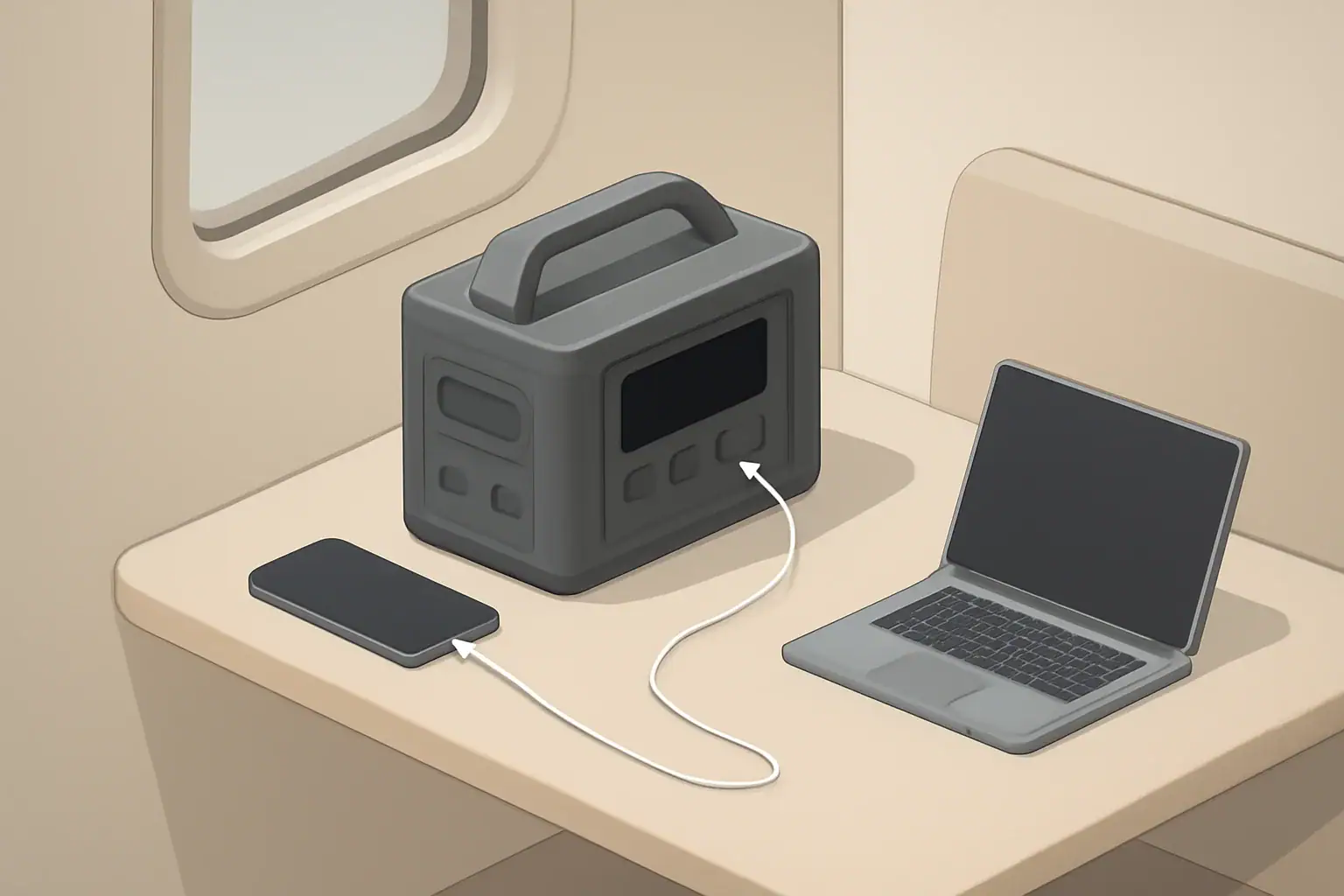
Isometric illustration of power station charging devices

Portable power stations are compact energy systems used by RV and motorhome owners to run appliances, charge devices, and provide backup power away from shore connections. They combine batteries, inverters, and charging circuitry in a single, transportable unit. This article explains how they work, how to size one for RV use, charging options, safety and maintenance, and common use scenarios.

The inverter determines what AC appliances you can run. Two technical aspects matter most: waveform and power ratings.

This information provides the technical foundation and practical considerations needed to evaluate portable power stations for RV and motorhome use. Use device power ratings, daily energy estimates, and realistic charging assumptions to choose a system that meets your travel and comfort needs.

How portable power stations work

A portable power station typically contains a rechargeable battery pack, a battery management system (BMS), an inverter to produce AC power, and multiple output ports for AC, USB, and 12V DC loads.

Key components

  • Battery pack: Stores energy in watt-hours (Wh). Chemistry varies, commonly lithium-ion or lithium iron phosphate (LiFePO4).
  • BMS: Protects the battery from overcharge, over-discharge, overheating, and short circuits.
  • Inverter: Converts DC battery power to AC for household-style outlets. Inverter ratings include continuous power and surge (peak) power.
  • Charge controller/Input: Manages incoming power from solar panels, shore power, or vehicle alternator.
  • Output ports: AC outlets, 12V DC ports, USB-A/USB-C ports for smaller devices.

Sizing and capacity for RV and motorhome use

Choosing the right size depends on what you plan to run and for how long. watt-hours (Wh) is how capacity is expressed. To estimate needs, list each device and its power draw in watts, then multiply by hours used.

Simple sizing formula

Estimated energy use (Wh) = device wattage (W) × hours used. Add up all devices for a total daily Wh. Allow for inverter losses (typically 10–15%), and avoid draining the battery fully—most users limit depth of discharge to extend battery life.

Example load categories

  • Small loads (phone, lights, laptop): 5–200 Wh per day. A 500–1000 Wh unit covers several days of light use.
  • Medium loads (mini fridge, CPAP, fans): 200–800 Wh per day. A 1000–2000 Wh unit handles basic refrigeration and devices for a day or more.
  • High loads (microwave, induction cooktop, rooftop air conditioner): 1000+ Wh per use and high surge current. These often require larger stationary systems or generator support.

Always check both continuous watt rating and surge rating for appliances with motors or compressors. A refrigerator may need modest continuous watts but a high startup surge.

Inverters and AC capability

Waveform: pure sine wave vs modified

Pure sine wave inverters produce smooth AC suitable for sensitive electronics and motor-driven appliances. Modified or stepped sine wave inverters are cheaper but can cause inefficient operation, extra heat, or compatibility issues with some devices.

Power ratings

  • Continuous power: The maximum load the inverter can sustain indefinitely (for example 1500W).
  • Surge power: Short-term peak capacity for starting motors (often 2–3× continuous rating).

For RV refrigerators, microwaves, and air conditioners, check that both continuous and surge ratings meet appliance requirements. Many portable stations are best suited for electronics, lights, CPAP machines, and small refrigerators rather than large air conditioners.

Charging options while on the road

Portable power stations accept several charging sources. Choosing the right combination speeds recharge and supports off-grid use.

Typical charging methods

  • Shore/AC charging: Fast and simple when connected to campground power. Charging speed depends on the station’s AC input limit.
  • Solar charging: Useful for boondocking and extending off-grid time. Effective solar charging depends on panel wattage, placement, and sun hours.
  • Vehicle/12V charging: Uses the RV alternator or cigarette outlet. Slower than AC and may be limited by vehicle output and charging circuitry.
  • Hybrid or pass-through charging: Some stations can be charged while simultaneously powering loads. Confirm pass-through capabilities and whether it affects lifespan.

Charge time considerations

Charge time depends on input power (watts) and battery capacity. For example, a 1000 Wh battery charged at 500 W input ideally takes about 2 hours, but real-world times are longer due to inefficiencies and tapering near full charge.

Safety and maintenance for RV installations

Proper installation and regular maintenance help maximize safety and battery life.

Safety practices

  • Install the station on a stable, level surface and secure it to prevent movement while driving.
  • Allow adequate ventilation. Batteries and inverters produce heat during heavy use or charging.
  • Avoid exposing the unit to extreme temperatures. Most batteries perform poorly or are damaged below freezing or above recommended temperatures.
  • Follow manufacturer guidance for connecting external loads and chargers. Use proper cables and fuses where required.

Maintenance tips

  • Keep contacts clean and dry. Inspect terminals and cables periodically.
  • Store at partial state of charge for long-term storage and recharge every few months to limit self-discharge.
  • Monitor battery health via any available diagnostics and follow recommended maintenance intervals.

Proper installation and regular maintenance can prevent common issues and extend service life.

Installation, placement, and wiring in RVs

Placement is important for safety, convenience, and weight distribution.

  • Choose a low, secure location close to expected loads to minimize cable runs.
  • Keep the station away from direct heat sources and moisture.
  • Use appropriately rated cables and connectors for high-current DC lines. Fuse protection near the battery is recommended.
  • Consider integrating the station with the RV’s electrical system through a transfer switch or designated inverter connection kit if you need seamless transition from shore power to battery power.

Common RV use cases and sizing examples

Below are sample scenarios and general capacity guidance. These are illustrative; calculate based on actual device power draws.

Weekend boondocking

  • Typical loads: LED lights, smartphone and laptop charging, small fridge, water pump, fans.
  • Suggested capacity: 1000–2000 Wh for 1–3 days depending on refrigerator efficiency and usage.

CPAP and electronics for overnight trips

  • Typical loads: CPAP machine (30–70 W depending on model), phone, small light.
  • Suggested capacity: 500–1000 Wh to cover multiple nights with margin.

Extended off-grid travel or partial home backup

  • Typical loads: Larger fridge, cooking appliances, sustained electronics use.
  • Suggested capacity: 2000–5000 Wh combined with solar charging or a generator for extended autonomy.

Choosing features to prioritize

When comparing units for RV use, prioritize based on how you travel and which appliances you need to run.

  • Capacity (Wh): More Wh gives longer run time.
  • Inverter continuous and surge rating: Match to appliance startup requirements.
  • Charging inputs: Higher input wattage and multiple input types reduce downtime.
  • Portability and weight: Balance capacity with what you can comfortably transport and safely secure in the RV.
  • Durability and thermal management: Look for units designed for frequent cycling and varied temperatures.

Key terms to know

  • Watt-hour (Wh): Energy capacity indicating how much energy is stored.
  • Inverter: Device that converts DC battery power to AC power used by household appliances.
  • Continuous vs surge power: Continuous is sustained output, surge covers short startup demands.
  • Depth of discharge: How much of the battery capacity is used before recharging.

Frequently asked questions

How do I size a portable power station to run my RV refrigerator?

Estimate the refrigerator’s average running watts and daily run hours, then multiply to get daily watt-hours. Add 10–15% for inverter losses and ensure the station’s surge rating covers the fridge startup current. Choose a capacity that provides the needed daily Wh plus a safety margin and avoid discharging to 0% to preserve battery life.

Can portable power stations run an RV rooftop air conditioner?

Most small to mid-size portable stations cannot reliably run rooftop air conditioners because those units require high continuous and very high surge power. Running an A/C typically needs a large inverter with several kilowatts of continuous output or a generator. For short bursts, some very large stations may cope, but check continuous and surge ratings carefully before attempting.

How long does it take to recharge a portable power station using RV solar panels?

Recharge time depends on battery capacity, total solar panel wattage, sun hours, and system losses. As a rough guide, divide battery Wh by effective solar input watts to get ideal peak-sun hours; a 1000 Wh battery on 200 W of panels needs about 5 peak sun hours plus extra for inefficiencies. Orientation, shading, and charge controller limits can significantly increase real-world times.

Is it safe to store and use a portable power station inside an RV while driving?

Yes, provided the unit is secured to prevent movement, placed where ventilation is adequate, and kept within the manufacturer’s temperature range. Use proper mounting or straps and ensure cables and ventilation paths are not obstructed. Follow the manufacturer’s installation and safety recommendations to reduce risk.

Can I charge a portable power station from my RV alternator while driving?

You can often charge from an alternator, but charging speed is limited by the alternator’s output and the station’s DC input limits. Long or heavy charging loads may stress the vehicle charging system, so use proper wiring, fusing, and any recommended DC-to-DC charge controllers. Verify compatibility and charging specifications before relying on alternator charging for full recharges.

Portable Power Stations for Apartments

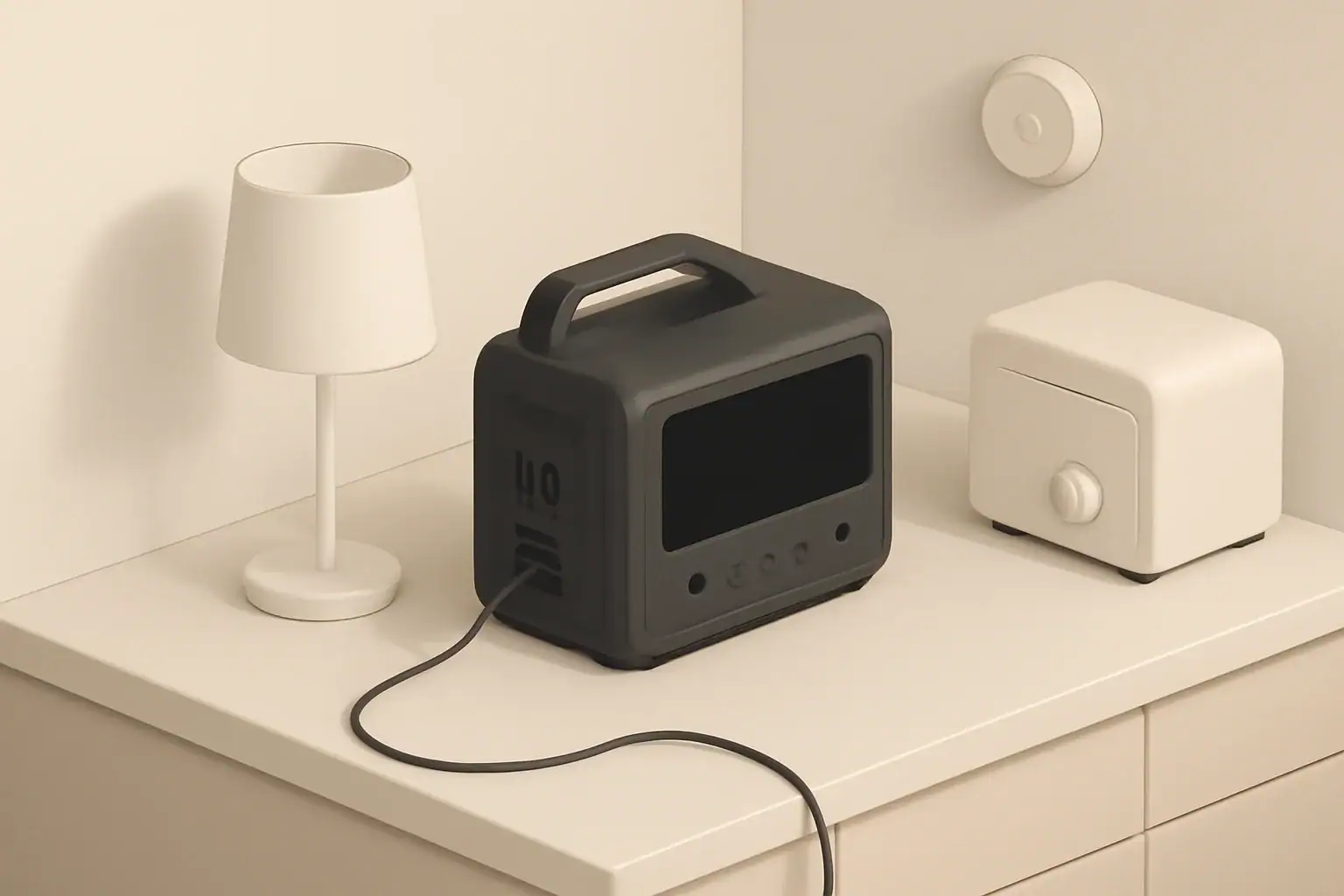
Isometric illustration of power station powering appliances

Portable power stations are compact battery systems with built-in inverters and multiple output ports. In apartments they can provide short-term backup power, run essential electronics, or support remote work during outages. Because of space, ventilation, and building rules, apartment use requires attention to capacity, safety, and noise.

Portable power stations are valued in apartments for several practical reasons:

  • Temporary backup for lights, routers, and small devices during outages.
  • Clean, quiet power for remote work without relying on loud fuel generators.
  • Power for medical devices or refrigeration for short periods.
  • Portable charging for devices in common areas or balconies.

Wall charging is the simplest option in apartments. Consider these points:

  • Confirm the building circuit can support additional continuous loads during recharging, especially if charging multiple large batteries.
  • Use a dedicated outlet if possible to prevent frequent tripping of shared circuits.
  • Solar recharging can work on balconies or terraces if local rules and shading allow, but check fire safety and building rules first.
  • Pass‑through charging convenience varies; ensure that feature is tested before relying on it in an outage.

Overview: Portable power stations in apartments

Portable power stations are compact battery systems with built-in inverters and multiple output ports. In apartments they can provide short-term backup power, run essential electronics, or support remote work during outages. Because of space, ventilation, and building rules, apartment use requires attention to capacity, safety, and noise.

Why apartment dwellers use portable power stations

Portable power stations are valued in apartments for several practical reasons:

  • Temporary backup for lights, routers, and small devices during outages.
  • Clean, quiet power for remote work without relying on loud fuel generators.
  • Power for medical devices or refrigeration for short periods.
  • Portable charging for devices in common areas or balconies.

Key features to evaluate

Capacity: watt‑hours (Wh)

watt‑hours (Wh) is expressed in watt‑hours (Wh) and determines how long a battery can run devices. A higher Wh rating gives longer runtimes but usually increases size and weight.

Example use estimates (very approximate):

  • Wi‑Fi router: 10–20 W → 100 Wh gives ~5–10 hours.
  • Laptop: 40–80 W → 500 Wh gives ~6–12 hours.
  • Mini refrigerator: 40–100 W continuous, higher at startup → 500 Wh might run it for several hours depending on duty cycle.

Power output: continuous watts and surge watts

Look for continuous output (the amount the inverter supplies consistently) and surge capacity (short peaks for appliances with motors). Appliances with compressors or motors require higher surge ratings for startup.

Inverter type

Pure sine wave inverters provide clean power suitable for sensitive electronics and medical equipment. Modified sine wave inverters are less costly but may not work well with some devices.

Battery chemistry

Common chemistries include lithium‑ion and LiFePO4. Differences affect cycle life, weight, thermal stability, and cost. LiFePO4 typically offers longer cycle life and greater thermal stability, which can be beneficial in confined indoor spaces.

Ports and outlets

Check for AC outlets, USB‑A, USB‑C PD, 12V DC outputs, and car outlets. The assortment determines what you can power directly without adapters.

Charging options and time

Apartment users benefit from units that recharge from wall outlets quickly. Solar and car charging options add flexibility but verify charge times and whether pass‑through charging (charging the unit while powering loads) is supported.

Size, weight, and placement

Measure available storage and consider where the device will sit during use. Heavy high‑capacity units may be difficult to move frequently. Ensure the chosen spot offers adequate ventilation and is not on flammable surfaces.

Noise and thermal management

Although portable power stations are much quieter than fuel generators, they may include cooling fans that run intermittently. Fan noise can be noticeable in small rooms. Look for models with low noise ratings and good thermal designs for apartment use.

Apartment‑specific safety and code considerations

Apartments often have stricter rules and limited space. Keep these safety points in mind:

  • Place units on non‑combustible surfaces and away from curtains or paper.
  • Ensure adequate airflow; do not block vents or place units in closed cabinets while operating.
  • Follow local building and rental rules. Some buildings prohibit certain battery sizes or storage of lithium batteries in hallways.
  • Check smoke detector and sprinkler system placement when locating the unit.
  • Never attempt to charge a damaged battery or one that shows swelling or overheating.

Sizing your system: quick approach

Basic steps to size a portable power station:

  1. List essential devices and their wattage.
  2. Estimate how many hours you need to run each device during an outage.
  3. Calculate total energy: add (wattage × hours) for each device to get required Wh.
  4. Factor in inverter losses and inefficiencies (add 10–20%).
  5. Choose a station with continuous watts higher than the sum of devices running simultaneously and Wh that meets your energy needs.

Example: Running a router (15 W), phone charging (10 W), and laptop (60 W) simultaneously totals 85 W. For 8 hours: 85 W × 8 h = 680 Wh. Add 15% overhead → ~782 Wh needed.

Typical apartment use cases and runtimes

Common scenarios that help pick the right capacity:

  • Basic outage backup: lights, router, and phone charging for several hours — 300–700 Wh may suffice.
  • Remote work setup: laptop, second monitor intermittently, router for a workday — 500–1000 Wh is a safer range.
  • Short refrigerator backup: depends heavily on fridge cycle and startup surge — a high‑capacity unit (1000+ Wh) with strong surge rating is recommended for meaningful runtime.
  • Medical device support: verify device power requirements and backup duration with a clinician. Prefer systems with clean pure sine output and sufficient capacity.

Charging and integration in apartments

Wall charging is the simplest option in apartments. Consider these points:

  • Confirm the building circuit can support additional continuous loads during recharging, especially if charging multiple large batteries.
  • Use a dedicated outlet if possible to prevent frequent tripping of shared circuits.
  • Solar recharging can work on balconies or terraces if local rules and shading allow, but check fire safety and building rules first.
  • Pass‑through charging convenience varies; ensure that feature is tested before relying on it in an outage.

Maintenance and safety practices

Simple maintenance keeps a unit ready and safe:

  • Store at partial charge for long‑term storage, typically around 40–60% unless manufacturer guidance differs.
  • Cycle the battery periodically to maintain health if it will sit unused for long periods.
  • Inspect for physical damage, swelling, or odd odors before use.
  • Keep vents dust‑free and avoid storing near heat sources.
  • Follow local disposal guidelines when the battery reaches end of life.

Placement and noise considerations in small spaces

Choose a location that balances noise, ventilation, and convenience:

  • Living room or home office for easy access to devices.
  • Near an exterior wall for potential solar cable routing if allowed.
  • On a stable, non‑combustible surface and away from bedding or curtains.
  • Test the unit during normal conditions to understand fan behavior and noise levels before an outage.

Apartment checklist before buying

  • Calculate required watt‑hours and peak wattage for simultaneous devices.
  • Confirm pure sine inverter if powering sensitive electronics or medical devices.
  • Verify ventilation and placement options in your apartment layout.
  • Check building rules, insurance policy, and local regulations about indoor battery storage.
  • Plan charging method: wall outlet, solar, or vehicle, and confirm recharge times.
  • Prepare a simple usage plan for common outages (which devices to prioritize).

Further reading and resources

Consult product manuals and local building authorities for specifics about fire codes and storage limits. For medical device backup or complex installations, consult a qualified electrician or healthcare provider to validate requirements and safe operation.

Frequently asked questions

Are portable power stations safe to use inside apartments?

When used according to manufacturer instructions and local rules, portable power stations can be safe indoors. Key precautions include placing the unit on a non‑combustible surface, ensuring adequate ventilation, avoiding charging in closed cabinets, and not using units that show swelling or overheating. Also confirm any building or storage restrictions before keeping larger batteries in your unit.

How do I size a portable power station for my apartment needs?

List the devices you need to power, note each device’s wattage and desired runtime, then multiply wattage by hours to get required watt‑hours (Wh) and sum them. Add 10–20% for inverter and inefficiency losses, and ensure the station’s continuous watt rating can handle simultaneous loads and its surge rating covers startup peaks for motors or compressors.

Can I recharge a portable power station from solar panels on my balcony?

Possibly, but it depends on local building rules, shading, and the unit’s solar input specifications. Verify that balcony-mounted panels are permitted by your building, confirm safe cable routing and fire-safety considerations, and check the station’s recommended solar array and expected charge times before relying on solar as a primary recharge method.

Will a portable power station run my refrigerator in an apartment?

Some portable power stations can run a refrigerator for short periods, but refrigerators require sufficient continuous Wh and a high surge capacity for compressor startup. For meaningful runtimes choose a high‑capacity unit (often 1000+ Wh) with a robust surge rating, and test or calculate based on your fridge’s duty cycle rather than nameplate running watts alone.

Do I need to notify my landlord or insurance company about storing a portable battery?

Yes — it’s wise to check your lease, building policies, and insurance terms because some buildings limit battery sizes or restrict storage in common areas. Notifying relevant parties helps ensure compliance with fire and safety rules and avoids potential coverage issues.

Portable Power Stations and Renewable Energy

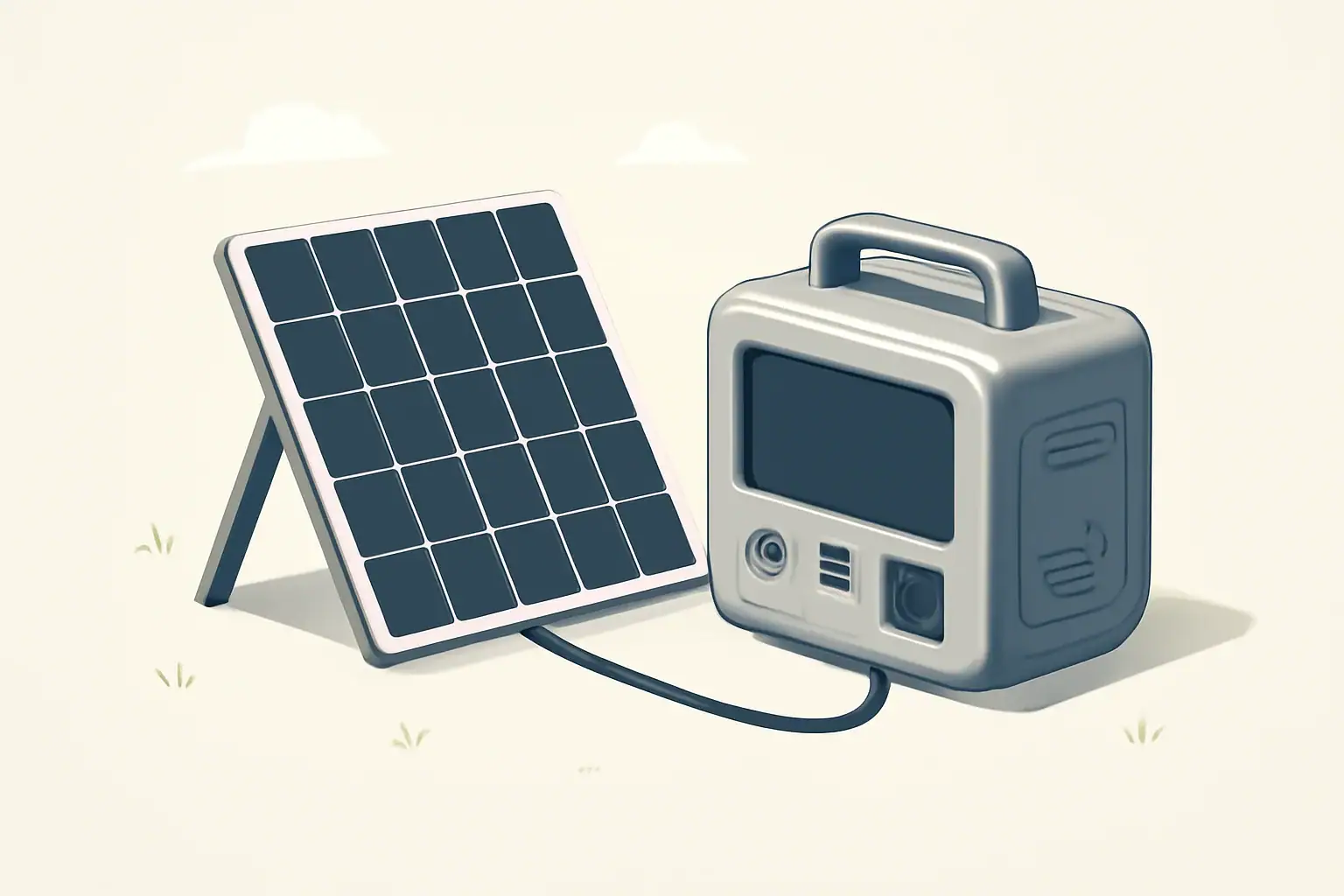
Isometric illustration of power station with solar panel

Introduction

Portable power stations are modular battery-based devices designed to store and deliver electricity for mobile, remote, or backup use. When paired with renewable energy sources such as solar panels, wind chargers, or vehicle-based systems, they provide a flexible way to capture and use clean energy without a wired grid connection.

This article explains how portable power stations work with renewables, the key components involved, practical charging options, sizing considerations, and recommended practices for reliable and safe operation.

How portable power stations work with renewable sources

At a basic level, a portable power station stores electrical energy from a charging source and makes it available through output ports (AC outlets, DC ports, USB). When used with renewables, it acts as the intermediary between intermittent generation and steady loads.

Basic components

  • Battery pack: the energy storage medium measured in watt-hours (Wh).
  • Battery management system (BMS): protects against overcharge, deep discharge, and imbalance.
  • Inverter: converts DC battery power to AC for household appliances.
  • Charge controller: manages solar or wind input to optimize charging and protect the battery.
  • Input/output ports: for solar panels, wall charging, 12V sources, and appliance outputs.

Energy flow: solar to battery to load

Renewable generation is variable. A typical flow is:

  • Solar panel or turbine generates DC power.
  • A charge controller (MPPT or PWM) conditions and maximizes energy sent to the battery.
  • The battery stores the energy until needed.
  • The inverter provides AC power to loads or DC outputs supply devices directly.

Charging options from renewable sources

Portable power stations can accept energy from multiple renewable inputs. The most common are solar panels, but other methods are possible depending on the system design.

Solar panels

Solar is the most common pairing. Key considerations:

  • Panel type and wattage determine potential charging power.
  • Matching voltage and current to the station’s input specifications is essential.
  • Use of an MPPT charge controller improves efficiency, especially under variable irradiance.
  • Environmental factors (angle, shading, temperature) affect charging rates.

Small wind turbines and microgeneration

Compact wind turbines can charge portable stations when wind resource exists. They typically require a charge controller compatible with the turbine’s output characteristics and may produce more variable power than solar.

Vehicle and alternative charging

Vehicles, fuel-powered generators, and hydro sources can also charge portable stations. Many units support 12V car charging or AC input from alternators and generators, offering flexibility when renewables are insufficient.

Battery chemistry and renewable integration

Battery chemistry affects cycle life, depth of discharge, weight, and how the battery interacts with renewable charging profiles.

Common chemistries

  • Lithium-ion: high energy density and lighter weight. Good for portable use but sensitive to deep discharge and high temperatures.
  • LiFePO4 (lithium iron phosphate): lower energy density but longer cycle life and improved thermal stability. Often preferred for frequent charge/discharge from renewables.
  • Other chemistries: lead-acid and AGM are heavier and have shorter cycle lives but may appear in low-cost or legacy systems.

Choose a chemistry based on expected charging cadence, lifetime, and weight requirements.

Inverters, charge controllers, and system components

Understanding supporting electronics helps ensure efficient renewable integration.

MPPT vs PWM charge controllers

  • MPPT (Maximum Power Point Tracking) controllers optimize energy harvest by matching panel output to battery voltage. They are more efficient in varied conditions.
  • PWM (Pulse Width Modulation) controllers are simpler and less expensive but can leave potential solar output unused, especially when panel voltage is significantly higher than battery voltage.

Sizing the inverter for appliances

Inverter capacity is measured in continuous watts and surge watts. Match the inverter to the largest loads you plan to run:

  • Resistive loads (lights, heaters) use rated power continuously.
  • Inductive loads (motors, pumps, refrigerators) require higher surge capacity at startup.
  • Don’t exceed continuous rating for sustained loads to prevent overheating or shutdowns.

Sizing a portable power station for renewable use

Correct sizing ensures the system meets daily energy needs and charging capability from renewables.

Steps to size a system

  1. List the devices you want to power and their wattage.
  2. Estimate hours of use per day for each device to calculate daily watt-hours (Wh = watts × hours).
  3. Add a margin for inefficiencies (inverter losses, battery depth of discharge). A common multiplier is 1.2–1.4.
  4. Choose a battery capacity (Wh) that covers daily needs after the efficiency factor.
  5. Ensure the renewable charging source (solar array wattage) can replenish that Wh in the available sun hours.

Example

If devices total 500 watts and run 3 hours per day, daily energy is 1,500 Wh. Applying a 1.3 multiplier gives 1,950 Wh required. A portable station rated at 2,000 Wh or greater would be appropriate, and solar panels must be sized to deliver at least that energy in typical sun hours.

Typical use cases and scenarios

Renewable-charged portable power stations support a range of activities.

  • Camping and van life: solar panels on a campsite or roof can keep devices and small appliances powered for extended trips.
  • Home backup: short-term outage support for lights, communications, and essential medical devices when recharged by rooftop solar or portable panels.
  • Remote work and field operations: power for tools, laptops, and equipment where grid access is limited.
  • Emergency response: mobile charging and lighting systems that can be recharged by portable solar or vehicle alternators.

Best practices for charging and maintaining with renewables

Following good practices extends battery life and improves reliability.

  • Use the correct charge controller type (prefer MPPT for most solar pairings).
  • Avoid deep discharges when possible; operate within recommended depth-of-discharge limits.
  • Keep panels clean and positioned to maximize sun exposure throughout the day.
  • Monitor temperature; extreme heat or cold reduces battery performance. Store and operate within manufacturer temperature ranges.
  • Regularly check connections for corrosion, tightness, and clean contacts to reduce energy losses.
  • Schedule periodic full charging cycles if the station is stored for long periods to maintain charge balance and reduce self-discharge effects.

Safety and environmental considerations

Working with batteries and renewable power requires attention to safety and environmental impact.

  • Ensure the BMS and charger include protections for overvoltage, overcurrent, and thermal shutdown.
  • Avoid charging batteries in enclosed spaces without ventilation if using external generators or fuel-based chargers.
  • Dispose of or recycle batteries and solar components according to local regulations to minimize environmental harm.
  • Follow manufacturer guidance for transporting batteries, especially by air where restrictions apply.

Further reading and resources

When integrating portable power stations with renewable sources, focus on matching energy needs, proper component selection, and maintenance routines. Exploring detailed calculators for energy consumption and solar yield can help refine system size and configuration for specific use cases.

Frequently asked questions

Can I charge a portable power station directly from solar panels without a separate charge controller?

Many portable power stations include a built-in solar charge controller and accept a PV input that matches their specifications; in those cases no external controller is required. If a station lacks an internal controller or if panel voltage or current exceed the unit’s input range, use a compatible external charge controller to prevent overvoltage and to optimize charging.

How do I size solar panels to fully recharge a specific portable power station in a day?

Calculate required panel wattage by dividing the station’s usable watt-hours by typical peak sun hours for your location, then divide by system efficiency (accounting for charge controller and conversion losses) to determine panel wattage. For example, a 2000 Wh battery with 5 peak sun hours and 80% overall efficiency needs roughly 500 W of panels (2000 / 5 / 0.8 ≈ 500).

Are small wind turbines a reliable charging option for portable power stations?

Small wind turbines can be reliable where a consistent wind resource exists, but their variable and sometimes high-voltage output requires a compatible charge controller or rectifier and proper system protection. Expect more variability than solar, and design the system with battery capacity and regulation to handle intermittent or gusty inputs.

What battery chemistry is best when pairing portable power stations with renewable sources?

LiFePO4 batteries are often preferred for frequent renewable charging because they tolerate deeper cycle depths, have longer cycle life, and better thermal stability; lithium-ion offers higher energy density for lighter systems but typically shorter cycle life. Choose chemistry based on trade-offs between weight, expected charge/discharge frequency, and longevity.

Can I run a refrigerator during an outage using a portable power station charged by solar panels?

Possibly, but you must confirm the station’s continuous and surge inverter ratings are sufficient for the refrigerator’s startup and running power, and ensure installed solar and battery capacity supply the refrigerator’s daily energy needs. Refrigerators have high startup surges and continuous consumption, so sizing for both peak and total watt-hours plus considering solar replenishment is essential.

Portable Power Station Terminology Explained

Isometric portable power station charging phone and laptop

Introduction

Portable power stations are sold with many technical terms that can be confusing. Understanding the common vocabulary helps you compare products, estimate runtime, and match a unit to your needs.

This guide explains the most important terms related to power, batteries, inverters, charging, and safety in clear, nontechnical language.

Key power and energy terms

Watts (W)

Watts measure power — the rate at which electrical energy is used. For appliances, the watt rating tells you how much power they draw when operating. Example loads include lights, fans, and small kitchen appliances.

Watt-hours (Wh)

Watt-hours measure energy — the amount of work a battery can deliver over time. A 500 Wh battery can supply 50 W for 10 hours, or 500 W for one hour, ignoring efficiency losses.

Voltage (V) and Amperes (A)

Voltage is electrical potential; current (amperes) is flow. Power equals voltage multiplied by current (P = V × I). Portable power stations usually provide 12 V, 24 V, 120 V AC or various USB voltages depending on the output.

VA and power factor

VA (volt-amps) is an apparent power rating used for AC loads. The power factor is the ratio of real power (watts) to apparent power (VA). Many consumer specs focus on watts, but VA can matter for certain inductive loads.

Continuous vs surge (peak) power

Continuous power is the output a station can sustain indefinitely at its rated temperature. Surge or peak power is a short-duration allowance for the initial startup of motors or compressors. Check both numbers when planning to run motors or compressors.

Battery and chemistry terms

Lithium-ion and LiFePO4

These are two common battery chemistries. Lithium-ion cells are energy-dense and lighter. LiFePO4 (lithium iron phosphate) has lower energy density but typically offers longer cycle life and enhanced thermal stability.

Capacity and nominal capacity

Capacity is often listed in watt-hours (Wh) or ampere-hours (Ah). Nominal capacity is the rated energy under specific test conditions. Actual usable capacity may be lower due to inverter losses and temperature.

State of Charge (SoC) and depth of discharge (DoD)

  • SoC is the remaining charge expressed as a percentage.
  • DoD is how much of the battery has been used. Higher DoD cycles typically reduce battery lifespan.

Cycle life

Cycle life is the number of complete charge/discharge cycles a battery can undergo before its capacity falls below a specified percentage of its original capacity (commonly 70–80%). It depends on chemistry, depth of discharge, and operating conditions.

Self-discharge and storage

Batteries naturally lose charge over time even when unused. Self-discharge rates vary by chemistry. Proper storage state of charge and temperature helps reduce capacity loss and extend life.

Inverter and output terms

Inverter

The inverter converts DC battery power to AC power for household appliances. Its capacity is a key spec when you need to run AC devices from the station.

Pure sine wave vs modified sine wave

Pure sine wave inverters produce AC similar to grid power and are compatible with sensitive electronics. Modified or square wave inverters are simpler and may not work well with some devices. For modern electronics, pure sine is generally recommended.

Inverter efficiency

Efficiency describes the energy lost during DC-to-AC conversion. Higher efficiency results in less wasted energy and slightly longer runtimes. Efficiency is often expressed as a percentage.

Output ports and ratings

  • AC outlets: list continuous watt limit and surge capability.
  • DC ports: include 12 V car-style outputs and barrel connectors.
  • USB ports: include standard USB-A, USB-C, and fast-charging protocols such as USB PD.

Charging and input terms

Input power rating

The input rating specifies the maximum power the station can accept while charging from AC, car, or solar. This affects how quickly the battery can be replenished.

Charging time

Charging time depends on battery capacity and input power. Manufacturers often quote a best-case charging time using full input power; real-world times may be longer due to tapering and inefficiencies.

Solar charging and MPPT

Many portable power stations accept solar input. MPPT (maximum power point tracking) charge controllers help extract more power from solar panels under varying sunlight and temperature conditions. MPPT usually yields faster and more efficient solar charging than basic controllers.

Pass-through charging

Pass-through charging allows the station to be charged while simultaneously supplying power to connected devices. It’s convenient but may affect battery life if used constantly. Check specifications for whether pass-through is supported and any limitations.

Safety, management, and reliability terms

Battery Management System (BMS)

The BMS monitors and protects the battery pack. It balances cell voltages, prevents overcharge, overdischarge, overcurrent, and monitors temperature. A robust BMS improves safety and longevity.

Thermal management

Portable stations use passive or active cooling (fans) to manage heat. Thermal limits affect continuous output and charging behavior; devices may throttle to prevent overheating.

Certifications and standards

Look for recognized safety and electrical certifications relevant to your market. These indicate that the unit has been tested to certain safety and performance standards.

Uninterruptible Power Supply (UPS) function

Some stations offer a UPS-like feature that switches to battery power automatically when grid power fails. UPS implementations vary — check switch time and supported loads if you need seamless backup for sensitive equipment.

Runtime estimates and capacity sizing

Estimating runtime

To estimate runtime, divide the battery capacity in watt-hours by the load in watts, then adjust for inverter and system efficiency.

Example: 400 Wh / 40 W load = 10 hours before accounting for losses. If system efficiency is 85%, usable runtime ≈ 8.5 hours.

Matching capacity to needs

  • List essential devices and their wattage.
  • Estimate how many hours each device will run.
  • Sum the energy needs in watt-hours and add margin for inefficiency and future needs.

Common labels and spec sheet items

When reading spec sheets, watch for these key items:

  • Battery capacity (Wh)
  • AC continuous and surge power (W)
  • Input charge power (W)
  • Number and types of output ports
  • Battery chemistry and cycle life rating
  • Weight and dimensions

Practical safety and maintenance terms

Storage best practices

Store batteries at recommended partial charge levels in a cool, dry place. Regularly check charge and recharge if necessary to avoid deep discharge during storage.

Maintenance and firmware

Some stations receive firmware updates that improve performance or safety. Basic maintenance may include cleaning vents and checking connections. Follow manufacturer guidance for service intervals.

Noise levels

Active cooling fans generate noise. Noise level specifications help set expectations for indoor use or quiet campsite settings.

How to use these terms when comparing units

Start by listing the loads you expect to power and their wattages. Use watt-hours to compare usable energy. Check inverter ratings for continuous and surge power. Consider battery chemistry and cycle life for long-term durability.

Pay attention to input ratings and charging options if you plan to recharge from solar or a vehicle. Review safety features like a robust BMS and relevant certifications.

Clear understanding of these terms will help you read spec sheets critically and choose a unit that fits your use case without surprises.

Frequently asked questions

What’s the difference between watts (W) and watt-hours (Wh) when choosing a portable power station?

Watts (W) measure instantaneous power draw of a device, while watt-hours (Wh) measure the total energy stored in the battery. Use watts to ensure the inverter can supply your device’s load and watt-hours to estimate how long the station will run that device. Both figures are needed to match a unit to your needs.

How do continuous and surge (peak) power ratings affect running appliances like refrigerators or power tools?

Continuous power is the amount the station can supply indefinitely, while surge (peak) power is a short-term allowance for startup currents. Motors, compressors, and some power tools can draw several times their running wattage at startup, so choose a station whose surge rating covers that initial draw and whose continuous rating covers the steady load. If either is insufficient the device may not start or the unit may shut down.

How does battery chemistry (lithium-ion vs LiFePO4) affect cycle life and overall durability?

LiFePO4 batteries typically offer longer cycle life and greater thermal and chemical stability, while lithium‑ion cells provide higher energy density and lower weight. If you need frequent deep cycling or long-term durability, LiFePO4 often outlasts lithium‑ion; for weight-sensitive uses, lithium‑ion may be preferable. Storage and temperature management also impact lifespan for both chemistries.

Can I charge a portable power station with solar panels while powering devices (pass-through), and will that harm the battery?

Many stations support pass‑through charging, letting them charge from solar while supplying loads, but implementations vary and real-world charging may be slower under load. Continuous pass‑through can increase cycle count and heat, which may reduce battery life over time, so check manufacturer guidance and any limitations on supported loads or charging modes. If long battery longevity is important, avoid constant pass‑through use.

What’s the simplest way to estimate runtime for multiple devices and account for inverter losses?

Add the wattage of all devices to get a total load, then divide the station’s watt‑hour capacity by that load to get raw hours of runtime. To account for inverter and system losses, multiply by an efficiency factor (commonly 0.8–0.9) or divide by 1/efficiency; also allow margin for startup surges and aging capacity. This gives a practical estimate rather than an exact runtime.

Portable Power Station Buying Guide

Isometric illustration of portable power station charging devices

Portable power stations provide portable, reliable electricity for camping, work, and emergency backup. These all-in-one units combine a high-capacity battery with inverters, chargers, and multiple output ports so you can run AC appliances, charge phones and laptops, or power 12V devices without a generator. Choosing the right model involves trade-offs between capacity, weight, charging speed, and supported outputs. Practical considerations include how you will recharge the unit (wall, car, or solar), the continuous and surge inverter ratings for high-draw appliances, battery chemistry and expected cycle life, and whether pass-through charging or UPS-like behavior is needed. This guide breaks down the key specifications, sizing calculations, charging methods, and real-world use cases to help you match a unit to your needs and avoid common pitfalls. Also consider warranty, support, and replacement battery availability for long-term ownership.

What is a portable power station?

A portable power station is a compact battery system that stores electrical energy and delivers AC and DC power for devices and appliances. Unlike small power banks designed only for phones, these units offer higher capacity and multiple output types—such as AC outlets, USB ports, and 12V sockets—making them suitable for camping, job sites, emergency backup, and mobile offices.

Key specifications to compare

When shopping, the product specifications tell most of the story. Understanding the key metrics helps you match a unit to your needs.

Watt-hours (Wh) — usable energy

Watt-hours measure stored energy. Higher Wh means longer runtime or ability to power larger loads. For example, a 500 Wh unit can theoretically deliver 500 watts for one hour.

Keep in mind usable Wh can be lower than stated capacity due to inverter inefficiency and recommended battery depth of discharge.

Rated output in watts (continuous and peak)

Continuous watt rating indicates the maximum load the inverter can supply continuously. Peak or surge ratings show short-term capacity to start motors and compressors.

Match continuous watt rating to the appliances you expect to run. Devices with electric motors or heating elements often require higher startup power.

Inverter type and efficiency

The inverter converts DC battery power to AC. Pure sine wave inverters deliver clean power suitable for sensitive electronics. Modified sine inverters are cheaper but may not be appropriate for all devices.

Consider inverter efficiency; higher efficiency means less energy lost during conversion.

Battery chemistry

Common chemistries include lithium-ion and lithium iron phosphate. Differences affect energy density, lifespan (cycle life), thermal stability, and weight.

Battery chemistry influences cost and longevity. For frequent deep cycling, choose a chemistry with a higher cycle life.

Charging options and time

Check supported charging methods: AC wall charger, car (12V), solar input, and sometimes USB-C PD. Charging time varies by input power and supported maximum charging watts.

Faster charging can be convenient but may generate more heat—look for thermal management and manufacturer charging limits.

Pass-through charging

Pass-through charging allows the station to be charged while powering devices. This is useful for continuous setups but may reduce battery longevity if used constantly.

Ports and outlets

Review the number and types of outputs: AC outlets, USB-A, USB-C, car ports (12V), DC barrel ports, and specialized ports like Anderson Powerpole. Confirm voltage and amperage limits per port.

Portability: weight and form factor

Consider weight, handle design, and dimensions. Higher capacity units are heavier. If you plan to carry the unit frequently—hiking or rooftop storage—prioritize lower weight and ergonomic handles.

Noise levels

Some units include active cooling fans that run under load or during charging. If you need a quiet unit for camping or night use, look for quieter models or lower-noise cooling systems.

Operating temperature and cold weather performance

Batteries have temperature ranges for charging and discharge. Cold environments reduce effective capacity and may prevent charging in extreme cold. Check stated operating and storage temperatures.

Safety features

Essential protections include overcharge, overdischarge, short circuit, overcurrent, and thermal protection. For sensitive or medical applications, verify certifications and specific safety features.

Sizing and calculating capacity

Choosing the right capacity starts with determining what you want to power and for how long.

Step-by-step runtime calculation

1. List devices and their power draw in watts (check device labels or use typical values).

2. Estimate hours of use per device.

3. Multiply watts by hours to get watt-hours required per device.

4. Sum all watt-hours for total daily energy need.

5. Add a margin (20–30%) for inverter losses and unexpected usage.

Example calculation

If you want to power a 60 W laptop for 8 hours: 60 W × 8 h = 480 Wh. Accounting for inverter losses, you might need 600 Wh capacity.

A coffee maker drawing 1,000 W for 5 minutes (0.083 h) uses roughly 83 Wh—short high-power bursts matter more for inverter peak ratings than total Wh.

Charging methods and practical considerations

How you recharge affects portability and usefulness in off-grid situations.

AC wall charging

Fastest and most convenient when mains power is available. Charging wattage varies; higher input wattage reduces charge time.

Solar charging

Solar input enables off-grid recharging. Check maximum solar input watts, MPPT charge controllers, and required panel voltage range.

Consider available sun hours and panel portability for realistic recharge plans.

Car charging

Useful for road trips. Charging speed over a car outlet is typically slower than AC wall charging unless the unit supports higher input via DC fast charging.

USB-C Power Delivery and smart charging

USB-C PD provides efficient charging for laptops and phones and may support both input and output. If you rely on USB-C devices, prioritize units with high-watt PD ports.

Use cases and matching features

Different applications have distinct priorities. Match features to your primary use case.

Camping and vanlife

  • Priorities: weight, quiet operation, solar charging support
  • Small to mid-size capacity often suffices for lights, phones, and small appliances

RV and motorhome

  • Priorities: higher capacity, multiple AC outlets, support for refrigerators and CPAP machines
  • Check inverter continuous and surge ratings carefully

Home backup for outages

  • Priorities: larger capacity, UPS-like features, safe indoor use
  • Consider models designed for extended backup and with appropriate certifications

Remote work and job sites

  • Priorities: high-watt USB-C PD, durable casing, multiple output types
  • Balance capacity with portability for frequent transport

Maintenance, storage, and safety best practices

Proper care extends battery life and ensures safe operation.

Storage and self-discharge

Store in a cool, dry place with partial charge (often 40–60%). Avoid prolonged storage at 0% or 100% unless specified by the manufacturer.

Charging and cycle habits

Avoid keeping the unit at extreme states of charge. Regular moderate discharges and recharges typically prolong battery life.

Cleaning and inspection

Keep vents clear and ports clean. Inspect cables and connectors for damage before each use.

Cold weather and thermal management

Cold reduces capacity and may prevent charging. If you must use a unit in cold conditions, consider insulating it or keeping it in a temperature-controlled space when possible.

Safety around appliances and medical devices

For critical devices like medical equipment, confirm compatibility and consider units with UPS or regulated output modes. Always consult device documentation for power requirements.

Buying checklist and final considerations

Use this checklist to compare models and make a practical selection:

  • Calculate required daily watt-hours and peak watt draw
  • Confirm continuous and surge watt ratings meet your highest-load devices
  • Choose battery capacity (Wh) with a margin for inverter losses and future needs
  • Select appropriate battery chemistry for cycle life and safety needs
  • Verify supported charging methods and maximum input watts for recharge speed
  • Ensure needed ports and outlets are present and rated correctly
  • Check weight and dimensions for intended mobility
  • Review safety protections, certifications, and cold-weather specs if relevant
  • Consider warranty, support options, and replacement battery availability

Prioritize the features that align with your typical use case rather than every available spec. Document realistic charging options and plan for how you will recharge in the field or during an outage.

Further reading

After narrowing your requirements, consult detailed product specifications, user manuals, and third-party performance tests to confirm real-world runtimes and reliability.

Frequently asked questions

How do I estimate the watt-hours needed for a weekend camping trip?

List each device and its watt draw, multiply by expected hours of use to get watt-hours per device, then sum those values. Add a 20–30% margin for inverter losses and unexpected use, and factor in any planned solar or vehicle recharging capacity.

Can a portable power station run a refrigerator or microwave?

Possibly, but you must check both the continuous watt rating and the surge (peak) rating; refrigerators and microwaves have high startup currents. Also ensure the unit has sufficient Wh capacity for the intended runtime and that the inverter provides a clean sine wave for sensitive motors or electronics.

Is solar charging practical for multi-day off-grid use?

Solar can be practical when panel wattage, available sun hours, and an MPPT controller match your daily energy needs; plan using realistic sun-hour estimates and account for weather variability. For reliable multi-day operation, size panels and battery capacity to maintain a charge window that covers expected consumption plus reserves.

How does cold weather affect performance and charging?

Cold temperatures reduce available capacity and can prevent charging until the battery warms to its safe charging range. Store units at partial charge in a warmer environment when possible, and consider insulating or moving the unit to a temperature-controlled area during use in very cold conditions.

What safety features are important when powering medical or critical devices?

Look for pure sine wave output, UPS-style or regulated output modes, certifications for safe indoor use, and protections such as overcurrent and thermal shutdown. Verify the device’s power requirements and consult medical device documentation before using a portable power station for critical equipment.

Can a Portable Power Station Replace a UPS?

Isometric illustration of two power stations

Overview

Both portable power stations and uninterruptible power supplies (UPS) provide battery-backed power, but they are engineered for different roles. Understanding the technical differences and typical use cases helps determine whether a portable power station can replace a UPS in a given situation.

What a UPS is designed for

A UPS is primarily intended to protect sensitive electronics from power interruptions and disturbances. Key characteristics include short transfer times and power conditioning.

  • Fast transfer or continuous online operation so connected devices do not reboot.
  • Power conditioning (voltage regulation, surge protection, and filtering).
  • Relatively small battery capacity optimized for minutes of runtime to allow safe shutdown or ride-through brief outages.
  • Form factors and certifications aimed at IT equipment, network gear, and medical-support devices.
  • Often designed with monitoring, alarms, and controlled shutdown interfaces.

What a portable power station is designed for

Portable power stations are battery-inverter systems built for mobile and off-grid use. They prioritize usable energy capacity, multiple output types, and flexible recharging.

  • Higher watt-hour capacities intended for hours of runtime powering appliances, tools, or multiple devices.
  • Multiple output ports: AC outlets, USB, 12V DC, and sometimes 120V/240V variants.
  • Rechargeable from wall outlets, vehicle outlets, or solar panels.
  • Built-in inverters that produce AC power; waveform and transfer behavior vary by model.
  • Often portable with integrated handles, but not always intended for continuous indoor installation.

Key technical differences

Transfer time and continuity

UPS units are engineered for continuity. An online (double-conversion) UPS provides uninterrupted AC output; line-interactive and standby UPS types switch to battery in milliseconds. Many portable power stations use an inverter that provides AC output when the unit is on; some have a passthrough mode allowing simultaneous charging and output. However, not all portable stations are specified for seamless, zero-transfer switching in case of mains loss.

Inverter type and waveform

UPS devices commonly produce a clean sine wave or are designed to emulate mains characteristics for sensitive electronics. Portable power stations may provide pure sine wave inverters, modified sine wave, or varying quality depending on cost and design. Sensitive loads such as medical devices, variable-speed motors, and some servers may require true sine wave output.

Surge capacity and peak power

Starting currents for motors and compressors can be several times steady-state draw. UPS units tailored for IT gear provide defined surge handling for short peaks. Portable power stations typically quote continuous and peak (surge) power; verify surge capacity if you plan to run inductive loads like refrigerators or pumps.

Battery capacity and runtime

UPS batteries are sized for short-duration ride-through, often measured in minutes. Portable power stations are sized in watt-hours to deliver longer runtime. If your goal is extended runtime for appliances or multiple devices, portable stations generally provide more usable energy.

Charging speed and recharge options

UPS batteries recharge from the AC mains slowly in many designs, whereas portable power stations often support fast AC charging, solar input, and vehicle charging. Recharge time affects how quickly the unit returns to full capacity after an outage.

Pass-through charging and UPS mode

Some portable power stations support pass-through charging (charging while supplying loads) and advertise an “UPS mode” that automatically switch when mains power fails. Implementation quality varies; some units introduce a short switchover or require manual mode selection. Always check the specification for transfer time, continuous output during charging, and recommended loads for UPS operation.

Form factor, ventilation, and noise

UPS are often compact and designed for indoor rack or floor placement with quieter operation. Portable power stations may use active cooling fans that ramp up under load or during charging, making them potentially noisier in indoor settings.

When a portable power station can replace a UPS

In some scenarios, a portable power station can functionally replace a UPS. Useful cases include:

  • Short outages for non-critical equipment where a brief transfer or restart is acceptable.
  • Powering household appliances, lights, or tools where runtime matters more than instantaneous transfer.
  • Remote or mobile setups where solar or vehicle charging is advantageous.
  • Temporary setups for home office or media equipment where the portable station has a fast automatic transfer or continuous output and provides a true sine wave.

To use a portable power station as a UPS substitute, verify these specifications:

  • Transfer time or confirmation of continuous inverter output while mains present.
  • Pure sine wave output if powering sensitive electronics.
  • Surge/peak power rating sufficient for connected devices.
  • Pass-through charging capability if you want simultaneous charging and powering.

When you should stick with a UPS

A UPS remains the preferred solution for certain environments:

  • Servers, network gear, and equipment that cannot tolerate any interruption or reboot during transfer.
  • Medical devices or life-supporting equipment where certification and guaranteed continuity are required.
  • Mission-critical IT systems that need integrated monitoring, managed shutdown, and predictable short ride-through behavior.
  • Environments sensitive to electrical noise where power conditioning and surge suppression matter.

How to decide: a practical checklist

Use this checklist to evaluate whether a portable power station will meet your needs in place of a UPS.

  • Transfer time: Does the portable station guarantee immediate switchover or continuous inverter output?
  • Waveform: Is the AC output a pure sine wave if your equipment needs it?
  • Surge handling: Can the unit handle start-up currents of motors or compressors?
  • Runtime requirement: Calculate watt-hours required (see sizing example below).
  • Recharge needs: Do you need fast recharge or solar/vehicle recharging?
  • Pass-through/UPS mode: Is pass-through supported and rated for continuous use?
  • Noise and ventilation: Is the expected noise acceptable for indoor use?
  • Safety and certifications: Does the unit have appropriate battery and electrical safety features?

Sizing example

Estimate capacity using this straightforward method:

  • List devices and their steady-state wattage (W).
  • Add them to get total continuous power required.
  • Decide desired runtime in hours.
  • Calculate required watt-hours: total watts × hours.
  • Adjust for inverter efficiency (typical 85–95%); divide required watt-hours by efficiency (for example, 0.9).
  • Add a margin (20–30%) for unexpected loads or battery aging.

Example: A home router and a small desktop draw 50 W combined. For 2 hours runtime: 50 W × 2 h = 100 Wh. Adjusting for 90% inverter efficiency: 100 Wh / 0.9 ≈ 111 Wh. A 200–300 Wh portable station would provide comfortable margin.

Additional considerations

Battery chemistry matters for longevity and safety. Lithium-based chemistries provide higher energy density but require proper battery management. Cold temperatures can reduce available capacity; plan accordingly if deploying outdoors or in unheated spaces.

Maintenance varies: UPS batteries may need periodic replacement and testing, while portable power stations often have sealed batteries with recommended storage and periodic cycling. Both require safe storage and adherence to manufacturer safety guidance.

Finally, verify warranty and support terms for both types of devices, especially if you plan to use them for critical applications.

Final notes

A portable power station can replace a UPS in many non-critical and mobile scenarios if the unit’s specifications meet the technical requirements for transfer time, waveform, surge capacity, and runtime. For mission-critical systems or equipment that cannot tolerate any interruption, a purpose-built UPS remains the appropriate choice.

Frequently asked questions

Can a portable power station provide seamless, zero-transfer switching like a UPS?

Most portable power stations do not guarantee true zero-transfer switching; however, models with continuous inverter output will keep AC output running while mains are present and when mains fail. If the unit specifies transfer time, confirm it meets your equipment’s tolerance; otherwise choose a purpose-built UPS for interruption-sensitive loads.

How do I calculate the watt-hours needed if I want a portable station to replace my UPS?

Add the steady-state wattage of all devices, multiply by the desired runtime in hours, then divide by inverter efficiency (typically 85–95%) and add a 20–30% margin for safety. Also verify the unit’s continuous and surge power ratings match your devices’ requirements.

Is pass-through charging on portable power stations safe for continuous UPS-like use?

Pass-through charging can be convenient, but continuous use may increase heat and stress the battery and charging circuitry unless the manufacturer rates the feature for continuous operation. Check the specifications and follow ventilation and usage guidance before relying on pass-through for long-term use.

Can portable power stations handle motor-driven appliances like refrigerators or pumps?

Some portable stations can if their peak (surge) rating exceeds the motor’s start-up current; always confirm both continuous and surge ratings before connecting inductive loads. For frequent or heavy motor loads, consider systems with higher surge capacity or soft-start solutions to avoid overload and premature battery wear.

Are portable power stations suitable for medical devices or critical servers?

No. Medical devices and critical servers usually require certified UPS systems with guaranteed continuity, integrated monitoring, and regulatory approvals. Use portable power stations only for non-critical or temporary needs unless the unit explicitly meets the required certifications and transfer specifications.