Can You Use a Higher-Watt Charger Than Rated? Understanding Input Headroom

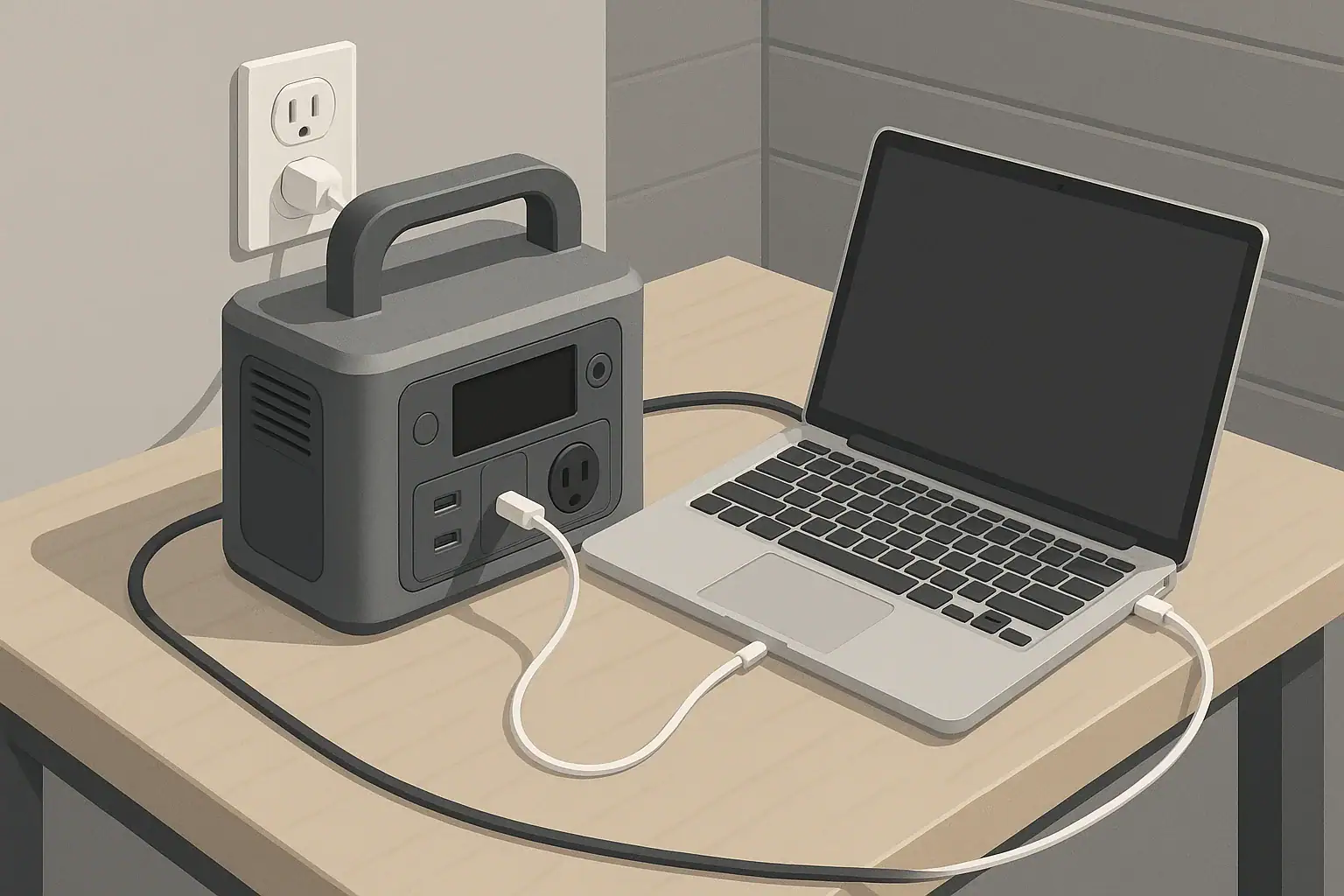
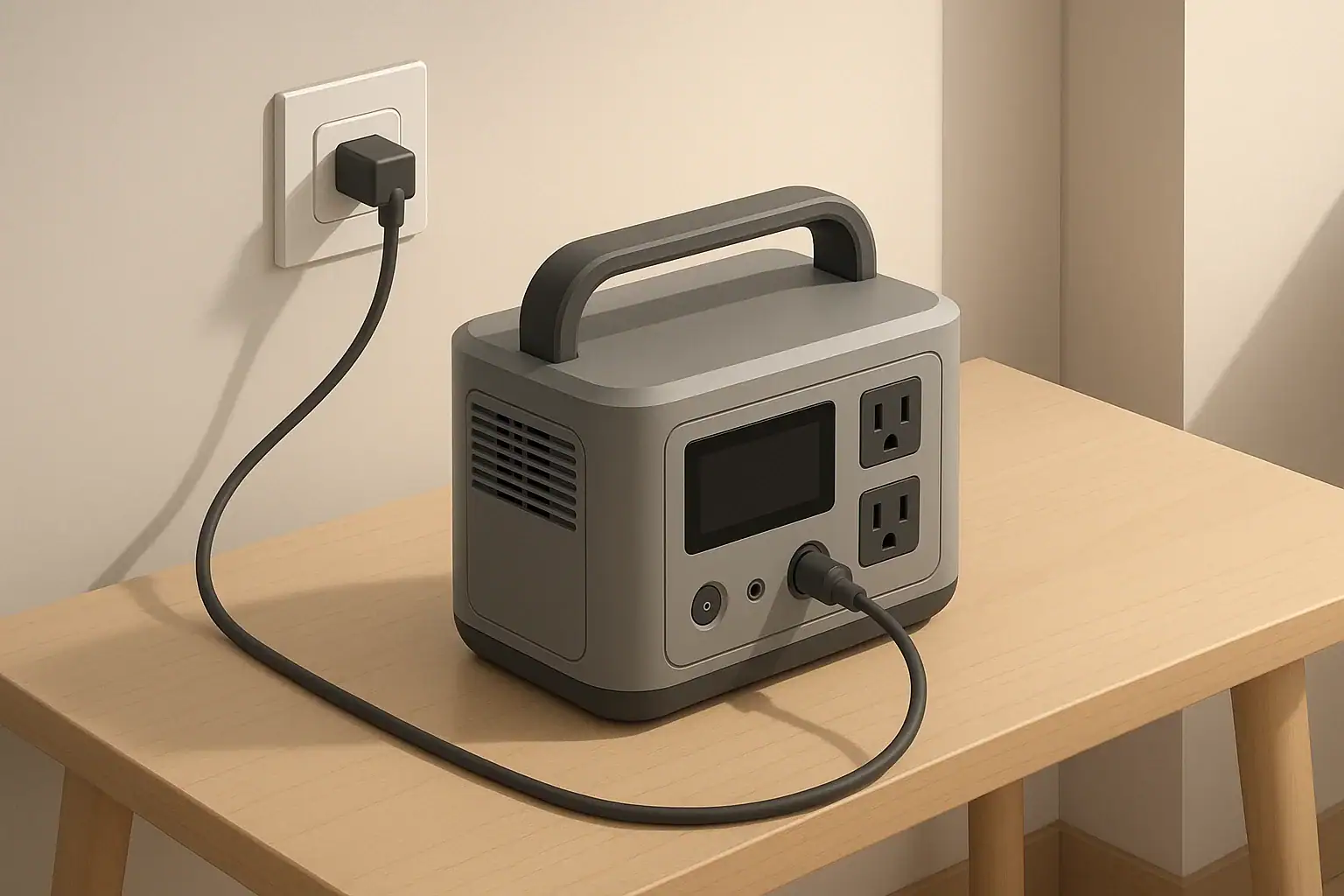
Portable power station charging from wall outlet with cable

When you buy a portable power station, its manual usually lists a maximum input wattage. At the same time, modern USB-C and AC adapters often advertise higher wattages than the device you want to charge. This raises a common question: can you safely use a higher-watt charger than the power station’s rated input?

The short answer in most cases is yes, as long as the voltage, connector type, and standards match, but there are important limits. To understand them, it helps to know what input headroom is and how portable power stations control the power they accept.

A charger rated at 60 W, 20 V, 3 A means it can deliver up to 60 watts by providing 20 volts and 3 amps. It does not force 60 W into every device; it can provide “up to” that amount.

Why Charger Wattage Matters for Portable Power Stations

Key Terms: Watts, Volts, Amps, and Input Headroom

Watts, Volts, and Amps

Before looking at input headroom, it is useful to clarify the basic electrical terms you will see on chargers and power stations:

  • Voltage (V) – The electrical “pressure.” Common input voltages for portable power stations include 12–24 V DC, 48 V DC, and standard AC mains such as 120 V.
  • Current (A) – The flow of electrical charge. Current increases as a device draws more power at a given voltage.
  • Power (W) – The rate of energy transfer. Power is calculated as watts = volts × amps.

What Is Input Headroom?

Input headroom is the difference between:

  • The maximum power a charger or power source can supply, and
  • The maximum power the portable power station is designed to accept on that input.

For example, if your portable power station’s DC input is rated for 100 W and you connect a 140 W USB-C charger, you are providing headroom of 40 W. The power station should still limit itself to 100 W (or less) if it is designed correctly.

This is similar to plugging a 500 W device into a household outlet that can supply 1,500 W. The outlet does not push 1,500 W into the device; the device only draws what it needs.

How Portable Power Stations Control Input Power

Internal Charge Controllers

Inside a portable power station, a charge controller manages the incoming power. Its main tasks are:

  • Negotiating with smart chargers (like USB-C PD) to choose voltage and current
  • Limiting current so the input power stays at or below the rated maximum
  • Protecting the battery from overvoltage, overcurrent, and overheating

Because the power station decides how much power to draw, using a higher-watt charger is usually safe as long as the voltage, connector, and protocol are compatible.

Examples of Common Input Types

Portable power stations may offer several input ports, such as:

  • Barrel plug DC input (e.g., 12–28 V DC from a wall adapter or car socket)
  • Anderson or similar DC connector for higher-power charging
  • USB-C PD input supporting fixed or programmable power profiles
  • AC input using a built-in charger connected directly to the wall outlet

The input headroom question usually applies to external adapters, especially USB-C chargers and DC bricks, rather than built-in AC charging where the internal charger sets a fixed limit.

Using a Higher-Watt USB-C Charger

How USB-C Power Delivery Negotiation Works

In USB-C Power Delivery (PD) systems, the charger (source) and the portable power station (sink) perform a digital negotiation. The charger advertises several voltage/current profiles it can provide, such as:

  • 5 V at 3 A (15 W)
  • 9 V at 3 A (27 W)
  • 15 V at 3 A (45 W)
  • 20 V at 5 A (100 W)

The power station selects one of these options that is within both:

  • The charger’s maximum capability, and
  • The power station’s own internal input limit.

This is why a 100 W USB-C charger can safely charge a power station whose USB-C input is rated for only 60 W. The station will simply choose a 60 W or lower profile (for instance, 20 V at 3 A) during negotiation.

Practical Example

Imagine your portable power station lists:

  • USB-C input: 5–20 V, up to 60 W

If you connect:

  • A 45 W USB-C charger: the power station might charge at around 45 W.
  • A 65 W or 100 W USB-C charger: the power station will typically charge at its own 60 W limit, not at 65 W or 100 W.

The extra charger capacity is simply unused headroom. It does not normally harm the station.

When Higher-Watt USB-C Chargers Are Useful

A higher-watt USB-C charger can be beneficial when:

  • You want to charge several devices from one charger, not just the power station.
  • You want to ensure the power station always gets its full rated input, even if charger performance drops slightly with heat or cable losses.
  • You are sharing the charger between a power station and a laptop, and need enough headroom for both, one at a time or in rotation.

However, using an extremely oversized USB-C charger will not make the power station charge faster than its designed input limit.

Using a Higher-Watt DC or AC Adapter

Barrel and DC Connector Inputs

Many portable power stations use dedicated DC inputs with barrel or other connectors, rated for a specific voltage and power, for example:

  • Input: 24 V DC, 6.5 A (approx. 156 W max)

If you replace the original 150 W adapter with a third-party 200 W adapter at the same voltage, the station should still limit its draw to around 150–160 W, provided:

  • The voltage is within the specified range.
  • The polarity of the connector matches.
  • The adapter output is stable and regulated.

Again, the extra charger capacity becomes unused headroom.

AC Charging With Built-In Chargers

Some portable power stations have a built-in AC charger and use a simple AC cable (like a computer power cord). In this case, the charger is inside the power station and the wall outlet can usually supply much more power than the charger needs.

Here, the concept of a “higher-watt charger” does not really apply. The wall outlet is capable of high wattage, but the internal charger determines the charging rate, not the cable or outlet.

When Higher-Watt Chargers Can Be Unsafe

Mismatched Voltage

The main danger is not a higher watt rating, but an incorrect voltage. Examples of risky scenarios include:

  • Using a 48 V DC supply on an input rated for 12–24 V DC.
  • Using a non-PD USB-C power source that provides fixed 20 V to a device expecting only 12 V.

Even if the watt rating is similar, too high a voltage can damage the input circuits or the battery management system.

Unregulated or Poor-Quality Adapters

Some third-party DC adapters may not maintain stable voltage or may create spikes, noise, or reverse polarity when connected incorrectly. Possible issues include:

  • Overvoltage spikes when plugging or unplugging
  • Excessive ripple that stresses internal components
  • Incorrect polarity causing immediate failure

In such cases, the problem is quality and regulation, not wattage alone.

Bypassing Built-In Protections

Certain users attempt to feed power through connectors not intended for charging, such as outputs or expansion ports. Doing this with a higher-watt supply can be especially risky because:

  • Those ports may lack proper current limiting for incoming power.
  • The wiring and connectors might not be rated for sustained input current.
  • The power flow path may bypass some protection features.

Charging should only be done through ports that the manufacturer designates as inputs.

Input Headroom and Charging Speed

Will a Bigger Charger Make Charging Faster?

A larger charger only speeds up charging if the original charger was below the power station’s input limit. For example:

  • Power station input limit: 200 W
  • Original adapter: 120 W
  • New adapter: 200 W with correct voltage and connector

In this case, the new adapter might allow the station to charge at the full 200 W rate (if the station supports it), reducing charging time.

However, if the power station’s input limit is 120 W, connecting a 200 W or 300 W adapter will not make it charge faster. The device will still pull about 120 W.

Estimating Charging Time

Charging time depends on both battery capacity and effective input wattage. A rough estimate is:

Charging time (hours) ≈ Battery watt-hours ÷ Charging watts

For example, for a 600 Wh power station:

  • At 60 W input: 600 ÷ 60 = 10 hours (plus overhead and tapering)
  • At 120 W input: 600 ÷ 120 = 5 hours (plus overhead and tapering)

A higher-watt charger only improves this if it enables higher actual charging watts within the device’s design limit.

Multiple Inputs and Combined Charging

Parallel Inputs (AC + DC, or USB-C + DC)

Some portable power stations allow simultaneous charging from multiple sources, such as:

  • AC adapter + solar input
  • DC adapter + USB-C PD

In these designs, the manufacturer usually specifies a combined maximum input. For example:

  • AC input: up to 200 W
  • Solar/DC input: up to 200 W
  • Combined input: up to 400 W

Even if you connect higher-watt sources to each input, the internal controller should limit the total. Still, it is wise to stay within the documented combined limit to avoid thermal stress.

Effect on Heat and Longevity

Running at continuous maximum input power increases internal temperature. More headroom on the charger side does not reduce the power station’s heat if the station is already drawing at its own maximum. However:

  • A charger operating below its maximum rating may run cooler and potentially last longer.
  • A power station constantly charged at its absolute maximum input may experience more thermal cycling than one charged more gently.

For long-term battery health, fast charging can be convenient, but moderate charging rates are often less stressful on the system.

Safe Practices When Using Higher-Watt Chargers

Check Input Specifications Carefully

Before connecting a higher-watt charger, verify the following in the power station’s manual or on its label:

  • Allowed input voltage range for each port
  • Maximum input watts (per port and combined)
  • Connector type and polarity
  • Supported protocols (e.g., USB-C PD, specific DC inputs)

Only use adapters and cables that match these specifications.

Use Certified and Reputable Chargers

Choose chargers that meet recognized safety standards and have:

  • Overcurrent and overvoltage protection
  • Short-circuit protection
  • Good build quality and adequate cabling

While a generic charger may work, poor regulation or incorrect labeling increases the risk of damage, especially at higher wattages.

Monitor Early Uses

When you first pair a higher-watt charger with a portable power station:

  • Check that the display (if available) shows a reasonable input wattage.
  • Feel the charger and the power station after 20–30 minutes to ensure they are not excessively hot.
  • Listen for unusual noises such as buzzing or clicking.

If you notice overheating or erratic behavior, discontinue use and return to the original or a lower-rated charger.

Frequently Asked Questions About Higher-Watt Chargers

Can a higher-watt charger damage my portable power station?

Under normal conditions, a higher-watt charger will not damage a power station if the voltage, polarity, and protocol are correct and the charger is of reasonable quality. The power station should limit its own input current. Damage is more likely from incorrect voltage or poor regulation than from wattage headroom itself.

Why does the station still charge slowly with a powerful charger?

If the portable power station has a low input limit (for example, 60 W), it cannot take advantage of a much larger charger (like 140 W). The internal design, not the charger size, is the bottleneck.

Should I avoid using the absolute maximum input?

Using the maximum rated input is generally safe if the manufacturer explicitly supports it. However, if you are not in a hurry and want to minimize thermal stress, you may choose to charge at a moderate rate when convenient, especially in hot environments.

Is it better to use the original adapter?

The original adapter is designed and tested specifically for the device. When possible, using it reduces the chance of compatibility issues. A higher-watt replacement can be fine when properly matched, but requires more careful attention to specifications.

Does input headroom matter for solar charging?

Yes. With solar panels, the array’s potential wattage can exceed the power station’s solar input limit. The charge controller will usually cap the solar input to its maximum rating, leaving some panel capacity unused. Oversizing panels can still be useful in less-than-ideal sunlight, but you must stay within the allowed voltage range to avoid damage.

Frequently asked questions

Can I use a higher-watt USB-C laptop charger with my power station’s USB-C input?

Yes—if both the charger and the power station support USB-C Power Delivery and the voltage range matches, the PD negotiation will limit the current so the station only draws up to its input limit. Use a cable rated for the charger’s current and monitor the first charge for heat or erratic behavior.

Is it safe to replace my DC brick with a higher-watt adapter at the same voltage?

Generally yes: if the replacement adapter provides the same regulated voltage and correct polarity, the power station should limit its draw to the rated input and simply leave the extra capacity unused. Make sure the adapter is well regulated and of good quality to avoid voltage spikes or ripple that could harm the device.

Will using a higher-watt charger shorten my power station’s battery lifespan?

Charging at higher rates can increase internal temperatures and slightly accelerate battery wear over time, especially if used constantly at the maximum rated input. Occasional fast charging within manufacturer limits is acceptable, but for long-term longevity moderate charging is gentler on the system.

Can a higher-watt charger trip safety systems or be rejected by the station?

Yes—if the charger advertises unsupported voltages or protocols, the power station’s charge controller or battery management system may refuse the connection or limit the input to protect the battery. This protective behavior prevents damage but emphasizes the need to follow the station’s input specifications.

Is it okay to use two high-watt sources to exceed a single-input limit?

Only if the manufacturer explicitly supports simultaneous inputs and specifies a combined maximum input; the internal controller should cap the total to that combined limit. Connecting multiple oversized sources beyond the documented combined rating risks overheating or bypassing protections and is not recommended.

MPPT vs PWM in Portable Power Stations: What It Changes in Real Life

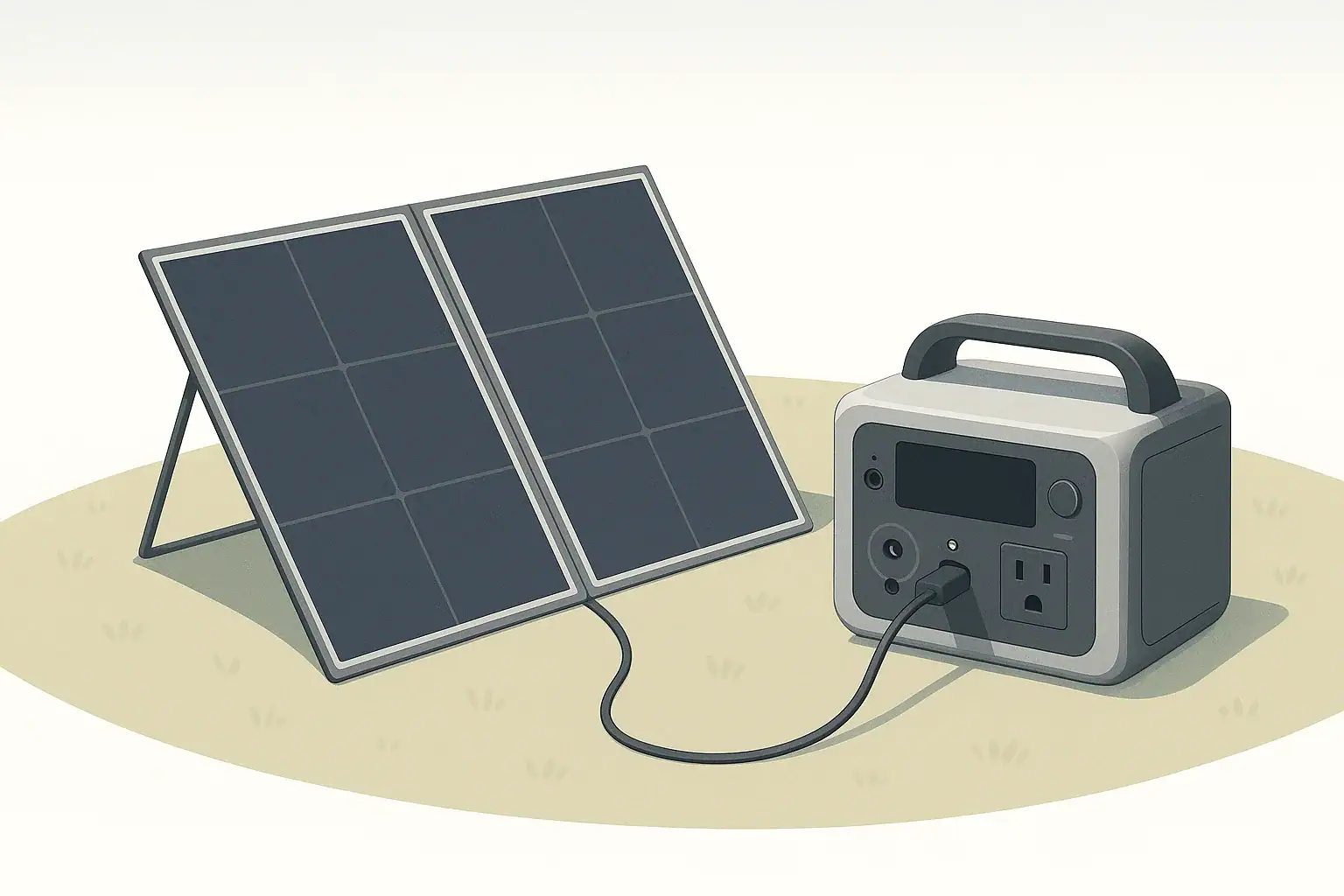
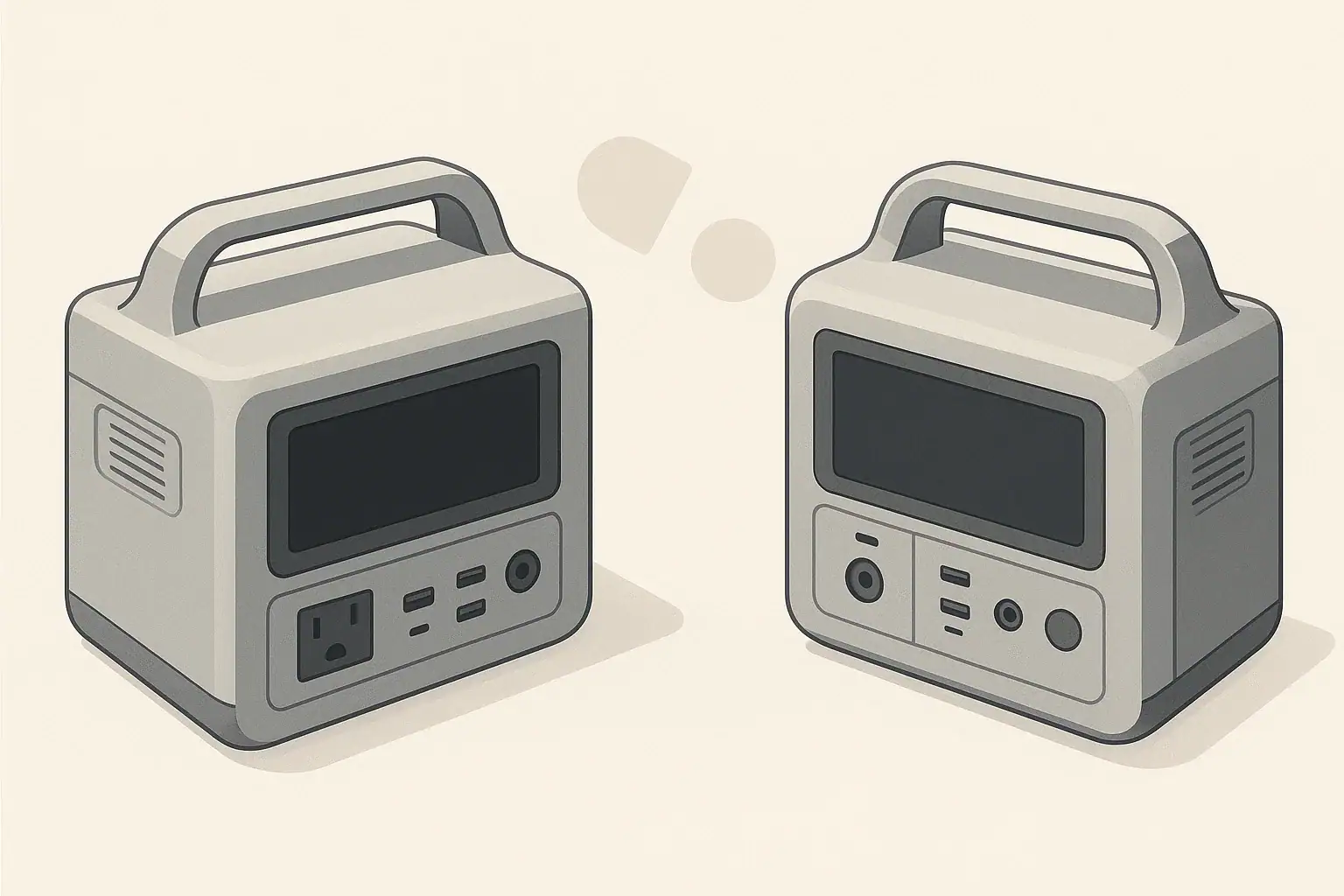
Two portable power stations shown side by side for comparison

Portable power stations are increasingly charged from solar panels, but how the built-in charge controller manages panel-to-battery power can make a big difference in day-to-day performance. This article compares the two common controller strategies — PWM (Pulse Width Modulation) and MPPT (Maximum Power Point Tracking) — and explains what those differences mean for charging speed, energy harvest, panel choices, and system design in real-life use. Read on to see how each approach behaves under changing sunlight, variable temperatures, and longer cable runs, plus practical tips on when the added cost and complexity of MPPT are worth it. The sections below break down quick definitions, real-world examples, system implications, and guidance to help you pick the right portable power station setup for your solar needs.

Why MPPT vs PWM Matters for Portable Power Stations

When you charge a portable power station from solar panels, a built-in solar charge controller manages how energy flows from the panels into the battery. Most modern units use one of two controller types:

  • PWM (Pulse Width Modulation)
  • MPPT (Maximum Power Point Tracking)

On spec sheets this often appears as a small line, but it has clear effects on how quickly and efficiently your power station charges from solar in real-world conditions. Understanding the difference helps you size your solar setup correctly and avoid unrealistic expectations about charging time.

Quick Definitions: PWM and MPPT

What a Solar Charge Controller Does

A solar charge controller sits between your solar panels and the battery in a portable power station. Its main jobs are to:

  • Protect the battery from overcharging
  • Match the panel output to the battery voltage
  • Control charging stages (bulk, absorption, float) for battery health

MPPT and PWM are two different control strategies for doing this.

PWM in Simple Terms

A PWM controller connects the solar panel directly to the battery and then rapidly switches the connection on and off (modulation) to control the charging current.

Key characteristics:

  • Simple electronics and usually lower cost
  • Operates the panel close to the battery voltage
  • Wastes potential panel voltage above battery voltage

MPPT in Simple Terms

An MPPT controller is more sophisticated. It continuously measures the panel voltage and current and adjusts the operating point to extract the maximum possible power from the panels.

Key characteristics:

  • Uses DC-DC conversion to transform higher panel voltage into extra charging current
  • Actively tracks the “maximum power point” as sunlight changes
  • Improves energy harvest, especially in suboptimal conditions

How MPPT and PWM Behave With Solar Panels

Voltage Matching and What It Means

Solar panels have a voltage at which they produce the most power (often called Vmp). Batteries also have a nominal voltage (for example, around 12 V, 24 V, or internal pack voltages inside a power station).

What each controller does with this mismatch is the core difference:

  • PWM: Pulls the panel voltage down close to the battery voltage. If the panel is rated for a much higher voltage than the battery, that extra voltage is mostly lost as heat or unused potential.
  • MPPT: Lets the panel operate at or near Vmp, then converts the higher voltage down to the battery voltage while increasing the current. This preserves more of the panel’s potential wattage.

Simple Real-World Example

Assume a solar panel has these approximate ratings under good sun:

  • Voltage at max power (Vmp): 18 V
  • Current at max power (Imp): 5.5 A
  • Panel power: 18 V × 5.5 A ≈ 99 W

Now connect it to a battery that is charging at around 13 V:

  • With PWM: Panel is pulled down to roughly 13 V. Maximum power becomes about 13 V × 5.5 A ≈ 71.5 W. You lose the remainder as unused potential.
  • With MPPT: Controller keeps panel near 18 V and converts it to battery voltage. In an ideal case, you could get close to 99 W into the battery (minus small conversion losses).

Over the course of a full day of sunlight, that difference adds up to noticeably more watt-hours stored with MPPT.

Efficiency and Energy Harvest in Real Life

Typical MPPT vs PWM Gain

Under many conditions, MPPT controllers can harvest about 15–30% more energy than PWM controllers from the same solar array. The actual gain depends on factors like:

  • Panel voltage relative to battery voltage
  • Cell temperature
  • Shading and cloud cover
  • Time of day (angle of the sun)

The benefit is largest when there is a significant voltage difference between the solar panel and the battery and when conditions are not ideal.

Partial Shade and Changing Conditions

Portable power stations often see variable conditions:

  • Panels moved around a campsite or yard
  • Clouds passing overhead
  • Panels tilted at non-optimal angles

An MPPT controller can respond to these changes by constantly seeking the best operating point. When the sun weakens, the voltage-current curve of the panel changes; MPPT tracks this and keeps power output closer to the maximum. PWM simply follows the battery voltage and does not adapt to the changing shape of the curve.

Cold and Hot Weather Impact

Panel voltage rises in cold temperatures and falls in hot temperatures. This is where the technology differences show up again:

  • In cold weather: Voltage can be significantly higher than nominal. MPPT can turn that higher voltage into more current, boosting wattage harvested. PWM cannot use the extra voltage and simply wastes it.
  • In hot weather: Panel voltage drops closer to battery voltage. The advantage of MPPT shrinks somewhat, but it still generally does better at maintaining optimal power.

Impact on Charging Time

Translating Efficiency Into Hours

Charging time for a portable power station from solar depends on:

  • Battery capacity (in watt-hours)
  • Total solar array power (in watts)
  • Average sun hours per day
  • System efficiency, including controller type

Because MPPT harvests more energy from the same panels, it shortens charging time compared to PWM in many real-world setups.

Illustrative Scenario

Consider a 500 Wh portable power station and a 100 W solar panel in reasonably good sun:

  • Assume about 5 peak sun hours in a day
  • Assume wiring and conversion losses outside the controller are similar

Approximate daily energy into the battery:

  • With PWM: Effective panel power might average ~70 W → 70 W × 5 h = 350 Wh
  • With MPPT: Effective panel power might average ~90 W → 90 W × 5 h = 450 Wh

In this simplified model, MPPT could bring the power station close to full in one good day, while PWM may need closer to a day and a half under similar conditions.

The exact numbers will vary in reality, but the pattern—shorter charging times with MPPT from the same panel—is typical when using modest to large solar panels compared to the battery size.

System Design: Panel Choices and Cable Runs

Panel Voltage Flexibility

MPPT controllers work best with solar panels that have a higher voltage than the battery. In the context of portable power stations, this has practical effects:

  • With PWM: You generally want panel voltage close to the battery-equivalent input voltage to minimize wasted potential.
  • With MPPT: You can use higher-voltage panels or combine panels in series (within the unit’s voltage limits) and still capture most of the extra voltage as useful power.

This flexibility can be useful when repurposing existing panels or scaling up an array.

Cable Length and Voltage Drop

Running low-voltage DC over longer cables causes voltage drop and power loss. MPPT can help manage this:

  • Higher input voltage: MPPT allows you to run panels at a higher voltage (within spec), which reduces current for the same power and therefore reduces losses in the cables.
  • PWM limitation: Because PWM forces panel voltage nearer to battery voltage, current is higher for the same power. That means thicker cables or shorter runs are needed to limit voltage drop.

For many small portable setups with short cables, this may not be a significant factor. For larger panels located farther from the power station (for example, to reach a sunny spot), MPPT can preserve more energy.

Cost, Complexity, and Reliability Considerations

Price and Internal Complexity

MPPT controllers use more complex electronics and control algorithms than PWM controllers. Inside a portable power station, that generally translates into:

  • Higher component cost for the manufacturer
  • More sophisticated firmware and control circuits

PWM controllers are simpler and often less expensive to implement. This is one reason some lower-cost or smaller-capacity portable power stations use PWM for their solar input.

Reliability in Practice

Both PWM and MPPT controllers can be highly reliable when designed and built well. The reliability differences in real-world portable power stations tend to depend more on overall product design and component quality rather than solely on the choice of PWM vs MPPT.

However, there are a few practical points:

  • More complex electronics (MPPT) can theoretically have more failure modes, but proper engineering and thermal management mitigate this.
  • PWM controllers are simpler and may run cooler at lower power levels, but can still be stressed if used near or beyond their design limits.

When MPPT Makes a Noticeable Difference

Larger Solar Arrays Relative to Battery Size

The more solar panel capacity you have relative to the battery size, the more meaningful the efficiency gain from MPPT becomes. For example:

  • Small power station with a modest 50 W panel: the difference between MPPT and PWM may be modest in absolute watt-hours per day.
  • Mid-size power station with 200–400 W of panels: the daily energy gain from MPPT can be significant, especially if you rely mostly on solar.

Situations With Limited Sunlight

When sunlight is scarce or inconsistent, more efficient energy capture matters:

  • Short winter days
  • Cloudy climates
  • Heavily shaded campsites or urban balconies

In these scenarios, MPPT can help you make the most of brief or weak sun windows, improving the odds of reaching a useful state of charge.

Long-Term Off-Grid or Heavy Solar Dependence

If your portable power station is part of a frequent or semi-permanent off-grid setup—such as a van, RV, remote cabin, or regular camping with solar as the main energy source—MPPT’s improved harvest typically pays off in convenience and system performance.

When PWM Can Be Acceptable

Occasional or Light Solar Use

If you use solar only occasionally, or primarily as a backup to wall charging or vehicle charging, a PWM-based solar input can still be adequate. Examples include:

  • Charging the power station from the wall most of the time
  • Using a small panel just to slow battery drain on trips
  • Rarely relying on solar as the sole energy source

In these cases, the extra efficiency of MPPT may not dramatically change your day-to-day experience.

Very Small Setups

For compact portable power stations with small batteries and small panels, the absolute difference in watt-hours can be relatively small. If your expectations are modest—such as topping up phones, tablets, or a small laptop—PWM may perform adequately within those limits.

Reading Portable Power Station Specs

Identifying MPPT vs PWM in Specifications

Product documentation or spec sheets typically mention the solar charging type. Look for phrases like:

  • “MPPT solar charge controller” or “built-in MPPT”
  • “PWM charge controller” or no explicit mention of MPPT

If the controller type is not clearly stated, detailed manuals or technical datasheets may provide more information, including:

  • Maximum solar input wattage
  • Supported input voltage range (for example, 12–30 V)
  • Maximum charging current

Higher allowable input voltages and explicit references to “tracking” or “MPPT” are indicators of an MPPT design.

Solar Input Limits Still Apply

Even with MPPT, you cannot exceed the maximum solar input specifications of the portable power station. Key limits include:

  • Maximum input power (W): The upper bound of solar wattage the unit can safely use.
  • Maximum input voltage (V): A hard limit you must not exceed with panel configurations, especially when wiring panels in series.
  • Connector type and rating: The physical plug and wiring must handle the current.

The controller type does not override these constraints; it simply changes how efficiently energy is used within them.

Practical Tips for Choosing Between MPPT and PWM

Questions to Ask Yourself

When evaluating a portable power station’s solar charging, consider:

  • How often will I rely primarily on solar charging?
  • How large a solar array do I plan to use, now or later?
  • Will my panels be in suboptimal conditions (shade, winter sun, long cables)?
  • Is faster solar charging important for my use case?

If you expect frequent or heavy solar use, MPPT usually offers more flexibility and better real-world performance for the same panel investment.

Designing Around a PWM Input

If you already own or choose a power station with PWM solar charging, you can still optimize performance:

  • Use panels with voltage close to the recommended input voltage to reduce wasted potential.
  • Keep cable runs short and use appropriately thick wire to minimize voltage drop.
  • Position panels for the best sun exposure and adjust tilt during the day if practical.
  • Manage expectations about charging speed, especially in marginal sunlight.

Designing Around an MPPT Input

With an MPPT-equipped power station, you can often:

  • Use higher-voltage panels or series combinations (within voltage limits) to reduce current and cable loss.
  • Get more usable energy on cloudy, cold, or partially shaded days.
  • Scale up your solar array more effectively if the input wattage rating allows it.

Summary: Real-Life Changes You Will Notice

In everyday use, the difference between MPPT and PWM in portable power stations shows up as:

  • Faster solar charging: MPPT generally fills the battery more quickly from the same panels.
  • Better performance in less-than-ideal sun: MPPT maintains higher output under changing conditions.
  • More flexibility in panel choice and cable length: MPPT handles higher voltages and longer runs more efficiently.
  • Simpler, often cheaper hardware with PWM: Adequate for light or occasional solar use with realistic expectations.

Choosing between MPPT and PWM is ultimately about matching your solar charging expectations and environment to how you plan to use your portable power station over time.

Frequently asked questions

How much faster will MPPT charge my portable power station compared to PWM?

MPPT typically harvests about 15–30% more energy than PWM under many real-world conditions, which often translates to roughly 15–30% shorter charging times. For example, with a 100 W panel in decent sun you might get ~450 Wh with MPPT versus ~350 Wh with PWM over a day, so MPPT can sometimes fill a medium-size station in one day that PWM would need more than a day to reach.

Can I use higher-voltage solar panels with a PWM-equipped portable power station?

Physically you can only use panels that stay within the unit’s stated input voltage limits, but PWM will pull panel voltage down toward the battery voltage and waste the excess. For PWM systems you should choose panels with a Vmp close to the battery input voltage to avoid losing potential power.

Will MPPT still provide benefits in hot weather or partial shade?

Yes; MPPT is especially beneficial in partial shade, cloudy conditions, and cold weather because it actively tracks the panel’s maximum power point. In hot weather the panel voltage falls and the relative advantage shrinks, but MPPT usually still extracts more usable energy than PWM in varying conditions.

Is MPPT worth the extra cost if I only use solar occasionally?

If solar use is occasional or you rely mainly on wall or vehicle charging, PWM can be adequate and the added cost of MPPT may not be justified. However, if you expect to scale up panels, depend on solar in poor conditions, or want faster charging, MPPT typically pays off over time.

How do cable length and voltage drop influence the MPPT vs PWM decision?

Longer cable runs increase voltage drop; using higher input voltage with an MPPT controller reduces current for the same power and therefore lowers cable losses. PWM forces panels to operate near battery voltage so current is higher and cable losses become more significant unless thicker wiring or very short runs are used.

Input Limits (Volts/Amps/Watts) Explained: How Not to Damage Your Unit

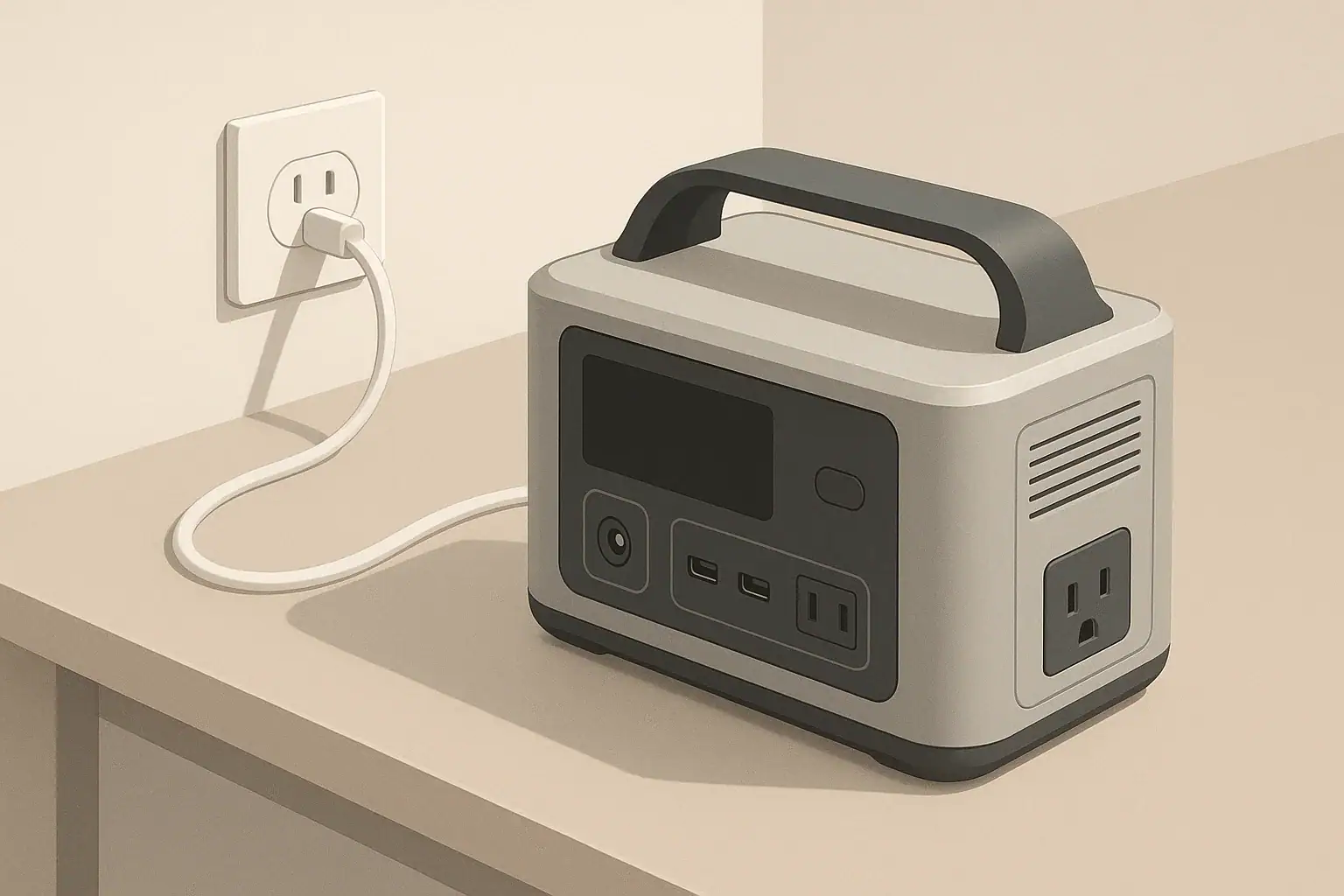
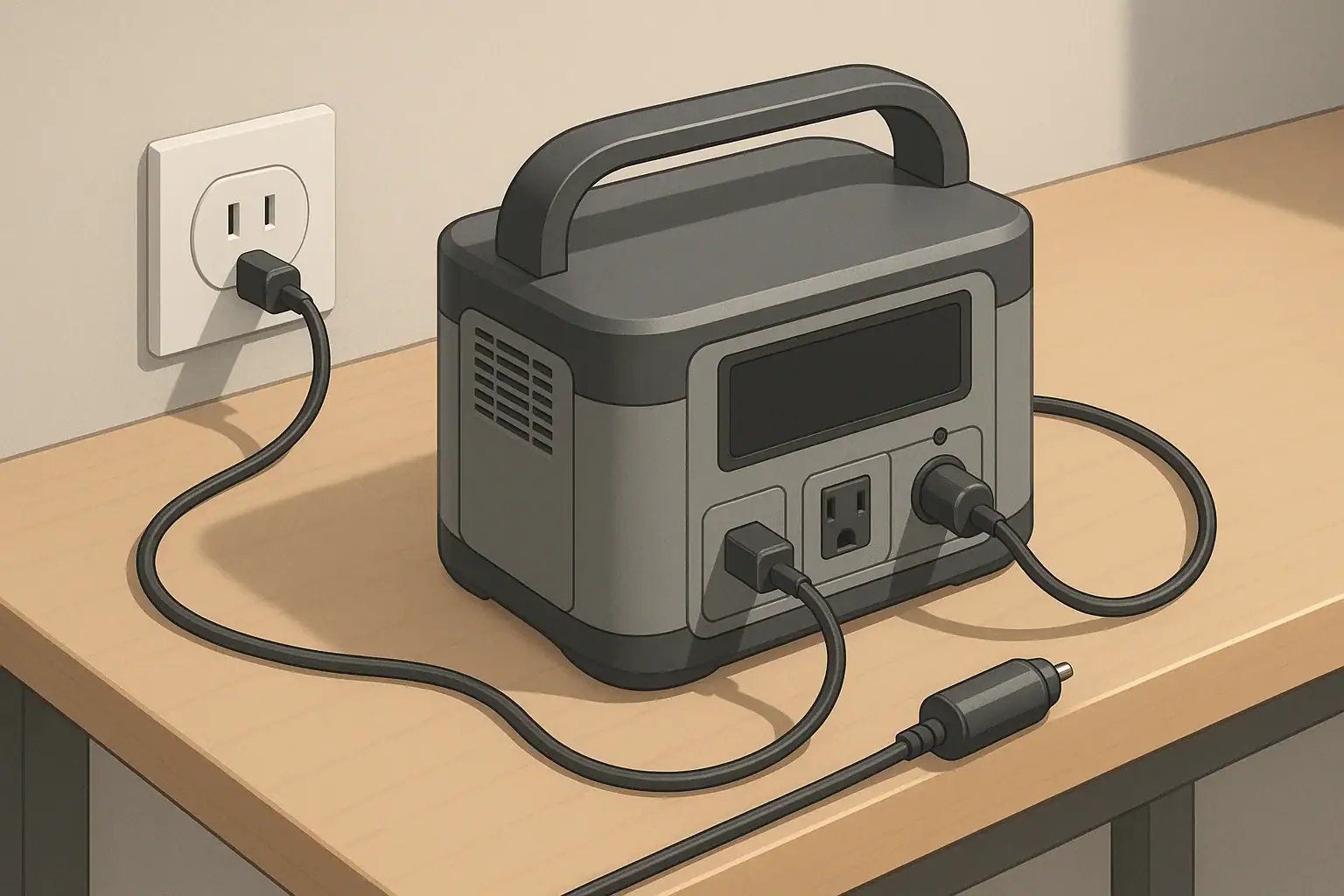
portable power station charging from a wall outlet indoors

Why Input Limits Matter for Portable Power Stations

Every portable power station has charging input limits. These limits define how much electrical power it can safely accept from the wall, a vehicle, or solar panels. Exceeding those limits can overheat components, stress the battery, shorten its life, or in the worst case permanently damage the unit.

Understanding volts (V), amps (A), and watts (W) on the input side helps you:

  • Choose appropriate chargers and power sources
  • Size solar panel arrays correctly
  • Avoid overloading connectors and cables
  • Charge efficiently without unnecessary wear on the battery

This article focuses on input limits for portable power stations: what they mean, how to read them on the spec sheet, and practical ways to avoid damage.

Key Electrical Terms: Volts, Amps, Watts

Volts (V): Electrical Pressure

Voltage is like the “pressure” that pushes electricity through a circuit. On the input side of a portable power station, you will see voltage limits such as:

  • AC input: 100–120 V or 220–240 V (depending on region)
  • DC input: For car charging, often around 12–24 V
  • Solar input: Sometimes 12–60 V, 12–50 V, or similar ranges

Feeding a voltage higher than the specified maximum into a DC or solar input can damage the unit’s charge controller or other internal electronics.

Amps (A): Electrical Current

Current is the rate of flow of electric charge. Input current limits might look like:

  • AC input current: for example, 10 A at 120 V
  • DC input current: for example, 8 A max from a car or solar panel

Exceeding current limits can overheat wiring, connectors, and internal components. Many power stations include internal current limiting, but it is still important to respect the published specifications.

Watts (W): Total Power

Power (watts) combines volts and amps:

Watts = Volts × Amps

For example:

  • 120 V × 5 A = 600 W
  • 24 V × 10 A = 240 W

Input wattage tells you how fast the unit can be charged. A 600 W input can theoretically add 600 watt-hours (Wh) to the battery in one hour, minus efficiency losses.

Where to Find Input Limits on Your Unit

Input ratings are usually listed in three places:

  • On the device label: Near the input ports or on the bottom panel
  • In the manual: Under “Specifications”, often broken down by input type
  • Next to ports: Small printed markings by the AC, DC, or solar inputs

Look specifically for lines that mention:

  • AC Input: e.g., 100–120 V ~ 50/60 Hz, 600 W max
  • Car/DC Input: e.g., 12–24 V DC, 8 A max
  • Solar Input: e.g., 12–50 V DC, 10 A max, 400 W max

If you see multiple values (for example, “12–60 V, 10 A, 400 W”), all three must be respected. You should stay within the allowed voltage range, current limit, and watt limit at the same time.

AC Input Limits: Wall and Generator Charging

What AC Input Ratings Mean

AC input is typically used for charging from a wall outlet or a fuel-powered generator. The spec might look like:

  • AC Input: 100–120 V ~ 50/60 Hz, 8 A, 800 W max

This means the power station’s internal charger will draw up to 800 W, or up to 8 A at 100–120 V. It will not draw more than that, even if the outlet can provide more.

How Damage Can Occur on AC Input

Most damage risk on AC input is indirect:

  • Overheating the circuit: Plugging a high-input charger into a weak or overloaded household circuit can cause breaker trips or hot wiring.
  • Poor-quality adapters: Cheap or undersized extension cords and power strips can overheat or fail.
  • Unstable generator output: Large voltage swings or frequency instability can stress the internal AC charger.

The power station usually limits its own AC draw, but the rest of the circuit might not be designed for that sustained load.

Safe Practices for AC Charging

  • Check the rated amperage of the circuit (e.g., 15 A or 20 A household circuit).
  • Avoid running multiple heavy loads on the same branch circuit while fast-charging.
  • Use a properly rated extension cord if needed: thick enough gauge and as short as practical.
  • If your unit supports adjustable AC charging rates, use a lower setting on weak circuits or generators.
  • Periodically touch the plug and cord; if they feel very hot, stop and investigate.

DC and Car Input Limits

Typical Car Input Ratings

Car charging uses DC power from a vehicle socket. Typical ratings might be:

  • Car Input: 12/24 V DC, 8 A max

At 12 V and 8 A, the maximum input power is roughly 96 W; at 24 V and 8 A, about 192 W. This is slower than most AC charging but convenient while driving.

Why Current Limits Matter for Car Input

Both the vehicle socket and the power station have current limits. Exceeding them can cause:

  • Blown fuses in the vehicle
  • Overheated cigarette lighter sockets
  • Damage to the DC input circuitry if bypassing protections

Many vehicles limit accessory sockets to around 10–15 A. The power station’s DC input may draw less than that, but if combined with other loads on the same circuit, problems can arise.

Safe Practices for DC Car Charging

  • Use the supplied DC car cable or one that matches the specified current rating.
  • Avoid using splitters or multi-socket adapters to power many devices alongside the power station.
  • Do not attempt to bypass vehicle fuses or wire into circuits not designed for continuous high current.
  • Follow the manual on whether the engine must be running while charging to avoid draining the starter battery.

Solar Input Limits: Voltage, Current, and Wattage

How Solar Input Specifications Work

Solar input is where users most commonly exceed limits, because solar arrays can be wired in different ways. A typical solar input spec might look like:

  • Solar Input: 12–60 V DC, 10 A max, 400 W max

To stay within safe limits, your panel (or array) must respect all three of these:

  • Voltage range: Panel open-circuit voltage (Voc) must stay below the maximum voltage, even in cold weather when Voc rises.
  • Current limit: Short-circuit current (Isc) of the array must not exceed the input’s amperage rating.
  • Power limit: The array’s wattage under ideal conditions should not exceed the specified maximum input power.

Panel Ratings to Compare With Your Unit

Solar panels list several values; the most relevant are:

  • Voc (Open-Circuit Voltage): Maximum voltage with no load; must be under the unit’s max input voltage.
  • Vmp (Voltage at Maximum Power): Operating voltage under load; used to estimate power.
  • Isc (Short-Circuit Current): Maximum current; useful for checking against the unit’s amp limit.
  • Imp (Current at Maximum Power): Current at Vmp; used to estimate operating power.
  • Rated Power (W): Panel wattage under standard test conditions.

Series vs Parallel Wiring and Input Limits

When combining panels:

  • Series wiring: Voltages add, current stays about the same.
  • Parallel wiring: Currents add, voltage stays about the same.

This matters for staying under voltage and current limits:

  • Too many panels in series can exceed the voltage limit.
  • Too many panels in parallel can exceed the current limit.

You must design the array so that in the worst credible conditions (cold temperatures, clear sun) your Voc and Isc still stay within the unit’s specifications.

Solar Scenarios That Risk Damage

  • Connecting a high-voltage rooftop array directly to a low-voltage portable power station solar input.
  • Ignoring the Voc increase in cold weather, resulting in voltage above the input’s max rating.
  • Using more panels than allowed in parallel so that Isc exceeds the amp limit.
  • Using incompatible connectors or adapters that bypass recommended protections.

Safe Practices for Solar Charging

  • Always compare panel Voc and Isc with the power station’s max voltage and current.
  • Consider a safety margin; keep peak Voc comfortably below the published maximum.
  • Verify polarity before connecting: reverse polarity can damage inputs not protected against it.
  • Use cables and connectors rated for outdoor use and the expected current.
  • Follow any specific wiring diagrams in the manual for supported series/parallel configurations.

Why Higher Input Is Not Always Better

Many users look for the fastest possible charging, but higher input power has trade-offs:

  • More heat: Fast charging creates more heat in the charger and battery, which can affect longevity if not managed well.
  • Battery stress: Some chemistries tolerate high charge rates better than others, but in general moderate rates are gentler.
  • Infrastructure limits: Household circuits, vehicle wiring, and solar cables all have practical limits.

If your unit offers adjustable charging speed, using a slightly lower setting when you are not in a hurry can be beneficial for both the battery and the upstream wiring.

What Happens Internally When You Exceed Limits

Built-In Protections

Modern portable power stations typically include several layers of protection:

  • Over-voltage protection: Shuts down input if the voltage goes above the safe threshold.
  • Over-current protection: Limits or cuts input current if it exceeds ratings.
  • Over-temperature protection: Reduces charging speed or stops charging when components run too hot.
  • Short-circuit protection: Stops charging if a short is detected.

These protections help prevent immediate catastrophic failure, but repeated trips or operating near the edge of limits can still cause long-term wear.

Potential Long-Term Effects of Pushing Limits

  • Connector wear: Plugs and ports may loosen or discolor from heat over time.
  • Degraded charge electronics: Components repeatedly run near their maximum ratings can age faster.
  • Shortened battery life: High-speed charging raises cell temperatures and may reduce cycle life, depending on design.

How to Match Chargers and Inputs Correctly

Reading Power Adapter Labels

For external power bricks or adapters, check the label for:

  • Output Voltage: Must match the power station’s required DC input voltage or range.
  • Output Current: The adapter’s max current; the power station will draw what it needs, up to this limit.
  • Output Power (W): Derived from voltage × current; should not exceed the unit’s allowed input wattage.

Using an adapter with a higher current rating is usually fine, as long as the voltage is correct and the power station’s own wattage limit is not exceeded. Using an adapter with the wrong voltage is unsafe.

Using USB-C and Other DC Inputs

Some portable power stations support USB-C Power Delivery or other DC inputs. The same rules apply:

  • Check the supported voltage profiles (e.g., 5 V, 9 V, 15 V, 20 V).
  • Do not assume every USB-C charger will work at full speed; many are limited in wattage.
  • Follow the manual on maximum USB-C input watts when using that port to charge the station.

Operating Temperature and Input Limits

Input ratings usually assume a certain temperature range. Outside that range, the unit may reduce charging speed or disable charging:

  • Cold conditions: Charging lithium-based batteries below recommended temperatures can cause damage. Many power stations restrict or block charging when too cold.
  • Hot conditions: High ambient temperatures make it harder to dissipate heat from fast charging, causing thermal throttling.

Check the manual for the specified charging temperature range and avoid forcing the unit to charge outside of it.

Practical Checklists to Avoid Damage

Before Connecting Any New Power Source

  • Read the input specs in the manual for the port you plan to use.
  • Verify the voltage and current of the charger, solar array, or vehicle outlet.
  • Confirm polarity on DC connections.
  • Inspect cables and connectors for damage or looseness.

While Charging

  • Check if the unit’s display or indicators show any warnings or error codes.
  • Occasionally feel the cables, plugs, and adapter to ensure they are warm at most, not hot.
  • Ensure there is adequate ventilation around the power station.

If Something Seems Wrong

  • Unplug the power source immediately.
  • Review the manual’s troubleshooting section and error code explanations.
  • Double-check all ratings before reconnecting.

Key Takeaways for Safe Input Use

Respecting input limits is primarily about matching voltages, staying under current ratings, and not exceeding rated watts. On AC, be mindful of the household or generator circuit capacity. On DC and solar, pay special attention to voltage ranges, especially with series-connected panels and cold-weather Voc. Using properly rated cables, following the manual, and not forcing the unit to charge faster than it was designed to handle are the most reliable ways to avoid damage and preserve long-term performance.

Frequently asked questions

How can I tell if my solar panel array might exceed the power station’s maximum input voltage in cold weather?

Compare the panels’ Voc (open-circuit voltage) with the power station’s maximum input voltage and account for cold-temperature Voc increases using the panel’s temperature coefficient. Leave a safety margin (for example 10–20%) below the unit’s max Voc to avoid risk. If the worst-case Voc could exceed the limit, reconfigure to fewer panels in series or use a higher-voltage-tolerant charge controller.

Can I use a high-wattage USB-C Power Delivery charger to speed up charging my portable power station?

Only if the power station’s USB-C input supports the PD voltage profiles and maximum wattage the charger offers. Check the manual for supported voltages and the USB-C input watt limit; supplying a charger with higher wattage won’t force the station to accept more than its spec, but mismatched voltages or unsupported profiles can be unsafe. Always use cables and chargers that meet the station’s stated requirements.

What immediate damage can occur if I exceed the AC, DC, or solar input limits?

Most modern units will trigger protections and shut down charging, but exceeding limits can still cause overheating of connectors or wiring, blown fuses, or stress to the charge controller and battery. If protections fail or are bypassed, permanent damage to internal electronics or battery cells is possible. Repeatedly operating beyond limits also accelerates long-term component degradation.

How should I size solar panels (series vs parallel) so I don’t exceed current or voltage limits?

Design your array for worst-case conditions: series strings add Voc, so ensure total Voc stays below the unit’s max even in cold weather; parallel strings add current, so ensure total Isc and operating watts remain under amp and watt limits. Use Vmp and Imp to estimate operating power and include a safety margin; if in doubt, reduce panel count or use an appropriately rated MPPT charge controller.

What are safe practices when charging from a car DC socket to avoid damaging the vehicle or the power station?

Use the supplied or a correctly rated DC cable, avoid splitters or multi-socket adapters, and do not bypass vehicle fuses. Verify the vehicle outlet’s amp rating exceeds the power station’s draw and follow the manual’s guidance on whether the engine should be running to prevent draining the starter battery. Stop charging immediately if the socket or cable becomes hot or a fuse blows.

Charging From a Car: What’s Safe, What’s Slow, and What Can Break

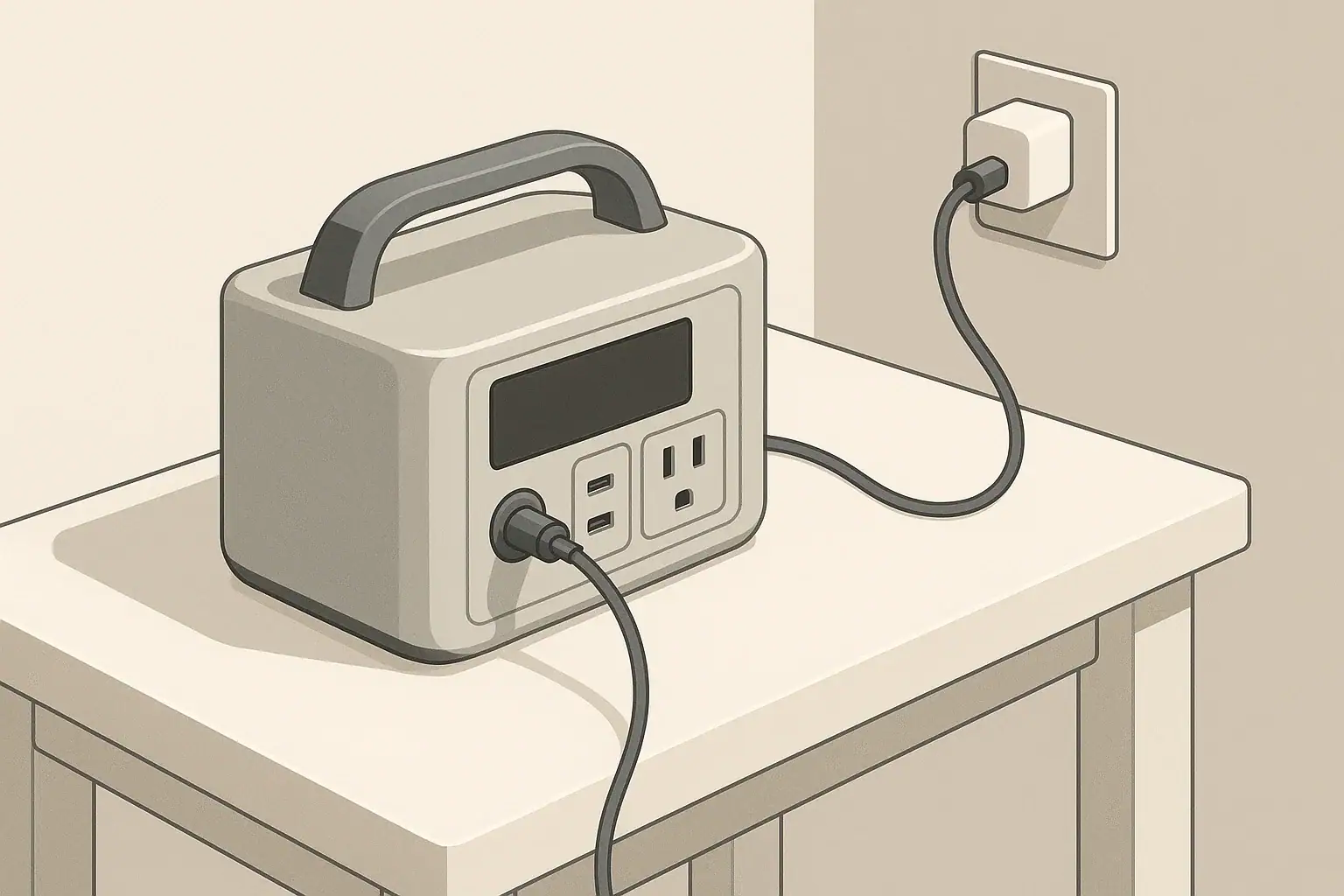
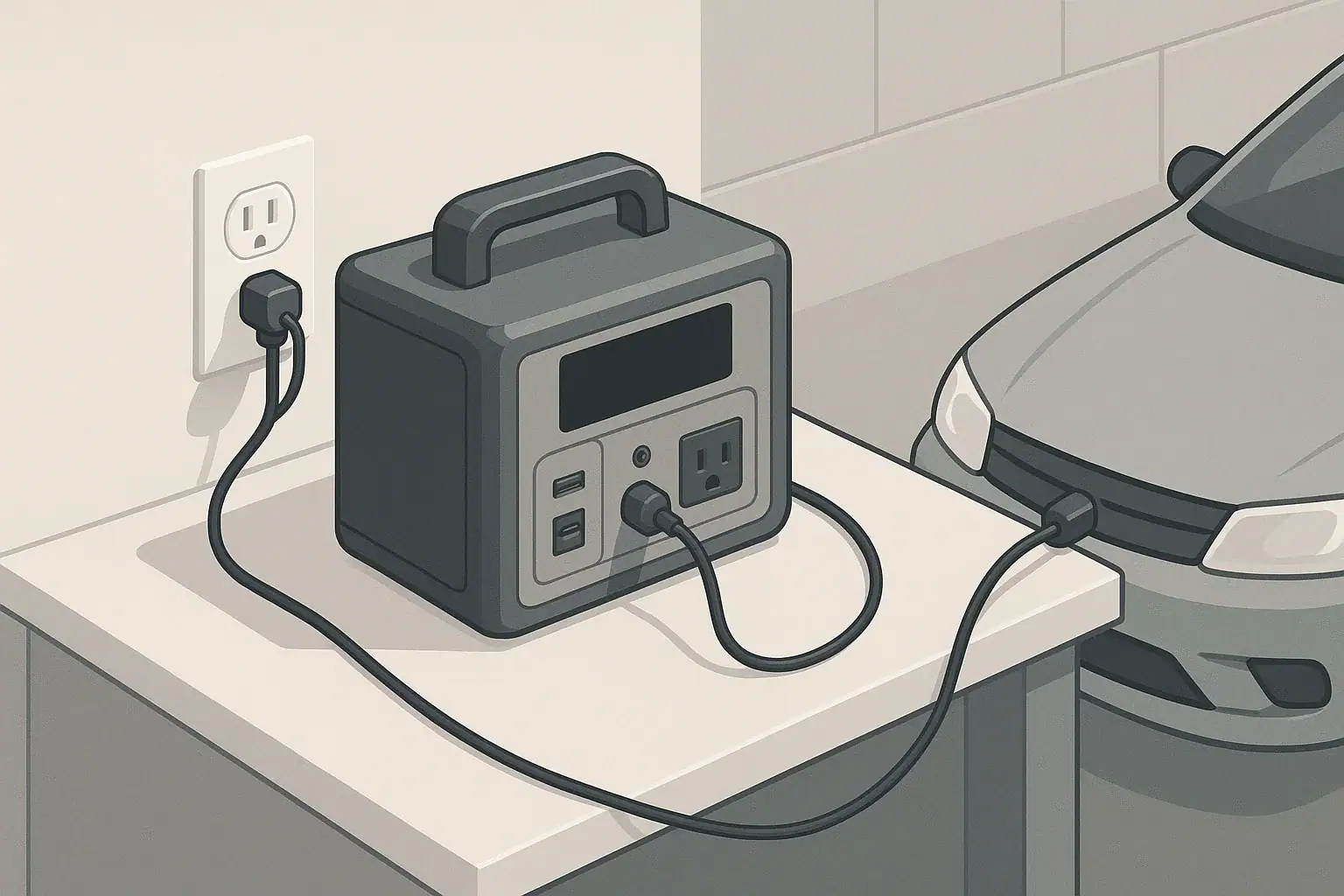
Portable power station charging from a car outlet in a garage

Why Charging a Portable Power Station From a Car Is Tricky

Charging a portable power station from a vehicle sounds simple: plug it into the car outlet and top it up while you drive. In reality, the details matter a lot for safety, charging speed, and long-term battery health.

This guide focuses on three key questions:

  • What car charging methods are generally safe?
  • What setups will work, but very slowly or inefficiently?
  • What can damage your portable power station, your vehicle, or both?

The information below applies broadly to most modern portable power stations, whether they use lithium-ion or LiFePO4 batteries.

Common Ways to Charge From a Car

There are several paths for getting energy from your vehicle into a portable power station. Each has different limits and risks.

1. Direct 12 V Car Socket (Cigarette Lighter)

This is the most common method. Many portable power stations include a cable for the 12 V accessory socket in a car.

Typical specs:

  • Voltage: about 12–14.4 V DC (when the engine is running)
  • Current limit: often 10 A, 15 A, or 20 A per socket (check vehicle manual and fuse)
  • Power: usually 120–180 W per socket in real-world use

Pros:

  • Simple: plug-and-play with the right cable
  • Generally safe when within current limits
  • Works while driving; many vehicles power the socket only with ignition on

Cons:

  • Slow for larger power stations (500 Wh and up)
  • Limited by factory socket fuses and wire size
  • Can drain the starter battery if used with the engine off

2. Hardwired 12 V or 24 V DC Connection

Some vehicle owners install a dedicated high-current DC line from the battery (or a distribution block) to a rear cargo area or cabin. This can be used to feed the DC input of a portable power station.

Pros:

  • Higher current capacity than stock accessory sockets
  • Better for larger power stations or faster DC input rates
  • Can be configured with proper fusing and heavy-gauge wire

Cons:

  • Requires correct wiring practices and fusing
  • Greater risk to the vehicle’s electrical system if done incorrectly
  • Still limited by the alternator’s available output

3. Charging Through a Small Inverter Plugged Into the Car

Another approach is to plug a small inverter into the 12 V socket and then plug the portable power station’s AC charger into that inverter.

Pros:

  • Compatible with power stations that only charge through AC
  • No custom wiring required

Cons:

  • Stacked losses: DC (car) → AC (inverter) → DC (charger) waste energy
  • Limited by socket current rating
  • Possible overload of the car socket or inverter if not sized correctly

4. Direct Alternator-to-Battery Charging Systems (DC–DC Chargers)

Some vehicle and overland builds use a dedicated DC–DC charger between the vehicle’s starter battery/alternator and auxiliary batteries. A portable power station can sometimes be integrated into such a system, but this is more advanced.

Pros:

  • Can provide controlled, higher-power charging
  • Designed to protect the starter battery and alternator
  • Useful for frequent off-grid use

Cons:

  • Complex installation and configuration
  • Must ensure voltage and current are compatible with the power station’s DC input
  • Overkill for occasional car charging

What’s Generally Safe

Safety depends on matching the portable power station’s input requirements with what the vehicle can comfortably provide.

Safe Voltage Matching

Most portable power stations accept a range of DC input voltages, often around 12–28 V or 10–30 V. Always check:

  • Allowed input voltage range for the DC/car charging port
  • Polarity (center positive vs center negative on barrel connectors)
  • Maximum input current or power rating

If your vehicle is a standard 12 V system and the power station lists a compatible car input, using the supplied car charging cable is usually safe.

Staying Under Fuse and Socket Limits

Factory 12 V sockets are protected by fuses. Common ratings:

  • 10 A fuse ≈ safe up to about 120 W
  • 15 A fuse ≈ safe up to about 150–180 W
  • 20 A fuse ≈ safe up to about 200–240 W

To stay safe:

  • Check the fuse rating for the specific socket you plan to use
  • Check the power station’s maximum car input power
  • If the power station can draw more than the socket can handle, use a lower current mode if available

Fuses are there to protect wiring from overheating. Replacing a blown fuse with a higher value to “get more power” is not safe and can lead to melted wires or fire.

Charging While the Engine Is Running

The safest time to draw significant power is while the engine is running and the alternator is charging.

Benefits:

  • Reduces the risk of draining the starter battery
  • Voltage is more stable under load
  • Alternator can supply more continuous current than a resting battery

Short engine-off charging sessions at low power can be acceptable, but high-power charging with the engine off can quickly deplete the starter battery.

Cable Quality and Connection Safety

Use cables designed for automotive DC loads:

  • Heavy enough gauge wire for the current (lower AWG number for higher current)
  • Secure, tight-fitting plugs that do not wiggle or arc
  • No frayed insulation, exposed copper, or improvised adapters

Loose or undersized connections can overheat, which is a common failure point in car charging setups.

What’s Slow (But Still Works)

Many car charging methods will technically work but are slower than people expect, especially with larger-capacity power stations.

Understanding Power and Time

Charging speed depends on power (watts) and capacity (watt-hours). A simple approximate formula:

Charge time (hours) ≈ Battery capacity (Wh) ÷ Charging power (W) ÷ 0.85

The 0.85 factor accounts for typical charging losses.

Examples:

  • 500 Wh power station at 100 W from car: 500 ÷ 100 ÷ 0.85 ≈ 6 hours
  • 1000 Wh power station at 120 W from car: 1000 ÷ 120 ÷ 0.85 ≈ 9.8 hours
  • 1500 Wh power station at 120 W from car: 1500 ÷ 120 ÷ 0.85 ≈ 14.7 hours

This illustrates why car charging is often described as “overnight” or “all-day” for larger units.

Car Socket Limits in Real Use

Even if a socket is fused for 15 A, you might not get full rated current:

  • Voltage drop in long or thin wires reduces actual power
  • Some vehicles limit output when hot or under heavy load
  • Sockets may share a fuse or wiring run with other accessories

As a result, practical continuous power may be closer to 80–120 W, which extends charging times.

Using a Small Inverter in the Car

When using a small inverter plugged into a 12 V socket:

  • The inverter might be rated for, say, 150–300 W
  • The car socket might only reliably support around 120–150 W
  • The portable power station’s AC adapter might be rated for 100–200 W

Stacking these limits usually forces you to run things well below the inverter’s advertised maximum, which again leads to slow charging.

Engine-Off “Top-Up” Sessions

Short periods of engine-off charging at low power (e.g., 50–80 W) can be useful to:

  • Top up the power station slightly without idling for long
  • Use spare energy from a partially charged starter battery

But because power is low and you must protect the starter battery from deep discharge, those sessions are best considered as small incremental boosts rather than full charges.

What Can Break or Cause Damage

Certain practices can harm the portable power station, the vehicle, or both. Understanding these risks helps avoid expensive repairs.

Overloading the Car Socket or Wiring

Drawing more current than a socket or wire was designed for can cause:

  • Repeated blown fuses
  • Melted or discolored plug ends
  • Overheated wiring behind panels or under the dash

Warning signs include:

  • Warm or hot 12 V plugs and sockets
  • Plastic odor near the outlet
  • Intermittent power or devices cutting out under load

If you encounter these symptoms, reduce load immediately and inspect the setup.

Draining the Starter Battery Too Far

Portable power stations can draw steady current for many hours. If the engine is off, that current comes directly from the starter battery.

Risks of deep discharge:

  • Car won’t start when you need it
  • Shortened starter battery lifespan
  • Potential damage to battery plates from deep cycling

Starter batteries are designed for short, high-current bursts, not long, deep discharges. Using them like a house battery will wear them out quickly.

Incorrect Polarity and DIY Connectors

Reversing positive and negative leads is one of the fastest ways to damage electronics. Common problem areas include:

  • Homemade 12 V cables with reversed connectors
  • Incorrectly wired Anderson-style or other DC plugs
  • Mixing up polarity between different vehicle or trailer sockets

Some portable power stations have reverse-polarity protection, but not all. A reversed connection can cause:

  • Blown internal fuses
  • Burned input circuitry
  • Permanent failure of the DC input port

Feeding Unsafe Voltage Into the DC Input

Many DC inputs have a maximum voltage rating. For example, a unit might accept 12–28 V but not 48 V. Common pitfalls:

  • Connecting to a 24 V truck system when only 12 V is supported
  • Using a DC–DC booster that outputs more than the rated voltage
  • Connecting in series with other sources to “speed up” charging

Overvoltage can permanently damage the charging circuit, even if it occurs for only a short moment.

Running the Alternator Beyond Its Comfort Zone

Alternators have a continuous output rating, but they also have to power:

  • Engine management systems
  • Lights and climate control
  • Onboard electronics and accessories

Adding a large continuous charging load from a portable power station can, in some situations:

  • Overheat the alternator, especially in hot weather and at low engine speeds
  • Cause premature alternator wear
  • Lead to voltage drops that upset other vehicle electronics

This risk is higher when using hardwired high-current connections or high-power DC–DC chargers, especially on smaller alternators.

Poor Mounting and Heat Buildup

Portable power stations and inverters generate heat while charging. In vehicles, they are often placed:

  • Under seats
  • In small compartments
  • In packed trunks without airflow

Insufficient ventilation can cause:

  • Thermal throttling and slower charging
  • Overheating and protective shutdowns
  • In extreme cases, damage to components

Ensure fan vents are not blocked and that there is space for air to move around the unit.

Practical Setup Examples

To clarify the concepts, here are some typical scenarios and how they usually play out.

Scenario 1: Small Power Station on a Weekend Road Trip

Equipment:

  • Power station around 300–500 Wh
  • Factory 12 V car outlet with 10–15 A fuse
  • Supplied 12 V car charging cable

Usage pattern: Charge while driving, run small devices (phone, camera, laptop) off the power station while parked or camping.

Result:

  • Charging at around 60–100 W is reasonable
  • Several hours of driving can replenish most or all of the capacity
  • Risk to the vehicle is low if you avoid long engine-off sessions

Scenario 2: Large Power Station on a Long Road Trip

Equipment:

  • Power station around 1000–1500 Wh
  • Vehicle with a 15 A accessory socket
  • Supplied car charging cable

Usage pattern: Charge while driving, run a fridge and other loads while parked.

Result:

  • Charging limited to about 120–150 W
  • Full charge may take an entire day of driving
  • Power station may not reach 100% if loads are running simultaneously

Risks: If power draw from the 12 V socket is pushed to its upper limit for many hours, plug and socket heating should be monitored.

Scenario 3: Custom Hardwired High-Current Setup

Equipment:

  • Large power station with higher-power DC input
  • Dedicated fused line from vehicle battery to cargo area
  • Appropriate gauge wire and connectors

Usage pattern: Frequent off-grid use, charging the power station at higher DC rates while driving.

Result:

  • Faster charging than the standard socket, depending on alternator capacity
  • Better suited for daily cycling in vanlife or work vehicles

Risks:

  • Incorrect wiring, undersized cable, or poor connections can overheat
  • High continuous loads can stress the alternator over time
  • Improper fuse sizing can turn faults into serious hazards

Best Practices for Safe, Effective Car Charging

With the trade-offs in mind, a few guidelines help keep things safe and predictable.

Match the Charger to the Input

  • Use the manufacturer-supplied car charging cable when possible
  • If using third-party cables or adapters, confirm voltage, polarity, and connector type
  • Avoid stacking multiple adapters that can introduce resistance and heat

Respect Vehicle Limits

  • Check your vehicle manual for accessory socket current ratings
  • Avoid pulling the full fuse rating continuously for hours; stay with a safety margin
  • Do not upsize fuses beyond their original rating

Protect the Starter Battery

  • Prefer charging while the engine is running
  • If charging engine-off, use low power and monitor time
  • Stop charging if cranking becomes noticeably slower or if the power station reports low input voltage

Monitor Temperature and Connections

  • Periodically feel plugs and cables; they should be warm at most, not hot
  • Ensure cables are routed to avoid pinching, sharp edges, and moving parts
  • Keep the portable power station in a ventilated area, not under thick blankets or tightly packed gear

Plan Around Slow Car Charging

  • Treat car charging as a top-up method, not always the primary source
  • Combine it with faster methods (AC at home, campsite hookups, or solar) when available
  • Size your power station capacity and loads with realistic car charging rates in mind

Key Takeaways

  • Factory 12 V sockets are safe for modest charging power when used within their fuse ratings and with proper cables.
  • Car charging is often slow compared with wall charging, especially for high-capacity portable power stations.
  • The biggest risks are overloading outlets, draining the starter battery, incorrect wiring or polarity, and overheating from poor ventilation or undersized wiring.
  • For frequent, high-power car charging, purpose-built wiring and charging hardware, correctly installed and fused, can reduce risk but require more planning.

With realistic expectations and attention to basic electrical limits, charging a portable power station from a car can be a reliable part of an overall power strategy rather than a source of surprises.

Frequently asked questions

Can I safely charge a portable power station from a car’s 12 V accessory socket while the engine is off?

Short, low-power top-ups from a 12 V socket can be done with the engine off, but prolonged charging risks draining the starter battery and shortening its life. For significant or long charging periods you should run the engine or use a dedicated auxiliary battery or DC–DC charger.

How long does charging a 1000 Wh power station from a car typically take?

Charging time depends on the actual charging power; with a realistic car socket delivery of about 100–120 W, a 1000 Wh station will take roughly 8–12 hours to charge due to conversion losses. Use the article’s formula (Wh ÷ W ÷ 0.85) to estimate other sizes and rates.

Will using an inverter plugged into the car to run the power station’s AC charger harm my vehicle?

Connecting an inverter adds conversion losses and concentrates load on the accessory socket, which can overheat plugs or blow fuses if you exceed the socket’s limits. It is acceptable when kept well below the socket and inverter ratings and with quality cabling, but monitor temperature and avoid continuous high loads.

Is hardwiring a dedicated DC line to the power station a good idea for faster charging?

Hardwiring can allow higher, safer continuous current if installed with the correct gauge wire, properly sized fuses, and secure connections, and it is often preferable for frequent high-power charging. However, incorrect installation can damage vehicle wiring or overload the alternator, so professional or experienced installation is recommended.

How can I avoid damaging the starter battery when charging a portable power station from my car?

Prefer charging while the engine is running, limit engine-off charging to short, low-power sessions, and monitor battery voltage or cranking performance. Consider installing a battery isolator or a DC–DC charger to protect the starter battery in regular off-grid use.

USB-C Power Delivery (PD) Explained for Portable Power Stations

Portable power station charging laptop and phone via USB C

USB-C Power Delivery (PD) is one component of a portable power station’s broader feature set. Understanding PD helps you decide when to use USB-C, when AC is necessary, and how to balance multiple loads and charging sources.

By matching PD wattage to device requirements, using suitable cables, and paying attention to total output limits, you can make efficient use of your portable power station’s capacity while keeping essential electronics charged and ready.

USB-C Power Delivery (PD) is a fast-charging standard that uses the USB-C connector to safely deliver higher power than older USB ports. On portable power stations, USB-C PD ports can charge phones, tablets, laptops, cameras, and some small appliances directly, often without needing AC adapters.

Instead of a fixed 5-volt output like classic USB, USB-C PD negotiates voltage and current between the power station and the device. This negotiation lets compatible devices charge faster while staying within safe limits.

What Is USB-C Power Delivery (PD)?

Why USB-C PD Matters for Portable Power Stations

Portable power stations originally focused on AC outlets and basic USB-A ports. USB-C PD changes how you can use this stored energy.

Key benefits

  • Higher efficiency: Direct DC-to-DC charging (USB-C) is usually more efficient than running an AC adapter from the inverter.
  • Faster charging: PD supports higher wattage than legacy USB ports, so compatible devices recharge more quickly.
  • Less gear to carry: Many laptops and tablets can plug into a PD port instead of a bulky AC charger.
  • Quieter operation: When you avoid using the AC inverter, some power stations can run fans less often.
  • Better use of battery capacity: Less conversion loss means more usable watt-hours from your battery.

How USB-C PD Power Levels Work

USB-C PD power is measured in watts (W), the product of voltage (V) and current (A). Portable power stations commonly advertise USB-C PD ratings such as 18 W, 45 W, 60 W, 65 W, 100 W, or higher.

Common PD voltage profiles

PD supports several voltage levels. The device and the power station agree on one during negotiation:

  • 5 V (legacy USB level)
  • 9 V
  • 12 V
  • 15 V
  • 20 V

Higher-voltage profiles are typically used for more power-hungry devices like laptops and some monitors.

Example power levels for typical devices

  • Phones and small devices: 18–30 W PD is usually enough for fast charging.
  • Tablets and small laptops: 30–60 W PD often provides full-speed or near full-speed charging.
  • Ultrabooks and mainstream laptops: 60–100 W PD is common.
  • High-performance laptops: May require 100 W or more and might throttle or charge slowly if underpowered.

Always check the maximum USB-C charging capability of your device to match it with the PD port on your power station.

USB-C PD vs. Regular USB Ports on Power Stations

Portable power stations may include several types of USB ports. Understanding the differences helps you choose the right port for each device.

USB-A (legacy) ports

  • Common ratings: 5 V at 2.4 A (≈12 W), or proprietary fast-charging standards.
  • Good for: Basic phone charging, small accessories, low-power devices.
  • Limitations: Lower maximum wattage; can be slower for modern phones and tablets.

USB-C non-PD ports

  • Looks like USB-C but may only output 5 V with limited current.
  • Good for: Smaller devices that do not need high power.
  • Limitations: May not charge laptops or fast-charge compatible phones.

USB-C PD ports

  • Offer negotiation-based voltage and higher power.
  • Good for: Phones, tablets, laptops, and other PD-enabled devices.
  • Advantages: Faster, more efficient, and more versatile than legacy USB ports.

Input vs. Output: USB-C PD on Portable Power Stations

On portable power stations, USB-C PD ports can serve as outputs, inputs, or both. The labeling is important.

USB-C PD output

When labeled as output, the PD port sends power from the power station to your devices.

  • Used for charging phones, tablets, laptops, and other electronics.
  • Rating example: “USB-C PD 60 W output” means up to 60 W available to that port.
  • Multiple PD outputs share the total DC output budget of the power station.

USB-C PD input

When labeled as input, the PD port is used to charge the power station itself.

  • Rating example: “USB-C PD 100 W input” means the station can accept up to 100 W from a compatible PD charger.
  • Faster charging than low-wattage wall adapters.
  • Useful when AC power is limited or when using a high-output PD wall charger.

Bidirectional USB-C PD (input/output)

Some ports are marked as both input and output. These can charge devices or recharge the power station depending on what is connected.

  • When connected to a wall PD charger: the station charges its own battery.
  • When connected to a phone or laptop: the station supplies power to the device.
  • Power direction is determined by PD negotiation and the type of connected device or charger.

Understanding PD Wattage Ratings on Portable Power Stations

Manufacturers often list multiple wattage numbers for USB-C ports. Interpreting them correctly prevents confusion and helps with planning.

Per-port PD rating

Each USB-C PD port typically has a per-port maximum output, such as:

  • One port: up to 60 W
  • Another port: up to 100 W

This is the most that any single device can draw from that specific port.

Total USB output budget

Portable power stations may also have a total DC or USB output limit, for example:

  • “Total USB output: 120 W” across all USB ports.
  • When several devices are plugged in, each port may not reach its maximum rating if the total limit is exceeded.

In practice, if two laptops are drawing from two 60 W ports on a station with a 100 W USB total limit, they may share that 100 W rather than each getting 60 W.

Voltage and current combinations

A PD label might include multiple combinations, such as “5 V⎓3 A, 9 V⎓3 A, 15 V⎓3 A, 20 V⎓3.25 A (65 W max).” This means:

  • The port supports several voltage levels.
  • The maximum current varies by voltage.
  • The highest total power is capped at 65 W regardless of the profile.

USB-C PD and Pass-Through Charging

Pass-through charging means using the power station while it is being charged. With USB-C PD, this can involve combinations of AC, DC, and USB inputs and outputs.

Typical pass-through scenarios involving PD

  • Charging the power station via USB-C PD input while powering a laptop from an AC outlet.
  • Charging the station from AC input while powering a phone and laptop from USB-C PD outputs.
  • Using a bidirectional PD port to charge the station, while other USB and DC ports power devices.

Things to watch for

  • Thermal limits: High combined input and output can increase heat, which may trigger fans or power limits.
  • Reduced battery cycling: Some users prefer to avoid heavy pass-through use to reduce battery stress, though this varies by design.
  • Power priorities: Some stations prioritize powering loads over charging the battery when input is limited.

Using USB-C PD to Charge Laptops from a Power Station

Laptop charging is one of the most important use cases for USB-C PD on portable power stations.

Check your laptop’s USB-C charging support

Not all laptops support USB-C charging, and some require a minimum PD wattage to work properly.

  • Look for USB-C ports marked with a power or charging symbol.
  • Check the laptop’s power adapter output (for example, 65 W, 90 W, or 100 W) to estimate PD needs.
  • Confirm whether USB-C is the primary or secondary charging method.

Match PD wattage to laptop needs

  • Underpowered PD: A laptop needing 90 W may charge slowly or lose charge under heavy use when connected to a 45 W PD port.
  • Equal or higher wattage: A 100 W PD port can typically support laptops rated up to that level. The laptop will only draw what it needs.
  • Multiple loads: If several high-power devices are plugged into USB at once, available power for the laptop may be reduced.

Estimating runtime from USB-C PD

To estimate how long a power station can run a laptop over USB-C PD:

  1. Find the laptop’s average power draw while in use (for example, 40 W).
  2. Find the power station’s usable capacity in watt-hours.
  3. Divide capacity by the laptop’s power draw and adjust for efficiency.

For example, a 500 Wh power station running a laptop averaging 40 W via USB-C PD with ~90% DC efficiency:

500 Wh × 0.9 ÷ 40 W ≈ 11 hours of approximate runtime, ignoring other loads.

USB-C PD and Small Devices: Phones, Tablets, and Accessories

For smaller electronics, USB-C PD offers faster charging and more flexibility compared to older USB standards.

Phone and tablet charging behavior

  • Many modern phones support PD fast charging at 18–30 W.
  • Tablets often make good use of 30–45 W PD for quicker top-ups.
  • When a device does not support PD, it will usually default to basic 5 V charging.

Managing multiple small loads

Portable power stations often combine PD outputs with USB-A ports, allowing several devices to charge at once:

  • Use PD ports for devices that benefit from fast charging (phones, tablets, laptops).
  • Reserve USB-A ports for lower-priority or low-power accessories.
  • Monitor total USB output if the station provides this information, especially when using all ports simultaneously.

USB-C PD and Power Banks vs. Portable Power Stations

USB-C PD appears on both power banks and portable power stations, but their roles differ.

Power banks with USB-C PD

  • Smaller capacity, often 10,000–30,000 mAh.
  • Designed primarily for phones, tablets, and some laptops.
  • Usually feature only USB-C and USB-A, with no AC outlets.

Portable power stations with USB-C PD

  • Much larger capacity, measured in hundreds or thousands of watt-hours.
  • Provide AC outlets, DC outputs, and sometimes car and solar charging inputs.
  • USB-C PD is one of several ways to access stored energy.

In many setups, a portable power station acts as the main energy source, and USB-C PD power banks can be recharged from it as secondary, portable chargers.

Efficiency Considerations: USB-C PD vs. AC Outlets

Using USB-C PD instead of AC can reduce energy losses from power conversion.

Conversion steps with AC laptop charging

  1. Battery DC → Inverter AC inside the power station.
  2. AC → DC inside the laptop’s power brick.

Each step introduces efficiency losses, which shorten total runtime.

Conversion steps with USB-C PD laptop charging

  1. Battery DC → regulated DC via USB-C PD in the power station.

With fewer conversion stages, less energy is lost as heat, and more of the battery capacity reaches the laptop. Actual savings depend on the specific designs but can be noticeable over long runtimes.

Practical Tips for Using USB-C PD with Portable Power Stations

1. Verify cable quality

  • Not all USB-C cables support high-wattage PD.
  • For 60 W or less, most decent USB-C cables are sufficient.
  • For 100 W and above, use cables rated for higher current and PD support.

2. Understand port labeling

  • Look for markings indicating “PD,” “USB-C PD,” or wattage ratings.
  • Confirm which ports support input, output, or both.
  • Check documentation for total USB output limits when using multiple ports.

3. Prioritize PD for critical devices

  • Use PD ports for laptops and key communication devices.
  • Move lower-priority items to USB-A or other outputs if you approach power limits.
  • In constrained power situations, limit fast charging to devices that truly need it.

4. Monitor heat and fan noise

  • High PD output combined with other loads can warm the power station.
  • Ensure adequate ventilation and avoid covering vents.
  • If possible, reduce charge or load levels if the unit frequently reaches high fan speeds.

5. Combine PD input with other charging methods carefully

  • Some power stations allow simultaneous charging from PD, wall, and solar inputs.
  • Check the maximum combined input rating in the manual.
  • Do not exceed specified input power limits to avoid protection shutdowns.

Limitations and Edge Cases of USB-C PD on Power Stations

Device compatibility quirks

  • Some older or proprietary devices may not accept full PD profiles.
  • Certain laptops may only charge via their original power adapter even when they have USB-C ports.
  • Specialized equipment might require custom voltages not offered by standard PD profiles.

Shared power and derating

  • When multiple high-power USB-C devices are connected, the power station may limit each port’s maximum output.
  • Some units reduce PD wattage as the internal battery level becomes low or to control heat.
  • Behavior varies, so observing real-world performance is useful for planning.

Firmware and protocol evolution

  • USB-C PD has evolved through several specification versions.
  • Most portable power stations support mainstream power levels and common profiles.
  • Newer features, such as very high PD wattage or advanced protocol extensions, may not be present on every model.

USB-C PD as Part of an Overall Portable Power Strategy

Frequently asked questions

How can I tell if a power station’s USB-C PD port will charge my laptop at full speed?

Check the laptop’s USB-C charging requirement (often listed on its power adapter or in the specifications) and compare it to the power station’s per-port PD rating. Also confirm the station’s total USB output budget and whether multiple ports share that budget, because the available wattage can be reduced when several devices are connected.

Can I recharge a portable power station using a USB-C PD charger, and how fast will it charge?

If the station has a USB-C PD input or a bidirectional PD port, you can recharge it with a compatible PD charger. Charging speed is limited by the station’s PD input rating and any combined input limits, and real-world times may be affected by the charger, cable, and the station’s thermal management.

Does using USB-C PD instead of an AC outlet increase runtime from the power station?

Yes — using USB-C PD often reduces conversion losses because it avoids the DC→AC inverter and then AC→DC conversion in the device, so more of the battery’s energy reaches the device. The exact savings depend on the designs involved, but DC-to-DC PD charging is generally more efficient than charging via AC.

Do all USB-C cables support high-wattage PD like 100 W?

No, not all cables support very high PD wattage. For up to ~60 W most well-made USB-C cables are adequate, but for 100 W and above you should use cables rated for higher current (those with the appropriate e-marker or explicit 5A/100W rating).

Is pass-through charging with USB-C PD safe for the power station’s battery long-term?

Many power stations support pass-through charging, but using it frequently can increase thermal stress and affect battery cycling depending on the unit’s design. Consult the manufacturer’s guidance and observe combined input/output limits and heat behavior to avoid unnecessary wear or protection shutdowns.

LiFePO4 Charging Profile Explained (in Plain English)

Isometric illustration of power station charging

LiFePO4 (lithium iron phosphate) is a lithium‑ion battery chemistry commonly used in portable power stations. It behaves differently from lead‑acid and other lithium chemistries when it comes to voltages, charging stages, and temperature sensitivity.

Understanding the charging profile helps you charge safely, extend cycle life, and get predictable run times from your equipment.

A charging profile describes how voltage and current are controlled during charge. Most modern chargers use a CC‑CV approach: constant current (CC) followed by constant voltage (CV).

Key ideas:

  • CC (Constant Current): Charger supplies a steady current until the battery reaches a target voltage.
  • CV (Constant Voltage): Charger holds a target voltage while current gradually tapers down.
  • Charge termination: Charging ends when current falls below a threshold or a timer expires.

What LiFePO4 means for charging

Basic charging concepts in plain English

A charging profile describes how voltage and current are controlled during charge. Most modern chargers use a CC‑CV approach: constant current (CC) followed by constant voltage (CV).

Key ideas:

  • CC (Constant Current): Charger supplies a steady current until the battery reaches a target voltage.
  • CV (Constant Voltage): Charger holds a target voltage while current gradually tapers down.
  • Charge termination: Charging ends when current falls below a threshold or a timer expires.

LiFePO4 CC‑CV profile: what it looks like

LiFePO4 follows the CC‑CV pattern, but with different voltage targets and tolerances than other battery types. The battery accepts a high current in the CC phase and then the charger reduces current as the battery approaches the CV voltage.

Typical stages

  • Bulk/CC: Apply a steady charging current (often expressed as a fraction of capacity, e.g., 0.2C).
  • Absorption/CV: Hold the pack voltage at the recommended value while the current tapers.
  • Float: Rare for LiFePO4—most systems do not use a continuous float charge the way lead‑acid does.

LiFePO4 cells have nominal voltages near 3.2–3.3 volts per cell. Most packs are series configurations of 4 cells for 12.8V nominal, 8 cells for 25.6V nominal, etc.

Common voltage targets

  • Per cell full charge voltage: about 3.60–3.65 V.
  • 12.8V (4S) pack CV voltage: roughly 14.4–14.6 V.
  • 24–26V packs and higher scale similarly (multiply cell voltage by series cell count).

Charging current guidelines

  • Recommended charge current: often 0.2C to 0.5C (where C is the battery capacity). For a 100 Ah pack, 20–50 A.
  • Maximum charge current: some cells tolerate 1C, but pack design and manufacturer limits may be lower.
  • Slow charging (≤0.2C) reduces stress and can improve longevity.

How charge termination and balancing work

battery management system (BMS) LiFePO4 packs are usually protected by a battery management system (BMS). The BMS enforces safe voltages, balancing, and temperature limits.

Charge termination

Unlike lead‑acid, LiFePO4 charging is often terminated when the charge current falls to a low percentage of the CC current (for example 1–3% of C) while the pack is at CV voltage. Some chargers also use a timer.

Cell balancing

Cell balancing equalizes voltages across series cells. LiFePO4 is tolerant of imbalance, but balancing is still useful to maintain capacity and prevent overvoltage on individual cells.

Balancing can be passive (bleeding off a bit of charge from higher cells) or active. Many BMS units provide passive balancing during or after full charge.

BMS, protections, and temperature effects

The BMS is the gatekeeper. It prevents overcharge, overdischarge, overcurrent, and charging below safe temperatures. Relying on the BMS as part of your charging strategy is essential.

Temperature limitations

  • LiFePO4 should not be charged below approximately 0°C (32°F) unless the pack has a built‑in heater or the BMS allows low‑temperature charging—charging at subfreezing temperatures risks lithium plating and permanent damage.
  • High temperatures accelerate aging. Chargers and pack enclosures should avoid excessive heat during charge.

Typical BMS protections

  • Cell overvoltage lockout (stops charging if any cell exceeds safe voltage).
  • Low‑temperature charge inhibit.
  • Charge current and short‑circuit protection.
  • Balancing during or near full charge.

Charging from different sources

Portable power stations often receive charge from wall chargers (AC), car outlets (DC), or solar panels via MPPT controllers. Each source affects the charging profile in practice.

AC (wall) charging

AC chargers are usually designed to provide the CC‑CV profile appropriate for the pack voltage. They often integrate with the unit’s internal BMS and stop when charge termination conditions are met.

DC fast charging

DC charging can provide higher currents for faster charging. The pack and BMS must support the higher power. Fast charging increases heat and can shorten cycle life if used repeatedly at high rates.

Solar charging and MPPT

Solar inputs are variable. MPPT charge controllers try to supply the optimal current given the panel output and the battery’s charging stage. On cloudy days the charger may remain in CC longer or never reach CV.

When using solar:

  • Expect slower transitions to CV due to variable input.
  • MPPT controllers should be set or configured for LiFePO4 pack voltages.
  • Ensure the controller recognizes LiFePO4 so it doesn’t apply lead‑acid float behavior.

Practical tips for charging portable power stations with LiFePO4

  • Use chargers and controllers that support LiFePO4 chemistry and the pack voltage target.
  • Charge at conservative currents (0.2–0.5C) to balance speed and longevity.
  • Avoid charging below freezing unless the BMS and pack include heating or cold‑charge capabilities.
  • Avoid continuous float charging; LiFePO4 does not need float like lead‑acid does.
  • Monitor pack temperature during fast charging and reduce current if overheating occurs.
  • Allow the charger to finish the CV taper — stopping partway leaves the pack with less stored energy and can increase imbalance over many cycles.

How long will charging take?

Estimate charging time roughly with this simple formula: time (hours) = usable capacity (Wh) ÷ input power (W). For a capacity‑based estimate use time (hours) = capacity (Ah) ÷ charge current (A).

Example: a 100 Ah 12.8 V pack at 0.5C (50 A) would go from near empty to CV in about 2 hours, plus additional time for the taper in CV stage.

Common myths and clarifications

  • Myth: LiFePO4 needs a float charge. Fact: LiFePO4 has low self‑discharge and doesn’t require continuous float charging; a periodic top‑up is sufficient.
  • Myth: All chargers for lithium batteries are the same. Fact: Voltage targets and charge termination differ across lithium chemistries — use a charger set for LiFePO4 voltages.
  • Myth: Faster is always better. Fact: High‑rate charging stresses cells and raises temperature; moderate rates prolong life.

Storage and long‑term care

For long‑term storage keep LiFePO4 packs at a partial state of charge, typically around 30–50% SOC. This minimizes calendar aging while allowing for BMS monitoring and occasional balancing.

LiFePO4 self‑discharge is low, so infrequent topping‑up is usually adequate. Periodically check voltage and cycle if necessary to maintain health.

Frequently asked quick questions

Is float charging safe for LiFePO4?

Continuous float is unnecessary and generally not recommended. If float is used, it must be at an appropriate low voltage tailored for LiFePO4 and monitored by the BMS.

Can I use a lead‑acid charger?

Not directly. Lead‑acid chargers typically use higher CV voltages and float schemes that are inappropriate for LiFePO4. Use a charger configured for LiFePO4 or programmable to correct voltage/current.

What happens if a LiFePO4 cell exceeds CV voltage?

The BMS should prevent overvoltage by cutting charge or disconnecting the pack. Repeated overvoltage on any cell shortens life and can trigger safety mechanisms.

Is cell balancing required?

Balancing is recommended to maintain capacity and prevent individual cell overvoltage. LiFePO4 tolerates imbalance well, but regular balancing extends useful life over many cycles.

Key takeaways

LiFePO4 charging uses a CC‑CV profile with lower voltage targets than many other battery types. Proper voltage, controlled current, BMS protections, and attention to temperature are the main factors that keep charging safe and maximize battery life.

Follow manufacturer recommendations for pack voltage and charge current, avoid charging in freezing conditions unless designed for it, and prefer chargers or MPPT controllers that explicitly support LiFePO4 chemistry.

Frequently asked questions

What is the correct CV voltage for a 12.8 V (4S) LiFePO4 charging profile?

A typical CV target for a 12.8 V (4S) LiFePO4 pack is about 14.4–14.6 V (approximately 3.60–3.65 V per cell). Always confirm the exact value with the pack manufacturer or BMS documentation because tolerances and recommended setpoints can vary by design.

How should I choose the charging current for a LiFePO4 pack?

Set the charge current relative to capacity; common routine rates are 0.2C–0.5C (for example, 20–50 A on a 100 Ah pack). Some cells and packs tolerate up to 1C, but using lower currents (≤0.2C) reduces stress and typically extends cycle life.

Can I leave a LiFePO4 battery on float charge long term?

Continuous float charging is generally unnecessary and not recommended for LiFePO4 packs. If float is required by a specific system, it must use a low, LiFePO4‑appropriate voltage and be supervised by the BMS to avoid overcharge and cell imbalance.

How does temperature influence the LiFePO4 charging profile?

Do not charge LiFePO4 below about 0°C unless the pack includes a heater or the BMS explicitly allows cold charging, because low‑temperature charging risks lithium plating. High temperatures accelerate aging and can trigger BMS limits, so monitor temperature and reduce charge current if the pack overheats.

Is cell balancing necessary for LiFePO4 packs, and when does it occur?

Cell balancing is recommended to keep series cells within safe voltage differences and preserve usable capacity over many cycles. Most BMS units perform passive balancing near or after the CV stage; regular balancing prevents small imbalances from growing and risking individual cell overvoltage.

Portable Power Station Buying Guide

Isometric illustration of portable power station charging devices

Portable power stations provide portable, reliable electricity for camping, work, and emergency backup. These all-in-one units combine a high-capacity battery with inverters, chargers, and multiple output ports so you can run AC appliances, charge phones and laptops, or power 12V devices without a generator. Choosing the right model involves trade-offs between capacity, weight, charging speed, and supported outputs. Practical considerations include how you will recharge the unit (wall, car, or solar), the continuous and surge inverter ratings for high-draw appliances, battery chemistry and expected cycle life, and whether pass-through charging or UPS-like behavior is needed. This guide breaks down the key specifications, sizing calculations, charging methods, and real-world use cases to help you match a unit to your needs and avoid common pitfalls. Also consider warranty, support, and replacement battery availability for long-term ownership.

What is a portable power station?

A portable power station is a compact battery system that stores electrical energy and delivers AC and DC power for devices and appliances. Unlike small power banks designed only for phones, these units offer higher capacity and multiple output types—such as AC outlets, USB ports, and 12V sockets—making them suitable for camping, job sites, emergency backup, and mobile offices.

Key specifications to compare

When shopping, the product specifications tell most of the story. Understanding the key metrics helps you match a unit to your needs.

Watt-hours (Wh) — usable energy

Watt-hours measure stored energy. Higher Wh means longer runtime or ability to power larger loads. For example, a 500 Wh unit can theoretically deliver 500 watts for one hour.

Keep in mind usable Wh can be lower than stated capacity due to inverter inefficiency and recommended battery depth of discharge.

Rated output in watts (continuous and peak)

Continuous watt rating indicates the maximum load the inverter can supply continuously. Peak or surge ratings show short-term capacity to start motors and compressors.

Match continuous watt rating to the appliances you expect to run. Devices with electric motors or heating elements often require higher startup power.

Inverter type and efficiency

The inverter converts DC battery power to AC. Pure sine wave inverters deliver clean power suitable for sensitive electronics. Modified sine inverters are cheaper but may not be appropriate for all devices.

Consider inverter efficiency; higher efficiency means less energy lost during conversion.

Battery chemistry

Common chemistries include lithium-ion and lithium iron phosphate. Differences affect energy density, lifespan (cycle life), thermal stability, and weight.

Battery chemistry influences cost and longevity. For frequent deep cycling, choose a chemistry with a higher cycle life.

Charging options and time

Check supported charging methods: AC wall charger, car (12V), solar input, and sometimes USB-C PD. Charging time varies by input power and supported maximum charging watts.

Faster charging can be convenient but may generate more heat—look for thermal management and manufacturer charging limits.

Pass-through charging

Pass-through charging allows the station to be charged while powering devices. This is useful for continuous setups but may reduce battery longevity if used constantly.

Ports and outlets

Review the number and types of outputs: AC outlets, USB-A, USB-C, car ports (12V), DC barrel ports, and specialized ports like Anderson Powerpole. Confirm voltage and amperage limits per port.

Portability: weight and form factor

Consider weight, handle design, and dimensions. Higher capacity units are heavier. If you plan to carry the unit frequently—hiking or rooftop storage—prioritize lower weight and ergonomic handles.

Noise levels

Some units include active cooling fans that run under load or during charging. If you need a quiet unit for camping or night use, look for quieter models or lower-noise cooling systems.

Operating temperature and cold weather performance

Batteries have temperature ranges for charging and discharge. Cold environments reduce effective capacity and may prevent charging in extreme cold. Check stated operating and storage temperatures.

Safety features

Essential protections include overcharge, overdischarge, short circuit, overcurrent, and thermal protection. For sensitive or medical applications, verify certifications and specific safety features.

Sizing and calculating capacity

Choosing the right capacity starts with determining what you want to power and for how long.

Step-by-step runtime calculation

1. List devices and their power draw in watts (check device labels or use typical values).

2. Estimate hours of use per device.

3. Multiply watts by hours to get watt-hours required per device.

4. Sum all watt-hours for total daily energy need.

5. Add a margin (20–30%) for inverter losses and unexpected usage.

Example calculation

If you want to power a 60 W laptop for 8 hours: 60 W × 8 h = 480 Wh. Accounting for inverter losses, you might need 600 Wh capacity.

A coffee maker drawing 1,000 W for 5 minutes (0.083 h) uses roughly 83 Wh—short high-power bursts matter more for inverter peak ratings than total Wh.

Charging methods and practical considerations

How you recharge affects portability and usefulness in off-grid situations.

AC wall charging

Fastest and most convenient when mains power is available. Charging wattage varies; higher input wattage reduces charge time.

Solar charging

Solar input enables off-grid recharging. Check maximum solar input watts, MPPT charge controllers, and required panel voltage range.

Consider available sun hours and panel portability for realistic recharge plans.

Car charging

Useful for road trips. Charging speed over a car outlet is typically slower than AC wall charging unless the unit supports higher input via DC fast charging.

USB-C Power Delivery and smart charging

USB-C PD provides efficient charging for laptops and phones and may support both input and output. If you rely on USB-C devices, prioritize units with high-watt PD ports.

Use cases and matching features

Different applications have distinct priorities. Match features to your primary use case.

Camping and vanlife

  • Priorities: weight, quiet operation, solar charging support
  • Small to mid-size capacity often suffices for lights, phones, and small appliances

RV and motorhome

  • Priorities: higher capacity, multiple AC outlets, support for refrigerators and CPAP machines
  • Check inverter continuous and surge ratings carefully

Home backup for outages

  • Priorities: larger capacity, UPS-like features, safe indoor use
  • Consider models designed for extended backup and with appropriate certifications

Remote work and job sites

  • Priorities: high-watt USB-C PD, durable casing, multiple output types
  • Balance capacity with portability for frequent transport

Maintenance, storage, and safety best practices

Proper care extends battery life and ensures safe operation.

Storage and self-discharge

Store in a cool, dry place with partial charge (often 40–60%). Avoid prolonged storage at 0% or 100% unless specified by the manufacturer.

Charging and cycle habits

Avoid keeping the unit at extreme states of charge. Regular moderate discharges and recharges typically prolong battery life.

Cleaning and inspection

Keep vents clear and ports clean. Inspect cables and connectors for damage before each use.

Cold weather and thermal management

Cold reduces capacity and may prevent charging. If you must use a unit in cold conditions, consider insulating it or keeping it in a temperature-controlled space when possible.

Safety around appliances and medical devices

For critical devices like medical equipment, confirm compatibility and consider units with UPS or regulated output modes. Always consult device documentation for power requirements.

Buying checklist and final considerations

Use this checklist to compare models and make a practical selection:

  • Calculate required daily watt-hours and peak watt draw
  • Confirm continuous and surge watt ratings meet your highest-load devices
  • Choose battery capacity (Wh) with a margin for inverter losses and future needs
  • Select appropriate battery chemistry for cycle life and safety needs
  • Verify supported charging methods and maximum input watts for recharge speed
  • Ensure needed ports and outlets are present and rated correctly
  • Check weight and dimensions for intended mobility
  • Review safety protections, certifications, and cold-weather specs if relevant
  • Consider warranty, support options, and replacement battery availability

Prioritize the features that align with your typical use case rather than every available spec. Document realistic charging options and plan for how you will recharge in the field or during an outage.

Further reading

After narrowing your requirements, consult detailed product specifications, user manuals, and third-party performance tests to confirm real-world runtimes and reliability.

Frequently asked questions

How do I estimate the watt-hours needed for a weekend camping trip?

List each device and its watt draw, multiply by expected hours of use to get watt-hours per device, then sum those values. Add a 20–30% margin for inverter losses and unexpected use, and factor in any planned solar or vehicle recharging capacity.

Can a portable power station run a refrigerator or microwave?

Possibly, but you must check both the continuous watt rating and the surge (peak) rating; refrigerators and microwaves have high startup currents. Also ensure the unit has sufficient Wh capacity for the intended runtime and that the inverter provides a clean sine wave for sensitive motors or electronics.

Is solar charging practical for multi-day off-grid use?

Solar can be practical when panel wattage, available sun hours, and an MPPT controller match your daily energy needs; plan using realistic sun-hour estimates and account for weather variability. For reliable multi-day operation, size panels and battery capacity to maintain a charge window that covers expected consumption plus reserves.

How does cold weather affect performance and charging?

Cold temperatures reduce available capacity and can prevent charging until the battery warms to its safe charging range. Store units at partial charge in a warmer environment when possible, and consider insulating or moving the unit to a temperature-controlled area during use in very cold conditions.

What safety features are important when powering medical or critical devices?

Look for pure sine wave output, UPS-style or regulated output modes, certifications for safe indoor use, and protections such as overcurrent and thermal shutdown. Verify the device’s power requirements and consult medical device documentation before using a portable power station for critical equipment.